

How To Improve Fault Isolation Speed In Solid-State Circuit Breakers
MAY 14, 20269 MIN READ
Generate Your Research Report Instantly with AI Agent
PatSnap Eureka helps you evaluate technical feasibility & market potential.
SSCB Fault Isolation Technology Background and Objectives
Solid-State Circuit Breakers (SSCBs) represent a paradigm shift from traditional mechanical circuit breakers, leveraging semiconductor technology to achieve superior switching performance and enhanced system protection capabilities. Unlike conventional electromechanical breakers that rely on physical contact separation, SSCBs utilize power semiconductor devices such as IGBTs, MOSFETs, or thyristors to interrupt current flow electronically. This fundamental difference enables SSCBs to operate without moving parts, resulting in faster response times, reduced maintenance requirements, and improved reliability in critical applications.
The evolution of SSCB technology has been driven by the increasing demands of modern electrical systems, particularly in renewable energy integration, electric vehicle charging infrastructure, and smart grid applications. Traditional circuit breakers typically require 50-100 milliseconds to detect and isolate faults, which may be insufficient for protecting sensitive electronic equipment and maintaining system stability in dynamic power networks. The semiconductor-based switching mechanism in SSCBs theoretically enables fault detection and isolation within microseconds, representing a significant advancement in protective device capabilities.
Current SSCB implementations face several technical challenges that limit their fault isolation speed optimization. Power semiconductor devices must handle high current and voltage stresses during fault conditions while maintaining precise control over switching timing. The integration of advanced sensing technologies, real-time signal processing algorithms, and high-speed gate drive circuits creates complex interdependencies that affect overall system response time. Additionally, thermal management considerations and electromagnetic interference mitigation requirements introduce design constraints that impact switching speed performance.
The primary objective of improving fault isolation speed in SSCBs centers on achieving sub-millisecond fault detection and interruption capabilities while maintaining system reliability and cost-effectiveness. This involves developing enhanced fault detection algorithms that can distinguish between transient disturbances and genuine fault conditions with minimal processing delay. Advanced current and voltage sensing techniques must provide accurate measurements within microsecond timeframes to enable rapid decision-making processes.
Furthermore, the optimization of semiconductor switching characteristics through improved gate drive circuits and control strategies represents a critical technical objective. The development of wide-bandgap semiconductor devices, such as silicon carbide and gallium nitride components, offers potential pathways to achieve faster switching speeds and reduced conduction losses. Integration of artificial intelligence and machine learning algorithms for predictive fault analysis and adaptive protection schemes constitutes an emerging objective area for next-generation SSCB systems.
The evolution of SSCB technology has been driven by the increasing demands of modern electrical systems, particularly in renewable energy integration, electric vehicle charging infrastructure, and smart grid applications. Traditional circuit breakers typically require 50-100 milliseconds to detect and isolate faults, which may be insufficient for protecting sensitive electronic equipment and maintaining system stability in dynamic power networks. The semiconductor-based switching mechanism in SSCBs theoretically enables fault detection and isolation within microseconds, representing a significant advancement in protective device capabilities.
Current SSCB implementations face several technical challenges that limit their fault isolation speed optimization. Power semiconductor devices must handle high current and voltage stresses during fault conditions while maintaining precise control over switching timing. The integration of advanced sensing technologies, real-time signal processing algorithms, and high-speed gate drive circuits creates complex interdependencies that affect overall system response time. Additionally, thermal management considerations and electromagnetic interference mitigation requirements introduce design constraints that impact switching speed performance.
The primary objective of improving fault isolation speed in SSCBs centers on achieving sub-millisecond fault detection and interruption capabilities while maintaining system reliability and cost-effectiveness. This involves developing enhanced fault detection algorithms that can distinguish between transient disturbances and genuine fault conditions with minimal processing delay. Advanced current and voltage sensing techniques must provide accurate measurements within microsecond timeframes to enable rapid decision-making processes.
Furthermore, the optimization of semiconductor switching characteristics through improved gate drive circuits and control strategies represents a critical technical objective. The development of wide-bandgap semiconductor devices, such as silicon carbide and gallium nitride components, offers potential pathways to achieve faster switching speeds and reduced conduction losses. Integration of artificial intelligence and machine learning algorithms for predictive fault analysis and adaptive protection schemes constitutes an emerging objective area for next-generation SSCB systems.
Market Demand for High-Speed Fault Protection Systems
The global electrical infrastructure is experiencing unprecedented stress due to rapid digitalization, renewable energy integration, and increasing power density requirements. Traditional mechanical circuit breakers, with their inherent mechanical delays and arc-based interruption mechanisms, are becoming inadequate for modern power systems that demand microsecond-level fault response times. This technological gap has created substantial market demand for high-speed fault protection systems, particularly those incorporating solid-state circuit breakers with enhanced fault isolation capabilities.
Data centers represent one of the most critical market segments driving this demand. Modern hyperscale facilities require uninterrupted power delivery to prevent catastrophic data loss and service disruptions. The financial impact of power outages in these environments has intensified the need for protection systems capable of isolating faults within microseconds rather than milliseconds. Similarly, industrial automation systems, particularly in semiconductor manufacturing and precision machinery, cannot tolerate the voltage sags and momentary interruptions associated with conventional protection schemes.
The renewable energy sector has emerged as another significant demand driver. Solar photovoltaic installations and wind farms require sophisticated fault protection to handle the unique characteristics of distributed generation, including rapid power fluctuations and bidirectional power flows. Grid-tied inverters and energy storage systems particularly benefit from solid-state protection devices that can respond to fault conditions faster than traditional electromechanical alternatives.
Electric vehicle charging infrastructure presents a rapidly expanding market opportunity. High-power DC fast charging stations require protection systems capable of handling fault currents while minimizing charging interruptions. The automotive industry's transition toward electrification has created demand for protection solutions that can operate reliably across wide temperature ranges while providing consistent fault isolation performance.
Smart grid modernization initiatives worldwide are driving systematic upgrades to protection infrastructure. Utility companies are increasingly recognizing that improved fault isolation speed directly correlates with grid stability, power quality, and customer satisfaction metrics. Regulatory frameworks in various regions are beginning to establish more stringent requirements for fault response times, further accelerating market adoption of advanced protection technologies.
The market demand extends beyond traditional power applications into emerging sectors such as aerospace, marine systems, and telecommunications infrastructure, where space constraints and reliability requirements favor solid-state solutions over conventional mechanical alternatives.
Data centers represent one of the most critical market segments driving this demand. Modern hyperscale facilities require uninterrupted power delivery to prevent catastrophic data loss and service disruptions. The financial impact of power outages in these environments has intensified the need for protection systems capable of isolating faults within microseconds rather than milliseconds. Similarly, industrial automation systems, particularly in semiconductor manufacturing and precision machinery, cannot tolerate the voltage sags and momentary interruptions associated with conventional protection schemes.
The renewable energy sector has emerged as another significant demand driver. Solar photovoltaic installations and wind farms require sophisticated fault protection to handle the unique characteristics of distributed generation, including rapid power fluctuations and bidirectional power flows. Grid-tied inverters and energy storage systems particularly benefit from solid-state protection devices that can respond to fault conditions faster than traditional electromechanical alternatives.
Electric vehicle charging infrastructure presents a rapidly expanding market opportunity. High-power DC fast charging stations require protection systems capable of handling fault currents while minimizing charging interruptions. The automotive industry's transition toward electrification has created demand for protection solutions that can operate reliably across wide temperature ranges while providing consistent fault isolation performance.
Smart grid modernization initiatives worldwide are driving systematic upgrades to protection infrastructure. Utility companies are increasingly recognizing that improved fault isolation speed directly correlates with grid stability, power quality, and customer satisfaction metrics. Regulatory frameworks in various regions are beginning to establish more stringent requirements for fault response times, further accelerating market adoption of advanced protection technologies.
The market demand extends beyond traditional power applications into emerging sectors such as aerospace, marine systems, and telecommunications infrastructure, where space constraints and reliability requirements favor solid-state solutions over conventional mechanical alternatives.
Current SSCB Fault Detection Speed Limitations and Challenges
Solid-state circuit breakers face significant speed limitations in fault detection that fundamentally constrain their protective capabilities. Traditional SSCB fault detection mechanisms typically operate within millisecond timeframes, which, while faster than mechanical breakers, still present critical delays during high-magnitude fault events. The detection speed is primarily limited by the response time of current sensing elements, signal processing delays, and the inherent switching characteristics of semiconductor devices.
Current sensing technologies employed in SSCBs, including Hall effect sensors and current transformers, introduce measurement delays ranging from 10 to 100 microseconds. These delays become particularly problematic during short-circuit conditions where fault currents can reach dangerous levels within microseconds. The analog-to-digital conversion process and subsequent digital signal processing add additional latency, creating a cumulative delay that can compromise system protection effectiveness.
The semiconductor switching elements themselves present another fundamental limitation. Power MOSFETs and IGBTs, commonly used in SSCB designs, require finite gate charging times and exhibit parasitic capacitances that slow switching transitions. During fault conditions, the di/dt stress on these devices can cause voltage overshoots and oscillations that complicate rapid fault identification and isolation.
Signal processing algorithms currently implemented in SSCBs often rely on threshold-based detection methods that require multiple sampling cycles to confirm fault conditions and avoid false triggering. This conservative approach, while necessary for reliability, inherently introduces delays that can extend fault detection times to several hundred microseconds or more.
Temperature dependencies further exacerbate speed limitations, as semiconductor characteristics vary with operating conditions, requiring adaptive threshold adjustments that add computational overhead. The integration of multiple protection functions within single SSCB units also creates processing bottlenecks, as microcontrollers must sequentially evaluate various fault scenarios.
Communication delays between distributed sensing elements and central control units in complex SSCB architectures represent another significant challenge. Network latency and protocol overhead can add substantial delays, particularly in systems requiring coordination between multiple protection devices.
The fundamental challenge lies in balancing detection speed with selectivity and reliability, as faster detection methods often sacrifice discrimination capability, potentially leading to unnecessary system interruptions or coordination failures with upstream protective devices.
Current sensing technologies employed in SSCBs, including Hall effect sensors and current transformers, introduce measurement delays ranging from 10 to 100 microseconds. These delays become particularly problematic during short-circuit conditions where fault currents can reach dangerous levels within microseconds. The analog-to-digital conversion process and subsequent digital signal processing add additional latency, creating a cumulative delay that can compromise system protection effectiveness.
The semiconductor switching elements themselves present another fundamental limitation. Power MOSFETs and IGBTs, commonly used in SSCB designs, require finite gate charging times and exhibit parasitic capacitances that slow switching transitions. During fault conditions, the di/dt stress on these devices can cause voltage overshoots and oscillations that complicate rapid fault identification and isolation.
Signal processing algorithms currently implemented in SSCBs often rely on threshold-based detection methods that require multiple sampling cycles to confirm fault conditions and avoid false triggering. This conservative approach, while necessary for reliability, inherently introduces delays that can extend fault detection times to several hundred microseconds or more.
Temperature dependencies further exacerbate speed limitations, as semiconductor characteristics vary with operating conditions, requiring adaptive threshold adjustments that add computational overhead. The integration of multiple protection functions within single SSCB units also creates processing bottlenecks, as microcontrollers must sequentially evaluate various fault scenarios.
Communication delays between distributed sensing elements and central control units in complex SSCB architectures represent another significant challenge. Network latency and protocol overhead can add substantial delays, particularly in systems requiring coordination between multiple protection devices.
The fundamental challenge lies in balancing detection speed with selectivity and reliability, as faster detection methods often sacrifice discrimination capability, potentially leading to unnecessary system interruptions or coordination failures with upstream protective devices.
Existing Fast Fault Isolation Solutions in SSCBs
01 Fast switching semiconductor devices for rapid fault isolation
Solid-state circuit breakers utilize advanced semiconductor switching devices such as IGBTs, MOSFETs, and thyristors to achieve rapid fault detection and isolation. These devices can switch from conducting to blocking state within microseconds, significantly faster than traditional mechanical breakers. The fast switching capability enables immediate interruption of fault currents, minimizing damage to electrical systems and improving overall protection speed.- Fast switching semiconductor devices for rapid fault isolation: Solid-state circuit breakers utilize advanced semiconductor switching devices such as IGBTs, MOSFETs, and thyristors to achieve rapid fault detection and isolation. These devices can switch from conducting to blocking state within microseconds, significantly faster than traditional mechanical breakers. The fast switching capability enables immediate interruption of fault currents, minimizing damage to electrical systems and improving overall protection speed.
- Advanced fault detection algorithms and control systems: Modern solid-state circuit breakers employ sophisticated fault detection algorithms that can identify various types of electrical faults including overcurrent, short circuit, and ground faults within milliseconds. These systems use real-time monitoring of electrical parameters and digital signal processing to distinguish between normal operating conditions and fault conditions, enabling precise and rapid response to electrical anomalies.
- High-speed current sensing and measurement techniques: Rapid fault isolation requires ultra-fast current sensing mechanisms that can detect abnormal current levels within microseconds. These systems employ various sensing technologies including Hall effect sensors, Rogowski coils, and current transformers optimized for high-frequency response. The sensing systems provide real-time feedback to the control circuits, enabling immediate decision-making for fault isolation operations.
- Arc suppression and energy dissipation methods: Solid-state circuit breakers incorporate specialized arc suppression techniques to handle the energy released during fault interruption. These methods include controlled switching sequences, energy absorption circuits, and magnetic field manipulation to quickly extinguish arcs formed during current interruption. Effective arc suppression is crucial for maintaining fast isolation speeds while preventing damage to the switching components.
- Integrated protection coordination and communication systems: Modern solid-state circuit breakers feature integrated communication capabilities that enable coordination with other protection devices in the electrical network. These systems can share fault information and coordinate isolation strategies across multiple protection zones, optimizing the overall system response time. The communication protocols allow for selective isolation of faulted sections while maintaining power supply to healthy portions of the network.
02 Advanced fault detection algorithms and control systems
Modern solid-state circuit breakers employ sophisticated digital control systems with real-time monitoring and intelligent fault detection algorithms. These systems continuously analyze current, voltage, and other electrical parameters to identify fault conditions rapidly. Machine learning and artificial intelligence techniques are integrated to predict and detect various types of faults including overcurrent, short circuit, and ground faults with enhanced accuracy and speed.Expand Specific Solutions03 High-speed current sensing and measurement techniques
Rapid fault isolation requires precise and fast current measurement systems that can detect abnormal conditions within milliseconds. Advanced current sensing technologies including Hall effect sensors, Rogowski coils, and fiber optic current transformers provide high-speed, accurate measurements. These sensing systems enable the circuit breaker to respond immediately to fault conditions by providing real-time feedback to the control system.Expand Specific Solutions04 Arc suppression and energy dissipation mechanisms
Solid-state circuit breakers incorporate specialized arc suppression techniques and energy dissipation systems to handle fault currents safely and quickly. These mechanisms include surge arresters, snubber circuits, and energy absorption devices that manage the electrical energy during fault interruption. The elimination of mechanical contacts reduces arc formation time and enables faster fault clearing compared to conventional breakers.Expand Specific Solutions05 Communication and coordination systems for grid-wide protection
Modern solid-state circuit breakers feature integrated communication capabilities that enable coordination with other protection devices and grid management systems. These systems use high-speed communication protocols to share fault information and coordinate protection actions across the electrical network. The networked approach allows for selective fault isolation and faster system restoration, improving overall grid reliability and reducing outage duration.Expand Specific Solutions
Key Players in SSCB and Power Electronics Industry
The solid-state circuit breaker fault isolation technology market is experiencing rapid growth driven by increasing demand for reliable power distribution systems and smart grid infrastructure. The industry is in an expansion phase with significant market potential, particularly in industrial automation and renewable energy integration. Technology maturity varies considerably across market players, with established electrical giants like ABB Ltd., Siemens AG, and Schneider Electric leading through decades of power systems expertise and comprehensive product portfolios. Asian manufacturers including Shanghai Liangxin Electrical and Zhejiang Chint Electrics are advancing rapidly with cost-effective solutions, while State Grid Corp. demonstrates strong utility-scale implementation capabilities. Semiconductor specialists such as Samsung Electronics, Micron Technology, and Taiwan Semiconductor Manufacturing provide critical enabling technologies for advanced fault detection algorithms. Emerging players like Atom Power are pioneering intelligent solid-state solutions with integrated software platforms, indicating the market's evolution toward digitally-enhanced protection systems with faster isolation capabilities and improved reliability.
ABB Ltd.
Technical Solution: ABB has developed advanced solid-state circuit breaker technology featuring ultra-fast fault detection algorithms that can isolate faults within microseconds. Their solution integrates high-speed current and voltage sensors with intelligent control units that utilize machine learning algorithms to predict and detect fault conditions. The system employs parallel processing architectures to simultaneously monitor multiple electrical parameters, enabling rapid fault classification and isolation. ABB's technology incorporates wide bandgap semiconductors like SiC and GaN devices that offer superior switching speeds compared to traditional mechanical breakers, significantly reducing fault clearing times and improving system reliability.
Strengths: Industry-leading fault detection speed, robust machine learning algorithms, extensive field experience. Weaknesses: High initial investment costs, complex integration requirements.
Huawei Digital Power Technologies Co., Ltd.
Technical Solution: Huawei Digital Power has developed intelligent solid-state circuit breaker solutions that integrate 5G communication technology with AI-powered fault detection systems. Their approach utilizes cloud-edge collaborative computing to process fault detection algorithms both locally and in the cloud, enabling rapid fault isolation while benefiting from centralized intelligence. The system features advanced sensor fusion technology that combines multiple detection methods including current differential, voltage monitoring, and arc detection to achieve comprehensive fault identification. Huawei's solution incorporates digital twin technology to simulate and predict fault scenarios, enabling proactive protection strategies and optimized response times.
Strengths: Advanced communication integration, strong AI capabilities, comprehensive digital ecosystem. Weaknesses: Geopolitical restrictions in some markets, relatively new to traditional power protection market.
Core Innovations in Ultra-Fast Fault Detection Algorithms
Novel DC solid-state circuit breaker with self-adapt current limiting capability and the control method thereof
PatentActiveUS20210226439A1
Innovation
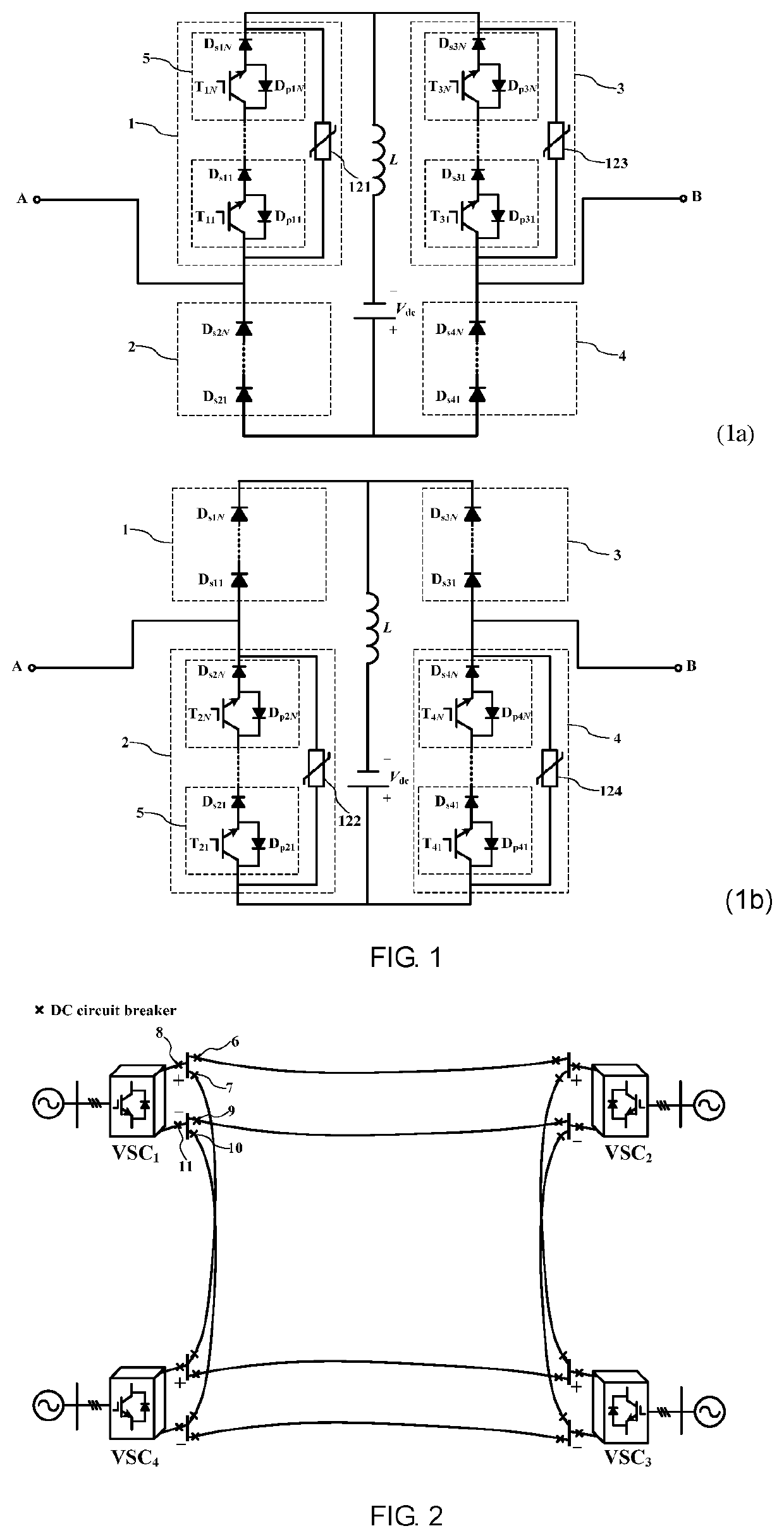
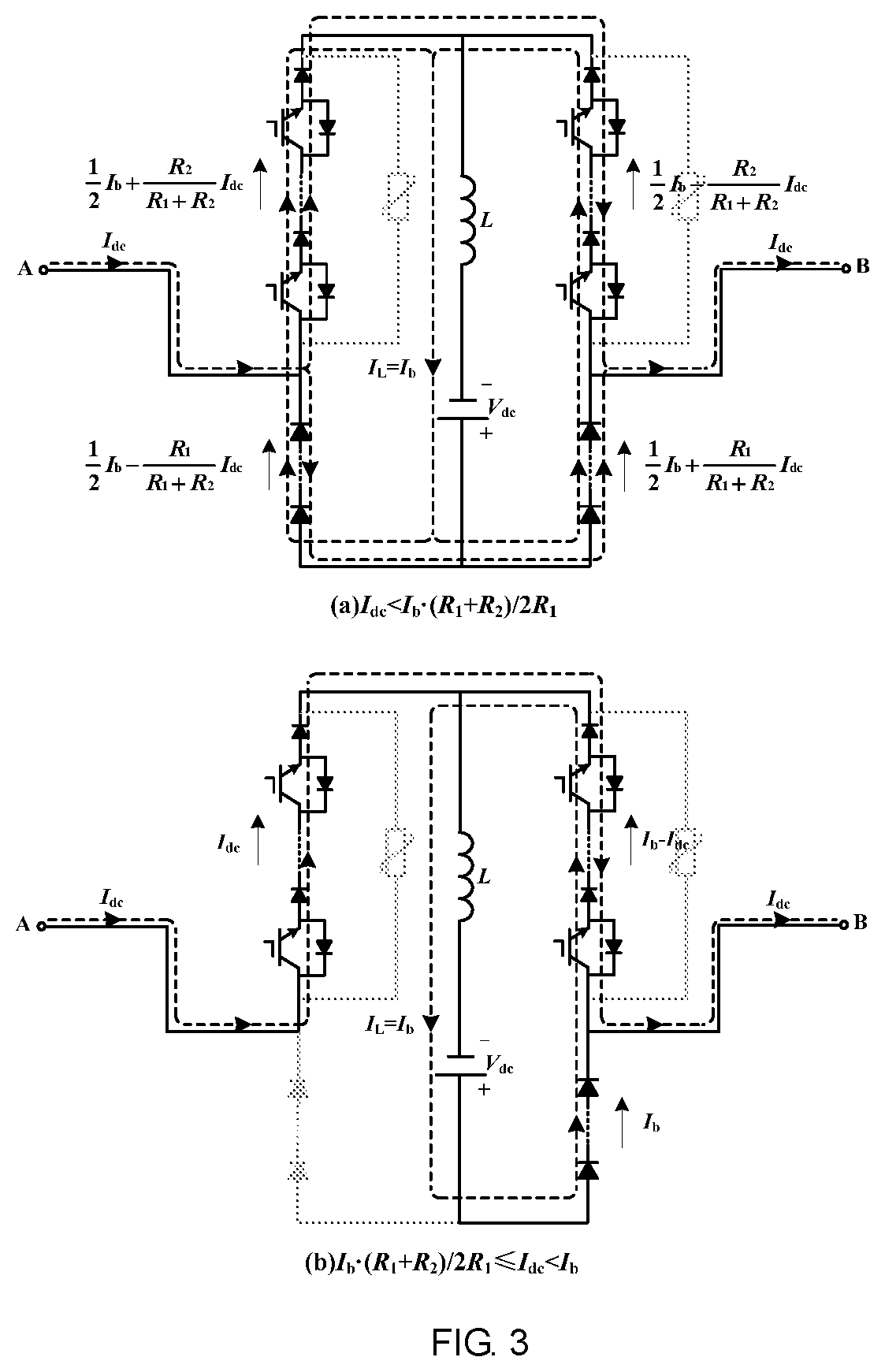
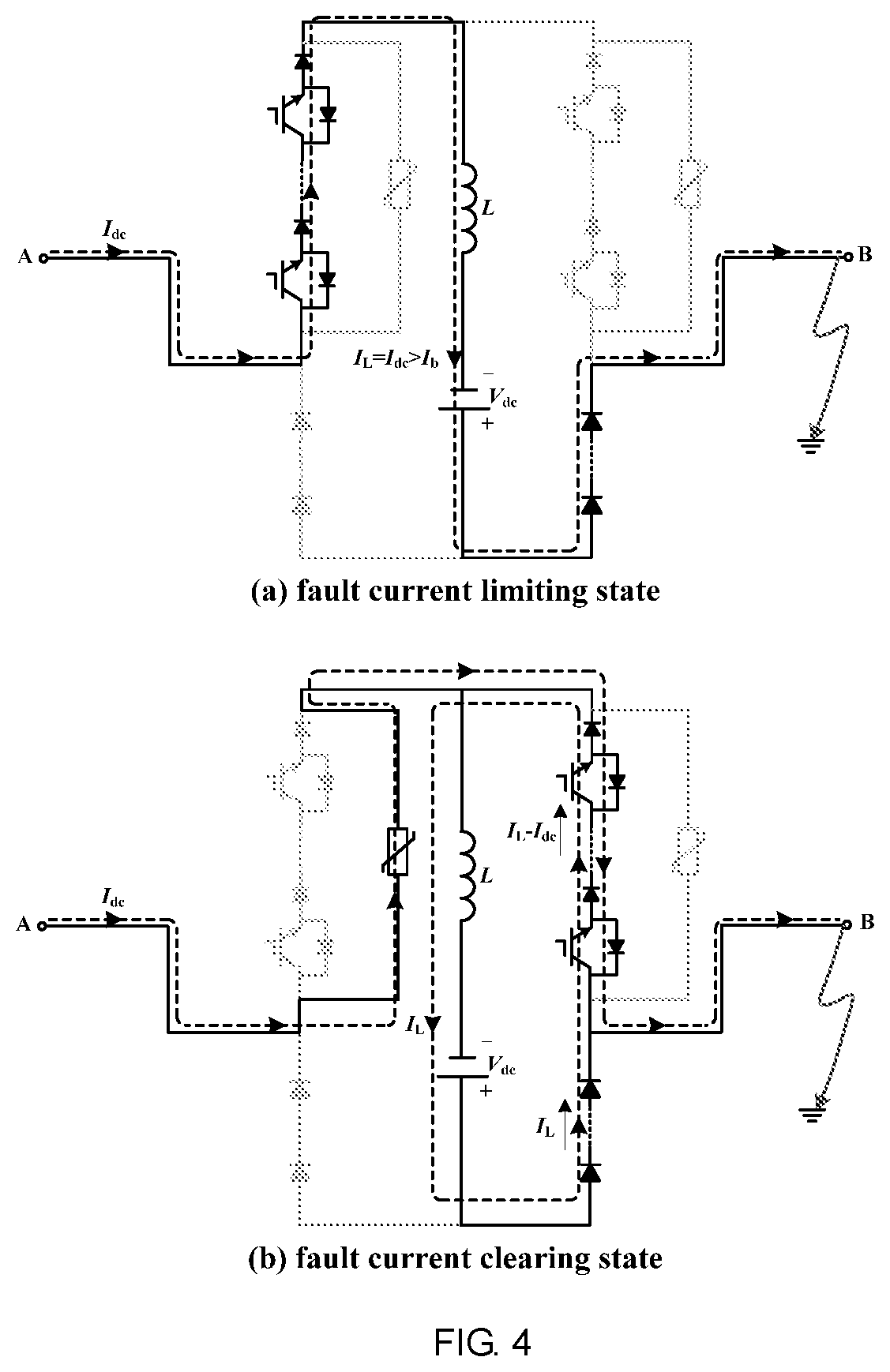
- A DC solid-state circuit breaker (SSCB) with self-adaptive fault current limiting capability, utilizing a H-bridge circuit with unidirectional breakable bridge arms and series-connected diode bridge arms, along with a DC reactor and bias power supply, which automatically connects the reactor to the fault circuit upon fault detection, allowing quick fault current limiting and isolation without negatively impacting system stability.

Solid-state circuit breakers
PatentInactiveUS20140029152A1
Innovation
- A solid-state circuit breaker utilizing saturable unipolar switches, such as JFETs or MOSFETs, with a controller that detects current saturation to rapidly respond to overcurrent conditions without additional insertion losses or bandwidth limitations, enabling instantaneous short circuit current interrupts and self-limiting fault currents.


Grid Code Requirements for SSCB Response Times
Grid codes worldwide have established increasingly stringent requirements for solid-state circuit breaker response times, driven by the need to maintain power system stability and protect critical infrastructure. These regulatory frameworks typically mandate fault detection and isolation within 2-5 milliseconds for transmission-level applications, while distribution systems may allow up to 10-20 milliseconds depending on the voltage level and criticality of the protected circuit.
The IEEE 1547 standard requires distributed energy resources to cease energizing within 2 seconds for abnormal voltage conditions, but modern grid codes are pushing for sub-cycle response times. European grid codes, particularly those outlined in the Network Code on Requirements for Grid Connection, specify that protection systems must operate within one-quarter cycle (5ms at 50Hz) for high-voltage applications. Similarly, NERC standards in North America emphasize rapid fault clearing to prevent cascading failures.
Regional variations in grid code requirements reflect different power system architectures and reliability priorities. Asian markets, led by China's GB/T standards, have implemented some of the most aggressive response time requirements, mandating sub-2ms fault isolation for critical transmission corridors. These requirements directly impact SSCB design specifications, forcing manufacturers to optimize semiconductor switching speeds and fault detection algorithms.
The trend toward renewable energy integration has intensified grid code requirements, as inverter-based resources exhibit different fault characteristics compared to traditional synchronous generators. Modern grid codes increasingly specify dynamic response requirements that account for the rapid voltage and current changes typical in renewable-heavy grids, necessitating faster SSCB response times.
Compliance verification procedures outlined in grid codes require extensive testing protocols, including real-time digital simulator validation and field testing under various fault scenarios. These requirements establish minimum performance benchmarks that drive continuous innovation in SSCB fault isolation speed, creating a regulatory foundation that shapes the entire industry's technological development trajectory.
The IEEE 1547 standard requires distributed energy resources to cease energizing within 2 seconds for abnormal voltage conditions, but modern grid codes are pushing for sub-cycle response times. European grid codes, particularly those outlined in the Network Code on Requirements for Grid Connection, specify that protection systems must operate within one-quarter cycle (5ms at 50Hz) for high-voltage applications. Similarly, NERC standards in North America emphasize rapid fault clearing to prevent cascading failures.
Regional variations in grid code requirements reflect different power system architectures and reliability priorities. Asian markets, led by China's GB/T standards, have implemented some of the most aggressive response time requirements, mandating sub-2ms fault isolation for critical transmission corridors. These requirements directly impact SSCB design specifications, forcing manufacturers to optimize semiconductor switching speeds and fault detection algorithms.
The trend toward renewable energy integration has intensified grid code requirements, as inverter-based resources exhibit different fault characteristics compared to traditional synchronous generators. Modern grid codes increasingly specify dynamic response requirements that account for the rapid voltage and current changes typical in renewable-heavy grids, necessitating faster SSCB response times.
Compliance verification procedures outlined in grid codes require extensive testing protocols, including real-time digital simulator validation and field testing under various fault scenarios. These requirements establish minimum performance benchmarks that drive continuous innovation in SSCB fault isolation speed, creating a regulatory foundation that shapes the entire industry's technological development trajectory.
Reliability and Safety Standards for High-Speed SSCBs
The development of high-speed solid-state circuit breakers necessitates comprehensive reliability and safety standards that address the unique challenges posed by rapid fault isolation requirements. Current international standards such as IEC 62271-37-013 and IEEE C37.302 provide foundational frameworks for SSCB testing and performance evaluation, yet these standards require significant enhancement to accommodate the specific demands of ultra-fast fault detection and isolation systems.
Reliability standards for high-speed SSCBs must establish stringent requirements for mean time between failures (MTBF) exceeding 100,000 operating cycles under rated conditions. The standards should mandate accelerated aging tests that simulate decades of operation within compressed timeframes, incorporating thermal cycling, voltage stress testing, and repetitive switching operations. Critical reliability metrics include semiconductor junction temperature limits, gate driver circuit stability, and protection system response consistency across varying environmental conditions.
Safety standards must address the unique risks associated with high-speed switching operations, particularly concerning electromagnetic interference (EMI) generation and transient voltage phenomena. The standards should specify maximum allowable EMI emissions during fault clearing operations and establish requirements for surge protection devices to handle switching transients. Personnel safety considerations include arc flash energy calculations specific to SSCB fault interruption characteristics and appropriate personal protective equipment specifications.
Testing protocols within these standards must incorporate high-frequency measurement capabilities to accurately assess microsecond-level fault detection and isolation performance. Standardized test circuits should replicate real-world fault conditions including short-circuit currents, ground faults, and load-side arcing scenarios. The standards must define acceptable fault clearing times, typically ranging from 1-10 milliseconds depending on application requirements, while maintaining coordination with upstream and downstream protection devices.
Certification processes should require third-party validation of fault isolation speed claims through standardized test procedures. This includes verification of sensor accuracy, control algorithm response times, and power semiconductor switching characteristics under fault conditions. The standards must also establish requirements for continuous monitoring systems that can detect degradation in fault isolation performance before critical failures occur.
Reliability standards for high-speed SSCBs must establish stringent requirements for mean time between failures (MTBF) exceeding 100,000 operating cycles under rated conditions. The standards should mandate accelerated aging tests that simulate decades of operation within compressed timeframes, incorporating thermal cycling, voltage stress testing, and repetitive switching operations. Critical reliability metrics include semiconductor junction temperature limits, gate driver circuit stability, and protection system response consistency across varying environmental conditions.
Safety standards must address the unique risks associated with high-speed switching operations, particularly concerning electromagnetic interference (EMI) generation and transient voltage phenomena. The standards should specify maximum allowable EMI emissions during fault clearing operations and establish requirements for surge protection devices to handle switching transients. Personnel safety considerations include arc flash energy calculations specific to SSCB fault interruption characteristics and appropriate personal protective equipment specifications.
Testing protocols within these standards must incorporate high-frequency measurement capabilities to accurately assess microsecond-level fault detection and isolation performance. Standardized test circuits should replicate real-world fault conditions including short-circuit currents, ground faults, and load-side arcing scenarios. The standards must define acceptable fault clearing times, typically ranging from 1-10 milliseconds depending on application requirements, while maintaining coordination with upstream and downstream protection devices.
Certification processes should require third-party validation of fault isolation speed claims through standardized test procedures. This includes verification of sensor accuracy, control algorithm response times, and power semiconductor switching characteristics under fault conditions. The standards must also establish requirements for continuous monitoring systems that can detect degradation in fault isolation performance before critical failures occur.
Unlock deeper insights with PatSnap Eureka Quick Research — get a full tech report to explore trends and direct your research. Try now!
Generate Your Research Report Instantly with AI Agent
Supercharge your innovation with PatSnap Eureka AI Agent Platform!