

How to Improve Reflectarray Gain for High-Frequency Communication
MAY 12, 20269 MIN READ
Generate Your Research Report Instantly with AI Agent
Patsnap Eureka helps you evaluate technical feasibility & market potential.
Reflectarray Technology Background and High-Frequency Goals
Reflectarray technology emerged in the 1960s as a revolutionary approach to antenna design, combining the advantages of both parabolic reflectors and phased arrays. This hybrid technology utilizes a planar surface embedded with electronically controllable elements to redirect incident electromagnetic waves toward desired directions. The fundamental principle relies on spatially varying the reflection phase across the array aperture, achieved through careful design of individual reflecting elements such as patches, dipoles, or more complex geometries.
The evolution of reflectarray technology has been driven by the increasing demand for lightweight, low-profile, and cost-effective antenna solutions. Unlike traditional parabolic reflectors that require precise mechanical shaping and complex feed networks, reflectarrays offer simplified manufacturing processes and enhanced design flexibility. The technology has progressed from simple printed patches to sophisticated multi-layer structures incorporating active components, enabling dynamic beam steering and reconfigurable radiation patterns.
High-frequency communication systems, particularly those operating in millimeter-wave bands including Ka-band, V-band, and beyond, present unique opportunities and challenges for reflectarray implementation. These frequency ranges offer substantial bandwidth availability, enabling high-data-rate communications essential for satellite communications, 5G/6G networks, and emerging space-based internet constellations. However, operating at these frequencies introduces significant technical hurdles, including increased atmospheric attenuation, precise manufacturing tolerances, and enhanced sensitivity to surface irregularities.
The primary technical goals for high-frequency reflectarray development center on maximizing antenna gain while maintaining acceptable efficiency levels. Achieving high gain requires minimizing various loss mechanisms, including ohmic losses in conductive elements, dielectric losses in substrate materials, and spillover losses from imperfect aperture illumination. Additionally, maintaining phase accuracy across the array becomes increasingly critical as frequency increases, demanding advanced design methodologies and manufacturing precision.
Current research objectives focus on developing novel element designs that exhibit stable performance across wide frequency ranges, implementing advanced materials with low loss tangent properties, and creating sophisticated optimization algorithms for element placement and sizing. The ultimate goal involves achieving gain levels comparable to traditional reflector antennas while preserving the inherent advantages of planar geometry, reduced weight, and manufacturing simplicity that make reflectarrays attractive for next-generation communication systems.
The evolution of reflectarray technology has been driven by the increasing demand for lightweight, low-profile, and cost-effective antenna solutions. Unlike traditional parabolic reflectors that require precise mechanical shaping and complex feed networks, reflectarrays offer simplified manufacturing processes and enhanced design flexibility. The technology has progressed from simple printed patches to sophisticated multi-layer structures incorporating active components, enabling dynamic beam steering and reconfigurable radiation patterns.
High-frequency communication systems, particularly those operating in millimeter-wave bands including Ka-band, V-band, and beyond, present unique opportunities and challenges for reflectarray implementation. These frequency ranges offer substantial bandwidth availability, enabling high-data-rate communications essential for satellite communications, 5G/6G networks, and emerging space-based internet constellations. However, operating at these frequencies introduces significant technical hurdles, including increased atmospheric attenuation, precise manufacturing tolerances, and enhanced sensitivity to surface irregularities.
The primary technical goals for high-frequency reflectarray development center on maximizing antenna gain while maintaining acceptable efficiency levels. Achieving high gain requires minimizing various loss mechanisms, including ohmic losses in conductive elements, dielectric losses in substrate materials, and spillover losses from imperfect aperture illumination. Additionally, maintaining phase accuracy across the array becomes increasingly critical as frequency increases, demanding advanced design methodologies and manufacturing precision.
Current research objectives focus on developing novel element designs that exhibit stable performance across wide frequency ranges, implementing advanced materials with low loss tangent properties, and creating sophisticated optimization algorithms for element placement and sizing. The ultimate goal involves achieving gain levels comparable to traditional reflector antennas while preserving the inherent advantages of planar geometry, reduced weight, and manufacturing simplicity that make reflectarrays attractive for next-generation communication systems.
Market Demand for High-Gain Reflectarray Communication Systems
The global telecommunications industry is experiencing unprecedented demand for high-performance antenna systems capable of supporting next-generation wireless networks. High-gain reflectarray communication systems have emerged as critical components in addressing the bandwidth and coverage requirements of 5G, 6G, and satellite communication networks. The increasing deployment of millimeter-wave frequencies and the need for precise beam steering capabilities are driving substantial market interest in advanced reflectarray technologies.
Satellite communication operators represent a primary market segment seeking enhanced reflectarray solutions. The growing constellation of low Earth orbit satellites requires ground-based antenna systems with superior gain characteristics to maintain reliable communication links. Commercial satellite internet providers are particularly focused on reflectarray systems that can deliver consistent performance across multiple frequency bands while maintaining cost-effectiveness for large-scale deployments.
The aerospace and defense sectors constitute another significant demand driver for high-gain reflectarray systems. Military communication networks require robust, high-performance antenna solutions capable of operating in challenging environments while providing secure, high-bandwidth connectivity. The ability of reflectarrays to achieve high gain with reduced weight and profile compared to traditional parabolic antennas makes them attractive for airborne and mobile applications.
Emerging applications in autonomous vehicle networks and smart city infrastructure are creating new market opportunities for reflectarray technology. Vehicle-to-everything communication systems demand antenna solutions with rapid beam switching capabilities and high gain to support real-time data exchange. Urban communication networks increasingly rely on high-frequency bands where reflectarray gain improvements directly translate to enhanced network performance and coverage.
The commercial wireless infrastructure market shows growing interest in reflectarray solutions for base station applications. Network operators seeking to optimize coverage patterns and reduce interference are evaluating reflectarray systems as alternatives to conventional antenna arrays. The potential for software-defined beam shaping and adaptive gain control aligns with the industry's movement toward intelligent network management.
Research institutions and technology developers are investing heavily in reflectarray advancement, recognizing the technology's potential to address fundamental limitations in high-frequency communication systems. The convergence of materials science, electromagnetic design, and digital signal processing is creating opportunities for breakthrough improvements in reflectarray gain performance.
Satellite communication operators represent a primary market segment seeking enhanced reflectarray solutions. The growing constellation of low Earth orbit satellites requires ground-based antenna systems with superior gain characteristics to maintain reliable communication links. Commercial satellite internet providers are particularly focused on reflectarray systems that can deliver consistent performance across multiple frequency bands while maintaining cost-effectiveness for large-scale deployments.
The aerospace and defense sectors constitute another significant demand driver for high-gain reflectarray systems. Military communication networks require robust, high-performance antenna solutions capable of operating in challenging environments while providing secure, high-bandwidth connectivity. The ability of reflectarrays to achieve high gain with reduced weight and profile compared to traditional parabolic antennas makes them attractive for airborne and mobile applications.
Emerging applications in autonomous vehicle networks and smart city infrastructure are creating new market opportunities for reflectarray technology. Vehicle-to-everything communication systems demand antenna solutions with rapid beam switching capabilities and high gain to support real-time data exchange. Urban communication networks increasingly rely on high-frequency bands where reflectarray gain improvements directly translate to enhanced network performance and coverage.
The commercial wireless infrastructure market shows growing interest in reflectarray solutions for base station applications. Network operators seeking to optimize coverage patterns and reduce interference are evaluating reflectarray systems as alternatives to conventional antenna arrays. The potential for software-defined beam shaping and adaptive gain control aligns with the industry's movement toward intelligent network management.
Research institutions and technology developers are investing heavily in reflectarray advancement, recognizing the technology's potential to address fundamental limitations in high-frequency communication systems. The convergence of materials science, electromagnetic design, and digital signal processing is creating opportunities for breakthrough improvements in reflectarray gain performance.
Current State and Gain Limitations of Reflectarray Technology
Reflectarray technology has emerged as a promising alternative to traditional parabolic reflectors and phased arrays for high-frequency communication systems. Current reflectarray implementations typically achieve gains ranging from 25 to 40 dBi, depending on aperture size, operating frequency, and design complexity. While these performance levels demonstrate the technology's viability, they often fall short of theoretical maximum gains by 3-8 dB, indicating substantial room for improvement.
The fundamental gain limitations in contemporary reflectarray designs stem from several interconnected factors. Phase quantization errors represent a primary constraint, as most practical implementations utilize discrete phase states rather than continuous phase control. Typical designs employ 1-bit to 3-bit phase quantization, resulting in theoretical efficiency losses of 20% to 4% respectively. Additionally, bandwidth limitations significantly impact gain performance, with most single-layer reflectarrays exhibiting usable bandwidths of only 5-10% before experiencing substantial gain degradation.
Element design constraints further compound gain limitations in current systems. Traditional patch-based elements suffer from inherent bandwidth restrictions and coupling effects that degrade overall aperture efficiency. Cross-polarization levels typically range from -15 to -25 dB, representing energy that fails to contribute to the desired radiation pattern. Moreover, manufacturing tolerances and substrate losses introduce additional inefficiencies, particularly at millimeter-wave frequencies where dimensional accuracy becomes increasingly critical.
Feed spillover and illumination taper effects constitute another significant source of gain reduction in existing reflectarray configurations. Conventional horn feeds often produce illumination patterns that inadequately match the reflectarray aperture, resulting in edge taper losses of 1-3 dB. The feed positioning optimization remains challenging, as achieving uniform amplitude distribution across the aperture while maintaining acceptable phase coherence requires careful consideration of feed location, beamwidth, and polarization characteristics.
Current technological approaches to address these limitations include multi-layer designs, novel element geometries, and advanced optimization algorithms. However, these solutions often introduce increased complexity and manufacturing costs while providing only incremental performance improvements. The trade-offs between gain enhancement, bandwidth expansion, and system complexity continue to challenge designers seeking optimal reflectarray performance for high-frequency communication applications.
The fundamental gain limitations in contemporary reflectarray designs stem from several interconnected factors. Phase quantization errors represent a primary constraint, as most practical implementations utilize discrete phase states rather than continuous phase control. Typical designs employ 1-bit to 3-bit phase quantization, resulting in theoretical efficiency losses of 20% to 4% respectively. Additionally, bandwidth limitations significantly impact gain performance, with most single-layer reflectarrays exhibiting usable bandwidths of only 5-10% before experiencing substantial gain degradation.
Element design constraints further compound gain limitations in current systems. Traditional patch-based elements suffer from inherent bandwidth restrictions and coupling effects that degrade overall aperture efficiency. Cross-polarization levels typically range from -15 to -25 dB, representing energy that fails to contribute to the desired radiation pattern. Moreover, manufacturing tolerances and substrate losses introduce additional inefficiencies, particularly at millimeter-wave frequencies where dimensional accuracy becomes increasingly critical.
Feed spillover and illumination taper effects constitute another significant source of gain reduction in existing reflectarray configurations. Conventional horn feeds often produce illumination patterns that inadequately match the reflectarray aperture, resulting in edge taper losses of 1-3 dB. The feed positioning optimization remains challenging, as achieving uniform amplitude distribution across the aperture while maintaining acceptable phase coherence requires careful consideration of feed location, beamwidth, and polarization characteristics.
Current technological approaches to address these limitations include multi-layer designs, novel element geometries, and advanced optimization algorithms. However, these solutions often introduce increased complexity and manufacturing costs while providing only incremental performance improvements. The trade-offs between gain enhancement, bandwidth expansion, and system complexity continue to challenge designers seeking optimal reflectarray performance for high-frequency communication applications.
Existing Solutions for Reflectarray Gain Enhancement
01 Reflectarray element design and configuration
The design and configuration of individual reflectarray elements significantly impacts the overall gain performance. This includes optimizing element geometry, spacing, and arrangement to achieve desired radiation characteristics. Various element shapes and configurations can be employed to enhance directivity and minimize losses, thereby improving the overall gain of the reflectarray antenna system.- Reflectarray element design and configuration: The design and configuration of individual reflectarray elements significantly impacts the overall gain performance. This includes optimizing element geometry, spacing, and arrangement to achieve desired radiation characteristics. Various element shapes and configurations can be employed to enhance directivity and reduce losses, thereby improving the overall gain of the reflectarray antenna system.
- Phase control mechanisms for gain optimization: Implementing precise phase control across the reflectarray aperture is crucial for maximizing gain. This involves using variable phase shift elements or structures that can provide the required phase distribution to focus the reflected beam effectively. Advanced phase control techniques enable better beam shaping and higher directivity, resulting in improved gain performance.
- Multi-band and wideband reflectarray designs: Developing reflectarray antennas that operate across multiple frequency bands or wide bandwidths while maintaining high gain presents unique challenges. These designs require careful consideration of frequency-dependent phase responses and element behaviors. Advanced techniques are employed to ensure consistent gain performance across the desired frequency range.
- Beam steering and adaptive gain control: Electronic beam steering capabilities in reflectarrays allow for dynamic adjustment of the main beam direction while maintaining optimal gain. This involves implementing active or reconfigurable elements that can alter the phase distribution in real-time. Such systems enable adaptive gain control and beam optimization for various operational scenarios.
- Feed system integration and efficiency enhancement: The integration of feed systems with reflectarray structures plays a critical role in overall gain performance. Optimizing feed placement, polarization matching, and minimizing spillover losses are essential for maximizing efficiency. Advanced feed designs and integration techniques help achieve higher aperture efficiency and improved gain characteristics.
02 Phase control mechanisms for gain optimization
Implementing precise phase control across the reflectarray aperture is crucial for maximizing gain. This involves techniques for achieving proper phase distribution to focus electromagnetic energy in the desired direction. Advanced phase control methods enable better beam shaping and reduced side lobe levels, which directly contribute to improved gain performance.Expand Specific Solutions03 Multi-band and wideband reflectarray designs
Developing reflectarray systems that operate across multiple frequency bands or wide bandwidths while maintaining high gain characteristics. These designs incorporate specialized techniques to ensure consistent performance across the operating frequency range, addressing challenges related to frequency-dependent phase variations and maintaining optimal gain levels throughout the bandwidth.Expand Specific Solutions04 Beam steering and adaptive gain control
Implementing dynamic beam steering capabilities while maintaining or optimizing gain performance. This includes electronically controllable reflectarray systems that can redirect the main beam without significant gain degradation. Advanced control algorithms and adaptive techniques are employed to maintain peak gain performance across different steering angles and operating conditions.Expand Specific Solutions05 Feed system integration and gain enhancement
Optimizing the feed system design and its integration with the reflectarray to maximize overall gain. This encompasses feed positioning, polarization considerations, and impedance matching techniques that minimize losses and improve radiation efficiency. Proper feed system design is essential for achieving theoretical gain limits and maintaining consistent performance across the operating bandwidth.Expand Specific Solutions
Key Players in Reflectarray and Antenna Manufacturing Industry
The reflectarray gain improvement technology for high-frequency communication represents a rapidly evolving sector within the broader antenna and RF systems market. The industry is currently in a growth phase, driven by increasing demand for 5G infrastructure, satellite communications, and automotive radar applications. Market expansion is fueled by companies like Huawei, Qualcomm, and Samsung Electronics leading in telecommunications infrastructure, while specialized firms such as Metawave focus on adaptive metamaterial solutions. Technology maturity varies significantly across players - established giants like Intel, Sony, and NXP leverage extensive R&D capabilities for integrated solutions, whereas companies like Tongyu Communication and Murata Manufacturing provide specialized RF components. The competitive landscape shows convergence between traditional semiconductor manufacturers and emerging antenna technology specialists, indicating a transitional phase toward more sophisticated beamforming and gain optimization solutions for next-generation wireless systems.
Huawei Technologies Co., Ltd.
Technical Solution: Huawei has developed advanced reflectarray antenna technologies for 5G and beyond communications, focusing on multi-beam reflectarray systems with electronically reconfigurable elements. Their approach utilizes varactor diodes and PIN diodes integrated into unit cells to achieve dynamic phase control, enabling beam steering capabilities up to 60 degrees. The company implements sophisticated feeding networks with corporate feed structures and optimized element spacing of 0.5λ to 0.7λ to minimize grating lobes. Their reflectarray designs incorporate multi-layer substrates with low-loss dielectric materials (εr=2.2-3.8, tanδ<0.002) to achieve gains exceeding 35 dBi at millimeter-wave frequencies. Huawei's solutions also feature advanced calibration algorithms and real-time beam optimization to maintain high efficiency across different operating conditions.
Strengths: Comprehensive system integration capabilities, strong R&D in millimeter-wave technologies, extensive 5G deployment experience. Weaknesses: Limited market access in some regions due to geopolitical constraints, higher complexity in manufacturing processes.
QUALCOMM, Inc.
Technical Solution: Qualcomm focuses on integrated reflectarray solutions for mobile communication systems, particularly for 5G mmWave applications. Their technology emphasizes compact, low-profile reflectarray antennas with integrated RF front-end circuits. The company develops reflectarray elements using advanced semiconductor processes, incorporating GaAs and SiGe technologies to achieve high-frequency operation up to 60 GHz. Their designs feature adaptive impedance matching networks and multi-port feeding systems to optimize radiation patterns. Qualcomm's reflectarray solutions utilize machine learning algorithms for real-time pattern optimization and interference mitigation. The company's approach includes the development of hybrid beamforming architectures that combine digital and analog processing to reduce power consumption while maintaining high gain performance exceeding 30 dBi.
Strengths: Strong semiconductor expertise, extensive mobile communication ecosystem, advanced signal processing capabilities. Weaknesses: Primarily focused on mobile applications, limited experience in large-scale reflectarray systems.
Core Innovations in High-Frequency Reflectarray Design
Bandwidth enhancement of reflectarray using overlapping tri-resonance phase distribution
PatentActiveIN202241063131A
Innovation
- A novel overlapping tri-resonance phase distribution method is employed, using a modified Malta cross structure within a square ring integrated with a delay line, which provides a 518° phase change and reduces computational complexity by utilizing phase curves at three neighboring frequencies to maintain stable gain response across a wide frequency range.


Reflecting board with variable slot size for a microstrip reflectarray antenna
PatentInactiveUS7259721B2
Innovation
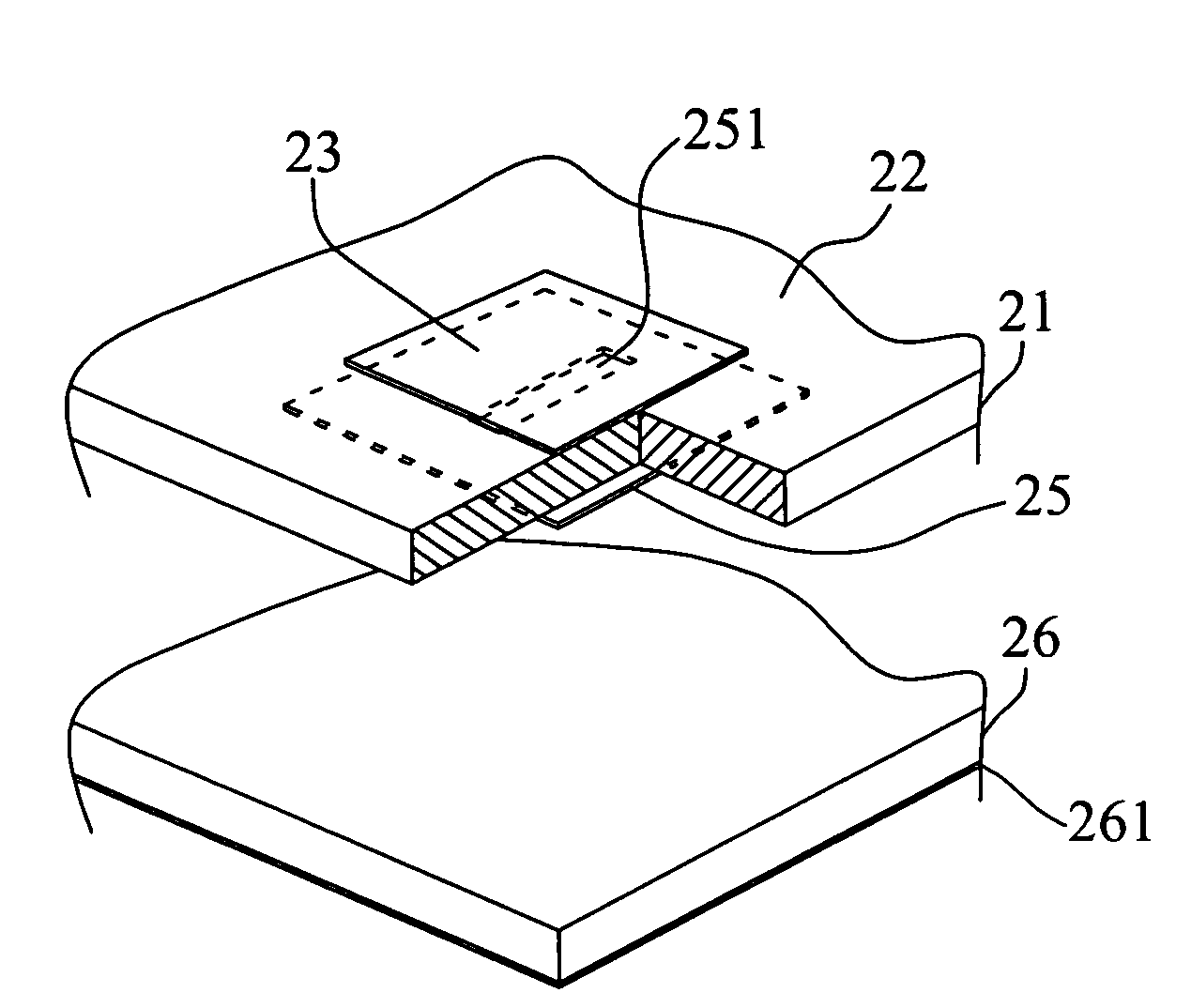
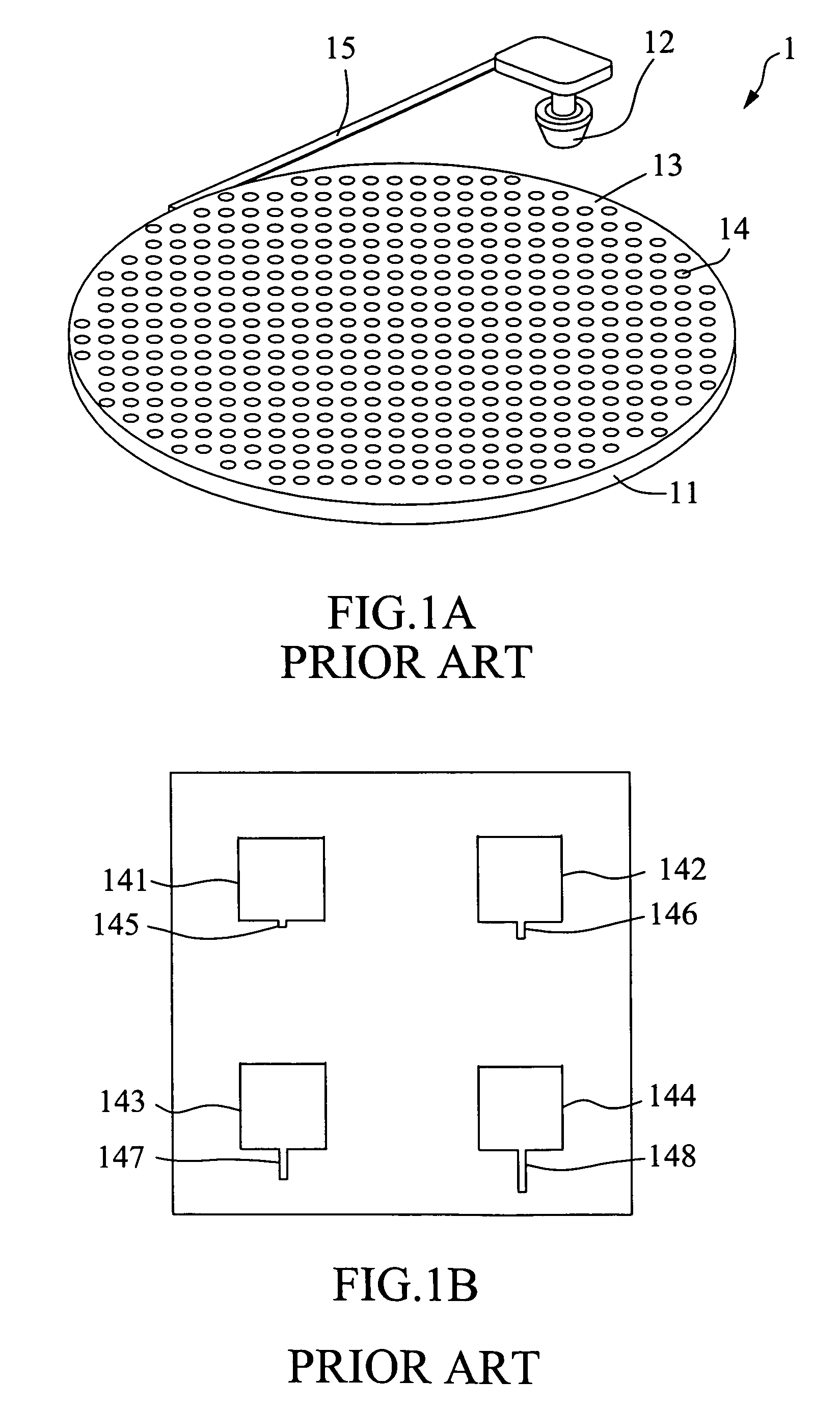
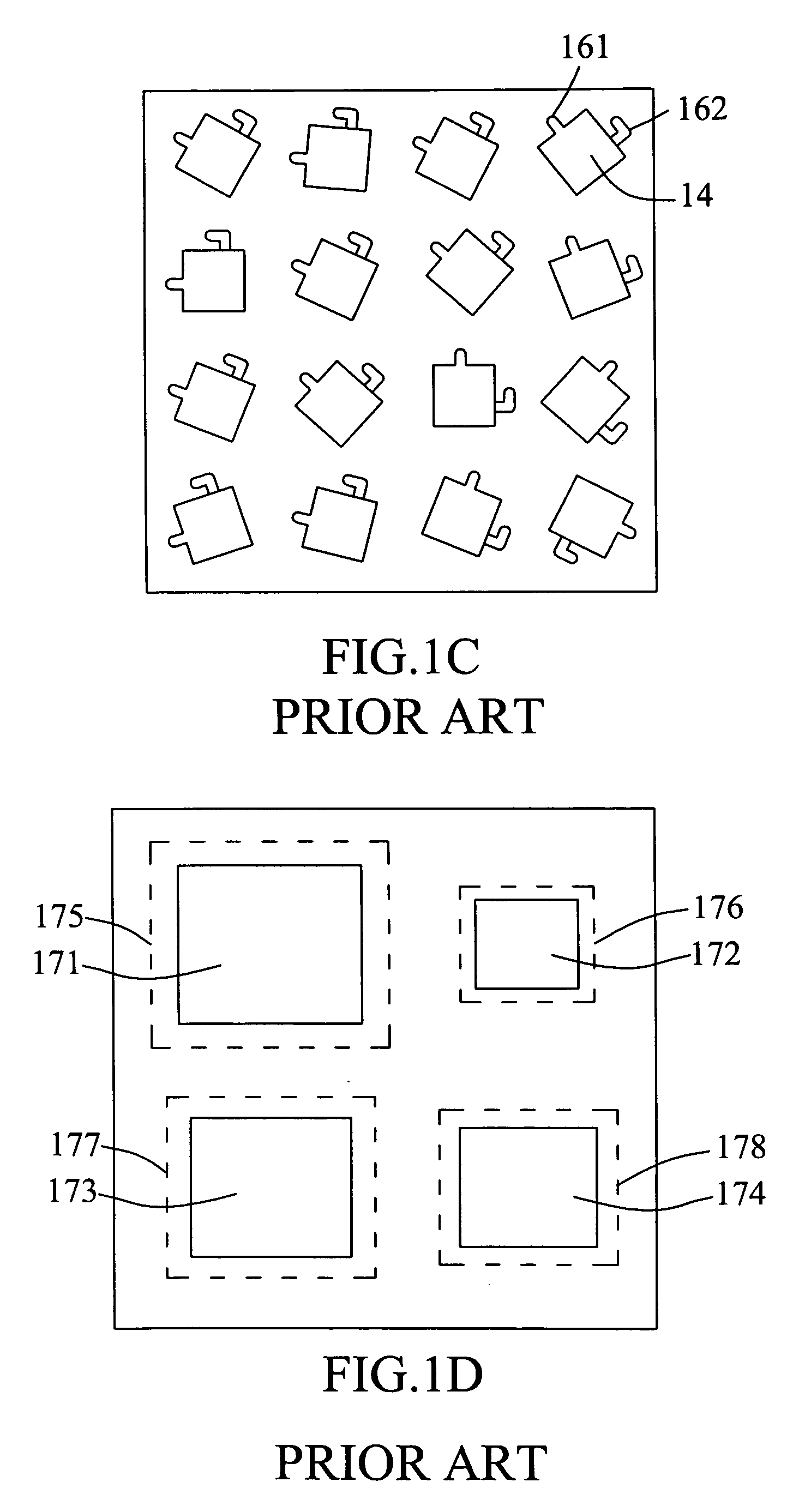
- A reflecting board with variable slot sizes is introduced, featuring first and second microstrip antenna patches with a specific ratio of border-lengths and rectangular slots, improving design flexibility and reducing sensitivity to manufacturing precision, allowing for the use of high dielectric constant substrates like FR-4, which reduces costs and increases yield.

Manufacturing Tolerances Impact on Reflectarray Performance
Manufacturing tolerances represent one of the most critical factors affecting reflectarray performance in high-frequency communication systems. As operating frequencies increase into millimeter-wave bands, the dimensional accuracy requirements become increasingly stringent, with tolerance specifications often measured in micrometers rather than millimeters.
The relationship between manufacturing precision and reflectarray gain follows a direct correlation pattern. Element dimensional variations as small as 5-10% of the operating wavelength can result in significant phase errors, leading to beam pointing deviations and reduced antenna efficiency. At 60 GHz frequencies, for instance, a 50-micrometer fabrication error can introduce phase shifts exceeding 10 degrees, substantially degrading the overall system performance.
Substrate thickness variations pose another significant challenge in reflectarray manufacturing. Non-uniform dielectric thickness across the array aperture creates unpredictable phase distributions, resulting in increased sidelobe levels and reduced directivity. Advanced manufacturing processes must maintain substrate thickness tolerances within ±25 micrometers for optimal high-frequency performance.
Metallization quality directly impacts reflectarray efficiency, particularly regarding surface roughness and edge definition. Poor metallization can introduce resistive losses and alter the electromagnetic boundary conditions of individual elements. Modern photolithographic processes have demonstrated the capability to achieve edge roughness below 2 micrometers, essential for maintaining high gain performance at frequencies above 30 GHz.
Assembly tolerances, including panel alignment and mounting precision, become increasingly critical for large reflectarray systems. Mechanical deformations due to thermal expansion or structural loading can introduce systematic phase errors across the array. Temperature-induced dimensional changes must be carefully considered, as coefficient of thermal expansion mismatches between substrate materials and mounting structures can significantly impact performance stability.
Statistical analysis of manufacturing variations reveals that reflectarray gain degradation follows a predictable pattern based on root-mean-square phase error distributions. Monte Carlo simulations indicate that maintaining manufacturing tolerances within specified limits can preserve gain performance within 1-2 dB of theoretical maximum values, making precision manufacturing techniques essential for competitive high-frequency reflectarray systems.
The relationship between manufacturing precision and reflectarray gain follows a direct correlation pattern. Element dimensional variations as small as 5-10% of the operating wavelength can result in significant phase errors, leading to beam pointing deviations and reduced antenna efficiency. At 60 GHz frequencies, for instance, a 50-micrometer fabrication error can introduce phase shifts exceeding 10 degrees, substantially degrading the overall system performance.
Substrate thickness variations pose another significant challenge in reflectarray manufacturing. Non-uniform dielectric thickness across the array aperture creates unpredictable phase distributions, resulting in increased sidelobe levels and reduced directivity. Advanced manufacturing processes must maintain substrate thickness tolerances within ±25 micrometers for optimal high-frequency performance.
Metallization quality directly impacts reflectarray efficiency, particularly regarding surface roughness and edge definition. Poor metallization can introduce resistive losses and alter the electromagnetic boundary conditions of individual elements. Modern photolithographic processes have demonstrated the capability to achieve edge roughness below 2 micrometers, essential for maintaining high gain performance at frequencies above 30 GHz.
Assembly tolerances, including panel alignment and mounting precision, become increasingly critical for large reflectarray systems. Mechanical deformations due to thermal expansion or structural loading can introduce systematic phase errors across the array. Temperature-induced dimensional changes must be carefully considered, as coefficient of thermal expansion mismatches between substrate materials and mounting structures can significantly impact performance stability.
Statistical analysis of manufacturing variations reveals that reflectarray gain degradation follows a predictable pattern based on root-mean-square phase error distributions. Monte Carlo simulations indicate that maintaining manufacturing tolerances within specified limits can preserve gain performance within 1-2 dB of theoretical maximum values, making precision manufacturing techniques essential for competitive high-frequency reflectarray systems.
Thermal Management Considerations for High-Frequency Arrays
Thermal management represents a critical design consideration for high-frequency reflectarray systems, as elevated operating frequencies generate substantial heat that can severely impact antenna performance and reliability. The electromagnetic losses inherent in high-frequency operations, combined with increased power densities required for enhanced gain, create thermal challenges that must be systematically addressed to maintain optimal reflectarray functionality.
Heat generation in high-frequency reflectarrays primarily stems from dielectric losses in substrate materials, conductor losses in metallic elements, and impedance mismatches within the feeding network. As operating frequencies extend into millimeter-wave ranges, these loss mechanisms become increasingly pronounced, leading to localized hot spots that can cause thermal expansion, material degradation, and phase drift in reflecting elements. The resulting thermal gradients across the array aperture introduce non-uniform phase distributions that directly compromise gain performance.
Substrate material selection plays a fundamental role in thermal management strategies. Low-loss dielectric materials with high thermal conductivity, such as aluminum nitride or specialized ceramic composites, offer superior heat dissipation capabilities compared to conventional FR-4 or Rogers materials. However, these advanced substrates often present manufacturing challenges and increased costs that must be balanced against performance requirements.
Active thermal management solutions include integrated heat sinks, thermal interface materials, and forced convection cooling systems. Microchannel cooling architectures embedded within the reflectarray structure provide efficient heat removal while maintaining electromagnetic transparency. Phase change materials strategically positioned behind reflecting elements can absorb thermal transients during peak power operations, preventing temperature spikes that would otherwise degrade array performance.
Thermal modeling and simulation tools enable predictive analysis of temperature distributions across reflectarray apertures under various operating conditions. Finite element thermal analysis coupled with electromagnetic simulations allows designers to optimize element spacing, substrate thickness, and cooling channel placement to minimize thermal-induced performance degradation. Real-time thermal monitoring systems incorporating distributed temperature sensors provide feedback for adaptive power management and thermal control algorithms.
The integration of thermal management considerations into reflectarray design requires careful attention to electromagnetic compatibility, ensuring that cooling structures do not introduce unwanted scattering or blockage effects. Thermally conductive but electromagnetically transparent materials, such as graphene-enhanced polymers, offer promising solutions for next-generation high-frequency reflectarray thermal management systems.
Heat generation in high-frequency reflectarrays primarily stems from dielectric losses in substrate materials, conductor losses in metallic elements, and impedance mismatches within the feeding network. As operating frequencies extend into millimeter-wave ranges, these loss mechanisms become increasingly pronounced, leading to localized hot spots that can cause thermal expansion, material degradation, and phase drift in reflecting elements. The resulting thermal gradients across the array aperture introduce non-uniform phase distributions that directly compromise gain performance.
Substrate material selection plays a fundamental role in thermal management strategies. Low-loss dielectric materials with high thermal conductivity, such as aluminum nitride or specialized ceramic composites, offer superior heat dissipation capabilities compared to conventional FR-4 or Rogers materials. However, these advanced substrates often present manufacturing challenges and increased costs that must be balanced against performance requirements.
Active thermal management solutions include integrated heat sinks, thermal interface materials, and forced convection cooling systems. Microchannel cooling architectures embedded within the reflectarray structure provide efficient heat removal while maintaining electromagnetic transparency. Phase change materials strategically positioned behind reflecting elements can absorb thermal transients during peak power operations, preventing temperature spikes that would otherwise degrade array performance.
Thermal modeling and simulation tools enable predictive analysis of temperature distributions across reflectarray apertures under various operating conditions. Finite element thermal analysis coupled with electromagnetic simulations allows designers to optimize element spacing, substrate thickness, and cooling channel placement to minimize thermal-induced performance degradation. Real-time thermal monitoring systems incorporating distributed temperature sensors provide feedback for adaptive power management and thermal control algorithms.
The integration of thermal management considerations into reflectarray design requires careful attention to electromagnetic compatibility, ensuring that cooling structures do not introduce unwanted scattering or blockage effects. Thermally conductive but electromagnetically transparent materials, such as graphene-enhanced polymers, offer promising solutions for next-generation high-frequency reflectarray thermal management systems.
Unlock deeper insights with Patsnap Eureka Quick Research — get a full tech report to explore trends and direct your research. Try now!
Generate Your Research Report Instantly with AI Agent
Supercharge your innovation with Patsnap Eureka AI Agent Platform!