

Quantifying Beam Efficiency of Reflectarray Antennas Using HFSS
MAY 12, 20269 MIN READ
Generate Your Research Report Instantly with AI Agent
Patsnap Eureka helps you evaluate technical feasibility & market potential.
Reflectarray Antenna Beam Efficiency Background and Objectives
Reflectarray antennas have emerged as a revolutionary technology in modern wireless communication systems, representing a paradigm shift from traditional parabolic reflectors and phased arrays. These innovative structures combine the mechanical simplicity of reflectors with the electronic beam-steering capabilities of phased arrays, offering unprecedented flexibility in antenna design and deployment.
The evolution of reflectarray technology traces back to the 1960s when researchers first explored the concept of using printed elements to replace conventional reflector surfaces. Early developments focused on basic phase compensation techniques using variable-length microstrip patches. The technology gained significant momentum in the 1990s with advances in computational electromagnetics and fabrication processes, enabling more sophisticated element designs and larger array configurations.
Contemporary reflectarray antennas utilize arrays of printed elements, typically patches or slots, arranged on a planar or curved substrate. Each element is designed to provide specific phase shifts to incoming electromagnetic waves, collectively forming a desired radiation pattern. This approach eliminates the need for complex feed networks while maintaining precise beam control capabilities essential for satellite communications, radar systems, and emerging 5G applications.
The critical importance of beam efficiency quantification has become increasingly apparent as reflectarray applications expand into high-performance domains. Beam efficiency directly impacts system performance metrics including gain, directivity, and power consumption, making accurate measurement and optimization essential for competitive antenna designs. Traditional analytical methods often fall short in capturing the complex electromagnetic interactions within large reflectarray structures, necessitating advanced simulation approaches.
High Frequency Structure Simulator (HFSS) has established itself as the industry standard for electromagnetic simulation, offering sophisticated finite element method capabilities specifically suited for reflectarray analysis. The software's ability to handle complex geometries, material properties, and boundary conditions makes it particularly valuable for beam efficiency studies where multiple physical phenomena interact simultaneously.
The primary objective of quantifying beam efficiency using HFSS encompasses several critical goals. First, establishing accurate simulation methodologies that can reliably predict real-world performance across various operating conditions and frequency bands. Second, developing optimization frameworks that can systematically improve beam efficiency through element design modifications and array configuration adjustments. Third, creating validation protocols that ensure simulation results correlate strongly with measured performance data.
These objectives directly support the broader goal of advancing reflectarray technology toward next-generation applications requiring superior efficiency, bandwidth, and beam agility. Success in this endeavor will enable more efficient satellite communication systems, enhanced radar capabilities, and improved wireless infrastructure supporting emerging technologies.
The evolution of reflectarray technology traces back to the 1960s when researchers first explored the concept of using printed elements to replace conventional reflector surfaces. Early developments focused on basic phase compensation techniques using variable-length microstrip patches. The technology gained significant momentum in the 1990s with advances in computational electromagnetics and fabrication processes, enabling more sophisticated element designs and larger array configurations.
Contemporary reflectarray antennas utilize arrays of printed elements, typically patches or slots, arranged on a planar or curved substrate. Each element is designed to provide specific phase shifts to incoming electromagnetic waves, collectively forming a desired radiation pattern. This approach eliminates the need for complex feed networks while maintaining precise beam control capabilities essential for satellite communications, radar systems, and emerging 5G applications.
The critical importance of beam efficiency quantification has become increasingly apparent as reflectarray applications expand into high-performance domains. Beam efficiency directly impacts system performance metrics including gain, directivity, and power consumption, making accurate measurement and optimization essential for competitive antenna designs. Traditional analytical methods often fall short in capturing the complex electromagnetic interactions within large reflectarray structures, necessitating advanced simulation approaches.
High Frequency Structure Simulator (HFSS) has established itself as the industry standard for electromagnetic simulation, offering sophisticated finite element method capabilities specifically suited for reflectarray analysis. The software's ability to handle complex geometries, material properties, and boundary conditions makes it particularly valuable for beam efficiency studies where multiple physical phenomena interact simultaneously.
The primary objective of quantifying beam efficiency using HFSS encompasses several critical goals. First, establishing accurate simulation methodologies that can reliably predict real-world performance across various operating conditions and frequency bands. Second, developing optimization frameworks that can systematically improve beam efficiency through element design modifications and array configuration adjustments. Third, creating validation protocols that ensure simulation results correlate strongly with measured performance data.
These objectives directly support the broader goal of advancing reflectarray technology toward next-generation applications requiring superior efficiency, bandwidth, and beam agility. Success in this endeavor will enable more efficient satellite communication systems, enhanced radar capabilities, and improved wireless infrastructure supporting emerging technologies.
Market Demand for High-Efficiency Reflectarray Systems
The global satellite communications market continues to experience unprecedented growth, driven by increasing demand for high-speed internet connectivity, IoT applications, and next-generation communication services. This expansion has created substantial market opportunities for high-efficiency reflectarray antenna systems, which offer superior performance characteristics compared to traditional parabolic reflectors and phased arrays.
Commercial satellite operators are increasingly seeking antenna solutions that can deliver enhanced beam efficiency while maintaining cost-effectiveness and operational flexibility. The demand stems from the need to maximize signal strength and coverage area while minimizing power consumption and system complexity. High-efficiency reflectarray systems address these requirements by providing precise beam shaping capabilities and reduced side lobe levels, making them particularly attractive for satellite communication applications.
The aerospace and defense sectors represent significant market segments for advanced reflectarray technologies. Military and government applications require antenna systems with exceptional performance reliability, stealth characteristics, and adaptability to various operational environments. High-efficiency reflectarray antennas meet these stringent requirements while offering advantages in terms of weight reduction and profile minimization, critical factors for airborne and space-based platforms.
Emerging applications in 5G infrastructure and beyond are creating new market opportunities for reflectarray antenna systems. The deployment of millimeter-wave frequencies and massive MIMO technologies requires antenna solutions capable of delivering high gain and precise beam control. Reflectarray antennas, with their ability to achieve high efficiency across wide frequency bands, are well-positioned to serve these evolving market needs.
The growing emphasis on sustainable technology solutions has further amplified market demand for energy-efficient antenna systems. Organizations across various industries are prioritizing technologies that reduce power consumption while maintaining or improving performance standards. High-efficiency reflectarray systems align with these sustainability objectives by minimizing energy waste and optimizing signal transmission efficiency.
Market research indicates strong growth potential in emerging economies where telecommunications infrastructure development is accelerating. These regions present opportunities for deploying advanced antenna technologies that can support rapid connectivity expansion while maintaining cost-effectiveness and operational efficiency.
Commercial satellite operators are increasingly seeking antenna solutions that can deliver enhanced beam efficiency while maintaining cost-effectiveness and operational flexibility. The demand stems from the need to maximize signal strength and coverage area while minimizing power consumption and system complexity. High-efficiency reflectarray systems address these requirements by providing precise beam shaping capabilities and reduced side lobe levels, making them particularly attractive for satellite communication applications.
The aerospace and defense sectors represent significant market segments for advanced reflectarray technologies. Military and government applications require antenna systems with exceptional performance reliability, stealth characteristics, and adaptability to various operational environments. High-efficiency reflectarray antennas meet these stringent requirements while offering advantages in terms of weight reduction and profile minimization, critical factors for airborne and space-based platforms.
Emerging applications in 5G infrastructure and beyond are creating new market opportunities for reflectarray antenna systems. The deployment of millimeter-wave frequencies and massive MIMO technologies requires antenna solutions capable of delivering high gain and precise beam control. Reflectarray antennas, with their ability to achieve high efficiency across wide frequency bands, are well-positioned to serve these evolving market needs.
The growing emphasis on sustainable technology solutions has further amplified market demand for energy-efficient antenna systems. Organizations across various industries are prioritizing technologies that reduce power consumption while maintaining or improving performance standards. High-efficiency reflectarray systems align with these sustainability objectives by minimizing energy waste and optimizing signal transmission efficiency.
Market research indicates strong growth potential in emerging economies where telecommunications infrastructure development is accelerating. These regions present opportunities for deploying advanced antenna technologies that can support rapid connectivity expansion while maintaining cost-effectiveness and operational efficiency.
Current HFSS Simulation Challenges and Limitations
HFSS simulation of reflectarray antennas faces significant computational complexity challenges due to the large electrical size of these structures. Reflectarrays typically consist of hundreds or thousands of unit cells distributed across apertures spanning multiple wavelengths, creating massive computational domains that strain available memory resources and processing capabilities. The requirement to model each unit cell with sufficient mesh density to capture electromagnetic field variations results in simulation models containing millions of mesh elements, leading to prohibitively long solution times and convergence difficulties.
Mesh generation represents another critical limitation in HFSS-based reflectarray analysis. The software's automatic meshing algorithms often struggle to create optimal mesh distributions across the complex geometries of reflectarray elements, particularly when dealing with multi-layer substrates, via holes, and intricate patch configurations. Inadequate mesh resolution can lead to inaccurate field calculations and erroneous beam efficiency predictions, while overly dense meshes consume excessive computational resources without proportional accuracy improvements.
Boundary condition implementation poses substantial challenges for accurate beam efficiency quantification. The selection of appropriate radiation boundaries and their positioning relative to the reflectarray aperture significantly impacts simulation accuracy. Placing boundaries too close to the antenna structure can introduce artificial reflections and distort far-field patterns, while distant boundaries increase computational overhead. The periodic boundary conditions commonly used for unit cell analysis may not accurately represent the actual operating environment of finite-sized reflectarrays.
Frequency-dependent material properties and substrate losses present additional simulation complexities. HFSS requires accurate material parameter definitions across the operating bandwidth, but many substrate materials exhibit frequency-dependent permittivity and loss tangent variations that are difficult to model precisely. These uncertainties directly impact beam efficiency calculations and limit the reliability of simulation predictions.
Convergence criteria establishment remains problematic for reflectarray simulations. The large number of resonant elements and complex coupling mechanisms make it challenging to determine appropriate convergence thresholds that balance computational efficiency with solution accuracy. Insufficient convergence can lead to unreliable beam efficiency metrics, while overly strict criteria may result in impractical simulation times or non-convergent solutions.
Mesh generation represents another critical limitation in HFSS-based reflectarray analysis. The software's automatic meshing algorithms often struggle to create optimal mesh distributions across the complex geometries of reflectarray elements, particularly when dealing with multi-layer substrates, via holes, and intricate patch configurations. Inadequate mesh resolution can lead to inaccurate field calculations and erroneous beam efficiency predictions, while overly dense meshes consume excessive computational resources without proportional accuracy improvements.
Boundary condition implementation poses substantial challenges for accurate beam efficiency quantification. The selection of appropriate radiation boundaries and their positioning relative to the reflectarray aperture significantly impacts simulation accuracy. Placing boundaries too close to the antenna structure can introduce artificial reflections and distort far-field patterns, while distant boundaries increase computational overhead. The periodic boundary conditions commonly used for unit cell analysis may not accurately represent the actual operating environment of finite-sized reflectarrays.
Frequency-dependent material properties and substrate losses present additional simulation complexities. HFSS requires accurate material parameter definitions across the operating bandwidth, but many substrate materials exhibit frequency-dependent permittivity and loss tangent variations that are difficult to model precisely. These uncertainties directly impact beam efficiency calculations and limit the reliability of simulation predictions.
Convergence criteria establishment remains problematic for reflectarray simulations. The large number of resonant elements and complex coupling mechanisms make it challenging to determine appropriate convergence thresholds that balance computational efficiency with solution accuracy. Insufficient convergence can lead to unreliable beam efficiency metrics, while overly strict criteria may result in impractical simulation times or non-convergent solutions.
Existing HFSS-Based Beam Efficiency Quantification Solutions
01 Element design and optimization for improved beam efficiency
Reflectarray antennas achieve enhanced beam efficiency through optimized element designs including variable-sized patches, cross-dipole elements, and multi-resonant structures. These designs improve the phase control accuracy and reduce losses, leading to better beam formation and higher aperture efficiency. Advanced element geometries and materials contribute to minimizing scattering losses and improving the overall radiation performance.- Element design and optimization for beam efficiency: Reflectarray antennas achieve improved beam efficiency through optimized element designs including patch geometries, element spacing, and substrate configurations. Advanced element structures and materials enhance radiation characteristics and reduce losses, leading to better directional beam formation and higher overall antenna efficiency.
- Phase control mechanisms for beam steering: Beam efficiency in reflectarray antennas is enhanced through precise phase control mechanisms that enable accurate beam steering and focusing. These systems utilize variable phase shifters, tunable elements, and electronic control circuits to maintain optimal phase distribution across the array aperture for maximum beam efficiency.
- Feed system optimization and coupling reduction: Efficient feed systems and reduced mutual coupling between elements significantly improve reflectarray beam efficiency. Optimized feed horn designs, proper feed positioning, and coupling suppression techniques minimize spillover losses and enhance the overall radiation pattern quality.
- Multi-band and wideband efficiency enhancement: Reflectarray antennas achieve enhanced beam efficiency across multiple frequency bands through specialized multi-layer structures, frequency-selective surfaces, and broadband element designs. These approaches maintain consistent beam performance and efficiency over extended frequency ranges.
- Adaptive and reconfigurable beam optimization: Advanced reflectarray systems incorporate adaptive algorithms and reconfigurable components to dynamically optimize beam efficiency based on operational requirements. These systems utilize real-time feedback, machine learning algorithms, and programmable elements to maintain peak performance under varying conditions.
02 Phase compensation techniques for beam steering
Beam efficiency in reflectarray antennas is significantly improved through advanced phase compensation methods that enable precise beam steering while maintaining high gain. These techniques involve sophisticated algorithms for calculating optimal phase distributions across the array elements to minimize phase errors and side lobe levels. The implementation of progressive phase shifts allows for efficient beam scanning with minimal efficiency degradation.Expand Specific Solutions03 Feed system optimization and coupling reduction
Enhanced beam efficiency is achieved through optimized feed horn designs and positioning that minimize spillover losses and improve illumination efficiency. Advanced feed systems incorporate techniques to reduce mutual coupling between elements and optimize the amplitude distribution across the reflectarray surface. These improvements result in better beam quality and reduced cross-polarization levels.Expand Specific Solutions04 Multi-band and wideband efficiency enhancement
Reflectarray antennas achieve improved beam efficiency across multiple frequency bands through innovative multi-layer structures and frequency-selective elements. These designs maintain high efficiency while providing operation across wide bandwidths or multiple discrete frequency bands. The implementation of stacked patches and multi-resonant elements enables consistent beam performance across the operational frequency range.Expand Specific Solutions05 Active and reconfigurable beam control systems
Advanced beam efficiency is realized through active reflectarray systems that incorporate electronic beam steering and adaptive control mechanisms. These systems utilize active components and reconfigurable elements to dynamically optimize beam patterns and maintain high efficiency under varying operational conditions. The integration of smart control algorithms enables real-time beam optimization and interference mitigation.Expand Specific Solutions
Key Players in Reflectarray and HFSS Simulation Industry
The reflectarray antenna beam efficiency quantification field represents a mature yet evolving technology sector within the broader antenna systems market. The industry is experiencing steady growth driven by increasing demand for high-performance communication systems, satellite applications, and 5G infrastructure deployment. Major aerospace and defense contractors like Boeing, Northrop Grumman, Raytheon, and Thales dominate the commercial landscape, leveraging decades of RF engineering expertise and substantial R&D investments. Technology maturity varies significantly across applications, with established players like Huawei and Murata Manufacturing advancing commercial implementations while research institutions including Xidian University, Penn State Research Foundation, and Nanjing University of Science & Technology drive fundamental innovations in simulation methodologies and optimization techniques. The competitive environment reflects a hybrid ecosystem where traditional defense contractors collaborate with emerging technology companies like Metawave and specialized RF firms such as Kaelus, creating opportunities for both incremental improvements and breakthrough developments in beam efficiency measurement and optimization using advanced simulation tools like HFSS.
Xidian University
Technical Solution: Xidian University conducts extensive research on reflectarray antenna beam efficiency quantification using HFSS simulation, focusing on novel unit cell designs and optimization methodologies. Their research approach involves developing innovative reflectarray element geometries including fractal structures, metamaterial-inspired designs, and multi-resonant configurations to enhance bandwidth and efficiency performance. The university utilizes HFSS's parametric optimization capabilities combined with machine learning algorithms to systematically improve beam efficiency across wide frequency ranges. Their methodology includes comprehensive analysis of cross-polarization effects, mutual coupling between elements, and feed spillover losses through detailed electromagnetic modeling. Research efforts focus on developing cost-effective manufacturing techniques while maintaining high beam efficiency performance for commercial applications.
Strengths: Strong research capabilities and innovative design approaches with focus on cost-effective solutions and novel materials. Weaknesses: Limited manufacturing capabilities and commercial deployment experience may restrict practical implementation and scalability.
The Boeing Co.
Technical Solution: Boeing utilizes HFSS simulation for developing reflectarray antennas in satellite communication and aircraft applications, with particular emphasis on quantifying beam efficiency for space-based platforms. Their approach involves comprehensive electromagnetic modeling of reflectarray structures considering space environment effects such as thermal variations and material degradation. Boeing's methodology includes detailed analysis of feed horn illumination patterns, reflectarray element design optimization, and system-level integration using HFSS co-simulation capabilities. The company focuses on achieving high beam efficiency while maintaining structural integrity and weight constraints critical for aerospace applications. Their reflectarray designs incorporate advanced composite materials and innovative feeding techniques to maximize aperture efficiency and minimize losses.
Strengths: Extensive aerospace heritage and system integration expertise for space-qualified reflectarray solutions. Weaknesses: High development costs and long qualification cycles may limit rapid technology advancement and commercial applications.
Core HFSS Techniques for Accurate Beam Efficiency Analysis
Design of metasurface (MS) based microstrip patch antenna at 5 ghz band suitable for wi-fi and wimax applications
PatentPendingIN202241076118A
Innovation
- Implementation of metasurface as superstrate configuration for beam-shaping and gain enhancement in microstrip patch antennas at 5 GHz frequency band.
- Integration of metasurface technology with conventional microstrip patch antenna design to achieve dual functionality for both Wi-Fi and WiMAX applications in a single antenna structure.
- Achievement of acceptable return loss performance of -17.6 dB through HFSS simulation-based optimization of the metasurface-enhanced antenna structure.
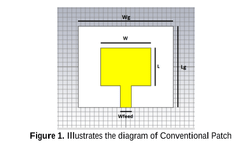
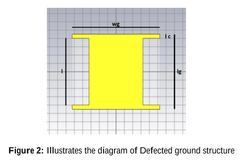
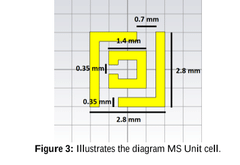
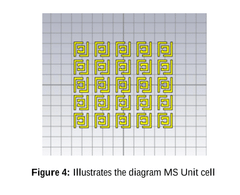
Design and implementation of vivaldi stepped patch antenna for UWB applications
PatentPendingIN202241036394A
Innovation
- A compact Vivaldi stepped patch antenna design featuring an L-shaped slot radiator within a square region on an H-shaped patch, fabricated using FR4 substrate, with a feeding network and radiation box, optimized through parametric studies and simulation using HFSS to achieve symmetric radiation patterns and efficient signal transmission.


Electromagnetic Compatibility Standards for Reflectarrays
Electromagnetic compatibility (EMC) standards for reflectarray antennas represent a critical regulatory framework that governs the design, deployment, and operation of these advanced antenna systems. These standards ensure that reflectarrays operate within acceptable electromagnetic interference limits while maintaining optimal beam efficiency performance. The primary international standards include IEC 61000 series, CISPR publications, and regional regulations such as FCC Part 15 in the United States and ETSI standards in Europe.
The fundamental EMC requirements for reflectarrays encompass both emission and immunity criteria. Emission standards limit the unwanted electromagnetic energy radiated by the antenna system, particularly focusing on spurious emissions, harmonic content, and out-of-band radiation. These limitations directly impact beam efficiency calculations in HFSS simulations, as designers must account for power losses through unwanted radiation channels. The immunity standards ensure that reflectarrays maintain performance integrity when exposed to external electromagnetic disturbances.
Specific frequency-dependent regulations significantly influence reflectarray design parameters. For satellite communication applications operating in Ku and Ka bands, ITU Radio Regulations define strict antenna pattern envelope requirements and cross-polarization discrimination limits. These constraints affect the optimization algorithms used in HFSS for achieving maximum beam efficiency while maintaining regulatory compliance. The antenna gain-to-temperature ratio specifications also impose design trade-offs between efficiency maximization and EMC adherence.
Testing and verification procedures outlined in EMC standards require comprehensive electromagnetic field measurements that complement HFSS simulation results. Standard test methods include radiated emission measurements in anechoic chambers, conducted emission testing, and immunity assessments under various interference scenarios. These experimental validations are essential for correlating simulated beam efficiency metrics with real-world performance under EMC-constrained conditions.
Emerging EMC challenges for reflectarrays include 5G spectrum coexistence requirements, satellite constellation interference mitigation, and adaptive beamforming compliance. Future standard developments are addressing dynamic spectrum access scenarios where reflectarrays must maintain EMC compliance while optimizing beam efficiency across varying operational conditions. These evolving requirements necessitate advanced HFSS modeling techniques that incorporate time-domain EMC analysis alongside traditional frequency-domain efficiency calculations.
The fundamental EMC requirements for reflectarrays encompass both emission and immunity criteria. Emission standards limit the unwanted electromagnetic energy radiated by the antenna system, particularly focusing on spurious emissions, harmonic content, and out-of-band radiation. These limitations directly impact beam efficiency calculations in HFSS simulations, as designers must account for power losses through unwanted radiation channels. The immunity standards ensure that reflectarrays maintain performance integrity when exposed to external electromagnetic disturbances.
Specific frequency-dependent regulations significantly influence reflectarray design parameters. For satellite communication applications operating in Ku and Ka bands, ITU Radio Regulations define strict antenna pattern envelope requirements and cross-polarization discrimination limits. These constraints affect the optimization algorithms used in HFSS for achieving maximum beam efficiency while maintaining regulatory compliance. The antenna gain-to-temperature ratio specifications also impose design trade-offs between efficiency maximization and EMC adherence.
Testing and verification procedures outlined in EMC standards require comprehensive electromagnetic field measurements that complement HFSS simulation results. Standard test methods include radiated emission measurements in anechoic chambers, conducted emission testing, and immunity assessments under various interference scenarios. These experimental validations are essential for correlating simulated beam efficiency metrics with real-world performance under EMC-constrained conditions.
Emerging EMC challenges for reflectarrays include 5G spectrum coexistence requirements, satellite constellation interference mitigation, and adaptive beamforming compliance. Future standard developments are addressing dynamic spectrum access scenarios where reflectarrays must maintain EMC compliance while optimizing beam efficiency across varying operational conditions. These evolving requirements necessitate advanced HFSS modeling techniques that incorporate time-domain EMC analysis alongside traditional frequency-domain efficiency calculations.
Computational Resource Optimization for HFSS Simulations
Computational resource optimization represents a critical bottleneck in HFSS-based reflectarray antenna simulations, particularly when quantifying beam efficiency across multiple design parameters. The electromagnetic modeling of reflectarray structures demands substantial computational power due to the complex interaction between numerous unit cells and the requirement for high-resolution field calculations across the entire aperture.
Memory allocation emerges as the primary constraint in large-scale reflectarray simulations. A typical reflectarray antenna containing thousands of unit cells requires extensive RAM for storing the impedance matrix and field solutions. For beam efficiency calculations, the memory requirements scale exponentially with the number of elements and frequency points analyzed. Modern workstations with 64-128 GB RAM often struggle with arrays exceeding 50×50 elements when performing full-wave analysis.
Processing time optimization involves strategic mesh refinement and adaptive frequency sweeping techniques. The computational burden can be reduced by implementing hierarchical meshing strategies, where critical regions such as element edges and substrate interfaces receive finer discretization while maintaining coarser meshes in homogeneous regions. This approach typically reduces simulation time by 30-40% without compromising accuracy in beam efficiency calculations.
Parallel processing capabilities in HFSS significantly impact simulation efficiency for reflectarray analysis. Multi-core processors and distributed computing clusters can accelerate matrix solving operations, particularly beneficial for parametric studies involving beam efficiency optimization. However, the parallel efficiency diminishes beyond 16-32 cores due to communication overhead between processing nodes.
Storage requirements for comprehensive beam efficiency studies present additional challenges. Each simulation generates substantial data volumes including near-field distributions, far-field patterns, and S-parameter matrices. A complete design optimization cycle typically produces 10-50 GB of data, necessitating robust data management strategies and high-speed storage solutions to maintain workflow efficiency throughout the reflectarray development process.
Memory allocation emerges as the primary constraint in large-scale reflectarray simulations. A typical reflectarray antenna containing thousands of unit cells requires extensive RAM for storing the impedance matrix and field solutions. For beam efficiency calculations, the memory requirements scale exponentially with the number of elements and frequency points analyzed. Modern workstations with 64-128 GB RAM often struggle with arrays exceeding 50×50 elements when performing full-wave analysis.
Processing time optimization involves strategic mesh refinement and adaptive frequency sweeping techniques. The computational burden can be reduced by implementing hierarchical meshing strategies, where critical regions such as element edges and substrate interfaces receive finer discretization while maintaining coarser meshes in homogeneous regions. This approach typically reduces simulation time by 30-40% without compromising accuracy in beam efficiency calculations.
Parallel processing capabilities in HFSS significantly impact simulation efficiency for reflectarray analysis. Multi-core processors and distributed computing clusters can accelerate matrix solving operations, particularly beneficial for parametric studies involving beam efficiency optimization. However, the parallel efficiency diminishes beyond 16-32 cores due to communication overhead between processing nodes.
Storage requirements for comprehensive beam efficiency studies present additional challenges. Each simulation generates substantial data volumes including near-field distributions, far-field patterns, and S-parameter matrices. A complete design optimization cycle typically produces 10-50 GB of data, necessitating robust data management strategies and high-speed storage solutions to maintain workflow efficiency throughout the reflectarray development process.
Unlock deeper insights with Patsnap Eureka Quick Research — get a full tech report to explore trends and direct your research. Try now!
Generate Your Research Report Instantly with AI Agent
Supercharge your innovation with Patsnap Eureka AI Agent Platform!