

Optimize Antenna Phase Panels in Reflectarray Designs for Microwave Links
MAY 12, 20269 MIN READ
Generate Your Research Report Instantly with AI Agent
Patsnap Eureka helps you evaluate technical feasibility & market potential.
Reflectarray Antenna Technology Background and Objectives
Reflectarray antenna technology emerged in the 1960s as a revolutionary approach to combine the advantages of both parabolic reflectors and phased arrays. This hybrid technology utilizes a planar array of reflecting elements, each designed to provide specific phase shifts to incident electromagnetic waves, thereby achieving beam steering and shaping capabilities without the complexity of traditional feed networks. The fundamental principle relies on spatially varying the reflection phase across the aperture to synthesize desired radiation patterns.
The evolution of reflectarray technology has been driven by the increasing demand for high-performance, cost-effective antenna solutions in satellite communications, radar systems, and wireless networks. Early implementations utilized simple patch elements with varying dimensions to achieve phase control, but modern designs incorporate sophisticated element geometries, multi-layer structures, and active components to enhance performance and functionality.
Contemporary reflectarray designs face significant challenges in optimizing antenna phase panels, particularly for microwave link applications where precise beam control and high efficiency are paramount. The primary technical objective centers on developing advanced phase compensation techniques that can accurately control the reflection phase of individual elements while maintaining broadband performance and minimizing losses.
The optimization of antenna phase panels involves addressing several critical parameters including element spacing, substrate characteristics, and inter-element coupling effects. Modern microwave link applications demand enhanced bandwidth capabilities, improved cross-polarization performance, and reduced side lobe levels, necessitating sophisticated design methodologies that can simultaneously optimize multiple performance metrics.
Current research objectives focus on developing intelligent phase panel designs that can adapt to varying operational requirements while maintaining structural simplicity and manufacturing feasibility. The integration of metamaterial concepts, reconfigurable elements, and advanced computational optimization algorithms represents the forefront of reflectarray phase panel development.
The ultimate goal of optimizing antenna phase panels in reflectarray designs is to achieve superior radiation performance, enhanced operational flexibility, and reduced system complexity compared to conventional antenna technologies, thereby enabling next-generation microwave communication systems with improved efficiency and reliability.
The evolution of reflectarray technology has been driven by the increasing demand for high-performance, cost-effective antenna solutions in satellite communications, radar systems, and wireless networks. Early implementations utilized simple patch elements with varying dimensions to achieve phase control, but modern designs incorporate sophisticated element geometries, multi-layer structures, and active components to enhance performance and functionality.
Contemporary reflectarray designs face significant challenges in optimizing antenna phase panels, particularly for microwave link applications where precise beam control and high efficiency are paramount. The primary technical objective centers on developing advanced phase compensation techniques that can accurately control the reflection phase of individual elements while maintaining broadband performance and minimizing losses.
The optimization of antenna phase panels involves addressing several critical parameters including element spacing, substrate characteristics, and inter-element coupling effects. Modern microwave link applications demand enhanced bandwidth capabilities, improved cross-polarization performance, and reduced side lobe levels, necessitating sophisticated design methodologies that can simultaneously optimize multiple performance metrics.
Current research objectives focus on developing intelligent phase panel designs that can adapt to varying operational requirements while maintaining structural simplicity and manufacturing feasibility. The integration of metamaterial concepts, reconfigurable elements, and advanced computational optimization algorithms represents the forefront of reflectarray phase panel development.
The ultimate goal of optimizing antenna phase panels in reflectarray designs is to achieve superior radiation performance, enhanced operational flexibility, and reduced system complexity compared to conventional antenna technologies, thereby enabling next-generation microwave communication systems with improved efficiency and reliability.
Market Demand for Advanced Microwave Communication Systems
The global microwave communication systems market is experiencing unprecedented growth driven by the exponential increase in data traffic and the deployment of next-generation wireless networks. The proliferation of 5G infrastructure, satellite communications, and Internet of Things applications has created substantial demand for high-performance microwave links that require advanced antenna technologies. Traditional parabolic reflector antennas are increasingly being challenged by the need for more compact, lightweight, and electronically steerable solutions.
Reflectarray antennas have emerged as a compelling alternative to conventional antenna systems, offering significant advantages in terms of manufacturing cost, weight reduction, and design flexibility. The market demand for these systems is particularly strong in telecommunications infrastructure, where operators seek to optimize network performance while reducing operational expenses. The ability to achieve precise beam steering and pattern control through optimized phase panel configurations has become a critical requirement for modern microwave communication systems.
The aerospace and defense sectors represent another major demand driver, where reflectarray technology enables the development of conformal antenna systems for aircraft, unmanned aerial vehicles, and satellite platforms. The growing emphasis on electronic warfare capabilities and secure communications has intensified the need for adaptive antenna systems that can dynamically adjust their radiation characteristics. Military applications particularly value the low-profile nature of reflectarray designs, which reduce radar cross-section while maintaining high gain performance.
Satellite communication operators are increasingly adopting reflectarray technology for both ground-based and space-based applications. The demand for high-throughput satellites and mega-constellation deployments has created opportunities for lightweight, cost-effective antenna solutions that can be mass-produced with consistent performance characteristics. The ability to integrate multiple beams and frequency bands within a single reflectarray structure addresses the growing complexity of modern satellite communication requirements.
The commercial wireless infrastructure market continues to drive demand for advanced microwave systems, particularly in backhaul and fronthaul applications. Network densification strategies require antenna solutions that can operate effectively in congested RF environments while maintaining high spectral efficiency. The push toward higher frequency bands, including millimeter-wave spectrum, has created new challenges that reflectarray technology is uniquely positioned to address through its inherent bandwidth capabilities and beam-forming flexibility.
Reflectarray antennas have emerged as a compelling alternative to conventional antenna systems, offering significant advantages in terms of manufacturing cost, weight reduction, and design flexibility. The market demand for these systems is particularly strong in telecommunications infrastructure, where operators seek to optimize network performance while reducing operational expenses. The ability to achieve precise beam steering and pattern control through optimized phase panel configurations has become a critical requirement for modern microwave communication systems.
The aerospace and defense sectors represent another major demand driver, where reflectarray technology enables the development of conformal antenna systems for aircraft, unmanned aerial vehicles, and satellite platforms. The growing emphasis on electronic warfare capabilities and secure communications has intensified the need for adaptive antenna systems that can dynamically adjust their radiation characteristics. Military applications particularly value the low-profile nature of reflectarray designs, which reduce radar cross-section while maintaining high gain performance.
Satellite communication operators are increasingly adopting reflectarray technology for both ground-based and space-based applications. The demand for high-throughput satellites and mega-constellation deployments has created opportunities for lightweight, cost-effective antenna solutions that can be mass-produced with consistent performance characteristics. The ability to integrate multiple beams and frequency bands within a single reflectarray structure addresses the growing complexity of modern satellite communication requirements.
The commercial wireless infrastructure market continues to drive demand for advanced microwave systems, particularly in backhaul and fronthaul applications. Network densification strategies require antenna solutions that can operate effectively in congested RF environments while maintaining high spectral efficiency. The push toward higher frequency bands, including millimeter-wave spectrum, has created new challenges that reflectarray technology is uniquely positioned to address through its inherent bandwidth capabilities and beam-forming flexibility.
Current State and Challenges in Phase Panel Optimization
Reflectarray antenna technology has reached a mature stage in fundamental design principles, yet significant challenges persist in optimizing phase panel configurations for microwave communication links. Current reflectarray systems typically employ unit cell elements arranged in periodic or quasi-periodic patterns, with phase control achieved through geometric variations in patch dimensions, stub lengths, or variable rotation angles. The predominant approaches include variable-sized patches, Phoenix cells, and ring elements, each offering distinct advantages in terms of bandwidth, polarization control, and manufacturing complexity.
The state-of-the-art phase panel optimization techniques primarily rely on electromagnetic simulation tools combined with optimization algorithms such as genetic algorithms, particle swarm optimization, and differential evolution. These methods have demonstrated effectiveness in achieving desired radiation patterns and beam steering capabilities. However, computational complexity remains a significant bottleneck, particularly for large-scale arrays exceeding 1000 elements, where full-wave electromagnetic analysis becomes prohibitively time-consuming.
Manufacturing tolerances present another critical challenge in phase panel optimization. Current fabrication processes introduce variations in element dimensions, substrate thickness, and dielectric properties that can significantly degrade array performance. The sensitivity of reflectarray elements to these manufacturing imperfections varies considerably across different unit cell topologies, with some designs exhibiting robust performance while others show dramatic degradation under similar tolerance conditions.
Bandwidth limitations constitute a fundamental constraint in existing phase panel designs. Most conventional reflectarray configurations suffer from narrow operational bandwidths, typically ranging from 5% to 15% fractional bandwidth. This limitation stems from the inherent frequency-dependent phase response of unit cell elements and the fixed geometric compensation required for spatial phase distribution. Multi-layer configurations and frequency-selective surfaces have been explored to address this issue, but they introduce additional complexity in optimization procedures.
Cross-polarization suppression remains inadequately addressed in current optimization frameworks. While many algorithms focus on co-polarized radiation pattern synthesis, the simultaneous control of cross-polarized components often receives insufficient attention, leading to degraded polarization purity in practical implementations. This challenge becomes particularly pronounced in dual-polarized applications and wide-angle scanning scenarios.
The integration of active elements for enhanced functionality introduces additional optimization complexities that current methodologies struggle to address comprehensively. Active reflectarrays incorporating varactors, PIN diodes, or MEMS switches require optimization strategies that account for nonlinear device characteristics, bias network design, and power consumption constraints simultaneously with electromagnetic performance objectives.
The state-of-the-art phase panel optimization techniques primarily rely on electromagnetic simulation tools combined with optimization algorithms such as genetic algorithms, particle swarm optimization, and differential evolution. These methods have demonstrated effectiveness in achieving desired radiation patterns and beam steering capabilities. However, computational complexity remains a significant bottleneck, particularly for large-scale arrays exceeding 1000 elements, where full-wave electromagnetic analysis becomes prohibitively time-consuming.
Manufacturing tolerances present another critical challenge in phase panel optimization. Current fabrication processes introduce variations in element dimensions, substrate thickness, and dielectric properties that can significantly degrade array performance. The sensitivity of reflectarray elements to these manufacturing imperfections varies considerably across different unit cell topologies, with some designs exhibiting robust performance while others show dramatic degradation under similar tolerance conditions.
Bandwidth limitations constitute a fundamental constraint in existing phase panel designs. Most conventional reflectarray configurations suffer from narrow operational bandwidths, typically ranging from 5% to 15% fractional bandwidth. This limitation stems from the inherent frequency-dependent phase response of unit cell elements and the fixed geometric compensation required for spatial phase distribution. Multi-layer configurations and frequency-selective surfaces have been explored to address this issue, but they introduce additional complexity in optimization procedures.
Cross-polarization suppression remains inadequately addressed in current optimization frameworks. While many algorithms focus on co-polarized radiation pattern synthesis, the simultaneous control of cross-polarized components often receives insufficient attention, leading to degraded polarization purity in practical implementations. This challenge becomes particularly pronounced in dual-polarized applications and wide-angle scanning scenarios.
The integration of active elements for enhanced functionality introduces additional optimization complexities that current methodologies struggle to address comprehensively. Active reflectarrays incorporating varactors, PIN diodes, or MEMS switches require optimization strategies that account for nonlinear device characteristics, bias network design, and power consumption constraints simultaneously with electromagnetic performance objectives.
Existing Phase Panel Optimization Solutions
01 Phase shifting elements and unit cell design
Reflectarray antennas utilize phase shifting elements as unit cells to control the phase of reflected electromagnetic waves. These elements can be designed with various geometries and configurations to achieve desired phase characteristics across the antenna aperture. The unit cells are arranged in a periodic array structure where each element provides specific phase shifts to create the required beam pattern.- Phase shifting elements and unit cell design: Reflectarray antennas utilize specialized phase shifting elements and unit cell configurations to control the phase of reflected electromagnetic waves. These elements can be implemented using various geometries including patches, slots, and variable-sized elements that provide the necessary phase variation across the array aperture. The unit cell design is critical for achieving the desired phase response and bandwidth characteristics.
- Variable geometry and tunable phase control: Advanced reflectarray designs incorporate variable geometry elements or tunable components to achieve dynamic phase control. These systems can adjust the phase response in real-time or provide enhanced bandwidth performance through optimized element shapes and configurations. The variable nature allows for beam steering and adaptive antenna characteristics.
- Multi-layer and stacked element configurations: Multi-layer reflectarray architectures employ stacked elements or multiple substrate layers to enhance phase control range and bandwidth performance. These configurations can provide improved phase linearity and reduced phase errors across the operating frequency band. The stacked approach allows for more complex phase responses and better impedance matching.
- Phase compensation and error correction techniques: Sophisticated phase compensation methods are employed to minimize phase errors and improve the overall performance of reflectarray antennas. These techniques include mathematical algorithms for phase synthesis, error correction mechanisms, and optimization procedures that account for mutual coupling effects and manufacturing tolerances to achieve accurate phase distribution.
- Broadband and frequency-independent phase elements: Specialized element designs focus on achieving broadband operation with frequency-independent or slowly varying phase characteristics. These approaches utilize novel geometries, metamaterial concepts, or multi-resonant structures to maintain consistent phase performance across wide frequency ranges, enabling wideband reflectarray operation with stable beam characteristics.
02 Variable geometry phase control mechanisms
Phase control in reflectarray systems can be achieved through variable geometry approaches where the physical dimensions or shapes of reflecting elements are modified to produce different phase responses. This method allows for precise phase tuning across the array aperture without requiring active components, making it suitable for passive beam steering applications.Expand Specific Solutions03 Multi-layer and stacked patch configurations
Advanced reflectarray designs employ multi-layer structures and stacked patch configurations to enhance phase control capabilities and bandwidth performance. These configurations provide additional degrees of freedom for phase manipulation while maintaining compact form factors and improved frequency response characteristics.Expand Specific Solutions04 Electronic phase control and tunable elements
Electronic phase control systems incorporate tunable elements such as varactors, PIN diodes, or other active components to dynamically adjust the phase response of individual array elements. This approach enables real-time beam steering and adaptive antenna performance without mechanical movement of the reflectarray structure.Expand Specific Solutions05 Broadband and frequency-selective phase designs
Specialized phase panel designs focus on achieving broadband operation or frequency-selective behavior in reflectarray systems. These approaches utilize advanced element geometries, frequency selective surfaces, or multi-resonant structures to maintain consistent phase performance across wide frequency ranges or provide selective response at specific frequencies.Expand Specific Solutions
Key Players in Reflectarray and Microwave Antenna Industry
The reflectarray antenna phase panel optimization field represents a mature yet evolving sector within microwave communications technology. The industry is experiencing steady growth driven by increasing demand for satellite communications, 5G infrastructure, and automotive radar applications. Market expansion is particularly notable in aerospace and telecommunications sectors, with estimated values reaching several billion dollars globally. Technology maturity varies significantly across different applications, with established players like Thales SA, Mitsubishi Electric Corp., and QUALCOMM demonstrating advanced commercial implementations, while research institutions including Southeast University, Xidian University, and CNRS continue pushing theoretical boundaries. Companies such as Metawave Corp. and ViaSat represent emerging innovators focusing on adaptive metamaterials and satellite communications respectively. The competitive landscape shows a clear division between established defense contractors like Thales and technology giants such as Samsung Electronics and Qualcomm who leverage extensive R&D capabilities, versus specialized firms and academic institutions driving fundamental research advances in phase control algorithms and antenna design optimization.
Thales SA
Technical Solution: Thales has developed advanced reflectarray antenna systems utilizing electronically steerable phase control technology for satellite communications and radar applications. Their approach incorporates variable impedance surface elements with integrated phase shifters that can dynamically adjust beam direction and shape. The company's reflectarray designs feature multi-layer printed circuit board structures with microstrip patch elements, enabling precise phase control across the aperture. Their systems achieve beam steering capabilities of ±45 degrees with minimal gain loss and support dual-polarization operation for enhanced link capacity in microwave communication systems.
Strengths: Proven track record in aerospace applications, robust phase control algorithms, excellent beam steering range. Weaknesses: Higher manufacturing complexity, increased power consumption for active elements.
Mitsubishi Electric Corp.
Technical Solution: Mitsubishi Electric has developed innovative reflectarray antenna solutions focusing on cost-effective manufacturing and reliable performance for terrestrial microwave links. Their technology employs printed dipole elements with variable-length stubs to achieve the required phase distribution across the reflectarray surface. The company's designs utilize advanced electromagnetic modeling techniques to optimize element spacing and minimize cross-polarization effects. Their reflectarray systems incorporate weather-resistant materials and coatings specifically designed for outdoor microwave communication applications, ensuring long-term reliability in harsh environmental conditions while maintaining consistent phase performance.
Strengths: Cost-effective manufacturing processes, excellent environmental durability, low maintenance requirements. Weaknesses: Limited bandwidth compared to active solutions, fixed beam configuration in passive designs.
Core Innovations in Reflectarray Phase Control Methods
Phase-shifting cell for an antenna reflectarray
PatentInactiveUS7042397B2
Innovation
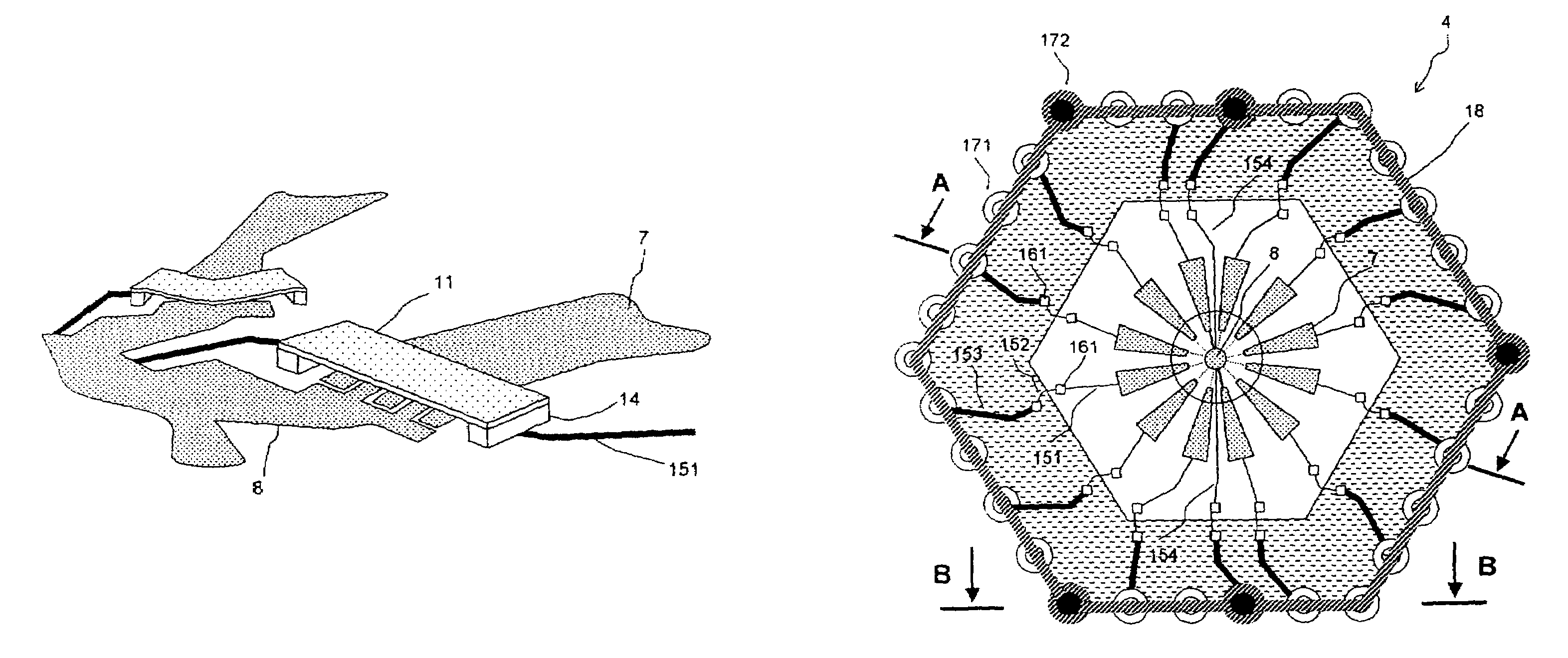
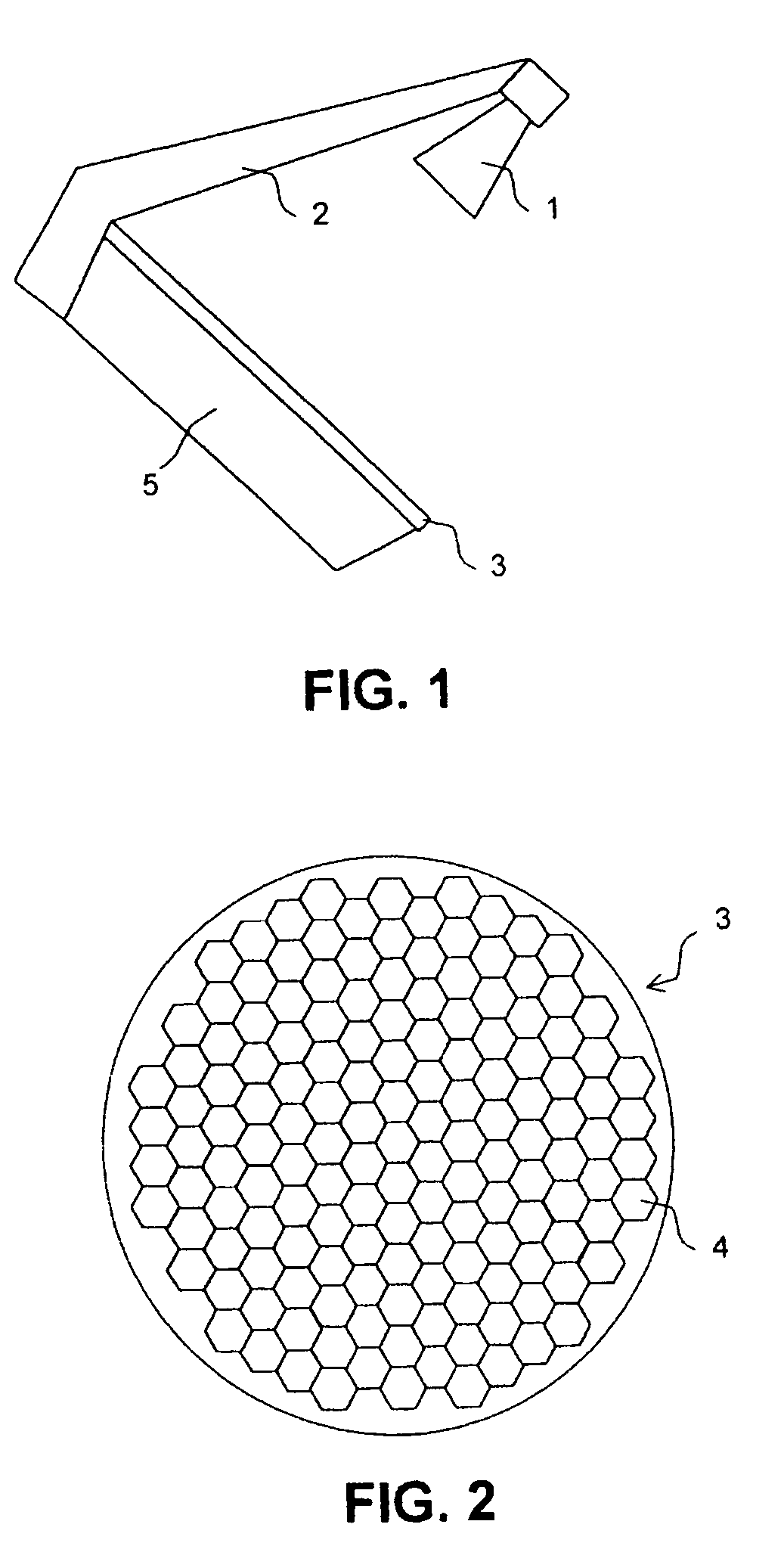
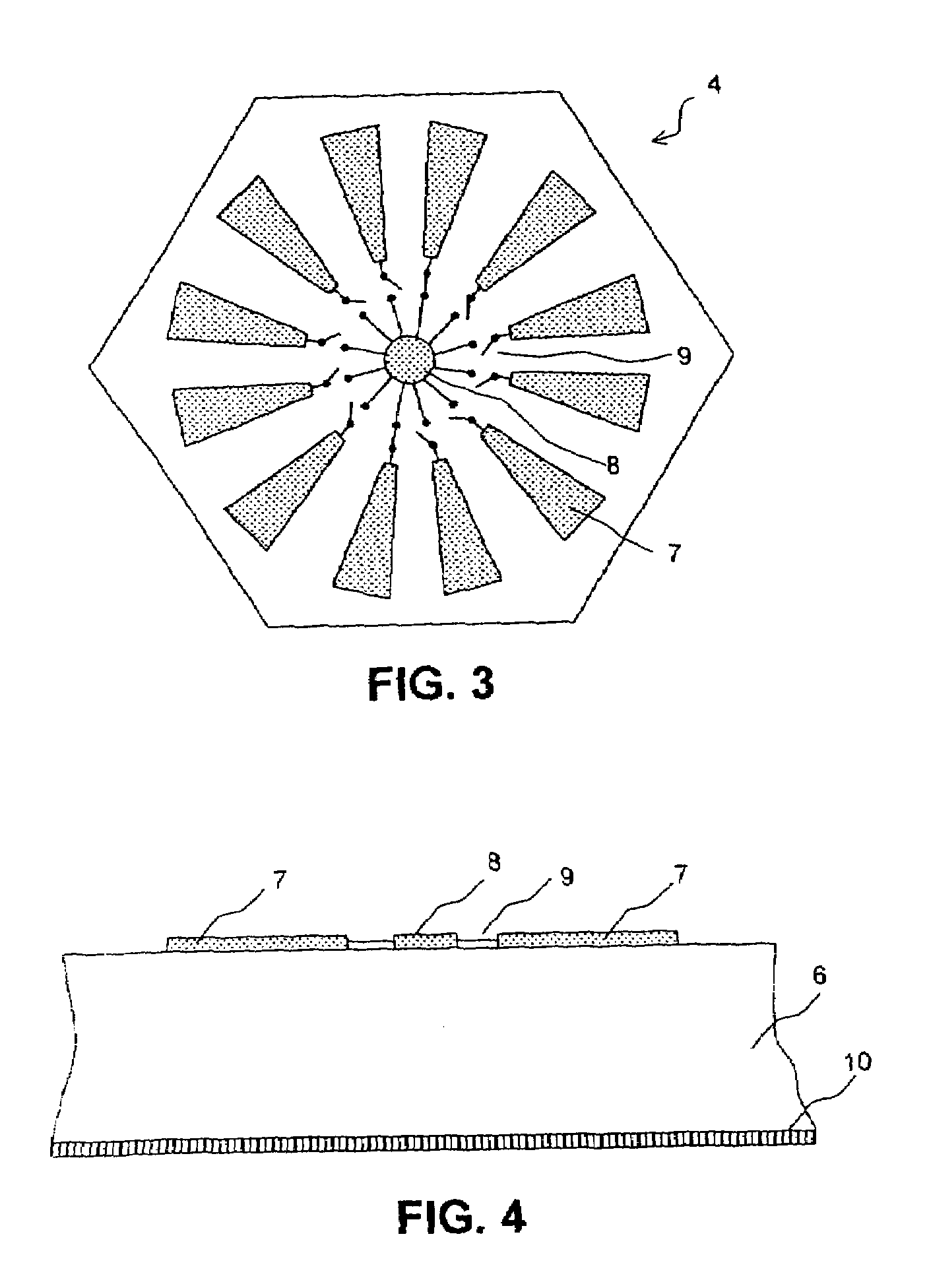
- The use of microelectromechanical switching devices with flexible membranes and capacitive switching mechanisms allows for wavelength-independent phase shifting, reducing power consumption and improving reliability by enabling efficient control of phase shifts in a reconfigurable reflectarray antenna.

Antenna with variable phase shift
PatentInactiveUS6774851B1
Innovation
- The antenna employs a dielectric substrate with microstrip patches and a periodic configuration of slots of varying lengths on the ground plane, where the phase shift is optically controlled by adjusting the slot length using photo-induced plasma effects in a semiconductor substrate, allowing for dynamic phase adjustment and beam manipulation.


Electromagnetic Compatibility Standards for Microwave Systems
Electromagnetic compatibility standards for microwave systems operating in reflectarray antenna applications represent a critical regulatory framework that governs interference mitigation and signal integrity. These standards establish mandatory compliance requirements for microwave link systems, particularly those utilizing optimized antenna phase panels in reflectarray configurations. The primary regulatory bodies including the Federal Communications Commission, International Telecommunication Union, and European Telecommunications Standards Institute have developed comprehensive guidelines addressing spurious emissions, harmonic distortion, and adjacent channel interference limits.
The fundamental EMC requirements for reflectarray-based microwave systems encompass both conducted and radiated emission standards. Conducted emissions typically must remain below -13 dBm for frequencies between 150 kHz and 30 MHz, while radiated emissions face stringent limits ranging from 30 to 40 dB above one microvolt per meter depending on the operational frequency band. These specifications become particularly challenging when implementing phase-optimized reflectarray designs, as the complex phase distribution across antenna elements can generate unexpected harmonic content and cross-polarization effects.
Immunity standards constitute another essential aspect of EMC compliance for microwave reflectarray systems. The equipment must demonstrate resilience against electromagnetic interference from external sources, including radar systems, cellular networks, and industrial equipment. Standard immunity test levels require systems to maintain operational performance when subjected to field strengths up to 10 V/m across frequency ranges from 80 MHz to 6 GHz, with specific attention to potential resonance frequencies that may coincide with reflectarray element dimensions.
Measurement methodologies for EMC compliance verification in reflectarray systems require specialized test configurations due to the directional nature of these antennas. Traditional EMC test chambers may not adequately capture the complex radiation patterns generated by phase-optimized reflectarray designs. Consequently, modified test procedures incorporating near-field scanning techniques and computational electromagnetic modeling have been developed to ensure accurate compliance assessment while accounting for the unique electromagnetic characteristics of reflectarray antenna systems.
The fundamental EMC requirements for reflectarray-based microwave systems encompass both conducted and radiated emission standards. Conducted emissions typically must remain below -13 dBm for frequencies between 150 kHz and 30 MHz, while radiated emissions face stringent limits ranging from 30 to 40 dB above one microvolt per meter depending on the operational frequency band. These specifications become particularly challenging when implementing phase-optimized reflectarray designs, as the complex phase distribution across antenna elements can generate unexpected harmonic content and cross-polarization effects.
Immunity standards constitute another essential aspect of EMC compliance for microwave reflectarray systems. The equipment must demonstrate resilience against electromagnetic interference from external sources, including radar systems, cellular networks, and industrial equipment. Standard immunity test levels require systems to maintain operational performance when subjected to field strengths up to 10 V/m across frequency ranges from 80 MHz to 6 GHz, with specific attention to potential resonance frequencies that may coincide with reflectarray element dimensions.
Measurement methodologies for EMC compliance verification in reflectarray systems require specialized test configurations due to the directional nature of these antennas. Traditional EMC test chambers may not adequately capture the complex radiation patterns generated by phase-optimized reflectarray designs. Consequently, modified test procedures incorporating near-field scanning techniques and computational electromagnetic modeling have been developed to ensure accurate compliance assessment while accounting for the unique electromagnetic characteristics of reflectarray antenna systems.
Manufacturing Scalability for Commercial Reflectarray Production
Manufacturing scalability represents a critical bottleneck in transitioning reflectarray antenna technology from laboratory prototypes to commercially viable products for microwave communication systems. The complex geometric patterns and precise dimensional tolerances required for phase panel optimization present unique challenges that traditional antenna manufacturing processes cannot adequately address at scale.
Current manufacturing approaches for reflectarray antennas rely heavily on printed circuit board (PCB) fabrication techniques, which offer excellent precision for small-scale prototypes but face significant limitations when scaling to larger production volumes. The intricate metallic patterns required for phase control elements demand sub-millimeter accuracy across potentially large aperture sizes, creating yield challenges that increase exponentially with antenna dimensions. Advanced lithographic processes, while capable of achieving the necessary precision, introduce substantial cost penalties that limit commercial viability.
Additive manufacturing technologies present promising alternatives for scalable reflectarray production, particularly for complex three-dimensional phase panel geometries. Direct metal laser sintering and selective laser melting processes enable the fabrication of integrated reflectarray structures with embedded phase control elements, potentially reducing assembly complexity and improving manufacturing consistency. However, these technologies currently face limitations in achieving the surface finish quality and dimensional accuracy required for optimal microwave performance.
The integration of automated assembly processes becomes essential for commercial-scale production, particularly for modular reflectarray designs where individual phase panels can be manufactured separately and assembled into larger arrays. Robotic placement systems with vision-guided alignment capabilities offer potential solutions for maintaining the precise positioning tolerances required across large aperture arrays while enabling cost-effective mass production.
Material considerations significantly impact manufacturing scalability, as traditional substrate materials may not be optimally suited for high-volume production processes. The development of specialized dielectric materials with consistent electrical properties and improved manufacturability characteristics represents a key enabler for commercial reflectarray production. These materials must maintain stable performance characteristics across varying environmental conditions while supporting cost-effective manufacturing processes.
Quality control and testing protocols for large-scale reflectarray production require sophisticated measurement systems capable of verifying phase panel performance across the entire aperture. Automated near-field scanning systems and integrated self-test capabilities become essential for ensuring consistent product quality while maintaining production throughput rates compatible with commercial requirements.
Current manufacturing approaches for reflectarray antennas rely heavily on printed circuit board (PCB) fabrication techniques, which offer excellent precision for small-scale prototypes but face significant limitations when scaling to larger production volumes. The intricate metallic patterns required for phase control elements demand sub-millimeter accuracy across potentially large aperture sizes, creating yield challenges that increase exponentially with antenna dimensions. Advanced lithographic processes, while capable of achieving the necessary precision, introduce substantial cost penalties that limit commercial viability.
Additive manufacturing technologies present promising alternatives for scalable reflectarray production, particularly for complex three-dimensional phase panel geometries. Direct metal laser sintering and selective laser melting processes enable the fabrication of integrated reflectarray structures with embedded phase control elements, potentially reducing assembly complexity and improving manufacturing consistency. However, these technologies currently face limitations in achieving the surface finish quality and dimensional accuracy required for optimal microwave performance.
The integration of automated assembly processes becomes essential for commercial-scale production, particularly for modular reflectarray designs where individual phase panels can be manufactured separately and assembled into larger arrays. Robotic placement systems with vision-guided alignment capabilities offer potential solutions for maintaining the precise positioning tolerances required across large aperture arrays while enabling cost-effective mass production.
Material considerations significantly impact manufacturing scalability, as traditional substrate materials may not be optimally suited for high-volume production processes. The development of specialized dielectric materials with consistent electrical properties and improved manufacturability characteristics represents a key enabler for commercial reflectarray production. These materials must maintain stable performance characteristics across varying environmental conditions while supporting cost-effective manufacturing processes.
Quality control and testing protocols for large-scale reflectarray production require sophisticated measurement systems capable of verifying phase panel performance across the entire aperture. Automated near-field scanning systems and integrated self-test capabilities become essential for ensuring consistent product quality while maintaining production throughput rates compatible with commercial requirements.
Unlock deeper insights with Patsnap Eureka Quick Research — get a full tech report to explore trends and direct your research. Try now!
Generate Your Research Report Instantly with AI Agent
Supercharge your innovation with Patsnap Eureka AI Agent Platform!