
How to Isolate Aromatic Compounds Using Distillation
MAR 5, 20269 MIN READ
Generate Your Research Report Instantly with AI Agent
Patsnap Eureka helps you evaluate technical feasibility & market potential.
Aromatic Distillation Background and Objectives
Aromatic compounds represent a fundamental class of organic molecules characterized by their cyclic structure and delocalized π-electron systems, with benzene serving as the archetypal example. These compounds are ubiquitous in nature and industrial processes, found in essential oils, petroleum fractions, pharmaceutical intermediates, and chemical manufacturing byproducts. The isolation and purification of aromatic compounds from complex mixtures has been a persistent challenge in chemical processing since the early days of organic chemistry.
The historical development of aromatic compound separation can be traced back to the 19th century when coal tar distillation first enabled the extraction of benzene, toluene, and xylene isomers. Early practitioners relied on simple distillation techniques, but the similar boiling points of many aromatic compounds necessitated the evolution of more sophisticated separation methods. The advent of fractional distillation marked a significant advancement, allowing for improved resolution between closely boiling components.
Modern distillation approaches for aromatic isolation have evolved to encompass various specialized techniques including vacuum distillation, steam distillation, azeotropic distillation, and extractive distillation. Each method addresses specific challenges associated with aromatic compound properties such as thermal sensitivity, formation of azeotropes with other components, and the narrow boiling point differences between structural isomers.
The primary technical objectives in aromatic distillation focus on achieving high purity levels while maintaining acceptable recovery rates and minimizing thermal degradation. Key performance targets typically include achieving purities exceeding 99% for commodity aromatics like benzene and toluene, while managing energy consumption and operational costs. Advanced process control and optimization strategies aim to maximize separation efficiency while preventing the formation of unwanted byproducts through thermal cracking or polymerization reactions.
Contemporary research directions emphasize the integration of process intensification principles, including the development of structured packing materials, advanced column internals, and hybrid separation processes that combine distillation with other unit operations. These innovations target enhanced mass transfer efficiency, reduced energy requirements, and improved selectivity for challenging separations involving aromatic compounds with similar volatilities or those forming complex azeotropic systems.
The historical development of aromatic compound separation can be traced back to the 19th century when coal tar distillation first enabled the extraction of benzene, toluene, and xylene isomers. Early practitioners relied on simple distillation techniques, but the similar boiling points of many aromatic compounds necessitated the evolution of more sophisticated separation methods. The advent of fractional distillation marked a significant advancement, allowing for improved resolution between closely boiling components.
Modern distillation approaches for aromatic isolation have evolved to encompass various specialized techniques including vacuum distillation, steam distillation, azeotropic distillation, and extractive distillation. Each method addresses specific challenges associated with aromatic compound properties such as thermal sensitivity, formation of azeotropes with other components, and the narrow boiling point differences between structural isomers.
The primary technical objectives in aromatic distillation focus on achieving high purity levels while maintaining acceptable recovery rates and minimizing thermal degradation. Key performance targets typically include achieving purities exceeding 99% for commodity aromatics like benzene and toluene, while managing energy consumption and operational costs. Advanced process control and optimization strategies aim to maximize separation efficiency while preventing the formation of unwanted byproducts through thermal cracking or polymerization reactions.
Contemporary research directions emphasize the integration of process intensification principles, including the development of structured packing materials, advanced column internals, and hybrid separation processes that combine distillation with other unit operations. These innovations target enhanced mass transfer efficiency, reduced energy requirements, and improved selectivity for challenging separations involving aromatic compounds with similar volatilities or those forming complex azeotropic systems.
Market Demand for Aromatic Compound Separation
The global market for aromatic compound separation technologies demonstrates robust growth driven by expanding applications across multiple industrial sectors. Petrochemical industries represent the largest demand segment, requiring efficient separation of benzene, toluene, and xylene isomers from complex hydrocarbon mixtures. These compounds serve as fundamental building blocks for plastics, synthetic fibers, and specialty chemicals production.
Pharmaceutical manufacturing constitutes another significant market driver, where precise isolation of aromatic intermediates and active pharmaceutical ingredients demands high-purity separation processes. The increasing complexity of drug molecules and stringent regulatory requirements for pharmaceutical-grade compounds intensify the need for advanced distillation technologies capable of achieving exceptional separation efficiency.
The fragrance and flavor industry presents substantial opportunities for aromatic compound separation technologies. Natural essential oil processing requires sophisticated distillation methods to isolate specific aromatic molecules while preserving their organoleptic properties. Consumer preferences for natural and premium products continue to fuel demand for high-quality aromatic extracts.
Environmental regulations significantly influence market dynamics, as stricter emission standards and waste treatment requirements drive adoption of more efficient separation technologies. Industries must recover and purify aromatic compounds from waste streams, creating additional market opportunities for advanced distillation systems.
Regional market patterns reveal concentrated demand in Asia-Pacific regions, particularly China and India, where rapid industrialization and expanding chemical manufacturing capacity drive substantial growth. North American and European markets emphasize technology upgrades and efficiency improvements in existing facilities.
Emerging applications in renewable energy sectors, including bio-based aromatic compound production from lignin and other biomass sources, represent growing market segments. These applications require specialized separation technologies adapted for processing complex bio-derived feedstocks.
The market increasingly favors integrated separation solutions combining distillation with complementary technologies such as extractive distillation, membrane separation, and crystallization. This trend reflects industry demands for comprehensive processing capabilities and improved economic performance in aromatic compound isolation applications.
Pharmaceutical manufacturing constitutes another significant market driver, where precise isolation of aromatic intermediates and active pharmaceutical ingredients demands high-purity separation processes. The increasing complexity of drug molecules and stringent regulatory requirements for pharmaceutical-grade compounds intensify the need for advanced distillation technologies capable of achieving exceptional separation efficiency.
The fragrance and flavor industry presents substantial opportunities for aromatic compound separation technologies. Natural essential oil processing requires sophisticated distillation methods to isolate specific aromatic molecules while preserving their organoleptic properties. Consumer preferences for natural and premium products continue to fuel demand for high-quality aromatic extracts.
Environmental regulations significantly influence market dynamics, as stricter emission standards and waste treatment requirements drive adoption of more efficient separation technologies. Industries must recover and purify aromatic compounds from waste streams, creating additional market opportunities for advanced distillation systems.
Regional market patterns reveal concentrated demand in Asia-Pacific regions, particularly China and India, where rapid industrialization and expanding chemical manufacturing capacity drive substantial growth. North American and European markets emphasize technology upgrades and efficiency improvements in existing facilities.
Emerging applications in renewable energy sectors, including bio-based aromatic compound production from lignin and other biomass sources, represent growing market segments. These applications require specialized separation technologies adapted for processing complex bio-derived feedstocks.
The market increasingly favors integrated separation solutions combining distillation with complementary technologies such as extractive distillation, membrane separation, and crystallization. This trend reflects industry demands for comprehensive processing capabilities and improved economic performance in aromatic compound isolation applications.
Current Challenges in Aromatic Distillation Technology
The isolation of aromatic compounds through distillation faces significant technical barriers that limit industrial efficiency and product purity. Traditional distillation methods struggle with the close boiling points of many aromatic compounds, particularly in complex mixtures containing benzene, toluene, xylene isomers, and other substituted aromatics. The narrow temperature differences, often less than 10°C between components, create substantial separation challenges that conventional distillation columns cannot adequately address.
Thermodynamic limitations present another critical obstacle in aromatic compound separation. Many aromatic mixtures exhibit non-ideal behavior, forming azeotropes that prevent complete separation through simple distillation. The formation of minimum and maximum boiling azeotropes, particularly in systems containing water or alcohols with aromatics, requires specialized separation techniques that significantly increase process complexity and energy consumption.
Energy efficiency remains a paramount concern in current aromatic distillation processes. The high reflux ratios required for adequate separation of close-boiling aromatics result in substantial energy penalties, with some processes consuming 3-5 times more energy than theoretical minimum requirements. Heat integration challenges and the need for precise temperature control across multiple distillation stages further compound energy consumption issues.
Equipment design constraints significantly impact separation performance. Traditional tray and packed column designs often lack the theoretical stages necessary for sharp separations between aromatic compounds. Mass transfer limitations, particularly in high-viscosity aromatic systems, reduce column efficiency and require oversized equipment to achieve desired separation specifications.
Process control complexity represents another major challenge in aromatic distillation operations. The sensitivity of aromatic separations to minor variations in temperature, pressure, and feed composition demands sophisticated control systems. Maintaining product specifications while optimizing energy consumption requires advanced process control strategies that many facilities struggle to implement effectively.
Environmental and safety considerations add additional layers of complexity to aromatic distillation processes. Volatile organic compound emissions, thermal degradation of heat-sensitive aromatics, and the handling of potentially carcinogenic compounds require specialized equipment and operational procedures that increase both capital and operating costs while potentially limiting process optimization opportunities.
Thermodynamic limitations present another critical obstacle in aromatic compound separation. Many aromatic mixtures exhibit non-ideal behavior, forming azeotropes that prevent complete separation through simple distillation. The formation of minimum and maximum boiling azeotropes, particularly in systems containing water or alcohols with aromatics, requires specialized separation techniques that significantly increase process complexity and energy consumption.
Energy efficiency remains a paramount concern in current aromatic distillation processes. The high reflux ratios required for adequate separation of close-boiling aromatics result in substantial energy penalties, with some processes consuming 3-5 times more energy than theoretical minimum requirements. Heat integration challenges and the need for precise temperature control across multiple distillation stages further compound energy consumption issues.
Equipment design constraints significantly impact separation performance. Traditional tray and packed column designs often lack the theoretical stages necessary for sharp separations between aromatic compounds. Mass transfer limitations, particularly in high-viscosity aromatic systems, reduce column efficiency and require oversized equipment to achieve desired separation specifications.
Process control complexity represents another major challenge in aromatic distillation operations. The sensitivity of aromatic separations to minor variations in temperature, pressure, and feed composition demands sophisticated control systems. Maintaining product specifications while optimizing energy consumption requires advanced process control strategies that many facilities struggle to implement effectively.
Environmental and safety considerations add additional layers of complexity to aromatic distillation processes. Volatile organic compound emissions, thermal degradation of heat-sensitive aromatics, and the handling of potentially carcinogenic compounds require specialized equipment and operational procedures that increase both capital and operating costs while potentially limiting process optimization opportunities.
Existing Aromatic Distillation Methods
01 Aromatic compounds as intermediates in chemical synthesis
Aromatic compounds serve as key intermediates in various chemical synthesis processes. These compounds can be used to produce a wide range of chemical products through reactions such as halogenation, nitration, sulfonation, and alkylation. The aromatic ring structure provides stability and reactivity that makes these compounds valuable building blocks in pharmaceutical, agrochemical, and industrial chemical manufacturing.- Synthesis and preparation methods of aromatic compounds: Various methods for synthesizing aromatic compounds include catalytic processes, oxidation reactions, and chemical transformations of precursor materials. These methods focus on efficient production routes, controlling reaction conditions such as temperature and pressure, and utilizing specific catalysts to achieve desired aromatic structures. The processes may involve ring formation, substitution reactions, or modification of existing aromatic systems to produce target compounds with specific properties.
- Aromatic compounds as intermediates in pharmaceutical applications: Aromatic compounds serve as key intermediates in the synthesis of pharmaceutical products and active ingredients. These compounds provide structural frameworks that can be modified to create therapeutic agents with desired biological activities. The aromatic structures offer stability and specific binding properties that are essential for drug development. Various substitution patterns on aromatic rings enable the creation of diverse pharmaceutical compounds with different pharmacological profiles.
- Functionalized aromatic compounds with specific substituents: Development of aromatic compounds bearing specific functional groups such as halogens, hydroxyl groups, alkyl chains, or other substituents to achieve desired chemical and physical properties. These functionalized aromatics can be tailored for specific applications by controlling the position and nature of substituents on the aromatic ring. The substitution patterns influence reactivity, solubility, and interaction with other molecules, making them valuable for various industrial and research applications.
- Aromatic compounds in polymer and material science: Aromatic compounds are utilized as building blocks or additives in polymer synthesis and material formulations. These compounds contribute to enhanced thermal stability, mechanical strength, and chemical resistance of polymeric materials. Aromatic structures can be incorporated into polymer backbones or used as cross-linking agents to improve material properties. Applications include high-performance plastics, coatings, and composite materials where aromatic moieties provide structural integrity and durability.
- Purification and isolation techniques for aromatic compounds: Methods for purifying and isolating aromatic compounds from reaction mixtures or natural sources involve various separation techniques. These include distillation, crystallization, chromatography, and extraction processes designed to obtain high-purity aromatic products. The purification strategies account for the physical and chemical properties of aromatic compounds such as boiling points, solubility characteristics, and stability. Efficient isolation methods are critical for obtaining aromatic compounds suitable for further applications or analysis.
02 Substituted aromatic compounds with functional groups
Aromatic compounds containing various functional groups such as hydroxyl, amino, carboxyl, or halogen substituents exhibit enhanced chemical properties and reactivity. These substituted aromatic compounds can be utilized in specialized applications where specific chemical characteristics are required. The position and type of substituents on the aromatic ring significantly influence the compound's physical and chemical properties, making them suitable for targeted applications.Expand Specific Solutions03 Aromatic compounds in polymer and resin production
Aromatic compounds play a crucial role in the manufacture of polymers and resins. These compounds can be polymerized or copolymerized to create materials with desirable properties such as thermal stability, mechanical strength, and chemical resistance. The aromatic structure contributes to the rigidity and heat resistance of the resulting polymeric materials, making them suitable for high-performance applications in various industries.Expand Specific Solutions04 Heterocyclic aromatic compounds
Heterocyclic aromatic compounds contain one or more heteroatoms such as nitrogen, oxygen, or sulfur within the aromatic ring system. These compounds exhibit unique electronic properties and biological activities compared to purely carbocyclic aromatic compounds. They are particularly important in pharmaceutical chemistry and materials science, where the presence of heteroatoms can significantly modify the compound's reactivity, solubility, and interaction with biological targets.Expand Specific Solutions05 Aromatic compounds in catalytic processes
Aromatic compounds are involved in various catalytic processes either as substrates, products, or catalyst components. These processes include catalytic hydrogenation, oxidation, and coupling reactions. The aromatic ring system can undergo selective transformations under specific catalytic conditions, enabling the production of valuable chemical products with high efficiency and selectivity. Catalytic methods for aromatic compound transformation are essential in modern chemical industry for sustainable and economical production.Expand Specific Solutions
Major Players in Distillation Equipment Industry
The aromatic compound isolation through distillation technology represents a mature industrial sector experiencing steady growth driven by petrochemical and specialty chemical demands. The market demonstrates significant scale with established players spanning multiple regions and technological approaches. Technology maturity varies considerably across the competitive landscape, with companies like BASF Corp., Bayer AG, and China Petroleum & Chemical Corp. representing highly advanced, integrated operations with decades of distillation expertise. Mid-tier players including thyssenkrupp AG subsidiaries, UOP LLC, and LANXESS Deutschland GmbH offer specialized process technologies and engineering solutions. Asian companies such as SK Innovation, Asahi Kasei Corp., and LOTTE Chemical Corp. demonstrate strong regional capabilities with expanding technological sophistication. The industry shows consolidation trends with established chemical giants maintaining dominant positions while specialized engineering firms like Sulzer Management AG and research institutions including TNO provide niche technological innovations and process optimization solutions.
thyssenkrupp AG
Technical Solution: ThyssenKrupp has developed comprehensive distillation solutions for aromatic compound separation through their engineering divisions. Their technology focuses on high-efficiency packed columns and structured packing systems designed specifically for aromatic hydrocarbon separation. The process utilizes advanced vapor-liquid equilibrium modeling to optimize column design and operating conditions. Their distillation systems feature proprietary internals that enhance mass transfer efficiency, achieving theoretical stage efficiencies above 95%. The technology incorporates automated control systems for precise temperature, pressure, and reflux ratio management, enabling consistent product quality with aromatic compound purities typically exceeding 99.0%. Energy integration through heat exchangers and reboiler optimization reduces overall energy consumption by approximately 15-20% compared to conventional systems.
Strengths: Advanced column internals design, excellent mass transfer efficiency, proven engineering expertise. Weaknesses: Higher initial equipment costs, requires specialized maintenance procedures.
UOP LLC
Technical Solution: UOP has developed advanced distillation technologies specifically for aromatic compound separation, including their Sulfolane extraction process combined with distillation for BTX (benzene, toluene, xylene) separation. Their technology utilizes selective solvent extraction followed by multi-stage distillation columns with optimized tray designs and reflux ratios. The process achieves high purity aromatic compounds through precise temperature and pressure control, with typical benzene purity reaching 99.9% and toluene purity exceeding 99.8%. UOP's distillation systems incorporate heat integration and energy recovery mechanisms to minimize operational costs while maintaining separation efficiency.
Strengths: Industry-leading separation efficiency, proven commercial scale operations, comprehensive process integration. Weaknesses: High capital investment requirements, complex operational procedures requiring skilled personnel.
Advanced Distillation Technologies for Aromatics
Process for separating aromatics by extractive distillation and a composite solvent used therein
PatentInactiveUS7078580B2
Innovation
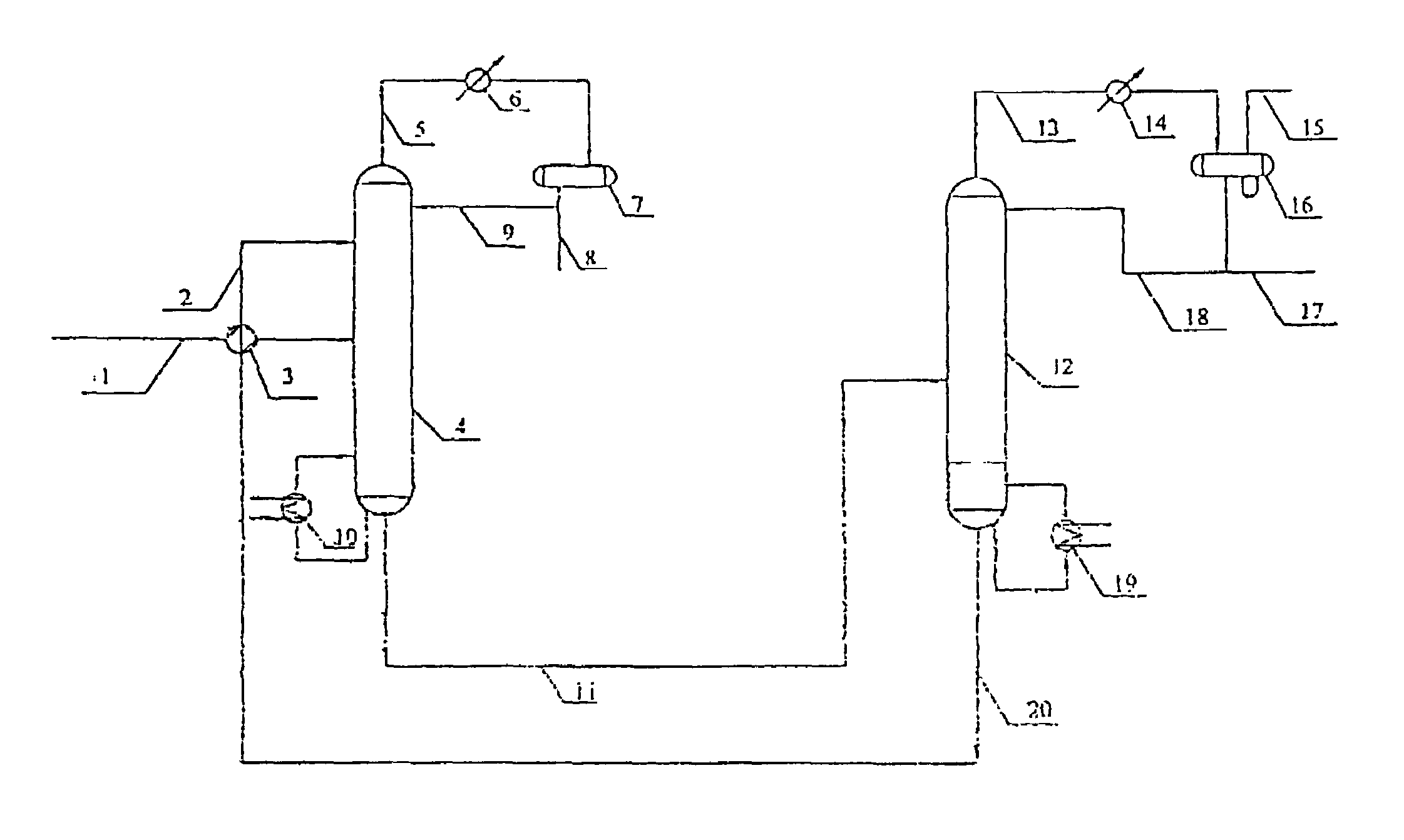
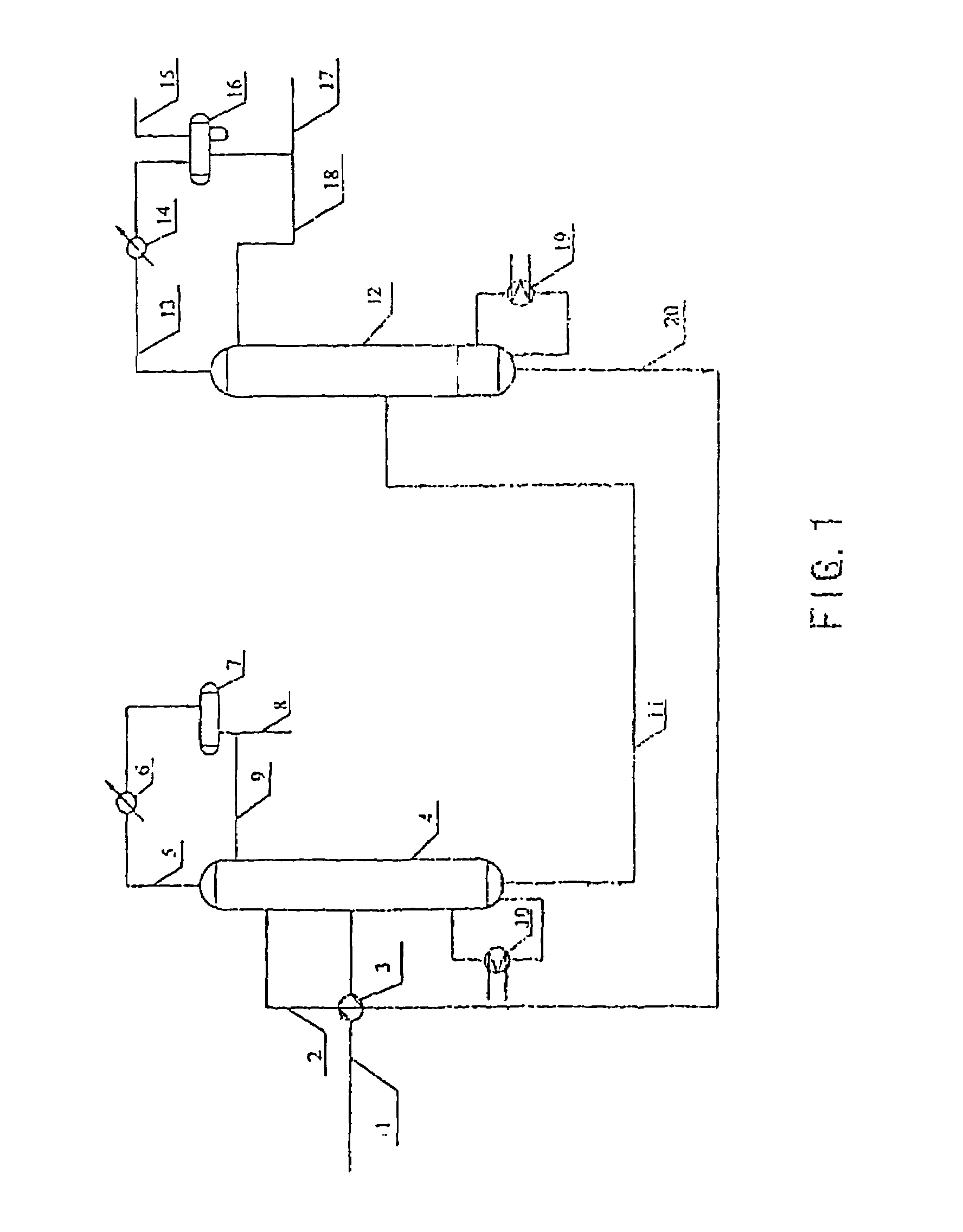
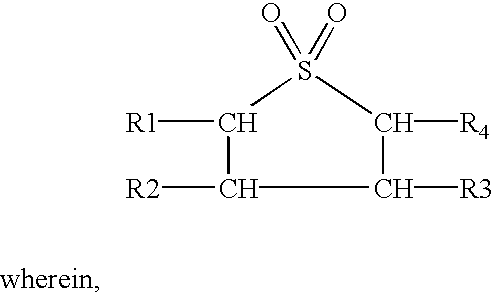
- A composite solvent comprising a main solvent, a solutizer (C8–C11 aromatics), and a modifier (sulfolane derivatives or N-formyl morpholine) is used in extractive distillation, enhancing solubility and allowing for neutral product recovery without water, reducing energy consumption and avoiding post-treatment.

Processes and apparatuses for separating aromatic and non-aromatic hydrocarbons
PatentActiveUS20240109824A1
Innovation
- Implementing a side draw from the solvent recovery column to return solvent to the extractive distillation column, utilizing an internal heat exchanger like a stab-in reboiler preheater to reduce utility consumption and improve heat transfer efficiency, and redistributing heat within the column.


Environmental Regulations for Aromatic Processing
The environmental regulatory landscape for aromatic compound processing has become increasingly stringent over the past decade, driven by growing awareness of the health and environmental impacts associated with benzene, toluene, xylene, and other aromatic hydrocarbons. These compounds are classified as volatile organic compounds (VOCs) and many are recognized carcinogens, prompting regulatory bodies worldwide to establish comprehensive frameworks governing their industrial handling and emission control.
In the United States, the Environmental Protection Agency (EPA) enforces strict regulations under the Clean Air Act, particularly through the National Emission Standards for Hazardous Air Pollutants (NESHAP) and the Maximum Achievable Control Technology (MACT) standards. These regulations mandate that facilities processing aromatic compounds implement best available control technologies and maintain emission levels below specified thresholds. The EPA's Risk Management Program also requires detailed safety assessments and emergency response planning for facilities handling significant quantities of aromatic compounds.
European Union regulations under the Industrial Emissions Directive (IED) and the REACH regulation establish comprehensive requirements for aromatic processing operations. The IED mandates the use of Best Available Techniques (BAT) and requires facilities to obtain integrated environmental permits that address air emissions, water discharges, and waste management. REACH regulations impose strict registration, evaluation, and authorization requirements for aromatic compounds, with particular emphasis on substances of very high concern (SVHC).
Distillation operations specifically face additional regulatory scrutiny due to their potential for fugitive emissions and energy-intensive nature. Regulations typically require implementation of leak detection and repair (LDAR) programs, vapor recovery systems, and continuous emission monitoring for large-scale operations. Many jurisdictions mandate the use of closed-loop systems and require regular equipment inspections to minimize atmospheric releases during distillation processes.
Emerging regulatory trends indicate a shift toward more comprehensive lifecycle assessments and carbon footprint considerations. New regulations are increasingly incorporating greenhouse gas emission limits and energy efficiency requirements, pushing the industry toward more sustainable distillation technologies and process optimization strategies for aromatic compound isolation.
In the United States, the Environmental Protection Agency (EPA) enforces strict regulations under the Clean Air Act, particularly through the National Emission Standards for Hazardous Air Pollutants (NESHAP) and the Maximum Achievable Control Technology (MACT) standards. These regulations mandate that facilities processing aromatic compounds implement best available control technologies and maintain emission levels below specified thresholds. The EPA's Risk Management Program also requires detailed safety assessments and emergency response planning for facilities handling significant quantities of aromatic compounds.
European Union regulations under the Industrial Emissions Directive (IED) and the REACH regulation establish comprehensive requirements for aromatic processing operations. The IED mandates the use of Best Available Techniques (BAT) and requires facilities to obtain integrated environmental permits that address air emissions, water discharges, and waste management. REACH regulations impose strict registration, evaluation, and authorization requirements for aromatic compounds, with particular emphasis on substances of very high concern (SVHC).
Distillation operations specifically face additional regulatory scrutiny due to their potential for fugitive emissions and energy-intensive nature. Regulations typically require implementation of leak detection and repair (LDAR) programs, vapor recovery systems, and continuous emission monitoring for large-scale operations. Many jurisdictions mandate the use of closed-loop systems and require regular equipment inspections to minimize atmospheric releases during distillation processes.
Emerging regulatory trends indicate a shift toward more comprehensive lifecycle assessments and carbon footprint considerations. New regulations are increasingly incorporating greenhouse gas emission limits and energy efficiency requirements, pushing the industry toward more sustainable distillation technologies and process optimization strategies for aromatic compound isolation.
Energy Efficiency in Industrial Distillation
Energy efficiency represents a critical operational parameter in industrial distillation processes for aromatic compound isolation, directly impacting both economic viability and environmental sustainability. Traditional distillation methods for separating aromatic compounds typically consume substantial amounts of thermal energy due to the close boiling points of many aromatic species and the need for precise temperature control throughout the separation process.
Heat integration strategies have emerged as fundamental approaches to enhance energy efficiency in aromatic distillation systems. Heat exchanger networks enable the recovery of thermal energy from hot product streams to preheat feed streams, significantly reducing the overall energy input requirements. Advanced pinch analysis techniques help identify optimal heat integration opportunities, with potential energy savings ranging from 20% to 40% in well-designed aromatic separation facilities.
Multi-effect distillation configurations offer substantial energy advantages for large-scale aromatic compound isolation. By operating multiple distillation columns at different pressure levels, the overhead vapor from higher-pressure columns can serve as heating medium for lower-pressure units. This cascading approach maximizes the utilization of available thermal energy and reduces steam consumption by up to 50% compared to conventional single-effect systems.
Vapor recompression technology presents another promising avenue for energy optimization in aromatic distillation processes. Mechanical vapor recompression systems compress overhead vapors to higher pressures and temperatures, enabling their reuse as heating medium in the same column. This closed-loop approach dramatically reduces external heating requirements, though it requires careful economic evaluation considering electricity costs versus steam savings.
Process intensification through advanced column internals and innovative separation techniques contributes significantly to energy efficiency improvements. High-performance structured packings and advanced tray designs reduce pressure drop and enhance mass transfer efficiency, allowing operation at lower reflux ratios. Dividing wall columns and thermally coupled distillation systems can achieve energy savings of 15-30% while maintaining separation performance for complex aromatic mixtures.
Waste heat recovery systems play increasingly important roles in modern aromatic distillation facilities. Integration of organic Rankine cycles, absorption refrigeration systems, and process heating applications enables the productive utilization of low-grade thermal energy that would otherwise be rejected to cooling systems, further enhancing overall plant energy efficiency.
Heat integration strategies have emerged as fundamental approaches to enhance energy efficiency in aromatic distillation systems. Heat exchanger networks enable the recovery of thermal energy from hot product streams to preheat feed streams, significantly reducing the overall energy input requirements. Advanced pinch analysis techniques help identify optimal heat integration opportunities, with potential energy savings ranging from 20% to 40% in well-designed aromatic separation facilities.
Multi-effect distillation configurations offer substantial energy advantages for large-scale aromatic compound isolation. By operating multiple distillation columns at different pressure levels, the overhead vapor from higher-pressure columns can serve as heating medium for lower-pressure units. This cascading approach maximizes the utilization of available thermal energy and reduces steam consumption by up to 50% compared to conventional single-effect systems.
Vapor recompression technology presents another promising avenue for energy optimization in aromatic distillation processes. Mechanical vapor recompression systems compress overhead vapors to higher pressures and temperatures, enabling their reuse as heating medium in the same column. This closed-loop approach dramatically reduces external heating requirements, though it requires careful economic evaluation considering electricity costs versus steam savings.
Process intensification through advanced column internals and innovative separation techniques contributes significantly to energy efficiency improvements. High-performance structured packings and advanced tray designs reduce pressure drop and enhance mass transfer efficiency, allowing operation at lower reflux ratios. Dividing wall columns and thermally coupled distillation systems can achieve energy savings of 15-30% while maintaining separation performance for complex aromatic mixtures.
Waste heat recovery systems play increasingly important roles in modern aromatic distillation facilities. Integration of organic Rankine cycles, absorption refrigeration systems, and process heating applications enables the productive utilization of low-grade thermal energy that would otherwise be rejected to cooling systems, further enhancing overall plant energy efficiency.
Unlock deeper insights with Patsnap Eureka Quick Research — get a full tech report to explore trends and direct your research. Try now!
Generate Your Research Report Instantly with AI Agent
Supercharge your innovation with Patsnap Eureka AI Agent Platform!