How to Maximize Thermal Absorption in Eutectic PCMs
FEB 3, 20269 MIN READ
Generate Your Research Report Instantly with AI Agent
Patsnap Eureka helps you evaluate technical feasibility & market potential.
Eutectic PCM Thermal Absorption Background and Objectives
Eutectic phase change materials have emerged as critical components in thermal energy storage systems due to their ability to absorb and release substantial amounts of latent heat during phase transitions at constant temperatures. These materials consist of two or more components that melt and solidify congruently at a specific eutectic composition, offering advantages over single-component PCMs including lower melting points, reduced supercooling effects, and enhanced thermal stability. The evolution of eutectic PCM technology traces back to early thermal management applications in the 1970s, initially focusing on simple salt hydrate mixtures for building temperature regulation. Over subsequent decades, research expanded to encompass organic-organic, organic-inorganic, and metal-based eutectic systems, driven by increasing demands for efficient energy storage in renewable energy systems, electronics cooling, and industrial waste heat recovery.
The fundamental challenge in eutectic PCM applications centers on maximizing thermal absorption capacity while maintaining practical operational characteristics. Despite their theoretical advantages, conventional eutectic PCMs face inherent limitations including low thermal conductivity, typically ranging from 0.2 to 0.6 W/m·K, which significantly restricts heat transfer rates and overall energy storage efficiency. This thermal transport bottleneck becomes particularly critical in high-power applications requiring rapid charging and discharging cycles. Additionally, phase separation during repeated thermal cycling, chemical degradation, and containment compatibility issues have historically constrained the long-term reliability and commercial viability of eutectic PCM systems.
The primary objective of current research focuses on developing innovative strategies to enhance thermal absorption performance through multiple approaches. These include optimizing eutectic compositions to achieve higher latent heat values, integrating high-conductivity additives such as expanded graphite or metal foams to create composite structures, and implementing advanced encapsulation techniques to prevent degradation while facilitating heat transfer. Furthermore, understanding the microstructural evolution during phase transitions and establishing predictive models for thermal behavior under various operating conditions represent essential goals for advancing eutectic PCM technology toward widespread industrial implementation and next-generation thermal management solutions.
The fundamental challenge in eutectic PCM applications centers on maximizing thermal absorption capacity while maintaining practical operational characteristics. Despite their theoretical advantages, conventional eutectic PCMs face inherent limitations including low thermal conductivity, typically ranging from 0.2 to 0.6 W/m·K, which significantly restricts heat transfer rates and overall energy storage efficiency. This thermal transport bottleneck becomes particularly critical in high-power applications requiring rapid charging and discharging cycles. Additionally, phase separation during repeated thermal cycling, chemical degradation, and containment compatibility issues have historically constrained the long-term reliability and commercial viability of eutectic PCM systems.
The primary objective of current research focuses on developing innovative strategies to enhance thermal absorption performance through multiple approaches. These include optimizing eutectic compositions to achieve higher latent heat values, integrating high-conductivity additives such as expanded graphite or metal foams to create composite structures, and implementing advanced encapsulation techniques to prevent degradation while facilitating heat transfer. Furthermore, understanding the microstructural evolution during phase transitions and establishing predictive models for thermal behavior under various operating conditions represent essential goals for advancing eutectic PCM technology toward widespread industrial implementation and next-generation thermal management solutions.
Market Demand for High-Performance Thermal Storage Systems
The global demand for high-performance thermal storage systems has experienced substantial growth driven by the urgent need for energy efficiency and renewable energy integration. Industries ranging from building climate control to concentrated solar power plants require advanced thermal management solutions that can store and release heat with minimal energy loss. Eutectic phase change materials have emerged as promising candidates due to their sharp melting points and high latent heat capacity, making them particularly suitable for applications requiring precise temperature control and enhanced thermal absorption.
Building and construction sectors represent a significant market segment, where thermal storage systems utilizing eutectic PCMs are increasingly integrated into passive heating and cooling designs. The push toward net-zero energy buildings has accelerated adoption, as these materials enable load shifting and reduce peak energy consumption. Commercial and residential applications seek PCM solutions that can maintain comfortable indoor temperatures while minimizing HVAC operational costs, creating sustained demand for materials with optimized thermal absorption characteristics.
The renewable energy sector, particularly concentrated solar power and solar thermal systems, constitutes another critical market driver. These installations require thermal storage media capable of absorbing large quantities of heat during peak sunlight hours and releasing it during periods of low solar availability. Eutectic PCMs with maximized thermal absorption properties enable higher system efficiency and extended operational hours, directly addressing the intermittency challenges inherent in solar energy generation.
Industrial process heat management presents additional market opportunities, especially in manufacturing environments where waste heat recovery and temperature stabilization are economically valuable. Industries such as metallurgy, chemical processing, and food production increasingly recognize the cost-saving potential of thermal storage systems that can capture excess heat and redistribute it when needed. The ability to maximize thermal absorption in eutectic PCMs directly translates to improved energy utilization and reduced operational expenses.
Emerging applications in electric vehicle thermal management and electronics cooling further expand market potential. As battery systems and high-performance computing generate increasing thermal loads, advanced PCM solutions offering superior thermal absorption become essential for maintaining optimal operating temperatures and extending component lifespans. This diversification of application domains underscores the growing commercial importance of developing eutectic PCMs with enhanced thermal absorption capabilities to meet evolving industrial and technological requirements.
Building and construction sectors represent a significant market segment, where thermal storage systems utilizing eutectic PCMs are increasingly integrated into passive heating and cooling designs. The push toward net-zero energy buildings has accelerated adoption, as these materials enable load shifting and reduce peak energy consumption. Commercial and residential applications seek PCM solutions that can maintain comfortable indoor temperatures while minimizing HVAC operational costs, creating sustained demand for materials with optimized thermal absorption characteristics.
The renewable energy sector, particularly concentrated solar power and solar thermal systems, constitutes another critical market driver. These installations require thermal storage media capable of absorbing large quantities of heat during peak sunlight hours and releasing it during periods of low solar availability. Eutectic PCMs with maximized thermal absorption properties enable higher system efficiency and extended operational hours, directly addressing the intermittency challenges inherent in solar energy generation.
Industrial process heat management presents additional market opportunities, especially in manufacturing environments where waste heat recovery and temperature stabilization are economically valuable. Industries such as metallurgy, chemical processing, and food production increasingly recognize the cost-saving potential of thermal storage systems that can capture excess heat and redistribute it when needed. The ability to maximize thermal absorption in eutectic PCMs directly translates to improved energy utilization and reduced operational expenses.
Emerging applications in electric vehicle thermal management and electronics cooling further expand market potential. As battery systems and high-performance computing generate increasing thermal loads, advanced PCM solutions offering superior thermal absorption become essential for maintaining optimal operating temperatures and extending component lifespans. This diversification of application domains underscores the growing commercial importance of developing eutectic PCMs with enhanced thermal absorption capabilities to meet evolving industrial and technological requirements.
Current Status and Challenges in Eutectic PCM Thermal Absorption
Eutectic phase change materials have emerged as promising candidates for thermal energy storage applications due to their ability to absorb and release substantial amounts of latent heat at constant temperatures. Current research demonstrates that eutectic PCMs offer advantages over single-component materials, including lower melting points, enhanced thermal stability, and improved phase transition characteristics. However, the field faces significant technical barriers that limit their widespread commercial deployment and optimal performance in real-world applications.
The primary challenge confronting eutectic PCM thermal absorption lies in their inherently low thermal conductivity, typically ranging from 0.2 to 0.7 W/m·K. This fundamental limitation severely restricts heat transfer rates during both charging and discharging cycles, resulting in prolonged phase transition periods and reduced system efficiency. The poor thermal conductivity creates substantial temperature gradients within the material, preventing uniform melting and solidification processes that are critical for maximizing thermal absorption capacity.
Supercooling phenomena represent another critical obstacle in eutectic PCM systems. Many eutectic compositions exhibit significant supercooling effects, where the material remains liquid below its theoretical solidification temperature. This behavior reduces the effective operating temperature range and decreases the reliability of thermal energy release, compromising the predictability and controllability of thermal absorption processes in practical applications.
Phase separation and compositional instability pose long-term operational challenges for eutectic PCMs. During repeated thermal cycling, some eutectic systems experience segregation of constituent components, leading to deviation from the original eutectic composition. This degradation mechanism alters the melting point, reduces latent heat capacity, and ultimately diminishes thermal absorption performance over extended operational lifetimes. The phenomenon is particularly pronounced in organic-inorganic eutectic combinations.
Geographical distribution of eutectic PCM research reveals concentrated efforts in regions with strong renewable energy initiatives. European institutions lead in fundamental research on salt-based eutectics for high-temperature applications, while Asian research centers focus predominantly on organic eutectic systems for building thermal management. North American efforts emphasize hybrid eutectic composites incorporating nanoenhancement strategies. This regional specialization reflects varying energy storage priorities and industrial application requirements across different markets.
Current technical constraints also include limited understanding of nucleation mechanisms in eutectic systems, difficulties in maintaining homogeneous distribution of thermal conductivity enhancers, and challenges in developing cost-effective encapsulation methods that prevent leakage while maintaining thermal performance. These multifaceted challenges necessitate integrated approaches combining materials science, heat transfer engineering, and manufacturing innovation to unlock the full potential of eutectic PCMs for maximizing thermal absorption efficiency.
The primary challenge confronting eutectic PCM thermal absorption lies in their inherently low thermal conductivity, typically ranging from 0.2 to 0.7 W/m·K. This fundamental limitation severely restricts heat transfer rates during both charging and discharging cycles, resulting in prolonged phase transition periods and reduced system efficiency. The poor thermal conductivity creates substantial temperature gradients within the material, preventing uniform melting and solidification processes that are critical for maximizing thermal absorption capacity.
Supercooling phenomena represent another critical obstacle in eutectic PCM systems. Many eutectic compositions exhibit significant supercooling effects, where the material remains liquid below its theoretical solidification temperature. This behavior reduces the effective operating temperature range and decreases the reliability of thermal energy release, compromising the predictability and controllability of thermal absorption processes in practical applications.
Phase separation and compositional instability pose long-term operational challenges for eutectic PCMs. During repeated thermal cycling, some eutectic systems experience segregation of constituent components, leading to deviation from the original eutectic composition. This degradation mechanism alters the melting point, reduces latent heat capacity, and ultimately diminishes thermal absorption performance over extended operational lifetimes. The phenomenon is particularly pronounced in organic-inorganic eutectic combinations.
Geographical distribution of eutectic PCM research reveals concentrated efforts in regions with strong renewable energy initiatives. European institutions lead in fundamental research on salt-based eutectics for high-temperature applications, while Asian research centers focus predominantly on organic eutectic systems for building thermal management. North American efforts emphasize hybrid eutectic composites incorporating nanoenhancement strategies. This regional specialization reflects varying energy storage priorities and industrial application requirements across different markets.
Current technical constraints also include limited understanding of nucleation mechanisms in eutectic systems, difficulties in maintaining homogeneous distribution of thermal conductivity enhancers, and challenges in developing cost-effective encapsulation methods that prevent leakage while maintaining thermal performance. These multifaceted challenges necessitate integrated approaches combining materials science, heat transfer engineering, and manufacturing innovation to unlock the full potential of eutectic PCMs for maximizing thermal absorption efficiency.
Existing Solutions for Maximizing PCM Thermal Absorption
01 Eutectic PCM compositions for enhanced thermal energy storage
Eutectic phase change materials are formulated by combining multiple components that melt and solidify at a single temperature, providing optimal thermal absorption characteristics. These compositions exhibit improved latent heat storage capacity and thermal conductivity compared to single-component PCMs. The eutectic mixtures are designed to achieve specific melting points suitable for various thermal management applications, offering consistent phase transition behavior and enhanced energy storage density.- Eutectic phase change material compositions for thermal energy storage: Eutectic PCMs are formulated by combining multiple phase change materials that melt and solidify at a specific eutectic temperature. These compositions exhibit enhanced thermal absorption properties compared to single-component PCMs. The eutectic mixtures are designed to optimize latent heat storage capacity and thermal conductivity for efficient thermal energy management in various applications.
- Encapsulation techniques for eutectic PCMs: Encapsulation methods are employed to contain eutectic phase change materials within protective shells or matrices. This approach prevents leakage during phase transitions, improves thermal cycling stability, and enhances heat transfer characteristics. Various encapsulation technologies including microencapsulation and macroencapsulation are utilized to improve the practical application of eutectic PCMs in thermal absorption systems.
- Integration of eutectic PCMs in building materials: Eutectic phase change materials are incorporated into construction materials such as concrete, gypsum boards, and insulation panels to enhance thermal absorption and storage capabilities. This integration helps regulate indoor temperature fluctuations, reduce energy consumption for heating and cooling, and improve overall building energy efficiency through passive thermal management.
- Thermal conductivity enhancement of eutectic PCMs: Various additives and structures are incorporated into eutectic phase change materials to improve their inherently low thermal conductivity. Methods include adding high-conductivity materials such as metal foams, graphite, carbon nanotubes, or metallic particles to create composite PCMs. These enhancements accelerate heat absorption and release rates, making eutectic PCMs more effective for thermal energy storage applications.
- Eutectic PCM systems for electronic thermal management: Eutectic phase change materials are applied in thermal management systems for electronic devices and components to absorb excess heat generated during operation. These systems utilize the high latent heat capacity of eutectic PCMs to maintain optimal operating temperatures, prevent overheating, and extend the lifespan of electronic equipment. The eutectic compositions are specifically tailored to match the thermal requirements of different electronic applications.
02 Encapsulation techniques for eutectic PCM stability
Advanced encapsulation methods are employed to contain eutectic phase change materials and prevent leakage during phase transitions. These techniques involve microencapsulation or macroencapsulation using polymer shells, ceramic matrices, or metallic containers that maintain the structural integrity of the PCM while allowing efficient heat transfer. The encapsulation also prevents chemical degradation and enhances the long-term cycling stability of the eutectic mixtures in thermal absorption applications.Expand Specific Solutions03 Thermal conductivity enhancement in eutectic PCMs
Various additives and fillers are incorporated into eutectic phase change materials to improve their inherently low thermal conductivity. These enhancements include the addition of metallic nanoparticles, carbon-based materials such as graphene or carbon nanotubes, or expanded graphite structures. The improved thermal conductivity facilitates faster heat absorption and release rates, making the eutectic PCMs more effective for thermal management systems requiring rapid response times.Expand Specific Solutions04 Eutectic salt-based PCMs for high-temperature applications
Eutectic salt mixtures are developed for thermal absorption in high-temperature environments, typically above 200 degrees Celsius. These inorganic eutectic compositions offer high latent heat capacity and thermal stability at elevated temperatures. The salt-based systems are particularly suitable for industrial waste heat recovery, concentrated solar power systems, and other applications requiring thermal energy storage at high operating temperatures.Expand Specific Solutions05 Organic-inorganic hybrid eutectic PCMs
Hybrid eutectic phase change materials combine organic and inorganic components to leverage the advantages of both material types. These formulations balance the high latent heat of organic PCMs with the thermal stability and non-flammability of inorganic materials. The hybrid approach results in eutectic mixtures with optimized melting points, improved thermal cycling performance, and enhanced safety characteristics for thermal absorption applications in building materials and electronic cooling systems.Expand Specific Solutions
Key Players in PCM and Thermal Storage Industry
The eutectic PCM thermal absorption maximization field represents an evolving technology sector transitioning from research-intensive development toward commercial deployment. The market demonstrates growing potential driven by energy storage demands and sustainability initiatives, particularly in building systems and renewable energy applications. Technology maturity varies significantly across players, with specialized innovators like Sunamp Ltd. and H2Go Power Ltd. advancing commercial-scale phase change material solutions, while Jiangsu Jinhe Energy Technology Co., Ltd. and Nanjing Jinhe Energy Materials Co., Ltd. focus on high-performance composite PCM development. Research institutions including Huazhong University of Science & Technology, Shantou University, and Rensselaer Polytechnic Institute contribute fundamental breakthroughs in thermal conductivity enhancement and nanostructure integration. Established industrial players such as Idemitsu Kosan Co., Ltd., SABIC Global Technologies BV, and Tata Steel Ltd. leverage material science expertise for PCM applications, while organizations like IFP Energies Nouvelles drive innovation in energy transition technologies, collectively advancing the field toward mainstream adoption.
Sunamp Ltd.
Technical Solution: Sunamp has developed advanced thermal energy storage systems utilizing eutectic phase change materials with optimized heat exchanger designs. Their technology employs high thermal conductivity matrix materials embedded within eutectic PCM formulations to enhance heat transfer rates and maximize thermal absorption capacity. The system integrates aluminum or copper foam structures with eutectic salt-based PCMs, achieving thermal conductivity improvements of 5-10 times compared to pure PCMs. Their patented heat battery technology uses compact plate heat exchangers with extended surface areas to increase the contact interface between heat transfer fluid and PCM, enabling rapid charging and discharging cycles while maintaining high energy density storage of 150-200 kWh/m³.
Strengths: Proven commercial deployment in residential heating applications with compact form factor and high energy density. Weaknesses: Higher initial cost compared to conventional storage systems and limited operating temperature range optimization.
Huazhong University of Science & Technology
Technical Solution: The university has conducted extensive research on enhancing thermal absorption in eutectic PCMs through nanoparticle doping and porous structure integration. Their approach involves dispersing high thermal conductivity nanoparticles such as graphene, carbon nanotubes, or metal oxides into eutectic salt mixtures to create composite PCMs with enhanced thermophysical properties. Research demonstrates that adding 1-5 wt% graphene nanoplatelets can increase thermal conductivity by 30-150% while maintaining phase change enthalpy above 85% of pure eutectic systems. Additionally, they have developed metal foam scaffolds with porosity of 90-95% to provide continuous heat conduction pathways, reducing melting time by 40-60% and maximizing volumetric thermal absorption rates during charging cycles.
Strengths: Strong fundamental research capabilities with comprehensive characterization of thermal enhancement mechanisms and scalable synthesis methods. Weaknesses: Technology primarily at laboratory scale with limited field testing and long-term stability data under cycling conditions.
Core Technologies in Eutectic PCM Thermal Enhancement
Phase change materials (PCMS) with solid to solid transitions
PatentWO2020161507A1
Innovation
- The development of phase change materials comprising tetrafluoroborate salts that can undergo solid to solid phase transitions within a wide temperature range of -270°C to 3,000°C, utilizing these salts in various forms and mixtures without the need for nucleating agents, and incorporating additives for improved thermal conductivity and stability.


Active management system for energy in concrete walls and/or pavements
PatentActiveEP3139700A1
Innovation
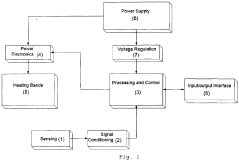
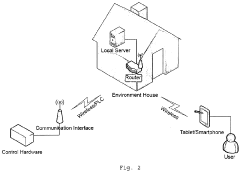
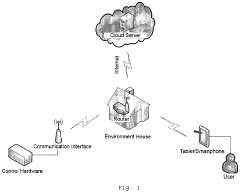
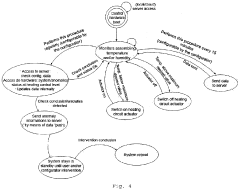
- The integration of adjustable heating systems directly printed on concrete surfaces with specific surface roughness and porosity, combined with phase-change materials and reflective materials, along with a monitoring and control system that allows user-controlled temperature management and energy monitoring, enhancing thermal insulation and energy efficiency.
Energy Efficiency Standards and PCM Regulations
The regulatory landscape surrounding phase change materials (PCMs) and energy efficiency standards plays an increasingly critical role in driving innovation and adoption of eutectic PCM technologies for thermal energy storage applications. Global energy efficiency mandates, particularly those targeting building energy consumption and industrial thermal management, have created a framework that incentivizes the development of advanced thermal absorption solutions. The European Union's Energy Performance of Buildings Directive (EPBD) and similar regulations in North America and Asia establish minimum energy performance requirements that can be more readily achieved through integration of high-performance PCM systems. These standards indirectly promote research into maximizing thermal absorption capacity, as enhanced PCM performance directly contributes to meeting stringent energy efficiency targets.
Material safety and environmental regulations significantly influence the selection and optimization of eutectic PCM compositions. Regulatory bodies such as REACH in Europe and EPA in the United States impose restrictions on certain chemical compounds, affecting the formulation strategies for eutectic mixtures. Compliance with these regulations often necessitates the exploration of alternative material combinations that maintain high thermal absorption characteristics while meeting safety and environmental criteria. This regulatory pressure has accelerated research into bio-based and non-toxic eutectic formulations, expanding the solution space for thermal absorption optimization.
Building codes and thermal performance standards increasingly recognize PCM technology as a viable pathway for compliance, with some jurisdictions offering incentive programs or expedited approval processes for PCM-integrated systems. The International Energy Conservation Code (IECC) and ASHRAE standards provide frameworks for evaluating thermal storage systems, establishing performance metrics that guide PCM development priorities. These standards emphasize not only storage capacity but also charging and discharging efficiency, directly influencing research directions toward maximizing effective thermal absorption under realistic operational conditions.
Emerging regulations addressing grid flexibility and demand response create additional drivers for PCM technology advancement. As electrical grids incorporate higher percentages of renewable energy, regulations promoting load shifting and peak demand reduction favor thermal storage solutions with optimized absorption characteristics. This regulatory evolution shapes the technical requirements for eutectic PCM systems, emphasizing rapid thermal charging capabilities and high energy density to support grid stabilization objectives.
Material safety and environmental regulations significantly influence the selection and optimization of eutectic PCM compositions. Regulatory bodies such as REACH in Europe and EPA in the United States impose restrictions on certain chemical compounds, affecting the formulation strategies for eutectic mixtures. Compliance with these regulations often necessitates the exploration of alternative material combinations that maintain high thermal absorption characteristics while meeting safety and environmental criteria. This regulatory pressure has accelerated research into bio-based and non-toxic eutectic formulations, expanding the solution space for thermal absorption optimization.
Building codes and thermal performance standards increasingly recognize PCM technology as a viable pathway for compliance, with some jurisdictions offering incentive programs or expedited approval processes for PCM-integrated systems. The International Energy Conservation Code (IECC) and ASHRAE standards provide frameworks for evaluating thermal storage systems, establishing performance metrics that guide PCM development priorities. These standards emphasize not only storage capacity but also charging and discharging efficiency, directly influencing research directions toward maximizing effective thermal absorption under realistic operational conditions.
Emerging regulations addressing grid flexibility and demand response create additional drivers for PCM technology advancement. As electrical grids incorporate higher percentages of renewable energy, regulations promoting load shifting and peak demand reduction favor thermal storage solutions with optimized absorption characteristics. This regulatory evolution shapes the technical requirements for eutectic PCM systems, emphasizing rapid thermal charging capabilities and high energy density to support grid stabilization objectives.
Sustainability and Environmental Impact of PCM Systems
The pursuit of maximizing thermal absorption in eutectic phase change materials must be balanced against critical sustainability considerations and environmental impact assessments. As PCM systems transition from laboratory research to large-scale commercial deployment, their lifecycle environmental footprint becomes increasingly significant. The extraction, processing, and manufacturing of eutectic PCM components require careful evaluation of resource consumption, energy intensity, and potential ecological consequences. Material sourcing practices directly influence the overall sustainability profile, particularly when utilizing salt hydrates, organic compounds, or metallic eutectics that may involve mining operations or chemical synthesis processes with varying environmental burdens.
End-of-life management presents substantial challenges for PCM systems, especially those incorporating encapsulation materials or composite structures designed to enhance thermal absorption. The recyclability of eutectic mixtures depends heavily on their chemical composition and physical integration with containment systems. Bio-based and naturally derived PCM components offer promising pathways toward circular economy models, though their thermal performance characteristics may require optimization. Disposal protocols must address potential leaching of chemical constituents into soil and water systems, particularly for salt-based eutectics that could contribute to salinity issues or heavy metal contamination if improperly managed.
The carbon footprint associated with PCM manufacturing and operational phases warrants comprehensive analysis. While enhanced thermal absorption capabilities reduce building energy consumption and associated emissions during use, the embodied energy in PCM production may offset these benefits depending on system lifespan and performance degradation rates. Life cycle assessment methodologies provide frameworks for quantifying net environmental benefits, considering factors such as manufacturing emissions, transportation impacts, operational energy savings, and disposal burdens.
Regulatory frameworks and environmental certifications increasingly influence PCM system design and material selection. Compliance with restrictions on hazardous substances, volatile organic compound emissions, and toxicity standards shapes the development of sustainable eutectic formulations. Green building certification programs recognize PCM integration as a strategy for improving energy efficiency, yet require documentation of environmental attributes throughout the product lifecycle. Future innovations must prioritize non-toxic, abundant, and recyclable materials while maintaining superior thermal absorption performance to ensure both technical effectiveness and environmental responsibility.
End-of-life management presents substantial challenges for PCM systems, especially those incorporating encapsulation materials or composite structures designed to enhance thermal absorption. The recyclability of eutectic mixtures depends heavily on their chemical composition and physical integration with containment systems. Bio-based and naturally derived PCM components offer promising pathways toward circular economy models, though their thermal performance characteristics may require optimization. Disposal protocols must address potential leaching of chemical constituents into soil and water systems, particularly for salt-based eutectics that could contribute to salinity issues or heavy metal contamination if improperly managed.
The carbon footprint associated with PCM manufacturing and operational phases warrants comprehensive analysis. While enhanced thermal absorption capabilities reduce building energy consumption and associated emissions during use, the embodied energy in PCM production may offset these benefits depending on system lifespan and performance degradation rates. Life cycle assessment methodologies provide frameworks for quantifying net environmental benefits, considering factors such as manufacturing emissions, transportation impacts, operational energy savings, and disposal burdens.
Regulatory frameworks and environmental certifications increasingly influence PCM system design and material selection. Compliance with restrictions on hazardous substances, volatile organic compound emissions, and toxicity standards shapes the development of sustainable eutectic formulations. Green building certification programs recognize PCM integration as a strategy for improving energy efficiency, yet require documentation of environmental attributes throughout the product lifecycle. Future innovations must prioritize non-toxic, abundant, and recyclable materials while maintaining superior thermal absorption performance to ensure both technical effectiveness and environmental responsibility.
Unlock deeper insights with Patsnap Eureka Quick Research — get a full tech report to explore trends and direct your research. Try now!
Generate Your Research Report Instantly with AI Agent
Supercharge your innovation with Patsnap Eureka AI Agent Platform!