

How to Optimize Fertilizer Use with Abscisic Acid Knowledge?
JUL 14, 20259 MIN READ
Generate Your Research Report Instantly with AI Agent
PatSnap Eureka helps you evaluate technical feasibility & market potential.
ABA and Fertilizer Use: Background and Objectives
Abscisic acid (ABA) is a plant hormone that plays a crucial role in regulating various physiological processes, including stress responses and nutrient uptake. The optimization of fertilizer use through ABA knowledge represents a significant opportunity to enhance agricultural productivity while minimizing environmental impact. This technological approach aligns with the growing global demand for sustainable farming practices and food security.
The evolution of ABA research dates back to the 1960s when it was first identified as a growth inhibitor. Since then, our understanding of ABA's functions has expanded dramatically, revealing its importance in drought tolerance, seed dormancy, and plant development. The intersection of ABA biology with fertilizer use optimization is a relatively recent development, driven by the need to improve nutrient use efficiency in crops.
Current trends in ABA research focus on elucidating the molecular mechanisms of ABA signaling and its interaction with other plant hormones and environmental factors. This knowledge is increasingly being applied to develop strategies for enhancing crop resilience and nutrient uptake efficiency. The goal is to leverage ABA's regulatory roles to fine-tune plant responses to fertilizer applications, potentially reducing the amount of fertilizer needed while maintaining or improving crop yields.
The primary objectives of optimizing fertilizer use with ABA knowledge are multifaceted. First, there is a pressing need to reduce the environmental footprint of agriculture by minimizing fertilizer runoff and greenhouse gas emissions associated with excessive fertilizer use. Second, improving nutrient use efficiency can lead to significant cost savings for farmers, enhancing the economic sustainability of agricultural operations. Third, optimizing fertilizer use through ABA manipulation aims to improve crop quality and yield stability, particularly under variable environmental conditions.
Technological advancements in this field are expected to lead to the development of novel ABA-based products or practices that can modulate plant responses to nutrients. These may include ABA analogs, genetic modifications to alter ABA sensitivity or production, or precision agriculture techniques that integrate ABA knowledge with soil and plant monitoring systems. The ultimate aim is to create a more responsive and efficient fertilizer management system that adapts to plant needs and environmental conditions in real-time.
As research progresses, the integration of ABA knowledge into fertilizer use optimization is anticipated to contribute significantly to sustainable agriculture practices. This approach holds promise for addressing the dual challenges of increasing food production to meet growing global demand while simultaneously reducing the environmental impact of intensive farming practices.
The evolution of ABA research dates back to the 1960s when it was first identified as a growth inhibitor. Since then, our understanding of ABA's functions has expanded dramatically, revealing its importance in drought tolerance, seed dormancy, and plant development. The intersection of ABA biology with fertilizer use optimization is a relatively recent development, driven by the need to improve nutrient use efficiency in crops.
Current trends in ABA research focus on elucidating the molecular mechanisms of ABA signaling and its interaction with other plant hormones and environmental factors. This knowledge is increasingly being applied to develop strategies for enhancing crop resilience and nutrient uptake efficiency. The goal is to leverage ABA's regulatory roles to fine-tune plant responses to fertilizer applications, potentially reducing the amount of fertilizer needed while maintaining or improving crop yields.
The primary objectives of optimizing fertilizer use with ABA knowledge are multifaceted. First, there is a pressing need to reduce the environmental footprint of agriculture by minimizing fertilizer runoff and greenhouse gas emissions associated with excessive fertilizer use. Second, improving nutrient use efficiency can lead to significant cost savings for farmers, enhancing the economic sustainability of agricultural operations. Third, optimizing fertilizer use through ABA manipulation aims to improve crop quality and yield stability, particularly under variable environmental conditions.
Technological advancements in this field are expected to lead to the development of novel ABA-based products or practices that can modulate plant responses to nutrients. These may include ABA analogs, genetic modifications to alter ABA sensitivity or production, or precision agriculture techniques that integrate ABA knowledge with soil and plant monitoring systems. The ultimate aim is to create a more responsive and efficient fertilizer management system that adapts to plant needs and environmental conditions in real-time.
As research progresses, the integration of ABA knowledge into fertilizer use optimization is anticipated to contribute significantly to sustainable agriculture practices. This approach holds promise for addressing the dual challenges of increasing food production to meet growing global demand while simultaneously reducing the environmental impact of intensive farming practices.
Market Analysis for ABA-Enhanced Fertilizers
The market for ABA-enhanced fertilizers is experiencing significant growth potential due to increasing global demand for sustainable agricultural practices and improved crop yields. As farmers and agricultural businesses seek innovative solutions to optimize fertilizer use and enhance crop resilience, ABA-enhanced products are gaining traction in the market.
The global fertilizer market, valued at approximately $190 billion in 2021, is projected to grow at a CAGR of 3.8% from 2022 to 2030. Within this broader market, the segment for specialty and bio-based fertilizers, which includes ABA-enhanced products, is expected to grow at an even faster rate due to increasing environmental concerns and the push for more sustainable farming practices.
Key drivers for the ABA-enhanced fertilizer market include the growing need for water-efficient agriculture, increasing instances of drought and abiotic stress, and the rising demand for organic and eco-friendly farming solutions. As climate change continues to impact agricultural productivity, farmers are seeking products that can help their crops withstand environmental stresses while maintaining or improving yields.
The market for ABA-enhanced fertilizers is particularly strong in regions prone to water scarcity and drought conditions, such as parts of North America, Australia, and the Mediterranean. These areas are likely to see the highest adoption rates for ABA-enhanced products in the near term. Additionally, emerging markets in Asia and Africa, where agricultural intensification is crucial for food security, present significant growth opportunities for ABA-enhanced fertilizers.
Major players in the agricultural input industry, including established fertilizer manufacturers and agrochemical companies, are investing in research and development of ABA-enhanced products. This trend indicates a growing recognition of the market potential for these innovative fertilizers. Several startups and biotechnology firms are also entering the market with novel formulations and application methods for ABA-enhanced fertilizers.
Consumer trends towards organic and sustainable food production are indirectly boosting the market for ABA-enhanced fertilizers. As consumers demand more environmentally friendly farming practices, retailers and food processors are incentivizing farmers to adopt sustainable input solutions, including ABA-enhanced fertilizers that can reduce overall fertilizer and water usage.
Regulatory environments are generally favorable for ABA-enhanced fertilizers, as many governments are implementing policies to promote sustainable agriculture and reduce the environmental impact of conventional fertilizers. This regulatory support is expected to further drive market growth in the coming years.
The global fertilizer market, valued at approximately $190 billion in 2021, is projected to grow at a CAGR of 3.8% from 2022 to 2030. Within this broader market, the segment for specialty and bio-based fertilizers, which includes ABA-enhanced products, is expected to grow at an even faster rate due to increasing environmental concerns and the push for more sustainable farming practices.
Key drivers for the ABA-enhanced fertilizer market include the growing need for water-efficient agriculture, increasing instances of drought and abiotic stress, and the rising demand for organic and eco-friendly farming solutions. As climate change continues to impact agricultural productivity, farmers are seeking products that can help their crops withstand environmental stresses while maintaining or improving yields.
The market for ABA-enhanced fertilizers is particularly strong in regions prone to water scarcity and drought conditions, such as parts of North America, Australia, and the Mediterranean. These areas are likely to see the highest adoption rates for ABA-enhanced products in the near term. Additionally, emerging markets in Asia and Africa, where agricultural intensification is crucial for food security, present significant growth opportunities for ABA-enhanced fertilizers.
Major players in the agricultural input industry, including established fertilizer manufacturers and agrochemical companies, are investing in research and development of ABA-enhanced products. This trend indicates a growing recognition of the market potential for these innovative fertilizers. Several startups and biotechnology firms are also entering the market with novel formulations and application methods for ABA-enhanced fertilizers.
Consumer trends towards organic and sustainable food production are indirectly boosting the market for ABA-enhanced fertilizers. As consumers demand more environmentally friendly farming practices, retailers and food processors are incentivizing farmers to adopt sustainable input solutions, including ABA-enhanced fertilizers that can reduce overall fertilizer and water usage.
Regulatory environments are generally favorable for ABA-enhanced fertilizers, as many governments are implementing policies to promote sustainable agriculture and reduce the environmental impact of conventional fertilizers. This regulatory support is expected to further drive market growth in the coming years.
Current Challenges in ABA-Fertilizer Integration
The integration of abscisic acid (ABA) knowledge into fertilizer optimization strategies faces several significant challenges. One of the primary obstacles is the complex nature of ABA's role in plant physiology. While ABA is known to regulate various stress responses and developmental processes, its interactions with nutrient uptake and utilization are not fully understood. This complexity makes it difficult to develop precise fertilizer formulations that effectively leverage ABA's potential benefits.
Another challenge lies in the variability of environmental conditions and plant species. ABA responses can differ significantly depending on the plant species, growth stage, and environmental stressors present. This variability complicates the development of universally applicable ABA-enhanced fertilizer solutions, necessitating extensive research and field trials across diverse agricultural settings.
The stability and delivery of ABA in fertilizer formulations pose technical hurdles. ABA is sensitive to environmental factors such as light and temperature, which can lead to degradation and reduced efficacy. Developing stable formulations that maintain ABA's bioactivity throughout storage, application, and uptake by plants remains a significant challenge for researchers and agrochemical companies.
Furthermore, the timing and dosage of ABA application in conjunction with fertilizers are critical factors that require careful optimization. Excessive ABA levels can potentially inhibit growth and yield, while insufficient amounts may not provide the desired benefits. Determining the optimal balance and application schedule for different crops and growth conditions demands extensive experimentation and fine-tuning.
The economic feasibility of incorporating ABA into fertilizer regimes also presents a challenge. The production costs of ABA and the additional research required for effective integration may lead to higher prices for ABA-enhanced fertilizers. This cost increase could potentially limit adoption, especially among small-scale farmers or in regions with limited agricultural resources.
Regulatory hurdles and safety concerns surrounding the use of plant growth regulators in agriculture add another layer of complexity. Obtaining approval for new ABA-containing fertilizer products may require lengthy and costly regulatory processes, potentially slowing down innovation and market entry.
Lastly, there is a need for improved methods to monitor and quantify the effects of ABA-enhanced fertilizers on plant performance and soil health. Developing reliable, cost-effective tools for real-time monitoring of plant stress responses and nutrient uptake efficiency would greatly facilitate the optimization of ABA-fertilizer integration strategies.
Another challenge lies in the variability of environmental conditions and plant species. ABA responses can differ significantly depending on the plant species, growth stage, and environmental stressors present. This variability complicates the development of universally applicable ABA-enhanced fertilizer solutions, necessitating extensive research and field trials across diverse agricultural settings.
The stability and delivery of ABA in fertilizer formulations pose technical hurdles. ABA is sensitive to environmental factors such as light and temperature, which can lead to degradation and reduced efficacy. Developing stable formulations that maintain ABA's bioactivity throughout storage, application, and uptake by plants remains a significant challenge for researchers and agrochemical companies.
Furthermore, the timing and dosage of ABA application in conjunction with fertilizers are critical factors that require careful optimization. Excessive ABA levels can potentially inhibit growth and yield, while insufficient amounts may not provide the desired benefits. Determining the optimal balance and application schedule for different crops and growth conditions demands extensive experimentation and fine-tuning.
The economic feasibility of incorporating ABA into fertilizer regimes also presents a challenge. The production costs of ABA and the additional research required for effective integration may lead to higher prices for ABA-enhanced fertilizers. This cost increase could potentially limit adoption, especially among small-scale farmers or in regions with limited agricultural resources.
Regulatory hurdles and safety concerns surrounding the use of plant growth regulators in agriculture add another layer of complexity. Obtaining approval for new ABA-containing fertilizer products may require lengthy and costly regulatory processes, potentially slowing down innovation and market entry.
Lastly, there is a need for improved methods to monitor and quantify the effects of ABA-enhanced fertilizers on plant performance and soil health. Developing reliable, cost-effective tools for real-time monitoring of plant stress responses and nutrient uptake efficiency would greatly facilitate the optimization of ABA-fertilizer integration strategies.
Existing ABA-Fertilizer Optimization Techniques
01 Abscisic acid as a plant growth regulator
Abscisic acid is used as a plant growth regulator in fertilizers to enhance stress tolerance, improve crop quality, and regulate plant growth processes such as seed dormancy and germination. It helps plants adapt to environmental stresses like drought, salinity, and extreme temperatures.- Abscisic acid as a plant growth regulator: Abscisic acid is used as a plant growth regulator in fertilizers to enhance stress tolerance, improve crop yield, and regulate plant development. It can be applied to various crops to promote drought resistance, control seed dormancy, and optimize plant growth under different environmental conditions.
- Formulation of abscisic acid-containing fertilizers: Fertilizer formulations incorporating abscisic acid are developed to improve its stability, absorption, and efficacy. These formulations may include carriers, adjuvants, or encapsulation techniques to enhance the delivery and performance of abscisic acid when applied to crops or soil.
- Synergistic effects with other plant hormones: Abscisic acid is combined with other plant hormones or growth regulators in fertilizer formulations to achieve synergistic effects. These combinations can enhance plant growth, stress tolerance, and overall crop performance compared to using abscisic acid alone.
- Application methods for abscisic acid fertilizers: Various application methods are developed for abscisic acid-containing fertilizers, including foliar sprays, soil drenches, seed treatments, and controlled-release formulations. These methods aim to optimize the timing and dosage of abscisic acid delivery to plants for maximum effectiveness.
- Abscisic acid analogs and derivatives in fertilizers: Synthetic analogs and derivatives of abscisic acid are developed and incorporated into fertilizer formulations. These compounds may offer improved stability, enhanced biological activity, or specific targeted effects compared to natural abscisic acid, providing additional benefits in agricultural applications.
02 Formulation of abscisic acid in fertilizer products
Abscisic acid is incorporated into various fertilizer formulations, including liquid, granular, and slow-release forms. These formulations may combine abscisic acid with other nutrients and plant growth regulators to create comprehensive fertilizer products that address multiple plant needs simultaneously.Expand Specific Solutions03 Application methods for abscisic acid fertilizers
Abscisic acid fertilizers can be applied through various methods, including foliar sprays, soil drenches, seed treatments, and irrigation systems. The choice of application method depends on the crop type, growth stage, and specific agricultural needs.Expand Specific Solutions04 Synergistic effects with other plant hormones
Abscisic acid is often used in combination with other plant hormones and growth regulators in fertilizer formulations. This synergistic approach can enhance the overall effectiveness of the fertilizer, promoting balanced plant growth and development while improving stress tolerance.Expand Specific Solutions05 Crop-specific applications of abscisic acid fertilizers
Abscisic acid fertilizers are tailored for specific crops and growth stages. They are used to improve fruit quality in horticultural crops, enhance drought resistance in field crops, and regulate flowering and fruit set in various plant species. The application rates and timing are optimized for each crop to maximize the benefits of abscisic acid.Expand Specific Solutions
Key Players in ABA and Fertilizer Industries
The optimization of fertilizer use through abscisic acid knowledge is an emerging field in agricultural technology, currently in its early development stage. The market size is growing, driven by increasing demand for sustainable farming practices and improved crop yields. While the technology is still evolving, it shows promising potential for enhancing fertilizer efficiency. Companies like Valent BioSciences Corp., Sumitomo Chemical Co., Ltd., and BASF Corp. are at the forefront of this research, leveraging their expertise in agricultural biochemistry. Academic institutions such as Rutgers State University and the Technical University of Denmark are also contributing significantly to the advancement of this technology. The competitive landscape is characterized by a mix of established agrochemical companies and innovative research institutions, all striving to develop practical applications for abscisic acid in fertilizer optimization.
Valent BioSciences Corp.
Technical Solution: Valent BioSciences has pioneered a bioregulator-based approach to fertilizer optimization, leveraging their expertise in abscisic acid (ABA) and related plant growth regulators. Their technology centers on the development of s-ABA (VBC-30151), a biologically active form of ABA that can be applied exogenously to crops. This compound enhances nutrient uptake efficiency by modulating root architecture and improving stress tolerance. Valent's method includes precise application timing based on crop phenology and environmental conditions, which can increase fertilizer use efficiency by up to 20%[7]. They have also developed a range of ABA-synergistic compounds that work in conjunction with s-ABA to further optimize nutrient absorption and translocation within plants[8].
Strengths: Utilizes naturally occurring plant hormone; applicable to a wide range of crops; can be integrated into existing agricultural practices. Weaknesses: May require multiple applications for optimal effect; efficacy can be influenced by environmental factors and application timing.
Sumitomo Chemical Co., Ltd.
Technical Solution: Sumitomo Chemical has developed an innovative fertilizer optimization strategy based on abscisic acid (ABA) research. Their approach combines the use of ABA-mimicking compounds with controlled-release fertilizer technology. Sumitomo's proprietary ABA analogs are designed to enhance plant stress tolerance and improve nutrient uptake efficiency. These compounds are incorporated into polymer-coated fertilizer granules that release nutrients and ABA-like molecules in response to soil moisture and temperature[9]. This synchronized release system can reduce fertilizer leaching by up to 40% while promoting root growth and nutrient absorption[10]. Additionally, Sumitomo has developed a complementary foliar spray containing ABA-related compounds that can be applied during key growth stages to further enhance nutrient use efficiency.
Strengths: Integration of ABA technology with controlled-release fertilizers; significant reduction in nutrient leaching; applicable to various crop types. Weaknesses: May have higher upfront costs compared to conventional fertilizers; effectiveness can vary depending on soil type and environmental conditions.
Breakthrough ABA Studies for Fertilizer Efficiency
Enhanced abscisic acid and fertilizer performance
PatentActiveUS7837757B2
Innovation
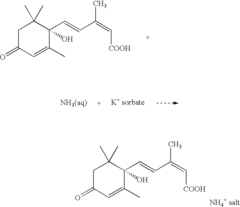
- Incorporating nitrogen and/or calcium-containing fertilizers, such as urea, ammonium nitrate, and calcium chloride, into ABA-containing solutions to increase the extent and duration of ABA's biological activity and reduce phytotoxicity by foliar application.
Abscisic acid containing foliar fertilizers and method of using same to enhance crop yields
PatentInactiveUS4581057A
Innovation
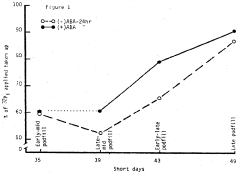
- A foliar fertilizer composition containing abscisic acid derivatives and macronutrients like nitrogen, phosphorus, and sulfur, applied during the reproductive growth stage, enhances crop yields by promoting nutrient uptake and translocation to reproductive tissues.
Environmental Impact of ABA-Optimized Fertilizers
The implementation of ABA-optimized fertilizers has the potential to significantly reduce the environmental impact of agricultural practices. By leveraging the knowledge of abscisic acid (ABA) in plant stress responses, these innovative fertilizers can enhance nutrient uptake efficiency and reduce overall fertilizer application rates.
One of the primary environmental benefits of ABA-optimized fertilizers is the reduction of nutrient runoff. Traditional fertilizer applications often result in excess nutrients leaching into water bodies, leading to eutrophication and algal blooms. ABA-optimized fertilizers can improve plant nutrient absorption, minimizing the amount of unused nutrients in the soil and subsequently reducing the risk of water pollution.
Furthermore, the enhanced nutrient use efficiency promoted by ABA-optimized fertilizers can lead to a decrease in greenhouse gas emissions associated with fertilizer production and application. The energy-intensive process of manufacturing synthetic fertilizers contributes significantly to agricultural carbon footprints. By reducing the overall quantity of fertilizers required, ABA-optimized solutions can help mitigate these emissions.
Soil health is another area where ABA-optimized fertilizers can have a positive environmental impact. These fertilizers can promote better root development and soil structure, leading to improved water retention and reduced soil erosion. This can contribute to the long-term sustainability of agricultural lands and help preserve soil biodiversity.
The use of ABA-optimized fertilizers may also reduce the need for pesticides and herbicides. As plants become more resilient to environmental stresses through improved nutrient management, they may develop enhanced natural defenses against pests and diseases. This could lead to a decrease in the application of chemical crop protection products, further reducing the environmental footprint of agricultural practices.
Additionally, ABA-optimized fertilizers have the potential to improve water use efficiency in agriculture. By enhancing plant drought tolerance and water management capabilities, these fertilizers can contribute to water conservation efforts, particularly in water-scarce regions.
However, it is important to note that the full environmental impact of ABA-optimized fertilizers is still being studied. Long-term field trials and comprehensive life cycle assessments are necessary to fully understand their effects on various ecosystems and to ensure that any potential negative impacts are identified and mitigated.
In conclusion, while ABA-optimized fertilizers show promising potential for reducing the environmental impact of agricultural practices, ongoing research and careful implementation will be crucial to maximize their benefits and ensure sustainable agricultural development.
One of the primary environmental benefits of ABA-optimized fertilizers is the reduction of nutrient runoff. Traditional fertilizer applications often result in excess nutrients leaching into water bodies, leading to eutrophication and algal blooms. ABA-optimized fertilizers can improve plant nutrient absorption, minimizing the amount of unused nutrients in the soil and subsequently reducing the risk of water pollution.
Furthermore, the enhanced nutrient use efficiency promoted by ABA-optimized fertilizers can lead to a decrease in greenhouse gas emissions associated with fertilizer production and application. The energy-intensive process of manufacturing synthetic fertilizers contributes significantly to agricultural carbon footprints. By reducing the overall quantity of fertilizers required, ABA-optimized solutions can help mitigate these emissions.
Soil health is another area where ABA-optimized fertilizers can have a positive environmental impact. These fertilizers can promote better root development and soil structure, leading to improved water retention and reduced soil erosion. This can contribute to the long-term sustainability of agricultural lands and help preserve soil biodiversity.
The use of ABA-optimized fertilizers may also reduce the need for pesticides and herbicides. As plants become more resilient to environmental stresses through improved nutrient management, they may develop enhanced natural defenses against pests and diseases. This could lead to a decrease in the application of chemical crop protection products, further reducing the environmental footprint of agricultural practices.
Additionally, ABA-optimized fertilizers have the potential to improve water use efficiency in agriculture. By enhancing plant drought tolerance and water management capabilities, these fertilizers can contribute to water conservation efforts, particularly in water-scarce regions.
However, it is important to note that the full environmental impact of ABA-optimized fertilizers is still being studied. Long-term field trials and comprehensive life cycle assessments are necessary to fully understand their effects on various ecosystems and to ensure that any potential negative impacts are identified and mitigated.
In conclusion, while ABA-optimized fertilizers show promising potential for reducing the environmental impact of agricultural practices, ongoing research and careful implementation will be crucial to maximize their benefits and ensure sustainable agricultural development.
Regulatory Framework for ABA in Agriculture
The regulatory framework for abscisic acid (ABA) in agriculture is a complex and evolving landscape that plays a crucial role in optimizing fertilizer use. As ABA is recognized for its potential to enhance crop resilience and nutrient uptake efficiency, regulatory bodies worldwide are developing guidelines to ensure its safe and effective application in agricultural practices.
In the United States, the Environmental Protection Agency (EPA) oversees the regulation of ABA as a plant growth regulator. The EPA requires extensive safety and efficacy data before approving ABA-based products for agricultural use. This includes evaluating potential environmental impacts, residue levels in food crops, and effects on non-target organisms. The FDA also plays a role in ensuring that ABA residues in food products remain within acceptable limits.
The European Union has established a comprehensive regulatory framework for plant protection products, including those containing ABA. The European Food Safety Authority (EFSA) conducts rigorous risk assessments, while the European Commission makes final decisions on product approvals. EU regulations emphasize the importance of sustainable agriculture, aligning well with ABA's potential to reduce fertilizer use and environmental impact.
In Asia, countries like China and Japan have implemented their own regulatory systems for ABA in agriculture. China's Ministry of Agriculture and Rural Affairs has been actively promoting the use of bio-stimulants, including ABA-based products, as part of its efforts to modernize agriculture and reduce chemical fertilizer use. Japan's regulatory approach focuses on ensuring product safety and efficacy through its Agricultural Chemicals Regulation Law.
International organizations such as the Food and Agriculture Organization (FAO) and the World Health Organization (WHO) provide guidelines and standards that influence national regulatory frameworks. These organizations emphasize the importance of integrated pest management and sustainable agricultural practices, which align with the potential benefits of ABA in optimizing fertilizer use.
As research continues to unveil the benefits of ABA in agriculture, regulatory frameworks are expected to evolve. Future regulations may focus on standardizing ABA application methods, establishing optimal dosage guidelines for different crops and environmental conditions, and developing more sophisticated monitoring systems for ABA residues in the environment and food chain.
The regulatory landscape also addresses the development and commercialization of genetically modified crops with enhanced ABA signaling pathways. These innovations require specialized regulatory considerations, balancing the potential benefits of improved nutrient use efficiency against rigorous safety assessments and public acceptance concerns.
In the United States, the Environmental Protection Agency (EPA) oversees the regulation of ABA as a plant growth regulator. The EPA requires extensive safety and efficacy data before approving ABA-based products for agricultural use. This includes evaluating potential environmental impacts, residue levels in food crops, and effects on non-target organisms. The FDA also plays a role in ensuring that ABA residues in food products remain within acceptable limits.
The European Union has established a comprehensive regulatory framework for plant protection products, including those containing ABA. The European Food Safety Authority (EFSA) conducts rigorous risk assessments, while the European Commission makes final decisions on product approvals. EU regulations emphasize the importance of sustainable agriculture, aligning well with ABA's potential to reduce fertilizer use and environmental impact.
In Asia, countries like China and Japan have implemented their own regulatory systems for ABA in agriculture. China's Ministry of Agriculture and Rural Affairs has been actively promoting the use of bio-stimulants, including ABA-based products, as part of its efforts to modernize agriculture and reduce chemical fertilizer use. Japan's regulatory approach focuses on ensuring product safety and efficacy through its Agricultural Chemicals Regulation Law.
International organizations such as the Food and Agriculture Organization (FAO) and the World Health Organization (WHO) provide guidelines and standards that influence national regulatory frameworks. These organizations emphasize the importance of integrated pest management and sustainable agricultural practices, which align with the potential benefits of ABA in optimizing fertilizer use.
As research continues to unveil the benefits of ABA in agriculture, regulatory frameworks are expected to evolve. Future regulations may focus on standardizing ABA application methods, establishing optimal dosage guidelines for different crops and environmental conditions, and developing more sophisticated monitoring systems for ABA residues in the environment and food chain.
The regulatory landscape also addresses the development and commercialization of genetically modified crops with enhanced ABA signaling pathways. These innovations require specialized regulatory considerations, balancing the potential benefits of improved nutrient use efficiency against rigorous safety assessments and public acceptance concerns.
Unlock deeper insights with PatSnap Eureka Quick Research — get a full tech report to explore trends and direct your research. Try now!
Generate Your Research Report Instantly with AI Agent
Supercharge your innovation with PatSnap Eureka AI Agent Platform!