
How to Optimize PCM for Audio Hardware Integration
MAR 6, 20269 MIN READ
Generate Your Research Report Instantly with AI Agent
Patsnap Eureka helps you evaluate technical feasibility & market potential.
PCM Audio Hardware Integration Background and Objectives
Pulse Code Modulation (PCM) has served as the fundamental digital audio representation standard since its inception in the 1930s and widespread adoption in the 1960s. Originally developed for telecommunications, PCM technology has evolved to become the cornerstone of modern digital audio systems, enabling the conversion of analog audio signals into discrete digital samples through systematic sampling and quantization processes.
The evolution of PCM technology has been marked by significant milestones in sampling rates and bit depths. Early implementations utilized 8-bit resolution at 8 kHz sampling rates for telephony applications. The introduction of Compact Disc technology in the 1980s established the 16-bit/44.1 kHz standard, while professional audio applications pushed boundaries toward 24-bit/96 kHz and beyond. Contemporary high-resolution audio formats now support sampling rates up to 768 kHz with 32-bit floating-point precision.
Modern audio hardware integration faces unprecedented challenges due to the proliferation of diverse playback devices, streaming platforms, and consumer expectations for seamless audio experiences. The convergence of mobile devices, automotive systems, smart home ecosystems, and professional audio equipment demands optimized PCM processing that can adapt to varying computational constraints and power limitations while maintaining audio fidelity.
Current market trends indicate exponential growth in wireless audio devices, with global shipments exceeding 300 million units annually. This surge necessitates efficient PCM optimization strategies that balance processing overhead with battery life considerations. Additionally, the emergence of spatial audio formats and immersive sound technologies requires enhanced PCM processing capabilities to handle multi-channel configurations and complex audio rendering algorithms.
The primary objective of PCM optimization for audio hardware integration centers on achieving maximum audio quality while minimizing computational resources and power consumption. This involves developing adaptive algorithms that can dynamically adjust processing parameters based on hardware capabilities, content characteristics, and user preferences. Key performance indicators include signal-to-noise ratio improvement, latency reduction, and efficient memory utilization across diverse hardware platforms.
Strategic goals encompass establishing standardized optimization frameworks that enable seamless interoperability between different audio hardware manufacturers and software platforms. This includes developing scalable PCM processing architectures that can accommodate future technological advancements while maintaining backward compatibility with existing audio infrastructure and legacy systems.
The evolution of PCM technology has been marked by significant milestones in sampling rates and bit depths. Early implementations utilized 8-bit resolution at 8 kHz sampling rates for telephony applications. The introduction of Compact Disc technology in the 1980s established the 16-bit/44.1 kHz standard, while professional audio applications pushed boundaries toward 24-bit/96 kHz and beyond. Contemporary high-resolution audio formats now support sampling rates up to 768 kHz with 32-bit floating-point precision.
Modern audio hardware integration faces unprecedented challenges due to the proliferation of diverse playback devices, streaming platforms, and consumer expectations for seamless audio experiences. The convergence of mobile devices, automotive systems, smart home ecosystems, and professional audio equipment demands optimized PCM processing that can adapt to varying computational constraints and power limitations while maintaining audio fidelity.
Current market trends indicate exponential growth in wireless audio devices, with global shipments exceeding 300 million units annually. This surge necessitates efficient PCM optimization strategies that balance processing overhead with battery life considerations. Additionally, the emergence of spatial audio formats and immersive sound technologies requires enhanced PCM processing capabilities to handle multi-channel configurations and complex audio rendering algorithms.
The primary objective of PCM optimization for audio hardware integration centers on achieving maximum audio quality while minimizing computational resources and power consumption. This involves developing adaptive algorithms that can dynamically adjust processing parameters based on hardware capabilities, content characteristics, and user preferences. Key performance indicators include signal-to-noise ratio improvement, latency reduction, and efficient memory utilization across diverse hardware platforms.
Strategic goals encompass establishing standardized optimization frameworks that enable seamless interoperability between different audio hardware manufacturers and software platforms. This includes developing scalable PCM processing architectures that can accommodate future technological advancements while maintaining backward compatibility with existing audio infrastructure and legacy systems.
Market Demand for Optimized PCM Audio Solutions
The global audio hardware market is experiencing unprecedented growth driven by the proliferation of high-resolution audio content, streaming services, and consumer demand for superior sound quality. Professional audio equipment manufacturers, consumer electronics companies, and automotive audio system integrators are increasingly seeking optimized PCM solutions to meet stringent performance requirements while maintaining cost-effectiveness.
Consumer electronics segment represents the largest demand driver, with smartphone manufacturers, headphone producers, and portable audio device companies requiring efficient PCM processing capabilities. The shift toward wireless audio technologies has intensified the need for low-latency, high-fidelity PCM optimization to compensate for compression artifacts and transmission limitations. Gaming hardware manufacturers also constitute a significant market segment, demanding real-time PCM processing for immersive audio experiences.
Professional audio markets, including recording studios, broadcast facilities, and live sound reinforcement systems, require PCM solutions capable of handling multiple high-resolution audio streams simultaneously. These applications demand minimal processing delays, exceptional signal-to-noise ratios, and seamless integration with existing digital audio workstations and mixing consoles.
The automotive industry presents rapidly expanding opportunities as vehicles increasingly incorporate sophisticated infotainment systems and premium audio packages. Electric vehicle manufacturers particularly emphasize audio quality as cabin noise reduction creates opportunities for enhanced listening experiences, driving demand for optimized PCM processing in automotive-grade hardware implementations.
Emerging applications in virtual reality, augmented reality, and spatial audio systems are creating new market segments requiring specialized PCM optimization techniques. These applications demand precise timing synchronization, multi-channel processing capabilities, and adaptive quality management to support immersive audio experiences across diverse hardware platforms.
Market research indicates strong growth trajectories across all segments, with particular emphasis on power-efficient solutions for battery-powered devices and scalable architectures supporting various performance tiers. The convergence of artificial intelligence with audio processing is also generating demand for PCM solutions that can adapt dynamically to content characteristics and user preferences.
Consumer electronics segment represents the largest demand driver, with smartphone manufacturers, headphone producers, and portable audio device companies requiring efficient PCM processing capabilities. The shift toward wireless audio technologies has intensified the need for low-latency, high-fidelity PCM optimization to compensate for compression artifacts and transmission limitations. Gaming hardware manufacturers also constitute a significant market segment, demanding real-time PCM processing for immersive audio experiences.
Professional audio markets, including recording studios, broadcast facilities, and live sound reinforcement systems, require PCM solutions capable of handling multiple high-resolution audio streams simultaneously. These applications demand minimal processing delays, exceptional signal-to-noise ratios, and seamless integration with existing digital audio workstations and mixing consoles.
The automotive industry presents rapidly expanding opportunities as vehicles increasingly incorporate sophisticated infotainment systems and premium audio packages. Electric vehicle manufacturers particularly emphasize audio quality as cabin noise reduction creates opportunities for enhanced listening experiences, driving demand for optimized PCM processing in automotive-grade hardware implementations.
Emerging applications in virtual reality, augmented reality, and spatial audio systems are creating new market segments requiring specialized PCM optimization techniques. These applications demand precise timing synchronization, multi-channel processing capabilities, and adaptive quality management to support immersive audio experiences across diverse hardware platforms.
Market research indicates strong growth trajectories across all segments, with particular emphasis on power-efficient solutions for battery-powered devices and scalable architectures supporting various performance tiers. The convergence of artificial intelligence with audio processing is also generating demand for PCM solutions that can adapt dynamically to content characteristics and user preferences.
Current PCM Implementation Challenges in Hardware
PCM implementation in modern audio hardware faces significant latency challenges that directly impact real-time audio processing capabilities. Traditional PCM architectures often introduce buffer-induced delays ranging from 5-20 milliseconds, which becomes problematic for professional audio applications, live monitoring, and interactive audio systems. The inherent design of conventional PCM interfaces requires multiple buffering stages between the digital signal processor and the analog conversion circuitry, creating cumulative delays that compromise system responsiveness.
Sample rate conversion presents another critical implementation hurdle, particularly in multi-format audio environments. Hardware systems must accommodate varying sample rates from 44.1kHz to 192kHz and beyond, requiring sophisticated interpolation and decimation algorithms. Current implementations often struggle with maintaining audio fidelity during real-time sample rate conversion, introducing artifacts such as aliasing, quantization noise, and frequency response irregularities that degrade overall audio quality.
Clock synchronization issues plague PCM hardware integration, especially in distributed audio systems where multiple devices must maintain precise timing relationships. Jitter accumulation across the PCM signal chain creates timing uncertainties that manifest as audible distortions, particularly in high-resolution audio applications. The challenge intensifies when integrating PCM streams from different clock domains, requiring complex phase-locked loop circuits and buffer management strategies.
Power consumption optimization represents a growing concern for portable and embedded PCM implementations. Traditional PCM processing architectures consume significant power due to continuous high-frequency clock operations and multiple active conversion stages. Battery-powered devices require more efficient PCM implementations that can dynamically adjust power consumption based on audio activity levels while maintaining signal integrity.
Hardware resource utilization inefficiencies limit the scalability of current PCM implementations. Many existing solutions require dedicated processing cores and substantial memory allocation for buffering operations, constraining the number of simultaneous PCM channels that can be processed. This limitation becomes particularly evident in multi-channel audio systems and professional mixing applications where dozens of PCM streams must be handled concurrently.
Integration complexity with existing audio hardware ecosystems creates additional implementation barriers. Legacy audio interfaces, proprietary communication protocols, and varying electrical specifications across different manufacturers complicate the development of universal PCM solutions. These compatibility challenges often force designers to implement multiple PCM variants within a single system, increasing development costs and system complexity.
Sample rate conversion presents another critical implementation hurdle, particularly in multi-format audio environments. Hardware systems must accommodate varying sample rates from 44.1kHz to 192kHz and beyond, requiring sophisticated interpolation and decimation algorithms. Current implementations often struggle with maintaining audio fidelity during real-time sample rate conversion, introducing artifacts such as aliasing, quantization noise, and frequency response irregularities that degrade overall audio quality.
Clock synchronization issues plague PCM hardware integration, especially in distributed audio systems where multiple devices must maintain precise timing relationships. Jitter accumulation across the PCM signal chain creates timing uncertainties that manifest as audible distortions, particularly in high-resolution audio applications. The challenge intensifies when integrating PCM streams from different clock domains, requiring complex phase-locked loop circuits and buffer management strategies.
Power consumption optimization represents a growing concern for portable and embedded PCM implementations. Traditional PCM processing architectures consume significant power due to continuous high-frequency clock operations and multiple active conversion stages. Battery-powered devices require more efficient PCM implementations that can dynamically adjust power consumption based on audio activity levels while maintaining signal integrity.
Hardware resource utilization inefficiencies limit the scalability of current PCM implementations. Many existing solutions require dedicated processing cores and substantial memory allocation for buffering operations, constraining the number of simultaneous PCM channels that can be processed. This limitation becomes particularly evident in multi-channel audio systems and professional mixing applications where dozens of PCM streams must be handled concurrently.
Integration complexity with existing audio hardware ecosystems creates additional implementation barriers. Legacy audio interfaces, proprietary communication protocols, and varying electrical specifications across different manufacturers complicate the development of universal PCM solutions. These compatibility challenges often force designers to implement multiple PCM variants within a single system, increasing development costs and system complexity.
Existing PCM Optimization Techniques and Methods
01 PCM composition and material selection optimization
Phase change materials can be optimized through careful selection and combination of base materials to achieve desired thermal properties. This includes selecting appropriate paraffins, salt hydrates, fatty acids, or eutectic mixtures that provide optimal melting points, latent heat capacity, and thermal stability. Material purity, crystalline structure, and chemical compatibility are key factors in enhancing PCM performance for thermal energy storage applications.- PCM composition and material selection optimization: Phase change materials can be optimized by selecting appropriate base materials and additives to enhance thermal properties. This includes using organic compounds, inorganic salts, or eutectic mixtures with specific melting points and latent heat capacities. Material selection focuses on improving thermal conductivity, stability, and phase transition characteristics to maximize energy storage efficiency.
- Encapsulation and containment methods for PCM: Encapsulation techniques are employed to contain phase change materials and prevent leakage during phase transitions. Methods include microencapsulation, macroencapsulation, and integration into porous matrices or composite structures. These approaches enhance the durability and applicability of PCM systems while maintaining thermal performance and enabling easier integration into various applications.
- Thermal conductivity enhancement of PCM systems: Improving thermal conductivity of phase change materials through the addition of conductive fillers, metal foams, graphite, carbon nanotubes, or other high-conductivity materials. These enhancements accelerate heat transfer rates during charging and discharging cycles, reducing response time and improving overall system efficiency for thermal energy storage applications.
- PCM integration in building and construction applications: Integration of phase change materials into building components such as walls, roofs, floors, and panels for passive thermal regulation. This optimization focuses on maintaining comfortable indoor temperatures, reducing heating and cooling loads, and improving energy efficiency in buildings. Implementation methods include incorporation into concrete, gypsum boards, or specialized thermal management panels.
- PCM system design for thermal management in electronics and industrial applications: Optimization of phase change material systems for thermal management in electronic devices, batteries, and industrial equipment. Design considerations include heat dissipation capacity, temperature control precision, compact form factors, and reliability under cyclic thermal loading. Applications range from cooling electronic components to temperature stabilization in manufacturing processes.
02 PCM encapsulation and containment methods
Encapsulation techniques are critical for preventing leakage, improving thermal cycling stability, and enhancing heat transfer characteristics of phase change materials. Various encapsulation methods including microencapsulation, macroencapsulation, and shape-stabilization can be employed to contain PCMs within protective shells or matrices. These methods improve mechanical strength, prevent phase separation, and enable integration into building materials or thermal management systems.Expand Specific Solutions03 Thermal conductivity enhancement of PCMs
The inherently low thermal conductivity of many phase change materials can be improved through incorporation of high-conductivity additives or structures. Methods include adding metallic particles, carbon-based materials such as graphite or carbon nanotubes, metal foams, or fins to create composite PCMs with enhanced heat transfer rates. These enhancements reduce charging and discharging times while maintaining high latent heat storage capacity.Expand Specific Solutions04 PCM system design and integration optimization
Optimization of PCM-based thermal management systems involves strategic design of heat exchanger configurations, container geometries, and integration methods. This includes optimizing the arrangement of PCM modules, flow channels, and heat transfer surfaces to maximize thermal performance. System-level considerations such as charging/discharging strategies, temperature control, and coupling with heating or cooling sources are essential for achieving efficient thermal energy storage and release.Expand Specific Solutions05 PCM performance stabilization and cycling durability
Long-term stability and cycling performance of phase change materials can be optimized through additives, nucleating agents, and stabilizers that prevent supercooling, phase separation, and degradation. Techniques include adding thickening agents, cross-linking polymers, or crystal structure modifiers to maintain consistent thermal properties over repeated melting and solidification cycles. These approaches ensure reliable performance in applications requiring thousands of thermal cycles.Expand Specific Solutions
Major Players in PCM Audio Hardware Market
The PCM audio hardware integration market represents a mature technology sector experiencing steady growth driven by increasing demand for high-fidelity audio across consumer electronics, automotive, and professional applications. The competitive landscape is dominated by established semiconductor giants including Cirrus Logic, STMicroelectronics, Renesas Electronics, and Samsung Electronics, who possess deep expertise in audio signal processing and codec development. Technology maturity varies significantly across market segments, with companies like Sony Group and LG Electronics leading in consumer audio integration, while specialized firms such as Harman Becker focus on automotive applications. The market demonstrates strong consolidation around key players who have developed comprehensive PCM optimization solutions, ranging from hardware-level improvements by AMD and NXP Semiconductors to system-level integration expertise from Crestron Electronics and Honor Device, indicating a competitive environment where technical differentiation and vertical integration capabilities determine market positioning.
Cirrus Logic, Inc.
Technical Solution: Cirrus Logic specializes in advanced PCM optimization through their proprietary Smart Codec technology, which integrates hardware-accelerated digital signal processing with adaptive power management. Their solutions feature real-time PCM sample rate conversion up to 384kHz/32-bit resolution, dynamic range compression algorithms, and low-latency audio buffering mechanisms. The company's PCM optimization includes intelligent clock domain crossing techniques, jitter reduction circuits, and multi-channel audio routing capabilities that minimize CPU overhead while maintaining audio fidelity. Their integrated approach combines analog front-end processing with digital PCM handling, enabling seamless audio hardware integration across various platforms including automotive, mobile, and professional audio systems.
Strengths: Industry-leading audio DSP expertise, proven low-power consumption designs, comprehensive codec solutions. Weaknesses: Higher cost compared to generic solutions, complex integration requirements for custom applications.
Stmicroelectronics Srl
Technical Solution: STMicroelectronics develops PCM optimization solutions through their STM32 microcontroller family, featuring dedicated audio peripherals including I2S interfaces, SAI (Serial Audio Interface), and hardware-based PCM processing units. Their approach emphasizes real-time PCM data handling with DMA-based audio streaming, reducing CPU load by up to 60% during audio processing tasks. The company's solutions include adaptive audio clock generation, multi-channel PCM routing, and integrated audio codecs with programmable gain control. STMicroelectronics provides comprehensive software libraries for PCM format conversion, audio effects processing, and seamless integration with various audio hardware components. Their optimization techniques focus on automotive and industrial applications, offering robust PCM processing capabilities in challenging environmental conditions.
Strengths: Robust automotive-grade solutions, extensive microcontroller ecosystem, cost-effective implementations. Weaknesses: Limited high-end audio processing capabilities, requires significant software development expertise.
Core PCM Hardware Integration Patent Analysis
Pulse-width modulation of pulse-code modulated signals at selectable or dynamically varying sample rates
PatentActiveUS7626519B2
Innovation
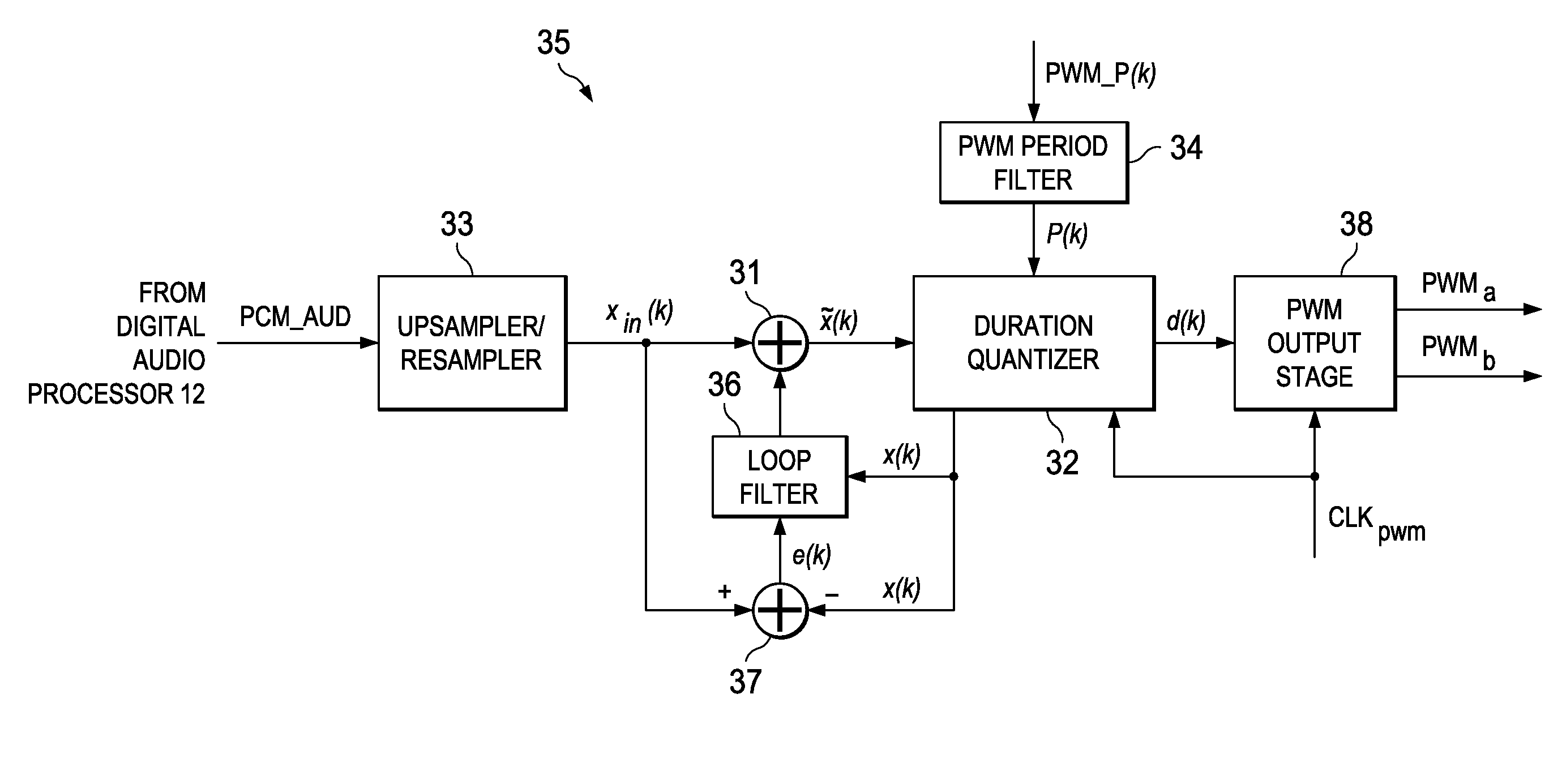
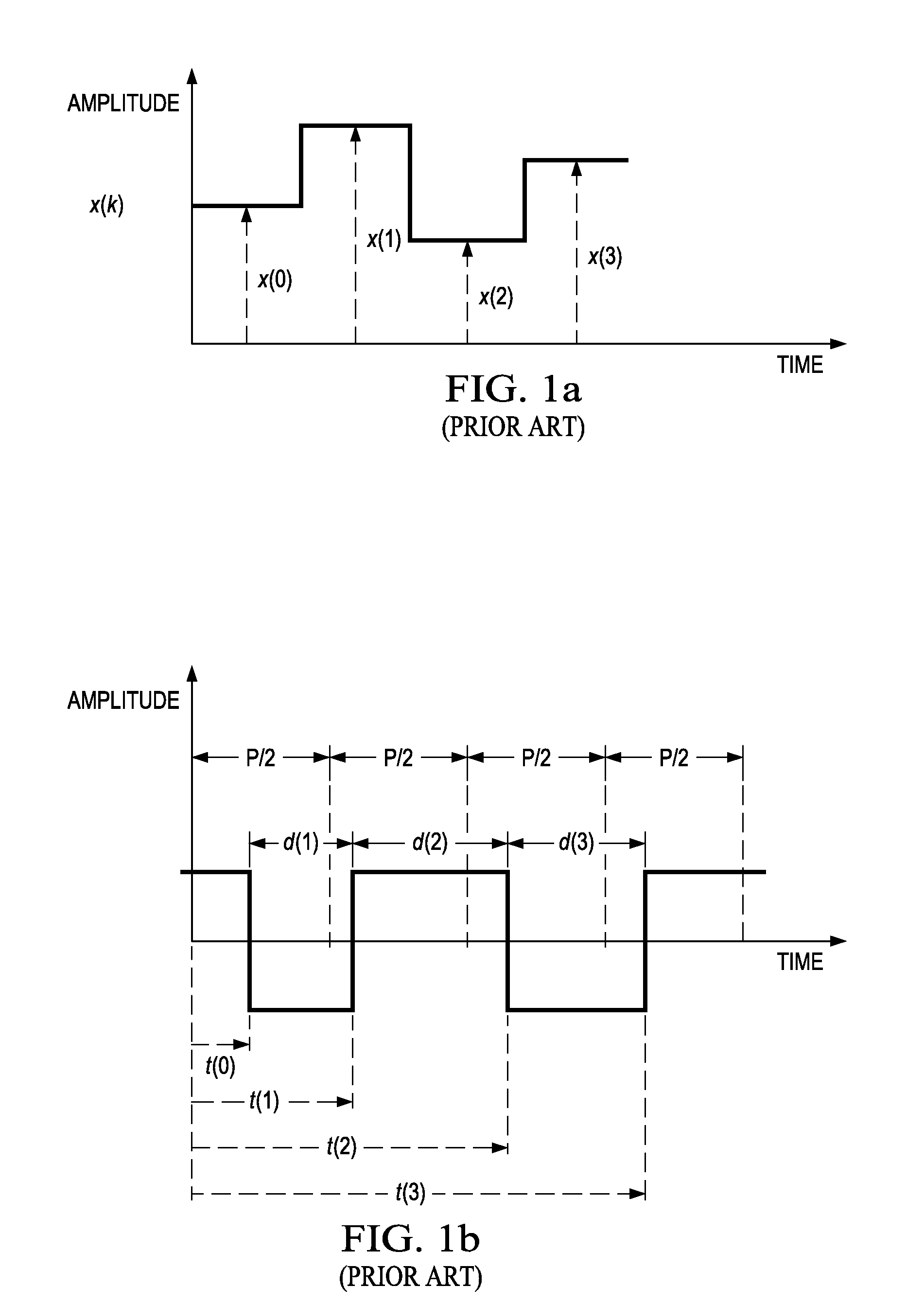
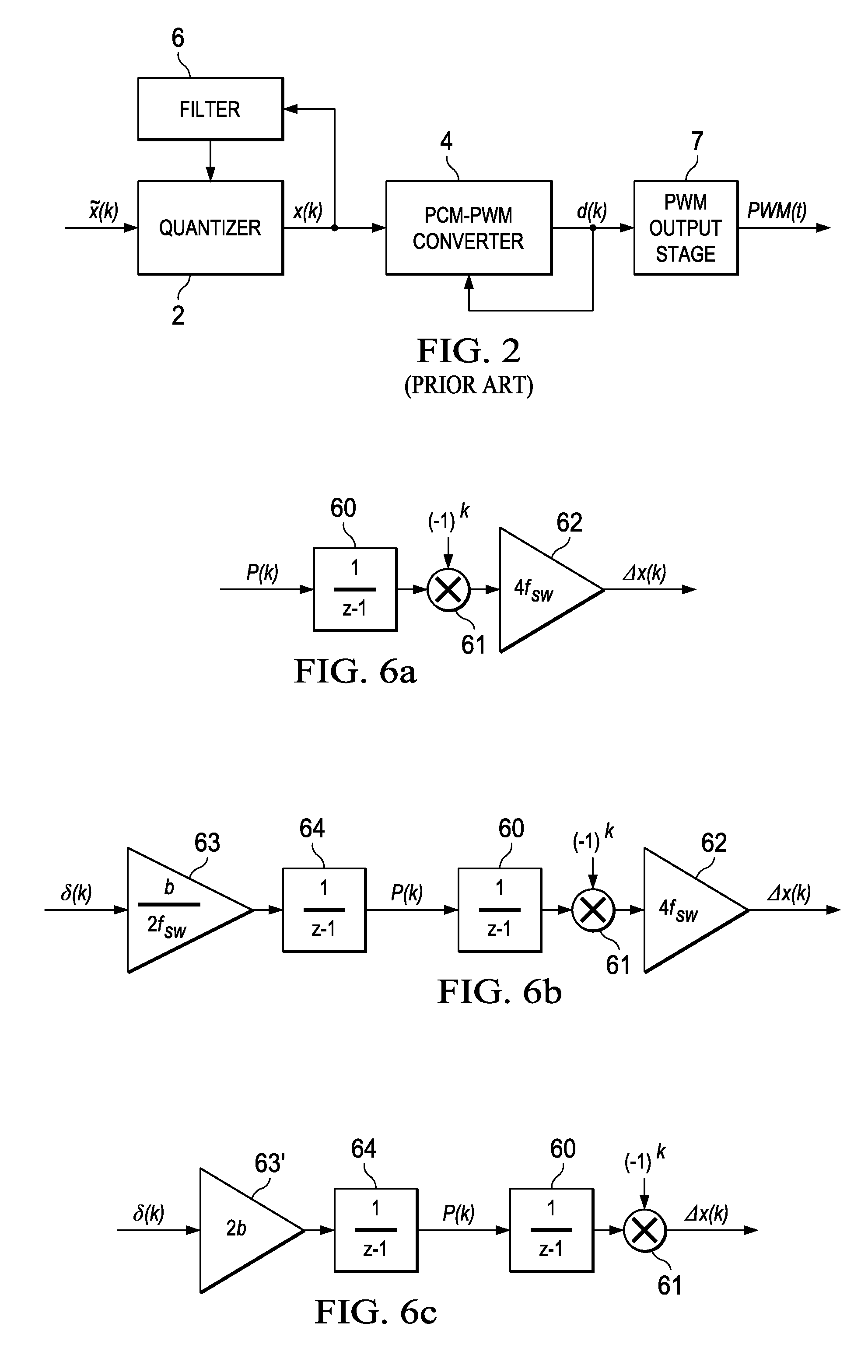
- A circuit and method that dynamically adjusts the PWM period over a continuous range, aligning transition times with the PWM clock grid while using filter functions to suppress transients, allowing the PWM signal to be slaved to an input sample rate and operate from a fixed clock frequency.

Digital-to-analog converter with sampling frequency detector
PatentInactiveUS6873274B2
Innovation
- A digital to analog converter with integrated sampling frequency detection means and oversampling capabilities, allowing it to automatically detect and adapt to changes in input sampling frequency, reducing the need for external control and minimizing noise during switching.


Audio Hardware Performance Standards and Compliance
Audio hardware performance standards and compliance requirements form the foundation for successful PCM optimization in professional audio systems. The Audio Engineering Society (AES) has established comprehensive standards including AES3 for digital audio interface and AES17 for digital audio measurement techniques, which directly impact PCM implementation strategies. These standards define critical parameters such as sampling rate accuracy, jitter tolerance, and bit depth requirements that must be maintained throughout the signal chain.
International compliance frameworks including IEC 60958 for consumer digital audio and ITU-R recommendations for broadcast applications establish mandatory performance thresholds for PCM-based systems. These specifications mandate maximum total harmonic distortion levels typically below 0.01%, signal-to-noise ratios exceeding 120 dB for 24-bit systems, and frequency response linearity within ±0.1 dB across the audible spectrum. Hardware implementations must demonstrate consistent performance across temperature variations and power supply fluctuations.
Professional audio applications require adherence to stricter performance criteria, particularly in studio monitoring and mastering environments. The European Broadcasting Union (EBU) R128 standard for loudness normalization directly influences PCM processing requirements, necessitating precise gain staging and dynamic range preservation. Similarly, Dolby and DTS certification programs impose specific PCM handling protocols for multichannel audio reproduction systems.
Measurement and verification protocols established by these standards require sophisticated test equipment and methodologies. Audio Precision analyzers and similar instruments must validate parameters including crosstalk isolation better than -100 dB, phase coherence within 0.1 degrees, and clock stability meeting AES11 specifications. Regular calibration and documentation procedures ensure ongoing compliance throughout product lifecycles.
Emerging standards for immersive audio formats including Dolby Atmos and DTS:X introduce additional complexity to PCM optimization requirements. These formats demand enhanced metadata handling capabilities while maintaining backward compatibility with existing stereo and surround sound systems, creating new challenges for hardware designers seeking comprehensive standards compliance.
International compliance frameworks including IEC 60958 for consumer digital audio and ITU-R recommendations for broadcast applications establish mandatory performance thresholds for PCM-based systems. These specifications mandate maximum total harmonic distortion levels typically below 0.01%, signal-to-noise ratios exceeding 120 dB for 24-bit systems, and frequency response linearity within ±0.1 dB across the audible spectrum. Hardware implementations must demonstrate consistent performance across temperature variations and power supply fluctuations.
Professional audio applications require adherence to stricter performance criteria, particularly in studio monitoring and mastering environments. The European Broadcasting Union (EBU) R128 standard for loudness normalization directly influences PCM processing requirements, necessitating precise gain staging and dynamic range preservation. Similarly, Dolby and DTS certification programs impose specific PCM handling protocols for multichannel audio reproduction systems.
Measurement and verification protocols established by these standards require sophisticated test equipment and methodologies. Audio Precision analyzers and similar instruments must validate parameters including crosstalk isolation better than -100 dB, phase coherence within 0.1 degrees, and clock stability meeting AES11 specifications. Regular calibration and documentation procedures ensure ongoing compliance throughout product lifecycles.
Emerging standards for immersive audio formats including Dolby Atmos and DTS:X introduce additional complexity to PCM optimization requirements. These formats demand enhanced metadata handling capabilities while maintaining backward compatibility with existing stereo and surround sound systems, creating new challenges for hardware designers seeking comprehensive standards compliance.
Power Efficiency Considerations in PCM Audio Systems
Power efficiency represents a critical design consideration in modern PCM audio systems, directly impacting battery life in portable devices and thermal management in high-performance audio equipment. The relationship between PCM processing requirements and power consumption becomes increasingly complex as audio fidelity demands rise, necessitating sophisticated optimization strategies across hardware and software layers.
Clock domain management emerges as a primary power efficiency factor in PCM systems. Dynamic clock scaling techniques allow processors to adjust operating frequencies based on real-time audio processing demands. During periods of audio silence or low-complexity content, systems can reduce clock speeds significantly, achieving power savings of 30-50% without compromising audio quality. Advanced implementations utilize predictive algorithms to anticipate processing requirements based on audio content analysis.
Sample rate adaptation presents another crucial efficiency opportunity. Intelligent systems can dynamically adjust PCM sample rates based on content characteristics and output device capabilities. For instance, speech-focused applications may operate at 16kHz sample rates, while music playback requires 44.1kHz or higher. This adaptive approach reduces computational overhead and memory bandwidth requirements proportionally.
Hardware-level optimizations focus on specialized audio processing units that offer superior power efficiency compared to general-purpose processors. Dedicated PCM processing cores can achieve 5-10x better power efficiency through optimized instruction sets and reduced data movement overhead. These specialized units often incorporate hardware-accelerated filtering, format conversion, and mixing capabilities.
Memory subsystem optimization significantly impacts overall power consumption in PCM systems. Efficient buffer management strategies minimize DRAM access frequency through intelligent caching and prefetching mechanisms. Low-power memory technologies, including LPDDR variants, provide substantial power savings while maintaining sufficient bandwidth for high-resolution audio streams.
Advanced power management techniques include voltage scaling coordination with processing demands and intelligent peripheral shutdown during inactive periods. Modern PCM systems implement fine-grained power domains, enabling selective activation of only necessary processing blocks. These approaches, combined with efficient interrupt handling and DMA utilization, create comprehensive power optimization frameworks essential for contemporary audio hardware integration.
Clock domain management emerges as a primary power efficiency factor in PCM systems. Dynamic clock scaling techniques allow processors to adjust operating frequencies based on real-time audio processing demands. During periods of audio silence or low-complexity content, systems can reduce clock speeds significantly, achieving power savings of 30-50% without compromising audio quality. Advanced implementations utilize predictive algorithms to anticipate processing requirements based on audio content analysis.
Sample rate adaptation presents another crucial efficiency opportunity. Intelligent systems can dynamically adjust PCM sample rates based on content characteristics and output device capabilities. For instance, speech-focused applications may operate at 16kHz sample rates, while music playback requires 44.1kHz or higher. This adaptive approach reduces computational overhead and memory bandwidth requirements proportionally.
Hardware-level optimizations focus on specialized audio processing units that offer superior power efficiency compared to general-purpose processors. Dedicated PCM processing cores can achieve 5-10x better power efficiency through optimized instruction sets and reduced data movement overhead. These specialized units often incorporate hardware-accelerated filtering, format conversion, and mixing capabilities.
Memory subsystem optimization significantly impacts overall power consumption in PCM systems. Efficient buffer management strategies minimize DRAM access frequency through intelligent caching and prefetching mechanisms. Low-power memory technologies, including LPDDR variants, provide substantial power savings while maintaining sufficient bandwidth for high-resolution audio streams.
Advanced power management techniques include voltage scaling coordination with processing demands and intelligent peripheral shutdown during inactive periods. Modern PCM systems implement fine-grained power domains, enabling selective activation of only necessary processing blocks. These approaches, combined with efficient interrupt handling and DMA utilization, create comprehensive power optimization frameworks essential for contemporary audio hardware integration.
Unlock deeper insights with Patsnap Eureka Quick Research — get a full tech report to explore trends and direct your research. Try now!
Generate Your Research Report Instantly with AI Agent
Supercharge your innovation with Patsnap Eureka AI Agent Platform!