How to Optimize Sorbent Use in Carbon Capture Mining
MAR 23, 20269 MIN READ
Generate Your Research Report Instantly with AI Agent
Patsnap Eureka helps you evaluate technical feasibility & market potential.
Carbon Capture Sorbent Optimization Background and Goals
Carbon capture technology has emerged as a critical component in global climate change mitigation strategies, with sorbent-based systems representing one of the most promising approaches for large-scale CO2 removal from industrial emissions and atmospheric sources. The evolution of carbon capture systems has progressed from early chemical absorption methods using simple amine solutions to sophisticated solid sorbent materials capable of selective CO2 adsorption under varying operational conditions.
The mining industry, characterized by energy-intensive operations and significant carbon emissions, presents unique challenges and opportunities for carbon capture implementation. Traditional mining processes generate substantial CO2 emissions through equipment operation, material processing, and energy consumption, making the sector a prime candidate for advanced carbon capture solutions. However, the harsh operational environments, remote locations, and cost-sensitive nature of mining operations demand highly optimized sorbent systems.
Current sorbent optimization challenges center around achieving maximum CO2 capture efficiency while minimizing material costs, energy consumption, and operational complexity. Key technical hurdles include sorbent degradation under cyclic loading conditions, reduced performance in the presence of impurities commonly found in mining environments, and the need for regeneration processes that maintain long-term material stability.
The primary technical objectives for sorbent optimization in carbon capture mining applications focus on developing materials and processes that can achieve CO2 capture rates exceeding 90% while maintaining operational stability over thousands of adsorption-desorption cycles. Performance targets include reducing energy penalties associated with sorbent regeneration to below 25% of captured CO2 equivalent energy content, extending sorbent lifespan to minimize replacement costs, and ensuring compatibility with existing mining infrastructure.
Economic viability represents another crucial goal, requiring sorbent systems that can operate at costs competitive with carbon pricing mechanisms and regulatory compliance requirements. This necessitates optimization strategies that balance initial capital investment with long-term operational efficiency, considering factors such as sorbent material costs, regeneration energy requirements, and maintenance intervals.
Environmental integration objectives emphasize developing sorbent systems that not only capture CO2 effectively but also minimize secondary environmental impacts. This includes reducing water consumption, eliminating toxic byproducts, and ensuring safe disposal or recycling of spent sorbent materials, thereby aligning carbon capture operations with broader sustainability goals in the mining sector.
The mining industry, characterized by energy-intensive operations and significant carbon emissions, presents unique challenges and opportunities for carbon capture implementation. Traditional mining processes generate substantial CO2 emissions through equipment operation, material processing, and energy consumption, making the sector a prime candidate for advanced carbon capture solutions. However, the harsh operational environments, remote locations, and cost-sensitive nature of mining operations demand highly optimized sorbent systems.
Current sorbent optimization challenges center around achieving maximum CO2 capture efficiency while minimizing material costs, energy consumption, and operational complexity. Key technical hurdles include sorbent degradation under cyclic loading conditions, reduced performance in the presence of impurities commonly found in mining environments, and the need for regeneration processes that maintain long-term material stability.
The primary technical objectives for sorbent optimization in carbon capture mining applications focus on developing materials and processes that can achieve CO2 capture rates exceeding 90% while maintaining operational stability over thousands of adsorption-desorption cycles. Performance targets include reducing energy penalties associated with sorbent regeneration to below 25% of captured CO2 equivalent energy content, extending sorbent lifespan to minimize replacement costs, and ensuring compatibility with existing mining infrastructure.
Economic viability represents another crucial goal, requiring sorbent systems that can operate at costs competitive with carbon pricing mechanisms and regulatory compliance requirements. This necessitates optimization strategies that balance initial capital investment with long-term operational efficiency, considering factors such as sorbent material costs, regeneration energy requirements, and maintenance intervals.
Environmental integration objectives emphasize developing sorbent systems that not only capture CO2 effectively but also minimize secondary environmental impacts. This includes reducing water consumption, eliminating toxic byproducts, and ensuring safe disposal or recycling of spent sorbent materials, thereby aligning carbon capture operations with broader sustainability goals in the mining sector.
Market Demand for Efficient Carbon Capture Solutions
The global carbon capture, utilization, and storage (CCUS) market is experiencing unprecedented growth driven by escalating climate commitments and regulatory pressures. Governments worldwide are implementing increasingly stringent carbon emission targets, with many nations committing to net-zero emissions by 2050. This regulatory landscape creates substantial demand for efficient carbon capture solutions across industrial sectors including power generation, cement production, steel manufacturing, and petrochemicals.
Industrial facilities are facing mounting pressure to reduce their carbon footprint while maintaining operational efficiency. The mining sector, traditionally associated with high carbon emissions, is particularly seeking advanced carbon capture technologies to meet environmental compliance requirements. Mining operations generate significant CO2 emissions through energy-intensive processes, creating a substantial addressable market for optimized sorbent-based capture systems.
The economic viability of carbon capture projects heavily depends on operational efficiency, with sorbent costs representing a major component of total system expenses. Current market analysis indicates that sorbent replacement and regeneration can account for substantial operational expenditures in carbon capture facilities. This cost structure drives strong demand for solutions that can optimize sorbent utilization, extend material lifespan, and improve capture efficiency.
Corporate sustainability initiatives are accelerating market adoption as companies seek to achieve carbon neutrality goals. Major mining corporations are increasingly investing in carbon capture technologies as part of their environmental, social, and governance strategies. The integration of carbon pricing mechanisms in various jurisdictions further enhances the economic attractiveness of efficient capture solutions.
Technological advancement requirements are creating specific market segments focused on sorbent optimization. End users are demanding solutions that can maximize CO2 capture rates while minimizing sorbent degradation and replacement frequency. The market shows particular interest in technologies that can adapt to varying CO2 concentrations and operating conditions typical in mining environments.
The emergence of carbon credit markets and potential revenue streams from captured CO2 utilization are expanding the economic case for carbon capture investments. Mining companies are recognizing that optimized sorbent systems can transform carbon capture from a compliance cost into a potential revenue generator through improved capture efficiency and reduced operational expenses.
Industrial facilities are facing mounting pressure to reduce their carbon footprint while maintaining operational efficiency. The mining sector, traditionally associated with high carbon emissions, is particularly seeking advanced carbon capture technologies to meet environmental compliance requirements. Mining operations generate significant CO2 emissions through energy-intensive processes, creating a substantial addressable market for optimized sorbent-based capture systems.
The economic viability of carbon capture projects heavily depends on operational efficiency, with sorbent costs representing a major component of total system expenses. Current market analysis indicates that sorbent replacement and regeneration can account for substantial operational expenditures in carbon capture facilities. This cost structure drives strong demand for solutions that can optimize sorbent utilization, extend material lifespan, and improve capture efficiency.
Corporate sustainability initiatives are accelerating market adoption as companies seek to achieve carbon neutrality goals. Major mining corporations are increasingly investing in carbon capture technologies as part of their environmental, social, and governance strategies. The integration of carbon pricing mechanisms in various jurisdictions further enhances the economic attractiveness of efficient capture solutions.
Technological advancement requirements are creating specific market segments focused on sorbent optimization. End users are demanding solutions that can maximize CO2 capture rates while minimizing sorbent degradation and replacement frequency. The market shows particular interest in technologies that can adapt to varying CO2 concentrations and operating conditions typical in mining environments.
The emergence of carbon credit markets and potential revenue streams from captured CO2 utilization are expanding the economic case for carbon capture investments. Mining companies are recognizing that optimized sorbent systems can transform carbon capture from a compliance cost into a potential revenue generator through improved capture efficiency and reduced operational expenses.
Current Sorbent Performance Challenges in Mining Applications
Mining operations face significant challenges in implementing effective carbon capture technologies, primarily due to the harsh operational environments and demanding performance requirements for sorbent materials. Current sorbent systems struggle with durability issues when exposed to high temperatures, corrosive gases, and particulate matter commonly found in mining facilities. These conditions accelerate sorbent degradation, reducing their effective lifespan and increasing operational costs substantially.
Capacity limitations represent another critical challenge affecting sorbent performance in mining applications. Traditional sorbents often exhibit insufficient CO2 absorption capacity under the variable pressure and temperature conditions typical of mining operations. The fluctuating nature of mining processes creates inconsistent gas flow rates and compositions, making it difficult for conventional sorbents to maintain optimal capture efficiency throughout operational cycles.
Regeneration efficiency poses a substantial technical hurdle for mining-based carbon capture systems. Many existing sorbent materials require energy-intensive regeneration processes that can consume up to 30% of a mining facility's available power output. The high energy penalty associated with sorbent regeneration significantly impacts the economic viability of carbon capture implementation in mining operations, where energy costs already represent a major operational expense.
Selectivity issues further complicate sorbent performance in mining environments. Mining operations typically produce complex gas mixtures containing sulfur compounds, nitrogen oxides, and various particulates that can interfere with CO2 capture mechanisms. Current sorbent formulations often lack the selectivity needed to effectively separate CO2 from these competing species, resulting in reduced capture efficiency and potential contamination of captured carbon streams.
Scale-up challenges present additional barriers to effective sorbent deployment in mining applications. Laboratory-tested sorbent materials frequently fail to maintain their performance characteristics when scaled to industrial mining volumes. The transition from bench-scale testing to full mining operation implementation reveals issues with mass transfer limitations, uneven gas distribution, and mechanical stability that are not apparent in smaller-scale evaluations.
Economic constraints significantly impact sorbent selection and optimization strategies in mining operations. The cost-effectiveness threshold for carbon capture in mining requires sorbent materials to achieve capture rates exceeding 85% while maintaining operational costs below $50 per ton of CO2 captured. Current sorbent technologies struggle to meet these economic targets while delivering consistent performance under mining operational conditions.
Capacity limitations represent another critical challenge affecting sorbent performance in mining applications. Traditional sorbents often exhibit insufficient CO2 absorption capacity under the variable pressure and temperature conditions typical of mining operations. The fluctuating nature of mining processes creates inconsistent gas flow rates and compositions, making it difficult for conventional sorbents to maintain optimal capture efficiency throughout operational cycles.
Regeneration efficiency poses a substantial technical hurdle for mining-based carbon capture systems. Many existing sorbent materials require energy-intensive regeneration processes that can consume up to 30% of a mining facility's available power output. The high energy penalty associated with sorbent regeneration significantly impacts the economic viability of carbon capture implementation in mining operations, where energy costs already represent a major operational expense.
Selectivity issues further complicate sorbent performance in mining environments. Mining operations typically produce complex gas mixtures containing sulfur compounds, nitrogen oxides, and various particulates that can interfere with CO2 capture mechanisms. Current sorbent formulations often lack the selectivity needed to effectively separate CO2 from these competing species, resulting in reduced capture efficiency and potential contamination of captured carbon streams.
Scale-up challenges present additional barriers to effective sorbent deployment in mining applications. Laboratory-tested sorbent materials frequently fail to maintain their performance characteristics when scaled to industrial mining volumes. The transition from bench-scale testing to full mining operation implementation reveals issues with mass transfer limitations, uneven gas distribution, and mechanical stability that are not apparent in smaller-scale evaluations.
Economic constraints significantly impact sorbent selection and optimization strategies in mining operations. The cost-effectiveness threshold for carbon capture in mining requires sorbent materials to achieve capture rates exceeding 85% while maintaining operational costs below $50 per ton of CO2 captured. Current sorbent technologies struggle to meet these economic targets while delivering consistent performance under mining operational conditions.
Existing Sorbent Optimization Methods and Technologies
01 Sorbent material composition and structure optimization
Optimization of sorbent materials involves selecting and modifying the chemical composition and physical structure to enhance adsorption capacity and selectivity. This includes developing porous materials with controlled pore size distribution, surface area, and functional groups. The structural characteristics such as particle size, morphology, and crystallinity are optimized to improve mass transfer and accessibility of active sites for target molecules.- Sorbent material composition and structure optimization: Optimization of sorbent materials involves modifying their chemical composition and physical structure to enhance adsorption capacity and selectivity. This includes developing novel sorbent materials with specific pore sizes, surface areas, and functional groups tailored for target substances. The optimization process focuses on improving the molecular structure and crystalline properties of sorbents to achieve better performance in separation and purification applications.
- Surface modification and functionalization of sorbents: Enhancement of sorbent performance through surface treatment and functionalization techniques to improve binding affinity and selectivity. This approach involves introducing specific chemical groups or coatings onto the sorbent surface to target particular molecules or contaminants. Surface modification can significantly increase the efficiency of adsorption processes and extend the operational lifetime of sorbent materials.
- Process parameters and operating conditions optimization: Systematic optimization of operational parameters such as temperature, pressure, flow rate, and contact time to maximize sorbent efficiency. This includes developing methods for controlling and adjusting process conditions to achieve optimal adsorption kinetics and capacity. The optimization considers factors affecting mass transfer and equilibrium to improve overall system performance.
- Regeneration and reusability enhancement: Development of methods to improve sorbent regeneration efficiency and extend the number of adsorption-desorption cycles. This involves optimizing desorption conditions and developing techniques to restore sorbent capacity after use. The focus is on maintaining consistent performance over multiple cycles while reducing operational costs and environmental impact through effective regeneration strategies.
- Multi-component sorbent systems and hybrid materials: Design and optimization of composite or hybrid sorbent systems that combine multiple materials or components to achieve synergistic effects. This approach integrates different sorbent types or incorporates additional functional materials to enhance overall adsorption performance. The optimization focuses on achieving complementary properties and improved selectivity for complex separation challenges.
02 Surface modification and functionalization techniques
Enhancement of sorbent performance through surface treatment methods that introduce specific functional groups or coatings to improve selectivity and binding affinity. These modifications can include chemical grafting, plasma treatment, or impregnation with active species to tailor the surface properties for specific applications. The optimization focuses on achieving optimal surface chemistry while maintaining structural integrity and regeneration capability.Expand Specific Solutions03 Process parameter optimization for sorbent performance
Systematic optimization of operational conditions including temperature, pressure, flow rate, and contact time to maximize sorbent efficiency. This involves determining optimal loading conditions, breakthrough characteristics, and regeneration cycles. The approach includes modeling and experimental validation to establish the most effective operating windows for different applications and target compounds.Expand Specific Solutions04 Multi-component and composite sorbent systems
Development of hybrid or composite sorbent materials that combine multiple components to achieve synergistic effects and enhanced performance. This includes layered structures, mixed-matrix materials, or sequential sorbent beds designed to optimize selectivity, capacity, and regeneration properties. The optimization considers the interaction between different components and their collective contribution to overall sorption efficiency.Expand Specific Solutions05 Regeneration and lifecycle optimization
Optimization strategies focused on improving sorbent regeneration efficiency, reusability, and long-term stability. This includes developing methods for effective desorption, thermal or chemical regeneration, and minimizing degradation over multiple cycles. The approach aims to reduce operational costs and environmental impact while maintaining consistent performance throughout the sorbent lifecycle.Expand Specific Solutions
Key Players in Carbon Capture and Sorbent Industry
The carbon capture sorbent optimization field represents an emerging yet rapidly evolving sector within the broader carbon capture, utilization, and storage (CCUS) market, which is projected to reach significant scale by 2030. The industry is currently in its early commercialization phase, transitioning from pilot projects to full-scale deployment. Technology maturity varies considerably across players, with established companies like Climeworks AG and Noya PBC demonstrating advanced direct air capture systems using novel sorbent materials, while research institutions such as California Institute of Technology and TDA Research, Inc. focus on fundamental sorbent development. Traditional energy companies including Schlumberger Technologies and China Petroleum & Chemical Corp. are integrating sorbent optimization into existing operations, whereas specialized firms like Susteon, Inc. concentrate exclusively on breakthrough sorbent technologies for enhanced CO2 capture efficiency and cost reduction.
TDA Research, Inc.
Technical Solution: TDA Research has developed innovative solid sorbent materials including metal-organic frameworks (MOFs) and advanced amine-functionalized materials for carbon capture applications. Their research focuses on optimizing sorbent selectivity and capacity through molecular-level design of capture materials. The company has created sorbents with enhanced CO2 uptake capacity exceeding 4 mmol/g and improved thermal stability for multiple regeneration cycles. Their approach includes developing sorbent pellets and structured contactors that minimize pressure drop while maximizing mass transfer efficiency. TDA's technology also incorporates rapid temperature swing processes that reduce energy consumption during sorbent regeneration by utilizing lower regeneration temperatures.
Strengths: Advanced materials research capabilities, high CO2 uptake capacity, innovative MOF technology. Weaknesses: Early-stage technology development, limited commercial deployment experience, scalability challenges for specialized materials.
Shell Internationale Research Maatschappij BV
Technical Solution: Shell has developed advanced solvent-based carbon capture technologies focusing on optimizing amine sorbent performance in post-combustion capture systems. Their approach includes novel amine formulations with reduced energy penalties for regeneration, typically requiring 15-20% less energy than conventional MEA systems. Shell's technology incorporates advanced process integration techniques including heat recovery systems and optimized stripper column designs to maximize sorbent utilization efficiency. The company has also developed corrosion-resistant sorbent formulations that extend equipment lifetime and reduce maintenance costs. Their pilot-scale demonstrations have shown improved CO2 loading capacity and faster absorption kinetics compared to traditional sorbents.
Strengths: Extensive industrial experience, proven at pilot scale, integrated heat recovery systems. Weaknesses: Focus primarily on point-source capture, high operational complexity, significant infrastructure requirements.
Core Innovations in Advanced Sorbent Materials
Systems and methods for optimizing carbon dioxide capture using sorbents
PatentWO2024232893A1
Innovation
- A method and system that utilize solid sorbents with varying chemical and physical characteristics, including temperature modulation using a regulating fluid stream composed of cold and hot streams, to optimize carbon dioxide adsorption and desorption in adsorbent beds, avoiding direct contact and contamination.
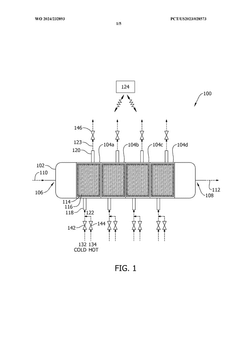
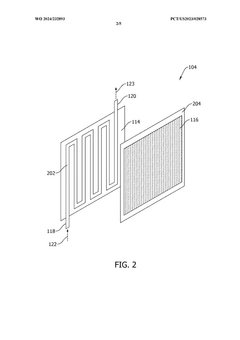
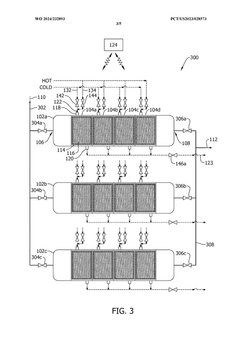
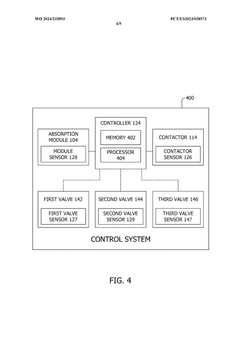
Pellets of sorbent suitable for carbon dioxide capture
PatentPendingUS20210252481A1
Innovation
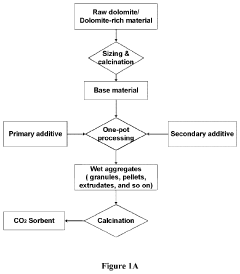
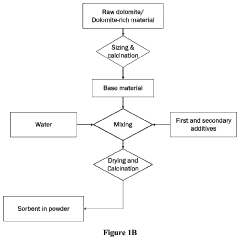
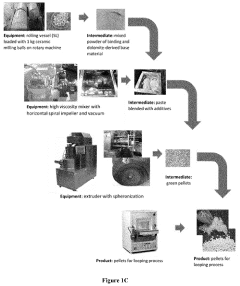
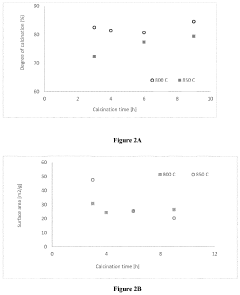
- Preparation of CaO-based sorbent pellets using dolomite with the addition of two different metal ions (Al or Mg, and a transition metal or lanthanide) through a one-pot process, which enhances CO2 capture performance and stability across multiple cycles.
Environmental Regulations for Carbon Capture in Mining
The regulatory landscape for carbon capture technologies in mining operations has evolved significantly over the past decade, driven by international climate commitments and national decarbonization strategies. The Paris Agreement's influence has cascaded into sector-specific regulations, with mining industries facing increasingly stringent emission reduction requirements. Key regulatory frameworks include the EU's Industrial Emissions Directive, which sets specific CO2 emission limits for large industrial installations, and similar legislation in jurisdictions like California's Cap-and-Trade Program and Canada's federal carbon pricing mechanism.
Environmental regulations specifically addressing sorbent optimization in carbon capture systems focus on several critical areas. Material safety standards govern the selection and handling of chemical sorbents, with regulations such as REACH in Europe requiring comprehensive assessment of sorbent materials' environmental and health impacts. The U.S. Environmental Protection Agency's Toxic Substances Control Act similarly regulates the introduction of new sorbent chemistries, requiring extensive testing data before commercial deployment.
Waste management regulations present significant compliance challenges for sorbent-based carbon capture systems. Spent sorbent materials often contain concentrated pollutants and require specialized disposal or regeneration processes. The Resource Conservation and Recovery Act in the United States classifies certain spent sorbents as hazardous waste, imposing strict handling, storage, and disposal requirements that directly impact operational costs and system design decisions.
Air quality standards indirectly influence sorbent optimization strategies through emission limits for criteria pollutants. Regulations such as the National Ambient Air Quality Standards require mining operations to minimize not only CO2 emissions but also particulate matter and other air pollutants that may be released during sorbent handling and regeneration processes. This creates a multi-objective optimization challenge where sorbent selection must balance carbon capture efficiency with broader environmental compliance.
Emerging regulations are beginning to address the lifecycle environmental impact of carbon capture technologies. Several jurisdictions are developing standards for measuring and reporting the net environmental benefit of carbon capture systems, including energy consumption for sorbent regeneration and the carbon footprint of sorbent production. These evolving requirements are pushing the industry toward more sustainable sorbent technologies and optimization strategies that consider total environmental impact rather than capture efficiency alone.
Environmental regulations specifically addressing sorbent optimization in carbon capture systems focus on several critical areas. Material safety standards govern the selection and handling of chemical sorbents, with regulations such as REACH in Europe requiring comprehensive assessment of sorbent materials' environmental and health impacts. The U.S. Environmental Protection Agency's Toxic Substances Control Act similarly regulates the introduction of new sorbent chemistries, requiring extensive testing data before commercial deployment.
Waste management regulations present significant compliance challenges for sorbent-based carbon capture systems. Spent sorbent materials often contain concentrated pollutants and require specialized disposal or regeneration processes. The Resource Conservation and Recovery Act in the United States classifies certain spent sorbents as hazardous waste, imposing strict handling, storage, and disposal requirements that directly impact operational costs and system design decisions.
Air quality standards indirectly influence sorbent optimization strategies through emission limits for criteria pollutants. Regulations such as the National Ambient Air Quality Standards require mining operations to minimize not only CO2 emissions but also particulate matter and other air pollutants that may be released during sorbent handling and regeneration processes. This creates a multi-objective optimization challenge where sorbent selection must balance carbon capture efficiency with broader environmental compliance.
Emerging regulations are beginning to address the lifecycle environmental impact of carbon capture technologies. Several jurisdictions are developing standards for measuring and reporting the net environmental benefit of carbon capture systems, including energy consumption for sorbent regeneration and the carbon footprint of sorbent production. These evolving requirements are pushing the industry toward more sustainable sorbent technologies and optimization strategies that consider total environmental impact rather than capture efficiency alone.
Economic Viability of Optimized Sorbent Systems
The economic viability of optimized sorbent systems in carbon capture mining represents a critical factor determining the widespread adoption of these technologies. Current cost structures reveal that sorbent materials typically account for 15-25% of total operational expenses in carbon capture facilities, making optimization efforts essential for achieving competitive economics against traditional emission control methods.
Capital expenditure considerations demonstrate that advanced sorbent systems require initial investments ranging from $50-80 million for industrial-scale installations. However, optimized sorbent utilization can reduce these costs by 20-30% through improved material efficiency and extended operational lifespans. The payback period for optimized systems typically ranges from 7-12 years, depending on carbon pricing mechanisms and regulatory frameworks.
Operational cost analysis indicates that optimized sorbent systems achieve significant savings through reduced material consumption and enhanced regeneration cycles. Advanced sorbent materials with improved selectivity and capacity can decrease operational costs by $15-25 per ton of CO2 captured compared to conventional systems. These savings primarily stem from reduced energy requirements for sorbent regeneration and lower material replacement frequencies.
Revenue generation potential emerges through carbon credit markets and regulatory compliance mechanisms. Optimized sorbent systems enable more cost-effective carbon capture, positioning operators to capitalize on carbon pricing schemes that currently range from $20-100 per ton CO2 equivalent across different jurisdictions. Enhanced capture efficiency directly translates to increased revenue potential from carbon credit sales.
Risk assessment reveals that economic viability depends heavily on regulatory stability and carbon pricing trajectories. Market volatility in carbon prices poses significant financial risks, while technological obsolescence represents another concern as next-generation sorbent materials continue emerging. However, optimized systems demonstrate greater resilience to market fluctuations due to their improved cost structures and operational flexibility, making them increasingly attractive investment propositions for forward-thinking industrial operators.
Capital expenditure considerations demonstrate that advanced sorbent systems require initial investments ranging from $50-80 million for industrial-scale installations. However, optimized sorbent utilization can reduce these costs by 20-30% through improved material efficiency and extended operational lifespans. The payback period for optimized systems typically ranges from 7-12 years, depending on carbon pricing mechanisms and regulatory frameworks.
Operational cost analysis indicates that optimized sorbent systems achieve significant savings through reduced material consumption and enhanced regeneration cycles. Advanced sorbent materials with improved selectivity and capacity can decrease operational costs by $15-25 per ton of CO2 captured compared to conventional systems. These savings primarily stem from reduced energy requirements for sorbent regeneration and lower material replacement frequencies.
Revenue generation potential emerges through carbon credit markets and regulatory compliance mechanisms. Optimized sorbent systems enable more cost-effective carbon capture, positioning operators to capitalize on carbon pricing schemes that currently range from $20-100 per ton CO2 equivalent across different jurisdictions. Enhanced capture efficiency directly translates to increased revenue potential from carbon credit sales.
Risk assessment reveals that economic viability depends heavily on regulatory stability and carbon pricing trajectories. Market volatility in carbon prices poses significant financial risks, while technological obsolescence represents another concern as next-generation sorbent materials continue emerging. However, optimized systems demonstrate greater resilience to market fluctuations due to their improved cost structures and operational flexibility, making them increasingly attractive investment propositions for forward-thinking industrial operators.
Unlock deeper insights with Patsnap Eureka Quick Research — get a full tech report to explore trends and direct your research. Try now!
Generate Your Research Report Instantly with AI Agent
Supercharge your innovation with Patsnap Eureka AI Agent Platform!