

How to Predict Maintenance Schedules for Float Valve Systems
FEB 11, 20269 MIN READ
Generate Your Research Report Instantly with AI Agent
PatSnap Eureka helps you evaluate technical feasibility & market potential.
Float Valve Predictive Maintenance Background and Objectives
Float valve systems represent critical components in industrial fluid control applications, serving essential functions across water treatment facilities, chemical processing plants, petroleum refineries, and manufacturing operations. These mechanical devices regulate liquid levels through buoyancy-activated mechanisms, ensuring consistent flow control and preventing overflow or dry-run conditions. Despite their relatively simple design principles, float valves operate under demanding conditions involving pressure fluctuations, temperature variations, chemical exposure, and continuous mechanical stress, making them susceptible to gradual degradation and unexpected failures.
Traditional maintenance approaches for float valve systems have predominantly relied on reactive strategies, where interventions occur only after component failure, or time-based preventive schedules that apply fixed maintenance intervals regardless of actual equipment condition. These conventional methods present significant operational challenges and economic inefficiencies. Reactive maintenance leads to unplanned downtime, production losses, potential safety hazards, and cascading system failures. Conversely, time-based preventive maintenance often results in unnecessary interventions, premature component replacement, excessive labor costs, and resource waste when equipment remains in serviceable condition.
The primary objective of developing predictive maintenance capabilities for float valve systems is to transition from these traditional paradigms toward condition-based maintenance strategies that optimize intervention timing based on actual equipment health status. This approach aims to maximize operational reliability while minimizing maintenance costs and downtime. Specific technical goals include establishing accurate degradation models that correlate operational parameters with remaining useful life, identifying early warning indicators of impending failures, and developing robust prediction algorithms capable of generating actionable maintenance schedules.
Furthermore, the initiative seeks to integrate multiple data sources including sensor measurements, operational history, environmental conditions, and material characteristics to create comprehensive predictive models. The ultimate objective extends beyond simple failure prediction to encompass optimization of maintenance resource allocation, spare parts inventory management, and operational planning coordination. Achieving these goals requires addressing fundamental challenges in data acquisition, feature extraction, model validation, and practical implementation within existing industrial infrastructure and operational workflows.
Traditional maintenance approaches for float valve systems have predominantly relied on reactive strategies, where interventions occur only after component failure, or time-based preventive schedules that apply fixed maintenance intervals regardless of actual equipment condition. These conventional methods present significant operational challenges and economic inefficiencies. Reactive maintenance leads to unplanned downtime, production losses, potential safety hazards, and cascading system failures. Conversely, time-based preventive maintenance often results in unnecessary interventions, premature component replacement, excessive labor costs, and resource waste when equipment remains in serviceable condition.
The primary objective of developing predictive maintenance capabilities for float valve systems is to transition from these traditional paradigms toward condition-based maintenance strategies that optimize intervention timing based on actual equipment health status. This approach aims to maximize operational reliability while minimizing maintenance costs and downtime. Specific technical goals include establishing accurate degradation models that correlate operational parameters with remaining useful life, identifying early warning indicators of impending failures, and developing robust prediction algorithms capable of generating actionable maintenance schedules.
Furthermore, the initiative seeks to integrate multiple data sources including sensor measurements, operational history, environmental conditions, and material characteristics to create comprehensive predictive models. The ultimate objective extends beyond simple failure prediction to encompass optimization of maintenance resource allocation, spare parts inventory management, and operational planning coordination. Achieving these goals requires addressing fundamental challenges in data acquisition, feature extraction, model validation, and practical implementation within existing industrial infrastructure and operational workflows.
Market Demand for Float Valve Maintenance Solutions
The market demand for float valve maintenance solutions is experiencing steady growth driven by the increasing complexity of industrial operations and the critical role these components play in fluid control systems across multiple sectors. Float valves are extensively deployed in water treatment facilities, chemical processing plants, oil and gas operations, HVAC systems, and manufacturing environments where precise liquid level control is essential for operational continuity and safety compliance.
Industrial facilities are increasingly recognizing that unplanned float valve failures can result in significant operational disruptions, including production downtime, equipment damage, and potential safety hazards. This awareness has created substantial demand for predictive maintenance solutions that can anticipate component degradation before catastrophic failures occur. The shift from reactive to proactive maintenance strategies represents a fundamental transformation in how organizations approach asset management and operational reliability.
The water and wastewater treatment sector demonstrates particularly strong demand for advanced maintenance solutions, as float valve failures in these applications can compromise water quality, regulatory compliance, and service delivery to communities. Similarly, chemical processing industries require highly reliable float valve systems to prevent hazardous material leaks and maintain process stability, driving investment in sophisticated monitoring and prediction technologies.
Economic factors further amplify market demand as organizations seek to optimize maintenance budgets and reduce total cost of ownership. Traditional time-based maintenance approaches often result in either premature component replacement or unexpected failures, both of which generate unnecessary expenses. Predictive maintenance solutions promise to optimize replacement intervals, minimize emergency repairs, and extend equipment lifespan through data-driven decision making.
The integration of Industrial Internet of Things technologies and advanced analytics platforms has made predictive maintenance solutions more accessible and cost-effective for facilities of varying scales. Small and medium-sized enterprises, previously unable to justify sophisticated monitoring systems, now represent an expanding market segment as cloud-based solutions and affordable sensor technologies lower implementation barriers. This democratization of predictive maintenance technology is broadening the addressable market significantly and creating opportunities for innovative solution providers to capture value across diverse industrial applications.
Industrial facilities are increasingly recognizing that unplanned float valve failures can result in significant operational disruptions, including production downtime, equipment damage, and potential safety hazards. This awareness has created substantial demand for predictive maintenance solutions that can anticipate component degradation before catastrophic failures occur. The shift from reactive to proactive maintenance strategies represents a fundamental transformation in how organizations approach asset management and operational reliability.
The water and wastewater treatment sector demonstrates particularly strong demand for advanced maintenance solutions, as float valve failures in these applications can compromise water quality, regulatory compliance, and service delivery to communities. Similarly, chemical processing industries require highly reliable float valve systems to prevent hazardous material leaks and maintain process stability, driving investment in sophisticated monitoring and prediction technologies.
Economic factors further amplify market demand as organizations seek to optimize maintenance budgets and reduce total cost of ownership. Traditional time-based maintenance approaches often result in either premature component replacement or unexpected failures, both of which generate unnecessary expenses. Predictive maintenance solutions promise to optimize replacement intervals, minimize emergency repairs, and extend equipment lifespan through data-driven decision making.
The integration of Industrial Internet of Things technologies and advanced analytics platforms has made predictive maintenance solutions more accessible and cost-effective for facilities of varying scales. Small and medium-sized enterprises, previously unable to justify sophisticated monitoring systems, now represent an expanding market segment as cloud-based solutions and affordable sensor technologies lower implementation barriers. This democratization of predictive maintenance technology is broadening the addressable market significantly and creating opportunities for innovative solution providers to capture value across diverse industrial applications.
Current Status and Challenges in Float Valve Monitoring
Float valve systems remain critical components across industrial, municipal, and commercial applications, yet their monitoring capabilities have historically lagged behind other automated systems. Traditional approaches rely heavily on scheduled inspections and reactive maintenance, where technicians physically examine valves at predetermined intervals or respond to failures after they occur. This methodology proves inefficient and costly, as it fails to account for actual operating conditions and usage patterns that significantly influence component degradation rates.
Current monitoring technologies for float valve systems face substantial limitations in data acquisition and analysis. Most existing installations lack integrated sensors capable of capturing real-time operational parameters such as cycle counts, pressure fluctuations, temperature variations, and mechanical wear indicators. Where sensors do exist, they often operate as standalone units without connectivity to centralized monitoring platforms, creating data silos that prevent comprehensive system analysis. The absence of standardized communication protocols further complicates integration efforts across different manufacturers and valve types.
The technical challenges extend beyond hardware limitations to encompass significant gaps in predictive analytics capabilities. Existing condition monitoring systems typically employ simple threshold-based alerts that trigger warnings only when parameters exceed preset limits. These approaches cannot identify gradual performance degradation or predict remaining useful life with acceptable accuracy. The lack of historical operational data compounds this problem, as machine learning algorithms require substantial datasets to develop reliable predictive models for maintenance scheduling.
Geographic and industrial variations present additional complexity in establishing universal monitoring standards. Float valve applications range from water treatment facilities operating in controlled environments to offshore oil platforms experiencing extreme conditions. Each context introduces unique failure modes and degradation patterns that current monitoring solutions struggle to accommodate. The fragmentation of technical expertise across industries further impedes knowledge transfer and best practice development.
Economic constraints represent a persistent barrier to widespread adoption of advanced monitoring technologies. Many facilities operate legacy float valve systems installed decades ago, where retrofitting modern sensors proves technically challenging or cost-prohibitive. The return on investment for predictive maintenance systems remains difficult to quantify, particularly for smaller operations with limited valve populations. This economic reality perpetuates reliance on traditional maintenance approaches despite their recognized inefficiencies.
Current monitoring technologies for float valve systems face substantial limitations in data acquisition and analysis. Most existing installations lack integrated sensors capable of capturing real-time operational parameters such as cycle counts, pressure fluctuations, temperature variations, and mechanical wear indicators. Where sensors do exist, they often operate as standalone units without connectivity to centralized monitoring platforms, creating data silos that prevent comprehensive system analysis. The absence of standardized communication protocols further complicates integration efforts across different manufacturers and valve types.
The technical challenges extend beyond hardware limitations to encompass significant gaps in predictive analytics capabilities. Existing condition monitoring systems typically employ simple threshold-based alerts that trigger warnings only when parameters exceed preset limits. These approaches cannot identify gradual performance degradation or predict remaining useful life with acceptable accuracy. The lack of historical operational data compounds this problem, as machine learning algorithms require substantial datasets to develop reliable predictive models for maintenance scheduling.
Geographic and industrial variations present additional complexity in establishing universal monitoring standards. Float valve applications range from water treatment facilities operating in controlled environments to offshore oil platforms experiencing extreme conditions. Each context introduces unique failure modes and degradation patterns that current monitoring solutions struggle to accommodate. The fragmentation of technical expertise across industries further impedes knowledge transfer and best practice development.
Economic constraints represent a persistent barrier to widespread adoption of advanced monitoring technologies. Many facilities operate legacy float valve systems installed decades ago, where retrofitting modern sensors proves technically challenging or cost-prohibitive. The return on investment for predictive maintenance systems remains difficult to quantify, particularly for smaller operations with limited valve populations. This economic reality perpetuates reliance on traditional maintenance approaches despite their recognized inefficiencies.
Existing Predictive Maintenance Solutions for Float Valves
01 Automated monitoring and maintenance scheduling systems
Systems that automatically monitor float valve conditions and schedule maintenance based on operational parameters, sensor data, and usage patterns. These systems can detect anomalies, predict failures, and generate maintenance alerts or schedules without manual intervention. The automation reduces downtime and ensures timely maintenance by tracking valve performance metrics and triggering maintenance activities when predetermined thresholds are reached.- Automated monitoring and maintenance scheduling systems: Systems that automatically monitor float valve conditions and schedule maintenance based on operational parameters, sensor data, and predictive algorithms. These systems can track valve performance metrics, detect anomalies, and generate maintenance alerts or schedules without manual intervention. The automation helps optimize maintenance timing and reduce unexpected failures.
- Condition-based maintenance using sensor technology: Implementation of sensors and monitoring devices to assess float valve condition in real-time, enabling maintenance schedules based on actual wear and performance rather than fixed time intervals. Sensors can detect parameters such as valve position, flow rates, pressure changes, and mechanical wear to determine optimal maintenance timing.
- Preventive maintenance protocols and inspection procedures: Structured maintenance schedules that include regular inspection routines, cleaning procedures, and component replacement intervals for float valve systems. These protocols establish standardized procedures for checking valve functionality, identifying wear patterns, and performing routine servicing to prevent system failures.
- Remote maintenance management and diagnostic systems: Technologies enabling remote monitoring, diagnostics, and maintenance scheduling of float valve systems through networked communication systems. These solutions allow operators to track multiple valve installations, receive maintenance notifications, and manage service schedules from centralized control systems or mobile devices.
- Maintenance documentation and record-keeping systems: Systems for documenting maintenance activities, tracking service history, and maintaining records of float valve inspections and repairs. These systems help establish maintenance patterns, comply with regulatory requirements, and optimize future maintenance schedules based on historical performance data.
02 Predictive maintenance using sensor-based diagnostics
Implementation of sensors and diagnostic tools to monitor float valve performance in real-time and predict maintenance needs before failures occur. These systems collect data on valve operation, fluid levels, pressure changes, and mechanical wear to establish predictive maintenance schedules. The approach enables condition-based maintenance rather than fixed-interval servicing, optimizing maintenance timing and reducing unnecessary interventions.Expand Specific Solutions03 Maintenance interval determination based on operational cycles
Methods for establishing maintenance schedules based on the number of operational cycles, usage hours, or actuations of float valves. These approaches track cumulative usage data to determine when maintenance should be performed, accounting for factors such as fluid type, operating environment, and valve design. The cycle-based scheduling ensures maintenance is performed at optimal intervals based on actual wear rather than arbitrary time periods.Expand Specific Solutions04 Remote maintenance management and notification systems
Systems that enable remote monitoring of float valve systems and provide maintenance notifications to operators or maintenance personnel. These solutions utilize communication networks to transmit valve status information and maintenance requirements to centralized management platforms or mobile devices. The remote capabilities allow for coordinated maintenance scheduling across multiple installations and facilitate timely response to maintenance needs.Expand Specific Solutions05 Integrated maintenance documentation and tracking
Systems that maintain comprehensive records of maintenance activities, service history, and component replacements for float valve systems. These solutions provide structured documentation of maintenance schedules, completed tasks, and performance trends over time. The integrated tracking enables analysis of maintenance effectiveness, identification of recurring issues, and optimization of future maintenance schedules based on historical data.Expand Specific Solutions
Key Players in Valve Monitoring and Predictive Systems
The predictive maintenance landscape for float valve systems is evolving from reactive to proactive approaches, driven by Industry 4.0 integration and IoT adoption. The market shows moderate growth potential as industrial facilities seek to minimize downtime and optimize operational efficiency. Technology maturity varies significantly across players: established industrial giants like Hitachi Ltd., Siemens Energy, Robert Bosch GmbH, and ABB Patent GmbH demonstrate advanced predictive analytics capabilities leveraging AI and sensor networks, while specialized firms such as Azbil Corp. and Valmet Automation Oy focus on control system integration. Energy sector leaders including Saudi Arabian Oil Co. and China Nuclear Power Operations emphasize reliability-critical applications. Meanwhile, companies like IBM and Microprogram Information contribute data analytics platforms. The competitive landscape reflects a transition phase where traditional equipment manufacturers are incorporating smart monitoring technologies, creating opportunities for both established automation providers and emerging digital solution specialists to capture value through condition-based maintenance innovations.
Azbil Corp.
Technical Solution: Azbil develops predictive maintenance solutions for float valve systems through their Harmonas-DEO platform, focusing on building automation and process control applications. The technology employs smart positioners and diagnostic modules that continuously monitor valve stem travel, actuator response time, and control signal deviation. Their approach utilizes statistical process control methods combined with fuzzy logic algorithms to detect subtle performance degradation indicative of impending maintenance needs. The system analyzes valve cycling frequency, process fluid characteristics, and environmental factors to predict maintenance windows. Azbil's solution emphasizes energy efficiency optimization alongside reliability, adjusting maintenance schedules to minimize process disruption while maintaining optimal system performance through adaptive control strategies that compensate for gradual valve degradation.
Strengths: Specialized expertise in building automation and HVAC systems, energy-efficient operation focus, excellent integration with Japanese industrial standards. Weaknesses: Limited global market presence compared to Western competitors, less extensive machine learning capabilities, primarily optimized for building automation rather than heavy industrial applications.
Robert Bosch GmbH
Technical Solution: Bosch applies IoT-enabled predictive maintenance strategies for float valve systems using their Connected Industry solution framework. The technology combines MEMS sensor arrays for multi-parameter monitoring including pressure, temperature, flow velocity, and valve position accuracy. Bosch's approach utilizes edge computing capabilities to perform real-time data processing and feature extraction at the sensor level, reducing latency and bandwidth requirements. Machine learning models trained on extensive failure mode databases predict maintenance needs by identifying signature patterns associated with seal degradation, spring fatigue, and contamination buildup. The system generates automated work orders with prioritization based on criticality assessment and resource availability, optimizing maintenance crew scheduling and spare parts inventory management.
Strengths: Robust sensor technology with high reliability, efficient edge computing reduces cloud dependency, excellent integration with automotive and industrial equipment. Weaknesses: Limited customization options for specialized applications, primarily optimized for Bosch ecosystem components.
Core Technologies in Valve Condition Monitoring
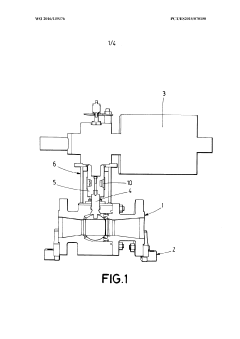
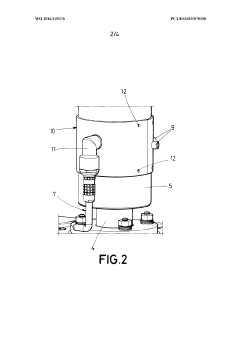
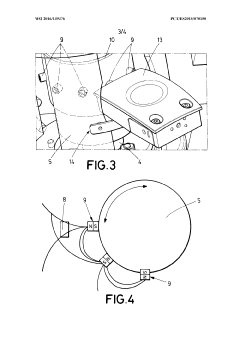
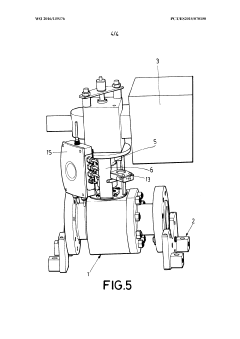
System for the predictive maintenance of valves and method for carrying out said maintenance
PatentWO2016139376A1
Innovation
- A predictive maintenance system utilizing torque and position sensors to record and analyze valve operation data, generating torque-position curves to anticipate potential failures, reduce maintenance costs, and provide real-time reporting and alarms, which can be adapted for various valve types and installations, including remote locations without internet access.
Predicting maintenance requirements for a valve assembly
PatentActiveEP3368955A1
Innovation
- A system and method that utilize a management server to acquire and analyze operating data from valve assemblies, calculate maintenance variables, compare them to threshold criteria, and generate maintenance tasks to address potential failure modes, incorporating pattern coefficients and key performance indicators to predict and prevent failures.
IoT and AI Integration in Valve Systems
The integration of Internet of Things (IoT) and Artificial Intelligence (AI) technologies represents a transformative approach to predicting maintenance schedules for float valve systems. IoT-enabled sensors embedded within valve assemblies continuously collect real-time operational data, including pressure fluctuations, flow rates, temperature variations, and mechanical wear indicators. These sensors transmit data wirelessly to centralized cloud platforms, creating comprehensive digital twins of physical valve systems that enable continuous monitoring without manual intervention.
AI algorithms, particularly machine learning models, process the vast streams of IoT-generated data to identify patterns indicative of impending failures or performance degradation. Supervised learning techniques train on historical maintenance records and failure data to recognize precursor signals, while unsupervised learning detects anomalies that deviate from normal operational parameters. Deep learning neural networks excel at processing complex, multi-dimensional sensor data to predict remaining useful life with increasing accuracy as more operational data accumulates.
Predictive maintenance platforms leverage edge computing capabilities to perform preliminary data analysis locally, reducing latency and bandwidth requirements while enabling immediate alerts for critical conditions. Advanced systems employ reinforcement learning algorithms that continuously refine prediction models based on actual maintenance outcomes, creating self-improving systems that adapt to specific operational environments and usage patterns.
The convergence of IoT connectivity and AI analytics enables condition-based maintenance strategies that replace traditional time-based schedules with data-driven interventions. Digital dashboards provide maintenance teams with prioritized work orders, predicted failure probabilities, and optimal maintenance windows that minimize operational disruptions. Integration with enterprise resource planning systems automates parts ordering and workforce scheduling based on predicted maintenance needs.
Emerging technologies such as 5G connectivity enhance real-time data transmission capabilities, while federated learning approaches allow AI models to improve across multiple installations while preserving data privacy. The synergy between IoT infrastructure and AI intelligence fundamentally transforms float valve maintenance from reactive repairs to proactive optimization, significantly reducing downtime and extending equipment lifespan through precisely timed interventions.
AI algorithms, particularly machine learning models, process the vast streams of IoT-generated data to identify patterns indicative of impending failures or performance degradation. Supervised learning techniques train on historical maintenance records and failure data to recognize precursor signals, while unsupervised learning detects anomalies that deviate from normal operational parameters. Deep learning neural networks excel at processing complex, multi-dimensional sensor data to predict remaining useful life with increasing accuracy as more operational data accumulates.
Predictive maintenance platforms leverage edge computing capabilities to perform preliminary data analysis locally, reducing latency and bandwidth requirements while enabling immediate alerts for critical conditions. Advanced systems employ reinforcement learning algorithms that continuously refine prediction models based on actual maintenance outcomes, creating self-improving systems that adapt to specific operational environments and usage patterns.
The convergence of IoT connectivity and AI analytics enables condition-based maintenance strategies that replace traditional time-based schedules with data-driven interventions. Digital dashboards provide maintenance teams with prioritized work orders, predicted failure probabilities, and optimal maintenance windows that minimize operational disruptions. Integration with enterprise resource planning systems automates parts ordering and workforce scheduling based on predicted maintenance needs.
Emerging technologies such as 5G connectivity enhance real-time data transmission capabilities, while federated learning approaches allow AI models to improve across multiple installations while preserving data privacy. The synergy between IoT infrastructure and AI intelligence fundamentally transforms float valve maintenance from reactive repairs to proactive optimization, significantly reducing downtime and extending equipment lifespan through precisely timed interventions.
Cost-Benefit Analysis of Predictive Maintenance Implementation
Implementing predictive maintenance for float valve systems requires careful economic evaluation to justify the initial investment and ongoing operational costs. The financial analysis must consider both direct expenses such as sensor installation, data infrastructure, and software platforms, alongside indirect costs including staff training and system integration. Initial capital expenditure typically ranges from moderate to substantial depending on system complexity and scale, while operational costs encompass data storage, algorithm maintenance, and periodic calibration activities.
The benefit side of the equation demonstrates compelling value propositions through multiple channels. Primary savings emerge from reduced unplanned downtime, as predictive systems can decrease emergency maintenance events by identifying potential failures before they occur. This proactive approach minimizes production losses and extends equipment lifespan through optimized maintenance timing. Secondary benefits include improved spare parts inventory management, as predictive insights enable just-in-time procurement strategies rather than maintaining excessive safety stock levels.
Quantitative metrics reveal that organizations implementing predictive maintenance typically achieve return on investment within eighteen to thirty-six months. Maintenance cost reductions commonly range between twenty to thirty-five percent, while equipment availability improvements can reach fifteen to twenty-five percent. These figures vary significantly based on system criticality, operational environment, and baseline maintenance maturity levels. Industries with continuous process requirements demonstrate faster payback periods due to higher downtime costs.
Risk mitigation represents another crucial benefit dimension often undervalued in traditional cost-benefit analyses. Predictive maintenance reduces safety incidents associated with catastrophic valve failures and minimizes environmental risks from uncontrolled fluid releases. Regulatory compliance improvements and reduced liability exposure contribute additional financial value that extends beyond direct operational savings.
The analysis must also account for scalability factors and technology evolution. Cloud-based predictive platforms offer flexible pricing models that align costs with actual usage, while machine learning algorithms improve accuracy over time without proportional cost increases. Organizations should evaluate both immediate financial returns and strategic positioning advantages that predictive maintenance capabilities provide in competitive markets where operational excellence increasingly differentiates industry leaders.
The benefit side of the equation demonstrates compelling value propositions through multiple channels. Primary savings emerge from reduced unplanned downtime, as predictive systems can decrease emergency maintenance events by identifying potential failures before they occur. This proactive approach minimizes production losses and extends equipment lifespan through optimized maintenance timing. Secondary benefits include improved spare parts inventory management, as predictive insights enable just-in-time procurement strategies rather than maintaining excessive safety stock levels.
Quantitative metrics reveal that organizations implementing predictive maintenance typically achieve return on investment within eighteen to thirty-six months. Maintenance cost reductions commonly range between twenty to thirty-five percent, while equipment availability improvements can reach fifteen to twenty-five percent. These figures vary significantly based on system criticality, operational environment, and baseline maintenance maturity levels. Industries with continuous process requirements demonstrate faster payback periods due to higher downtime costs.
Risk mitigation represents another crucial benefit dimension often undervalued in traditional cost-benefit analyses. Predictive maintenance reduces safety incidents associated with catastrophic valve failures and minimizes environmental risks from uncontrolled fluid releases. Regulatory compliance improvements and reduced liability exposure contribute additional financial value that extends beyond direct operational savings.
The analysis must also account for scalability factors and technology evolution. Cloud-based predictive platforms offer flexible pricing models that align costs with actual usage, while machine learning algorithms improve accuracy over time without proportional cost increases. Organizations should evaluate both immediate financial returns and strategic positioning advantages that predictive maintenance capabilities provide in competitive markets where operational excellence increasingly differentiates industry leaders.
Unlock deeper insights with PatSnap Eureka Quick Research — get a full tech report to explore trends and direct your research. Try now!
Generate Your Research Report Instantly with AI Agent
Supercharge your innovation with PatSnap Eureka AI Agent Platform!