

How to Predict Reciprocating Compressor Lifecycle Costs
MAR 20, 20269 MIN READ
Generate Your Research Report Instantly with AI Agent
PatSnap Eureka helps you evaluate technical feasibility & market potential.
Compressor Lifecycle Cost Prediction Background and Objectives
Reciprocating compressors represent critical infrastructure components across numerous industrial sectors, including oil and gas processing, petrochemicals, manufacturing, and power generation. These mechanical systems are characterized by high capital investment requirements, substantial operational expenses, and significant maintenance demands throughout their operational lifespan. The complexity of predicting lifecycle costs stems from the multifaceted nature of compressor operations, where numerous variables influence both performance degradation and associated financial implications.
The evolution of compressor technology has been driven by increasing demands for energy efficiency, reliability, and environmental compliance. Modern reciprocating compressors incorporate advanced materials, sophisticated control systems, and enhanced monitoring capabilities. However, these technological improvements have simultaneously increased the complexity of cost prediction models, as traditional approaches often fail to account for the intricate relationships between operational parameters, maintenance strategies, and long-term financial performance.
Historical cost prediction methodologies have relied heavily on empirical data and simplified mathematical models that inadequately capture the dynamic nature of compressor operations. These conventional approaches typically focus on isolated cost components such as energy consumption or scheduled maintenance, without considering the interconnected relationships between various cost drivers. The limitations of existing prediction frameworks have become increasingly apparent as industrial operators seek more accurate financial planning tools to optimize capital allocation and operational strategies.
The primary objective of developing advanced lifecycle cost prediction capabilities is to enable more informed decision-making throughout the compressor's operational timeline. This encompasses initial equipment selection, operational optimization strategies, maintenance scheduling, and end-of-life planning. Accurate cost prediction models serve as fundamental tools for financial planning, risk assessment, and strategic asset management, ultimately contributing to improved operational efficiency and reduced total cost of ownership.
Contemporary industrial environments demand predictive capabilities that can accommodate varying operational conditions, evolving maintenance practices, and changing regulatory requirements. The integration of digital technologies, including IoT sensors, machine learning algorithms, and advanced analytics platforms, presents unprecedented opportunities to enhance prediction accuracy and provide real-time cost optimization insights. These technological advancements enable the development of more sophisticated models that can adapt to changing operational parameters and provide continuous cost forecasting updates.
The strategic importance of lifecycle cost prediction extends beyond immediate financial considerations to encompass broader organizational objectives such as sustainability goals, operational resilience, and competitive positioning. Organizations that successfully implement advanced cost prediction capabilities can achieve significant advantages in terms of operational planning, resource allocation, and long-term strategic positioning within their respective markets.
The evolution of compressor technology has been driven by increasing demands for energy efficiency, reliability, and environmental compliance. Modern reciprocating compressors incorporate advanced materials, sophisticated control systems, and enhanced monitoring capabilities. However, these technological improvements have simultaneously increased the complexity of cost prediction models, as traditional approaches often fail to account for the intricate relationships between operational parameters, maintenance strategies, and long-term financial performance.
Historical cost prediction methodologies have relied heavily on empirical data and simplified mathematical models that inadequately capture the dynamic nature of compressor operations. These conventional approaches typically focus on isolated cost components such as energy consumption or scheduled maintenance, without considering the interconnected relationships between various cost drivers. The limitations of existing prediction frameworks have become increasingly apparent as industrial operators seek more accurate financial planning tools to optimize capital allocation and operational strategies.
The primary objective of developing advanced lifecycle cost prediction capabilities is to enable more informed decision-making throughout the compressor's operational timeline. This encompasses initial equipment selection, operational optimization strategies, maintenance scheduling, and end-of-life planning. Accurate cost prediction models serve as fundamental tools for financial planning, risk assessment, and strategic asset management, ultimately contributing to improved operational efficiency and reduced total cost of ownership.
Contemporary industrial environments demand predictive capabilities that can accommodate varying operational conditions, evolving maintenance practices, and changing regulatory requirements. The integration of digital technologies, including IoT sensors, machine learning algorithms, and advanced analytics platforms, presents unprecedented opportunities to enhance prediction accuracy and provide real-time cost optimization insights. These technological advancements enable the development of more sophisticated models that can adapt to changing operational parameters and provide continuous cost forecasting updates.
The strategic importance of lifecycle cost prediction extends beyond immediate financial considerations to encompass broader organizational objectives such as sustainability goals, operational resilience, and competitive positioning. Organizations that successfully implement advanced cost prediction capabilities can achieve significant advantages in terms of operational planning, resource allocation, and long-term strategic positioning within their respective markets.
Market Demand for Predictive Maintenance in Compressor Industry
The global compressor market is experiencing unprecedented growth driven by expanding industrial automation, energy efficiency mandates, and the critical need for unplanned downtime reduction. Manufacturing facilities across petrochemical, oil and gas, power generation, and refrigeration sectors increasingly recognize that compressor failures can result in catastrophic operational disruptions, making predictive maintenance solutions essential rather than optional.
Traditional reactive maintenance approaches have proven inadequate for modern industrial operations where continuous uptime directly correlates with profitability. The shift toward Industry 4.0 principles has accelerated demand for sophisticated lifecycle cost prediction systems that can anticipate maintenance needs, optimize replacement schedules, and minimize total cost of ownership. This transformation is particularly pronounced in reciprocating compressor applications where mechanical complexity and operational criticality create substantial financial exposure.
Market drivers include stringent regulatory requirements for equipment reliability in safety-critical applications, rising energy costs that demand optimal compressor efficiency throughout operational lifecycles, and competitive pressures requiring lean operational models. The integration of Internet of Things sensors, advanced analytics platforms, and machine learning algorithms has created new possibilities for real-time condition monitoring and predictive analytics that were previously technically or economically unfeasible.
Industrial end-users are increasingly seeking comprehensive solutions that extend beyond basic condition monitoring to provide actionable insights about future maintenance requirements, component replacement timing, and operational optimization opportunities. This demand spans both retrofit applications for existing compressor installations and integrated predictive capabilities in new equipment procurement decisions.
The market landscape reflects growing sophistication in buyer requirements, with procurement decisions increasingly influenced by total lifecycle value propositions rather than initial capital costs alone. Organizations are actively seeking vendors capable of delivering integrated hardware, software, and service solutions that can demonstrate measurable returns through reduced maintenance costs, extended equipment lifecycles, and improved operational reliability across diverse industrial applications.
Traditional reactive maintenance approaches have proven inadequate for modern industrial operations where continuous uptime directly correlates with profitability. The shift toward Industry 4.0 principles has accelerated demand for sophisticated lifecycle cost prediction systems that can anticipate maintenance needs, optimize replacement schedules, and minimize total cost of ownership. This transformation is particularly pronounced in reciprocating compressor applications where mechanical complexity and operational criticality create substantial financial exposure.
Market drivers include stringent regulatory requirements for equipment reliability in safety-critical applications, rising energy costs that demand optimal compressor efficiency throughout operational lifecycles, and competitive pressures requiring lean operational models. The integration of Internet of Things sensors, advanced analytics platforms, and machine learning algorithms has created new possibilities for real-time condition monitoring and predictive analytics that were previously technically or economically unfeasible.
Industrial end-users are increasingly seeking comprehensive solutions that extend beyond basic condition monitoring to provide actionable insights about future maintenance requirements, component replacement timing, and operational optimization opportunities. This demand spans both retrofit applications for existing compressor installations and integrated predictive capabilities in new equipment procurement decisions.
The market landscape reflects growing sophistication in buyer requirements, with procurement decisions increasingly influenced by total lifecycle value propositions rather than initial capital costs alone. Organizations are actively seeking vendors capable of delivering integrated hardware, software, and service solutions that can demonstrate measurable returns through reduced maintenance costs, extended equipment lifecycles, and improved operational reliability across diverse industrial applications.
Current State and Challenges in Compressor Cost Forecasting
The current landscape of reciprocating compressor lifecycle cost prediction is characterized by fragmented methodologies and significant technological gaps. Traditional approaches predominantly rely on historical maintenance records and basic statistical models, which often fail to capture the complex interdependencies between operational parameters, environmental conditions, and component degradation patterns. Most existing systems operate in silos, with maintenance cost tracking, energy consumption monitoring, and performance assessment handled by separate software platforms that lack integration capabilities.
Industry practitioners currently face substantial challenges in establishing accurate cost forecasting frameworks due to the heterogeneous nature of compressor applications across different sectors. Oil and gas operations, manufacturing facilities, and refrigeration systems each present unique operational profiles that significantly impact cost structures. The absence of standardized data collection protocols across these industries creates inconsistencies in cost categorization and reporting methodologies, making it difficult to develop universally applicable predictive models.
Data quality and availability represent critical bottlenecks in current forecasting efforts. Many organizations struggle with incomplete maintenance histories, inconsistent documentation practices, and limited sensor data from older compressor installations. The lack of real-time condition monitoring systems in legacy equipment creates blind spots in understanding actual component wear patterns and failure mechanisms. Additionally, external cost factors such as spare parts pricing volatility, labor rate fluctuations, and regulatory compliance requirements are often inadequately incorporated into existing prediction models.
Technological limitations in current forecasting tools present another significant challenge. Most available solutions employ simplistic linear regression models or basic time-series analysis that cannot effectively handle the non-linear relationships inherent in compressor degradation processes. The integration of advanced analytics, machine learning algorithms, and predictive maintenance technologies remains limited, particularly in smaller organizations with constrained IT resources.
Furthermore, the industry lacks comprehensive benchmarking standards for lifecycle cost components, making it difficult to validate prediction accuracy across different operational contexts. The absence of industry-wide cost databases and performance metrics hampers the development of robust comparative analysis frameworks necessary for improving forecasting precision and reliability.
Industry practitioners currently face substantial challenges in establishing accurate cost forecasting frameworks due to the heterogeneous nature of compressor applications across different sectors. Oil and gas operations, manufacturing facilities, and refrigeration systems each present unique operational profiles that significantly impact cost structures. The absence of standardized data collection protocols across these industries creates inconsistencies in cost categorization and reporting methodologies, making it difficult to develop universally applicable predictive models.
Data quality and availability represent critical bottlenecks in current forecasting efforts. Many organizations struggle with incomplete maintenance histories, inconsistent documentation practices, and limited sensor data from older compressor installations. The lack of real-time condition monitoring systems in legacy equipment creates blind spots in understanding actual component wear patterns and failure mechanisms. Additionally, external cost factors such as spare parts pricing volatility, labor rate fluctuations, and regulatory compliance requirements are often inadequately incorporated into existing prediction models.
Technological limitations in current forecasting tools present another significant challenge. Most available solutions employ simplistic linear regression models or basic time-series analysis that cannot effectively handle the non-linear relationships inherent in compressor degradation processes. The integration of advanced analytics, machine learning algorithms, and predictive maintenance technologies remains limited, particularly in smaller organizations with constrained IT resources.
Furthermore, the industry lacks comprehensive benchmarking standards for lifecycle cost components, making it difficult to validate prediction accuracy across different operational contexts. The absence of industry-wide cost databases and performance metrics hampers the development of robust comparative analysis frameworks necessary for improving forecasting precision and reliability.
Existing Lifecycle Cost Modeling Approaches for Compressors
01 Predictive maintenance and condition monitoring systems
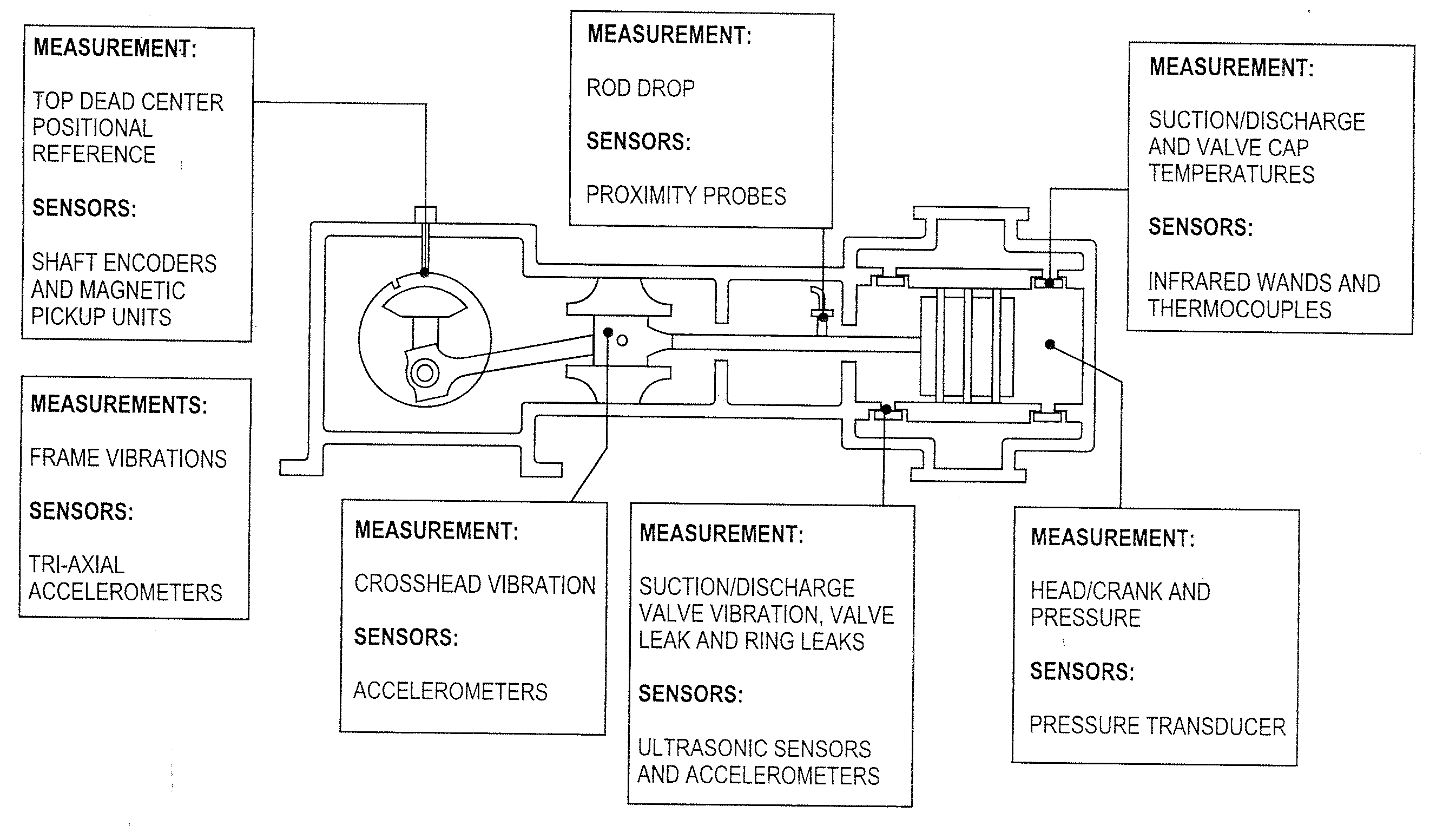
Implementation of advanced monitoring systems that track compressor performance parameters in real-time to predict failures before they occur. These systems utilize sensors and data analytics to monitor vibration, temperature, pressure, and other critical parameters, enabling proactive maintenance scheduling and reducing unexpected downtime. By identifying potential issues early, operators can perform maintenance during planned shutdowns, significantly reducing lifecycle costs through prevention of catastrophic failures and optimization of maintenance intervals.- Predictive maintenance and condition monitoring systems: Implementation of advanced monitoring systems that track compressor performance parameters in real-time to predict failures before they occur. These systems utilize sensors and data analytics to monitor vibration, temperature, pressure, and other critical parameters, enabling proactive maintenance scheduling and reducing unexpected downtime. By identifying potential issues early, operators can perform maintenance during planned shutdowns, significantly reducing lifecycle costs through prevention of catastrophic failures and optimization of maintenance intervals.
- Component wear monitoring and replacement optimization: Technologies focused on monitoring the wear and degradation of critical compressor components such as valves, pistons, rings, and bearings to optimize replacement schedules. These solutions employ various sensing techniques and analytical methods to assess component condition and remaining useful life, allowing for data-driven decisions on when to replace parts. This approach minimizes both premature replacements that waste component life and delayed replacements that lead to secondary damage, thereby optimizing maintenance costs over the compressor lifecycle.
- Energy efficiency optimization and performance enhancement: Methods and systems designed to improve compressor energy efficiency and reduce operational costs through performance optimization. These technologies include variable speed drives, capacity control systems, and operational parameter optimization that adapt compressor operation to actual demand. By reducing energy consumption, which typically represents the largest portion of lifecycle costs, these solutions provide significant cost savings while maintaining required performance levels and extending equipment life through reduced stress during partial load operations.
- Lubrication system optimization and oil management: Advanced lubrication systems and oil management strategies that extend lubricant life, reduce consumption, and minimize wear-related failures. These technologies include oil condition monitoring, filtration systems, and optimized lubrication delivery methods that ensure proper lubrication while minimizing oil degradation and contamination. Effective oil management reduces both lubricant costs and maintenance requirements associated with oil-related component failures, contributing to lower overall lifecycle costs.
- Remote diagnostics and digital twin technologies: Digital solutions that enable remote monitoring, diagnostics, and simulation of compressor operations to optimize maintenance and reduce costs. These systems create virtual models of physical compressors that can simulate various operating conditions and predict performance under different scenarios. Remote diagnostic capabilities allow experts to analyze compressor performance without site visits, reducing service costs and enabling faster problem resolution. Digital twins facilitate optimization of operating parameters and maintenance strategies based on actual equipment behavior and historical data.
02 Component wear monitoring and replacement optimization
Technologies focused on monitoring the wear and degradation of critical compressor components such as valves, pistons, rings, and bearings. These solutions employ various sensing techniques to assess component condition and determine optimal replacement timing. By replacing components based on actual condition rather than fixed schedules, operators can extend component life while avoiding premature failures, thereby reducing both maintenance costs and unplanned downtime throughout the compressor lifecycle.Expand Specific Solutions03 Energy efficiency optimization and control systems
Advanced control systems and operational strategies designed to minimize energy consumption during compressor operation. These technologies include variable speed drives, capacity control methods, and intelligent algorithms that optimize compressor performance based on demand. Since energy costs typically represent the largest portion of lifecycle expenses, improvements in operational efficiency can yield substantial cost savings over the compressor's service life while also reducing environmental impact.Expand Specific Solutions04 Lubrication system improvements and oil management
Enhanced lubrication systems and oil management technologies that extend lubricant life, reduce contamination, and improve component protection. These innovations include advanced filtration systems, oil condition monitoring, and optimized lubrication delivery methods. Proper lubrication management reduces wear on moving parts, extends maintenance intervals, and prevents costly failures, contributing significantly to lower lifecycle costs through reduced consumable expenses and extended component longevity.Expand Specific Solutions05 Design modifications for extended service life and reliability
Structural and design improvements that enhance compressor durability and reliability, including advanced materials, improved sealing technologies, and optimized component geometries. These design enhancements reduce the frequency of repairs and replacements, minimize maintenance requirements, and extend overall equipment life. By incorporating features that address common failure modes and wear patterns, these innovations reduce total cost of ownership through improved reliability and reduced maintenance burden over the compressor's operational lifetime.Expand Specific Solutions
Key Players in Compressor Manufacturing and Predictive Solutions
The reciprocating compressor lifecycle cost prediction market is in a mature growth phase, driven by increasing industrial automation and predictive maintenance adoption across oil & gas, petrochemical, and manufacturing sectors. The market demonstrates substantial scale with major energy companies like Shell, PetroChina, and Sinopec investing heavily in operational efficiency technologies. Technology maturity varies significantly among players, with specialized manufacturers like Burckhardt Compression AG leading in domain-specific solutions, while industrial giants such as General Electric, Mitsubishi Electric, and Baker Hughes leverage advanced IoT and AI capabilities for comprehensive lifecycle management. Chinese companies including SUPCON Technology and Anhui Ronds are rapidly advancing AI-driven maintenance solutions, while established players like Hitachi Industrial Equipment Systems focus on integrated industrial automation approaches, creating a competitive landscape spanning from specialized compressor expertise to broad industrial digitalization platforms.
Burckhardt Compression AG
Technical Solution: Burckhardt Compression specializes in reciprocating compressor lifecycle cost prediction through their proprietary condition monitoring systems and predictive maintenance solutions. Their approach combines advanced thermodynamic modeling with real-time performance monitoring to assess compressor health and predict maintenance requirements. The company has developed sophisticated algorithms that analyze cylinder pressure diagrams, valve performance indicators, and mechanical condition parameters to forecast component lifecycles. Their Prognosys system provides continuous monitoring of critical components including valves, pistons, and bearings, enabling accurate prediction of maintenance intervals and replacement schedules. The lifecycle cost models incorporate operational parameters, maintenance history, and component degradation patterns to optimize total cost of ownership. Burckhardt's solutions can predict valve failures up to 6 months in advance and reduce maintenance costs by 15-30% through optimized scheduling and inventory management.
Strengths: Specialized compressor expertise, proven condition monitoring technology, accurate failure prediction capabilities. Weaknesses: Limited to reciprocating compressor applications, smaller global service network.
Mitsubishi Electric Corp.
Technical Solution: Mitsubishi Electric has developed lifecycle cost prediction solutions for reciprocating compressors through their e-F@ctory concept and industrial automation technologies. Their approach integrates advanced control systems with predictive analytics to monitor compressor performance and forecast maintenance requirements. The company utilizes their MELSEC programmable logic controllers and GOT human-machine interfaces to collect operational data including pressure profiles, temperature measurements, and power consumption patterns. Their lifecycle cost prediction models employ statistical analysis and trend monitoring to identify degradation patterns and predict component failures. Mitsubishi's solutions incorporate energy efficiency optimization algorithms that can reduce operational costs while extending equipment life. The system provides early warning capabilities for critical components and enables condition-based maintenance strategies that can reduce maintenance costs by 10-25%. Their approach focuses on integrating compressor monitoring with overall plant automation systems to optimize total facility performance and minimize lifecycle costs.
Strengths: Strong automation and control expertise, integrated system approach, proven industrial solutions. Weaknesses: Limited specialized compressor knowledge, focus more on control systems than predictive analytics.
Core Technologies in Compressor Health Monitoring and Analytics
Method for predicting the remaining useful life of a seal arrangement of a piston compressor
PatentWO2023242055A1
Innovation
- A computer-implemented method using vibration data to create an input matrix, simulate error propagation, calculate eigenvalues, and select parameters to predict the remaining useful life of sealing arrangements, which recreates leakage measurements without additional sensors, allowing for cost-effective and robust predictions.


Computer program and method for detecting and predicting valve failure in a reciprocating compressor
PatentInactiveUS20100106458A1
Innovation
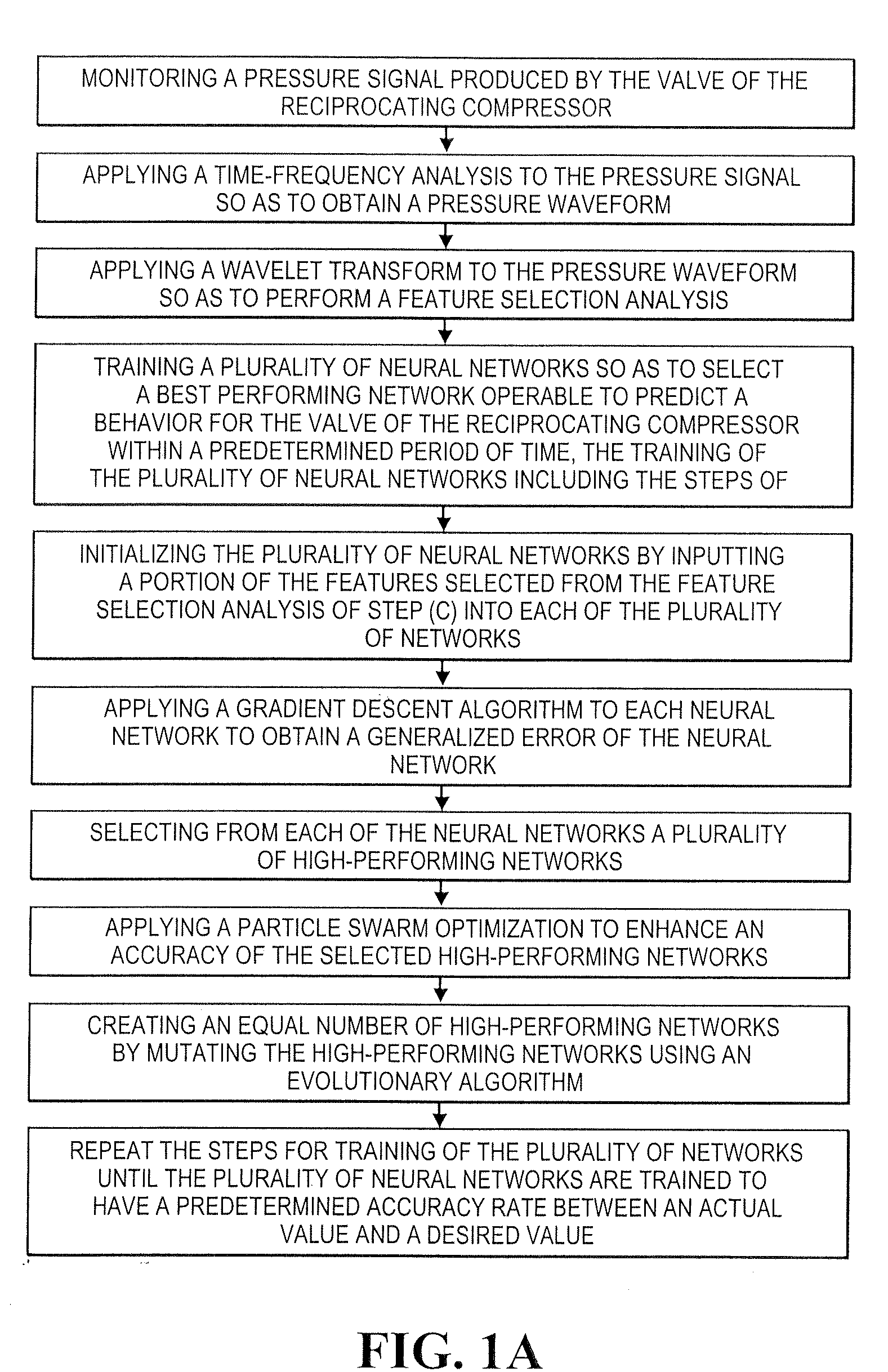
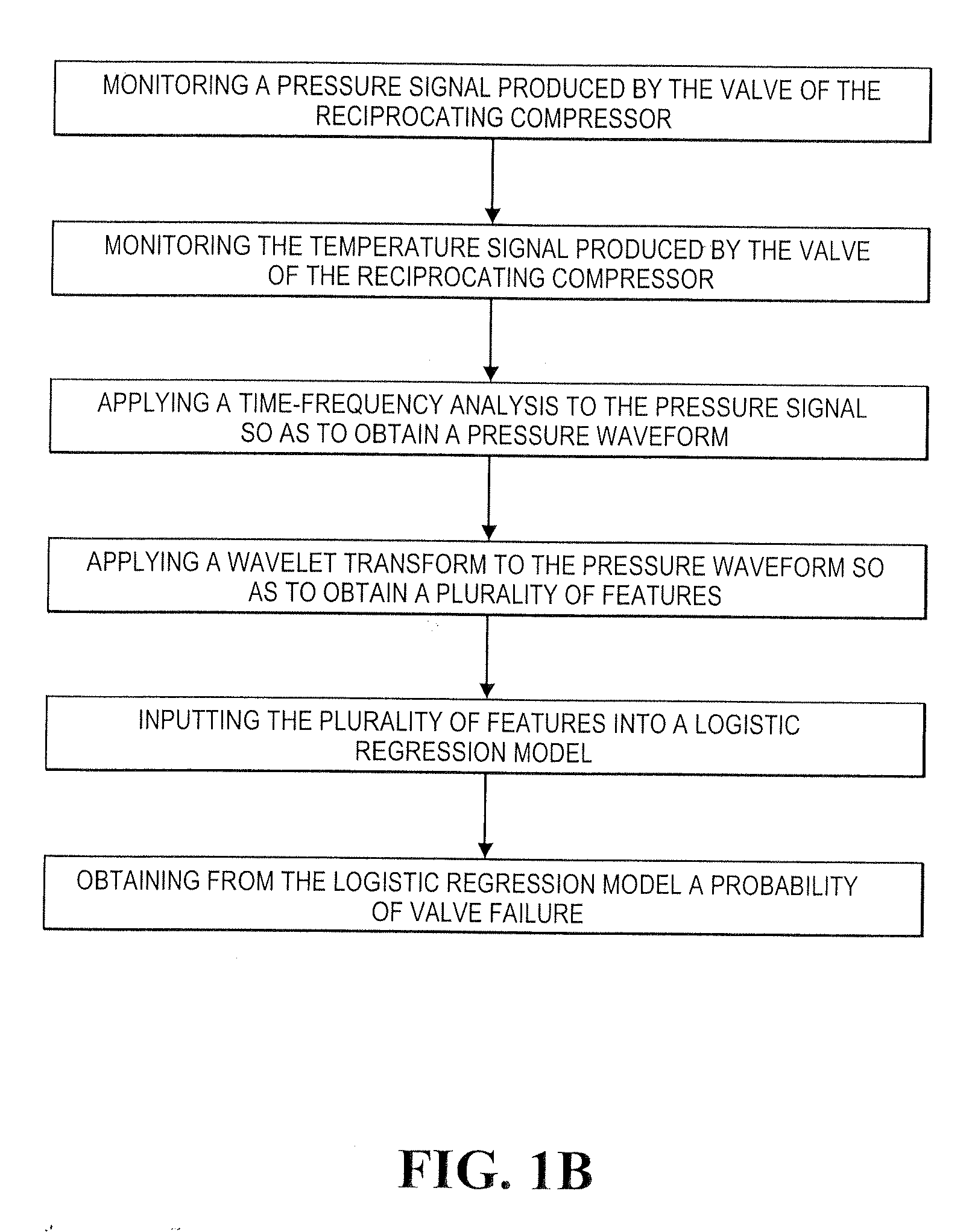
- A computer program utilizing wavelet analysis, logistic regression, and neural networks to predict valve failures in reciprocating compressors by extracting features from pressure signals and temperature data, providing early warnings and root cause detection without the need for expensive sensors.

Industrial Equipment Safety and Compliance Standards
Industrial equipment safety and compliance standards play a critical role in reciprocating compressor lifecycle cost prediction by establishing mandatory requirements that directly impact operational expenses, maintenance schedules, and equipment longevity. These standards create a regulatory framework that influences both initial capital investments and ongoing operational costs throughout the equipment's service life.
Safety standards such as ASME Boiler and Pressure Vessel Code, API 618 for reciprocating compressors, and OSHA regulations establish minimum design requirements that affect equipment specifications and pricing. Compliance with these standards often necessitates higher-grade materials, additional safety systems, and enhanced monitoring capabilities, which increase initial procurement costs but potentially reduce long-term maintenance expenses and operational risks.
Regulatory compliance requirements significantly influence maintenance strategies and associated costs. Standards mandate specific inspection intervals, testing procedures, and documentation requirements that must be factored into lifecycle cost models. For instance, pressure vessel inspections required by jurisdictional authorities create predictable maintenance events with associated downtime and service costs that can be accurately forecasted in cost prediction models.
Environmental regulations, including emissions standards and noise control requirements, introduce additional compliance costs that vary by geographic location and application. These regulations may require specialized components, emission control systems, or operational modifications that impact both capital and operating expenses. Understanding regional regulatory differences is essential for accurate cost prediction, particularly for companies operating across multiple jurisdictions.
Insurance and liability considerations tied to safety compliance create another cost dimension. Equipment meeting higher safety standards typically qualifies for reduced insurance premiums and lower liability exposure, creating long-term cost benefits that offset initial compliance investments. Risk assessment methodologies incorporated into safety standards provide valuable data for predicting potential failure costs and associated business interruption expenses.
Documentation and certification requirements mandated by safety standards generate ongoing administrative costs that must be included in lifecycle cost calculations. These include regular safety audits, compliance reporting, training requirements, and certification renewals that create predictable cost streams throughout the equipment's operational life.
Safety standards such as ASME Boiler and Pressure Vessel Code, API 618 for reciprocating compressors, and OSHA regulations establish minimum design requirements that affect equipment specifications and pricing. Compliance with these standards often necessitates higher-grade materials, additional safety systems, and enhanced monitoring capabilities, which increase initial procurement costs but potentially reduce long-term maintenance expenses and operational risks.
Regulatory compliance requirements significantly influence maintenance strategies and associated costs. Standards mandate specific inspection intervals, testing procedures, and documentation requirements that must be factored into lifecycle cost models. For instance, pressure vessel inspections required by jurisdictional authorities create predictable maintenance events with associated downtime and service costs that can be accurately forecasted in cost prediction models.
Environmental regulations, including emissions standards and noise control requirements, introduce additional compliance costs that vary by geographic location and application. These regulations may require specialized components, emission control systems, or operational modifications that impact both capital and operating expenses. Understanding regional regulatory differences is essential for accurate cost prediction, particularly for companies operating across multiple jurisdictions.
Insurance and liability considerations tied to safety compliance create another cost dimension. Equipment meeting higher safety standards typically qualifies for reduced insurance premiums and lower liability exposure, creating long-term cost benefits that offset initial compliance investments. Risk assessment methodologies incorporated into safety standards provide valuable data for predicting potential failure costs and associated business interruption expenses.
Documentation and certification requirements mandated by safety standards generate ongoing administrative costs that must be included in lifecycle cost calculations. These include regular safety audits, compliance reporting, training requirements, and certification renewals that create predictable cost streams throughout the equipment's operational life.
Sustainability Impact of Compressor Lifecycle Management
The sustainability impact of compressor lifecycle management represents a critical intersection between operational efficiency and environmental responsibility in industrial applications. As global environmental regulations tighten and corporate sustainability commitments intensify, the management of reciprocating compressor lifecycles has evolved from a purely economic consideration to a comprehensive environmental stewardship challenge.
Energy consumption constitutes the most significant environmental impact throughout a compressor's operational lifecycle, typically accounting for 80-90% of total lifecycle environmental costs. Effective lifecycle management strategies can reduce energy consumption by 15-25% through optimized maintenance schedules, component upgrades, and operational parameter adjustments. This reduction translates directly into decreased carbon emissions and reduced strain on electrical grid infrastructure.
Material resource optimization emerges as another crucial sustainability dimension. Advanced lifecycle management approaches emphasize component refurbishment and remanufacturing over complete replacement, extending useful component life by 40-60%. This strategy significantly reduces raw material consumption, manufacturing energy requirements, and waste generation while maintaining operational reliability standards.
Waste minimization through predictive maintenance represents a paradigm shift from traditional reactive approaches. By accurately forecasting component failures and optimizing replacement timing, organizations can reduce premature component disposal by up to 35%. This approach minimizes hazardous waste generation, particularly important given the specialized materials and lubricants used in compressor systems.
The circular economy principles increasingly influence compressor lifecycle management strategies. Modern approaches incorporate end-of-life planning from initial installation, ensuring components can be effectively recycled or repurposed. This comprehensive approach reduces landfill contributions and supports sustainable material flows within industrial ecosystems.
Regulatory compliance benefits extend beyond immediate environmental requirements. Proactive lifecycle management positions organizations advantageously for emerging carbon pricing mechanisms and environmental reporting standards. Companies implementing comprehensive lifecycle management typically demonstrate 20-30% better performance against sustainability metrics compared to traditional maintenance approaches.
The integration of digital technologies amplifies sustainability benefits through enhanced monitoring and optimization capabilities. IoT sensors and predictive analytics enable real-time efficiency optimization, reducing unnecessary energy consumption and extending component lifecycles through precise operational control.
Energy consumption constitutes the most significant environmental impact throughout a compressor's operational lifecycle, typically accounting for 80-90% of total lifecycle environmental costs. Effective lifecycle management strategies can reduce energy consumption by 15-25% through optimized maintenance schedules, component upgrades, and operational parameter adjustments. This reduction translates directly into decreased carbon emissions and reduced strain on electrical grid infrastructure.
Material resource optimization emerges as another crucial sustainability dimension. Advanced lifecycle management approaches emphasize component refurbishment and remanufacturing over complete replacement, extending useful component life by 40-60%. This strategy significantly reduces raw material consumption, manufacturing energy requirements, and waste generation while maintaining operational reliability standards.
Waste minimization through predictive maintenance represents a paradigm shift from traditional reactive approaches. By accurately forecasting component failures and optimizing replacement timing, organizations can reduce premature component disposal by up to 35%. This approach minimizes hazardous waste generation, particularly important given the specialized materials and lubricants used in compressor systems.
The circular economy principles increasingly influence compressor lifecycle management strategies. Modern approaches incorporate end-of-life planning from initial installation, ensuring components can be effectively recycled or repurposed. This comprehensive approach reduces landfill contributions and supports sustainable material flows within industrial ecosystems.
Regulatory compliance benefits extend beyond immediate environmental requirements. Proactive lifecycle management positions organizations advantageously for emerging carbon pricing mechanisms and environmental reporting standards. Companies implementing comprehensive lifecycle management typically demonstrate 20-30% better performance against sustainability metrics compared to traditional maintenance approaches.
The integration of digital technologies amplifies sustainability benefits through enhanced monitoring and optimization capabilities. IoT sensors and predictive analytics enable real-time efficiency optimization, reducing unnecessary energy consumption and extending component lifecycles through precise operational control.
Unlock deeper insights with PatSnap Eureka Quick Research — get a full tech report to explore trends and direct your research. Try now!
Generate Your Research Report Instantly with AI Agent
Supercharge your innovation with PatSnap Eureka AI Agent Platform!