
How to Predict Swelling Behavior in Hydrogel Actuators
MAY 12, 20269 MIN READ
Generate Your Research Report Instantly with AI Agent
Patsnap Eureka helps you evaluate technical feasibility & market potential.
Hydrogel Actuator Swelling Prediction Background and Objectives
Hydrogel actuators represent a revolutionary class of soft materials that undergo controlled volumetric changes in response to external stimuli, making them highly valuable for applications in biomedical devices, robotics, and smart materials systems. These three-dimensional polymer networks possess the unique ability to absorb and retain substantial amounts of water while maintaining their structural integrity, enabling them to function as artificial muscles, sensors, and drug delivery systems.
The fundamental mechanism underlying hydrogel actuator functionality relies on the reversible swelling and deswelling behavior of crosslinked polymer chains. When exposed to specific environmental conditions such as pH changes, temperature variations, ionic strength modifications, or electric fields, hydrogel networks undergo conformational changes that result in significant volume alterations. This responsive behavior has positioned hydrogel actuators as promising candidates for next-generation soft robotics and biomedical applications.
However, the practical implementation of hydrogel actuators faces significant challenges due to the complex and often unpredictable nature of their swelling behavior. The swelling process involves intricate interactions between polymer chains, solvent molecules, and external stimuli, creating a multifaceted system that is difficult to characterize and control precisely. Current limitations in predicting swelling behavior have hindered the widespread adoption of hydrogel actuators in commercial applications.
The primary objective of advancing swelling prediction capabilities is to establish reliable mathematical models and computational frameworks that can accurately forecast the temporal and spatial evolution of hydrogel deformation under various operating conditions. This predictive capability would enable engineers to design hydrogel actuators with predetermined performance characteristics, optimize their response times, and ensure consistent operation across different environmental conditions.
Furthermore, accurate swelling prediction models would facilitate the development of closed-loop control systems for hydrogel-based devices, enabling real-time adjustment of actuator behavior and improving overall system reliability. The ability to predict swelling behavior would also accelerate the material design process, allowing researchers to screen potential hydrogel formulations computationally before experimental validation.
The ultimate goal encompasses creating a comprehensive understanding of the relationship between hydrogel composition, crosslinking density, environmental conditions, and resulting swelling behavior, thereby unlocking the full potential of these remarkable materials in advanced engineering applications.
The fundamental mechanism underlying hydrogel actuator functionality relies on the reversible swelling and deswelling behavior of crosslinked polymer chains. When exposed to specific environmental conditions such as pH changes, temperature variations, ionic strength modifications, or electric fields, hydrogel networks undergo conformational changes that result in significant volume alterations. This responsive behavior has positioned hydrogel actuators as promising candidates for next-generation soft robotics and biomedical applications.
However, the practical implementation of hydrogel actuators faces significant challenges due to the complex and often unpredictable nature of their swelling behavior. The swelling process involves intricate interactions between polymer chains, solvent molecules, and external stimuli, creating a multifaceted system that is difficult to characterize and control precisely. Current limitations in predicting swelling behavior have hindered the widespread adoption of hydrogel actuators in commercial applications.
The primary objective of advancing swelling prediction capabilities is to establish reliable mathematical models and computational frameworks that can accurately forecast the temporal and spatial evolution of hydrogel deformation under various operating conditions. This predictive capability would enable engineers to design hydrogel actuators with predetermined performance characteristics, optimize their response times, and ensure consistent operation across different environmental conditions.
Furthermore, accurate swelling prediction models would facilitate the development of closed-loop control systems for hydrogel-based devices, enabling real-time adjustment of actuator behavior and improving overall system reliability. The ability to predict swelling behavior would also accelerate the material design process, allowing researchers to screen potential hydrogel formulations computationally before experimental validation.
The ultimate goal encompasses creating a comprehensive understanding of the relationship between hydrogel composition, crosslinking density, environmental conditions, and resulting swelling behavior, thereby unlocking the full potential of these remarkable materials in advanced engineering applications.
Market Demand for Predictable Hydrogel Actuator Systems
The global hydrogel actuator market is experiencing unprecedented growth driven by the increasing demand for smart materials in biomedical applications, soft robotics, and microfluidic systems. Healthcare sectors represent the largest consumer segment, particularly in drug delivery systems, tissue engineering scaffolds, and minimally invasive surgical devices. The ability to predict and control swelling behavior has become a critical requirement for manufacturers seeking to develop reliable, reproducible hydrogel-based products.
Biomedical device manufacturers face stringent regulatory requirements that necessitate precise control over actuator performance. Predictable swelling behavior enables companies to meet FDA and CE marking standards while reducing development costs and time-to-market. The pharmaceutical industry specifically demands hydrogel actuators with controllable release kinetics, where swelling prediction directly impacts drug dosing accuracy and patient safety outcomes.
The soft robotics sector represents an emerging high-growth market segment where predictable hydrogel actuators enable the development of bio-inspired robotic systems. Applications range from underwater exploration vehicles to prosthetic devices requiring human-like movement patterns. Manufacturing companies in this space require sophisticated modeling capabilities to optimize actuator design and ensure consistent performance across varying environmental conditions.
Microfluidics and lab-on-chip applications constitute another significant market driver, where precise fluid control depends on predictable hydrogel valve and pump behaviors. The growing point-of-care diagnostics market particularly values systems that can operate reliably without external power sources, making stimulus-responsive hydrogel actuators increasingly attractive for portable medical devices.
Current market challenges include the lack of standardized testing protocols and limited availability of comprehensive predictive models that account for multi-physics interactions. Companies investing in advanced prediction capabilities gain competitive advantages through reduced prototyping costs, improved product reliability, and faster regulatory approval processes. The integration of machine learning approaches with traditional modeling techniques represents a key market opportunity for technology providers.
Industrial automation sectors are beginning to explore hydrogel actuators for applications requiring biocompatible, silent operation in sensitive environments such as food processing and pharmaceutical manufacturing. These markets demand robust prediction tools to ensure consistent performance under varying temperature, pH, and ionic strength conditions.
Biomedical device manufacturers face stringent regulatory requirements that necessitate precise control over actuator performance. Predictable swelling behavior enables companies to meet FDA and CE marking standards while reducing development costs and time-to-market. The pharmaceutical industry specifically demands hydrogel actuators with controllable release kinetics, where swelling prediction directly impacts drug dosing accuracy and patient safety outcomes.
The soft robotics sector represents an emerging high-growth market segment where predictable hydrogel actuators enable the development of bio-inspired robotic systems. Applications range from underwater exploration vehicles to prosthetic devices requiring human-like movement patterns. Manufacturing companies in this space require sophisticated modeling capabilities to optimize actuator design and ensure consistent performance across varying environmental conditions.
Microfluidics and lab-on-chip applications constitute another significant market driver, where precise fluid control depends on predictable hydrogel valve and pump behaviors. The growing point-of-care diagnostics market particularly values systems that can operate reliably without external power sources, making stimulus-responsive hydrogel actuators increasingly attractive for portable medical devices.
Current market challenges include the lack of standardized testing protocols and limited availability of comprehensive predictive models that account for multi-physics interactions. Companies investing in advanced prediction capabilities gain competitive advantages through reduced prototyping costs, improved product reliability, and faster regulatory approval processes. The integration of machine learning approaches with traditional modeling techniques represents a key market opportunity for technology providers.
Industrial automation sectors are beginning to explore hydrogel actuators for applications requiring biocompatible, silent operation in sensitive environments such as food processing and pharmaceutical manufacturing. These markets demand robust prediction tools to ensure consistent performance under varying temperature, pH, and ionic strength conditions.
Current State and Challenges in Hydrogel Swelling Modeling
The current landscape of hydrogel swelling modeling presents a complex array of theoretical frameworks and computational approaches, each with distinct capabilities and limitations. Traditional continuum mechanics models, based on Flory-Huggins theory and its extensions, have dominated the field for decades. These models effectively capture thermodynamic equilibrium states but struggle with dynamic swelling processes and non-uniform deformation patterns commonly observed in actuator applications.
Molecular dynamics simulations offer detailed insights into polymer chain behavior and water molecule interactions at the microscopic level. However, their computational intensity limits practical applications to small-scale systems, creating a significant gap between molecular understanding and macroscopic actuator design. The challenge of bridging length scales from nanometer polymer segments to millimeter-scale actuators remains largely unresolved.
Finite element modeling has emerged as a promising approach for predicting complex geometrical deformations in hydrogel actuators. Current implementations typically employ coupled diffusion-mechanical models that account for water transport and mechanical deformation simultaneously. Despite these advances, most existing models assume homogeneous material properties and fail to capture the heterogeneous swelling behavior that occurs due to crosslinking density variations, manufacturing defects, or environmental gradients.
The integration of machine learning techniques represents a growing trend in swelling prediction, with neural networks showing promise in capturing non-linear relationships between environmental conditions and swelling responses. However, these data-driven approaches often lack physical interpretability and require extensive experimental datasets for training, limiting their applicability to novel hydrogel compositions or operating conditions.
Temperature-dependent swelling behavior poses another significant modeling challenge, particularly for thermoresponsive hydrogels used in smart actuators. Current models inadequately represent the sharp phase transitions and hysteresis effects observed in these systems. The coupling between thermal, chemical, and mechanical effects creates complex feedback loops that existing theoretical frameworks struggle to capture accurately.
Validation remains a critical bottleneck in model development, as experimental characterization of swelling behavior often involves destructive testing or time-consuming measurements that cannot capture real-time dynamics. The lack of standardized testing protocols and benchmark datasets further complicates model comparison and validation efforts across different research groups.
Molecular dynamics simulations offer detailed insights into polymer chain behavior and water molecule interactions at the microscopic level. However, their computational intensity limits practical applications to small-scale systems, creating a significant gap between molecular understanding and macroscopic actuator design. The challenge of bridging length scales from nanometer polymer segments to millimeter-scale actuators remains largely unresolved.
Finite element modeling has emerged as a promising approach for predicting complex geometrical deformations in hydrogel actuators. Current implementations typically employ coupled diffusion-mechanical models that account for water transport and mechanical deformation simultaneously. Despite these advances, most existing models assume homogeneous material properties and fail to capture the heterogeneous swelling behavior that occurs due to crosslinking density variations, manufacturing defects, or environmental gradients.
The integration of machine learning techniques represents a growing trend in swelling prediction, with neural networks showing promise in capturing non-linear relationships between environmental conditions and swelling responses. However, these data-driven approaches often lack physical interpretability and require extensive experimental datasets for training, limiting their applicability to novel hydrogel compositions or operating conditions.
Temperature-dependent swelling behavior poses another significant modeling challenge, particularly for thermoresponsive hydrogels used in smart actuators. Current models inadequately represent the sharp phase transitions and hysteresis effects observed in these systems. The coupling between thermal, chemical, and mechanical effects creates complex feedback loops that existing theoretical frameworks struggle to capture accurately.
Validation remains a critical bottleneck in model development, as experimental characterization of swelling behavior often involves destructive testing or time-consuming measurements that cannot capture real-time dynamics. The lack of standardized testing protocols and benchmark datasets further complicates model comparison and validation efforts across different research groups.
Existing Solutions for Hydrogel Swelling Behavior Prediction
01 Hydrogel composition and crosslinking mechanisms for controlled swelling
The fundamental composition of hydrogels and their crosslinking structures significantly influence swelling behavior in actuator applications. Different polymer networks, crosslinking densities, and molecular architectures can be engineered to achieve specific swelling ratios and response characteristics. The degree of crosslinking directly affects the equilibrium swelling capacity and mechanical properties of the hydrogel actuators.- Stimuli-responsive hydrogel swelling mechanisms: Hydrogel actuators can be designed to respond to various external stimuli such as pH, temperature, electric fields, or ionic strength changes. These stimuli trigger conformational changes in the polymer network, leading to controlled swelling or deswelling behavior. The responsiveness is achieved through incorporation of specific functional groups or crosslinking strategies that enable the hydrogel to undergo volumetric changes when exposed to target stimuli.
- Polymer network structure and crosslinking density effects: The swelling behavior of hydrogel actuators is fundamentally controlled by the polymer network architecture and crosslinking density. Higher crosslinking densities typically result in reduced swelling capacity but improved mechanical stability, while lower crosslinking allows for greater volume changes but may compromise structural integrity. The balance between these factors determines the actuator's performance characteristics and operational range.
- Ionic and electrostatic interactions in swelling: Electrostatic interactions between charged groups within the hydrogel network significantly influence swelling behavior. Ionic hydrogels containing charged moieties exhibit enhanced swelling due to osmotic pressure differences and electrostatic repulsion between like charges. The presence of counterions and ionic strength of the surrounding medium can dramatically alter the equilibrium swelling state of these actuators.
- Composite and hybrid hydrogel actuator systems: Incorporation of reinforcing materials, nanoparticles, or secondary polymer networks creates composite hydrogel actuators with enhanced swelling properties and mechanical performance. These hybrid systems can exhibit anisotropic swelling behavior, improved response times, and greater force generation capabilities. The composite approach allows for fine-tuning of swelling characteristics while maintaining structural integrity during actuation cycles.
- Kinetics and dynamics of swelling processes: The rate and extent of hydrogel swelling are governed by diffusion processes, polymer chain mobility, and network relaxation dynamics. Understanding these kinetic aspects is crucial for controlling actuator response times and achieving desired performance characteristics. Factors such as gel thickness, porosity, and molecular weight between crosslinks directly impact the swelling kinetics and overall actuator behavior.
02 Environmental stimuli-responsive swelling mechanisms
Hydrogel actuators can be designed to respond to various environmental stimuli such as pH, temperature, ionic strength, and electric fields, leading to predictable swelling and deswelling behaviors. These responsive mechanisms enable the development of smart actuators that can change their volume and shape in response to specific environmental conditions, making them suitable for various applications including sensors and adaptive materials.Expand Specific Solutions03 Kinetics and dynamics of hydrogel swelling processes
The rate and mechanism of water uptake and release in hydrogel actuators are critical for their performance characteristics. Swelling kinetics are influenced by factors such as diffusion coefficients, network structure, and external conditions. Understanding these dynamics allows for the optimization of response times and the prediction of actuator behavior under different operating conditions.Expand Specific Solutions04 Mechanical properties and deformation behavior during swelling
The mechanical response of hydrogel actuators during swelling involves complex interactions between elastic forces, osmotic pressure, and structural constraints. The relationship between swelling ratio and mechanical stress determines the actuator's force output and displacement capabilities. Optimization of these properties is essential for achieving desired actuator performance in practical applications.Expand Specific Solutions05 Applications and design considerations for hydrogel actuator systems
Practical implementation of hydrogel actuators requires careful consideration of swelling behavior in relation to specific application requirements. Design parameters such as geometry, boundary conditions, and operating environment must be optimized to achieve reliable and repeatable actuator performance. Integration with other system components and long-term stability are also important factors in actuator design.Expand Specific Solutions
Key Players in Hydrogel Actuator and Smart Materials Industry
The hydrogel actuator swelling prediction field represents an emerging technology sector at the intersection of materials science and smart systems, currently in its early-to-mid development stage with significant growth potential driven by applications in biomedical devices, soft robotics, and industrial automation. The market demonstrates moderate fragmentation with diverse players ranging from established multinational corporations to specialized research institutions. Technology maturity varies considerably across different application domains, with companies like Baxter International and Terumo Neuro advancing medical-grade hydrogel applications, while industrial giants such as LG Chem and Nippon Shokubai focus on chemical manufacturing and materials optimization. Research institutions including Xi'an Jiaotong University, Huazhong University of Science & Technology, and École Polytechnique Fédérale de Lausanne are driving fundamental breakthroughs in predictive modeling and material characterization. The competitive landscape shows strong academic-industry collaboration, particularly evident through organizations like Hanyang University ERICA Industry-University Cooperation, indicating that while core technologies are still maturing, the field is rapidly progressing toward commercial viability with increasing patent activity and cross-sector applications.
Baxter International, Inc.
Technical Solution: Baxter has developed predictive models for hydrogel swelling behavior specifically for medical device applications, focusing on drug delivery systems and biocompatible actuators. Their approach combines empirical testing with thermodynamic modeling to predict swelling kinetics in physiological environments. The company has created proprietary algorithms that account for protein interactions, body fluid composition, and temperature variations to forecast hydrogel performance in vivo. Their predictive models are integrated into medical device design workflows to ensure consistent actuator performance in clinical applications.
Strengths: Extensive experience in medical applications with regulatory compliance expertise and clinical validation capabilities. Weaknesses: Limited to biomedical applications with less focus on industrial or consumer actuator systems.
LG Chem Ltd.
Technical Solution: LG Chem has developed industrial-scale predictive modeling systems for hydrogel actuator applications in consumer electronics and automotive sectors. Their approach uses statistical process control combined with machine learning to predict swelling behavior during manufacturing and operation. The company has created predictive maintenance algorithms for hydrogel-based actuators that forecast performance degradation and swelling changes over time. Their models incorporate accelerated aging data and environmental stress testing to predict long-term actuator reliability and performance in commercial products.
Strengths: Strong industrial manufacturing capabilities with extensive experience in polymer chemistry and large-scale production. Weaknesses: Focus on commercial applications may limit fundamental research depth compared to academic institutions.
Core Innovations in Swelling Prediction Models and Algorithms
Method for Predicting Swelling Behaviour of Thermo-responsive Hydrogels
PatentInactiveKR1020180116597A
Innovation
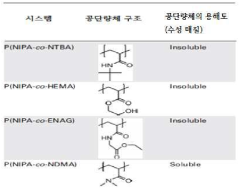
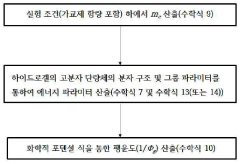
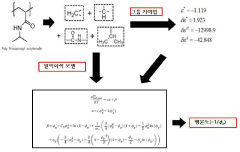
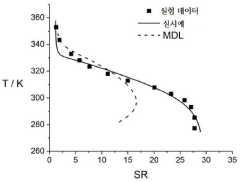
- A molecular thermodynamics-based model combined with a group contribution method is applied, separating functional groups in hydrogel polymers, considering the cross-linker fraction and using group parameters to predict swelling behavior under various conditions without unnecessary experiments.
Method and device for determining the swelling behavior of polymer gels under pressure
PatentInactiveUS7189575B2
Innovation
- A contactless method using a movable piston within a measuring vessel to apply a restraining force, allowing continuous measurement of the swelling process via optical systems, such as CCD cameras, which enables automatic, computer-controlled measurements and increased sample throughput by parallelizing the process.


Material Safety and Biocompatibility Regulations
The regulatory landscape for hydrogel actuators encompasses multiple jurisdictions with varying requirements for material safety and biocompatibility assessment. In the United States, the Food and Drug Administration (FDA) governs medical device applications through the 510(k) premarket notification process or Premarket Approval (PMA) pathway, depending on device classification. The FDA requires comprehensive biocompatibility testing according to ISO 10993 standards, which evaluate cytotoxicity, sensitization, irritation, and systemic toxicity of hydrogel materials.
European Union regulations under the Medical Device Regulation (MDR 2017/745) mandate rigorous conformity assessment procedures for hydrogel actuators intended for medical applications. The European Medicines Agency (EMA) requires detailed documentation of material composition, manufacturing processes, and clinical evaluation data. Notified bodies must verify compliance with essential safety and performance requirements before CE marking approval.
International standards play a crucial role in harmonizing safety requirements across different markets. ISO 10993 series provides the primary framework for biological evaluation of medical devices, while ASTM standards address specific testing methodologies for hydrogel materials. ISO 14155 governs clinical investigation protocols, ensuring systematic evaluation of device safety and efficacy in human subjects.
Biocompatibility testing requirements vary significantly based on intended application duration and tissue contact level. Short-term contact devices require basic cytotoxicity and sensitization studies, while long-term implantable actuators necessitate comprehensive testing including carcinogenicity, reproductive toxicity, and biodegradation assessments. The testing matrix becomes particularly complex for smart hydrogels incorporating stimuli-responsive polymers or drug delivery capabilities.
Emerging regulatory challenges include addressing novel materials such as conductive hydrogels, hybrid organic-inorganic composites, and programmable shape-memory hydrogels. Regulatory agencies are developing new guidance documents to address these innovative materials, focusing on characterization of degradation products, immune response evaluation, and long-term biocompatibility assessment protocols.
Quality management systems compliance under ISO 13485 is mandatory for commercial hydrogel actuator development, requiring documented procedures for design controls, risk management, and post-market surveillance activities.
European Union regulations under the Medical Device Regulation (MDR 2017/745) mandate rigorous conformity assessment procedures for hydrogel actuators intended for medical applications. The European Medicines Agency (EMA) requires detailed documentation of material composition, manufacturing processes, and clinical evaluation data. Notified bodies must verify compliance with essential safety and performance requirements before CE marking approval.
International standards play a crucial role in harmonizing safety requirements across different markets. ISO 10993 series provides the primary framework for biological evaluation of medical devices, while ASTM standards address specific testing methodologies for hydrogel materials. ISO 14155 governs clinical investigation protocols, ensuring systematic evaluation of device safety and efficacy in human subjects.
Biocompatibility testing requirements vary significantly based on intended application duration and tissue contact level. Short-term contact devices require basic cytotoxicity and sensitization studies, while long-term implantable actuators necessitate comprehensive testing including carcinogenicity, reproductive toxicity, and biodegradation assessments. The testing matrix becomes particularly complex for smart hydrogels incorporating stimuli-responsive polymers or drug delivery capabilities.
Emerging regulatory challenges include addressing novel materials such as conductive hydrogels, hybrid organic-inorganic composites, and programmable shape-memory hydrogels. Regulatory agencies are developing new guidance documents to address these innovative materials, focusing on characterization of degradation products, immune response evaluation, and long-term biocompatibility assessment protocols.
Quality management systems compliance under ISO 13485 is mandatory for commercial hydrogel actuator development, requiring documented procedures for design controls, risk management, and post-market surveillance activities.
Environmental Impact of Hydrogel Actuator Applications
The environmental implications of hydrogel actuator applications represent a critical consideration in the broader adoption of these smart materials across various industries. As hydrogel actuators gain prominence in biomedical devices, soft robotics, and environmental monitoring systems, understanding their ecological footprint becomes essential for sustainable technological development.
Hydrogel actuators demonstrate significant environmental advantages compared to traditional actuator systems. Their operation typically requires minimal energy input, often relying on environmental stimuli such as pH changes, temperature variations, or ionic concentration shifts rather than continuous electrical power. This passive actuation mechanism substantially reduces energy consumption and associated carbon emissions during operational phases.
The biodegradability of many hydrogel materials presents another environmental benefit. Natural polymer-based hydrogels, including those derived from alginate, chitosan, and gelatin, can decompose naturally without leaving persistent synthetic residues. This characteristic is particularly valuable in biomedical applications where implanted devices eventually integrate with biological systems or in environmental monitoring applications where sensors may remain in natural ecosystems.
However, synthetic hydrogel actuators based on polyacrylamide, polyethylene glycol, or other petroleum-derived polymers raise concerns regarding long-term environmental persistence. These materials may accumulate in ecosystems, particularly in aquatic environments where their high water content and swelling behavior could affect local water chemistry and organism interactions.
Manufacturing processes for hydrogel actuators generally involve fewer toxic solvents and harsh chemicals compared to traditional electronic actuators. The aqueous-based synthesis routes commonly employed reduce volatile organic compound emissions and minimize hazardous waste generation. Additionally, the absence of rare earth elements or heavy metals in most hydrogel formulations eliminates concerns related to resource scarcity and toxic metal contamination.
The application context significantly influences environmental impact assessment. In agricultural applications, hydrogel actuators used for controlled irrigation systems can reduce water consumption and minimize fertilizer runoff. Similarly, in environmental remediation, these materials can facilitate targeted pollutant removal without introducing additional contaminants.
End-of-life considerations vary substantially based on hydrogel composition. While biodegradable variants offer clear disposal advantages, synthetic hydrogels require careful waste management strategies. Recycling opportunities remain limited due to the crosslinked nature of most hydrogel networks, though emerging depolymerization techniques show promise for material recovery.
Hydrogel actuators demonstrate significant environmental advantages compared to traditional actuator systems. Their operation typically requires minimal energy input, often relying on environmental stimuli such as pH changes, temperature variations, or ionic concentration shifts rather than continuous electrical power. This passive actuation mechanism substantially reduces energy consumption and associated carbon emissions during operational phases.
The biodegradability of many hydrogel materials presents another environmental benefit. Natural polymer-based hydrogels, including those derived from alginate, chitosan, and gelatin, can decompose naturally without leaving persistent synthetic residues. This characteristic is particularly valuable in biomedical applications where implanted devices eventually integrate with biological systems or in environmental monitoring applications where sensors may remain in natural ecosystems.
However, synthetic hydrogel actuators based on polyacrylamide, polyethylene glycol, or other petroleum-derived polymers raise concerns regarding long-term environmental persistence. These materials may accumulate in ecosystems, particularly in aquatic environments where their high water content and swelling behavior could affect local water chemistry and organism interactions.
Manufacturing processes for hydrogel actuators generally involve fewer toxic solvents and harsh chemicals compared to traditional electronic actuators. The aqueous-based synthesis routes commonly employed reduce volatile organic compound emissions and minimize hazardous waste generation. Additionally, the absence of rare earth elements or heavy metals in most hydrogel formulations eliminates concerns related to resource scarcity and toxic metal contamination.
The application context significantly influences environmental impact assessment. In agricultural applications, hydrogel actuators used for controlled irrigation systems can reduce water consumption and minimize fertilizer runoff. Similarly, in environmental remediation, these materials can facilitate targeted pollutant removal without introducing additional contaminants.
End-of-life considerations vary substantially based on hydrogel composition. While biodegradable variants offer clear disposal advantages, synthetic hydrogels require careful waste management strategies. Recycling opportunities remain limited due to the crosslinked nature of most hydrogel networks, though emerging depolymerization techniques show promise for material recovery.
Unlock deeper insights with Patsnap Eureka Quick Research — get a full tech report to explore trends and direct your research. Try now!
Generate Your Research Report Instantly with AI Agent
Supercharge your innovation with Patsnap Eureka AI Agent Platform!