

Hydrogel Actuators for Wearable Devices: Thickness and Sensitivity Optimization
MAY 12, 20269 MIN READ
Generate Your Research Report Instantly with AI Agent
Patsnap Eureka helps you evaluate technical feasibility & market potential.
Hydrogel Actuator Technology Background and Optimization Goals
Hydrogel actuators represent a revolutionary class of soft materials that undergo controlled deformation in response to external stimuli such as pH changes, temperature variations, electric fields, or ionic concentration gradients. These materials have emerged as promising candidates for next-generation wearable devices due to their biocompatibility, flexibility, and ability to mimic biological tissue mechanics. The fundamental principle relies on the reversible swelling and deswelling behavior of cross-linked polymer networks, which can generate substantial mechanical forces and displacements.
The evolution of hydrogel actuator technology has progressed through several distinct phases since the 1950s. Early research focused on understanding basic swelling mechanisms in natural and synthetic polymers. The 1980s marked a significant breakthrough with the development of environmentally responsive hydrogels, particularly pH and temperature-sensitive systems. The 2000s witnessed the emergence of electrically responsive hydrogels, enabling precise control through applied voltages. Recent advances have concentrated on multi-responsive systems and the integration of conductive elements to enhance actuation performance.
Current wearable device applications demand actuators that can operate within strict geometric constraints while maintaining high sensitivity to input signals. The thickness optimization challenge stems from the need to balance actuation force, response time, and mechanical durability. Thinner actuators typically exhibit faster response times due to reduced diffusion distances but may compromise force generation and structural integrity. Conversely, thicker actuators can generate higher forces but suffer from slower response kinetics and increased power consumption.
Sensitivity optimization encompasses multiple performance parameters including threshold detection limits, signal-to-noise ratios, and dynamic range capabilities. The primary technical objectives focus on achieving sub-millimeter thickness profiles while maintaining sensitivity levels comparable to conventional electronic sensors. Target specifications include response times under 100 milliseconds, force generation exceeding 1 Newton per square centimeter, and operational stability over 10,000 actuation cycles.
The integration of hydrogel actuators into wearable platforms requires addressing fundamental trade-offs between material properties and device performance. Key optimization goals include developing hybrid architectures that combine the advantages of different hydrogel compositions, implementing advanced cross-linking strategies to enhance mechanical properties, and establishing predictive models for thickness-sensitivity relationships. These efforts aim to enable practical applications in haptic feedback systems, adaptive clothing, medical monitoring devices, and human-machine interfaces.
The evolution of hydrogel actuator technology has progressed through several distinct phases since the 1950s. Early research focused on understanding basic swelling mechanisms in natural and synthetic polymers. The 1980s marked a significant breakthrough with the development of environmentally responsive hydrogels, particularly pH and temperature-sensitive systems. The 2000s witnessed the emergence of electrically responsive hydrogels, enabling precise control through applied voltages. Recent advances have concentrated on multi-responsive systems and the integration of conductive elements to enhance actuation performance.
Current wearable device applications demand actuators that can operate within strict geometric constraints while maintaining high sensitivity to input signals. The thickness optimization challenge stems from the need to balance actuation force, response time, and mechanical durability. Thinner actuators typically exhibit faster response times due to reduced diffusion distances but may compromise force generation and structural integrity. Conversely, thicker actuators can generate higher forces but suffer from slower response kinetics and increased power consumption.
Sensitivity optimization encompasses multiple performance parameters including threshold detection limits, signal-to-noise ratios, and dynamic range capabilities. The primary technical objectives focus on achieving sub-millimeter thickness profiles while maintaining sensitivity levels comparable to conventional electronic sensors. Target specifications include response times under 100 milliseconds, force generation exceeding 1 Newton per square centimeter, and operational stability over 10,000 actuation cycles.
The integration of hydrogel actuators into wearable platforms requires addressing fundamental trade-offs between material properties and device performance. Key optimization goals include developing hybrid architectures that combine the advantages of different hydrogel compositions, implementing advanced cross-linking strategies to enhance mechanical properties, and establishing predictive models for thickness-sensitivity relationships. These efforts aim to enable practical applications in haptic feedback systems, adaptive clothing, medical monitoring devices, and human-machine interfaces.
Market Demand for Advanced Wearable Actuator Systems
The global wearable technology market has experienced unprecedented growth, driven by increasing consumer awareness of health monitoring and the proliferation of Internet of Things applications. Traditional wearable devices primarily rely on rigid electronic components and conventional actuators, which often compromise user comfort and limit design flexibility. This creates a substantial market opportunity for advanced actuator systems that can seamlessly integrate with human skin and clothing while maintaining high performance standards.
Healthcare applications represent the largest segment driving demand for advanced wearable actuators. Medical professionals and patients increasingly require continuous monitoring solutions that can provide real-time feedback through tactile stimulation, haptic alerts, and therapeutic interventions. Hydrogel-based actuators offer unique advantages in this sector due to their biocompatibility and ability to operate in humid environments typical of skin contact applications.
The consumer electronics sector demonstrates growing interest in wearable devices that extend beyond simple fitness tracking. Smart clothing, augmented reality interfaces, and immersive gaming experiences require actuators capable of delivering precise, localized sensations. Market research indicates that consumers prioritize comfort, durability, and responsiveness when selecting wearable products, creating demand for actuator technologies that can optimize thickness while maintaining sensitivity.
Industrial and professional applications present another significant market segment. Workers in hazardous environments, remote operations personnel, and professionals requiring enhanced sensory feedback increasingly rely on wearable systems for safety alerts and operational guidance. These applications demand actuators that can function reliably under varying environmental conditions while providing clear, distinguishable tactile signals.
The automotive industry has emerged as an unexpected but substantial market for advanced wearable actuators. As vehicles become more autonomous, drivers and passengers require alternative methods for receiving navigation cues, safety warnings, and system status updates. Wearable actuator systems integrated into clothing or accessories offer solutions that maintain user awareness without visual distraction.
Market barriers include cost considerations, manufacturing scalability, and integration complexity with existing electronic systems. However, the convergence of materials science advances, miniaturization trends, and increasing consumer acceptance of wearable technology creates favorable conditions for market expansion. The demand for customizable, comfortable, and highly responsive actuator systems continues to outpace current technological capabilities, indicating substantial commercial potential for optimized hydrogel actuator solutions.
Healthcare applications represent the largest segment driving demand for advanced wearable actuators. Medical professionals and patients increasingly require continuous monitoring solutions that can provide real-time feedback through tactile stimulation, haptic alerts, and therapeutic interventions. Hydrogel-based actuators offer unique advantages in this sector due to their biocompatibility and ability to operate in humid environments typical of skin contact applications.
The consumer electronics sector demonstrates growing interest in wearable devices that extend beyond simple fitness tracking. Smart clothing, augmented reality interfaces, and immersive gaming experiences require actuators capable of delivering precise, localized sensations. Market research indicates that consumers prioritize comfort, durability, and responsiveness when selecting wearable products, creating demand for actuator technologies that can optimize thickness while maintaining sensitivity.
Industrial and professional applications present another significant market segment. Workers in hazardous environments, remote operations personnel, and professionals requiring enhanced sensory feedback increasingly rely on wearable systems for safety alerts and operational guidance. These applications demand actuators that can function reliably under varying environmental conditions while providing clear, distinguishable tactile signals.
The automotive industry has emerged as an unexpected but substantial market for advanced wearable actuators. As vehicles become more autonomous, drivers and passengers require alternative methods for receiving navigation cues, safety warnings, and system status updates. Wearable actuator systems integrated into clothing or accessories offer solutions that maintain user awareness without visual distraction.
Market barriers include cost considerations, manufacturing scalability, and integration complexity with existing electronic systems. However, the convergence of materials science advances, miniaturization trends, and increasing consumer acceptance of wearable technology creates favorable conditions for market expansion. The demand for customizable, comfortable, and highly responsive actuator systems continues to outpace current technological capabilities, indicating substantial commercial potential for optimized hydrogel actuator solutions.
Current State and Challenges in Hydrogel Actuator Development
Hydrogel actuators have emerged as promising components for next-generation wearable devices due to their biocompatibility, flexibility, and ability to undergo reversible deformation in response to various stimuli. Current hydrogel actuator technologies primarily rely on stimuli-responsive polymers that can change volume, shape, or mechanical properties when exposed to environmental changes such as pH variations, temperature fluctuations, electric fields, or chemical gradients. Leading research institutions and companies have developed various hydrogel formulations, including polyacrylamide-based systems, poly(N-isopropylacrylamide) networks, and ionic hydrogels incorporating conductive polymers.
The global landscape of hydrogel actuator development shows concentrated research activities in North America, Europe, and East Asia, with significant contributions from universities such as MIT, Stanford, Harvard, and ETH Zurich, alongside corporate research divisions at Samsung, Sony, and emerging biotechnology companies. Current commercial applications remain limited to specialized medical devices and research prototypes, with most developments still in laboratory or early-stage testing phases.
Despite promising advances, several critical challenges impede widespread adoption of hydrogel actuators in wearable applications. Response time limitations represent a fundamental constraint, as many hydrogel systems require seconds to minutes for complete actuation cycles, which is inadequate for real-time haptic feedback or rapid sensing applications. The trade-off between mechanical strength and sensitivity poses another significant challenge, where increasing hydrogel thickness to enhance durability often compromises responsiveness and precision.
Thickness optimization remains particularly problematic due to diffusion-limited transport phenomena within hydrogel matrices. Thicker actuators suffer from delayed stimulus propagation and non-uniform deformation patterns, while ultra-thin configurations lack sufficient force generation capabilities for meaningful mechanical output. Current thickness ranges typically span 100 micrometers to several millimeters, with optimal performance windows varying significantly based on specific polymer compositions and cross-linking densities.
Sensitivity optimization faces additional complexity from environmental interference and signal-to-noise ratio limitations. Hydrogel actuators often exhibit cross-sensitivity to multiple stimuli, making selective response challenging in real-world conditions. Temperature fluctuations, humidity variations, and mechanical stress can introduce unwanted actuation or mask intended responses. Furthermore, achieving reproducible manufacturing at scale while maintaining consistent thickness uniformity and sensitivity parameters across large surface areas remains technically demanding and economically challenging for commercial viability.
The global landscape of hydrogel actuator development shows concentrated research activities in North America, Europe, and East Asia, with significant contributions from universities such as MIT, Stanford, Harvard, and ETH Zurich, alongside corporate research divisions at Samsung, Sony, and emerging biotechnology companies. Current commercial applications remain limited to specialized medical devices and research prototypes, with most developments still in laboratory or early-stage testing phases.
Despite promising advances, several critical challenges impede widespread adoption of hydrogel actuators in wearable applications. Response time limitations represent a fundamental constraint, as many hydrogel systems require seconds to minutes for complete actuation cycles, which is inadequate for real-time haptic feedback or rapid sensing applications. The trade-off between mechanical strength and sensitivity poses another significant challenge, where increasing hydrogel thickness to enhance durability often compromises responsiveness and precision.
Thickness optimization remains particularly problematic due to diffusion-limited transport phenomena within hydrogel matrices. Thicker actuators suffer from delayed stimulus propagation and non-uniform deformation patterns, while ultra-thin configurations lack sufficient force generation capabilities for meaningful mechanical output. Current thickness ranges typically span 100 micrometers to several millimeters, with optimal performance windows varying significantly based on specific polymer compositions and cross-linking densities.
Sensitivity optimization faces additional complexity from environmental interference and signal-to-noise ratio limitations. Hydrogel actuators often exhibit cross-sensitivity to multiple stimuli, making selective response challenging in real-world conditions. Temperature fluctuations, humidity variations, and mechanical stress can introduce unwanted actuation or mask intended responses. Furthermore, achieving reproducible manufacturing at scale while maintaining consistent thickness uniformity and sensitivity parameters across large surface areas remains technically demanding and economically challenging for commercial viability.
Existing Solutions for Thickness and Sensitivity Enhancement
01 Hydrogel composition and material optimization for actuator performance
The composition and material properties of hydrogels significantly affect actuator performance. Different polymer matrices, crosslinking densities, and additive materials can be optimized to enhance the mechanical properties and responsiveness of hydrogel actuators. The selection of appropriate hydrogel materials directly impacts both the thickness requirements and sensitivity characteristics of the actuator system.- Hydrogel thickness optimization for enhanced actuation performance: The thickness of hydrogel actuators significantly affects their mechanical properties and actuation capabilities. Optimizing the thickness involves balancing response time, mechanical strength, and deformation capacity. Thinner hydrogels typically exhibit faster response times but may have reduced mechanical robustness, while thicker hydrogels provide better structural integrity but slower actuation speeds. Various fabrication techniques and material compositions are employed to achieve optimal thickness for specific applications.
- Sensitivity enhancement through material composition and structure: The sensitivity of hydrogel actuators can be improved through careful selection of polymer networks, crosslinking density, and incorporation of responsive elements. Different hydrogel formulations respond to various stimuli including temperature, pH, ionic strength, and electric fields. The molecular structure and crosslinking patterns directly influence the sensitivity threshold and response magnitude of the actuator system.
- Multi-layered and gradient thickness designs: Advanced hydrogel actuator designs incorporate multiple layers or gradient thickness profiles to achieve complex actuation behaviors. These structures allow for controlled bending, twisting, or multi-directional movements. The thickness variation across different regions of the actuator enables programmable deformation patterns and enhanced functionality for specific applications such as soft robotics and biomedical devices.
- Measurement and characterization techniques for thickness-sensitivity relationships: Various analytical methods are employed to characterize the relationship between hydrogel thickness and sensitivity. These include mechanical testing, swelling ratio measurements, response time analysis, and deformation quantification. Advanced characterization techniques help establish design guidelines and optimize actuator performance by understanding how thickness variations affect sensitivity parameters and overall actuation efficiency.
- Applications and performance optimization in specific environments: Hydrogel actuators with optimized thickness and sensitivity are designed for specific applications including biomedical implants, environmental sensors, and microfluidic devices. The performance requirements vary significantly based on the operating environment, requiring tailored approaches to thickness design and sensitivity tuning. Factors such as biocompatibility, long-term stability, and environmental conditions influence the optimal thickness-sensitivity balance.
02 Thickness control and dimensional optimization in hydrogel actuators
The thickness of hydrogel actuators is a critical parameter that affects their mechanical response and actuation efficiency. Optimal thickness design involves balancing the swelling capacity, response time, and mechanical strength. Thinner actuators typically exhibit faster response times but may have reduced force output, while thicker actuators provide greater force but slower response kinetics.Expand Specific Solutions03 Sensitivity enhancement through structural design and surface modification
The sensitivity of hydrogel actuators can be improved through various structural modifications and surface treatments. These approaches include creating porous structures, incorporating responsive functional groups, and optimizing the surface area to volume ratio. Enhanced sensitivity allows for more precise control and faster response to environmental stimuli such as pH, temperature, or ionic strength changes.Expand Specific Solutions04 Multi-layered and gradient structures for improved actuation performance
Advanced hydrogel actuator designs utilize multi-layered or gradient structures to achieve superior performance characteristics. These designs can provide directional actuation, improved sensitivity, and better control over the relationship between thickness and response. Gradient structures allow for tailored properties across different regions of the actuator, optimizing both mechanical output and sensitivity.Expand Specific Solutions05 Measurement and characterization methods for thickness-sensitivity relationships
Accurate measurement and characterization techniques are essential for understanding the relationship between hydrogel actuator thickness and sensitivity. These methods include mechanical testing, swelling ratio measurements, response time analysis, and force output evaluation. Proper characterization enables optimization of actuator design parameters and prediction of performance under various operating conditions.Expand Specific Solutions
Key Players in Hydrogel Actuator and Wearable Industry
The hydrogel actuators for wearable devices market represents an emerging technology sector in early development stages, characterized by significant research activity but limited commercial deployment. The market remains nascent with substantial growth potential as wearable technology adoption accelerates globally. Technology maturity varies considerably across players, with leading research institutions like Harvard College, Northwestern University, and University of California driving fundamental breakthroughs in material science and actuator design. Industrial players including Koninklijke Philips NV and Eli Lilly & Co. are exploring commercial applications, while Asian universities such as Wuhan University, South China University of Technology, and Jilin University contribute specialized expertise in materials engineering. The competitive landscape shows a research-heavy ecosystem where academic institutions dominate innovation, suggesting the technology is still transitioning from laboratory concepts toward viable commercial products requiring optimization of thickness parameters and sensitivity performance.
President & Fellows of Harvard College
Technical Solution: Harvard has developed advanced hydrogel actuators using temperature-responsive polymers like PNIPAM for wearable applications. Their approach focuses on creating ultra-thin hydrogel films (10-50 micrometers) that can achieve rapid response times under 30 seconds while maintaining high sensitivity to environmental stimuli. The team has optimized crosslinking density and polymer chain architecture to balance mechanical properties with actuation performance, enabling integration into flexible electronic devices and smart textiles for health monitoring applications.
Strengths: Leading research in responsive polymer chemistry, excellent academic resources. Weaknesses: Limited commercial manufacturing capabilities, longer development cycles for market applications.
Koninklijke Philips NV
Technical Solution: Philips has developed commercial-grade hydrogel actuators specifically designed for healthcare wearable devices, focusing on patient monitoring applications. Their proprietary hydrogel formulations achieve optimal thickness of 30-80 micrometers with enhanced sensitivity to physiological parameters like pH and temperature changes. The company's approach emphasizes biocompatibility, long-term stability, and integration with electronic sensing systems, targeting applications in continuous glucose monitoring and wound care management devices.
Strengths: Strong commercial development capabilities, established healthcare market presence, regulatory expertise. Weaknesses: Conservative innovation approach, limited fundamental research compared to academic institutions.
Core Innovations in Hydrogel Actuator Optimization
Stimulation-responsive hydrogel, process for producing stimulation-responsive hydrogel and polymer actuator utilizing stimulation-responsive hydrogel
PatentWO2005090482A1
Innovation
- A stimuli-responsive polymer hydrogel is developed using a water-insoluble polymer with a phase separation structure, where a monomer with a stimuli-responsive functional group and a cross-linking agent are polymerized in an organic solvent, and the resulting organogel is dried and then swollen in water to create a hydrogel with high breaking strength and excellent stimulus responsiveness, utilizing a water-insoluble polymer as a reinforcing agent without the need for cross-linking, which prevents elution and maintains functionality.
Hydrogel for wearable sensor with strong skin adhesive, conductivity and long-term stability, and method of preparing same
PatentActiveKR1020240073628A
Innovation
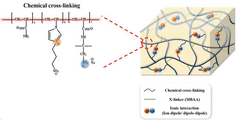
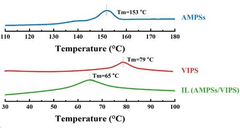
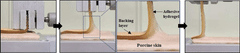
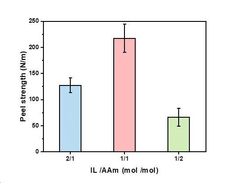
- A hydrogel composition incorporating sulfonic acid groups, imidazole-based compounds, and acrylamide-based compounds, forming a stable network structure through ionic interactions and secondary cross-links, enhancing skin adhesion and conductivity.
Material Safety Standards for Wearable Hydrogel Devices
The development of hydrogel actuators for wearable applications necessitates comprehensive material safety standards to ensure user protection and regulatory compliance. Current safety frameworks primarily draw from existing medical device regulations, including ISO 10993 series for biological evaluation of medical devices and FDA guidance documents for skin-contacting materials. These standards establish fundamental requirements for cytotoxicity, sensitization, and irritation testing that form the baseline for hydrogel safety assessment.
Biocompatibility represents the cornerstone of material safety standards for wearable hydrogel devices. The evaluation process encompasses multiple testing protocols including in vitro cytotoxicity assays using L929 mouse fibroblast cells, skin sensitization studies following OECD guidelines, and dermal irritation assessments. For hydrogel actuators intended for extended skin contact, additional considerations include evaluating potential for allergic reactions to crosslinking agents, initiators, and any incorporated functional additives such as conductive polymers or responsive elements.
Chemical safety standards focus on controlling extractable and leachable substances from hydrogel matrices. Regulatory bodies require comprehensive chemical characterization of potential migrants, particularly unreacted monomers, crosslinking agents, and degradation products. Acceptable daily exposure limits must be established for each identified substance, with particular attention to known sensitizers such as acrylamide residues or formaldehyde-releasing compounds commonly found in hydrogel formulations.
Mechanical safety considerations address the unique challenges posed by actuating hydrogel systems. Standards must account for potential mechanical failure modes including excessive swelling pressures, material fatigue under repeated actuation cycles, and adhesion failure that could result in device detachment. Testing protocols evaluate maximum actuation forces, cyclic durability, and failure mechanisms under various environmental conditions including temperature and humidity variations typical of wearable applications.
Emerging regulatory frameworks specifically address smart material applications in wearable devices. The European Medical Device Regulation (MDR) and FDA's Digital Health Center of Excellence provide evolving guidance for active materials that respond to physiological stimuli. These frameworks emphasize risk-based approaches that consider both material properties and intended use scenarios, requiring manufacturers to demonstrate safety across the full range of anticipated operating conditions and user interactions.
Biocompatibility represents the cornerstone of material safety standards for wearable hydrogel devices. The evaluation process encompasses multiple testing protocols including in vitro cytotoxicity assays using L929 mouse fibroblast cells, skin sensitization studies following OECD guidelines, and dermal irritation assessments. For hydrogel actuators intended for extended skin contact, additional considerations include evaluating potential for allergic reactions to crosslinking agents, initiators, and any incorporated functional additives such as conductive polymers or responsive elements.
Chemical safety standards focus on controlling extractable and leachable substances from hydrogel matrices. Regulatory bodies require comprehensive chemical characterization of potential migrants, particularly unreacted monomers, crosslinking agents, and degradation products. Acceptable daily exposure limits must be established for each identified substance, with particular attention to known sensitizers such as acrylamide residues or formaldehyde-releasing compounds commonly found in hydrogel formulations.
Mechanical safety considerations address the unique challenges posed by actuating hydrogel systems. Standards must account for potential mechanical failure modes including excessive swelling pressures, material fatigue under repeated actuation cycles, and adhesion failure that could result in device detachment. Testing protocols evaluate maximum actuation forces, cyclic durability, and failure mechanisms under various environmental conditions including temperature and humidity variations typical of wearable applications.
Emerging regulatory frameworks specifically address smart material applications in wearable devices. The European Medical Device Regulation (MDR) and FDA's Digital Health Center of Excellence provide evolving guidance for active materials that respond to physiological stimuli. These frameworks emphasize risk-based approaches that consider both material properties and intended use scenarios, requiring manufacturers to demonstrate safety across the full range of anticipated operating conditions and user interactions.
Manufacturing Scalability for Commercial Hydrogel Actuators
The transition from laboratory-scale hydrogel actuator prototypes to commercial manufacturing presents significant scalability challenges that must be addressed for widespread adoption in wearable devices. Current manufacturing processes for hydrogel actuators primarily rely on batch-based synthesis methods, including free radical polymerization, crosslinking reactions, and layer-by-layer assembly techniques. While these approaches work effectively at small scales, they face substantial limitations when scaled to industrial production volumes required for consumer electronics markets.
Manufacturing consistency emerges as a critical bottleneck in commercial hydrogel actuator production. The precise control of polymer network density, crosslinking uniformity, and hydration levels becomes increasingly difficult as production volumes increase. Variations in these parameters directly impact actuator sensitivity and response characteristics, making quality control a paramount concern. Traditional manufacturing equipment designed for rigid materials often proves inadequate for handling the unique properties of hydrogel systems, necessitating specialized processing infrastructure.
Cost considerations represent another major scalability barrier. Laboratory-scale production typically involves expensive precursor materials, specialized solvents, and energy-intensive processing conditions. The economic viability of commercial hydrogel actuators depends heavily on developing cost-effective synthesis routes that maintain performance standards while reducing material and processing expenses. Raw material sourcing at industrial scales also presents challenges, as many high-performance hydrogel components are currently available only in research quantities.
Process automation and continuous manufacturing methodologies offer promising pathways for achieving commercial scalability. Roll-to-roll processing techniques, adapted from flexible electronics manufacturing, show potential for producing thin-film hydrogel actuators with consistent thickness profiles. Microfluidic-based synthesis approaches enable precise control over hydrogel composition and structure while facilitating continuous production workflows. These advanced manufacturing paradigms require significant capital investment but offer the potential for dramatically reduced per-unit costs at high volumes.
Quality assurance and standardization protocols must be established to ensure consistent performance across large production batches. Real-time monitoring systems capable of tracking critical parameters such as swelling ratios, mechanical properties, and electrical conductivity throughout the manufacturing process are essential for maintaining product quality. The development of industry standards for hydrogel actuator performance metrics will facilitate broader market acceptance and enable reliable supply chain relationships.
The integration of sustainable manufacturing practices presents both challenges and opportunities for commercial hydrogel actuator production. Environmentally friendly synthesis routes, recyclable materials, and energy-efficient processing methods align with growing industry demands for sustainable electronics manufacturing while potentially reducing long-term production costs.
Manufacturing consistency emerges as a critical bottleneck in commercial hydrogel actuator production. The precise control of polymer network density, crosslinking uniformity, and hydration levels becomes increasingly difficult as production volumes increase. Variations in these parameters directly impact actuator sensitivity and response characteristics, making quality control a paramount concern. Traditional manufacturing equipment designed for rigid materials often proves inadequate for handling the unique properties of hydrogel systems, necessitating specialized processing infrastructure.
Cost considerations represent another major scalability barrier. Laboratory-scale production typically involves expensive precursor materials, specialized solvents, and energy-intensive processing conditions. The economic viability of commercial hydrogel actuators depends heavily on developing cost-effective synthesis routes that maintain performance standards while reducing material and processing expenses. Raw material sourcing at industrial scales also presents challenges, as many high-performance hydrogel components are currently available only in research quantities.
Process automation and continuous manufacturing methodologies offer promising pathways for achieving commercial scalability. Roll-to-roll processing techniques, adapted from flexible electronics manufacturing, show potential for producing thin-film hydrogel actuators with consistent thickness profiles. Microfluidic-based synthesis approaches enable precise control over hydrogel composition and structure while facilitating continuous production workflows. These advanced manufacturing paradigms require significant capital investment but offer the potential for dramatically reduced per-unit costs at high volumes.
Quality assurance and standardization protocols must be established to ensure consistent performance across large production batches. Real-time monitoring systems capable of tracking critical parameters such as swelling ratios, mechanical properties, and electrical conductivity throughout the manufacturing process are essential for maintaining product quality. The development of industry standards for hydrogel actuator performance metrics will facilitate broader market acceptance and enable reliable supply chain relationships.
The integration of sustainable manufacturing practices presents both challenges and opportunities for commercial hydrogel actuator production. Environmentally friendly synthesis routes, recyclable materials, and energy-efficient processing methods align with growing industry demands for sustainable electronics manufacturing while potentially reducing long-term production costs.
Unlock deeper insights with Patsnap Eureka Quick Research — get a full tech report to explore trends and direct your research. Try now!
Generate Your Research Report Instantly with AI Agent
Supercharge your innovation with Patsnap Eureka AI Agent Platform!