
How to Reduce Curing Time for Underfill Materials
APR 7, 20269 MIN READ
Generate Your Research Report Instantly with AI Agent
Patsnap Eureka helps you evaluate technical feasibility & market potential.
Underfill Curing Time Reduction Background and Objectives
Underfill materials have emerged as critical components in advanced semiconductor packaging technologies, particularly in flip-chip and ball grid array (BGA) assemblies. These materials serve as mechanical reinforcement between semiconductor dies and substrates, providing essential stress relief and enhancing the reliability of solder joint interconnections. As electronic devices continue to miniaturize while demanding higher performance, the semiconductor industry faces increasing pressure to optimize manufacturing processes without compromising product quality.
The evolution of underfill technology traces back to the early 1990s when flip-chip packaging gained prominence in high-performance computing applications. Initially, underfill materials required extensive curing times, often exceeding several hours at elevated temperatures, which significantly impacted manufacturing throughput and energy consumption. The traditional epoxy-based underfills, while providing excellent mechanical properties, presented substantial bottlenecks in high-volume production environments.
Contemporary semiconductor manufacturing operates under stringent time-to-market pressures and cost optimization requirements. The conventional curing processes, typically involving thermal cycles of 150-180°C for 60-120 minutes, represent a significant portion of the overall assembly time. This extended processing duration directly impacts production capacity, increases energy costs, and limits the flexibility of manufacturing schedules, particularly in facilities operating continuous production lines.
The primary objective of reducing underfill curing time centers on achieving substantial improvements in manufacturing efficiency while maintaining or enhancing the mechanical and thermal performance characteristics of the cured material. Specifically, the industry targets reducing curing times from the current standard of 60-120 minutes to ideally 15-30 minutes, representing a 50-75% improvement in processing speed.
Beyond throughput enhancement, accelerated curing processes aim to reduce thermal exposure duration for temperature-sensitive components, minimize energy consumption per unit, and enable more flexible production scheduling. The technical goals encompass maintaining glass transition temperatures above 120°C, preserving coefficient of thermal expansion compatibility with substrate materials, and ensuring long-term reliability under thermal cycling conditions.
The strategic importance of this technological advancement extends to enabling next-generation packaging architectures, including system-in-package and heterogeneous integration solutions, where rapid processing capabilities become essential for economic viability and competitive positioning in the global semiconductor market.
The evolution of underfill technology traces back to the early 1990s when flip-chip packaging gained prominence in high-performance computing applications. Initially, underfill materials required extensive curing times, often exceeding several hours at elevated temperatures, which significantly impacted manufacturing throughput and energy consumption. The traditional epoxy-based underfills, while providing excellent mechanical properties, presented substantial bottlenecks in high-volume production environments.
Contemporary semiconductor manufacturing operates under stringent time-to-market pressures and cost optimization requirements. The conventional curing processes, typically involving thermal cycles of 150-180°C for 60-120 minutes, represent a significant portion of the overall assembly time. This extended processing duration directly impacts production capacity, increases energy costs, and limits the flexibility of manufacturing schedules, particularly in facilities operating continuous production lines.
The primary objective of reducing underfill curing time centers on achieving substantial improvements in manufacturing efficiency while maintaining or enhancing the mechanical and thermal performance characteristics of the cured material. Specifically, the industry targets reducing curing times from the current standard of 60-120 minutes to ideally 15-30 minutes, representing a 50-75% improvement in processing speed.
Beyond throughput enhancement, accelerated curing processes aim to reduce thermal exposure duration for temperature-sensitive components, minimize energy consumption per unit, and enable more flexible production scheduling. The technical goals encompass maintaining glass transition temperatures above 120°C, preserving coefficient of thermal expansion compatibility with substrate materials, and ensuring long-term reliability under thermal cycling conditions.
The strategic importance of this technological advancement extends to enabling next-generation packaging architectures, including system-in-package and heterogeneous integration solutions, where rapid processing capabilities become essential for economic viability and competitive positioning in the global semiconductor market.
Market Demand for Fast-Curing Underfill Solutions
The semiconductor packaging industry is experiencing unprecedented demand for fast-curing underfill solutions, driven by the relentless pursuit of higher manufacturing throughput and reduced production costs. Traditional underfill materials, which typically require curing times ranging from several minutes to hours, have become a significant bottleneck in high-volume electronics manufacturing. This constraint directly impacts production efficiency and overall equipment effectiveness, creating substantial pressure on manufacturers to adopt faster curing alternatives.
Consumer electronics manufacturers, particularly those producing smartphones, tablets, and wearable devices, represent the largest market segment demanding accelerated underfill curing solutions. These manufacturers operate under extremely tight production schedules and cost pressures, where even marginal improvements in curing time can translate to significant competitive advantages. The miniaturization trend in electronic devices further intensifies this demand, as smaller form factors require more precise and rapid processing techniques.
The automotive electronics sector has emerged as another critical driver of fast-curing underfill demand. With the automotive industry's transition toward electric vehicles and autonomous driving systems, the number of electronic components per vehicle has increased dramatically. Automotive-grade electronics require exceptional reliability while maintaining cost-effectiveness, making rapid curing underfill materials essential for meeting production volume requirements without compromising quality standards.
Data center and telecommunications infrastructure markets are experiencing robust growth in demand for high-performance computing solutions. These applications require advanced packaging technologies with superior thermal and mechanical properties, where fast-curing underfill materials enable manufacturers to achieve higher production rates while maintaining the stringent reliability requirements of mission-critical applications.
The Internet of Things expansion has created new market opportunities for fast-curing underfill solutions across diverse application areas including industrial sensors, smart home devices, and medical electronics. These emerging markets often require cost-optimized manufacturing processes, making reduced curing time a crucial factor in achieving competitive pricing while maintaining acceptable quality levels.
Regional market dynamics show particularly strong demand growth in Asia-Pacific manufacturing hubs, where the concentration of electronics assembly operations creates intense competition for production efficiency improvements. European and North American markets demonstrate growing interest in fast-curing solutions primarily driven by automotive electronics and industrial applications requiring enhanced manufacturing flexibility and responsiveness to market demands.
Consumer electronics manufacturers, particularly those producing smartphones, tablets, and wearable devices, represent the largest market segment demanding accelerated underfill curing solutions. These manufacturers operate under extremely tight production schedules and cost pressures, where even marginal improvements in curing time can translate to significant competitive advantages. The miniaturization trend in electronic devices further intensifies this demand, as smaller form factors require more precise and rapid processing techniques.
The automotive electronics sector has emerged as another critical driver of fast-curing underfill demand. With the automotive industry's transition toward electric vehicles and autonomous driving systems, the number of electronic components per vehicle has increased dramatically. Automotive-grade electronics require exceptional reliability while maintaining cost-effectiveness, making rapid curing underfill materials essential for meeting production volume requirements without compromising quality standards.
Data center and telecommunications infrastructure markets are experiencing robust growth in demand for high-performance computing solutions. These applications require advanced packaging technologies with superior thermal and mechanical properties, where fast-curing underfill materials enable manufacturers to achieve higher production rates while maintaining the stringent reliability requirements of mission-critical applications.
The Internet of Things expansion has created new market opportunities for fast-curing underfill solutions across diverse application areas including industrial sensors, smart home devices, and medical electronics. These emerging markets often require cost-optimized manufacturing processes, making reduced curing time a crucial factor in achieving competitive pricing while maintaining acceptable quality levels.
Regional market dynamics show particularly strong demand growth in Asia-Pacific manufacturing hubs, where the concentration of electronics assembly operations creates intense competition for production efficiency improvements. European and North American markets demonstrate growing interest in fast-curing solutions primarily driven by automotive electronics and industrial applications requiring enhanced manufacturing flexibility and responsiveness to market demands.
Current Underfill Curing Challenges and Limitations
Underfill materials in semiconductor packaging face significant curing challenges that directly impact manufacturing efficiency and product reliability. Traditional thermal curing processes typically require extended exposure times at elevated temperatures, often ranging from 150°C to 180°C for periods extending 30 minutes to several hours. This prolonged curing duration creates substantial bottlenecks in high-volume production environments, where throughput optimization is critical for maintaining competitive manufacturing costs.
Temperature sensitivity represents another fundamental limitation in current underfill curing processes. Many existing formulations exhibit narrow processing windows, where insufficient curing leads to poor mechanical properties and reliability issues, while excessive thermal exposure can cause material degradation, substrate warpage, or damage to temperature-sensitive components. This constraint becomes particularly problematic when dealing with advanced packaging technologies that incorporate multiple materials with varying thermal expansion coefficients.
Incomplete curing presents persistent quality control challenges across the industry. Current monitoring techniques often rely on time-temperature profiles rather than real-time assessment of actual crosslinking progress, leading to inconsistent cure states within production batches. This uncertainty necessitates conservative curing schedules that further extend processing times to ensure complete polymerization, thereby exacerbating throughput limitations.
Spatial uniformity during curing poses additional complications, especially in complex three-dimensional package geometries. Heat transfer limitations can create temperature gradients within the underfill material, resulting in non-uniform curing rates and potential stress concentrations. These variations become more pronounced as package sizes increase and geometries become more intricate, making it difficult to achieve consistent material properties throughout the entire underfill volume.
Energy consumption associated with prolonged high-temperature curing processes represents both an economic and environmental concern. Current thermal curing methods require substantial energy input to maintain elevated temperatures across large production ovens, contributing to increased manufacturing costs and carbon footprint. Additionally, the extended thermal cycling can accelerate equipment wear and increase maintenance requirements.
Process scalability limitations emerge when attempting to transfer laboratory-optimized curing conditions to full-scale manufacturing environments. Factors such as oven loading density, airflow patterns, and thermal mass effects can significantly alter curing kinetics, requiring extensive process requalification and potentially compromising the effectiveness of curing time reduction strategies developed at smaller scales.
Temperature sensitivity represents another fundamental limitation in current underfill curing processes. Many existing formulations exhibit narrow processing windows, where insufficient curing leads to poor mechanical properties and reliability issues, while excessive thermal exposure can cause material degradation, substrate warpage, or damage to temperature-sensitive components. This constraint becomes particularly problematic when dealing with advanced packaging technologies that incorporate multiple materials with varying thermal expansion coefficients.
Incomplete curing presents persistent quality control challenges across the industry. Current monitoring techniques often rely on time-temperature profiles rather than real-time assessment of actual crosslinking progress, leading to inconsistent cure states within production batches. This uncertainty necessitates conservative curing schedules that further extend processing times to ensure complete polymerization, thereby exacerbating throughput limitations.
Spatial uniformity during curing poses additional complications, especially in complex three-dimensional package geometries. Heat transfer limitations can create temperature gradients within the underfill material, resulting in non-uniform curing rates and potential stress concentrations. These variations become more pronounced as package sizes increase and geometries become more intricate, making it difficult to achieve consistent material properties throughout the entire underfill volume.
Energy consumption associated with prolonged high-temperature curing processes represents both an economic and environmental concern. Current thermal curing methods require substantial energy input to maintain elevated temperatures across large production ovens, contributing to increased manufacturing costs and carbon footprint. Additionally, the extended thermal cycling can accelerate equipment wear and increase maintenance requirements.
Process scalability limitations emerge when attempting to transfer laboratory-optimized curing conditions to full-scale manufacturing environments. Factors such as oven loading density, airflow patterns, and thermal mass effects can significantly alter curing kinetics, requiring extensive process requalification and potentially compromising the effectiveness of curing time reduction strategies developed at smaller scales.
Existing Fast-Curing Underfill Solutions
01 Fast-curing underfill compositions with reduced curing time
Underfill materials can be formulated with specific curing agents and catalysts to significantly reduce the curing time. These compositions are designed to achieve rapid polymerization and crosslinking, enabling faster processing times in semiconductor packaging applications. The formulations typically include epoxy resins combined with accelerated curing systems that can cure at lower temperatures or in shorter time periods, improving manufacturing throughput.- Fast-curing underfill compositions with reduced curing time: Underfill materials can be formulated with specific curing agents and catalysts to significantly reduce the curing time. These compositions are designed to achieve rapid polymerization and crosslinking, enabling faster processing times in semiconductor packaging applications. The use of accelerated curing systems allows for improved manufacturing throughput while maintaining adequate mechanical and thermal properties.
- Thermal curing methods and temperature control for underfill materials: The curing time of underfill materials can be optimized through controlled thermal curing processes. By adjusting curing temperatures and implementing staged heating profiles, the polymerization rate can be precisely controlled. This approach allows for balancing between achieving sufficient cure while minimizing thermal stress on sensitive electronic components. Temperature ramping and hold times are critical parameters in determining the overall curing duration.
- UV or radiation-initiated curing systems for rapid underfill solidification: Radiation-curable underfill compositions utilize photoinitiators that enable rapid curing upon exposure to ultraviolet light or other radiation sources. This curing mechanism can dramatically reduce processing time compared to traditional thermal curing methods. The technology allows for selective curing and provides better control over the curing process, making it suitable for applications requiring precise timing and localized curing.
- Dual-cure and multi-stage curing systems for underfill applications: Advanced underfill formulations employ dual-cure or multi-stage curing mechanisms that combine different curing methods or sequential curing steps. These systems may utilize an initial rapid cure phase followed by a secondary curing stage to achieve optimal properties. This approach provides flexibility in processing while ensuring complete cure and superior performance characteristics. The staged curing process helps manage stress development and improves reliability.
- Moisture-cure and ambient temperature curing underfill materials: Certain underfill compositions are designed to cure at ambient or room temperature through moisture-initiated mechanisms or other non-thermal curing pathways. These materials eliminate the need for elevated temperature processing, which can be advantageous for temperature-sensitive components. The curing time for such systems depends on environmental conditions such as humidity and can be tailored through formulation adjustments to meet specific application requirements.
02 Thermal curing methods and temperature control for underfill materials
The curing time of underfill materials can be optimized through precise thermal management and temperature profiling. Different heating methods and temperature ramps are employed to control the curing kinetics, ensuring complete polymerization while minimizing thermal stress on semiconductor components. These methods include staged heating processes and specific temperature holds that balance curing speed with material properties and reliability requirements.Expand Specific Solutions03 UV or radiation-initiated curing systems for rapid underfill solidification
Alternative curing mechanisms using ultraviolet light or other radiation sources enable extremely rapid curing of underfill materials. These systems allow for on-demand curing with precise spatial and temporal control, significantly reducing processing time compared to traditional thermal curing. The radiation-curable formulations contain photoinitiators that trigger polymerization upon exposure, enabling curing times measured in seconds rather than minutes or hours.Expand Specific Solutions04 Dual-cure and staged curing systems for controlled underfill processing
Advanced underfill formulations employ dual-cure or multi-stage curing mechanisms that provide flexibility in processing. These systems typically combine different curing triggers, such as initial rapid curing followed by thermal post-cure, allowing for partial solidification during assembly and complete curing in subsequent steps. This approach enables better flow control during dispensing while ensuring full material properties are achieved through the complete curing cycle.Expand Specific Solutions05 Moisture-cure and ambient-temperature curing underfill systems
Certain underfill compositions are designed to cure at ambient or low temperatures through moisture-initiated or room-temperature curing mechanisms. These systems eliminate or reduce the need for high-temperature processing, which can be beneficial for temperature-sensitive components. The curing time in these systems is influenced by environmental humidity and temperature conditions, and formulations are optimized to achieve practical curing times while maintaining reliability and performance characteristics.Expand Specific Solutions
Key Players in Underfill Materials Industry
The underfill materials curing time reduction technology represents a mature segment within the rapidly expanding semiconductor packaging market, valued at approximately $25 billion globally. The industry is in a consolidation phase, driven by increasing demand for miniaturized electronics and faster production cycles. Technology maturity varies significantly across market players, with established materials companies like Henkel AG, Sumitomo Bakelite, and Dexerials leading in advanced formulation technologies, while semiconductor manufacturers such as Taiwan Semiconductor Manufacturing, Intel, and Texas Instruments drive application-specific requirements. Asian companies including Darbond Technology, Wuhan Sanxuan Technology, and Shenzhen Cooteck represent emerging players focusing on cost-effective solutions. The competitive landscape shows clear segmentation between material suppliers developing next-generation thermosetting and UV-curable formulations, and end-users implementing these technologies in high-volume manufacturing environments.
Sumitomo Bakelite Co., Ltd.
Technical Solution: Sumitomo Bakelite has developed innovative underfill materials featuring rapid-cure phenolic and epoxy hybrid systems that achieve accelerated curing through controlled molecular architecture. Their technology incorporates thermally activated initiators and cross-linking accelerators that enable curing at moderate temperatures within 10-15 minutes. The company's approach focuses on optimizing the balance between flow characteristics during dispensing and rapid gelation once heating begins, utilizing proprietary catalyst systems and rheology modifiers.
Strengths: Strong chemical expertise, cost-effective solutions, good process stability. Weaknesses: Limited global presence, fewer application-specific variants compared to larger competitors.
Dexerials Corp.
Technical Solution: Dexerials has developed unique underfill curing solutions that combine infrared heating with pressure-assisted curing to achieve rapid and uniform cross-linking. Their technology utilizes specially designed underfill formulations with IR-absorbing additives that enable selective heating of the underfill material while minimizing thermal stress on components. The process can achieve complete curing in 8-12 minutes through precise temperature control and optimized heating profiles, making it suitable for high-throughput manufacturing environments.
Strengths: Innovative heating technology, excellent process control, suitable for automated manufacturing. Weaknesses: Requires specialized IR equipment, higher initial capital investment for implementation.
Core Innovations in Rapid Curing Chemistry
Anhydride polymers for use as curing agents in epoxy resin-based underfill material
PatentInactiveUS7202304B2
Innovation
- A curable liquid or semisolid underfill material composition incorporating low molecular weight polyfunctional anhydride polymers and oligomers, along with epoxy resin, silica particles, and catalysts, which reduces volatilization, enhances cross-linking, and modifies viscosity, adhesion, and mechanical properties, while adjusting the coefficient of thermal expansion to match that of the chip and substrate.


Pressurized underfill cure
PatentInactiveUS8008122B1
Innovation
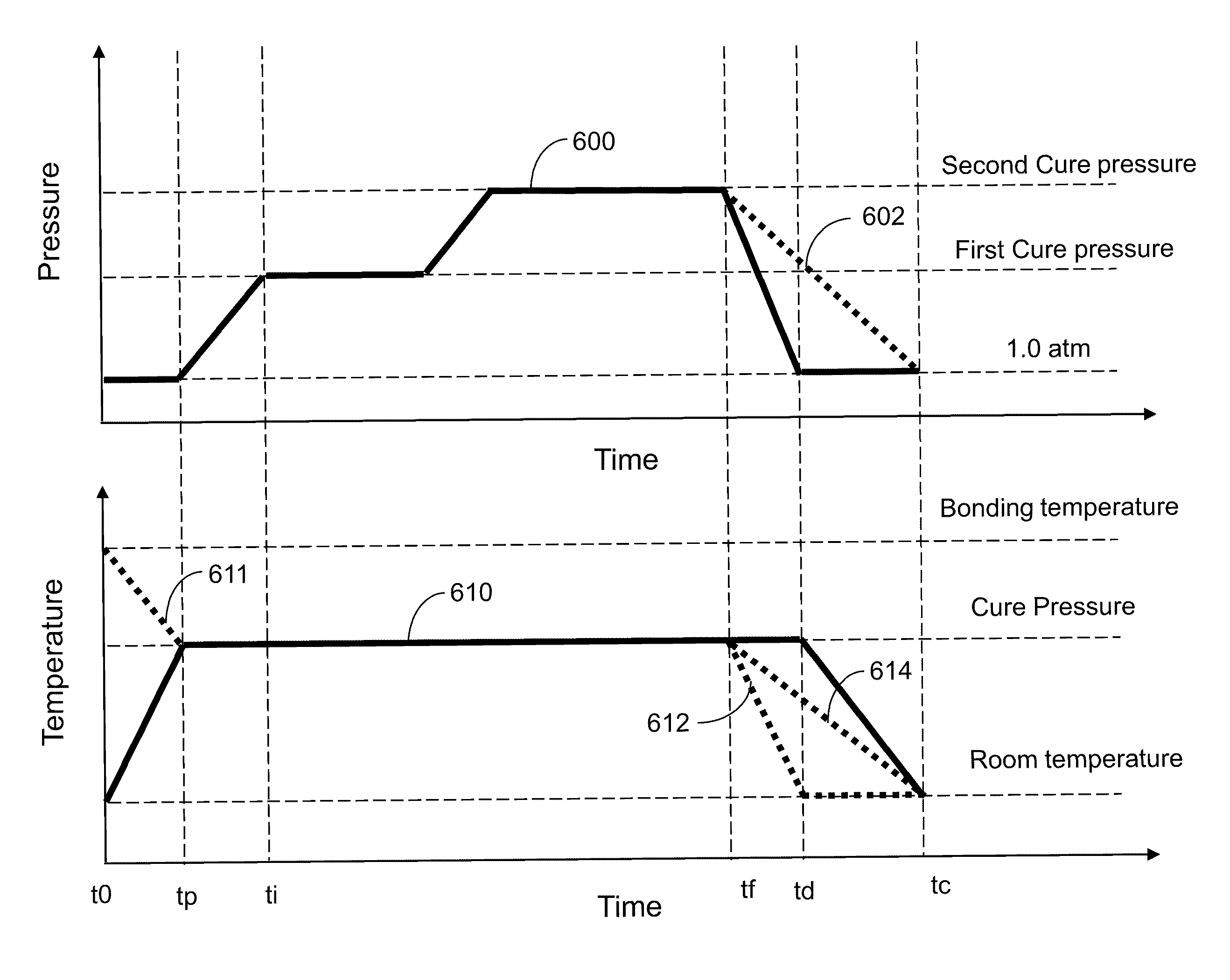
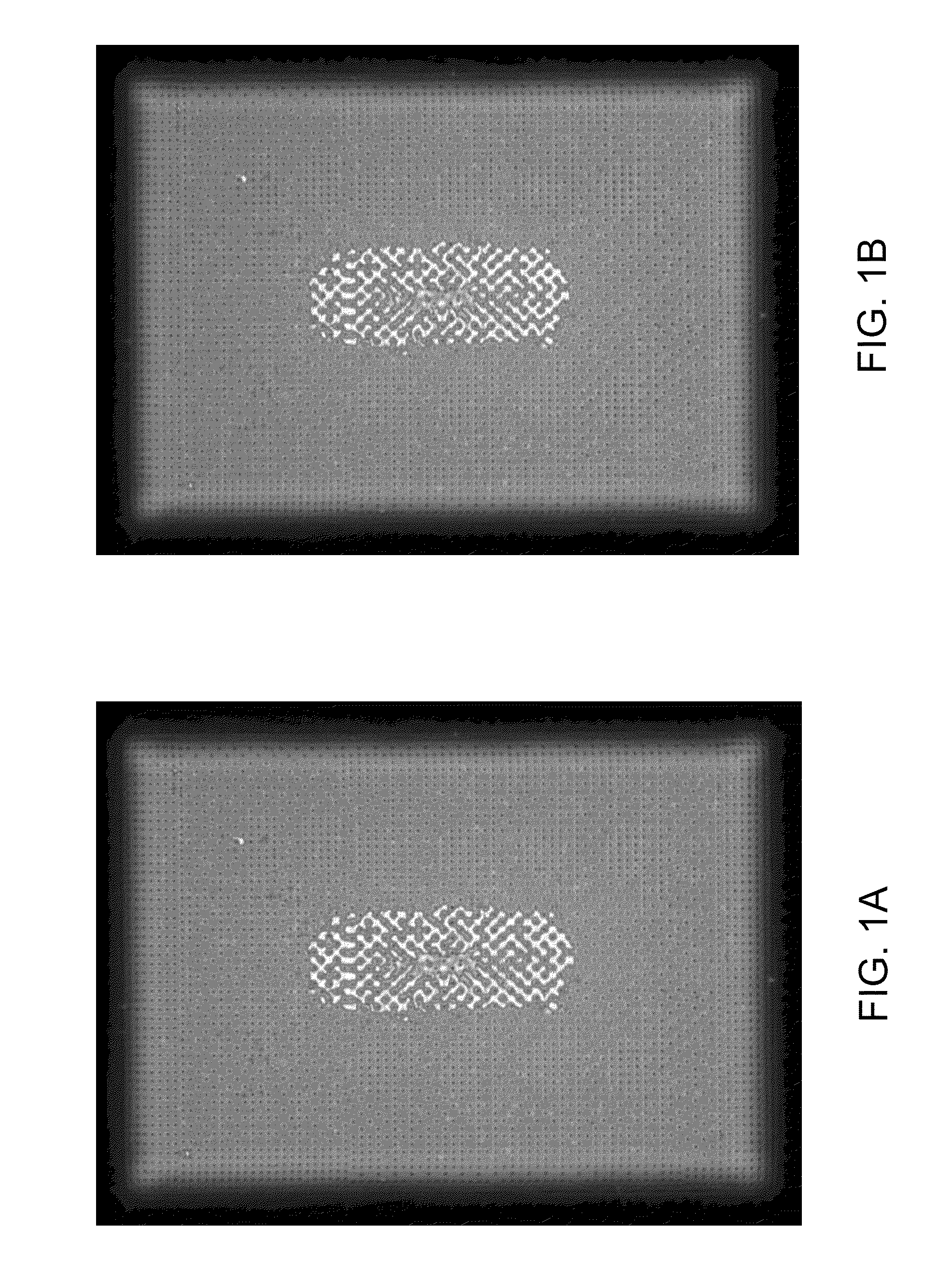
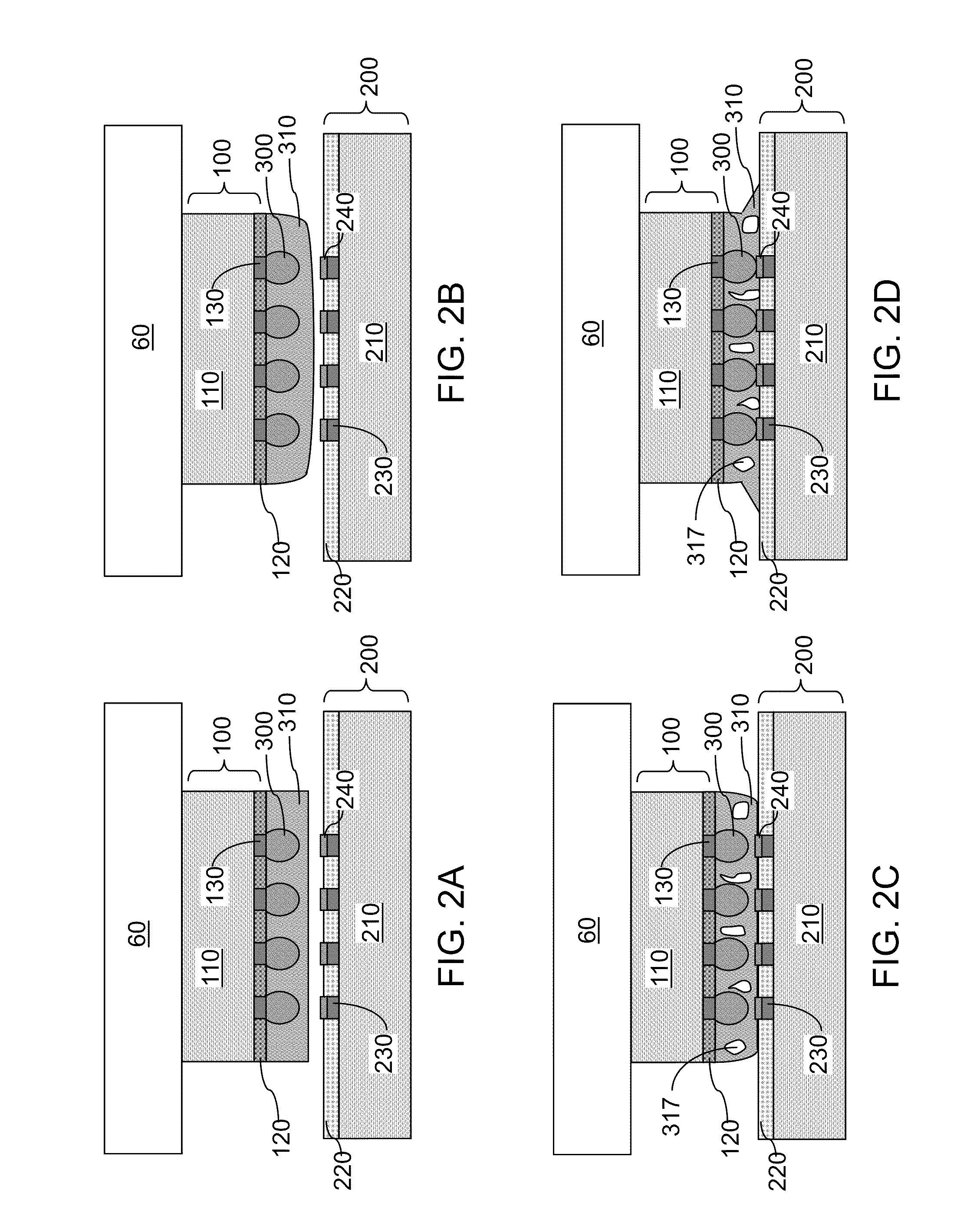
- The method involves applying underfill material between semiconductor chips and substrates, followed by fast temperature ramping during bonding, and subsequent curing in a pressurized environment to maintain viscosity and prevent void reformation, using a combination of constant or multi-temperature and pressure processes to ensure complete curing while minimizing voids.

Thermal Management Considerations for Fast Curing
Thermal management represents a critical engineering challenge when implementing fast-curing underfill materials in semiconductor packaging applications. The acceleration of curing processes inherently generates increased thermal energy within confined spaces, creating potential risks for component integrity and process reliability. Understanding and controlling these thermal dynamics becomes essential for successful implementation of rapid curing technologies.
The primary thermal concern during fast curing stems from the exothermic nature of polymer crosslinking reactions. When curing time is reduced from traditional 2-4 hours to minutes or seconds, the same amount of chemical energy is released over a dramatically compressed timeframe. This concentrated energy release can generate localized hot spots exceeding 200°C, potentially damaging temperature-sensitive components such as low-k dielectrics or causing thermal stress-induced cracking in silicon substrates.
Heat dissipation mechanisms must be carefully engineered to accommodate rapid thermal cycling. Traditional passive cooling approaches prove insufficient for managing the intense heat flux generated during accelerated curing. Advanced thermal management solutions include integrated heat sinks, active cooling systems, and thermally conductive substrates that can rapidly channel heat away from critical areas. The thermal conductivity of the underfill material itself becomes a crucial parameter, requiring optimization between curing speed and thermal transport properties.
Temperature uniformity across the package presents another significant challenge. Rapid curing processes can create substantial temperature gradients, leading to non-uniform cure states and residual stress concentrations. This non-uniformity can manifest as warpage, delamination, or reliability failures during thermal cycling tests. Sophisticated heating systems with multiple zones and real-time temperature monitoring are necessary to maintain acceptable temperature variations within ±5°C across the entire package area.
Thermal expansion mismatch becomes more pronounced during fast curing due to rapid temperature changes. The coefficient of thermal expansion differences between underfill materials, silicon dies, and organic substrates can generate significant mechanical stresses when subjected to rapid thermal transitions. Material formulations must account for these dynamic thermal stresses, often requiring modified filler systems or polymer architectures that provide enhanced thermal shock resistance while maintaining fast cure characteristics.
Process control systems must incorporate advanced thermal monitoring and feedback mechanisms to ensure consistent results. Real-time temperature measurement using infrared sensors or embedded thermocouples enables dynamic adjustment of heating profiles to compensate for variations in thermal mass or ambient conditions. Predictive thermal modeling becomes essential for optimizing cure profiles and preventing thermal damage while achieving target cure times.
The primary thermal concern during fast curing stems from the exothermic nature of polymer crosslinking reactions. When curing time is reduced from traditional 2-4 hours to minutes or seconds, the same amount of chemical energy is released over a dramatically compressed timeframe. This concentrated energy release can generate localized hot spots exceeding 200°C, potentially damaging temperature-sensitive components such as low-k dielectrics or causing thermal stress-induced cracking in silicon substrates.
Heat dissipation mechanisms must be carefully engineered to accommodate rapid thermal cycling. Traditional passive cooling approaches prove insufficient for managing the intense heat flux generated during accelerated curing. Advanced thermal management solutions include integrated heat sinks, active cooling systems, and thermally conductive substrates that can rapidly channel heat away from critical areas. The thermal conductivity of the underfill material itself becomes a crucial parameter, requiring optimization between curing speed and thermal transport properties.
Temperature uniformity across the package presents another significant challenge. Rapid curing processes can create substantial temperature gradients, leading to non-uniform cure states and residual stress concentrations. This non-uniformity can manifest as warpage, delamination, or reliability failures during thermal cycling tests. Sophisticated heating systems with multiple zones and real-time temperature monitoring are necessary to maintain acceptable temperature variations within ±5°C across the entire package area.
Thermal expansion mismatch becomes more pronounced during fast curing due to rapid temperature changes. The coefficient of thermal expansion differences between underfill materials, silicon dies, and organic substrates can generate significant mechanical stresses when subjected to rapid thermal transitions. Material formulations must account for these dynamic thermal stresses, often requiring modified filler systems or polymer architectures that provide enhanced thermal shock resistance while maintaining fast cure characteristics.
Process control systems must incorporate advanced thermal monitoring and feedback mechanisms to ensure consistent results. Real-time temperature measurement using infrared sensors or embedded thermocouples enables dynamic adjustment of heating profiles to compensate for variations in thermal mass or ambient conditions. Predictive thermal modeling becomes essential for optimizing cure profiles and preventing thermal damage while achieving target cure times.
Quality Control Standards for Accelerated Curing Processes
Establishing robust quality control standards for accelerated curing processes is essential to ensure consistent performance and reliability of underfill materials while maintaining shortened curing cycles. These standards must address the unique challenges introduced by rapid thermal cycling, elevated temperatures, and compressed timeframes that characterize accelerated curing methodologies.
Temperature monitoring and control represent the cornerstone of quality assurance in accelerated curing. Precise thermal profiling systems must maintain temperature uniformity within ±2°C across the entire substrate surface, with continuous monitoring at multiple points to prevent localized overheating. Real-time feedback control systems should automatically adjust heating parameters to compensate for thermal variations, ensuring consistent cure kinetics throughout the process.
Cure degree verification requires implementation of multiple analytical techniques to validate complete polymerization. Differential scanning calorimetry measurements should confirm residual heat of reaction below 5% of total cure enthalpy, while dynamic mechanical analysis must verify glass transition temperature values matching fully cured material specifications. Infrared spectroscopy monitoring of functional group conversion provides real-time cure assessment during processing.
Material flow and void formation control becomes critical under accelerated conditions due to reduced viscosity adjustment time. Automated optical inspection systems must detect void content exceeding 2% by volume, while X-ray imaging verifies complete underfill coverage beneath components. Standardized flow pattern analysis ensures consistent material distribution across varying component geometries and substrate configurations.
Process validation protocols must establish statistical process control limits based on extensive baseline testing. Control charts tracking key parameters including peak temperature, ramp rates, dwell times, and material properties enable early detection of process drift. Capability studies should demonstrate process sigma levels exceeding 4.0 for critical quality characteristics, ensuring robust manufacturing performance under production conditions.
Documentation and traceability requirements encompass comprehensive recording of all process parameters, material lot information, and quality test results. Automated data logging systems must capture thermal profiles, cure monitoring data, and inspection results with timestamp correlation to enable rapid root cause analysis of any quality deviations encountered during production implementation.
Temperature monitoring and control represent the cornerstone of quality assurance in accelerated curing. Precise thermal profiling systems must maintain temperature uniformity within ±2°C across the entire substrate surface, with continuous monitoring at multiple points to prevent localized overheating. Real-time feedback control systems should automatically adjust heating parameters to compensate for thermal variations, ensuring consistent cure kinetics throughout the process.
Cure degree verification requires implementation of multiple analytical techniques to validate complete polymerization. Differential scanning calorimetry measurements should confirm residual heat of reaction below 5% of total cure enthalpy, while dynamic mechanical analysis must verify glass transition temperature values matching fully cured material specifications. Infrared spectroscopy monitoring of functional group conversion provides real-time cure assessment during processing.
Material flow and void formation control becomes critical under accelerated conditions due to reduced viscosity adjustment time. Automated optical inspection systems must detect void content exceeding 2% by volume, while X-ray imaging verifies complete underfill coverage beneath components. Standardized flow pattern analysis ensures consistent material distribution across varying component geometries and substrate configurations.
Process validation protocols must establish statistical process control limits based on extensive baseline testing. Control charts tracking key parameters including peak temperature, ramp rates, dwell times, and material properties enable early detection of process drift. Capability studies should demonstrate process sigma levels exceeding 4.0 for critical quality characteristics, ensuring robust manufacturing performance under production conditions.
Documentation and traceability requirements encompass comprehensive recording of all process parameters, material lot information, and quality test results. Automated data logging systems must capture thermal profiles, cure monitoring data, and inspection results with timestamp correlation to enable rapid root cause analysis of any quality deviations encountered during production implementation.
Unlock deeper insights with Patsnap Eureka Quick Research — get a full tech report to explore trends and direct your research. Try now!
Generate Your Research Report Instantly with AI Agent
Supercharge your innovation with Patsnap Eureka AI Agent Platform!