
Underfill vs Potting: Mechanical Fatigue Performance Analysis
APR 7, 20269 MIN READ
Generate Your Research Report Instantly with AI Agent
Patsnap Eureka helps you evaluate technical feasibility & market potential.
Underfill and Potting Technology Background and Objectives
Electronic packaging technologies have evolved significantly over the past several decades, driven by the relentless miniaturization of electronic devices and the increasing demand for higher performance, reliability, and durability. Among the critical protection methods employed in semiconductor packaging, underfill and potting technologies have emerged as two fundamental approaches to address mechanical stress, thermal cycling, and environmental challenges that threaten device integrity.
Underfill technology represents a precision encapsulation method primarily developed for flip-chip and ball grid array (BGA) packages. This technique involves dispensing low-viscosity epoxy materials into the narrow gaps between semiconductor dies and substrates, creating a protective barrier that redistributes mechanical stresses and enhances solder joint reliability. The technology gained prominence in the 1990s as semiconductor packages became increasingly dense and vulnerable to thermal fatigue failures.
Potting technology, conversely, encompasses a broader encapsulation approach where electronic assemblies are completely or partially embedded within protective compounds. This method provides comprehensive environmental protection against moisture, chemicals, vibration, and mechanical shock. Potting has been extensively utilized in harsh environment applications, including automotive electronics, aerospace systems, and industrial control equipment.
The fundamental objectives driving research into underfill versus potting mechanical fatigue performance center on optimizing protection strategies for next-generation electronic systems. Primary goals include maximizing solder joint reliability under cyclic loading conditions, minimizing coefficient of thermal expansion mismatches between different materials, and enhancing overall package durability while maintaining cost-effectiveness and manufacturing feasibility.
Contemporary research focuses on understanding how these two protection methodologies perform under various mechanical fatigue scenarios, including thermal cycling, vibration testing, and drop shock conditions. The comparative analysis aims to establish design guidelines that enable engineers to select optimal protection strategies based on specific application requirements, environmental conditions, and reliability targets.
Advanced material formulations and application techniques continue to expand the capabilities of both technologies. Modern underfill materials incorporate nano-fillers and advanced cure chemistries to improve mechanical properties, while potting compounds are being engineered with enhanced flexibility and adhesion characteristics to better accommodate package-level stresses and maintain long-term reliability in demanding operational environments.
Underfill technology represents a precision encapsulation method primarily developed for flip-chip and ball grid array (BGA) packages. This technique involves dispensing low-viscosity epoxy materials into the narrow gaps between semiconductor dies and substrates, creating a protective barrier that redistributes mechanical stresses and enhances solder joint reliability. The technology gained prominence in the 1990s as semiconductor packages became increasingly dense and vulnerable to thermal fatigue failures.
Potting technology, conversely, encompasses a broader encapsulation approach where electronic assemblies are completely or partially embedded within protective compounds. This method provides comprehensive environmental protection against moisture, chemicals, vibration, and mechanical shock. Potting has been extensively utilized in harsh environment applications, including automotive electronics, aerospace systems, and industrial control equipment.
The fundamental objectives driving research into underfill versus potting mechanical fatigue performance center on optimizing protection strategies for next-generation electronic systems. Primary goals include maximizing solder joint reliability under cyclic loading conditions, minimizing coefficient of thermal expansion mismatches between different materials, and enhancing overall package durability while maintaining cost-effectiveness and manufacturing feasibility.
Contemporary research focuses on understanding how these two protection methodologies perform under various mechanical fatigue scenarios, including thermal cycling, vibration testing, and drop shock conditions. The comparative analysis aims to establish design guidelines that enable engineers to select optimal protection strategies based on specific application requirements, environmental conditions, and reliability targets.
Advanced material formulations and application techniques continue to expand the capabilities of both technologies. Modern underfill materials incorporate nano-fillers and advanced cure chemistries to improve mechanical properties, while potting compounds are being engineered with enhanced flexibility and adhesion characteristics to better accommodate package-level stresses and maintain long-term reliability in demanding operational environments.
Market Demand for Electronic Packaging Protection Solutions
The electronic packaging protection solutions market has experienced substantial growth driven by the increasing complexity and miniaturization of electronic devices across multiple industries. Consumer electronics, automotive systems, aerospace applications, and industrial equipment all require robust protection mechanisms to ensure reliable operation under various environmental and mechanical stress conditions. The demand for advanced packaging protection has intensified as electronic components become more susceptible to mechanical fatigue, thermal cycling, and environmental degradation.
Underfill and potting compounds represent two primary approaches to addressing these protection requirements, each serving distinct market segments with specific performance criteria. The semiconductor packaging industry has shown particular interest in underfill solutions for flip-chip and ball grid array applications, where precise material placement and controlled flow characteristics are essential. Meanwhile, potting compounds have gained traction in applications requiring comprehensive environmental sealing and enhanced mechanical shock resistance.
Market drivers include the proliferation of Internet of Things devices, electric vehicle adoption, and the expansion of 5G infrastructure, all of which demand higher reliability standards for electronic assemblies. The automotive sector has emerged as a significant growth driver, with electronic control units requiring protection solutions that can withstand extreme temperature variations, vibration, and moisture exposure over extended operational lifespans.
Regional demand patterns reflect the concentration of electronics manufacturing, with Asia-Pacific markets leading consumption due to high-volume production facilities. North American and European markets demonstrate strong demand for specialized protection solutions in aerospace, defense, and automotive applications, where performance requirements often exceed standard commercial specifications.
The market has also responded to evolving regulatory requirements regarding environmental sustainability and material safety. Manufacturers increasingly seek protection solutions that comply with RoHS directives and other environmental regulations while maintaining superior mechanical fatigue performance. This trend has accelerated the development of bio-based and low-emission formulations that meet both performance and environmental criteria.
Supply chain considerations have become increasingly important, with manufacturers seeking reliable sources for protection materials that can support high-volume production while maintaining consistent quality standards. The market continues to evolve toward customized solutions that address specific application requirements rather than one-size-fits-all approaches.
Underfill and potting compounds represent two primary approaches to addressing these protection requirements, each serving distinct market segments with specific performance criteria. The semiconductor packaging industry has shown particular interest in underfill solutions for flip-chip and ball grid array applications, where precise material placement and controlled flow characteristics are essential. Meanwhile, potting compounds have gained traction in applications requiring comprehensive environmental sealing and enhanced mechanical shock resistance.
Market drivers include the proliferation of Internet of Things devices, electric vehicle adoption, and the expansion of 5G infrastructure, all of which demand higher reliability standards for electronic assemblies. The automotive sector has emerged as a significant growth driver, with electronic control units requiring protection solutions that can withstand extreme temperature variations, vibration, and moisture exposure over extended operational lifespans.
Regional demand patterns reflect the concentration of electronics manufacturing, with Asia-Pacific markets leading consumption due to high-volume production facilities. North American and European markets demonstrate strong demand for specialized protection solutions in aerospace, defense, and automotive applications, where performance requirements often exceed standard commercial specifications.
The market has also responded to evolving regulatory requirements regarding environmental sustainability and material safety. Manufacturers increasingly seek protection solutions that comply with RoHS directives and other environmental regulations while maintaining superior mechanical fatigue performance. This trend has accelerated the development of bio-based and low-emission formulations that meet both performance and environmental criteria.
Supply chain considerations have become increasingly important, with manufacturers seeking reliable sources for protection materials that can support high-volume production while maintaining consistent quality standards. The market continues to evolve toward customized solutions that address specific application requirements rather than one-size-fits-all approaches.
Current State and Challenges in Mechanical Fatigue Performance
The mechanical fatigue performance of electronic assemblies protected by underfill and potting materials represents a critical reliability concern in modern electronics manufacturing. Current industry practices reveal significant disparities in fatigue resistance between these two protection methods, with underfill materials typically demonstrating superior performance in thermal cycling environments due to their lower coefficient of thermal expansion and enhanced adhesion properties to substrate materials.
Contemporary underfill formulations, primarily based on epoxy resins with silica fillers, exhibit fatigue life improvements of 10-50 times compared to unprotected solder joints under accelerated thermal cycling conditions. However, these materials face substantial challenges in terms of processing complexity, void formation during capillary flow, and limited reworkability. The capillary underfill process requires precise control of viscosity, surface tension, and curing parameters, making it susceptible to manufacturing defects that can compromise long-term reliability.
Potting compounds, while offering superior environmental protection and easier application processes, demonstrate inferior mechanical fatigue performance due to their higher modulus and thermal expansion mismatch with electronic components. Current silicone-based potting materials typically provide 2-5 times fatigue life improvement compared to unprotected assemblies, significantly lower than underfill solutions. The primary challenge lies in balancing mechanical properties with environmental protection requirements.
Material degradation mechanisms present ongoing challenges for both protection methods. Underfill materials experience interfacial delamination, particularly at elevated temperatures above 150°C, while potting compounds suffer from thermal oxidation and crosslink density changes during extended thermal exposure. These degradation processes directly impact fatigue crack initiation and propagation rates.
Current testing methodologies for fatigue performance evaluation lack standardization across the industry. Existing standards such as JEDEC JESD22-A104 and IPC-9701 provide general guidelines but fail to address specific material interactions and failure mechanisms unique to underfill versus potting applications. This standardization gap creates difficulties in comparative performance assessment and material selection processes.
Advanced characterization techniques including digital image correlation, acoustic emission monitoring, and micro-computed tomography are emerging as essential tools for understanding fatigue mechanisms. However, these methods remain expensive and time-consuming, limiting their widespread adoption in routine material evaluation processes. The integration of predictive modeling with experimental validation continues to present significant technical challenges in accurately forecasting long-term fatigue performance under real-world operating conditions.
Contemporary underfill formulations, primarily based on epoxy resins with silica fillers, exhibit fatigue life improvements of 10-50 times compared to unprotected solder joints under accelerated thermal cycling conditions. However, these materials face substantial challenges in terms of processing complexity, void formation during capillary flow, and limited reworkability. The capillary underfill process requires precise control of viscosity, surface tension, and curing parameters, making it susceptible to manufacturing defects that can compromise long-term reliability.
Potting compounds, while offering superior environmental protection and easier application processes, demonstrate inferior mechanical fatigue performance due to their higher modulus and thermal expansion mismatch with electronic components. Current silicone-based potting materials typically provide 2-5 times fatigue life improvement compared to unprotected assemblies, significantly lower than underfill solutions. The primary challenge lies in balancing mechanical properties with environmental protection requirements.
Material degradation mechanisms present ongoing challenges for both protection methods. Underfill materials experience interfacial delamination, particularly at elevated temperatures above 150°C, while potting compounds suffer from thermal oxidation and crosslink density changes during extended thermal exposure. These degradation processes directly impact fatigue crack initiation and propagation rates.
Current testing methodologies for fatigue performance evaluation lack standardization across the industry. Existing standards such as JEDEC JESD22-A104 and IPC-9701 provide general guidelines but fail to address specific material interactions and failure mechanisms unique to underfill versus potting applications. This standardization gap creates difficulties in comparative performance assessment and material selection processes.
Advanced characterization techniques including digital image correlation, acoustic emission monitoring, and micro-computed tomography are emerging as essential tools for understanding fatigue mechanisms. However, these methods remain expensive and time-consuming, limiting their widespread adoption in routine material evaluation processes. The integration of predictive modeling with experimental validation continues to present significant technical challenges in accurately forecasting long-term fatigue performance under real-world operating conditions.
Existing Mechanical Fatigue Testing and Analysis Methods
01 Epoxy-based underfill materials with enhanced fatigue resistance
Epoxy resin formulations are widely used as underfill materials in electronic packaging. These materials can be modified with specific additives, fillers, and curing agents to improve their mechanical fatigue performance. The incorporation of elastomeric modifiers and stress-relief agents helps to reduce crack propagation and enhance the durability under cyclic loading conditions. Proper selection of resin systems and curing profiles is critical for achieving optimal fatigue resistance in thermal cycling environments.- Epoxy-based underfill materials with enhanced fatigue resistance: Epoxy resin formulations are widely used as underfill materials in semiconductor packaging. These materials can be modified with specific additives, fillers, and curing agents to improve their mechanical fatigue performance. The incorporation of elastomeric modifiers and stress-relief agents helps to reduce crack propagation and enhance the material's ability to withstand cyclic thermal and mechanical stresses. Advanced epoxy formulations demonstrate improved adhesion properties and flexibility, which are critical for maintaining structural integrity under repeated loading conditions.
- Silicone-based potting compounds for improved mechanical durability: Silicone-based materials offer excellent flexibility and stress absorption characteristics, making them suitable for potting applications where mechanical fatigue resistance is critical. These materials maintain their properties over a wide temperature range and exhibit superior resistance to thermal cycling. The inherent elasticity of silicone compounds allows them to accommodate differential thermal expansion between components, thereby reducing stress concentrations that lead to fatigue failure. Modified silicone formulations with reinforcing fillers further enhance mechanical strength while preserving flexibility.
- Particle-filled composite materials for stress distribution: The incorporation of inorganic fillers and particles into underfill and potting materials significantly improves their mechanical fatigue performance. These fillers help distribute stress more evenly throughout the material matrix, reducing localized stress concentrations. Particle size, distribution, and surface treatment play crucial roles in determining the fatigue resistance of the composite. Nano-scale and micro-scale fillers can be combined to optimize both mechanical strength and toughness, creating materials that resist crack initiation and propagation under cyclic loading.
- Hybrid polymer systems with controlled coefficient of thermal expansion: Hybrid polymer formulations combining different resin systems are designed to match the coefficient of thermal expansion of adjacent materials in electronic assemblies. This matching reduces thermal stress accumulation during temperature cycling, which is a primary cause of mechanical fatigue failure. These systems often incorporate both rigid and flexible polymer segments to balance mechanical strength with stress accommodation capabilities. The controlled expansion properties help maintain interfacial integrity and prevent delamination under repeated thermal and mechanical loading.
- Testing and characterization methods for fatigue performance evaluation: Specialized testing methodologies have been developed to evaluate the mechanical fatigue performance of underfill and potting materials under conditions that simulate real-world applications. These methods include accelerated thermal cycling tests, mechanical stress cycling, and combined environmental testing protocols. Advanced characterization techniques assess crack propagation rates, interfacial adhesion strength, and material degradation over extended cycling periods. Standardized testing procedures enable comparison of different material formulations and prediction of long-term reliability in electronic packaging applications.
02 Silicone-based potting compounds for improved flexibility
Silicone-based materials offer superior flexibility and stress absorption compared to rigid encapsulants, making them suitable for applications requiring enhanced mechanical fatigue performance. These materials maintain their properties over a wide temperature range and exhibit excellent resistance to thermal cycling fatigue. The inherent elasticity of silicone compounds allows them to accommodate differential thermal expansion between components, thereby reducing stress concentrations that lead to fatigue failure.Expand Specific Solutions03 Particle-filled composite materials for stress distribution
The addition of inorganic fillers such as silica, alumina, or other ceramic particles to polymer matrices can significantly improve the mechanical fatigue performance of underfill and potting materials. These fillers help to distribute mechanical stress more uniformly throughout the material, reducing localized strain concentrations. The particle size, distribution, and loading level are key parameters that influence the fatigue resistance and overall mechanical properties of the composite system.Expand Specific Solutions04 Hybrid organic-inorganic materials with tailored properties
Hybrid materials combining organic polymers with inorganic components provide a balance between flexibility and mechanical strength, resulting in improved fatigue performance. These materials can be engineered to have specific coefficients of thermal expansion and modulus values that match the substrate and components being encapsulated. The synergistic effect of organic and inorganic phases creates materials with enhanced resistance to crack initiation and propagation under cyclic mechanical and thermal loading.Expand Specific Solutions05 Testing and characterization methods for fatigue performance evaluation
Various testing methodologies have been developed to assess the mechanical fatigue performance of underfill and potting materials. These include accelerated thermal cycling tests, mechanical stress cycling, and combined environmental testing protocols. Characterization techniques such as dynamic mechanical analysis, fracture mechanics testing, and reliability assessment under simulated service conditions are employed to predict long-term performance. Standardized testing procedures enable comparison of different material formulations and optimization of composition for specific application requirements.Expand Specific Solutions
Key Players in Electronic Packaging Materials Industry
The underfill versus potting mechanical fatigue performance analysis represents a mature technical domain within the advanced packaging and protection materials industry, currently experiencing steady growth driven by increasing demands for reliable electronic assemblies in automotive, aerospace, and consumer electronics sectors. The market demonstrates significant scale with established players spanning semiconductor manufacturers like Intel Corp. and Texas Instruments, specialized materials companies including Alpha Assembly Solutions and Kureha Corp., automotive suppliers such as Continental Teves and Honda Motor, and manufacturing service providers like Jabil Inc. Technology maturity varies across applications, with underfill solutions showing high sophistication in semiconductor packaging while potting compounds continue evolving for harsh environment protection. Leading research institutions including Beihang University and Northwestern Polytechnical University contribute to advancing fatigue analysis methodologies, while industrial players focus on optimizing material formulations and application processes to enhance long-term reliability performance under cyclic loading conditions.
Intel Corp.
Technical Solution: Intel has developed advanced underfill materials and processes for their high-performance processors and chipsets. Their approach focuses on capillary underfill (CUF) technology that provides excellent mechanical protection for flip-chip assemblies under thermal cycling conditions. Intel's underfill solutions utilize specialized epoxy formulations with controlled flow properties and curing profiles optimized for fine-pitch applications. The company has extensively studied the fatigue performance of underfilled assemblies versus potted configurations, demonstrating that underfill provides superior solder joint reliability under mechanical stress while maintaining lower profile packaging requirements for mobile and server applications.
Strengths: Industry-leading expertise in high-performance semiconductor packaging, extensive reliability testing capabilities. Weaknesses: Solutions primarily optimized for their own product portfolio, limited availability of materials to external customers.
NXP USA, Inc.
Technical Solution: NXP has developed comprehensive underfill and potting solutions for automotive and industrial semiconductor applications where mechanical fatigue resistance is critical. Their technology portfolio includes both capillary underfill for fine-pitch components and potting compounds for harsh environment protection. NXP's approach emphasizes the trade-offs between underfill's superior thermal cycling performance and potting's enhanced vibration resistance. They have conducted extensive comparative studies showing that underfill provides better solder joint fatigue life under thermal stress, while potting offers superior protection against mechanical shock and vibration in automotive applications. Their material selection criteria consider coefficient of thermal expansion matching, adhesion properties, and long-term reliability under various stress conditions.
Strengths: Strong automotive market focus with rigorous reliability standards, comprehensive testing methodologies for fatigue analysis. Weaknesses: Limited presence in consumer electronics markets, higher material costs for specialized formulations.
Core Innovations in Fatigue-Resistant Packaging Materials
Technique for enhancing thermal and mechanical characteristics of an underfill material of a substrate/die assembly
PatentInactiveUS7306976B2
Innovation
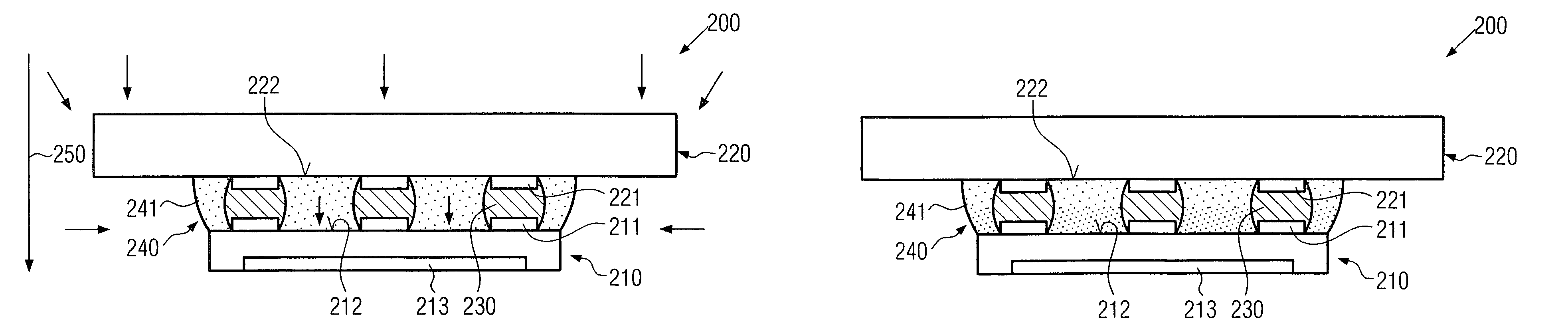
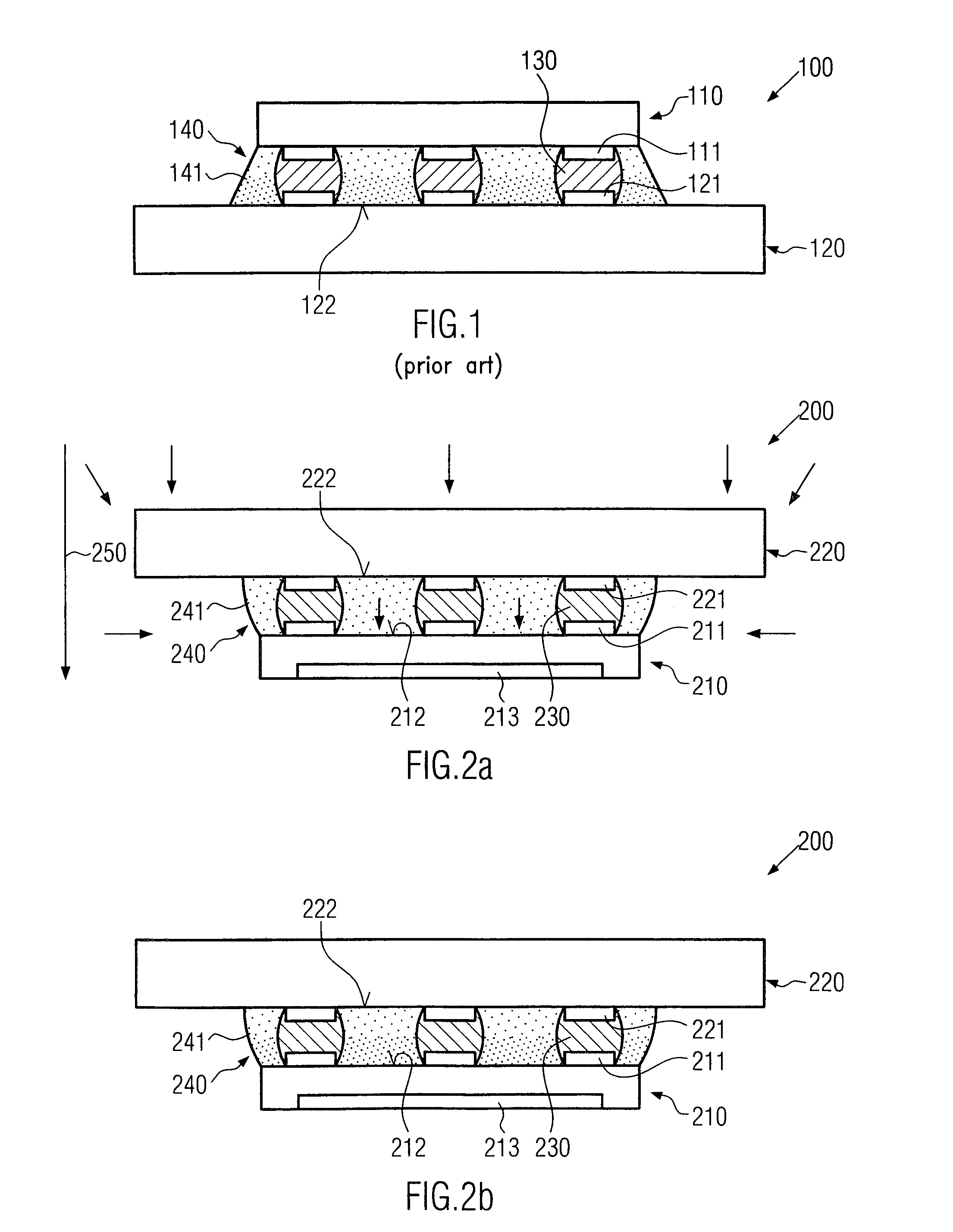
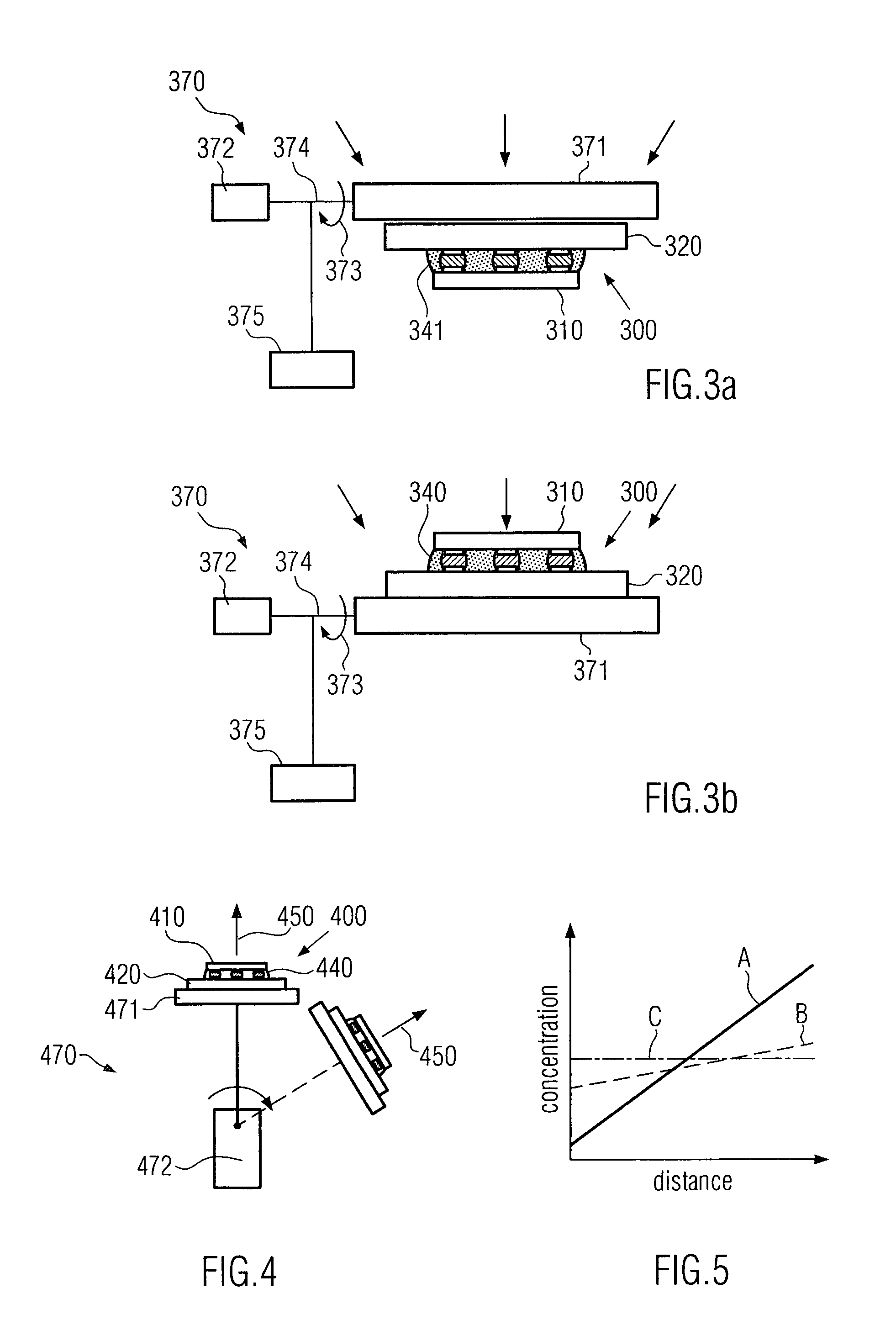
- The technique involves controlling the collective motion of particles within the underfill material using an external force to adjust their concentration profile, ensuring a higher particle concentration at the interface with the semiconductor chip and a lower concentration at the interface with the carrier substrate, thereby optimizing the thermal and mechanical characteristics of the underfill material.
Low voiding no flow fluxing underfill for electronic devices
PatentWO2006022693A1
Innovation
- A no-flow underfill composition comprising an epoxy component, a phenolic component, and an anhydride component in a specific molar ratio, along with a latent catalyst, is developed to reduce volatility, enhance fluxing activity, and improve adhesion and fracture toughness, while maintaining low viscosity and stability.


Reliability Standards and Testing Protocols for Electronics
The reliability assessment of underfill versus potting materials in electronic assemblies requires adherence to established international standards that govern mechanical fatigue testing protocols. IPC-9701A serves as the primary standard for performance test methods and qualification requirements of surface mount solder attachments, providing specific guidelines for thermal cycling and mechanical stress testing that directly apply to both underfill and potting applications.
JEDEC standards, particularly JESD22 series, establish comprehensive testing methodologies for semiconductor device reliability. JESD22-A104 outlines temperature cycling test conditions, while JESD22-A105 specifies power and temperature cycling protocols that are essential for evaluating the long-term mechanical integrity of encapsulated electronic components. These standards define critical parameters including cycle counts, temperature ranges, and failure criteria specific to fatigue performance evaluation.
Military standards such as MIL-STD-883 and MIL-STD-202 provide rigorous testing protocols for high-reliability applications where mechanical fatigue resistance is paramount. These standards incorporate accelerated life testing methodologies that enable comparative analysis between underfill and potting solutions under extreme operational conditions. The standards specify precise measurement techniques for crack propagation, delamination detection, and interface adhesion assessment.
ISO 16750 automotive electronics standards establish environmental testing requirements that include vibration, shock, and thermal cycling protocols specifically designed to evaluate mechanical fatigue performance in harsh operating environments. These protocols are particularly relevant for comparing the durability characteristics of underfill versus potting materials in automotive electronic control units and sensor applications.
Testing protocol implementation requires standardized sample preparation procedures, controlled environmental chambers capable of precise temperature and humidity regulation, and advanced characterization equipment including scanning acoustic microscopy for non-destructive evaluation of internal defects. Data collection methodologies must follow statistical sampling requirements outlined in these standards to ensure reliable comparative analysis between different encapsulation approaches.
JEDEC standards, particularly JESD22 series, establish comprehensive testing methodologies for semiconductor device reliability. JESD22-A104 outlines temperature cycling test conditions, while JESD22-A105 specifies power and temperature cycling protocols that are essential for evaluating the long-term mechanical integrity of encapsulated electronic components. These standards define critical parameters including cycle counts, temperature ranges, and failure criteria specific to fatigue performance evaluation.
Military standards such as MIL-STD-883 and MIL-STD-202 provide rigorous testing protocols for high-reliability applications where mechanical fatigue resistance is paramount. These standards incorporate accelerated life testing methodologies that enable comparative analysis between underfill and potting solutions under extreme operational conditions. The standards specify precise measurement techniques for crack propagation, delamination detection, and interface adhesion assessment.
ISO 16750 automotive electronics standards establish environmental testing requirements that include vibration, shock, and thermal cycling protocols specifically designed to evaluate mechanical fatigue performance in harsh operating environments. These protocols are particularly relevant for comparing the durability characteristics of underfill versus potting materials in automotive electronic control units and sensor applications.
Testing protocol implementation requires standardized sample preparation procedures, controlled environmental chambers capable of precise temperature and humidity regulation, and advanced characterization equipment including scanning acoustic microscopy for non-destructive evaluation of internal defects. Data collection methodologies must follow statistical sampling requirements outlined in these standards to ensure reliable comparative analysis between different encapsulation approaches.
Thermal Cycling Impact on Material Fatigue Performance
Thermal cycling represents one of the most critical stress factors affecting the long-term reliability of electronic assemblies, particularly in applications where underfill and potting materials are employed for component protection. The repetitive expansion and contraction cycles induced by temperature fluctuations create complex mechanical stresses that directly impact material fatigue performance, making this phenomenon a decisive factor in material selection and application design.
The fundamental mechanism of thermal cycling fatigue involves the differential thermal expansion coefficients between various materials in the assembly. When underfill materials are subjected to thermal cycling, the mismatch between the coefficient of thermal expansion of the underfill, substrate, and component creates interfacial stresses. These stresses concentrate at critical locations such as solder joint interfaces and component edges, where crack initiation typically occurs. The magnitude of these stresses depends on the temperature range, cycling frequency, and the elastic modulus of the underfill material.
Potting compounds experience similar thermal stress mechanisms but with different stress distribution patterns due to their bulk application nature. The larger volume of potting material results in higher absolute thermal expansion, creating substantial mechanical forces on encapsulated components. However, the stress concentration effects may be less severe compared to underfill applications due to the distributed nature of the applied material and typically lower elastic modulus formulations.
Material fatigue performance under thermal cycling conditions is significantly influenced by the glass transition temperature of the polymer matrix. Below the glass transition temperature, both underfill and potting materials exhibit higher stiffness, leading to increased stress transfer to solder joints and component interfaces. Above this critical temperature, the materials become more compliant, reducing stress transfer but potentially compromising mechanical support and protection functions.
The cycling frequency and temperature ramp rates also play crucial roles in fatigue performance. Rapid temperature changes can induce higher stress rates, potentially exceeding the viscoelastic relaxation capabilities of the materials. This phenomenon is particularly pronounced in underfill applications where the confined geometry limits stress relaxation mechanisms. Conversely, slower thermal transitions allow for stress redistribution through creep and relaxation processes, potentially extending fatigue life.
Recent studies have demonstrated that the fatigue crack propagation behavior differs significantly between underfill and potting applications under thermal cycling conditions. Underfill materials typically exhibit crack propagation along the component-substrate interface, while potting compounds may develop internal cracking patterns that can compromise overall encapsulation integrity without immediately affecting electrical performance.
The fundamental mechanism of thermal cycling fatigue involves the differential thermal expansion coefficients between various materials in the assembly. When underfill materials are subjected to thermal cycling, the mismatch between the coefficient of thermal expansion of the underfill, substrate, and component creates interfacial stresses. These stresses concentrate at critical locations such as solder joint interfaces and component edges, where crack initiation typically occurs. The magnitude of these stresses depends on the temperature range, cycling frequency, and the elastic modulus of the underfill material.
Potting compounds experience similar thermal stress mechanisms but with different stress distribution patterns due to their bulk application nature. The larger volume of potting material results in higher absolute thermal expansion, creating substantial mechanical forces on encapsulated components. However, the stress concentration effects may be less severe compared to underfill applications due to the distributed nature of the applied material and typically lower elastic modulus formulations.
Material fatigue performance under thermal cycling conditions is significantly influenced by the glass transition temperature of the polymer matrix. Below the glass transition temperature, both underfill and potting materials exhibit higher stiffness, leading to increased stress transfer to solder joints and component interfaces. Above this critical temperature, the materials become more compliant, reducing stress transfer but potentially compromising mechanical support and protection functions.
The cycling frequency and temperature ramp rates also play crucial roles in fatigue performance. Rapid temperature changes can induce higher stress rates, potentially exceeding the viscoelastic relaxation capabilities of the materials. This phenomenon is particularly pronounced in underfill applications where the confined geometry limits stress relaxation mechanisms. Conversely, slower thermal transitions allow for stress redistribution through creep and relaxation processes, potentially extending fatigue life.
Recent studies have demonstrated that the fatigue crack propagation behavior differs significantly between underfill and potting applications under thermal cycling conditions. Underfill materials typically exhibit crack propagation along the component-substrate interface, while potting compounds may develop internal cracking patterns that can compromise overall encapsulation integrity without immediately affecting electrical performance.
Unlock deeper insights with Patsnap Eureka Quick Research — get a full tech report to explore trends and direct your research. Try now!
Generate Your Research Report Instantly with AI Agent
Supercharge your innovation with Patsnap Eureka AI Agent Platform!