

How to Test for Oxidation in Thin Films
FEB 26, 20269 MIN READ
Generate Your Research Report Instantly with AI Agent
PatSnap Eureka helps you evaluate technical feasibility & market potential.
Thin Film Oxidation Testing Background and Objectives
Thin film oxidation represents a critical phenomenon that significantly impacts the performance, reliability, and longevity of various technological applications across multiple industries. As electronic devices continue to miniaturize and demand higher performance standards, the integrity of thin film materials becomes increasingly paramount. Oxidation processes in thin films can lead to degradation of electrical properties, mechanical failure, and reduced operational lifespans, making comprehensive testing methodologies essential for quality assurance and product development.
The semiconductor industry faces particular challenges with thin film oxidation, where even nanometer-scale oxide formation can dramatically alter device characteristics. In microelectronics, unwanted oxidation of metal interconnects, barrier layers, and active device components can result in increased resistance, electromigration, and ultimately device failure. Similarly, optical coatings used in displays, solar panels, and precision instruments are susceptible to oxidation-induced changes in refractive index, transmission properties, and surface morphology.
The primary objective of developing robust oxidation testing methodologies is to establish reliable, reproducible, and sensitive detection techniques that can identify oxidation processes at their earliest stages. This enables proactive quality control measures and informed decision-making regarding material selection, processing conditions, and protective strategies. Advanced testing approaches must be capable of distinguishing between different oxidation mechanisms, quantifying oxidation rates under various environmental conditions, and correlating laboratory findings with real-world performance scenarios.
Contemporary research focuses on achieving multi-scale characterization capabilities, from atomic-level interface analysis to macroscopic property evaluation. The integration of in-situ monitoring techniques with accelerated aging protocols represents a significant advancement, allowing researchers to observe oxidation kinetics in real-time while predicting long-term behavior. Furthermore, the development of non-destructive testing methods is crucial for industrial applications where sample preservation is essential.
The ultimate goal encompasses establishing standardized testing protocols that can be universally adopted across industries, ensuring consistent quality metrics and facilitating technology transfer between research institutions and manufacturing environments.
The semiconductor industry faces particular challenges with thin film oxidation, where even nanometer-scale oxide formation can dramatically alter device characteristics. In microelectronics, unwanted oxidation of metal interconnects, barrier layers, and active device components can result in increased resistance, electromigration, and ultimately device failure. Similarly, optical coatings used in displays, solar panels, and precision instruments are susceptible to oxidation-induced changes in refractive index, transmission properties, and surface morphology.
The primary objective of developing robust oxidation testing methodologies is to establish reliable, reproducible, and sensitive detection techniques that can identify oxidation processes at their earliest stages. This enables proactive quality control measures and informed decision-making regarding material selection, processing conditions, and protective strategies. Advanced testing approaches must be capable of distinguishing between different oxidation mechanisms, quantifying oxidation rates under various environmental conditions, and correlating laboratory findings with real-world performance scenarios.
Contemporary research focuses on achieving multi-scale characterization capabilities, from atomic-level interface analysis to macroscopic property evaluation. The integration of in-situ monitoring techniques with accelerated aging protocols represents a significant advancement, allowing researchers to observe oxidation kinetics in real-time while predicting long-term behavior. Furthermore, the development of non-destructive testing methods is crucial for industrial applications where sample preservation is essential.
The ultimate goal encompasses establishing standardized testing protocols that can be universally adopted across industries, ensuring consistent quality metrics and facilitating technology transfer between research institutions and manufacturing environments.
Market Demand for Thin Film Oxidation Analysis
The global thin film industry has experienced substantial growth driven by expanding applications across semiconductor manufacturing, photovoltaic systems, optical coatings, and advanced electronic devices. This growth trajectory has simultaneously intensified the demand for sophisticated oxidation analysis capabilities, as manufacturers increasingly recognize that oxidation control directly impacts product performance, reliability, and manufacturing yield.
Semiconductor fabrication represents the largest market segment driving demand for thin film oxidation testing. As device geometries continue shrinking and new materials like high-k dielectrics and metal gates become standard, precise oxidation monitoring has become critical for maintaining electrical properties and preventing device failure. The transition to advanced node technologies has created unprecedented requirements for oxidation detection sensitivity and measurement accuracy.
The photovoltaic industry constitutes another significant demand driver, particularly as solar cell efficiency improvements depend heavily on optimized thin film interfaces. Oxidation at these interfaces can dramatically reduce energy conversion efficiency, making routine oxidation testing essential for quality assurance and process optimization. The global push toward renewable energy has amplified this market segment's growth potential.
Emerging applications in flexible electronics, wearable devices, and Internet of Things components are creating new market opportunities for oxidation analysis services. These applications often involve novel substrate materials and deposition conditions that present unique oxidation challenges, requiring specialized testing approaches and equipment capabilities.
The automotive electronics sector has emerged as an unexpected growth area, driven by electric vehicle adoption and autonomous driving technologies. These applications demand exceptional reliability under harsh environmental conditions, making oxidation resistance verification crucial for component qualification and long-term performance assurance.
Current market dynamics indicate strong demand for both laboratory-based analytical services and in-line process monitoring solutions. Manufacturing facilities increasingly seek real-time oxidation monitoring capabilities to enable immediate process adjustments and reduce waste. This trend has created opportunities for equipment manufacturers developing automated oxidation detection systems.
Regional demand patterns show concentration in established semiconductor manufacturing hubs, with emerging markets demonstrating rapid growth as local thin film industries develop. The market exhibits characteristics of both mature segments with established testing protocols and emerging applications requiring innovative analytical approaches.
Semiconductor fabrication represents the largest market segment driving demand for thin film oxidation testing. As device geometries continue shrinking and new materials like high-k dielectrics and metal gates become standard, precise oxidation monitoring has become critical for maintaining electrical properties and preventing device failure. The transition to advanced node technologies has created unprecedented requirements for oxidation detection sensitivity and measurement accuracy.
The photovoltaic industry constitutes another significant demand driver, particularly as solar cell efficiency improvements depend heavily on optimized thin film interfaces. Oxidation at these interfaces can dramatically reduce energy conversion efficiency, making routine oxidation testing essential for quality assurance and process optimization. The global push toward renewable energy has amplified this market segment's growth potential.
Emerging applications in flexible electronics, wearable devices, and Internet of Things components are creating new market opportunities for oxidation analysis services. These applications often involve novel substrate materials and deposition conditions that present unique oxidation challenges, requiring specialized testing approaches and equipment capabilities.
The automotive electronics sector has emerged as an unexpected growth area, driven by electric vehicle adoption and autonomous driving technologies. These applications demand exceptional reliability under harsh environmental conditions, making oxidation resistance verification crucial for component qualification and long-term performance assurance.
Current market dynamics indicate strong demand for both laboratory-based analytical services and in-line process monitoring solutions. Manufacturing facilities increasingly seek real-time oxidation monitoring capabilities to enable immediate process adjustments and reduce waste. This trend has created opportunities for equipment manufacturers developing automated oxidation detection systems.
Regional demand patterns show concentration in established semiconductor manufacturing hubs, with emerging markets demonstrating rapid growth as local thin film industries develop. The market exhibits characteristics of both mature segments with established testing protocols and emerging applications requiring innovative analytical approaches.
Current Oxidation Testing Challenges in Thin Films
Testing for oxidation in thin films presents numerous technical challenges that significantly impact measurement accuracy and reliability. The primary difficulty stems from the extremely small thickness of these films, typically ranging from nanometers to micrometers, which makes conventional oxidation detection methods inadequate or entirely unsuitable for precise characterization.
Sample preparation represents a critical bottleneck in oxidation testing protocols. Thin films are inherently fragile and susceptible to damage during handling, mounting, and preparation procedures. The process of preparing samples for analysis often introduces artifacts or additional oxidation, compromising the integrity of original oxidation states. Cross-sectional preparation for transmission electron microscopy analysis, for instance, frequently causes beam-induced oxidation or mechanical stress that alters the native oxide structure.
Sensitivity limitations of current analytical techniques pose another significant challenge. Many established oxidation detection methods lack the spatial resolution and detection limits required for thin film analysis. X-ray photoelectron spectroscopy, while surface-sensitive, struggles with depth profiling accuracy in ultra-thin layers. Similarly, conventional optical methods fail to provide sufficient contrast between oxidized and non-oxidized regions in films thinner than the wavelength of visible light.
Environmental control during testing procedures remains problematic. Thin films exhibit high surface-to-volume ratios, making them extremely sensitive to atmospheric conditions during measurement. Exposure to ambient air, moisture, or reactive gases can induce rapid oxidation changes that occur faster than measurement timescales. This temporal instability complicates the establishment of baseline conditions and reproducible testing protocols.
Interference from substrate materials creates additional complexity in oxidation assessment. Signals from underlying substrates often overwhelm thin film responses, particularly in techniques like X-ray diffraction or infrared spectroscopy. Distinguishing between substrate-related peaks and thin film oxidation signatures requires sophisticated data processing and often leads to ambiguous interpretations.
Standardization gaps in testing methodologies further compound these challenges. The absence of universally accepted protocols for thin film oxidation testing results in inconsistent results across different laboratories and measurement systems. This lack of standardization hampers comparative studies and impedes the development of reliable quality control procedures for industrial applications.
Sample preparation represents a critical bottleneck in oxidation testing protocols. Thin films are inherently fragile and susceptible to damage during handling, mounting, and preparation procedures. The process of preparing samples for analysis often introduces artifacts or additional oxidation, compromising the integrity of original oxidation states. Cross-sectional preparation for transmission electron microscopy analysis, for instance, frequently causes beam-induced oxidation or mechanical stress that alters the native oxide structure.
Sensitivity limitations of current analytical techniques pose another significant challenge. Many established oxidation detection methods lack the spatial resolution and detection limits required for thin film analysis. X-ray photoelectron spectroscopy, while surface-sensitive, struggles with depth profiling accuracy in ultra-thin layers. Similarly, conventional optical methods fail to provide sufficient contrast between oxidized and non-oxidized regions in films thinner than the wavelength of visible light.
Environmental control during testing procedures remains problematic. Thin films exhibit high surface-to-volume ratios, making them extremely sensitive to atmospheric conditions during measurement. Exposure to ambient air, moisture, or reactive gases can induce rapid oxidation changes that occur faster than measurement timescales. This temporal instability complicates the establishment of baseline conditions and reproducible testing protocols.
Interference from substrate materials creates additional complexity in oxidation assessment. Signals from underlying substrates often overwhelm thin film responses, particularly in techniques like X-ray diffraction or infrared spectroscopy. Distinguishing between substrate-related peaks and thin film oxidation signatures requires sophisticated data processing and often leads to ambiguous interpretations.
Standardization gaps in testing methodologies further compound these challenges. The absence of universally accepted protocols for thin film oxidation testing results in inconsistent results across different laboratories and measurement systems. This lack of standardization hampers comparative studies and impedes the development of reliable quality control procedures for industrial applications.
Existing Oxidation Detection Solutions for Thin Films
01 Thermal oxidation methods for thin film formation
Thermal oxidation is a fundamental technique for forming thin oxide films on substrates, particularly semiconductor materials. This process involves exposing the substrate to an oxygen-containing atmosphere at elevated temperatures, allowing controlled oxidation to occur. The method enables precise control over film thickness and uniformity through temperature and time parameters. Various thermal oxidation approaches including dry oxidation, wet oxidation, and rapid thermal oxidation can be employed depending on the desired film properties and application requirements.- Thermal oxidation methods for thin film formation: Thermal oxidation is a fundamental technique for forming thin oxide films on substrates, particularly semiconductor materials. This process involves exposing the substrate to an oxygen-containing atmosphere at elevated temperatures, allowing controlled oxidation to occur. The method enables precise control over film thickness and uniformity through temperature and time parameters. Various thermal oxidation approaches including dry oxidation, wet oxidation, and rapid thermal oxidation can be employed depending on the desired film properties and application requirements.
- Plasma-enhanced oxidation techniques: Plasma-enhanced oxidation utilizes plasma energy to facilitate the oxidation process at lower temperatures compared to conventional thermal methods. This approach allows for better control of film properties and reduces thermal budget requirements, making it suitable for temperature-sensitive substrates. The plasma environment provides activated oxygen species that enhance the oxidation rate and film quality. This technique is particularly advantageous for advanced semiconductor manufacturing where precise control and low-temperature processing are critical.
- Chemical vapor deposition oxidation processes: Chemical vapor deposition methods enable the formation of oxide thin films through chemical reactions between gaseous precursors and the substrate surface. This approach offers excellent conformality and uniformity over complex surface topographies. The process parameters such as precursor composition, flow rates, pressure, and temperature can be adjusted to control film composition, density, and stress. These methods are widely used for depositing various oxide materials with tailored properties for specific applications.
- Oxidation prevention and barrier layer technologies: Preventing unwanted oxidation of thin films is crucial in many applications, requiring the development of protective barrier layers and encapsulation techniques. These technologies involve the deposition of materials that resist oxygen diffusion while maintaining compatibility with underlying films. Various strategies include the use of noble metals, nitrides, or multi-layer structures that effectively block oxygen penetration. The selection of barrier materials and deposition methods depends on the specific film being protected and the operating environment.
- Controlled oxidation for device fabrication: Controlled oxidation processes are essential for manufacturing electronic and optoelectronic devices, where precise oxide thickness and quality directly impact device performance. These processes involve sophisticated monitoring and control systems to achieve target specifications. Techniques include selective oxidation, lateral oxidation, and patterned oxidation that enable the creation of specific device structures. The integration of oxidation steps with other fabrication processes requires careful optimization to maintain film integrity and device functionality.
02 Plasma-enhanced oxidation techniques
Plasma-enhanced oxidation utilizes plasma energy to facilitate the oxidation process at lower temperatures compared to conventional thermal methods. This technique involves generating reactive oxygen species through plasma discharge, which react with the thin film surface to form oxide layers. The method offers advantages in terms of reduced thermal budget, improved film quality, and enhanced process control. Various plasma sources and oxidizing gases can be utilized to optimize the oxidation characteristics for different materials and applications.Expand Specific Solutions03 Chemical oxidation and wet oxidation processes
Chemical oxidation methods involve using liquid-phase oxidizing agents or wet oxidation environments to form thin oxide films. These processes typically operate at moderate temperatures and utilize chemical reactions between oxidizing solutions and the substrate material. The technique provides good uniformity and can be applied to various substrate geometries. Process parameters such as oxidant concentration, temperature, and treatment duration can be adjusted to control the resulting oxide film properties including thickness, composition, and interface quality.Expand Specific Solutions04 Oxidation prevention and barrier layer formation
Preventing unwanted oxidation of thin films is critical in many applications, requiring the implementation of protective strategies and barrier layers. Various approaches include depositing protective coatings, using inert atmospheres during processing, and forming passivation layers that resist further oxidation. These methods help maintain the desired properties of the underlying thin films while preventing degradation. The selection of appropriate barrier materials and deposition techniques depends on the specific film composition, operating environment, and performance requirements.Expand Specific Solutions05 Advanced oxidation control and monitoring techniques
Precise control and real-time monitoring of thin film oxidation processes are essential for achieving consistent and high-quality results. Advanced techniques include in-situ monitoring systems, feedback control mechanisms, and multi-step oxidation sequences that optimize film properties. These approaches enable better process reproducibility and allow for fine-tuning of oxidation parameters based on real-time measurements. Integration of sensors, automated control systems, and process modeling helps achieve target specifications while minimizing defects and improving yield.Expand Specific Solutions
Key Players in Thin Film Testing Equipment Industry
The thin film oxidation testing field represents a mature technology sector with established market presence across diverse industries including semiconductors, displays, steel manufacturing, and photovoltaics. The market demonstrates significant scale, driven by quality control requirements in electronics manufacturing and materials science applications. Technology maturity varies considerably among key players, with Japanese companies like Tokyo Electron, ULVAC, Canon Anelva, and Fujitsu leading in advanced semiconductor testing equipment, while Chinese manufacturers such as SMIC and China Star Optoelectronics focus on high-volume production applications. Steel industry giants including JFE Steel, Kobe Steel, and Shanxi Taigang represent traditional materials testing approaches, whereas companies like Semiconductor Energy Laboratory and research institutions like Tsinghua University drive innovation in next-generation testing methodologies. The competitive landscape shows geographic clustering with strong Japanese technological leadership, emerging Chinese manufacturing capabilities, and specialized European players like ÖHMI AG providing analytical services.
Semiconductor Energy Laboratory Co., Ltd.
Technical Solution: Semiconductor Energy Laboratory has developed specialized oxidation testing methods for organic and inorganic thin films used in display technologies. Their approach focuses on environmental stability testing using controlled atmosphere chambers with precise humidity, temperature, and oxygen concentration control. The company's methodology includes photo-oxidation studies under various light sources to simulate real-world exposure conditions, combined with electrical and optical property monitoring to assess functional degradation. Their testing protocols incorporate accelerated aging under multiple stress factors including thermal cycling, UV exposure, and atmospheric contamination. The company utilizes advanced spectroscopic techniques and microscopy to characterize oxidation-induced changes in film morphology and chemical composition.
Strengths: Specialized expertise in display materials and comprehensive environmental testing capabilities. Weaknesses: Primarily focused on specific application areas and limited scalability for high-volume testing.
Fujitsu Ltd.
Technical Solution: Fujitsu has developed computational and experimental approaches for thin film oxidation testing, particularly focused on semiconductor applications. Their methodology combines molecular dynamics simulations with experimental validation using controlled oxidation chambers and advanced characterization techniques. The company utilizes machine learning algorithms to predict oxidation behavior based on film composition, microstructure, and environmental conditions. Their testing protocols include accelerated stress testing under elevated temperatures and oxygen concentrations, coupled with electrical property monitoring to assess functional degradation. Fujitsu's approach emphasizes correlation between atomic-scale oxidation mechanisms and macroscopic film performance, enabling predictive modeling of long-term reliability in electronic devices.
Strengths: Advanced computational modeling capabilities and strong semiconductor application focus. Weaknesses: Limited to specific material systems and requires extensive computational resources.
Core Technologies in Thin Film Oxidation Analysis
Method and apparatus for determining characteristics of thin films and coatings on substrates
PatentInactiveUS20050172702A1
Innovation
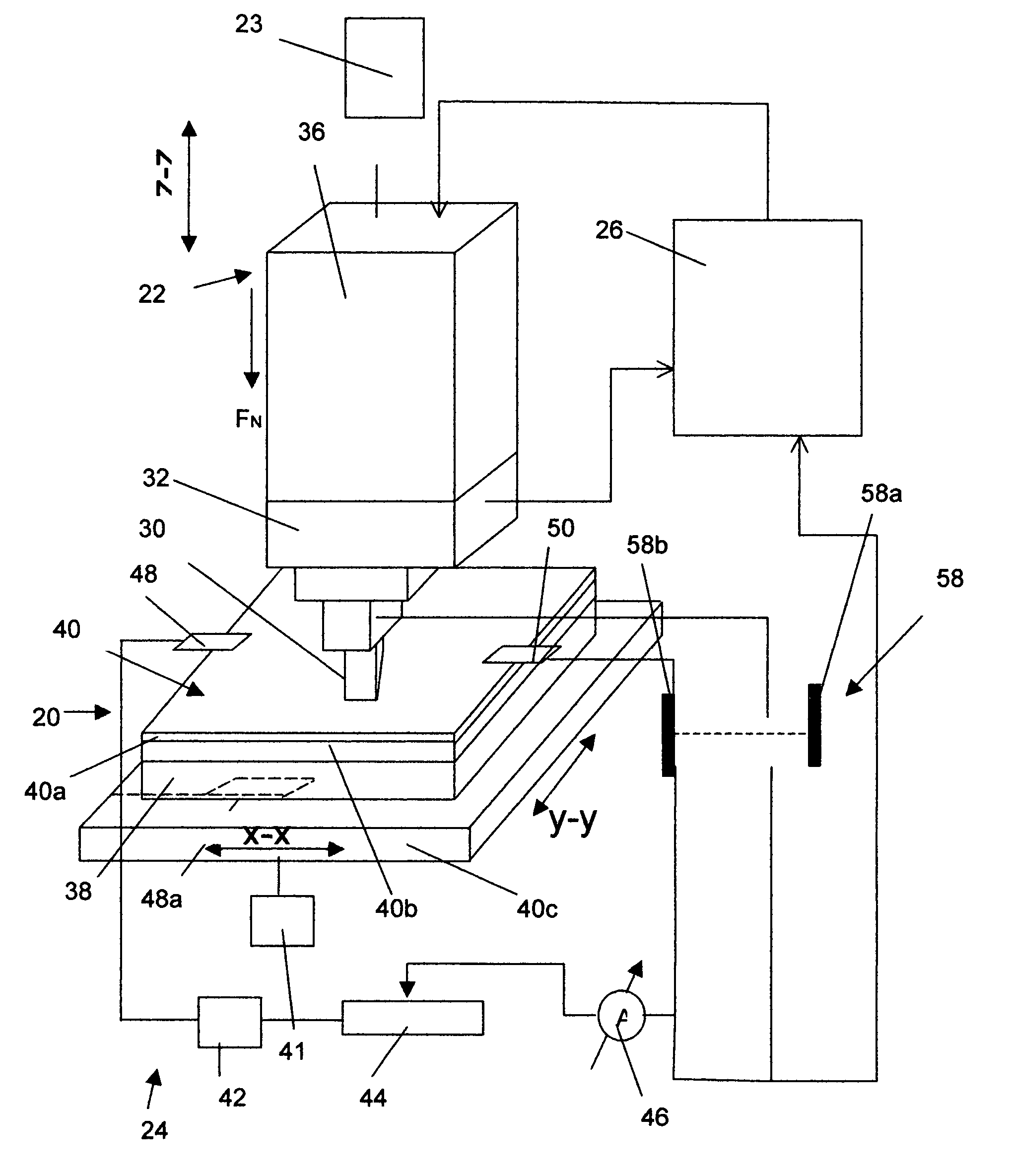
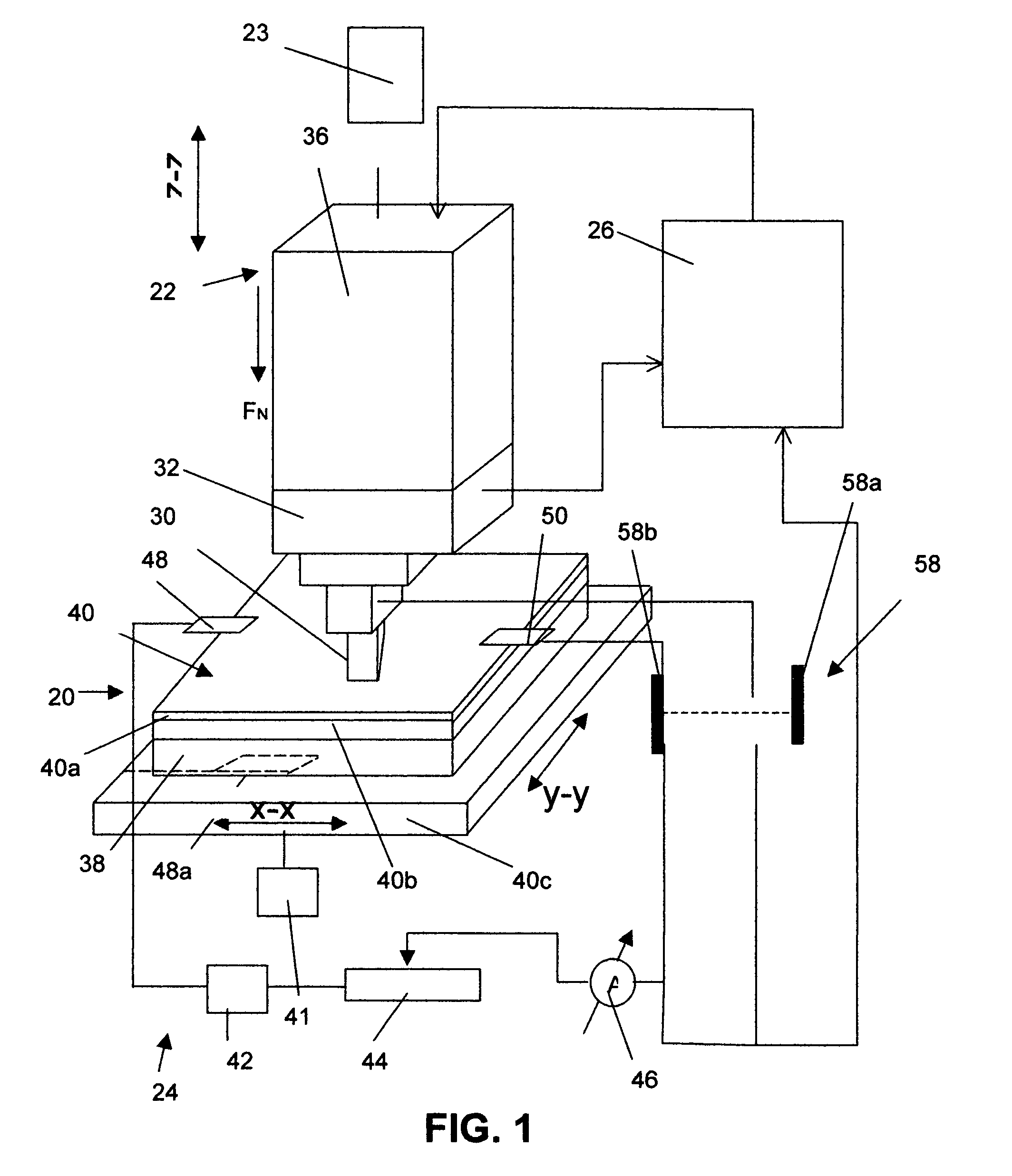
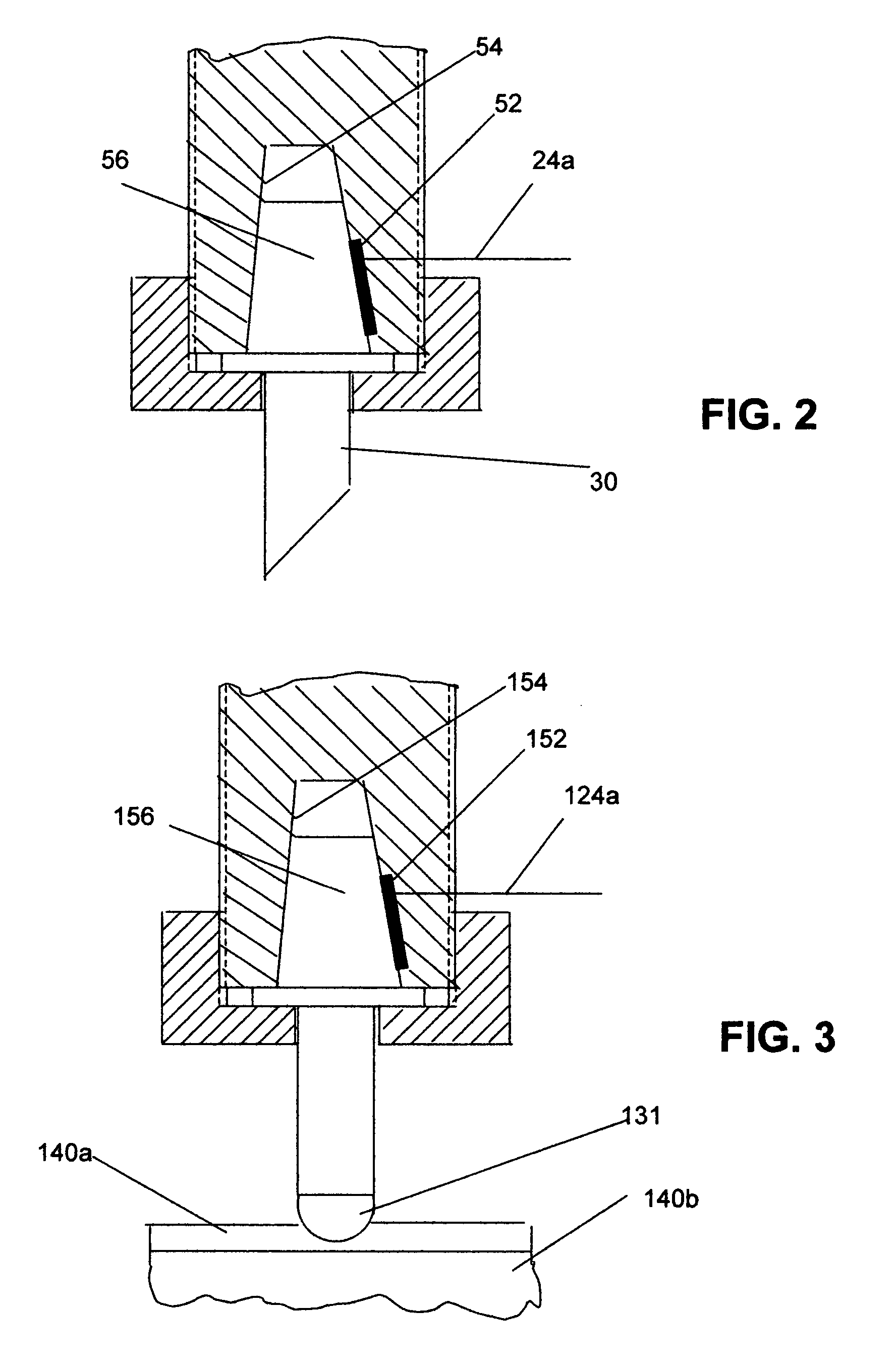
- A method and apparatus using a conductive indenter with electrical measurement capabilities to detect changes in electrical characteristics during scratching or indentation, allowing for precise determination of durability by analyzing resistance changes, suitable for both conductive and non-conductive coatings and substrates, with options for different indenter shapes and test motions.

Mechanical property measurement of thin films by micro plane-strain compression
PatentInactiveUS7395722B2
Innovation
- A testing apparatus with substantially flat and parallel test surfaces, a double cantilever structure for precise alignment, and a thermoelectric heating and cooling device to control temperature, enabling uniform stress-strain measurements under high strain rates and varied thermal conditions.


Environmental Standards for Thin Film Testing
Environmental standards for thin film oxidation testing have evolved significantly to address the growing complexity of modern thin film applications across industries. These standards establish critical frameworks for ensuring consistent, reliable, and reproducible testing methodologies that can accurately assess oxidation behavior under controlled conditions.
The International Organization for Standardization (ISO) has developed several key standards relevant to thin film oxidation testing, including ISO 14577 for instrumented indentation testing and ISO 4287 for surface texture parameters. Additionally, ASTM International provides comprehensive guidelines through standards such as ASTM E2109 for kinetic parameters by thermogravimetric methods and ASTM G155 for operating xenon arc light apparatus for exposure testing.
Temperature and humidity control represent fundamental environmental parameters in oxidation testing standards. Most protocols specify testing temperatures ranging from ambient conditions to elevated temperatures up to 500°C, with humidity levels maintained between 45-75% relative humidity. These controlled environments ensure that oxidation mechanisms can be studied systematically without interference from uncontrolled atmospheric variables.
Atmospheric composition standards mandate specific gas mixtures and purity levels during testing procedures. Standard testing atmospheres typically include dry air, oxygen-enriched environments, and inert gas conditions with oxygen concentrations precisely controlled to parts-per-million levels. These specifications enable researchers to isolate oxidation effects and establish baseline measurements for comparative analysis.
Contamination control protocols within environmental standards address particle filtration, chemical purity requirements, and surface preparation procedures. Class 100 or better cleanroom conditions are often specified, along with detailed protocols for sample handling, storage, and preparation to minimize external contamination that could influence oxidation test results.
Calibration and validation requirements ensure measurement accuracy and traceability across different testing facilities. Standards typically mandate regular calibration of environmental monitoring equipment, temperature sensors, gas flow controllers, and analytical instruments using certified reference materials and traceable measurement standards.
Documentation and reporting standards establish comprehensive requirements for test condition recording, data collection protocols, and result presentation formats. These specifications ensure that oxidation testing results can be properly interpreted, compared across different studies, and validated through independent verification processes.
The International Organization for Standardization (ISO) has developed several key standards relevant to thin film oxidation testing, including ISO 14577 for instrumented indentation testing and ISO 4287 for surface texture parameters. Additionally, ASTM International provides comprehensive guidelines through standards such as ASTM E2109 for kinetic parameters by thermogravimetric methods and ASTM G155 for operating xenon arc light apparatus for exposure testing.
Temperature and humidity control represent fundamental environmental parameters in oxidation testing standards. Most protocols specify testing temperatures ranging from ambient conditions to elevated temperatures up to 500°C, with humidity levels maintained between 45-75% relative humidity. These controlled environments ensure that oxidation mechanisms can be studied systematically without interference from uncontrolled atmospheric variables.
Atmospheric composition standards mandate specific gas mixtures and purity levels during testing procedures. Standard testing atmospheres typically include dry air, oxygen-enriched environments, and inert gas conditions with oxygen concentrations precisely controlled to parts-per-million levels. These specifications enable researchers to isolate oxidation effects and establish baseline measurements for comparative analysis.
Contamination control protocols within environmental standards address particle filtration, chemical purity requirements, and surface preparation procedures. Class 100 or better cleanroom conditions are often specified, along with detailed protocols for sample handling, storage, and preparation to minimize external contamination that could influence oxidation test results.
Calibration and validation requirements ensure measurement accuracy and traceability across different testing facilities. Standards typically mandate regular calibration of environmental monitoring equipment, temperature sensors, gas flow controllers, and analytical instruments using certified reference materials and traceable measurement standards.
Documentation and reporting standards establish comprehensive requirements for test condition recording, data collection protocols, and result presentation formats. These specifications ensure that oxidation testing results can be properly interpreted, compared across different studies, and validated through independent verification processes.
Quality Control Framework for Oxidation Testing
A comprehensive quality control framework for oxidation testing in thin films requires systematic protocols that ensure reproducible and reliable results across different testing methodologies. The framework must establish standardized procedures for sample preparation, environmental control, measurement protocols, and data validation to minimize variability and enhance the accuracy of oxidation assessments.
Sample preparation protocols form the foundation of quality control, requiring strict adherence to substrate cleaning procedures, film deposition parameters, and storage conditions. Standardized substrate preparation includes sequential cleaning with appropriate solvents, surface activation treatments, and contamination-free handling procedures. Film deposition must maintain consistent parameters such as temperature, pressure, and deposition rate, with detailed documentation of process conditions for each sample batch.
Environmental control measures are critical for maintaining testing integrity throughout the oxidation assessment process. Temperature and humidity monitoring systems should maintain stable conditions within specified tolerances, typically ±2°C for temperature and ±5% for relative humidity. Atmospheric composition control, including oxygen and moisture levels, requires continuous monitoring and documentation to ensure consistent testing environments across different measurement sessions.
Measurement protocol standardization encompasses instrument calibration procedures, measurement sequence optimization, and data acquisition parameters. Regular calibration of analytical instruments using certified reference materials ensures measurement accuracy and traceability. Standardized measurement sequences minimize systematic errors by establishing consistent sample positioning, measurement timing, and environmental equilibration periods before data collection.
Data validation procedures include statistical analysis protocols for identifying outliers, establishing measurement uncertainty ranges, and implementing acceptance criteria for test results. Quality control charts track measurement precision over time, enabling early detection of systematic drift or equipment degradation. Inter-laboratory comparison programs validate measurement consistency across different facilities and instrument configurations.
Documentation requirements encompass complete traceability from sample preparation through final results reporting. Standardized data recording formats facilitate data analysis and enable effective comparison of results across different testing campaigns. Regular review and updating of quality control procedures ensures continuous improvement and adaptation to evolving testing requirements and technological advances.
Sample preparation protocols form the foundation of quality control, requiring strict adherence to substrate cleaning procedures, film deposition parameters, and storage conditions. Standardized substrate preparation includes sequential cleaning with appropriate solvents, surface activation treatments, and contamination-free handling procedures. Film deposition must maintain consistent parameters such as temperature, pressure, and deposition rate, with detailed documentation of process conditions for each sample batch.
Environmental control measures are critical for maintaining testing integrity throughout the oxidation assessment process. Temperature and humidity monitoring systems should maintain stable conditions within specified tolerances, typically ±2°C for temperature and ±5% for relative humidity. Atmospheric composition control, including oxygen and moisture levels, requires continuous monitoring and documentation to ensure consistent testing environments across different measurement sessions.
Measurement protocol standardization encompasses instrument calibration procedures, measurement sequence optimization, and data acquisition parameters. Regular calibration of analytical instruments using certified reference materials ensures measurement accuracy and traceability. Standardized measurement sequences minimize systematic errors by establishing consistent sample positioning, measurement timing, and environmental equilibration periods before data collection.
Data validation procedures include statistical analysis protocols for identifying outliers, establishing measurement uncertainty ranges, and implementing acceptance criteria for test results. Quality control charts track measurement precision over time, enabling early detection of systematic drift or equipment degradation. Inter-laboratory comparison programs validate measurement consistency across different facilities and instrument configurations.
Documentation requirements encompass complete traceability from sample preparation through final results reporting. Standardized data recording formats facilitate data analysis and enable effective comparison of results across different testing campaigns. Regular review and updating of quality control procedures ensures continuous improvement and adaptation to evolving testing requirements and technological advances.
Unlock deeper insights with PatSnap Eureka Quick Research — get a full tech report to explore trends and direct your research. Try now!
Generate Your Research Report Instantly with AI Agent
Supercharge your innovation with PatSnap Eureka AI Agent Platform!