How to Validate Electromagnetic Shield Testing for Reliability
MAR 6, 20269 MIN READ
Generate Your Research Report Instantly with AI Agent
Patsnap Eureka helps you evaluate technical feasibility & market potential.
EMI Shield Testing Background and Validation Goals
Electromagnetic interference (EMI) shielding has evolved from a niche engineering concern to a critical requirement across virtually all electronic systems. The proliferation of wireless communications, high-frequency digital circuits, and increasingly dense electronic packaging has created an environment where electromagnetic compatibility is paramount for device functionality and regulatory compliance.
The historical development of EMI shielding began in the early 20th century with basic metallic enclosures for radio equipment. As electronic systems became more sophisticated and operating frequencies increased, the need for more effective and reliable shielding solutions grew exponentially. The advent of mobile communications, automotive electronics, and medical devices has further intensified the demand for robust EMI protection.
Modern EMI shielding encompasses a diverse range of materials and technologies, including conductive gaskets, metallic coatings, conductive fabrics, and advanced composite materials. Each solution presents unique challenges in terms of performance validation and long-term reliability assessment. The complexity is compounded by the fact that shielding effectiveness can degrade over time due to environmental factors, mechanical stress, and material aging.
The primary technical objective in EMI shield testing validation is to establish comprehensive methodologies that accurately predict real-world performance under various operational conditions. This involves developing test protocols that can simulate the complex electromagnetic environments encountered in actual applications while accounting for factors such as frequency-dependent behavior, temperature variations, and mechanical degradation.
Current validation goals focus on creating standardized testing frameworks that bridge the gap between laboratory measurements and field performance. This includes establishing correlation models between accelerated aging tests and long-term reliability, developing multi-physics simulation capabilities that account for electromagnetic, thermal, and mechanical interactions, and implementing statistical approaches for reliability prediction.
The ultimate aim is to enable engineers to make informed decisions about shielding solutions based on quantitative reliability data rather than conservative over-design approaches. This requires validation methodologies that can accurately assess shielding performance degradation mechanisms and predict failure modes before they impact system functionality.
The historical development of EMI shielding began in the early 20th century with basic metallic enclosures for radio equipment. As electronic systems became more sophisticated and operating frequencies increased, the need for more effective and reliable shielding solutions grew exponentially. The advent of mobile communications, automotive electronics, and medical devices has further intensified the demand for robust EMI protection.
Modern EMI shielding encompasses a diverse range of materials and technologies, including conductive gaskets, metallic coatings, conductive fabrics, and advanced composite materials. Each solution presents unique challenges in terms of performance validation and long-term reliability assessment. The complexity is compounded by the fact that shielding effectiveness can degrade over time due to environmental factors, mechanical stress, and material aging.
The primary technical objective in EMI shield testing validation is to establish comprehensive methodologies that accurately predict real-world performance under various operational conditions. This involves developing test protocols that can simulate the complex electromagnetic environments encountered in actual applications while accounting for factors such as frequency-dependent behavior, temperature variations, and mechanical degradation.
Current validation goals focus on creating standardized testing frameworks that bridge the gap between laboratory measurements and field performance. This includes establishing correlation models between accelerated aging tests and long-term reliability, developing multi-physics simulation capabilities that account for electromagnetic, thermal, and mechanical interactions, and implementing statistical approaches for reliability prediction.
The ultimate aim is to enable engineers to make informed decisions about shielding solutions based on quantitative reliability data rather than conservative over-design approaches. This requires validation methodologies that can accurately assess shielding performance degradation mechanisms and predict failure modes before they impact system functionality.
Market Demand for Reliable EMI Shield Testing
The global electronics industry faces unprecedented challenges in electromagnetic interference (EMI) management as devices become increasingly complex and interconnected. Modern electronic systems operate in environments with dense electromagnetic fields, making reliable EMI shielding validation critical for product performance and regulatory compliance. The proliferation of wireless technologies, Internet of Things devices, and high-frequency applications has intensified the demand for robust electromagnetic shielding solutions.
Automotive electronics represents one of the fastest-growing segments driving EMI shield testing demand. Advanced driver assistance systems, electric vehicle powertrains, and autonomous driving technologies require stringent electromagnetic compatibility standards. The automotive industry's shift toward electrification has created new challenges in managing electromagnetic interference between high-power systems and sensitive electronic components, necessitating comprehensive validation methodologies.
The telecommunications sector continues to expand its requirements for reliable EMI testing as 5G networks deploy globally. Base station equipment, mobile devices, and network infrastructure components must demonstrate consistent electromagnetic performance across varying environmental conditions. The higher frequencies and increased power densities associated with 5G technology demand more sophisticated testing approaches to ensure long-term reliability.
Consumer electronics manufacturers face mounting pressure to validate EMI shielding effectiveness throughout product lifecycles. Smartphones, tablets, wearable devices, and smart home products must maintain electromagnetic performance despite miniaturization trends and extended operational periods. Market competition drives the need for accelerated testing methods that can predict long-term shielding reliability without compromising time-to-market objectives.
Industrial automation and medical device sectors present specialized market demands for EMI shield validation. Manufacturing equipment, robotic systems, and medical imaging devices operate in electromagnetically challenging environments where shielding failure can result in significant operational disruptions or safety concerns. These applications require validation methodologies that account for harsh operating conditions and extended service life requirements.
The aerospace and defense industries maintain stringent requirements for electromagnetic shielding reliability validation. Military communications systems, avionics, and satellite technologies must demonstrate consistent performance across extreme environmental conditions and extended operational periods. These sectors drive demand for advanced testing methodologies that can simulate real-world electromagnetic environments and predict long-term performance degradation patterns.
Regulatory compliance requirements across multiple industries continue to evolve, creating sustained demand for comprehensive EMI testing services and equipment. International standards organizations regularly update electromagnetic compatibility requirements, necessitating continuous advancement in validation methodologies and testing capabilities.
Automotive electronics represents one of the fastest-growing segments driving EMI shield testing demand. Advanced driver assistance systems, electric vehicle powertrains, and autonomous driving technologies require stringent electromagnetic compatibility standards. The automotive industry's shift toward electrification has created new challenges in managing electromagnetic interference between high-power systems and sensitive electronic components, necessitating comprehensive validation methodologies.
The telecommunications sector continues to expand its requirements for reliable EMI testing as 5G networks deploy globally. Base station equipment, mobile devices, and network infrastructure components must demonstrate consistent electromagnetic performance across varying environmental conditions. The higher frequencies and increased power densities associated with 5G technology demand more sophisticated testing approaches to ensure long-term reliability.
Consumer electronics manufacturers face mounting pressure to validate EMI shielding effectiveness throughout product lifecycles. Smartphones, tablets, wearable devices, and smart home products must maintain electromagnetic performance despite miniaturization trends and extended operational periods. Market competition drives the need for accelerated testing methods that can predict long-term shielding reliability without compromising time-to-market objectives.
Industrial automation and medical device sectors present specialized market demands for EMI shield validation. Manufacturing equipment, robotic systems, and medical imaging devices operate in electromagnetically challenging environments where shielding failure can result in significant operational disruptions or safety concerns. These applications require validation methodologies that account for harsh operating conditions and extended service life requirements.
The aerospace and defense industries maintain stringent requirements for electromagnetic shielding reliability validation. Military communications systems, avionics, and satellite technologies must demonstrate consistent performance across extreme environmental conditions and extended operational periods. These sectors drive demand for advanced testing methodologies that can simulate real-world electromagnetic environments and predict long-term performance degradation patterns.
Regulatory compliance requirements across multiple industries continue to evolve, creating sustained demand for comprehensive EMI testing services and equipment. International standards organizations regularly update electromagnetic compatibility requirements, necessitating continuous advancement in validation methodologies and testing capabilities.
Current EMI Testing Standards and Validation Challenges
Electromagnetic interference (EMI) testing standards form the foundation for validating shield effectiveness, yet current frameworks present significant validation challenges that impact reliability assessment. The primary international standards governing EMI shielding include IEEE 299, ASTM D4935, and IEC 61000-5-7, each addressing different aspects of shielding effectiveness measurement but with inherent limitations in real-world application scenarios.
IEEE 299 standard, widely adopted for shielding effectiveness measurements, employs far-field testing methodologies that may not accurately represent near-field conditions commonly encountered in electronic devices. This discrepancy creates validation gaps when translating laboratory results to practical applications, particularly in compact electronic systems where electromagnetic fields exhibit complex behavior patterns.
ASTM D4935 focuses on material-level testing using coaxial transmission line methods, providing valuable data for material characterization but failing to account for assembly-level effects such as seam integrity, connector performance, and mechanical stress impacts. The standard's frequency range limitations also restrict comprehensive validation across the entire electromagnetic spectrum relevant to modern electronic systems.
Military standards like MIL-STD-188-125 offer more stringent requirements but introduce complexity in civilian applications due to their specialized testing environments and equipment requirements. The translation of military-grade validation protocols to commercial applications often results in over-engineering or inadequate protection levels, highlighting the need for application-specific validation approaches.
Current validation challenges stem from the dynamic nature of electromagnetic environments and the static nature of existing test standards. Real-world electromagnetic threats continuously evolve with advancing technology, while standardized test procedures remain relatively fixed, creating temporal validation gaps that compromise long-term reliability predictions.
Temperature cycling, humidity exposure, and mechanical stress significantly affect shielding performance over time, yet most standards inadequately address these environmental factors in their validation protocols. This limitation becomes critical when assessing shield reliability in harsh operating conditions or extended service life applications.
The emergence of high-frequency applications, including 5G communications and millimeter-wave technologies, exposes additional validation challenges as existing standards struggle to address frequency-dependent shielding behaviors and resonance effects that become prominent at higher frequencies. These gaps necessitate enhanced validation methodologies that incorporate frequency-specific testing protocols and advanced measurement techniques.
IEEE 299 standard, widely adopted for shielding effectiveness measurements, employs far-field testing methodologies that may not accurately represent near-field conditions commonly encountered in electronic devices. This discrepancy creates validation gaps when translating laboratory results to practical applications, particularly in compact electronic systems where electromagnetic fields exhibit complex behavior patterns.
ASTM D4935 focuses on material-level testing using coaxial transmission line methods, providing valuable data for material characterization but failing to account for assembly-level effects such as seam integrity, connector performance, and mechanical stress impacts. The standard's frequency range limitations also restrict comprehensive validation across the entire electromagnetic spectrum relevant to modern electronic systems.
Military standards like MIL-STD-188-125 offer more stringent requirements but introduce complexity in civilian applications due to their specialized testing environments and equipment requirements. The translation of military-grade validation protocols to commercial applications often results in over-engineering or inadequate protection levels, highlighting the need for application-specific validation approaches.
Current validation challenges stem from the dynamic nature of electromagnetic environments and the static nature of existing test standards. Real-world electromagnetic threats continuously evolve with advancing technology, while standardized test procedures remain relatively fixed, creating temporal validation gaps that compromise long-term reliability predictions.
Temperature cycling, humidity exposure, and mechanical stress significantly affect shielding performance over time, yet most standards inadequately address these environmental factors in their validation protocols. This limitation becomes critical when assessing shield reliability in harsh operating conditions or extended service life applications.
The emergence of high-frequency applications, including 5G communications and millimeter-wave technologies, exposes additional validation challenges as existing standards struggle to address frequency-dependent shielding behaviors and resonance effects that become prominent at higher frequencies. These gaps necessitate enhanced validation methodologies that incorporate frequency-specific testing protocols and advanced measurement techniques.
Current EMI Shield Validation Solutions
01 Electromagnetic shielding materials and compositions
Various materials and compositions can be used to enhance electromagnetic shielding effectiveness and reliability. These include conductive polymers, metal-filled composites, carbon-based materials, and multi-layer structures that provide consistent shielding performance. The selection of appropriate materials with specific electrical conductivity and magnetic permeability properties is crucial for achieving reliable electromagnetic interference protection across different frequency ranges.- Electromagnetic shielding materials and compositions: Various materials and compositions can be used to enhance electromagnetic shielding effectiveness and reliability. These include conductive polymers, metal-filled composites, carbon-based materials, and multi-layer structures that provide consistent shielding performance. The selection of appropriate materials with specific electrical conductivity and magnetic permeability properties is crucial for achieving reliable electromagnetic interference protection across different frequency ranges.
- Shielding structure design and configuration: The design and configuration of electromagnetic shielding structures significantly impact their reliability. This includes optimized geometries, seamless enclosures, proper grounding techniques, and strategic placement of shielding elements. Multi-layer shielding configurations and specialized joint designs help maintain shielding integrity over time and under various environmental conditions, ensuring consistent protection against electromagnetic interference.
- Testing and measurement methods for shield performance: Reliable electromagnetic shielding requires comprehensive testing and measurement methodologies to verify performance. This includes standardized test procedures for evaluating shielding effectiveness, durability testing under environmental stress conditions, and quality control methods. Advanced measurement techniques enable accurate assessment of shielding performance across frequency spectrums and help identify potential failure points before deployment.
- Gaskets and sealing components for shielding continuity: Electromagnetic shielding gaskets and sealing components are critical for maintaining shielding continuity and reliability at joints, seams, and interfaces. These components utilize conductive elastomers, metal mesh, or composite materials to ensure consistent electrical contact and prevent electromagnetic leakage. Proper gasket design and material selection help maintain long-term shielding effectiveness despite mechanical stress, temperature variations, and aging.
- Environmental durability and long-term stability: Ensuring electromagnetic shield reliability requires consideration of environmental factors and long-term stability. This includes resistance to corrosion, temperature cycling, humidity, mechanical vibration, and chemical exposure. Advanced coating technologies, protective treatments, and material selection strategies help maintain shielding performance throughout the product lifecycle. Accelerated aging tests and reliability prediction models are used to ensure shields maintain their effectiveness under real-world operating conditions.
02 Shielding structure design and configuration
The design and configuration of electromagnetic shielding structures significantly impact their reliability. This includes optimized geometries, seamless enclosures, proper grounding techniques, and strategic placement of shielding elements. Multi-layer shielding configurations and specialized joint designs help maintain shielding integrity over time and under various environmental conditions, ensuring consistent protection against electromagnetic interference.Expand Specific Solutions03 Testing and measurement methods for shield performance
Reliable electromagnetic shielding requires comprehensive testing and measurement methodologies to verify performance. This includes standardized test procedures for evaluating shielding effectiveness, durability testing under environmental stress conditions, and quality control methods. Advanced measurement techniques enable accurate assessment of shielding performance across frequency spectrums and help identify potential failure points before deployment.Expand Specific Solutions04 Gaskets and sealing components for shielding continuity
Electromagnetic shielding gaskets and sealing components are critical for maintaining shielding continuity and reliability at joints, seams, and interfaces. These components use conductive elastomers, metal mesh, or composite materials to ensure electrical contact and prevent electromagnetic leakage. Proper gasket design and material selection help maintain long-term shielding effectiveness despite mechanical stress, temperature variations, and aging.Expand Specific Solutions05 Environmental durability and long-term stability
Ensuring electromagnetic shield reliability requires consideration of environmental factors and long-term stability. This includes resistance to corrosion, temperature cycling, humidity, mechanical vibration, and chemical exposure. Advanced coating technologies, protective treatments, and material selection strategies help maintain shielding performance throughout the product lifecycle. Accelerated aging tests and reliability prediction models are used to ensure consistent electromagnetic protection over extended periods.Expand Specific Solutions
Key Players in EMI Testing and Shielding Industry
The electromagnetic shield testing validation market represents a mature yet evolving sector driven by increasing electronic device complexity and stringent regulatory requirements. The industry is experiencing steady growth with expanding market size, particularly in automotive, aerospace, and consumer electronics segments. Technology maturity varies significantly across market players, with established giants like Apple, Panasonic Holdings, NEC Corp., and Fujitsu demonstrating advanced EMI shielding capabilities integrated into their product ecosystems. Specialized testing companies such as Vkan Certification & Testing and China Institute of Electronic Product Reliability provide comprehensive validation services, while material innovators like Nanotech Energy advance graphene-based EMI solutions. Manufacturing leaders including Hon Hai Precision, SMIC-Beijing, and component specialists like Taiyo Yuden contribute robust testing infrastructure. The competitive landscape shows consolidation around companies offering end-to-end solutions combining materials science, testing methodologies, and manufacturing expertise, positioning the market for continued technological advancement.
Vkan Certification & Testing Co. Ltd.
Technical Solution: Provides third-party electromagnetic shield testing validation services using automated test systems with real-time monitoring capabilities. Their methodology incorporates continuous wave and pulsed signal testing across multiple frequency bands, combined with thermal imaging analysis to detect hotspots that could compromise shielding integrity. The company utilizes machine learning algorithms to analyze test data patterns and predict potential failure modes. Their validation process includes comparative analysis between theoretical shielding effectiveness calculations and measured performance, ensuring reliability through statistical process control methods and automated report generation for regulatory compliance documentation.
Strengths: Automated testing systems with high throughput, machine learning-enhanced failure prediction, comprehensive regulatory compliance support. Weaknesses: Dependency on standardized test procedures may limit customization, potential challenges with novel shielding materials validation.
Hon Hai Precision Industry Co., Ltd.
Technical Solution: Implements in-line electromagnetic shield testing validation during manufacturing processes using proprietary automated measurement systems. Their approach combines near-field scanning techniques with far-field measurements to create comprehensive shielding effectiveness maps. The company employs statistical quality control methods with real-time feedback loops to manufacturing processes, ensuring consistent shield performance across production batches. Their validation methodology includes correlation studies between material properties, manufacturing parameters, and final shielding performance, utilizing big data analytics to optimize shield design and manufacturing processes for enhanced reliability and cost-effectiveness.
Strengths: Integrated manufacturing and testing processes, real-time quality control systems, extensive production data analytics capabilities. Weaknesses: Focus primarily on high-volume consumer electronics may limit applicability to specialized applications, potential constraints in handling custom shield configurations.
Core Testing Standards and Validation Techniques
Process of testing the efficiency of the electromagnetic screening of a conductor, and appliance therefor
PatentInactiveEP0454578A1
Innovation
- A method involving the injection of a transient disturbing signal into the cord's shielding to identify faults, with measurements compared to a reference signal to determine the shielding's quality, allowing for quick assessment without unwinding the cord and using a device to control the signal parameters for accurate results.


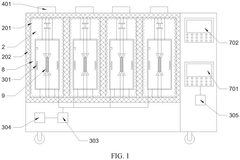
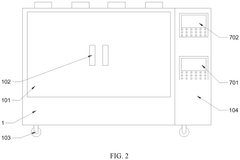
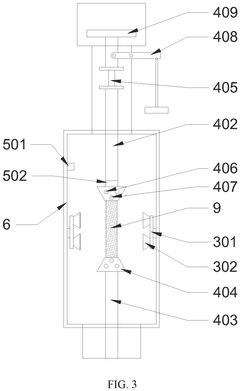
Reliability test apparatus coupling electromagnetic environment and stress environment
PatentActiveEP4455692A1
Innovation
- A reliability test apparatus that includes a shielding compartment with a microwave absorption layer and shielding layer, an electromagnetic simulation system, a stress application system, a data collection system, and a control system, allowing for the simulation of electromagnetic environments and application of stress to test samples in a controlled manner.

Regulatory Standards for EMI Testing Compliance
Electromagnetic interference (EMI) testing compliance is governed by a comprehensive framework of international, regional, and national standards that establish mandatory requirements for electromagnetic shield validation. The International Electrotechnical Commission (IEC) serves as the primary global standardization body, with IEC 61000 series forming the cornerstone of EMC regulations worldwide. This standard encompasses emission limits, immunity requirements, and testing methodologies that manufacturers must adhere to for market access.
Regional regulatory bodies have developed complementary standards based on IEC frameworks. The European Union enforces the EMC Directive 2014/30/EU, requiring CE marking for electromagnetic compatibility compliance. In North America, the Federal Communications Commission (FCC) Part 15 regulations govern electromagnetic emissions, while Industry Canada's ICES standards provide parallel requirements. These regulations mandate specific shielding effectiveness thresholds and testing protocols for different product categories.
Military and aerospace applications operate under more stringent standards, including MIL-STD-461 for electromagnetic environmental effects and DO-160 for airborne equipment. These specifications require enhanced shielding performance levels, often exceeding 60-80 dB attenuation across broader frequency ranges. The standards also mandate accelerated aging tests and environmental stress screening to validate long-term reliability under harsh operating conditions.
Testing facility accreditation represents a critical compliance requirement, with laboratories must obtain ISO/IEC 17025 certification and specific EMC testing accreditations. Regulatory bodies maintain approved testing facility databases, and only results from accredited laboratories are accepted for compliance documentation. This ensures measurement traceability and repeatability across different testing environments.
Documentation requirements for regulatory compliance include detailed test reports, technical construction files, and declaration of conformity statements. Manufacturers must maintain comprehensive records demonstrating shield design validation, material specifications, and quality control procedures. Post-market surveillance obligations require ongoing compliance monitoring and corrective action implementation when non-conformities are identified.
Emerging regulatory trends focus on cybersecurity integration with EMC requirements, particularly for IoT devices and connected systems. New standards are being developed to address electromagnetic security vulnerabilities and intentional electromagnetic interference threats, expanding traditional EMC compliance scope beyond unintentional emissions and immunity concerns.
Regional regulatory bodies have developed complementary standards based on IEC frameworks. The European Union enforces the EMC Directive 2014/30/EU, requiring CE marking for electromagnetic compatibility compliance. In North America, the Federal Communications Commission (FCC) Part 15 regulations govern electromagnetic emissions, while Industry Canada's ICES standards provide parallel requirements. These regulations mandate specific shielding effectiveness thresholds and testing protocols for different product categories.
Military and aerospace applications operate under more stringent standards, including MIL-STD-461 for electromagnetic environmental effects and DO-160 for airborne equipment. These specifications require enhanced shielding performance levels, often exceeding 60-80 dB attenuation across broader frequency ranges. The standards also mandate accelerated aging tests and environmental stress screening to validate long-term reliability under harsh operating conditions.
Testing facility accreditation represents a critical compliance requirement, with laboratories must obtain ISO/IEC 17025 certification and specific EMC testing accreditations. Regulatory bodies maintain approved testing facility databases, and only results from accredited laboratories are accepted for compliance documentation. This ensures measurement traceability and repeatability across different testing environments.
Documentation requirements for regulatory compliance include detailed test reports, technical construction files, and declaration of conformity statements. Manufacturers must maintain comprehensive records demonstrating shield design validation, material specifications, and quality control procedures. Post-market surveillance obligations require ongoing compliance monitoring and corrective action implementation when non-conformities are identified.
Emerging regulatory trends focus on cybersecurity integration with EMC requirements, particularly for IoT devices and connected systems. New standards are being developed to address electromagnetic security vulnerabilities and intentional electromagnetic interference threats, expanding traditional EMC compliance scope beyond unintentional emissions and immunity concerns.
Quality Assurance in EMI Shield Manufacturing
Quality assurance in EMI shield manufacturing represents a critical foundation for ensuring electromagnetic interference protection across diverse industrial applications. The manufacturing process demands rigorous quality control protocols that encompass material selection, fabrication techniques, and performance validation to guarantee consistent shielding effectiveness throughout the product lifecycle.
Material quality control begins with the verification of conductive materials used in shield construction, including copper, aluminum, and specialized alloys. Manufacturers must establish stringent incoming inspection procedures to validate material conductivity, thickness uniformity, and surface integrity. These parameters directly influence the shield's electromagnetic properties and long-term reliability under operational conditions.
Manufacturing process control involves monitoring key fabrication parameters such as welding quality, seam integrity, and dimensional accuracy. Advanced quality systems employ statistical process control methods to track manufacturing variations and implement corrective actions before defective products reach final assembly. Critical control points include joint conductivity measurements, surface treatment verification, and mechanical stress testing.
Supplier qualification and management constitute essential elements of comprehensive quality assurance programs. Manufacturers must establish robust supplier evaluation criteria that assess technical capabilities, quality management systems, and delivery performance. Regular supplier audits and performance reviews ensure consistent material quality and manufacturing process adherence across the supply chain.
Documentation and traceability systems enable complete product genealogy tracking from raw materials through final delivery. These systems support root cause analysis during quality investigations and facilitate rapid response to customer concerns or field performance issues. Comprehensive record-keeping includes material certifications, process parameters, test results, and inspection data.
Continuous improvement initiatives drive ongoing enhancement of manufacturing quality through systematic analysis of quality metrics, customer feedback, and field performance data. These programs identify opportunities for process optimization, defect reduction, and enhanced product reliability. Regular quality reviews and corrective action implementation ensure sustained manufacturing excellence and customer satisfaction in EMI shielding applications.
Material quality control begins with the verification of conductive materials used in shield construction, including copper, aluminum, and specialized alloys. Manufacturers must establish stringent incoming inspection procedures to validate material conductivity, thickness uniformity, and surface integrity. These parameters directly influence the shield's electromagnetic properties and long-term reliability under operational conditions.
Manufacturing process control involves monitoring key fabrication parameters such as welding quality, seam integrity, and dimensional accuracy. Advanced quality systems employ statistical process control methods to track manufacturing variations and implement corrective actions before defective products reach final assembly. Critical control points include joint conductivity measurements, surface treatment verification, and mechanical stress testing.
Supplier qualification and management constitute essential elements of comprehensive quality assurance programs. Manufacturers must establish robust supplier evaluation criteria that assess technical capabilities, quality management systems, and delivery performance. Regular supplier audits and performance reviews ensure consistent material quality and manufacturing process adherence across the supply chain.
Documentation and traceability systems enable complete product genealogy tracking from raw materials through final delivery. These systems support root cause analysis during quality investigations and facilitate rapid response to customer concerns or field performance issues. Comprehensive record-keeping includes material certifications, process parameters, test results, and inspection data.
Continuous improvement initiatives drive ongoing enhancement of manufacturing quality through systematic analysis of quality metrics, customer feedback, and field performance data. These programs identify opportunities for process optimization, defect reduction, and enhanced product reliability. Regular quality reviews and corrective action implementation ensure sustained manufacturing excellence and customer satisfaction in EMI shielding applications.
Unlock deeper insights with Patsnap Eureka Quick Research — get a full tech report to explore trends and direct your research. Try now!
Generate Your Research Report Instantly with AI Agent
Supercharge your innovation with Patsnap Eureka AI Agent Platform!