

How to Validate Front Suspension Modifications in Simulated Environments
MAR 31, 20269 MIN READ
Generate Your Research Report Instantly with AI Agent
Patsnap Eureka helps you evaluate technical feasibility & market potential.
Front Suspension Simulation Technology Background and Objectives
Front suspension systems have undergone significant evolution since the early days of automotive engineering, transitioning from simple leaf spring configurations to sophisticated multi-link assemblies with adaptive damping capabilities. The development trajectory has been driven by increasing demands for vehicle performance, safety, and comfort, necessitating more precise engineering approaches to suspension design and validation.
The emergence of computer-aided engineering and simulation technologies in the 1980s marked a pivotal shift in suspension development methodologies. Early finite element analysis tools provided basic structural validation capabilities, while subsequent advances in multi-body dynamics simulation enabled comprehensive kinematic and dynamic analysis of suspension systems under various operating conditions.
Modern suspension simulation has evolved to encompass advanced computational fluid dynamics for aerodynamic interactions, sophisticated tire models for accurate contact patch behavior, and real-time hardware-in-the-loop testing capabilities. These technological advances have enabled engineers to evaluate suspension modifications with unprecedented accuracy before physical prototyping, significantly reducing development costs and time-to-market.
The primary objective of front suspension simulation technology centers on creating virtual environments that accurately replicate real-world driving conditions and vehicle dynamics. This encompasses the validation of geometric modifications, material property changes, and component substitutions through comprehensive digital testing protocols that mirror physical validation procedures.
Key technical goals include achieving high-fidelity representation of suspension kinematics and compliance characteristics, accurate prediction of ride comfort and handling performance metrics, and reliable assessment of component durability under various load scenarios. The simulation framework must effectively capture the complex interactions between suspension geometry, spring and damper characteristics, bushing compliance, and tire-road interface dynamics.
Contemporary simulation objectives extend beyond traditional performance validation to encompass predictive analytics for component wear, optimization algorithms for multi-objective design scenarios, and integration with vehicle-level simulation platforms for comprehensive system-level validation. These capabilities enable engineers to evaluate suspension modifications within the broader context of overall vehicle performance and regulatory compliance requirements.
The ultimate technological aim involves establishing simulation-based validation protocols that can reliably predict real-world performance outcomes, thereby reducing dependence on extensive physical testing while maintaining the highest standards of safety and performance validation in suspension system development.
The emergence of computer-aided engineering and simulation technologies in the 1980s marked a pivotal shift in suspension development methodologies. Early finite element analysis tools provided basic structural validation capabilities, while subsequent advances in multi-body dynamics simulation enabled comprehensive kinematic and dynamic analysis of suspension systems under various operating conditions.
Modern suspension simulation has evolved to encompass advanced computational fluid dynamics for aerodynamic interactions, sophisticated tire models for accurate contact patch behavior, and real-time hardware-in-the-loop testing capabilities. These technological advances have enabled engineers to evaluate suspension modifications with unprecedented accuracy before physical prototyping, significantly reducing development costs and time-to-market.
The primary objective of front suspension simulation technology centers on creating virtual environments that accurately replicate real-world driving conditions and vehicle dynamics. This encompasses the validation of geometric modifications, material property changes, and component substitutions through comprehensive digital testing protocols that mirror physical validation procedures.
Key technical goals include achieving high-fidelity representation of suspension kinematics and compliance characteristics, accurate prediction of ride comfort and handling performance metrics, and reliable assessment of component durability under various load scenarios. The simulation framework must effectively capture the complex interactions between suspension geometry, spring and damper characteristics, bushing compliance, and tire-road interface dynamics.
Contemporary simulation objectives extend beyond traditional performance validation to encompass predictive analytics for component wear, optimization algorithms for multi-objective design scenarios, and integration with vehicle-level simulation platforms for comprehensive system-level validation. These capabilities enable engineers to evaluate suspension modifications within the broader context of overall vehicle performance and regulatory compliance requirements.
The ultimate technological aim involves establishing simulation-based validation protocols that can reliably predict real-world performance outcomes, thereby reducing dependence on extensive physical testing while maintaining the highest standards of safety and performance validation in suspension system development.
Market Demand for Virtual Suspension Validation Solutions
The automotive industry is experiencing unprecedented demand for virtual suspension validation solutions, driven by the accelerating shift toward digital-first development methodologies and the increasing complexity of modern vehicle suspension systems. Traditional physical testing approaches are becoming insufficient to meet the rapid development cycles and cost optimization requirements of contemporary automotive manufacturers.
Market drivers are primarily rooted in the automotive sector's digital transformation initiatives. Original equipment manufacturers are investing heavily in simulation-based validation to reduce prototype costs and accelerate time-to-market for new vehicle platforms. The growing emphasis on electric vehicle development has further intensified this demand, as electric vehicles require specialized suspension tuning to accommodate different weight distributions and performance characteristics compared to conventional internal combustion engine vehicles.
The commercial vehicle segment represents a particularly strong growth area for virtual suspension validation solutions. Fleet operators and commercial vehicle manufacturers are seeking advanced simulation capabilities to optimize suspension performance for specific load conditions and operational environments. This demand is amplified by the increasing adoption of autonomous and semi-autonomous commercial vehicles, which require precise suspension behavior prediction for safety-critical applications.
Regulatory pressures are also shaping market demand patterns. Stricter safety standards and environmental regulations are compelling manufacturers to adopt more comprehensive validation processes that can be efficiently executed through simulation platforms. Virtual validation enables extensive testing scenarios that would be impractical or cost-prohibitive using traditional physical testing methods.
The aftermarket modification sector presents an emerging demand segment for virtual suspension validation tools. Performance tuning companies and motorsport organizations are increasingly recognizing the value of simulation-based validation for custom suspension configurations. This market segment values solutions that can predict handling characteristics and performance outcomes before committing to expensive physical modifications.
Geographically, demand is concentrated in established automotive manufacturing regions, with North America, Europe, and Asia-Pacific leading adoption rates. However, emerging automotive markets are showing accelerated interest in virtual validation technologies as they seek to establish competitive development capabilities without the substantial infrastructure investments required for comprehensive physical testing facilities.
The integration requirements with existing computer-aided engineering workflows represent a critical demand factor. Organizations are seeking validation solutions that seamlessly integrate with popular simulation platforms and design tools, enabling efficient data exchange and collaborative development processes across multidisciplinary engineering teams.
Market drivers are primarily rooted in the automotive sector's digital transformation initiatives. Original equipment manufacturers are investing heavily in simulation-based validation to reduce prototype costs and accelerate time-to-market for new vehicle platforms. The growing emphasis on electric vehicle development has further intensified this demand, as electric vehicles require specialized suspension tuning to accommodate different weight distributions and performance characteristics compared to conventional internal combustion engine vehicles.
The commercial vehicle segment represents a particularly strong growth area for virtual suspension validation solutions. Fleet operators and commercial vehicle manufacturers are seeking advanced simulation capabilities to optimize suspension performance for specific load conditions and operational environments. This demand is amplified by the increasing adoption of autonomous and semi-autonomous commercial vehicles, which require precise suspension behavior prediction for safety-critical applications.
Regulatory pressures are also shaping market demand patterns. Stricter safety standards and environmental regulations are compelling manufacturers to adopt more comprehensive validation processes that can be efficiently executed through simulation platforms. Virtual validation enables extensive testing scenarios that would be impractical or cost-prohibitive using traditional physical testing methods.
The aftermarket modification sector presents an emerging demand segment for virtual suspension validation tools. Performance tuning companies and motorsport organizations are increasingly recognizing the value of simulation-based validation for custom suspension configurations. This market segment values solutions that can predict handling characteristics and performance outcomes before committing to expensive physical modifications.
Geographically, demand is concentrated in established automotive manufacturing regions, with North America, Europe, and Asia-Pacific leading adoption rates. However, emerging automotive markets are showing accelerated interest in virtual validation technologies as they seek to establish competitive development capabilities without the substantial infrastructure investments required for comprehensive physical testing facilities.
The integration requirements with existing computer-aided engineering workflows represent a critical demand factor. Organizations are seeking validation solutions that seamlessly integrate with popular simulation platforms and design tools, enabling efficient data exchange and collaborative development processes across multidisciplinary engineering teams.
Current State and Challenges in Suspension Simulation Methods
The current landscape of suspension simulation methods encompasses several established approaches, each with distinct capabilities and limitations. Finite Element Analysis (FEA) remains the predominant method for structural validation, offering detailed stress and deformation analysis of suspension components. Multi-body dynamics (MBD) simulation provides comprehensive vehicle behavior modeling, enabling engineers to evaluate ride comfort, handling characteristics, and dynamic responses under various driving conditions.
Advanced simulation platforms such as ADAMS, ANSYS, and CarSim have become industry standards, integrating sophisticated mathematical models that account for nonlinear spring characteristics, damping coefficients, and kinematic relationships. These tools enable virtual testing of suspension modifications before physical prototyping, significantly reducing development costs and time-to-market. However, the accuracy of these simulations heavily depends on the quality of input parameters and material property definitions.
Despite technological advances, several critical challenges persist in suspension simulation validation. Model correlation with real-world performance remains a significant hurdle, as simulated results often deviate from actual vehicle behavior due to simplified assumptions and idealized boundary conditions. The complexity of tire-road interaction modeling presents another substantial challenge, as tire behavior significantly influences suspension performance but is difficult to accurately represent in virtual environments.
Computational limitations continue to constrain simulation fidelity, particularly when modeling high-frequency vibrations and complex material behaviors such as rubber bushing hysteresis and friction effects. The trade-off between simulation accuracy and computational efficiency forces engineers to make compromises that may impact validation reliability. Additionally, the lack of standardized validation protocols across the industry creates inconsistencies in simulation methodologies and acceptance criteria.
Emerging challenges include the integration of active and semi-active suspension systems, which require sophisticated control algorithms and real-time feedback mechanisms that are difficult to validate purely through traditional simulation methods. The increasing demand for electric vehicle applications introduces new considerations such as battery weight distribution and regenerative braking integration, further complicating the validation process.
The geographical distribution of simulation expertise reveals significant disparities, with advanced capabilities concentrated in established automotive regions while emerging markets struggle with limited access to sophisticated simulation tools and expertise. This technological gap affects the global standardization of suspension validation practices and creates barriers to collaborative development efforts.
Advanced simulation platforms such as ADAMS, ANSYS, and CarSim have become industry standards, integrating sophisticated mathematical models that account for nonlinear spring characteristics, damping coefficients, and kinematic relationships. These tools enable virtual testing of suspension modifications before physical prototyping, significantly reducing development costs and time-to-market. However, the accuracy of these simulations heavily depends on the quality of input parameters and material property definitions.
Despite technological advances, several critical challenges persist in suspension simulation validation. Model correlation with real-world performance remains a significant hurdle, as simulated results often deviate from actual vehicle behavior due to simplified assumptions and idealized boundary conditions. The complexity of tire-road interaction modeling presents another substantial challenge, as tire behavior significantly influences suspension performance but is difficult to accurately represent in virtual environments.
Computational limitations continue to constrain simulation fidelity, particularly when modeling high-frequency vibrations and complex material behaviors such as rubber bushing hysteresis and friction effects. The trade-off between simulation accuracy and computational efficiency forces engineers to make compromises that may impact validation reliability. Additionally, the lack of standardized validation protocols across the industry creates inconsistencies in simulation methodologies and acceptance criteria.
Emerging challenges include the integration of active and semi-active suspension systems, which require sophisticated control algorithms and real-time feedback mechanisms that are difficult to validate purely through traditional simulation methods. The increasing demand for electric vehicle applications introduces new considerations such as battery weight distribution and regenerative braking integration, further complicating the validation process.
The geographical distribution of simulation expertise reveals significant disparities, with advanced capabilities concentrated in established automotive regions while emerging markets struggle with limited access to sophisticated simulation tools and expertise. This technological gap affects the global standardization of suspension validation practices and creates barriers to collaborative development efforts.
Existing Solutions for Suspension Modification Validation
01 Physical testing and durability validation methods
Front suspension systems undergo physical testing procedures to validate their durability and performance under various load conditions. These methods include fatigue testing, stress analysis, and endurance trials that simulate real-world operating conditions. Testing protocols evaluate the structural integrity of suspension components through controlled laboratory environments and test rigs that replicate road conditions and vehicle dynamics.- Physical testing and durability validation methods: Front suspension systems undergo rigorous physical testing to validate their durability and performance under various load conditions. Testing methods include fatigue testing, stress analysis, and endurance trials that simulate real-world driving conditions. These validation procedures assess the structural integrity of suspension components including control arms, springs, and mounting points. Advanced testing rigs and equipment are used to apply cyclic loads and measure component response over extended periods.
- Computer-aided simulation and virtual validation: Virtual validation techniques utilize finite element analysis and multi-body dynamics simulation to predict suspension behavior before physical prototyping. These computational methods enable engineers to evaluate stress distribution, deflection characteristics, and dynamic response of suspension systems under various operating conditions. Simulation-based validation reduces development time and costs while allowing optimization of component geometry and material selection.
- On-vehicle testing and field validation: Field validation involves testing suspension systems on actual vehicles under real-world driving conditions including various road surfaces, speeds, and load scenarios. Instrumentation and sensors are installed to monitor suspension performance parameters such as displacement, acceleration, and force transmission. Data collected during on-road testing validates design assumptions and identifies potential issues that may not be apparent in laboratory conditions.
- Component-level validation and quality control: Individual suspension components undergo specific validation procedures to ensure they meet design specifications and quality standards. This includes dimensional verification, material property testing, and functional testing of bushings, joints, and damping elements. Non-destructive testing methods are employed to detect manufacturing defects or material inconsistencies that could compromise suspension performance or safety.
- Integration testing and system-level validation: System-level validation examines the interaction between suspension components and their integration with the vehicle chassis and steering systems. This comprehensive approach evaluates overall suspension geometry, alignment characteristics, and compatibility with other vehicle systems. Testing protocols verify that the complete suspension assembly meets performance targets for ride comfort, handling stability, and noise vibration harshness characteristics.
02 Computer-aided simulation and virtual validation
Virtual validation techniques utilize computer simulation and finite element analysis to predict suspension behavior before physical prototyping. These methods enable engineers to evaluate design parameters, optimize component geometry, and assess performance characteristics through digital modeling. Simulation approaches reduce development time and costs while allowing comprehensive analysis of multiple design iterations.Expand Specific Solutions03 Dynamic performance testing and ride quality assessment
Dynamic testing procedures evaluate suspension performance during vehicle operation, focusing on ride comfort, handling characteristics, and response to road inputs. These validation methods measure parameters such as damping rates, spring characteristics, and kinematic behavior under various driving conditions. Assessment includes both subjective evaluation and objective measurement of suspension dynamics.Expand Specific Solutions04 Component-level validation and material testing
Individual suspension components undergo specific validation procedures to verify material properties, manufacturing quality, and functional performance. Testing includes evaluation of bushings, control arms, springs, and dampers through specialized equipment and protocols. Component validation ensures each element meets design specifications and quality standards before system integration.Expand Specific Solutions05 Field testing and real-world validation protocols
Real-world validation involves testing suspension systems under actual operating conditions on various road surfaces and environments. Field testing protocols collect data on system performance, durability, and reliability through instrumented vehicles and monitoring equipment. These validation methods provide critical feedback on suspension behavior in diverse conditions that may not be fully replicated in laboratory settings.Expand Specific Solutions
Key Players in Automotive Simulation and Testing Industry
The front suspension modification validation technology is experiencing rapid growth within the broader automotive simulation market, which is valued at approximately $2.5 billion and expanding at 15% annually. The industry is in a mature development stage, driven by increasing vehicle complexity and safety regulations. Technology maturity varies significantly among key players: established automotive manufacturers like China FAW, BYD, Geely, Honda, and Hino Motors possess advanced in-house simulation capabilities, while technology specialists such as Robert Bosch and research institutions like Tsinghua University and Jilin University are pioneering next-generation validation methodologies. Emerging players including UISEE Technologies and Guangzhou Xiaopeng are integrating AI-driven simulation approaches, creating a competitive landscape where traditional automotive engineering meets cutting-edge computational technologies for enhanced suspension system validation accuracy.
Robert Bosch GmbH
Technical Solution: Bosch has developed comprehensive virtual validation platforms for automotive suspension systems using advanced multi-body dynamics simulation and hardware-in-the-loop testing. Their approach integrates real-time simulation environments with physical test rigs to validate suspension modifications before physical prototyping. The system incorporates detailed vehicle dynamics models, road surface modeling, and component-level validation tools that enable engineers to test various suspension configurations under different driving conditions. Their simulation framework supports both passive and active suspension systems validation, including electronic stability control integration and ride comfort optimization algorithms.
Strengths: Industry-leading simulation accuracy and extensive automotive expertise. Weaknesses: High implementation costs and complex system integration requirements.
Dalian University of Technology
Technical Solution: Dalian University of Technology specializes in computational mechanics and simulation-based validation for automotive suspension systems. Their research encompasses advanced numerical methods for suspension dynamics analysis, including nonlinear finite element modeling and multi-physics simulation approaches. The university has developed specialized software tools for suspension modification validation that incorporate uncertainty quantification and robust design optimization. Their methodology emphasizes the use of high-performance computing for complex suspension system analysis and validation in virtual environments, enabling comprehensive evaluation of design modifications before physical implementation.
Strengths: Strong computational mechanics expertise and advanced numerical simulation capabilities. Weaknesses: Academic focus may limit immediate industrial application and commercial software integration challenges.
Core Innovations in Virtual Suspension Testing Methods
Reducing drive file development time for a vehicle road test simulator
PatentActiveUS7194888B1
Innovation
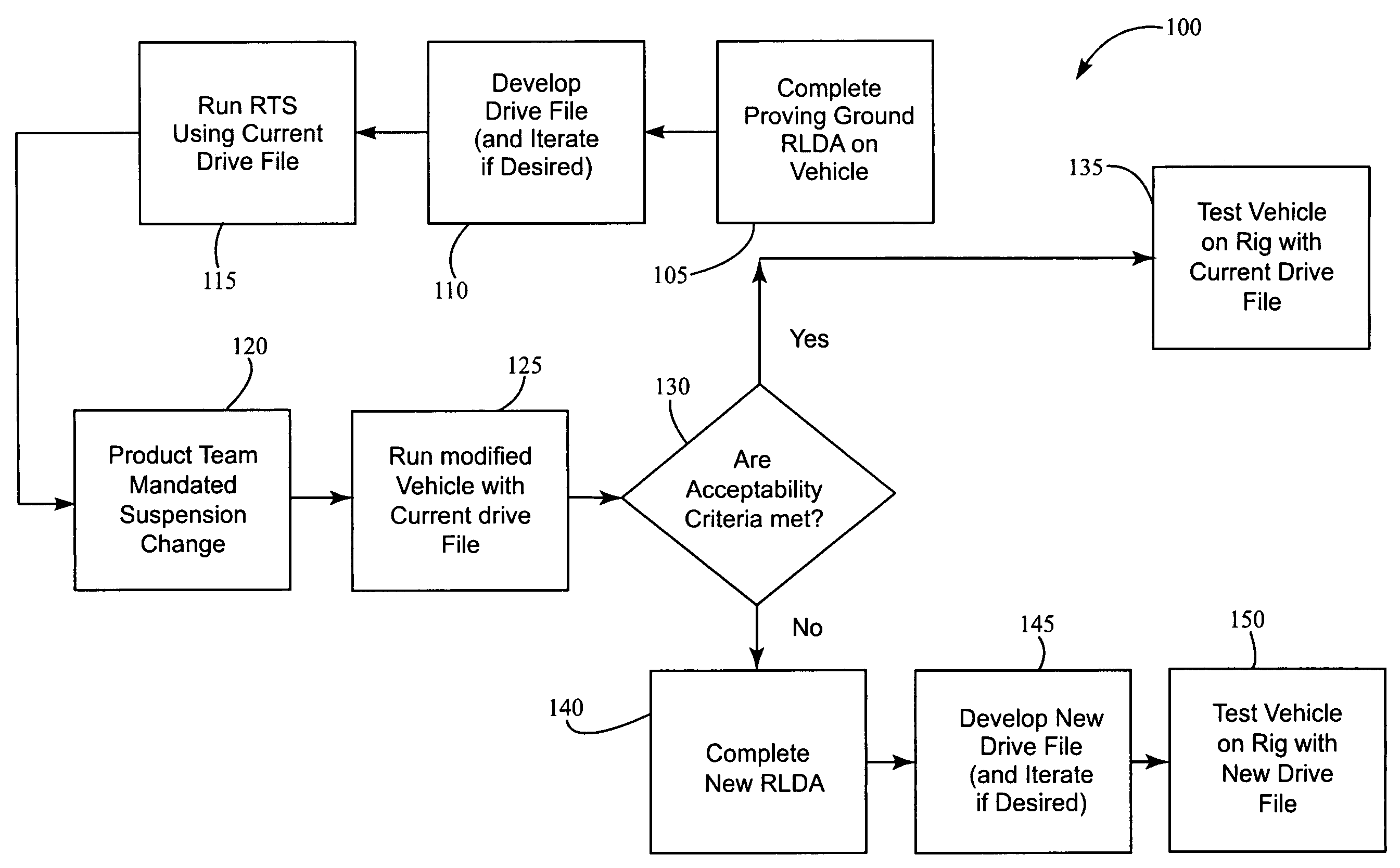
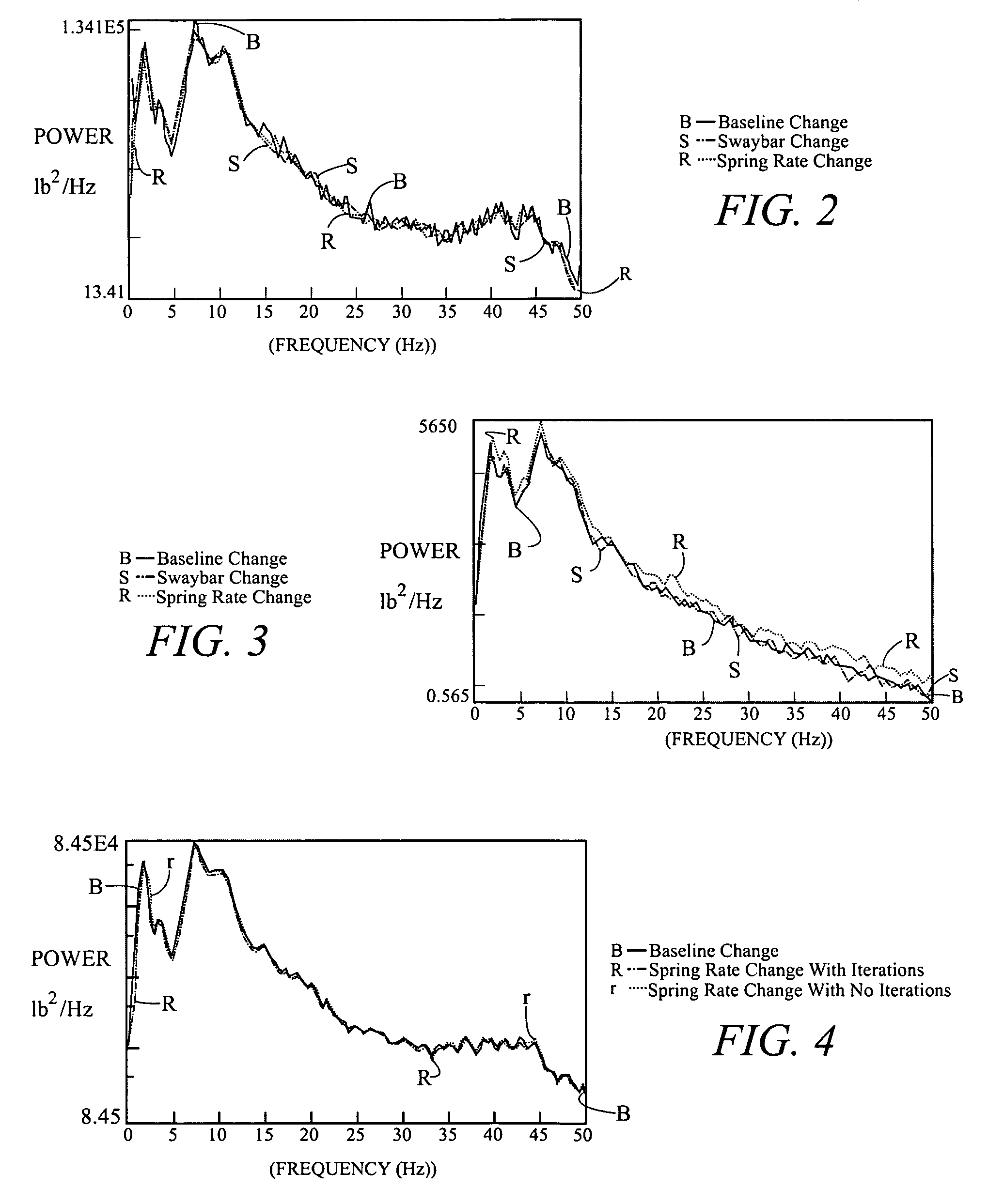
- An initial actual road test is conducted, and data is used to generate a drive file for subsequent simulated road testing. Acceptability criteria are applied to determine if further actual road testing is needed before additional simulated testing, allowing for reliable suspension parameter changes to be tested in a laboratory without repeated proving ground data acquisition.

Safety Standards for Virtual Automotive Testing
Virtual automotive testing environments require comprehensive safety standards to ensure reliable validation of front suspension modifications while maintaining the integrity of simulation results. The establishment of robust safety protocols becomes critical when transitioning from physical testing to digital validation methodologies, as the consequences of inadequate standards can propagate through the entire product development cycle.
Current safety standards for virtual automotive testing are primarily governed by ISO 26262 functional safety requirements, which mandate systematic verification and validation processes for automotive systems. These standards emphasize the need for simulation model validation against real-world data, requiring correlation coefficients above 0.95 for critical safety parameters. Additionally, ASME V&V 40 provides guidelines specifically for computational fluid dynamics and structural analysis validation in automotive applications.
The regulatory framework encompasses multiple layers of safety verification, including model fidelity assessment, numerical accuracy validation, and boundary condition verification. Safety standards mandate that suspension modification simulations must demonstrate convergence within specified tolerance limits, typically requiring mesh independence studies and temporal discretization validation. Furthermore, uncertainty quantification protocols must be implemented to assess the confidence intervals of simulation predictions.
Emerging safety standards specifically address the validation of modified suspension components through virtual testing protocols. These include requirements for multi-physics simulation validation, where interactions between suspension dynamics, vehicle stability, and occupant safety must be simultaneously verified. The standards also mandate the implementation of digital twins that maintain real-time correlation with physical test data throughout the validation process.
Quality assurance protocols within safety standards require comprehensive documentation of simulation methodologies, including solver settings, material property definitions, and loading condition specifications. Traceability requirements ensure that all simulation parameters can be audited and reproduced, while version control standards maintain consistency across different validation phases. These protocols also mandate regular calibration of simulation tools against standardized benchmark cases to ensure continued accuracy and reliability in suspension modification validation processes.
Current safety standards for virtual automotive testing are primarily governed by ISO 26262 functional safety requirements, which mandate systematic verification and validation processes for automotive systems. These standards emphasize the need for simulation model validation against real-world data, requiring correlation coefficients above 0.95 for critical safety parameters. Additionally, ASME V&V 40 provides guidelines specifically for computational fluid dynamics and structural analysis validation in automotive applications.
The regulatory framework encompasses multiple layers of safety verification, including model fidelity assessment, numerical accuracy validation, and boundary condition verification. Safety standards mandate that suspension modification simulations must demonstrate convergence within specified tolerance limits, typically requiring mesh independence studies and temporal discretization validation. Furthermore, uncertainty quantification protocols must be implemented to assess the confidence intervals of simulation predictions.
Emerging safety standards specifically address the validation of modified suspension components through virtual testing protocols. These include requirements for multi-physics simulation validation, where interactions between suspension dynamics, vehicle stability, and occupant safety must be simultaneously verified. The standards also mandate the implementation of digital twins that maintain real-time correlation with physical test data throughout the validation process.
Quality assurance protocols within safety standards require comprehensive documentation of simulation methodologies, including solver settings, material property definitions, and loading condition specifications. Traceability requirements ensure that all simulation parameters can be audited and reproduced, while version control standards maintain consistency across different validation phases. These protocols also mandate regular calibration of simulation tools against standardized benchmark cases to ensure continued accuracy and reliability in suspension modification validation processes.
Cost-Benefit Analysis of Simulation vs Physical Testing
The economic evaluation of simulation versus physical testing for front suspension validation reveals significant cost disparities across multiple dimensions. Initial capital investment for advanced simulation platforms, including high-fidelity multibody dynamics software, finite element analysis tools, and computational hardware, typically ranges from $200,000 to $500,000 for comprehensive setups. Conversely, establishing physical testing facilities requires substantially higher upfront costs, often exceeding $2-5 million for complete suspension test rigs, environmental chambers, and instrumentation systems.
Operational cost analysis demonstrates simulation's compelling advantage in iterative testing scenarios. Virtual validation enables unlimited test iterations at marginal computational costs, typically $50-200 per simulation run depending on complexity. Physical testing incurs substantial recurring expenses including prototype fabrication ($5,000-15,000 per iteration), facility utilization ($1,000-3,000 daily), and component replacement costs following destructive testing phases.
Time-to-market considerations further amplify simulation benefits. Virtual testing cycles complete within hours or days, enabling rapid design optimization and parametric studies. Physical testing requires weeks for prototype preparation, setup, and execution, creating bottlenecks in development timelines. This temporal advantage translates to significant competitive positioning benefits worth millions in market capture potential.
However, physical testing provides irreplaceable validation confidence for safety-critical applications. Regulatory compliance often mandates physical verification, particularly for automotive homologation processes. The cost of potential field failures due to inadequate validation can reach tens of millions in recalls and liability exposure.
Risk mitigation strategies increasingly favor hybrid approaches combining simulation screening with targeted physical validation. This methodology reduces physical testing volume by 60-80% while maintaining validation integrity. The optimal cost-benefit ratio typically emerges when simulation handles initial design space exploration and optimization, while physical testing validates final configurations and edge cases.
Return on investment analysis indicates simulation platforms achieve payback within 12-18 months for organizations conducting frequent suspension modifications. The cumulative savings over five-year periods often exceed 300-500% of initial simulation investment, primarily through reduced prototype costs and accelerated development cycles.
Operational cost analysis demonstrates simulation's compelling advantage in iterative testing scenarios. Virtual validation enables unlimited test iterations at marginal computational costs, typically $50-200 per simulation run depending on complexity. Physical testing incurs substantial recurring expenses including prototype fabrication ($5,000-15,000 per iteration), facility utilization ($1,000-3,000 daily), and component replacement costs following destructive testing phases.
Time-to-market considerations further amplify simulation benefits. Virtual testing cycles complete within hours or days, enabling rapid design optimization and parametric studies. Physical testing requires weeks for prototype preparation, setup, and execution, creating bottlenecks in development timelines. This temporal advantage translates to significant competitive positioning benefits worth millions in market capture potential.
However, physical testing provides irreplaceable validation confidence for safety-critical applications. Regulatory compliance often mandates physical verification, particularly for automotive homologation processes. The cost of potential field failures due to inadequate validation can reach tens of millions in recalls and liability exposure.
Risk mitigation strategies increasingly favor hybrid approaches combining simulation screening with targeted physical validation. This methodology reduces physical testing volume by 60-80% while maintaining validation integrity. The optimal cost-benefit ratio typically emerges when simulation handles initial design space exploration and optimization, while physical testing validates final configurations and edge cases.
Return on investment analysis indicates simulation platforms achieve payback within 12-18 months for organizations conducting frequent suspension modifications. The cumulative savings over five-year periods often exceed 300-500% of initial simulation investment, primarily through reduced prototype costs and accelerated development cycles.
Unlock deeper insights with Patsnap Eureka Quick Research — get a full tech report to explore trends and direct your research. Try now!
Generate Your Research Report Instantly with AI Agent
Supercharge your innovation with Patsnap Eureka AI Agent Platform!