
How to Validate Logic Chip Thermal Performance Under Load
APR 2, 20269 MIN READ
Generate Your Research Report Instantly with AI Agent
Patsnap Eureka helps you evaluate technical feasibility & market potential.
Logic Chip Thermal Validation Background and Objectives
Logic chip thermal validation has emerged as a critical discipline in semiconductor engineering, driven by the relentless pursuit of higher performance and increased transistor density. As Moore's Law continues to push the boundaries of chip miniaturization, thermal management has evolved from a secondary consideration to a primary design constraint that directly impacts product reliability, performance, and market viability.
The historical evolution of thermal validation methodologies reflects the semiconductor industry's response to escalating power densities. Early microprocessors operated at relatively low frequencies with modest power consumption, making thermal considerations manageable through basic heat sink solutions. However, the transition to multi-core architectures, advanced process nodes, and specialized computing units has fundamentally transformed the thermal landscape, necessitating sophisticated validation approaches.
Contemporary logic chips face unprecedented thermal challenges, with power densities approaching those found in nuclear reactors. Modern processors can generate localized hotspots exceeding 100°C while maintaining junction temperatures within acceptable limits. This thermal complexity demands comprehensive validation strategies that account for dynamic workload variations, package-level thermal interactions, and system-level cooling solutions.
The primary objective of logic chip thermal validation encompasses multiple dimensions of performance verification. Functional validation ensures that chips maintain computational accuracy across the entire operating temperature range, preventing thermal-induced logic errors that could compromise system integrity. Performance validation focuses on characterizing frequency scaling behavior under thermal constraints, enabling accurate prediction of sustained performance levels during real-world applications.
Reliability validation represents another crucial objective, involving accelerated aging studies and thermal cycling tests to predict long-term device behavior. These assessments help establish safe operating boundaries and inform warranty policies, directly impacting product commercialization strategies. Additionally, power efficiency validation under thermal stress provides essential data for optimizing dynamic voltage and frequency scaling algorithms.
The validation process must also address package-level thermal interactions, including thermal interface material performance, heat spreader effectiveness, and thermal coupling between adjacent components. System-level objectives encompass cooling solution validation, acoustic performance under thermal stress, and thermal management algorithm verification.
Modern validation objectives increasingly emphasize real-world workload representation, moving beyond synthetic stress tests to application-specific thermal characterization. This shift reflects the recognition that thermal behavior varies significantly across different computational tasks, requiring nuanced validation approaches that capture the full spectrum of operational scenarios.
The historical evolution of thermal validation methodologies reflects the semiconductor industry's response to escalating power densities. Early microprocessors operated at relatively low frequencies with modest power consumption, making thermal considerations manageable through basic heat sink solutions. However, the transition to multi-core architectures, advanced process nodes, and specialized computing units has fundamentally transformed the thermal landscape, necessitating sophisticated validation approaches.
Contemporary logic chips face unprecedented thermal challenges, with power densities approaching those found in nuclear reactors. Modern processors can generate localized hotspots exceeding 100°C while maintaining junction temperatures within acceptable limits. This thermal complexity demands comprehensive validation strategies that account for dynamic workload variations, package-level thermal interactions, and system-level cooling solutions.
The primary objective of logic chip thermal validation encompasses multiple dimensions of performance verification. Functional validation ensures that chips maintain computational accuracy across the entire operating temperature range, preventing thermal-induced logic errors that could compromise system integrity. Performance validation focuses on characterizing frequency scaling behavior under thermal constraints, enabling accurate prediction of sustained performance levels during real-world applications.
Reliability validation represents another crucial objective, involving accelerated aging studies and thermal cycling tests to predict long-term device behavior. These assessments help establish safe operating boundaries and inform warranty policies, directly impacting product commercialization strategies. Additionally, power efficiency validation under thermal stress provides essential data for optimizing dynamic voltage and frequency scaling algorithms.
The validation process must also address package-level thermal interactions, including thermal interface material performance, heat spreader effectiveness, and thermal coupling between adjacent components. System-level objectives encompass cooling solution validation, acoustic performance under thermal stress, and thermal management algorithm verification.
Modern validation objectives increasingly emphasize real-world workload representation, moving beyond synthetic stress tests to application-specific thermal characterization. This shift reflects the recognition that thermal behavior varies significantly across different computational tasks, requiring nuanced validation approaches that capture the full spectrum of operational scenarios.
Market Demand for Reliable Chip Thermal Performance
The semiconductor industry faces unprecedented demand for reliable chip thermal performance validation as computing workloads become increasingly intensive and power-hungry. Modern processors, graphics cards, and specialized computing chips generate substantial heat under operational loads, making thermal management a critical factor in system reliability, performance sustainability, and component longevity. Market pressures from data centers, automotive electronics, mobile devices, and high-performance computing applications drive the urgent need for comprehensive thermal validation methodologies.
Data center operators represent a primary market segment demanding robust thermal performance validation. Cloud computing providers and enterprise data centers require assurance that logic chips can maintain specified performance levels under sustained high-utilization scenarios without thermal throttling or premature failure. The exponential growth in artificial intelligence workloads, cryptocurrency mining, and edge computing applications has intensified thermal challenges, creating substantial market demand for validated thermal performance metrics.
Automotive electronics markets increasingly require stringent thermal validation as vehicles integrate more sophisticated computing systems. Advanced driver assistance systems, autonomous driving processors, and electric vehicle power management units must operate reliably across extreme temperature ranges while maintaining consistent performance under varying load conditions. Regulatory requirements and safety standards in automotive applications amplify the market need for proven thermal validation methodologies.
Consumer electronics manufacturers face growing market pressure to deliver high-performance devices in compact form factors. Smartphones, tablets, gaming consoles, and laptops must balance processing power with thermal constraints, making reliable thermal performance validation essential for product differentiation and customer satisfaction. Thermal throttling issues directly impact user experience and brand reputation, driving market demand for comprehensive validation approaches.
The emergence of specialized computing applications, including machine learning accelerators, cryptocurrency mining hardware, and high-frequency trading systems, creates niche markets with extreme thermal validation requirements. These applications often operate chips at maximum capacity for extended periods, making thermal performance validation critical for operational viability and return on investment.
Market demand extends beyond traditional performance metrics to encompass energy efficiency, environmental sustainability, and total cost of ownership considerations. Organizations increasingly recognize that proper thermal validation reduces cooling infrastructure requirements, extends component lifecycles, and improves overall system efficiency, creating economic incentives for comprehensive thermal performance validation methodologies.
Data center operators represent a primary market segment demanding robust thermal performance validation. Cloud computing providers and enterprise data centers require assurance that logic chips can maintain specified performance levels under sustained high-utilization scenarios without thermal throttling or premature failure. The exponential growth in artificial intelligence workloads, cryptocurrency mining, and edge computing applications has intensified thermal challenges, creating substantial market demand for validated thermal performance metrics.
Automotive electronics markets increasingly require stringent thermal validation as vehicles integrate more sophisticated computing systems. Advanced driver assistance systems, autonomous driving processors, and electric vehicle power management units must operate reliably across extreme temperature ranges while maintaining consistent performance under varying load conditions. Regulatory requirements and safety standards in automotive applications amplify the market need for proven thermal validation methodologies.
Consumer electronics manufacturers face growing market pressure to deliver high-performance devices in compact form factors. Smartphones, tablets, gaming consoles, and laptops must balance processing power with thermal constraints, making reliable thermal performance validation essential for product differentiation and customer satisfaction. Thermal throttling issues directly impact user experience and brand reputation, driving market demand for comprehensive validation approaches.
The emergence of specialized computing applications, including machine learning accelerators, cryptocurrency mining hardware, and high-frequency trading systems, creates niche markets with extreme thermal validation requirements. These applications often operate chips at maximum capacity for extended periods, making thermal performance validation critical for operational viability and return on investment.
Market demand extends beyond traditional performance metrics to encompass energy efficiency, environmental sustainability, and total cost of ownership considerations. Organizations increasingly recognize that proper thermal validation reduces cooling infrastructure requirements, extends component lifecycles, and improves overall system efficiency, creating economic incentives for comprehensive thermal performance validation methodologies.
Current Thermal Testing Challenges and Limitations
Traditional thermal testing methodologies for logic chips face significant limitations when attempting to accurately validate performance under realistic operational conditions. Conventional steady-state thermal testing often fails to capture the dynamic nature of modern processor workloads, where thermal hotspots can emerge and dissipate within microseconds. This temporal mismatch between testing protocols and actual usage patterns creates substantial gaps in thermal validation accuracy.
Spatial resolution represents another critical challenge in current thermal testing approaches. While infrared thermal imaging provides valuable surface temperature data, it cannot effectively measure junction temperatures at the transistor level where thermal stress is most critical. The inability to precisely monitor localized heating in high-density logic areas leads to incomplete thermal characterization and potential reliability risks in production environments.
Power delivery network interactions complicate thermal validation efforts significantly. Modern logic chips exhibit complex interdependencies between power consumption patterns, thermal generation, and performance scaling. Current testing methodologies struggle to simultaneously account for these multifaceted relationships, often resulting in thermal models that inadequately represent real-world operating scenarios.
Workload representativeness poses substantial challenges for thermal validation accuracy. Laboratory thermal testing typically employs synthetic stress patterns that may not accurately reflect the diverse computational loads encountered in actual applications. This disconnect between test conditions and operational reality can lead to thermal validation results that fail to predict performance degradation or reliability issues under specific workload combinations.
Measurement instrumentation limitations further constrain thermal testing effectiveness. Existing thermal sensors often lack the bandwidth necessary to capture rapid thermal transients, while their physical placement can introduce measurement artifacts. Additionally, the thermal mass of sensing equipment can alter the thermal behavior of the system under test, compromising measurement accuracy.
Package-level thermal modeling presents additional complexity challenges. The interaction between die-level thermal generation, package thermal resistance, and system-level cooling solutions creates a multiscale thermal problem that current testing approaches struggle to address comprehensively. This limitation becomes particularly problematic for advanced packaging technologies where thermal coupling between multiple dies requires sophisticated validation approaches.
Spatial resolution represents another critical challenge in current thermal testing approaches. While infrared thermal imaging provides valuable surface temperature data, it cannot effectively measure junction temperatures at the transistor level where thermal stress is most critical. The inability to precisely monitor localized heating in high-density logic areas leads to incomplete thermal characterization and potential reliability risks in production environments.
Power delivery network interactions complicate thermal validation efforts significantly. Modern logic chips exhibit complex interdependencies between power consumption patterns, thermal generation, and performance scaling. Current testing methodologies struggle to simultaneously account for these multifaceted relationships, often resulting in thermal models that inadequately represent real-world operating scenarios.
Workload representativeness poses substantial challenges for thermal validation accuracy. Laboratory thermal testing typically employs synthetic stress patterns that may not accurately reflect the diverse computational loads encountered in actual applications. This disconnect between test conditions and operational reality can lead to thermal validation results that fail to predict performance degradation or reliability issues under specific workload combinations.
Measurement instrumentation limitations further constrain thermal testing effectiveness. Existing thermal sensors often lack the bandwidth necessary to capture rapid thermal transients, while their physical placement can introduce measurement artifacts. Additionally, the thermal mass of sensing equipment can alter the thermal behavior of the system under test, compromising measurement accuracy.
Package-level thermal modeling presents additional complexity challenges. The interaction between die-level thermal generation, package thermal resistance, and system-level cooling solutions creates a multiscale thermal problem that current testing approaches struggle to address comprehensively. This limitation becomes particularly problematic for advanced packaging technologies where thermal coupling between multiple dies requires sophisticated validation approaches.
Existing Thermal Performance Validation Solutions
01 Heat dissipation structures and thermal interface materials
Logic chips can incorporate specialized heat dissipation structures such as heat sinks, thermal vias, and heat spreaders to improve thermal performance. Thermal interface materials with high thermal conductivity are used between the chip and cooling components to enhance heat transfer efficiency. These structures help distribute and remove heat generated during chip operation, preventing thermal hotspots and maintaining optimal operating temperatures.- Heat dissipation structures and thermal interface materials: Logic chips can incorporate specialized heat dissipation structures such as heat sinks, thermal vias, and heat spreaders to improve thermal performance. Thermal interface materials with high thermal conductivity are used between the chip and cooling components to enhance heat transfer efficiency. These structures and materials help to reduce junction temperatures and prevent thermal throttling during operation.
- Package-level thermal management solutions: Advanced packaging technologies can significantly improve the thermal performance of logic chips. These solutions include flip-chip packaging, through-silicon vias, and integrated heat spreaders within the package structure. Package designs that optimize thermal pathways and reduce thermal resistance between the die and external cooling systems are essential for high-performance logic chips.
- Active cooling and liquid cooling systems: Active cooling mechanisms such as microchannel coolers and liquid cooling systems can be integrated with logic chips to enhance thermal performance. These systems use forced convection or liquid coolants to remove heat more efficiently than passive cooling methods. Advanced designs include embedded microfluidic channels and direct liquid cooling interfaces that provide superior heat removal capabilities for high-power logic chips.
- Thermal monitoring and dynamic thermal management: Logic chips can incorporate on-chip thermal sensors and dynamic thermal management circuits to monitor and control temperature in real-time. These systems can adjust operating frequencies, voltages, or power distribution based on thermal conditions to prevent overheating. Predictive thermal management algorithms and adaptive cooling control mechanisms help maintain optimal thermal performance while maximizing computational efficiency.
- Material selection and chip architecture optimization: The thermal performance of logic chips can be improved through careful selection of substrate materials, interconnect materials, and die attach materials with enhanced thermal properties. Chip architecture optimization including floorplanning, power distribution network design, and strategic placement of high-power functional blocks can minimize hotspot formation. Low-thermal-resistance materials and thermally-aware design methodologies contribute to better overall thermal performance.
02 Advanced packaging technologies for thermal management
Modern packaging technologies such as flip-chip, through-silicon vias, and three-dimensional stacking configurations are employed to optimize thermal performance of logic chips. These packaging approaches reduce thermal resistance paths and improve heat dissipation by minimizing the distance between heat sources and cooling solutions. Advanced substrate materials and multi-layer packaging designs further enhance thermal conductivity and heat spreading capabilities.Expand Specific Solutions03 Thermal monitoring and dynamic power management
Logic chips integrate thermal sensors and monitoring circuits to track temperature distribution across the die in real-time. Dynamic power management techniques adjust operating frequency, voltage, and power states based on thermal conditions to prevent overheating. These adaptive thermal management systems enable the chip to maintain performance while staying within safe temperature limits through intelligent workload distribution and thermal throttling mechanisms.Expand Specific Solutions04 Chip layout optimization for thermal performance
Strategic placement of functional blocks, power distribution networks, and thermal-aware floorplanning techniques are used to optimize heat generation and distribution across the logic chip. Design methodologies consider thermal gradients during the layout phase to separate high-power components and create efficient heat flow paths. This approach minimizes localized heating and improves overall thermal uniformity across the chip surface.Expand Specific Solutions05 Cooling system integration and liquid cooling solutions
Advanced cooling systems including microchannel liquid cooling, vapor chambers, and integrated cooling plates are designed to work directly with logic chips for enhanced thermal performance. These solutions provide superior heat removal capacity compared to traditional air cooling methods. The integration of cooling channels within or adjacent to the chip package enables efficient heat extraction from high-power density areas, supporting higher performance levels and improved reliability.Expand Specific Solutions
Key Players in Semiconductor Thermal Testing Industry
The logic chip thermal validation market represents a mature yet rapidly evolving sector driven by increasing chip complexity and power densities. The industry has reached a critical growth phase where traditional thermal management approaches are insufficient for next-generation processors. Market expansion is fueled by AI, 5G, and high-performance computing demands, creating substantial opportunities for specialized thermal testing solutions. Technology maturity varies significantly across players, with established leaders like Intel, Qualcomm, and IBM driving advanced thermal validation methodologies through extensive R&D investments. Semiconductor manufacturers including SMIC-Beijing, GlobalFoundries, and SK Hynix are advancing packaging-level thermal solutions, while test equipment specialists like Advantest and Tokyo Electron provide sophisticated validation infrastructure. Academic institutions such as Northwestern University and University of Electronic Science & Technology of China contribute fundamental research in thermal modeling and characterization techniques, supporting industry-wide technological advancement and standardization efforts.
International Business Machines Corp.
Technical Solution: IBM implements enterprise-grade thermal validation for high-performance computing and server processors. Their approach combines computational fluid dynamics modeling with extensive thermal characterization using infrared thermography and embedded temperature sensors. IBM's validation methodology includes data center environmental simulation, rack-level thermal analysis, and workload-specific thermal profiling. They utilize advanced cooling solutions validation including liquid cooling systems and optimize thermal interface materials for sustained high-performance computing workloads. Their validation covers both steady-state and transient thermal behavior under enterprise computing scenarios.
Strengths: Enterprise computing expertise, advanced cooling solutions, comprehensive data center thermal modeling. Weaknesses: Focus primarily on server applications, high infrastructure requirements.
Intel Corp.
Technical Solution: Intel employs comprehensive thermal validation methodologies combining advanced thermal simulation tools with real-world testing protocols. Their approach includes junction temperature monitoring using embedded thermal sensors, power virus testing to create maximum thermal stress conditions, and thermal interface material optimization. Intel utilizes sophisticated thermal modeling software that correlates with physical measurements from thermal test vehicles. They implement multi-phase validation including pre-silicon thermal simulation, post-silicon characterization, and system-level thermal validation under various workload scenarios including AVX-512 instructions that generate peak thermal loads.
Strengths: Industry-leading thermal design expertise, comprehensive validation infrastructure, extensive real-world data. Weaknesses: High validation costs, complex methodology requiring specialized equipment.
Core Innovations in Load-Based Thermal Testing
Automated method and apparatus for processor thermal validation
PatentInactiveUS7275012B2
Innovation
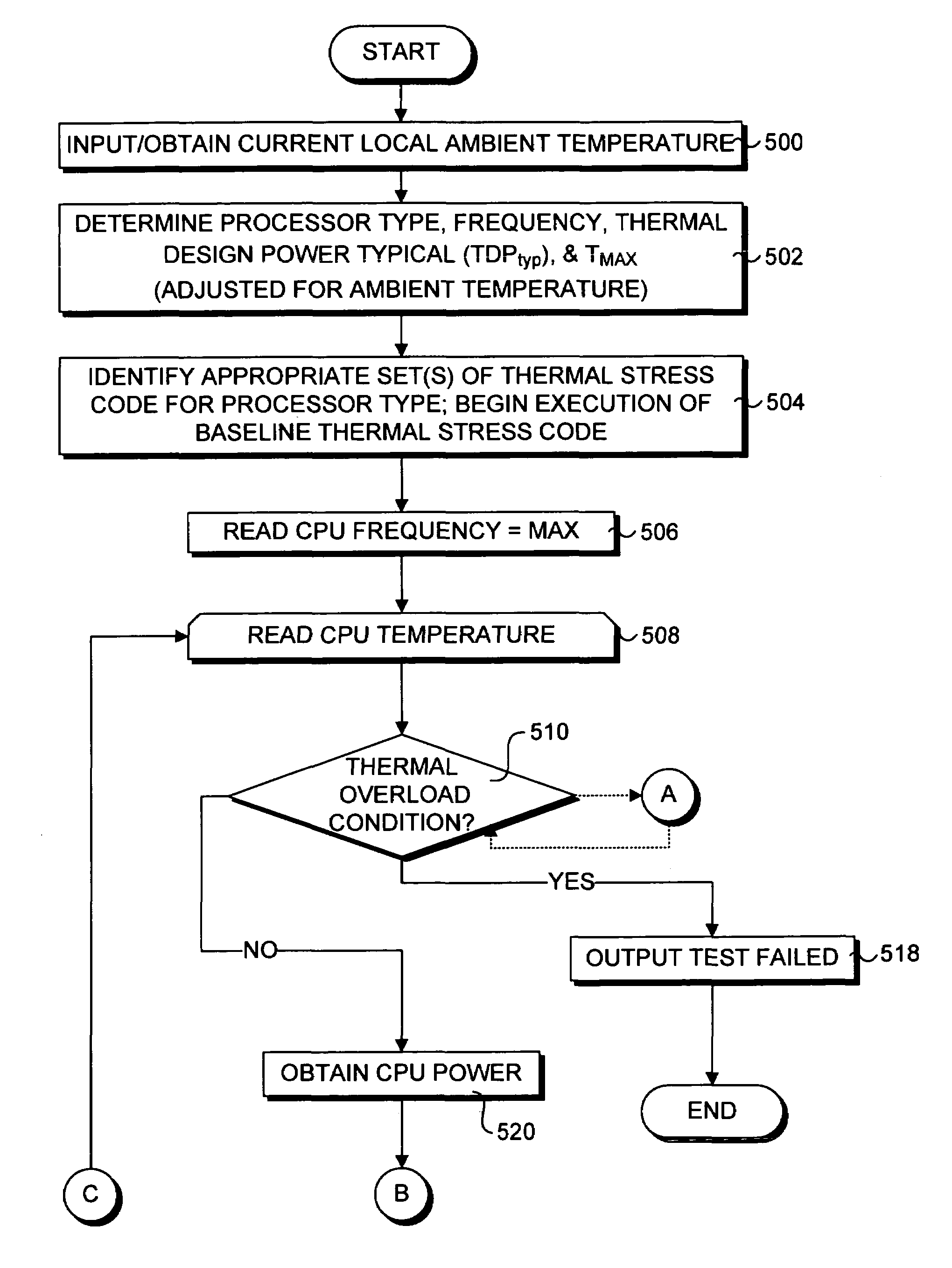
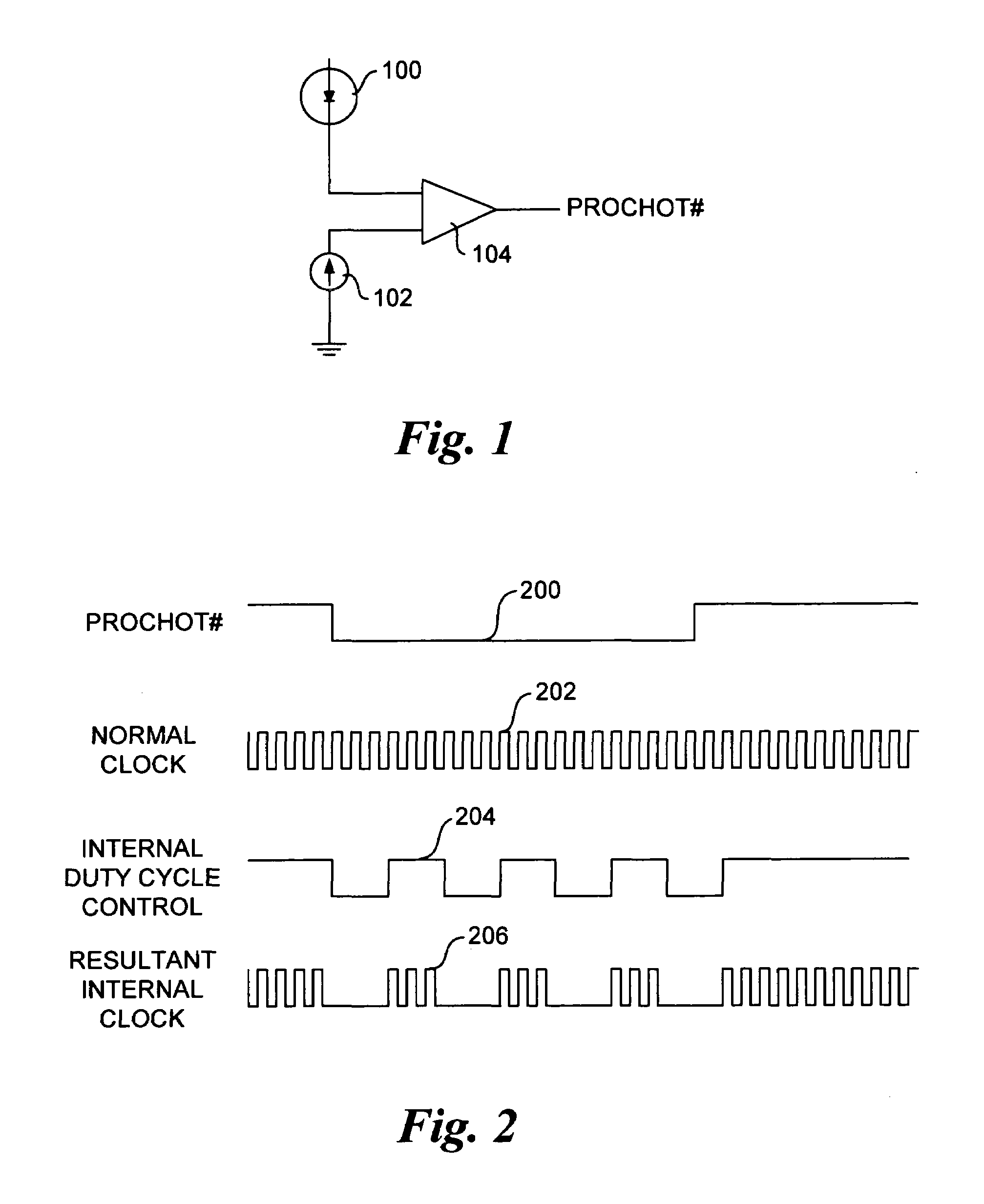
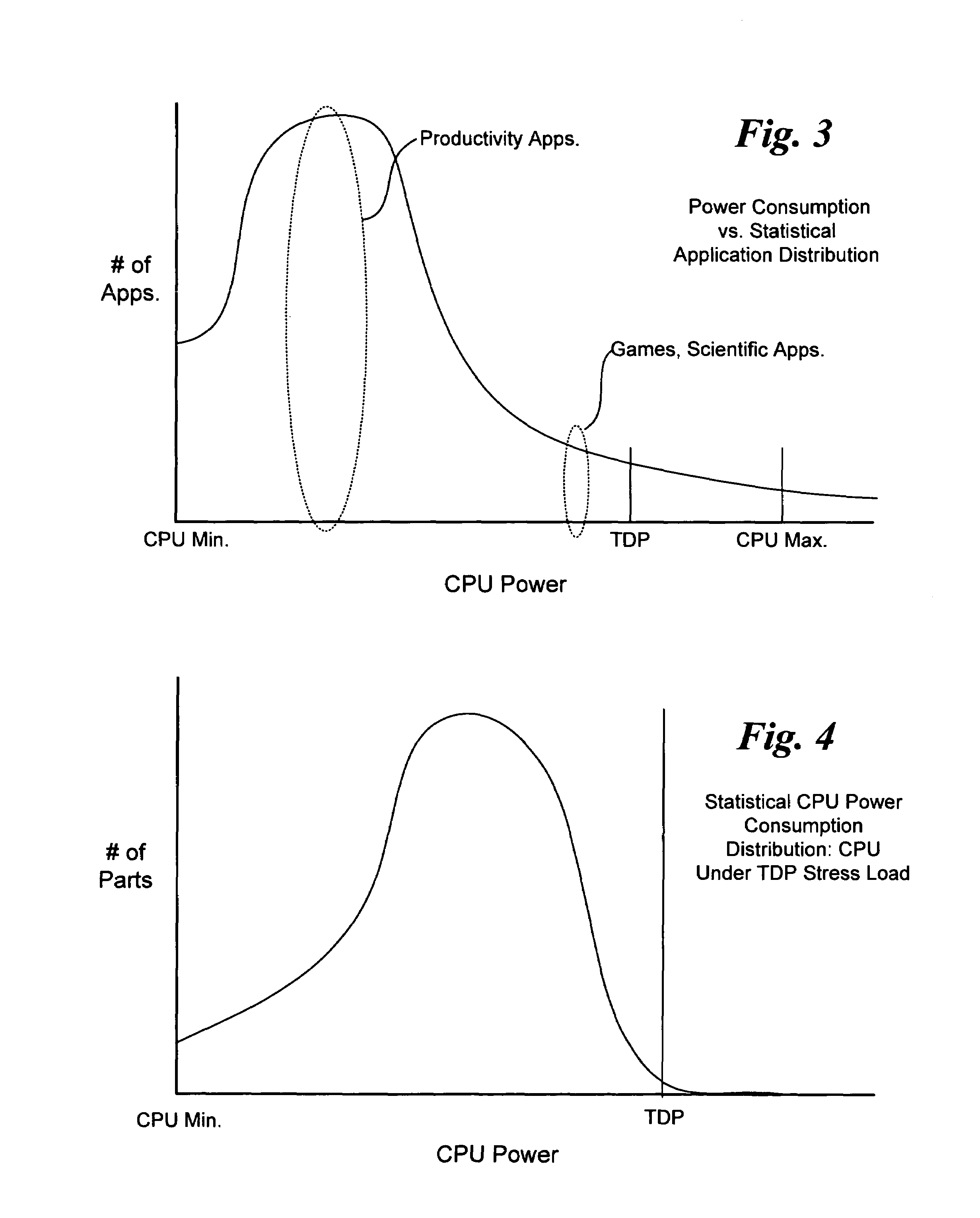
- The implementation of a software-based thermal validation method using built-in thermal management features, such as the Thermal Monitor in processors like Intel Pentium 4, which includes on-die temperature sensing and a thermal control circuit, allowing for processor-independent TDP thermal stress testing without extraneous probes, and adjusting the thermal stress load through software-executed thermal stress code to validate the thermal solution.

Systems and arrangements to assess thermal performance
PatentInactiveUS7734444B2
Innovation
- A system and method to assess thermal performance by determining a maximum junction temperature based on project objectives and calculating an operating junction temperature under specific conditions, comparing it to the maximum temperature to pass or fail components, which accounts for differences between testing and customer installation conditions.


Industry Standards for Semiconductor Thermal Testing
The semiconductor industry relies on a comprehensive framework of standardized testing protocols to ensure thermal performance validation across different chip architectures and operating conditions. These standards provide essential guidelines for measuring, analyzing, and reporting thermal characteristics of logic chips under various load scenarios.
JEDEC Solid State Technology Association serves as the primary standards body, establishing critical thermal testing methodologies through specifications such as JESD51 series. These standards define junction-to-ambient thermal resistance measurements, transient thermal testing procedures, and thermal characterization parameters that form the foundation for industry-wide thermal validation practices.
The JESD51-1 standard specifically addresses integrated circuit thermal measurement methods, establishing procedures for determining junction-to-case and junction-to-ambient thermal resistance values. This standard provides detailed guidance on test fixture design, measurement equipment calibration, and environmental control requirements necessary for accurate thermal characterization under load conditions.
Military and aerospace applications follow MIL-STD-883 specifications, which outline rigorous thermal testing requirements for semiconductor devices operating in extreme environments. These standards mandate extended temperature cycling, thermal shock testing, and steady-state thermal resistance measurements that exceed commercial-grade requirements.
International Electrotechnical Commission standards, particularly IEC 60749 series, complement JEDEC specifications by providing additional thermal stress testing methodologies. These standards address thermal cycling procedures, temperature humidity bias testing, and accelerated aging protocols that validate long-term thermal reliability under operational loads.
ASTM International contributes specialized thermal testing standards focusing on material properties and thermal interface characterization. ASTM D5470 standard specifically addresses thermal transmission properties of thin thermally conductive solid electrical insulation materials, which directly impacts chip-level thermal management solutions.
Industry consortiums such as the Semiconductor Industry Association have developed supplementary guidelines that address emerging thermal challenges in advanced node technologies. These collaborative standards address three-dimensional thermal modeling requirements, multi-core processor thermal validation, and system-level thermal interaction protocols that traditional component-level standards cannot adequately cover.
JEDEC Solid State Technology Association serves as the primary standards body, establishing critical thermal testing methodologies through specifications such as JESD51 series. These standards define junction-to-ambient thermal resistance measurements, transient thermal testing procedures, and thermal characterization parameters that form the foundation for industry-wide thermal validation practices.
The JESD51-1 standard specifically addresses integrated circuit thermal measurement methods, establishing procedures for determining junction-to-case and junction-to-ambient thermal resistance values. This standard provides detailed guidance on test fixture design, measurement equipment calibration, and environmental control requirements necessary for accurate thermal characterization under load conditions.
Military and aerospace applications follow MIL-STD-883 specifications, which outline rigorous thermal testing requirements for semiconductor devices operating in extreme environments. These standards mandate extended temperature cycling, thermal shock testing, and steady-state thermal resistance measurements that exceed commercial-grade requirements.
International Electrotechnical Commission standards, particularly IEC 60749 series, complement JEDEC specifications by providing additional thermal stress testing methodologies. These standards address thermal cycling procedures, temperature humidity bias testing, and accelerated aging protocols that validate long-term thermal reliability under operational loads.
ASTM International contributes specialized thermal testing standards focusing on material properties and thermal interface characterization. ASTM D5470 standard specifically addresses thermal transmission properties of thin thermally conductive solid electrical insulation materials, which directly impacts chip-level thermal management solutions.
Industry consortiums such as the Semiconductor Industry Association have developed supplementary guidelines that address emerging thermal challenges in advanced node technologies. These collaborative standards address three-dimensional thermal modeling requirements, multi-core processor thermal validation, and system-level thermal interaction protocols that traditional component-level standards cannot adequately cover.
Reliability and Safety Considerations in Thermal Design
Thermal reliability in logic chip design represents a critical intersection between performance optimization and long-term operational safety. As semiconductor devices continue to scale down while computational demands increase, thermal-induced failures have emerged as primary reliability concerns. Excessive temperatures can accelerate electromigration, thermal cycling stress, and junction degradation, potentially leading to catastrophic system failures in mission-critical applications.
The relationship between thermal performance and chip reliability follows well-established physics principles, where failure rates typically double for every 10°C temperature increase according to Arrhenius law. This exponential relationship necessitates stringent thermal validation protocols that account for worst-case operating scenarios, including sustained high-load conditions, ambient temperature variations, and thermal cycling effects over extended operational periods.
Safety considerations in thermal design extend beyond component-level reliability to encompass system-wide protection mechanisms. Modern logic chips incorporate multiple thermal protection layers, including on-die temperature sensors, dynamic thermal management circuits, and emergency shutdown protocols. These safety systems must be thoroughly validated under various load conditions to ensure proper activation thresholds and response times, preventing thermal runaway scenarios that could damage surrounding components or create safety hazards.
Reliability testing protocols for thermal validation typically involve accelerated aging tests, thermal cycling experiments, and extended burn-in procedures under maximum specified loads. These tests must simulate real-world operating conditions while compressing timeframes to identify potential failure modes within practical development cycles. Statistical analysis of thermal test data enables prediction of mean time between failures and establishment of safe operating boundaries.
The integration of predictive thermal modeling with empirical validation data creates comprehensive reliability frameworks that guide design decisions and operational parameters. This approach ensures that thermal performance validation encompasses not only immediate functionality verification but also long-term reliability assurance and safety compliance across diverse operating environments and application scenarios.
The relationship between thermal performance and chip reliability follows well-established physics principles, where failure rates typically double for every 10°C temperature increase according to Arrhenius law. This exponential relationship necessitates stringent thermal validation protocols that account for worst-case operating scenarios, including sustained high-load conditions, ambient temperature variations, and thermal cycling effects over extended operational periods.
Safety considerations in thermal design extend beyond component-level reliability to encompass system-wide protection mechanisms. Modern logic chips incorporate multiple thermal protection layers, including on-die temperature sensors, dynamic thermal management circuits, and emergency shutdown protocols. These safety systems must be thoroughly validated under various load conditions to ensure proper activation thresholds and response times, preventing thermal runaway scenarios that could damage surrounding components or create safety hazards.
Reliability testing protocols for thermal validation typically involve accelerated aging tests, thermal cycling experiments, and extended burn-in procedures under maximum specified loads. These tests must simulate real-world operating conditions while compressing timeframes to identify potential failure modes within practical development cycles. Statistical analysis of thermal test data enables prediction of mean time between failures and establishment of safe operating boundaries.
The integration of predictive thermal modeling with empirical validation data creates comprehensive reliability frameworks that guide design decisions and operational parameters. This approach ensures that thermal performance validation encompasses not only immediate functionality verification but also long-term reliability assurance and safety compliance across diverse operating environments and application scenarios.
Unlock deeper insights with Patsnap Eureka Quick Research — get a full tech report to explore trends and direct your research. Try now!
Generate Your Research Report Instantly with AI Agent
Supercharge your innovation with Patsnap Eureka AI Agent Platform!