
Logic Chips in Virtual Reality Technology: Performance Optimization
APR 2, 20268 MIN READ
Generate Your Research Report Instantly with AI Agent
Patsnap Eureka helps you evaluate technical feasibility & market potential.
VR Logic Chip Performance Background and Objectives
Virtual reality technology has emerged as one of the most transformative computing paradigms of the 21st century, fundamentally reshaping how humans interact with digital environments. The evolution from early head-mounted displays in the 1960s to today's sophisticated VR systems represents decades of continuous innovation in display technology, motion tracking, and computational processing. This technological journey has consistently been driven by the pursuit of creating immersive experiences that seamlessly blend digital content with human perception.
The foundation of modern VR systems relies heavily on specialized logic chips that must process enormous amounts of data in real-time while maintaining strict latency requirements. These processors handle complex computational tasks including 3D rendering, spatial tracking, sensor fusion, and display optimization simultaneously. The performance demands have intensified as VR applications expand beyond gaming into enterprise training, medical simulation, architectural visualization, and social interaction platforms.
Current VR systems face significant computational bottlenecks that directly impact user experience quality. Frame rate consistency, motion-to-photon latency, and thermal management represent critical performance metrics that determine the success of VR implementations. Traditional computing architectures often struggle to meet these demanding requirements, particularly when processing high-resolution stereoscopic displays at refresh rates exceeding 90Hz while maintaining sub-20ms latency thresholds.
The primary objective of VR logic chip performance optimization centers on achieving seamless real-time processing capabilities that eliminate motion sickness and enhance user immersion. This involves developing specialized processing architectures that can efficiently handle parallel computational workloads while minimizing power consumption and heat generation. Advanced optimization techniques must address both hardware-level improvements and software-level algorithmic enhancements.
Future VR applications demand even more sophisticated processing capabilities to support features like photorealistic rendering, advanced haptic feedback, eye tracking integration, and multi-user collaborative environments. These emerging requirements necessitate fundamental innovations in chip design, including specialized neural processing units, optimized memory hierarchies, and adaptive performance scaling mechanisms that can dynamically adjust to varying computational loads while maintaining consistent user experience quality across diverse application scenarios.
The foundation of modern VR systems relies heavily on specialized logic chips that must process enormous amounts of data in real-time while maintaining strict latency requirements. These processors handle complex computational tasks including 3D rendering, spatial tracking, sensor fusion, and display optimization simultaneously. The performance demands have intensified as VR applications expand beyond gaming into enterprise training, medical simulation, architectural visualization, and social interaction platforms.
Current VR systems face significant computational bottlenecks that directly impact user experience quality. Frame rate consistency, motion-to-photon latency, and thermal management represent critical performance metrics that determine the success of VR implementations. Traditional computing architectures often struggle to meet these demanding requirements, particularly when processing high-resolution stereoscopic displays at refresh rates exceeding 90Hz while maintaining sub-20ms latency thresholds.
The primary objective of VR logic chip performance optimization centers on achieving seamless real-time processing capabilities that eliminate motion sickness and enhance user immersion. This involves developing specialized processing architectures that can efficiently handle parallel computational workloads while minimizing power consumption and heat generation. Advanced optimization techniques must address both hardware-level improvements and software-level algorithmic enhancements.
Future VR applications demand even more sophisticated processing capabilities to support features like photorealistic rendering, advanced haptic feedback, eye tracking integration, and multi-user collaborative environments. These emerging requirements necessitate fundamental innovations in chip design, including specialized neural processing units, optimized memory hierarchies, and adaptive performance scaling mechanisms that can dynamically adjust to varying computational loads while maintaining consistent user experience quality across diverse application scenarios.
Market Demand for High-Performance VR Systems
The virtual reality market has experienced unprecedented growth driven by increasing consumer adoption and enterprise applications across multiple sectors. Gaming remains the dominant consumer segment, with VR headset sales accelerating as hardware becomes more accessible and content libraries expand. Major technology companies have invested heavily in VR ecosystems, creating substantial demand for high-performance systems capable of delivering immersive experiences without motion sickness or visual artifacts.
Enterprise applications represent a rapidly expanding market segment, particularly in training simulations, architectural visualization, and industrial design. Healthcare organizations increasingly utilize VR for surgical training, patient therapy, and medical education, requiring systems with exceptional precision and reliability. Manufacturing companies deploy VR solutions for product prototyping, assembly line training, and remote collaboration, driving demand for enterprise-grade performance standards.
The metaverse concept has amplified market expectations for VR systems capable of supporting persistent virtual worlds with multiple concurrent users. Social VR platforms require robust processing capabilities to handle complex avatar interactions, realistic physics simulations, and seamless cross-platform connectivity. This emerging use case demands significantly higher computational performance than traditional single-user VR applications.
Current market trends indicate strong preference for wireless VR systems with extended battery life and reduced latency. Consumers increasingly expect 4K per eye resolution, high refresh rates exceeding 90Hz, and wide field-of-view displays. These requirements place substantial computational demands on logic chips, necessitating advanced optimization techniques and specialized hardware architectures.
Professional VR applications in fields such as automotive design, aerospace engineering, and scientific visualization require real-time rendering of highly detailed models with photorealistic materials and lighting. These applications often involve datasets containing millions of polygons and complex shader calculations, pushing current hardware capabilities to their limits.
The education sector represents an emerging growth area, with institutions seeking VR solutions for immersive learning experiences in subjects ranging from history to molecular biology. Educational VR applications require stable performance across diverse content types while maintaining cost-effectiveness for institutional deployment.
Market research indicates that performance limitations remain the primary barrier to broader VR adoption, with users citing motion sickness, visual quality issues, and system responsiveness as key concerns. This creates substantial market opportunity for logic chip innovations that address these performance bottlenecks while maintaining reasonable power consumption and thermal characteristics.
Enterprise applications represent a rapidly expanding market segment, particularly in training simulations, architectural visualization, and industrial design. Healthcare organizations increasingly utilize VR for surgical training, patient therapy, and medical education, requiring systems with exceptional precision and reliability. Manufacturing companies deploy VR solutions for product prototyping, assembly line training, and remote collaboration, driving demand for enterprise-grade performance standards.
The metaverse concept has amplified market expectations for VR systems capable of supporting persistent virtual worlds with multiple concurrent users. Social VR platforms require robust processing capabilities to handle complex avatar interactions, realistic physics simulations, and seamless cross-platform connectivity. This emerging use case demands significantly higher computational performance than traditional single-user VR applications.
Current market trends indicate strong preference for wireless VR systems with extended battery life and reduced latency. Consumers increasingly expect 4K per eye resolution, high refresh rates exceeding 90Hz, and wide field-of-view displays. These requirements place substantial computational demands on logic chips, necessitating advanced optimization techniques and specialized hardware architectures.
Professional VR applications in fields such as automotive design, aerospace engineering, and scientific visualization require real-time rendering of highly detailed models with photorealistic materials and lighting. These applications often involve datasets containing millions of polygons and complex shader calculations, pushing current hardware capabilities to their limits.
The education sector represents an emerging growth area, with institutions seeking VR solutions for immersive learning experiences in subjects ranging from history to molecular biology. Educational VR applications require stable performance across diverse content types while maintaining cost-effectiveness for institutional deployment.
Market research indicates that performance limitations remain the primary barrier to broader VR adoption, with users citing motion sickness, visual quality issues, and system responsiveness as key concerns. This creates substantial market opportunity for logic chip innovations that address these performance bottlenecks while maintaining reasonable power consumption and thermal characteristics.
Current VR Chip Performance Bottlenecks and Challenges
Virtual reality technology faces significant performance bottlenecks primarily stemming from the computational demands of real-time rendering and the stringent latency requirements for immersive experiences. Current VR systems require sustained frame rates of 90-120 FPS to prevent motion sickness, while maintaining motion-to-photon latency below 20 milliseconds. These requirements place enormous pressure on logic chips, particularly graphics processing units and specialized VR processors.
The most critical bottleneck lies in pixel throughput and rendering pipeline efficiency. Modern VR headsets demand resolutions exceeding 2160x2160 per eye, resulting in over 9 million pixels that must be rendered, processed, and displayed simultaneously. This creates a computational load approximately 1.5 to 2 times greater than traditional 4K displays due to the dual-eye rendering requirement and additional processing for lens distortion correction.
Memory bandwidth limitations represent another fundamental challenge affecting VR chip performance. The constant data transfer between system memory, graphics memory, and processing units creates bottlenecks that directly impact frame consistency. Current DDR4 and GDDR6 memory architectures struggle to maintain the sustained bandwidth required for complex VR scenes with high polygon counts and detailed textures.
Thermal management poses increasingly severe constraints as VR chips operate under continuous high-performance loads. Unlike traditional computing applications with variable workloads, VR systems maintain peak performance throughout usage sessions, leading to thermal throttling that degrades user experience. This challenge is particularly acute in standalone VR devices where cooling solutions are limited by form factor constraints.
Power consumption efficiency remains a critical limitation, especially for mobile and standalone VR platforms. Current logic chips consume 15-25 watts during VR operations, significantly limiting battery life and requiring active cooling solutions. The power density of modern VR processors often exceeds 100 watts per square centimeter, creating design challenges for sustainable operation.
Parallel processing coordination presents additional complexity as VR applications require simultaneous execution of multiple computational tasks including physics simulation, audio processing, tracking calculations, and rendering operations. Current chip architectures struggle to efficiently balance these concurrent workloads while maintaining deterministic timing requirements essential for VR applications.
The most critical bottleneck lies in pixel throughput and rendering pipeline efficiency. Modern VR headsets demand resolutions exceeding 2160x2160 per eye, resulting in over 9 million pixels that must be rendered, processed, and displayed simultaneously. This creates a computational load approximately 1.5 to 2 times greater than traditional 4K displays due to the dual-eye rendering requirement and additional processing for lens distortion correction.
Memory bandwidth limitations represent another fundamental challenge affecting VR chip performance. The constant data transfer between system memory, graphics memory, and processing units creates bottlenecks that directly impact frame consistency. Current DDR4 and GDDR6 memory architectures struggle to maintain the sustained bandwidth required for complex VR scenes with high polygon counts and detailed textures.
Thermal management poses increasingly severe constraints as VR chips operate under continuous high-performance loads. Unlike traditional computing applications with variable workloads, VR systems maintain peak performance throughout usage sessions, leading to thermal throttling that degrades user experience. This challenge is particularly acute in standalone VR devices where cooling solutions are limited by form factor constraints.
Power consumption efficiency remains a critical limitation, especially for mobile and standalone VR platforms. Current logic chips consume 15-25 watts during VR operations, significantly limiting battery life and requiring active cooling solutions. The power density of modern VR processors often exceeds 100 watts per square centimeter, creating design challenges for sustainable operation.
Parallel processing coordination presents additional complexity as VR applications require simultaneous execution of multiple computational tasks including physics simulation, audio processing, tracking calculations, and rendering operations. Current chip architectures struggle to efficiently balance these concurrent workloads while maintaining deterministic timing requirements essential for VR applications.
Current VR Performance Optimization Solutions
01 Advanced logic chip architecture and design optimization
Improvements in logic chip performance through optimized circuit architectures, including enhanced gate designs, improved interconnect structures, and advanced layout techniques. These innovations focus on reducing signal propagation delays, minimizing power consumption, and increasing overall processing efficiency through structural and architectural enhancements.- Advanced logic chip architecture and design optimization: Improvements in logic chip performance through optimized circuit architectures, including enhanced gate designs, improved transistor configurations, and novel interconnect structures. These architectural innovations focus on reducing signal propagation delays, minimizing power consumption, and increasing overall processing efficiency through strategic layout and design methodologies.
- Power management and thermal optimization techniques: Methods for enhancing logic chip performance by implementing advanced power management strategies and thermal control mechanisms. These techniques include dynamic voltage scaling, clock gating, power domain isolation, and thermal dissipation structures that enable chips to maintain high performance while managing heat generation and energy efficiency.
- High-speed signal processing and timing optimization: Technologies focused on improving signal processing speeds and timing accuracy in logic chips through advanced clocking schemes, reduced latency pathways, and optimized signal routing. These innovations enable faster data processing, improved synchronization, and enhanced overall chip performance through precise timing control and signal integrity management.
- Multi-core and parallel processing architectures: Implementation of multi-core designs and parallel processing capabilities to enhance logic chip performance through concurrent operation of multiple processing units. These architectures enable improved throughput, better resource utilization, and enhanced computational efficiency by distributing workloads across multiple cores and processing elements.
- Advanced manufacturing processes and material integration: Performance improvements achieved through advanced semiconductor manufacturing processes, including novel material integration, reduced feature sizes, and improved fabrication techniques. These manufacturing innovations enable higher transistor density, reduced parasitic effects, and enhanced electrical characteristics that contribute to superior logic chip performance.
02 Power management and thermal optimization techniques
Methods for improving logic chip performance by implementing advanced power management strategies and thermal control mechanisms. These approaches include dynamic voltage scaling, power gating techniques, and thermal dissipation solutions that enable chips to maintain high performance while managing energy consumption and heat generation effectively.Expand Specific Solutions03 High-speed signal processing and data transmission
Technologies focused on enhancing the speed and efficiency of signal processing within logic chips. These innovations include improved timing circuits, advanced clocking mechanisms, and optimized data path designs that enable faster computation and data transfer rates while maintaining signal integrity and reducing latency.Expand Specific Solutions04 Manufacturing process and material innovations
Advancements in fabrication processes and material selection that contribute to improved logic chip performance. These include novel semiconductor materials, advanced lithography techniques, and innovative manufacturing methods that enable smaller feature sizes, reduced defects, and enhanced electrical characteristics for better overall chip performance.Expand Specific Solutions05 Testing, verification and performance monitoring systems
Systems and methods for evaluating, testing, and monitoring logic chip performance during development and operation. These technologies include built-in self-test mechanisms, performance benchmarking tools, and real-time monitoring systems that ensure chips meet performance specifications and maintain optimal operation throughout their lifecycle.Expand Specific Solutions
Major VR Chip Manufacturers and Industry Leaders
The virtual reality logic chip optimization market represents a rapidly evolving competitive landscape characterized by intense technological advancement and diverse player participation. The industry is currently in a growth phase, driven by increasing VR adoption across gaming, enterprise, and educational sectors. Major semiconductor leaders like Intel, AMD, and Xilinx dominate the foundational chip architecture space, while tech giants including Apple, Google, Microsoft, and Sony drive integration and optimization innovations. Chinese companies such as Tencent, BOE Technology, and NetEase contribute significantly to content and display technologies. The technology maturity varies considerably - established players like Intel and AMD offer mature processing solutions, while emerging companies like FlyInside and Jump Into Reality focus on specialized VR applications. This fragmented ecosystem reflects the nascent but promising nature of VR logic chip optimization, with substantial growth potential as hardware-software integration continues advancing.
Intel Corp.
Technical Solution: Intel develops specialized VR-optimized processors with integrated graphics capabilities, featuring low-latency processing architectures specifically designed for virtual reality applications. Their logic chips incorporate advanced branch prediction and out-of-order execution to minimize frame drops and reduce motion-to-photon latency. The company's VR processors utilize dynamic frequency scaling and thermal management to maintain consistent performance during intensive VR workloads while preventing overheating in compact headset designs.
Strengths: Industry-leading x86 architecture expertise, strong integrated graphics performance, excellent thermal management. Weaknesses: Higher power consumption compared to ARM-based solutions, limited mobile VR optimization.
Apple, Inc.
Technical Solution: Apple's custom silicon approach for VR includes their M-series chips with unified memory architecture and dedicated neural processing units optimized for real-time VR computations. Their logic chips incorporate advanced power management, custom GPU cores, and specialized image signal processors designed for low-latency VR experiences. Apple's chips feature hardware-accelerated machine learning capabilities for predictive rendering and adaptive performance scaling based on VR application demands.
Strengths: Excellent power efficiency, custom silicon optimization, strong ecosystem integration. Weaknesses: Limited compatibility with non-Apple VR platforms, higher development costs for third-party integration.
Core VR Chip Performance Enhancement Technologies
Virtual reality systems and methods
PatentInactiveUS8046408B2
Innovation
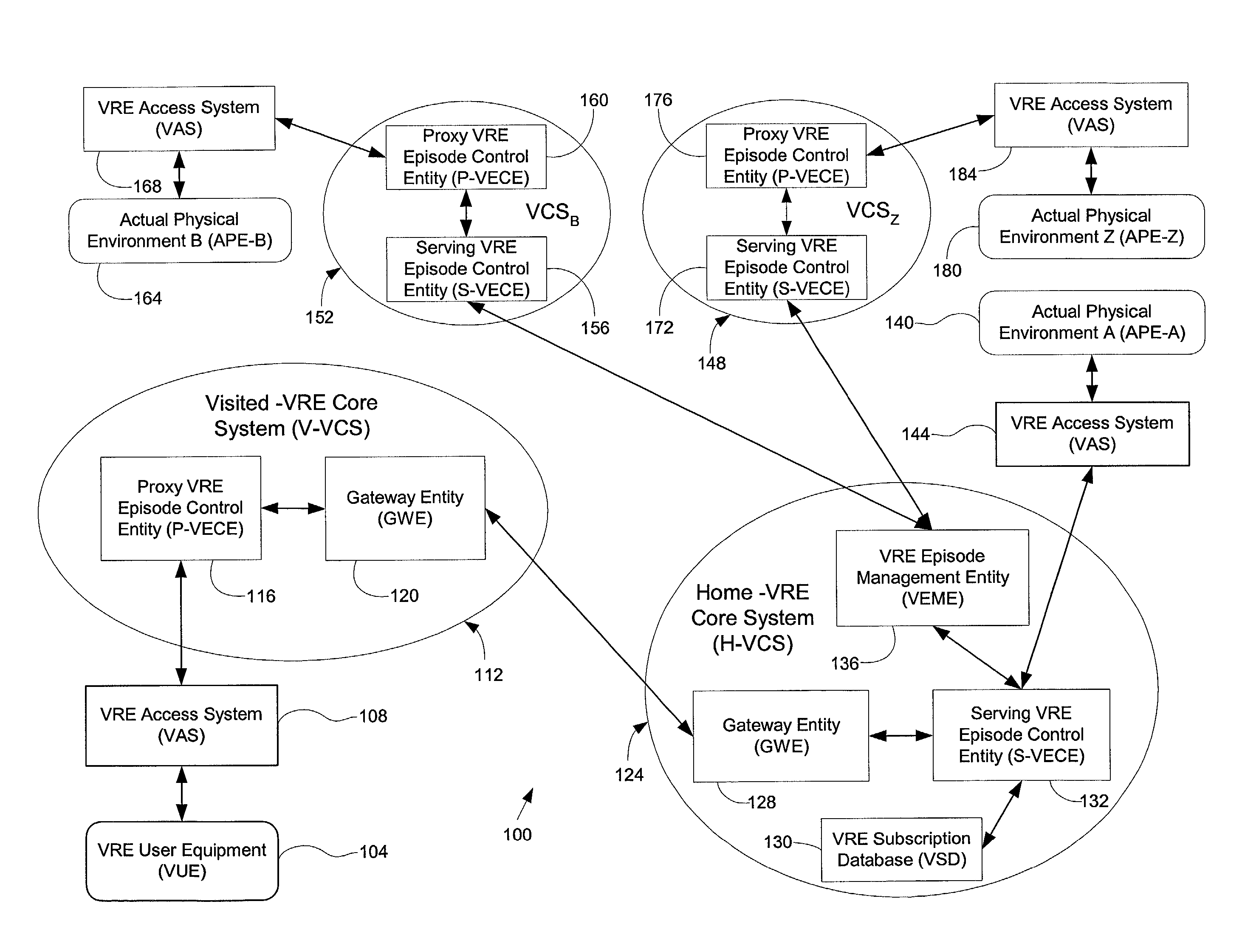
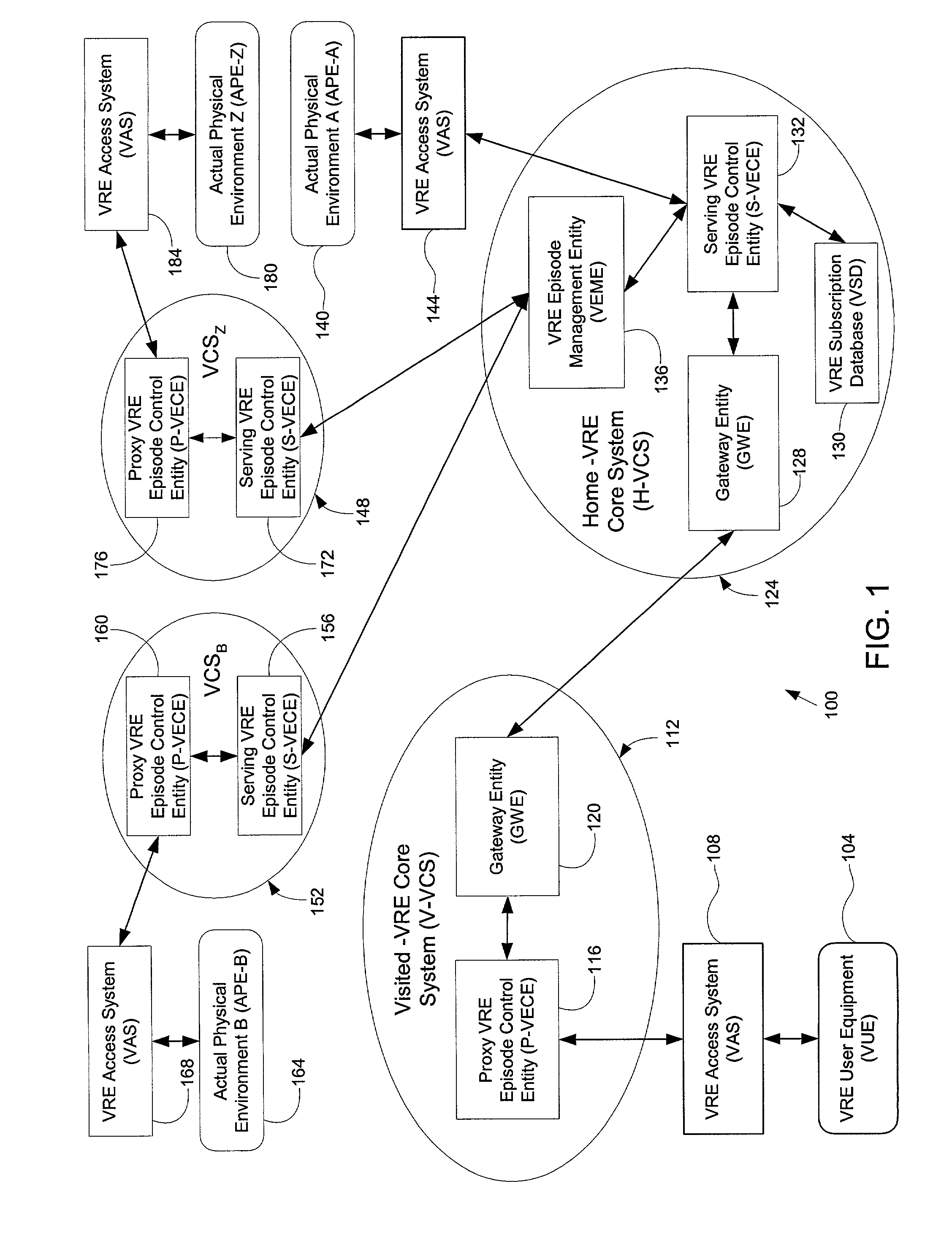
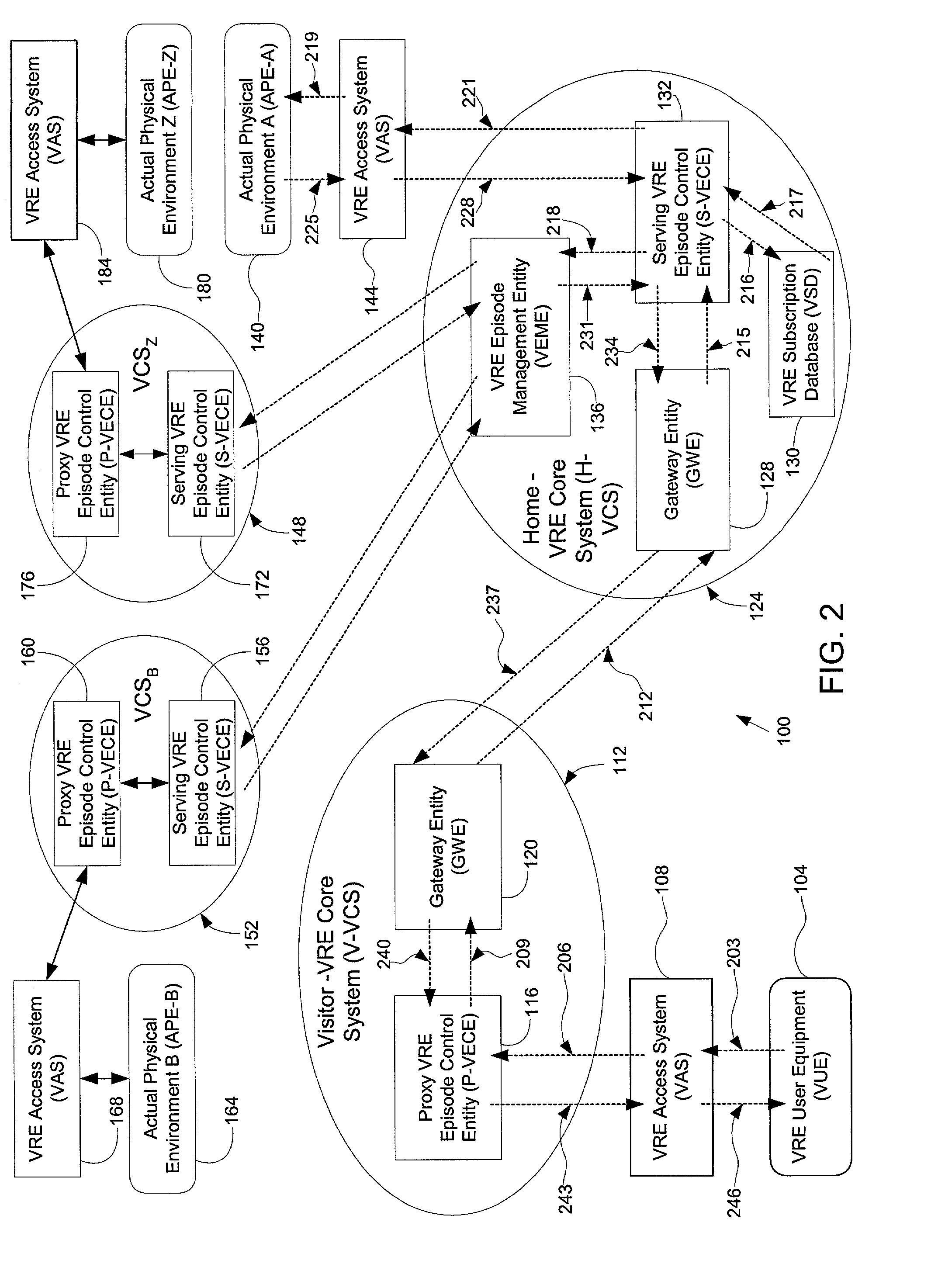
- A virtual reality system and method that enables real-time virtual presence of physical environments through VRE capable networks and devices, including mobile telecommunications, allowing users to participate in virtual reality episodes that represent actual or computer-generated environments, using VRE User Equipment that captures and transmits audio, video, and textual data across networks.
Systems and methods for processing incoming events while performing a virtual reality session
PatentInactiveUS20190011980A1
Innovation
- A virtual reality system and method that allows for processing incoming events by generating notifications within the virtual environment, using a virtual reality host and display to sync with a source unit, enabling alerts to be displayed on the virtual reality screen without leaving the virtual reality session.


VR Chip Thermal Management and Power Efficiency
Thermal management represents one of the most critical challenges in VR chip design, as the high computational demands of virtual reality applications generate substantial heat loads that can severely impact performance and user experience. Modern VR processors typically operate at power densities exceeding 100W/cm², creating thermal hotspots that require sophisticated cooling solutions to maintain optimal performance levels.
The relationship between thermal performance and power efficiency in VR chips is fundamentally interconnected. As chip temperatures rise beyond optimal operating ranges, processors automatically throttle their clock speeds to prevent thermal damage, resulting in reduced frame rates and degraded visual quality. This thermal throttling can cause frame drops below the critical 90 FPS threshold required for comfortable VR experiences, leading to motion sickness and user discomfort.
Advanced thermal management techniques currently employed in VR systems include multi-layer heat spreaders, vapor chamber cooling, and dynamic thermal interface materials. These solutions aim to efficiently dissipate heat while maintaining compact form factors essential for head-mounted displays. Liquid cooling systems, though more effective, face integration challenges due to weight and mobility constraints inherent in VR headset designs.
Power efficiency optimization strategies focus on dynamic voltage and frequency scaling (DVFS), where processors adjust their operating parameters based on real-time workload demands. Modern VR chips implement sophisticated power gating techniques, selectively shutting down unused processing units during lower-intensity rendering tasks. This approach can achieve power savings of 20-30% during typical VR applications while maintaining performance quality.
Emerging thermal management innovations include phase-change materials integrated directly into chip packaging and micro-channel cooling systems that provide targeted heat removal from critical processing cores. These technologies promise to enable next-generation VR processors operating at higher performance levels while maintaining acceptable thermal profiles for extended usage periods.
The relationship between thermal performance and power efficiency in VR chips is fundamentally interconnected. As chip temperatures rise beyond optimal operating ranges, processors automatically throttle their clock speeds to prevent thermal damage, resulting in reduced frame rates and degraded visual quality. This thermal throttling can cause frame drops below the critical 90 FPS threshold required for comfortable VR experiences, leading to motion sickness and user discomfort.
Advanced thermal management techniques currently employed in VR systems include multi-layer heat spreaders, vapor chamber cooling, and dynamic thermal interface materials. These solutions aim to efficiently dissipate heat while maintaining compact form factors essential for head-mounted displays. Liquid cooling systems, though more effective, face integration challenges due to weight and mobility constraints inherent in VR headset designs.
Power efficiency optimization strategies focus on dynamic voltage and frequency scaling (DVFS), where processors adjust their operating parameters based on real-time workload demands. Modern VR chips implement sophisticated power gating techniques, selectively shutting down unused processing units during lower-intensity rendering tasks. This approach can achieve power savings of 20-30% during typical VR applications while maintaining performance quality.
Emerging thermal management innovations include phase-change materials integrated directly into chip packaging and micro-channel cooling systems that provide targeted heat removal from critical processing cores. These technologies promise to enable next-generation VR processors operating at higher performance levels while maintaining acceptable thermal profiles for extended usage periods.
Real-time Rendering Pipeline Optimization Strategies
Real-time rendering pipeline optimization represents a critical bottleneck in VR applications where logic chips must process complex 3D scenes at consistently high frame rates. The fundamental challenge lies in maintaining 90+ FPS while handling increasingly sophisticated visual content, as any frame drops below this threshold can cause motion sickness and break immersion.
Modern VR rendering pipelines employ several key optimization strategies at the hardware level. Foveated rendering has emerged as a primary technique, where logic chips allocate maximum computational resources to the user's focal point while reducing detail in peripheral vision areas. This approach can reduce pixel shading workload by up to 70% without perceptible quality loss, directly addressing the processing limitations of current mobile VR chipsets.
Multi-resolution shading represents another crucial optimization where different portions of the frame buffer are rendered at varying resolutions. Logic chips implement this through specialized shader units that can dynamically adjust rendering quality based on predicted eye movement and gaze tracking data. This technique proves particularly effective for mobile VR platforms where thermal constraints limit sustained performance.
Temporal reprojection techniques allow logic chips to interpolate between rendered frames, effectively doubling perceived frame rates while maintaining computational efficiency. Advanced implementations utilize motion vector analysis and depth buffer information to predict intermediate frames, reducing the actual rendering workload on the GPU cores while preserving visual fluidity.
Pipeline parallelization strategies focus on overlapping rendering operations across multiple processing units within the logic chip architecture. By implementing asynchronous compute shaders and utilizing dedicated VR processing blocks, modern chips can simultaneously handle geometry processing, texture sampling, and post-processing effects without creating rendering bottlenecks.
Adaptive quality scaling represents an emerging approach where logic chips continuously monitor performance metrics and automatically adjust rendering parameters to maintain target frame rates. This includes dynamic resolution scaling, texture level-of-detail adjustments, and selective feature disabling based on real-time performance analysis, ensuring consistent user experience across varying computational demands.
Modern VR rendering pipelines employ several key optimization strategies at the hardware level. Foveated rendering has emerged as a primary technique, where logic chips allocate maximum computational resources to the user's focal point while reducing detail in peripheral vision areas. This approach can reduce pixel shading workload by up to 70% without perceptible quality loss, directly addressing the processing limitations of current mobile VR chipsets.
Multi-resolution shading represents another crucial optimization where different portions of the frame buffer are rendered at varying resolutions. Logic chips implement this through specialized shader units that can dynamically adjust rendering quality based on predicted eye movement and gaze tracking data. This technique proves particularly effective for mobile VR platforms where thermal constraints limit sustained performance.
Temporal reprojection techniques allow logic chips to interpolate between rendered frames, effectively doubling perceived frame rates while maintaining computational efficiency. Advanced implementations utilize motion vector analysis and depth buffer information to predict intermediate frames, reducing the actual rendering workload on the GPU cores while preserving visual fluidity.
Pipeline parallelization strategies focus on overlapping rendering operations across multiple processing units within the logic chip architecture. By implementing asynchronous compute shaders and utilizing dedicated VR processing blocks, modern chips can simultaneously handle geometry processing, texture sampling, and post-processing effects without creating rendering bottlenecks.
Adaptive quality scaling represents an emerging approach where logic chips continuously monitor performance metrics and automatically adjust rendering parameters to maintain target frame rates. This includes dynamic resolution scaling, texture level-of-detail adjustments, and selective feature disabling based on real-time performance analysis, ensuring consistent user experience across varying computational demands.
Unlock deeper insights with Patsnap Eureka Quick Research — get a full tech report to explore trends and direct your research. Try now!
Generate Your Research Report Instantly with AI Agent
Supercharge your innovation with Patsnap Eureka AI Agent Platform!