

How to Verify Simulation-Driven Design for Robustness
MAR 6, 20269 MIN READ
Generate Your Research Report Instantly with AI Agent
PatSnap Eureka helps you evaluate technical feasibility & market potential.
Simulation-Driven Design Verification Background and Objectives
Simulation-driven design has emerged as a cornerstone methodology in modern engineering, fundamentally transforming how complex systems are conceived, developed, and validated. This approach leverages computational models to predict system behavior under various operating conditions, enabling engineers to explore design alternatives and optimize performance before physical prototyping. The evolution from traditional trial-and-error methods to sophisticated simulation frameworks represents a paradigm shift that has accelerated innovation cycles across industries ranging from aerospace and automotive to electronics and biomedical devices.
The historical trajectory of simulation-driven design traces back to the early computational fluid dynamics and finite element analysis methods of the 1960s. Over subsequent decades, advances in computational power, numerical algorithms, and modeling techniques have expanded simulation capabilities to encompass multi-physics phenomena, complex material behaviors, and system-level interactions. Today's simulation environments can model everything from molecular-level interactions to large-scale structural dynamics, providing unprecedented insight into design performance and failure modes.
However, the increasing reliance on simulation-driven methodologies has introduced critical challenges related to verification and validation. As systems become more complex and simulation models more sophisticated, ensuring the robustness and reliability of simulation-based design decisions has become paramount. The gap between simulation predictions and real-world performance can lead to costly design failures, safety concerns, and market delays, making robust verification methodologies essential for maintaining confidence in simulation-driven design processes.
The primary objective of developing comprehensive verification frameworks for simulation-driven design robustness centers on establishing systematic approaches to validate computational models against experimental data, quantify uncertainties in simulation predictions, and ensure design reliability under diverse operating conditions. This involves creating standardized protocols for model validation, developing metrics for assessing simulation accuracy, and implementing uncertainty quantification techniques that account for both aleatory and epistemic uncertainties inherent in complex systems.
Furthermore, the verification process must address the challenge of bridging multiple scales and physics domains while maintaining computational efficiency. Modern engineering systems often exhibit coupled behaviors across different temporal and spatial scales, requiring verification strategies that can validate multi-scale simulation approaches and ensure consistency across different modeling fidelities. The ultimate goal is to establish a robust framework that enables engineers to make confident design decisions based on simulation results while maintaining appropriate safety margins and reliability standards.
The historical trajectory of simulation-driven design traces back to the early computational fluid dynamics and finite element analysis methods of the 1960s. Over subsequent decades, advances in computational power, numerical algorithms, and modeling techniques have expanded simulation capabilities to encompass multi-physics phenomena, complex material behaviors, and system-level interactions. Today's simulation environments can model everything from molecular-level interactions to large-scale structural dynamics, providing unprecedented insight into design performance and failure modes.
However, the increasing reliance on simulation-driven methodologies has introduced critical challenges related to verification and validation. As systems become more complex and simulation models more sophisticated, ensuring the robustness and reliability of simulation-based design decisions has become paramount. The gap between simulation predictions and real-world performance can lead to costly design failures, safety concerns, and market delays, making robust verification methodologies essential for maintaining confidence in simulation-driven design processes.
The primary objective of developing comprehensive verification frameworks for simulation-driven design robustness centers on establishing systematic approaches to validate computational models against experimental data, quantify uncertainties in simulation predictions, and ensure design reliability under diverse operating conditions. This involves creating standardized protocols for model validation, developing metrics for assessing simulation accuracy, and implementing uncertainty quantification techniques that account for both aleatory and epistemic uncertainties inherent in complex systems.
Furthermore, the verification process must address the challenge of bridging multiple scales and physics domains while maintaining computational efficiency. Modern engineering systems often exhibit coupled behaviors across different temporal and spatial scales, requiring verification strategies that can validate multi-scale simulation approaches and ensure consistency across different modeling fidelities. The ultimate goal is to establish a robust framework that enables engineers to make confident design decisions based on simulation results while maintaining appropriate safety margins and reliability standards.
Market Demand for Robust Simulation-Based Design Solutions
The global market for robust simulation-based design solutions is experiencing unprecedented growth driven by increasing complexity in engineering systems and heightened regulatory requirements across multiple industries. Aerospace and automotive sectors lead this demand, where system failures can result in catastrophic consequences and substantial financial losses. These industries require comprehensive verification methodologies that can validate design robustness under extreme operating conditions and uncertain environments.
Manufacturing industries are increasingly adopting simulation-driven design approaches to reduce physical prototyping costs and accelerate time-to-market. The demand extends beyond traditional sectors to emerging fields such as renewable energy systems, where wind turbines and solar installations must demonstrate long-term reliability under varying environmental conditions. Medical device manufacturers also represent a significant market segment, requiring robust verification processes to meet stringent FDA and CE marking requirements.
The semiconductor industry presents another substantial market opportunity, particularly as chip designs become more complex and manufacturing tolerances tighter. Electronic system designers need robust simulation tools to verify performance across process variations, temperature fluctuations, and aging effects. This demand is amplified by the Internet of Things expansion, where billions of devices must operate reliably in uncontrolled environments.
Financial services and insurance sectors are emerging as unexpected drivers of market demand. These industries increasingly rely on simulation-based risk models that must demonstrate robustness across various economic scenarios. Climate change modeling and infrastructure resilience planning also contribute to growing market requirements for verified robust simulation methodologies.
Current market trends indicate strong preference for integrated verification platforms that combine multiple robustness assessment techniques. Organizations seek solutions that can handle uncertainty quantification, sensitivity analysis, and Monte Carlo simulations within unified frameworks. Cloud-based simulation platforms are gaining traction, enabling smaller companies to access sophisticated robustness verification capabilities without substantial infrastructure investments.
The market demand is further intensified by digital transformation initiatives across industries. Companies transitioning to digital twins and Industry 4.0 paradigms require robust simulation verification to ensure virtual models accurately represent real-world system behavior under various operational scenarios.
Manufacturing industries are increasingly adopting simulation-driven design approaches to reduce physical prototyping costs and accelerate time-to-market. The demand extends beyond traditional sectors to emerging fields such as renewable energy systems, where wind turbines and solar installations must demonstrate long-term reliability under varying environmental conditions. Medical device manufacturers also represent a significant market segment, requiring robust verification processes to meet stringent FDA and CE marking requirements.
The semiconductor industry presents another substantial market opportunity, particularly as chip designs become more complex and manufacturing tolerances tighter. Electronic system designers need robust simulation tools to verify performance across process variations, temperature fluctuations, and aging effects. This demand is amplified by the Internet of Things expansion, where billions of devices must operate reliably in uncontrolled environments.
Financial services and insurance sectors are emerging as unexpected drivers of market demand. These industries increasingly rely on simulation-based risk models that must demonstrate robustness across various economic scenarios. Climate change modeling and infrastructure resilience planning also contribute to growing market requirements for verified robust simulation methodologies.
Current market trends indicate strong preference for integrated verification platforms that combine multiple robustness assessment techniques. Organizations seek solutions that can handle uncertainty quantification, sensitivity analysis, and Monte Carlo simulations within unified frameworks. Cloud-based simulation platforms are gaining traction, enabling smaller companies to access sophisticated robustness verification capabilities without substantial infrastructure investments.
The market demand is further intensified by digital transformation initiatives across industries. Companies transitioning to digital twins and Industry 4.0 paradigms require robust simulation verification to ensure virtual models accurately represent real-world system behavior under various operational scenarios.
Current State and Challenges in Simulation Verification Methods
The current landscape of simulation verification methods for robustness assessment presents a complex array of approaches, each with distinct capabilities and limitations. Traditional Monte Carlo simulation remains the most widely adopted technique, offering statistical confidence through random sampling of parameter spaces. However, its computational intensity becomes prohibitive when dealing with high-dimensional systems or when seeking rare failure events that critically impact robustness.
Deterministic verification methods, including worst-case analysis and interval arithmetic, provide mathematical guarantees but often yield overly conservative results. These approaches struggle with nonlinear systems and complex interdependencies, frequently producing bounds that are too wide to be practically useful for design decisions.
Metamodel-based verification has emerged as a promising middle ground, utilizing surrogate models such as polynomial chaos expansions, Gaussian process regression, and neural networks to approximate system behavior. While these methods significantly reduce computational burden, they introduce approximation errors that can compromise verification accuracy, particularly in regions of the design space with limited training data.
A significant challenge lies in the verification of multi-physics simulations where coupling effects between different physical domains create emergent behaviors that are difficult to predict and verify. Current methods often treat each physics domain independently, missing critical interactions that could lead to robustness failures.
The integration of uncertainty quantification with verification processes remains fragmented. Most existing approaches handle aleatory and epistemic uncertainties separately, lacking unified frameworks that can simultaneously address both types while maintaining computational tractability. This separation often leads to incomplete robustness assessments.
Scalability represents another fundamental challenge. As system complexity increases, traditional verification methods face exponential growth in computational requirements. Current parallel computing implementations show limited effectiveness due to the inherently sequential nature of many verification algorithms.
The lack of standardized metrics and benchmarks for comparing verification methods creates additional difficulties. Different approaches often use incompatible robustness measures, making it challenging to select appropriate methods for specific applications or to validate verification results across different tools and platforms.
Deterministic verification methods, including worst-case analysis and interval arithmetic, provide mathematical guarantees but often yield overly conservative results. These approaches struggle with nonlinear systems and complex interdependencies, frequently producing bounds that are too wide to be practically useful for design decisions.
Metamodel-based verification has emerged as a promising middle ground, utilizing surrogate models such as polynomial chaos expansions, Gaussian process regression, and neural networks to approximate system behavior. While these methods significantly reduce computational burden, they introduce approximation errors that can compromise verification accuracy, particularly in regions of the design space with limited training data.
A significant challenge lies in the verification of multi-physics simulations where coupling effects between different physical domains create emergent behaviors that are difficult to predict and verify. Current methods often treat each physics domain independently, missing critical interactions that could lead to robustness failures.
The integration of uncertainty quantification with verification processes remains fragmented. Most existing approaches handle aleatory and epistemic uncertainties separately, lacking unified frameworks that can simultaneously address both types while maintaining computational tractability. This separation often leads to incomplete robustness assessments.
Scalability represents another fundamental challenge. As system complexity increases, traditional verification methods face exponential growth in computational requirements. Current parallel computing implementations show limited effectiveness due to the inherently sequential nature of many verification algorithms.
The lack of standardized metrics and benchmarks for comparing verification methods creates additional difficulties. Different approaches often use incompatible robustness measures, making it challenging to select appropriate methods for specific applications or to validate verification results across different tools and platforms.
Existing Robustness Verification Solutions for Simulation Models
01 Monte Carlo simulation and statistical analysis for design robustness
Monte Carlo simulation methods are employed to evaluate design robustness by analyzing variations in design parameters and their impact on system performance. Statistical analysis techniques are applied to quantify uncertainty and assess the probability of design failures under various operating conditions. These methods enable designers to identify critical parameters and optimize designs to maintain performance despite manufacturing variations and environmental uncertainties.- Monte Carlo simulation and statistical analysis for design robustness: Monte Carlo simulation methods are employed to evaluate design robustness by analyzing variations in design parameters and their impact on system performance. Statistical analysis techniques are applied to quantify uncertainty and assess the probability of design failures under various operating conditions. These methods enable designers to identify critical parameters and optimize designs to maintain performance across a range of scenarios, ensuring robust product behavior in real-world applications.
- Sensitivity analysis and parameter optimization: Sensitivity analysis is utilized to determine how variations in input parameters affect output performance metrics, identifying which parameters have the most significant impact on design robustness. Parameter optimization techniques are then applied to adjust design variables within acceptable ranges to maximize robustness while meeting performance requirements. This approach helps in creating designs that are less sensitive to manufacturing tolerances and environmental variations.
- Multi-objective optimization for robust design: Multi-objective optimization frameworks are implemented to balance competing design goals such as performance, cost, and robustness simultaneously. These methods use evolutionary algorithms or other optimization techniques to explore the design space and identify Pareto-optimal solutions that provide the best trade-offs. By considering multiple objectives, designers can create solutions that are not only high-performing but also resilient to variations and uncertainties.
- Virtual prototyping and design verification: Virtual prototyping techniques enable the creation of digital models that simulate physical product behavior under various conditions before physical prototypes are built. Design verification processes use these simulations to validate that designs meet robustness criteria and performance specifications across expected operating ranges. This approach reduces development time and costs by identifying potential issues early in the design cycle and allowing for iterative improvements without physical testing.
- Uncertainty quantification and reliability analysis: Uncertainty quantification methods are applied to characterize and propagate uncertainties in design parameters, material properties, and operating conditions through simulation models. Reliability analysis techniques assess the probability of design success and failure modes under uncertain conditions, providing metrics for design robustness. These approaches enable designers to make informed decisions about design margins and safety factors, ensuring that products maintain acceptable performance levels despite inherent uncertainties.
02 Sensitivity analysis and parameter optimization
Sensitivity analysis is utilized to determine which design parameters have the most significant impact on system robustness. By systematically varying input parameters and observing their effects on output performance, designers can identify critical factors that require tighter tolerances or improved control. Parameter optimization techniques are then applied to find optimal design configurations that maximize robustness while meeting performance requirements and constraints.Expand Specific Solutions03 Multi-objective optimization for robust design
Multi-objective optimization approaches balance competing design goals such as performance, cost, and robustness. These methods employ algorithms that explore the design space to identify Pareto-optimal solutions that represent the best trade-offs between objectives. By incorporating robustness metrics as optimization objectives, designs can be developed that maintain acceptable performance across a wide range of operating conditions and parameter variations.Expand Specific Solutions04 Worst-case analysis and corner case simulation
Worst-case analysis techniques evaluate design performance under extreme operating conditions and parameter combinations to ensure robustness. Corner case simulations test designs at the boundaries of acceptable parameter ranges to identify potential failure modes. These approaches help designers understand the limits of their designs and implement safeguards or design modifications to prevent failures in edge cases.Expand Specific Solutions05 Design of experiments and response surface methodology
Design of experiments methodologies systematically plan simulation runs to efficiently explore the design space and understand parameter interactions. Response surface methodology creates mathematical models that approximate system behavior based on simulation results, enabling rapid evaluation of design alternatives. These techniques reduce the computational burden of robustness analysis while providing insights into how design parameters affect performance and reliability.Expand Specific Solutions
Key Players in Simulation Software and Verification Industry
The simulation-driven design verification for robustness represents a rapidly evolving technological domain currently in its growth phase, with the market experiencing significant expansion driven by increasing complexity in automotive, aerospace, and semiconductor applications. The market demonstrates substantial scale potential as industries increasingly rely on virtual validation to reduce physical prototyping costs and accelerate development cycles. Technology maturity varies significantly across market segments, with established EDA leaders like Synopsys and Cadence Design Systems offering sophisticated simulation platforms, while semiconductor manufacturers including Taiwan Semiconductor Manufacturing and GlobalFoundries integrate advanced verification methodologies into their fabrication processes. Automotive companies such as Volvo, Chery Automobile, and Robert Bosch are advancing simulation capabilities for autonomous systems, complemented by specialized simulation providers like AVL List and Siemens Industry Software. The competitive landscape includes emerging AI-driven approaches from companies like Beijing Real AI, alongside traditional aerospace leaders Boeing and Safran, indicating a diverse ecosystem where established simulation technologies are being enhanced with machine learning and advanced analytics to improve robustness verification accuracy and efficiency.
Cadence Design Systems, Inc.
Technical Solution: Cadence provides comprehensive simulation-driven design verification through their Virtuoso platform and advanced Monte Carlo simulation capabilities. Their approach integrates statistical analysis with corner case testing to verify design robustness across process, voltage, and temperature variations. The platform employs machine learning algorithms to identify critical failure modes and optimize design parameters for maximum yield. Their verification methodology includes automated sensitivity analysis, worst-case scenario generation, and statistical timing analysis to ensure designs meet robustness requirements under all operating conditions.
Strengths: Industry-leading EDA tools with comprehensive verification capabilities and strong statistical analysis features. Weaknesses: High licensing costs and steep learning curve for complex verification flows.
Synopsys, Inc.
Technical Solution: Synopsys offers robust simulation-driven design verification through their Design Compiler and PrimeTime suite, featuring advanced corner analysis and statistical static timing analysis (SSTA). Their methodology incorporates process variation modeling, aging effects simulation, and reliability analysis to verify design robustness. The platform utilizes machine learning-based prediction models to identify potential failure points and provides automated design optimization recommendations. Their verification flow includes comprehensive coverage analysis, assertion-based verification, and formal verification techniques to ensure design integrity across all operating scenarios.
Strengths: Comprehensive verification suite with strong formal verification capabilities and excellent process variation modeling. Weaknesses: Complex tool integration and requires significant computational resources for large designs.
Core Innovations in Simulation Verification and Validation
Checking the robustness of a model of a physical system
PatentInactiveIN542MUM2005A
Innovation
- A method involving the creation of a first model in a formal language, enrichment with a fault injection mechanism, and using formal proof tools to automatically find combinations of faults and input values that could cause system failure, allowing for pre-production robustness verification and reduction of development costs.


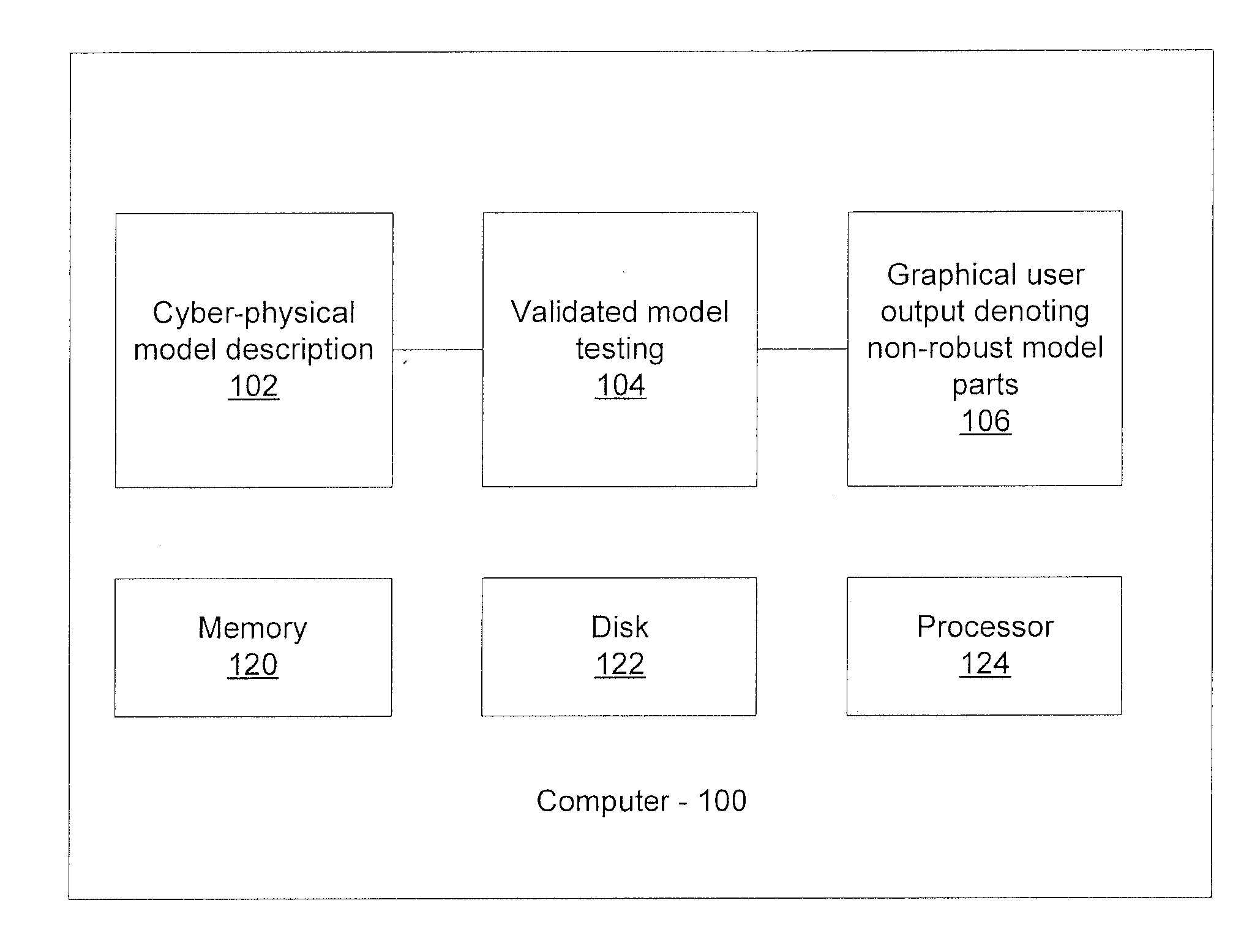
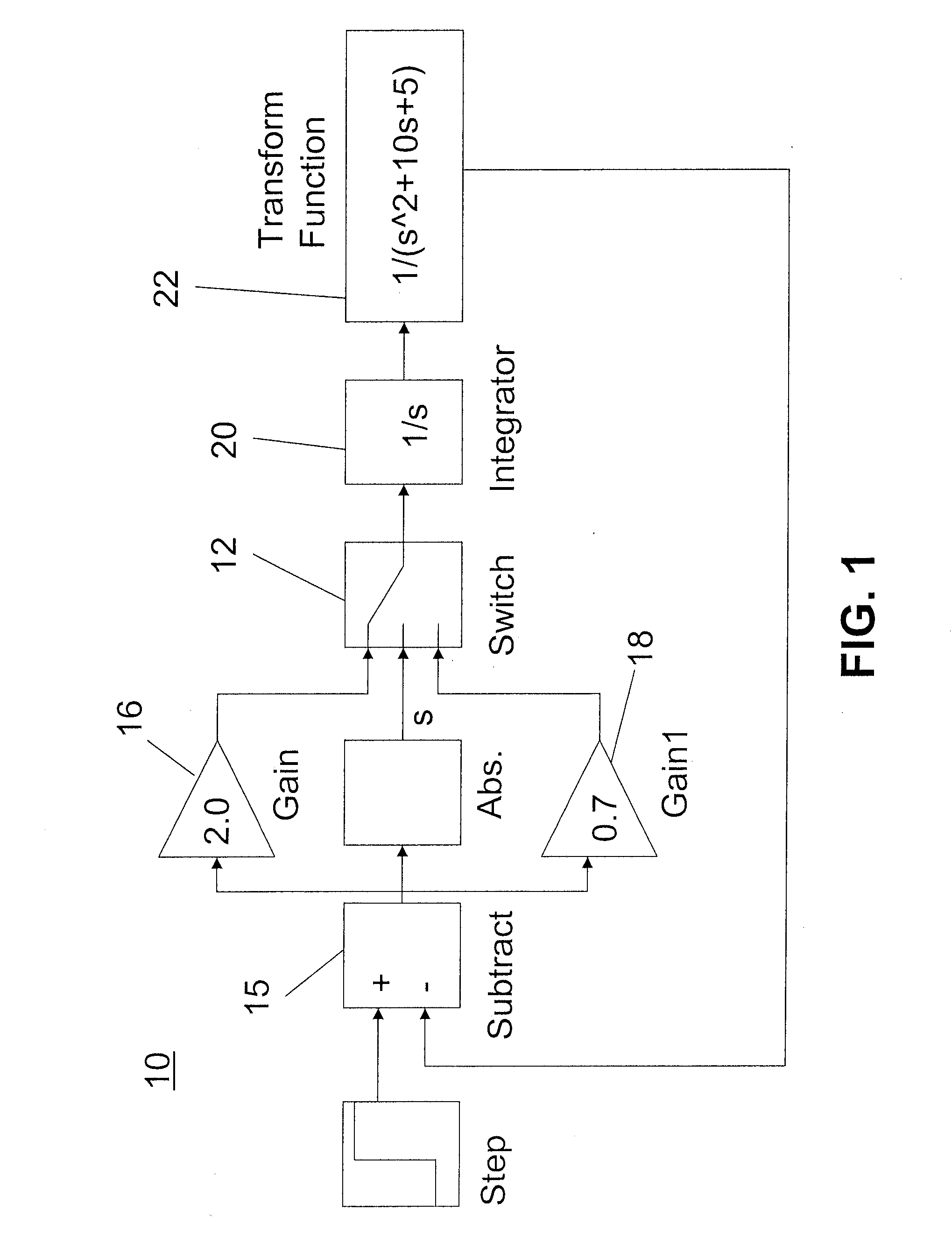
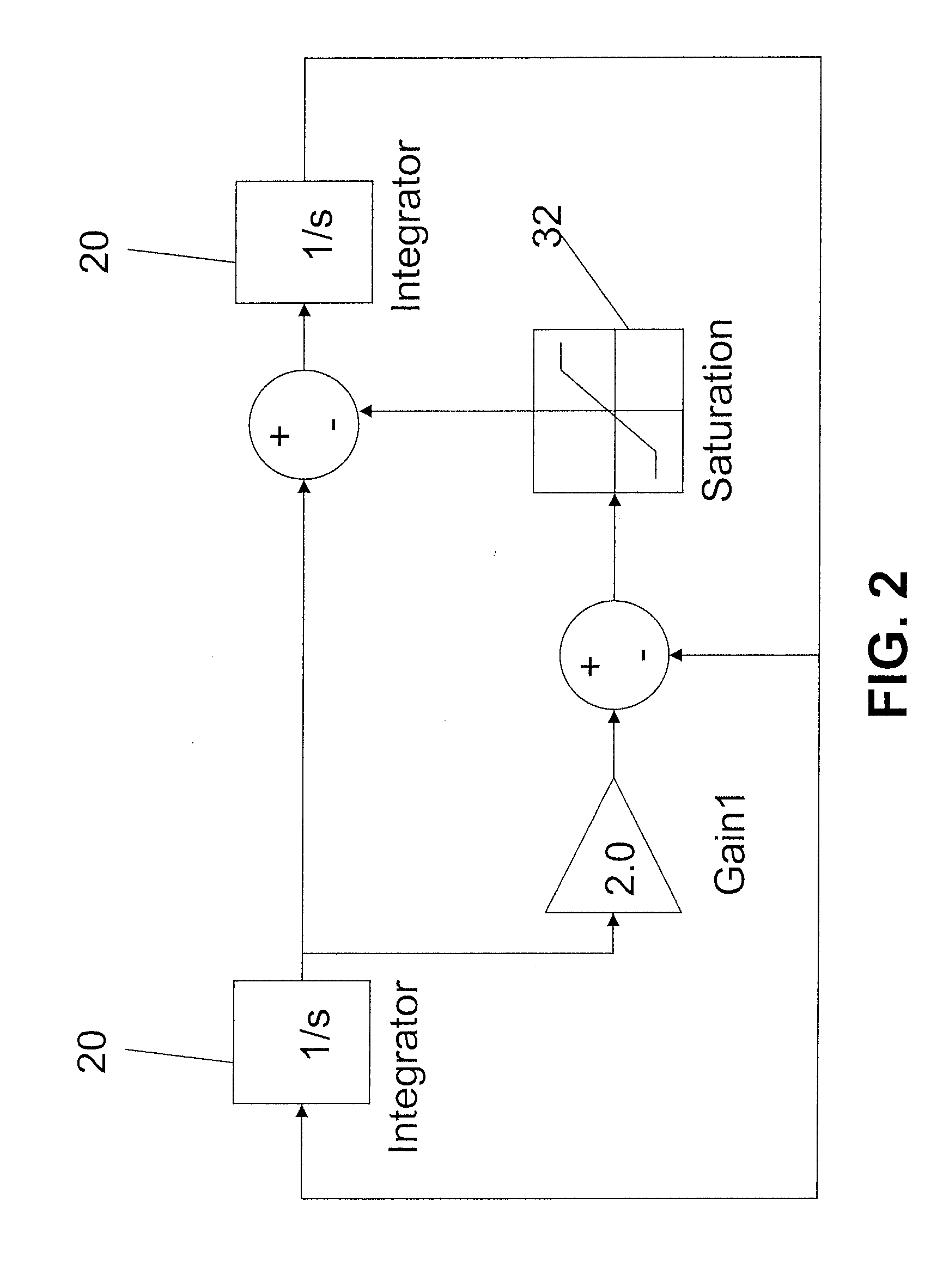
Robust testing for discrete-time and continuous-time system models
PatentInactiveUS20100299651A1
Innovation
- A system and method for testing robustness of cyber-physical system models by computing symbolic simulation traces, identifying sources of simulation errors due to numerical instabilities and numeric computations, using a validated simulator with self-validated arithmetic to account for floating-point rounding errors and uncertainties, and employing mixed discrete/continuous-time hybrid systems.

Standards and Certification Requirements for Simulation Verification
The verification of simulation-driven design for robustness requires adherence to comprehensive standards and certification frameworks that ensure reliability, accuracy, and regulatory compliance across various industries. These requirements form the foundation for establishing trust in simulation-based engineering decisions and provide structured approaches for validation processes.
International standards organizations have developed specific guidelines for simulation verification, with ISO 26262 leading automotive functional safety requirements, DO-178C governing aerospace software certification, and IEC 61508 establishing general functional safety principles. These standards mandate rigorous verification protocols that include model validation, numerical accuracy assessment, and uncertainty quantification methodologies.
Certification bodies require detailed documentation of simulation processes, including model development procedures, validation test cases, and traceability matrices linking simulation results to physical test data. The FDA's guidance on computational modeling for medical devices exemplifies how regulatory agencies are establishing specific requirements for simulation-based product development, emphasizing the need for comprehensive verification and validation protocols.
Industry-specific certification requirements vary significantly in their stringency and scope. Aerospace applications demand the highest levels of verification rigor, requiring extensive cross-validation between simulation results and physical testing data. Automotive standards focus on functional safety aspects, mandating probabilistic approaches to assess simulation uncertainty and its impact on safety-critical systems.
Emerging standards are addressing modern simulation challenges, including multi-physics modeling verification, high-performance computing validation, and artificial intelligence integration in simulation workflows. The ASME V&V standards series provides comprehensive frameworks for verification and validation activities, establishing clear distinctions between code verification, solution verification, and model validation processes.
Certification pathways typically involve third-party assessment organizations that evaluate simulation tools, processes, and results against established criteria. These assessments examine computational accuracy, numerical stability, and the adequacy of verification test suites, ensuring that simulation-driven designs meet required robustness thresholds before market deployment.
International standards organizations have developed specific guidelines for simulation verification, with ISO 26262 leading automotive functional safety requirements, DO-178C governing aerospace software certification, and IEC 61508 establishing general functional safety principles. These standards mandate rigorous verification protocols that include model validation, numerical accuracy assessment, and uncertainty quantification methodologies.
Certification bodies require detailed documentation of simulation processes, including model development procedures, validation test cases, and traceability matrices linking simulation results to physical test data. The FDA's guidance on computational modeling for medical devices exemplifies how regulatory agencies are establishing specific requirements for simulation-based product development, emphasizing the need for comprehensive verification and validation protocols.
Industry-specific certification requirements vary significantly in their stringency and scope. Aerospace applications demand the highest levels of verification rigor, requiring extensive cross-validation between simulation results and physical testing data. Automotive standards focus on functional safety aspects, mandating probabilistic approaches to assess simulation uncertainty and its impact on safety-critical systems.
Emerging standards are addressing modern simulation challenges, including multi-physics modeling verification, high-performance computing validation, and artificial intelligence integration in simulation workflows. The ASME V&V standards series provides comprehensive frameworks for verification and validation activities, establishing clear distinctions between code verification, solution verification, and model validation processes.
Certification pathways typically involve third-party assessment organizations that evaluate simulation tools, processes, and results against established criteria. These assessments examine computational accuracy, numerical stability, and the adequacy of verification test suites, ensuring that simulation-driven designs meet required robustness thresholds before market deployment.
Risk Management Framework for Simulation-Based Design Decisions
Establishing a comprehensive risk management framework for simulation-based design decisions requires systematic identification, assessment, and mitigation of uncertainties inherent in computational modeling processes. This framework serves as a critical foundation for ensuring design robustness while maintaining confidence in simulation-driven outcomes across various engineering domains.
The framework begins with uncertainty quantification, where potential sources of variability are categorized into aleatory uncertainties (inherent randomness in physical systems) and epistemic uncertainties (knowledge gaps in modeling assumptions). Model parameter uncertainties, boundary condition variations, and material property dispersions must be systematically catalogued and characterized through statistical distributions or interval bounds.
Risk assessment methodologies form the core analytical component, employing techniques such as Monte Carlo simulation, Latin hypercube sampling, and polynomial chaos expansion to propagate uncertainties through computational models. These approaches enable quantitative evaluation of design performance variability and identification of critical failure modes under uncertain conditions.
Decision-making protocols establish clear criteria for accepting or rejecting design alternatives based on risk tolerance levels. Multi-objective optimization frameworks incorporate robustness metrics alongside traditional performance indicators, enabling designers to balance nominal performance against sensitivity to parameter variations. Reliability-based design optimization and robust design optimization methodologies provide mathematical foundations for these trade-off decisions.
Validation and verification procedures ensure the risk management framework itself maintains accuracy and reliability. Cross-validation techniques, sensitivity analysis, and benchmark comparisons against experimental data establish confidence bounds for risk predictions. Regular framework updates incorporate new uncertainty sources and refined modeling approaches as design knowledge evolves.
Implementation guidelines define organizational responsibilities, documentation requirements, and integration protocols with existing design workflows. Standardized risk reporting formats facilitate communication between design teams, management, and stakeholders, ensuring transparent decision-making processes throughout the product development lifecycle.
The framework begins with uncertainty quantification, where potential sources of variability are categorized into aleatory uncertainties (inherent randomness in physical systems) and epistemic uncertainties (knowledge gaps in modeling assumptions). Model parameter uncertainties, boundary condition variations, and material property dispersions must be systematically catalogued and characterized through statistical distributions or interval bounds.
Risk assessment methodologies form the core analytical component, employing techniques such as Monte Carlo simulation, Latin hypercube sampling, and polynomial chaos expansion to propagate uncertainties through computational models. These approaches enable quantitative evaluation of design performance variability and identification of critical failure modes under uncertain conditions.
Decision-making protocols establish clear criteria for accepting or rejecting design alternatives based on risk tolerance levels. Multi-objective optimization frameworks incorporate robustness metrics alongside traditional performance indicators, enabling designers to balance nominal performance against sensitivity to parameter variations. Reliability-based design optimization and robust design optimization methodologies provide mathematical foundations for these trade-off decisions.
Validation and verification procedures ensure the risk management framework itself maintains accuracy and reliability. Cross-validation techniques, sensitivity analysis, and benchmark comparisons against experimental data establish confidence bounds for risk predictions. Regular framework updates incorporate new uncertainty sources and refined modeling approaches as design knowledge evolves.
Implementation guidelines define organizational responsibilities, documentation requirements, and integration protocols with existing design workflows. Standardized risk reporting formats facilitate communication between design teams, management, and stakeholders, ensuring transparent decision-making processes throughout the product development lifecycle.
Unlock deeper insights with PatSnap Eureka Quick Research — get a full tech report to explore trends and direct your research. Try now!
Generate Your Research Report Instantly with AI Agent
Supercharge your innovation with PatSnap Eureka AI Agent Platform!