Hypochlorous Acid: Assessing Risks and Mitigating Exposure
AUG 4, 20259 MIN READ
Generate Your Research Report Instantly with AI Agent
Patsnap Eureka helps you evaluate technical feasibility & market potential.
HOCI Background and Objectives
Hypochlorous acid (HOCl) has emerged as a significant subject of interest in various industries due to its potent antimicrobial properties and potential applications in disinfection and sanitization. This naturally occurring compound, produced by the human immune system to fight infections, has gained attention for its effectiveness against a wide range of pathogens, including bacteria, viruses, and fungi.
The primary objective of this technical research report is to comprehensively assess the risks associated with hypochlorous acid exposure and develop strategies for mitigating these risks in practical applications. This investigation aims to bridge the gap between the promising potential of HOCl and the necessary safety considerations for its widespread use.
Historically, hypochlorous acid has been known for over two centuries, with its discovery dating back to 1834. However, it is only in recent decades that its full potential as a safe and effective disinfectant has been realized. The evolution of HOCl technology has been driven by advancements in production methods, stability enhancement, and a growing understanding of its mechanisms of action at the molecular level.
Current trends in HOCl research and development focus on optimizing its production, improving its stability for long-term storage, and expanding its applications across various sectors, including healthcare, food safety, water treatment, and agriculture. The COVID-19 pandemic has further accelerated interest in HOCl as a potential tool in the fight against infectious diseases, prompting increased research into its virucidal properties and safety profile.
The technical goals of this investigation include:
1. Evaluating the potential health risks associated with acute and chronic exposure to hypochlorous acid at various concentrations.
2. Assessing the environmental impact of HOCl use and disposal, particularly in large-scale applications.
3. Developing guidelines for safe handling, storage, and application of HOCl-based products in different settings.
4. Investigating potential interactions between HOCl and other commonly used chemicals or materials to identify any unforeseen risks.
5. Exploring innovative methods to mitigate exposure risks without compromising the efficacy of HOCl as a disinfectant.
By addressing these objectives, this report aims to provide a comprehensive understanding of the safety considerations surrounding hypochlorous acid use. This knowledge will be crucial in guiding the responsible development and implementation of HOCl-based technologies across various industries, ensuring that the benefits of this powerful antimicrobial agent can be harnessed while minimizing potential risks to human health and the environment.
The primary objective of this technical research report is to comprehensively assess the risks associated with hypochlorous acid exposure and develop strategies for mitigating these risks in practical applications. This investigation aims to bridge the gap between the promising potential of HOCl and the necessary safety considerations for its widespread use.
Historically, hypochlorous acid has been known for over two centuries, with its discovery dating back to 1834. However, it is only in recent decades that its full potential as a safe and effective disinfectant has been realized. The evolution of HOCl technology has been driven by advancements in production methods, stability enhancement, and a growing understanding of its mechanisms of action at the molecular level.
Current trends in HOCl research and development focus on optimizing its production, improving its stability for long-term storage, and expanding its applications across various sectors, including healthcare, food safety, water treatment, and agriculture. The COVID-19 pandemic has further accelerated interest in HOCl as a potential tool in the fight against infectious diseases, prompting increased research into its virucidal properties and safety profile.
The technical goals of this investigation include:
1. Evaluating the potential health risks associated with acute and chronic exposure to hypochlorous acid at various concentrations.
2. Assessing the environmental impact of HOCl use and disposal, particularly in large-scale applications.
3. Developing guidelines for safe handling, storage, and application of HOCl-based products in different settings.
4. Investigating potential interactions between HOCl and other commonly used chemicals or materials to identify any unforeseen risks.
5. Exploring innovative methods to mitigate exposure risks without compromising the efficacy of HOCl as a disinfectant.
By addressing these objectives, this report aims to provide a comprehensive understanding of the safety considerations surrounding hypochlorous acid use. This knowledge will be crucial in guiding the responsible development and implementation of HOCl-based technologies across various industries, ensuring that the benefits of this powerful antimicrobial agent can be harnessed while minimizing potential risks to human health and the environment.
Market Analysis for HOCI Applications
The market for Hypochlorous Acid (HOCl) applications has been experiencing significant growth in recent years, driven by increasing awareness of its effectiveness as a disinfectant and sanitizer. The global HOCl market is projected to expand at a robust rate, with key sectors including healthcare, water treatment, agriculture, and food processing leading the demand.
In the healthcare sector, HOCl has gained traction as a powerful yet safe disinfectant for medical facilities, surgical equipment, and wound care. Its ability to effectively kill a wide range of pathogens without harmful residues has positioned it as a preferred choice in hospitals and clinics. The ongoing focus on infection control, particularly in light of recent global health challenges, has further accelerated the adoption of HOCl-based solutions in healthcare settings.
The water treatment industry represents another substantial market for HOCl applications. Municipal water treatment plants are increasingly incorporating HOCl systems for disinfection purposes, as it offers a more environmentally friendly alternative to traditional chlorine-based methods. Additionally, the growing concern over waterborne diseases in developing regions has opened new opportunities for HOCl in portable water purification systems.
Agriculture has emerged as a promising sector for HOCl applications, with farmers adopting it for crop protection, soil treatment, and post-harvest preservation. The rising demand for organic produce and the need to reduce chemical pesticide use have contributed to the increased interest in HOCl as a natural antimicrobial agent in agriculture.
The food processing industry has also recognized the benefits of HOCl for sanitizing equipment, surfaces, and food products. Its effectiveness against foodborne pathogens, combined with its non-toxic nature, aligns well with the industry's stringent safety standards and consumer preferences for chemical-free food processing methods.
Consumer products represent an expanding segment of the HOCl market, with applications in household cleaning, personal care, and pet care products. The trend towards eco-friendly and non-toxic cleaning solutions has driven the development of HOCl-based sprays, wipes, and other consumer-oriented products.
Geographically, North America and Europe currently lead the HOCl market, owing to stringent regulations on disinfection and sanitization practices. However, the Asia-Pacific region is expected to witness the fastest growth, fueled by rapid industrialization, increasing healthcare expenditure, and growing awareness of hygiene practices.
Despite the positive market outlook, challenges remain in terms of product stability, storage, and transportation of HOCl solutions. Ongoing research and development efforts are focused on addressing these issues to enhance the commercial viability of HOCl across various applications.
In the healthcare sector, HOCl has gained traction as a powerful yet safe disinfectant for medical facilities, surgical equipment, and wound care. Its ability to effectively kill a wide range of pathogens without harmful residues has positioned it as a preferred choice in hospitals and clinics. The ongoing focus on infection control, particularly in light of recent global health challenges, has further accelerated the adoption of HOCl-based solutions in healthcare settings.
The water treatment industry represents another substantial market for HOCl applications. Municipal water treatment plants are increasingly incorporating HOCl systems for disinfection purposes, as it offers a more environmentally friendly alternative to traditional chlorine-based methods. Additionally, the growing concern over waterborne diseases in developing regions has opened new opportunities for HOCl in portable water purification systems.
Agriculture has emerged as a promising sector for HOCl applications, with farmers adopting it for crop protection, soil treatment, and post-harvest preservation. The rising demand for organic produce and the need to reduce chemical pesticide use have contributed to the increased interest in HOCl as a natural antimicrobial agent in agriculture.
The food processing industry has also recognized the benefits of HOCl for sanitizing equipment, surfaces, and food products. Its effectiveness against foodborne pathogens, combined with its non-toxic nature, aligns well with the industry's stringent safety standards and consumer preferences for chemical-free food processing methods.
Consumer products represent an expanding segment of the HOCl market, with applications in household cleaning, personal care, and pet care products. The trend towards eco-friendly and non-toxic cleaning solutions has driven the development of HOCl-based sprays, wipes, and other consumer-oriented products.
Geographically, North America and Europe currently lead the HOCl market, owing to stringent regulations on disinfection and sanitization practices. However, the Asia-Pacific region is expected to witness the fastest growth, fueled by rapid industrialization, increasing healthcare expenditure, and growing awareness of hygiene practices.
Despite the positive market outlook, challenges remain in terms of product stability, storage, and transportation of HOCl solutions. Ongoing research and development efforts are focused on addressing these issues to enhance the commercial viability of HOCl across various applications.
HOCI Challenges and Limitations
Despite its numerous advantages, Hypochlorous Acid (HOCl) faces several challenges and limitations that hinder its widespread adoption and effectiveness in various applications. One of the primary concerns is its stability. HOCl is inherently unstable and tends to degrade rapidly, especially when exposed to light, heat, or organic matter. This instability significantly reduces its shelf life and effectiveness over time, making storage and long-term use problematic.
The pH sensitivity of HOCl presents another significant challenge. The acid is most effective within a narrow pH range of 3.5 to 6.5. Outside this range, its antimicrobial properties diminish considerably. Maintaining the optimal pH level in different environments and applications can be difficult, limiting its versatility and reliability in certain scenarios.
Production and storage of HOCl also pose technical challenges. The process of generating HOCl through electrolysis requires precise control of parameters such as salt concentration, water quality, and electrical current. Variations in these factors can lead to inconsistent product quality. Moreover, the storage of HOCl solutions demands specialized containers and conditions to prevent degradation and maintain efficacy.
The potential for byproduct formation is another limitation of HOCl use. When HOCl reacts with organic matter, it can form disinfection byproducts (DBPs) such as trihalomethanes and haloacetic acids. These byproducts are potentially harmful to human health and the environment, raising concerns about the long-term safety of HOCl applications, particularly in water treatment and food processing industries.
Regulatory hurdles also present challenges for HOCl adoption. The classification and approval processes for HOCl-based products vary across different countries and industries. This regulatory inconsistency can lead to confusion and hesitation among potential users and manufacturers, slowing down market penetration and technological advancement in HOCl applications.
Lastly, there are limitations in the understanding of HOCl's mechanisms of action and potential long-term effects. While its broad-spectrum antimicrobial properties are well-documented, the exact molecular interactions and potential impacts on various biological systems are not fully elucidated. This knowledge gap hampers the development of optimized formulations and application protocols, and raises questions about potential resistance development in microorganisms exposed to HOCl over extended periods.
The pH sensitivity of HOCl presents another significant challenge. The acid is most effective within a narrow pH range of 3.5 to 6.5. Outside this range, its antimicrobial properties diminish considerably. Maintaining the optimal pH level in different environments and applications can be difficult, limiting its versatility and reliability in certain scenarios.
Production and storage of HOCl also pose technical challenges. The process of generating HOCl through electrolysis requires precise control of parameters such as salt concentration, water quality, and electrical current. Variations in these factors can lead to inconsistent product quality. Moreover, the storage of HOCl solutions demands specialized containers and conditions to prevent degradation and maintain efficacy.
The potential for byproduct formation is another limitation of HOCl use. When HOCl reacts with organic matter, it can form disinfection byproducts (DBPs) such as trihalomethanes and haloacetic acids. These byproducts are potentially harmful to human health and the environment, raising concerns about the long-term safety of HOCl applications, particularly in water treatment and food processing industries.
Regulatory hurdles also present challenges for HOCl adoption. The classification and approval processes for HOCl-based products vary across different countries and industries. This regulatory inconsistency can lead to confusion and hesitation among potential users and manufacturers, slowing down market penetration and technological advancement in HOCl applications.
Lastly, there are limitations in the understanding of HOCl's mechanisms of action and potential long-term effects. While its broad-spectrum antimicrobial properties are well-documented, the exact molecular interactions and potential impacts on various biological systems are not fully elucidated. This knowledge gap hampers the development of optimized formulations and application protocols, and raises questions about potential resistance development in microorganisms exposed to HOCl over extended periods.
Current HOCI Risk Mitigation Strategies
01 Health risks associated with hypochlorous acid exposure
Hypochlorous acid exposure can pose various health risks, including respiratory irritation, skin and eye damage, and potential long-term effects on the respiratory system. Prolonged or high-level exposure may lead to more severe health issues. Proper safety measures and protective equipment are essential when handling or working with hypochlorous acid.- Health risks associated with hypochlorous acid exposure: Hypochlorous acid exposure can pose various health risks, including respiratory irritation, skin and eye damage, and potential long-term effects on the respiratory system. Prolonged or high-level exposure may lead to more severe health issues. Proper safety measures and protective equipment are essential when handling or working with hypochlorous acid.
- Environmental impact of hypochlorous acid: Hypochlorous acid can have significant environmental impacts, particularly on aquatic ecosystems. It may affect water quality, harm aquatic organisms, and contribute to the formation of harmful byproducts. Proper disposal and treatment methods are crucial to minimize environmental risks associated with hypochlorous acid use.
- Occupational exposure limits and safety guidelines: Regulatory agencies have established occupational exposure limits and safety guidelines for hypochlorous acid to protect workers. These guidelines include recommended exposure limits, proper handling procedures, and required personal protective equipment. Adherence to these standards is essential for minimizing risks in workplace settings where hypochlorous acid is used or produced.
- Mitigation strategies for hypochlorous acid risks: Various mitigation strategies can be employed to reduce risks associated with hypochlorous acid exposure. These may include engineering controls such as proper ventilation systems, administrative controls like worker training programs, and the use of personal protective equipment. Additionally, implementing proper storage and handling procedures can significantly reduce the potential for accidental exposure.
- Detection and monitoring of hypochlorous acid exposure: Accurate detection and monitoring of hypochlorous acid levels are crucial for assessing exposure risks. Various analytical methods and technologies have been developed for this purpose, including spectrophotometric techniques, electrochemical sensors, and colorimetric indicators. Regular monitoring and proper calibration of detection equipment are essential for maintaining a safe working environment.
02 Environmental impact of hypochlorous acid
Hypochlorous acid can have significant environmental impacts, particularly on aquatic ecosystems. It can react with organic matter in water, forming potentially harmful byproducts. Proper disposal and treatment methods are crucial to minimize environmental contamination and protect wildlife.Expand Specific Solutions03 Occupational exposure limits and safety guidelines
Regulatory agencies have established occupational exposure limits and safety guidelines for hypochlorous acid to protect workers. These guidelines include recommended exposure limits, proper handling procedures, and required personal protective equipment. Employers must ensure compliance with these regulations to maintain a safe work environment.Expand Specific Solutions04 Mitigation strategies for hypochlorous acid risks
Various mitigation strategies can be employed to reduce the risks associated with hypochlorous acid exposure. These include engineering controls such as proper ventilation systems, administrative controls like worker training programs, and the use of personal protective equipment. Regular monitoring and maintenance of equipment and facilities are also essential.Expand Specific Solutions05 Applications and benefits of hypochlorous acid
Despite its potential risks, hypochlorous acid has numerous beneficial applications in various industries. It is widely used as a disinfectant and sanitizer in healthcare, food processing, and water treatment. When used properly, it can effectively eliminate harmful microorganisms and improve overall hygiene and safety in these settings.Expand Specific Solutions
Key HOCI Industry Players
The hypochlorous acid market is in a growth phase, driven by increasing awareness of its disinfection properties and applications in various industries. The global market size is expanding, with projections indicating significant growth in the coming years. Technologically, the production and application of hypochlorous acid are advancing, with companies like Fluid Energy Group Ltd. and Aquaox, Inc. leading innovation in formulation and delivery systems. Academic institutions such as Qilu University of Technology and Shandong University are contributing to research and development efforts. While the technology is relatively mature, ongoing research focuses on improving stability, efficacy, and production methods. Companies like Annihilare Medical Systems, Inc. and Medimark Scientific Ltd. are developing specialized applications for healthcare and industrial use, indicating a trend towards sector-specific solutions.
Aquaox, Inc.
Technical Solution: Aquaox has developed a patented electrolysis technology for producing hypochlorous acid (HOCl) on-site. Their system generates a stable form of HOCl with a pH range of 6.5-7.0, which maximizes the effectiveness and shelf life of the solution[1]. The company's ECA (Electrochemical Activation) devices use salt, water, and electricity to produce HOCl at concentrations of 200-500 ppm, suitable for various applications including disinfection and wound care[2]. Aquaox has implemented safety measures such as automatic shut-off systems and real-time monitoring to mitigate risks associated with HOCl production and handling[3].
Strengths: On-site production reduces transportation risks; stable pH formulation enhances safety and efficacy. Weaknesses: Requires specialized equipment and trained operators; potential for equipment malfunction or human error in production process.
Wonder Spray LLC
Technical Solution: Wonder Spray LLC focuses on developing and manufacturing HOCl-based products for various applications. Their proprietary formulation process creates a stable HOCl solution with a pH range of 6.5-7.5, which enhances its safety profile while maintaining efficacy[7]. The company utilizes a controlled production environment to minimize contamination risks and ensure product consistency. Wonder Spray's HOCl solutions are typically produced at concentrations between 100-300 ppm, balancing effectiveness with safety considerations[8]. To mitigate exposure risks, the company has developed user-friendly packaging and application methods, such as fine mist sprayers that reduce aerosolization[9].
Strengths: Stable formulation with balanced pH; user-friendly application methods. Weaknesses: Limited control over end-user handling and application; potential for misuse if safety instructions are not followed.
HOCI Safety Innovations
Mixing device
PatentWO2013121295A2
Innovation
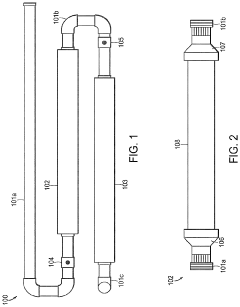
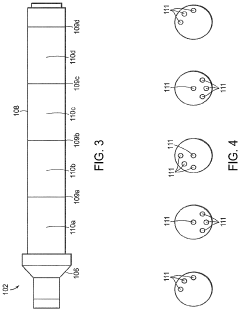
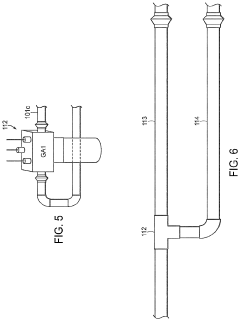
- A mixing device that produces fluidic vortices within a chamber with strategically placed apertures to stabilize hypochlorous acid by controlling proton concentration and pH through the use of buffering agents like acetic acid, allowing for its production and storage for extended periods without the need for onsite generation.


Compositions of hypochlorous acid and methods of manufacture thereof
PatentActiveUS20230065525A1
Innovation
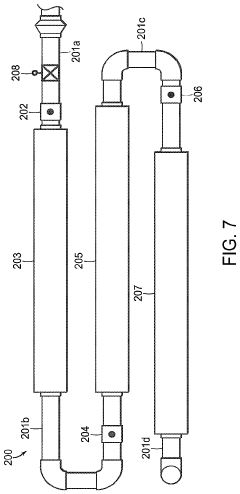
- An air-free mixing method involving a compound that generates a proton and a compound that generates a hypochlorite anion in water, without using electrolysis or chlorine gas, to produce a stable HOCl formulation that can be stored for several months.
Regulatory Framework for HOCI Use
The regulatory framework for Hypochlorous Acid (HOCl) use is complex and multifaceted, involving various governmental agencies and international bodies. In the United States, the Environmental Protection Agency (EPA) plays a crucial role in regulating HOCl as a pesticide under the Federal Insecticide, Fungicide, and Rodenticide Act (FIFRA). The EPA requires registration and approval of HOCl products before they can be marketed and sold as antimicrobial agents.
The Food and Drug Administration (FDA) also has oversight on HOCl, particularly when it is used in food processing or as a medical device. The FDA has cleared certain HOCl-based products for use in wound care and as a preservative in eye care solutions. However, the regulatory status can vary depending on the specific application and concentration of HOCl.
Occupational Safety and Health Administration (OSHA) regulations come into play regarding workplace safety and exposure limits for HOCl. While OSHA does not have a specific standard for HOCl, it falls under the general duty clause requiring employers to provide a safe workplace free from recognized hazards.
Internationally, the European Chemicals Agency (ECHA) regulates HOCl under the Registration, Evaluation, Authorization and Restriction of Chemicals (REACH) regulation. In the EU, HOCl is also subject to the Biocidal Products Regulation (BPR) when used as a disinfectant or preservative.
The World Health Organization (WHO) has recognized HOCl as an effective disinfectant, particularly in the context of water treatment and healthcare settings. However, the WHO also emphasizes the importance of proper handling and application to minimize potential risks.
Many countries have their own regulatory bodies that oversee the use of HOCl. For example, in Canada, Health Canada regulates HOCl under the Pest Control Products Act when used as a disinfectant. In Japan, the Ministry of Health, Labour and Welfare oversees its use in various applications.
Regulatory frameworks often require manufacturers to provide detailed safety data sheets (SDS) and proper labeling for HOCl products. These documents must include information on potential hazards, safe handling procedures, and emergency measures in case of accidental exposure.
As research continues to unveil both the benefits and potential risks of HOCl, regulatory bodies are likely to update their guidelines and requirements. This dynamic regulatory landscape necessitates ongoing vigilance from manufacturers, users, and regulatory agencies to ensure the safe and effective use of HOCl across various applications.
The Food and Drug Administration (FDA) also has oversight on HOCl, particularly when it is used in food processing or as a medical device. The FDA has cleared certain HOCl-based products for use in wound care and as a preservative in eye care solutions. However, the regulatory status can vary depending on the specific application and concentration of HOCl.
Occupational Safety and Health Administration (OSHA) regulations come into play regarding workplace safety and exposure limits for HOCl. While OSHA does not have a specific standard for HOCl, it falls under the general duty clause requiring employers to provide a safe workplace free from recognized hazards.
Internationally, the European Chemicals Agency (ECHA) regulates HOCl under the Registration, Evaluation, Authorization and Restriction of Chemicals (REACH) regulation. In the EU, HOCl is also subject to the Biocidal Products Regulation (BPR) when used as a disinfectant or preservative.
The World Health Organization (WHO) has recognized HOCl as an effective disinfectant, particularly in the context of water treatment and healthcare settings. However, the WHO also emphasizes the importance of proper handling and application to minimize potential risks.
Many countries have their own regulatory bodies that oversee the use of HOCl. For example, in Canada, Health Canada regulates HOCl under the Pest Control Products Act when used as a disinfectant. In Japan, the Ministry of Health, Labour and Welfare oversees its use in various applications.
Regulatory frameworks often require manufacturers to provide detailed safety data sheets (SDS) and proper labeling for HOCl products. These documents must include information on potential hazards, safe handling procedures, and emergency measures in case of accidental exposure.
As research continues to unveil both the benefits and potential risks of HOCl, regulatory bodies are likely to update their guidelines and requirements. This dynamic regulatory landscape necessitates ongoing vigilance from manufacturers, users, and regulatory agencies to ensure the safe and effective use of HOCl across various applications.
Environmental Impact of HOCI
Hypochlorous acid (HOCl) is a powerful oxidizing agent with widespread applications in disinfection and water treatment. However, its environmental impact requires careful consideration. When released into aquatic ecosystems, HOCl can have both positive and negative effects on water quality and aquatic life.
In natural water bodies, HOCl rapidly dissociates into hypochlorite ions and hydrogen ions, depending on the pH level. This process can alter the pH balance of the water, potentially affecting the survival and reproduction of aquatic organisms. The presence of HOCl and its byproducts may also lead to the formation of disinfection byproducts (DBPs) when reacting with organic matter in the water, some of which can be harmful to aquatic life and human health.
The impact of HOCl on aquatic ecosystems varies depending on concentration levels and exposure duration. At low concentrations, it can effectively control harmful microorganisms, potentially improving overall water quality. However, higher concentrations or prolonged exposure can be toxic to fish, invertebrates, and other aquatic organisms, disrupting the ecological balance of water bodies.
In terrestrial environments, the use of HOCl as a disinfectant or in agricultural applications can affect soil microorganisms and plant life. While it can help control plant pathogens, excessive use may harm beneficial soil bacteria and fungi, potentially impacting soil fertility and plant growth. The runoff from treated areas can also contribute to the contamination of nearby water sources.
The atmospheric impact of HOCl is generally considered minimal due to its rapid decomposition in air. However, the production and transportation of HOCl and its precursors may contribute to carbon emissions and other environmental concerns associated with industrial processes.
To mitigate the environmental impact of HOCl, several strategies can be employed. These include optimizing dosage and application methods to minimize excess release into the environment, implementing proper disposal and neutralization techniques for HOCl-containing waste, and developing more environmentally friendly production methods. Additionally, the use of alternative disinfection technologies in certain applications can help reduce reliance on HOCl and its potential environmental impacts.
Ongoing research and monitoring of HOCl's environmental effects are crucial for developing sustainable practices and regulations. This includes studying long-term impacts on ecosystems, assessing the formation and fate of disinfection byproducts, and exploring eco-friendly alternatives that can provide similar disinfection efficacy with reduced environmental risks.
In natural water bodies, HOCl rapidly dissociates into hypochlorite ions and hydrogen ions, depending on the pH level. This process can alter the pH balance of the water, potentially affecting the survival and reproduction of aquatic organisms. The presence of HOCl and its byproducts may also lead to the formation of disinfection byproducts (DBPs) when reacting with organic matter in the water, some of which can be harmful to aquatic life and human health.
The impact of HOCl on aquatic ecosystems varies depending on concentration levels and exposure duration. At low concentrations, it can effectively control harmful microorganisms, potentially improving overall water quality. However, higher concentrations or prolonged exposure can be toxic to fish, invertebrates, and other aquatic organisms, disrupting the ecological balance of water bodies.
In terrestrial environments, the use of HOCl as a disinfectant or in agricultural applications can affect soil microorganisms and plant life. While it can help control plant pathogens, excessive use may harm beneficial soil bacteria and fungi, potentially impacting soil fertility and plant growth. The runoff from treated areas can also contribute to the contamination of nearby water sources.
The atmospheric impact of HOCl is generally considered minimal due to its rapid decomposition in air. However, the production and transportation of HOCl and its precursors may contribute to carbon emissions and other environmental concerns associated with industrial processes.
To mitigate the environmental impact of HOCl, several strategies can be employed. These include optimizing dosage and application methods to minimize excess release into the environment, implementing proper disposal and neutralization techniques for HOCl-containing waste, and developing more environmentally friendly production methods. Additionally, the use of alternative disinfection technologies in certain applications can help reduce reliance on HOCl and its potential environmental impacts.
Ongoing research and monitoring of HOCl's environmental effects are crucial for developing sustainable practices and regulations. This includes studying long-term impacts on ecosystems, assessing the formation and fate of disinfection byproducts, and exploring eco-friendly alternatives that can provide similar disinfection efficacy with reduced environmental risks.
Unlock deeper insights with Patsnap Eureka Quick Research — get a full tech report to explore trends and direct your research. Try now!
Generate Your Research Report Instantly with AI Agent
Supercharge your innovation with Patsnap Eureka AI Agent Platform!