

Improve Cycloidal Drive Alignment for Reduced Wear
APR 27, 20269 MIN READ
Generate Your Research Report Instantly with AI Agent
PatSnap Eureka helps you evaluate technical feasibility & market potential.
Cycloidal Drive Background and Alignment Objectives
Cycloidal drives represent a sophisticated mechanical transmission technology that has evolved significantly since their initial development in the early 20th century. Originally conceived as an alternative to traditional gear systems, these drives utilize the mathematical principles of cycloidal motion to achieve high reduction ratios in compact configurations. The fundamental mechanism involves an eccentric input shaft that drives a cycloidal disc through a series of rolling contacts with fixed pins, creating smooth rotational motion with exceptional torque multiplication capabilities.
The historical development of cycloidal drives can be traced through several key phases, beginning with basic theoretical frameworks in the 1930s and progressing through industrial refinements in the post-war manufacturing boom. Early implementations focused primarily on achieving high reduction ratios, with alignment precision being a secondary consideration. However, as industrial automation demands increased and precision requirements became more stringent, the importance of optimal alignment emerged as a critical performance factor.
Modern cycloidal drive applications span diverse industries including robotics, aerospace, renewable energy systems, and precision manufacturing equipment. These applications have revealed that misalignment issues significantly impact operational efficiency, component longevity, and overall system reliability. The evolution toward higher precision requirements has necessitated advanced alignment methodologies and enhanced manufacturing tolerances.
Current alignment objectives center on minimizing contact stress variations, reducing uneven wear patterns, and optimizing load distribution across cycloidal disc interfaces. Primary technical goals include achieving concentricity tolerances within micrometers, maintaining consistent pin-to-disc clearances, and ensuring uniform contact pressure distribution throughout the engagement cycle. These objectives directly correlate with extended service life, reduced maintenance requirements, and improved power transmission efficiency.
The strategic importance of alignment optimization has intensified with the growing adoption of cycloidal drives in high-precision applications such as robotic joints and satellite positioning systems. Contemporary research focuses on developing predictive alignment models, implementing real-time monitoring systems, and establishing standardized alignment protocols that can accommodate varying operational conditions while maintaining optimal performance parameters throughout the drive's operational lifecycle.
The historical development of cycloidal drives can be traced through several key phases, beginning with basic theoretical frameworks in the 1930s and progressing through industrial refinements in the post-war manufacturing boom. Early implementations focused primarily on achieving high reduction ratios, with alignment precision being a secondary consideration. However, as industrial automation demands increased and precision requirements became more stringent, the importance of optimal alignment emerged as a critical performance factor.
Modern cycloidal drive applications span diverse industries including robotics, aerospace, renewable energy systems, and precision manufacturing equipment. These applications have revealed that misalignment issues significantly impact operational efficiency, component longevity, and overall system reliability. The evolution toward higher precision requirements has necessitated advanced alignment methodologies and enhanced manufacturing tolerances.
Current alignment objectives center on minimizing contact stress variations, reducing uneven wear patterns, and optimizing load distribution across cycloidal disc interfaces. Primary technical goals include achieving concentricity tolerances within micrometers, maintaining consistent pin-to-disc clearances, and ensuring uniform contact pressure distribution throughout the engagement cycle. These objectives directly correlate with extended service life, reduced maintenance requirements, and improved power transmission efficiency.
The strategic importance of alignment optimization has intensified with the growing adoption of cycloidal drives in high-precision applications such as robotic joints and satellite positioning systems. Contemporary research focuses on developing predictive alignment models, implementing real-time monitoring systems, and establishing standardized alignment protocols that can accommodate varying operational conditions while maintaining optimal performance parameters throughout the drive's operational lifecycle.
Market Demand for High-Precision Cycloidal Drives
The global market for high-precision cycloidal drives is experiencing robust growth driven by increasing automation demands across multiple industrial sectors. Manufacturing industries, particularly automotive, aerospace, and semiconductor equipment, require positioning systems with exceptional accuracy and minimal backlash. These applications demand cycloidal drives capable of maintaining precise angular positioning over extended operational periods, making alignment optimization a critical performance factor.
Robotics applications represent a significant demand driver, especially in collaborative robots and precision assembly systems. Modern robotic joints require cycloidal drives that can deliver consistent performance while minimizing wear-related degradation. The semiconductor manufacturing sector particularly values drives with enhanced alignment characteristics, as even microscopic positioning errors can result in substantial production losses and quality issues.
Industrial automation equipment, including CNC machine tools and packaging machinery, increasingly relies on high-precision cycloidal drives for critical motion control applications. These systems operate continuously under varying load conditions, making wear reduction through improved alignment essential for maintaining operational efficiency and reducing maintenance costs.
The renewable energy sector, particularly wind turbine applications, presents growing demand for robust cycloidal drives with superior alignment characteristics. Wind turbine pitch control systems require drives that maintain precision despite harsh environmental conditions and cyclical loading patterns. Enhanced alignment reduces internal stress concentrations, extending operational life and improving system reliability.
Medical device manufacturing and laboratory automation equipment represent emerging high-value market segments. These applications demand cycloidal drives with exceptional precision and longevity, as equipment downtime directly impacts critical operations. The stringent reliability requirements in medical applications drive demand for drives with optimized alignment to minimize wear-related failures.
Market trends indicate increasing preference for cycloidal drives offering predictable performance degradation patterns and extended maintenance intervals. End users prioritize solutions that combine high initial precision with sustained accuracy over operational lifecycles, making alignment optimization a key differentiating factor in competitive markets.
Robotics applications represent a significant demand driver, especially in collaborative robots and precision assembly systems. Modern robotic joints require cycloidal drives that can deliver consistent performance while minimizing wear-related degradation. The semiconductor manufacturing sector particularly values drives with enhanced alignment characteristics, as even microscopic positioning errors can result in substantial production losses and quality issues.
Industrial automation equipment, including CNC machine tools and packaging machinery, increasingly relies on high-precision cycloidal drives for critical motion control applications. These systems operate continuously under varying load conditions, making wear reduction through improved alignment essential for maintaining operational efficiency and reducing maintenance costs.
The renewable energy sector, particularly wind turbine applications, presents growing demand for robust cycloidal drives with superior alignment characteristics. Wind turbine pitch control systems require drives that maintain precision despite harsh environmental conditions and cyclical loading patterns. Enhanced alignment reduces internal stress concentrations, extending operational life and improving system reliability.
Medical device manufacturing and laboratory automation equipment represent emerging high-value market segments. These applications demand cycloidal drives with exceptional precision and longevity, as equipment downtime directly impacts critical operations. The stringent reliability requirements in medical applications drive demand for drives with optimized alignment to minimize wear-related failures.
Market trends indicate increasing preference for cycloidal drives offering predictable performance degradation patterns and extended maintenance intervals. End users prioritize solutions that combine high initial precision with sustained accuracy over operational lifecycles, making alignment optimization a key differentiating factor in competitive markets.
Current Alignment Issues and Wear Challenges
Cycloidal drives face significant alignment challenges that directly contribute to accelerated wear patterns and reduced operational lifespan. The primary alignment issue stems from the inherent complexity of maintaining precise geometric relationships between multiple rotating components, including the input eccentric shaft, cycloidal discs, pin wheels, and output mechanism. Manufacturing tolerances, assembly variations, and operational loads create cumulative misalignment effects that compromise the theoretical perfect engagement between cycloidal disc lobes and circumferential pins.
Eccentric shaft misalignment represents one of the most critical challenges, as even minor deviations from the designed eccentricity can cause uneven load distribution across the cycloidal disc profile. This misalignment results in localized contact stress concentrations, leading to accelerated wear on specific portions of the disc rather than uniform wear distribution. The phenomenon becomes particularly pronounced under high-torque applications where the increased forces amplify the effects of geometric imperfections.
Pin wheel alignment issues constitute another major wear contributor, where improper pin positioning or pin diameter variations create irregular contact patterns with the cycloidal disc. When pins are not perfectly positioned on their theoretical circle or exhibit dimensional inconsistencies, the cycloidal motion becomes distorted, causing sliding friction instead of the intended rolling contact. This sliding action generates excessive heat and accelerates material degradation at contact interfaces.
Dynamic alignment challenges emerge during operation due to thermal expansion, bearing clearances, and structural deflections under load. Temperature variations cause differential expansion rates between components, altering the precise geometric relationships established during assembly. Bearing wear and clearance growth over time further compound alignment issues, creating progressive deterioration cycles where initial misalignment accelerates wear, which in turn worsens alignment conditions.
The cumulative effect of these alignment challenges manifests as irregular wear patterns, including pitting, scoring, and material fatigue on cycloidal disc surfaces and pins. Vibration levels increase as alignment degrades, creating additional dynamic loads that accelerate the wear process. Current measurement and adjustment methods often lack the precision required to detect and correct minor misalignments before they develop into significant wear problems, highlighting the need for advanced alignment improvement strategies.
Eccentric shaft misalignment represents one of the most critical challenges, as even minor deviations from the designed eccentricity can cause uneven load distribution across the cycloidal disc profile. This misalignment results in localized contact stress concentrations, leading to accelerated wear on specific portions of the disc rather than uniform wear distribution. The phenomenon becomes particularly pronounced under high-torque applications where the increased forces amplify the effects of geometric imperfections.
Pin wheel alignment issues constitute another major wear contributor, where improper pin positioning or pin diameter variations create irregular contact patterns with the cycloidal disc. When pins are not perfectly positioned on their theoretical circle or exhibit dimensional inconsistencies, the cycloidal motion becomes distorted, causing sliding friction instead of the intended rolling contact. This sliding action generates excessive heat and accelerates material degradation at contact interfaces.
Dynamic alignment challenges emerge during operation due to thermal expansion, bearing clearances, and structural deflections under load. Temperature variations cause differential expansion rates between components, altering the precise geometric relationships established during assembly. Bearing wear and clearance growth over time further compound alignment issues, creating progressive deterioration cycles where initial misalignment accelerates wear, which in turn worsens alignment conditions.
The cumulative effect of these alignment challenges manifests as irregular wear patterns, including pitting, scoring, and material fatigue on cycloidal disc surfaces and pins. Vibration levels increase as alignment degrades, creating additional dynamic loads that accelerate the wear process. Current measurement and adjustment methods often lack the precision required to detect and correct minor misalignments before they develop into significant wear problems, highlighting the need for advanced alignment improvement strategies.
Existing Alignment Solutions for Wear Reduction
01 Surface treatment and coating technologies for wear reduction
Various surface treatment methods and coating technologies can be applied to cycloidal drive components to reduce wear and extend service life. These treatments include specialized coatings, surface hardening processes, and protective layers that minimize friction and abrasion between moving parts. The treatments help maintain dimensional accuracy and reduce maintenance requirements over the operational lifetime of the drive system.- Surface treatment and coating technologies for wear reduction: Various surface treatment methods and specialized coatings can be applied to cycloidal drive components to significantly reduce wear. These treatments modify the surface properties of the materials, creating harder, more durable surfaces that resist abrasion and friction. Advanced coating technologies can provide enhanced lubrication properties and create protective barriers that extend component life and maintain precision in cycloidal drive systems.
- Material selection and heat treatment optimization: The choice of materials and their heat treatment processes play a crucial role in minimizing wear in cycloidal drives. Advanced metallurgical techniques and specialized alloys can provide superior hardness, toughness, and wear resistance. Proper heat treatment protocols ensure optimal material properties that can withstand the high contact stresses and cyclic loading conditions typical in cycloidal drive applications.
- Lubrication systems and tribological improvements: Enhanced lubrication systems and tribological design modifications are essential for reducing wear in cycloidal drives. Advanced lubricants with specific additives can form protective films on contact surfaces, while improved lubrication delivery systems ensure consistent coverage. Tribological optimization involves designing surface textures and contact geometries that minimize friction and wear while maintaining efficient power transmission.
- Geometric design optimization and contact stress reduction: Optimizing the geometric parameters of cycloidal drives can significantly reduce contact stresses and associated wear. This includes modifications to tooth profiles, contact ratios, and load distribution patterns. Advanced design methodologies focus on achieving more uniform stress distribution across contact surfaces, reducing peak stresses that lead to accelerated wear and improving overall system durability.
- Manufacturing precision and quality control methods: Achieving high manufacturing precision and implementing rigorous quality control measures are critical for minimizing wear in cycloidal drives. Advanced manufacturing techniques ensure accurate component dimensions and surface finishes that reduce initial wear rates. Quality control methods include precision measurement systems and testing protocols that verify component specifications and predict wear performance under operational conditions.
02 Material selection and composition optimization
The selection of appropriate materials and optimization of their composition plays a crucial role in minimizing wear in cycloidal drives. Advanced alloys, heat-treated steels, and composite materials with enhanced wear resistance properties are utilized to improve durability. Material engineering focuses on achieving optimal hardness, toughness, and fatigue resistance to withstand the complex loading conditions in cycloidal mechanisms.Expand Specific Solutions03 Lubrication systems and tribological improvements
Effective lubrication systems are essential for reducing wear in cycloidal drives. Advanced lubricants, oil distribution systems, and tribological enhancements help minimize friction between contacting surfaces. These systems ensure proper film formation, heat dissipation, and contamination control, which are critical for maintaining low wear rates and optimal performance throughout the drive's operational life.Expand Specific Solutions04 Geometric design optimization and tolerance control
Precise geometric design and tight tolerance control are fundamental to minimizing wear in cycloidal drives. Optimized tooth profiles, clearance management, and dimensional accuracy help ensure proper load distribution and reduce stress concentrations. Advanced manufacturing techniques and quality control measures maintain the required precision to minimize uneven wear patterns and extend component life.Expand Specific Solutions05 Monitoring and predictive maintenance systems
Implementation of monitoring systems and predictive maintenance strategies helps detect and prevent excessive wear in cycloidal drives. Sensor technologies, vibration analysis, and condition monitoring techniques enable early detection of wear-related issues. These systems provide real-time feedback on drive performance and help optimize maintenance schedules to prevent catastrophic failures and extend equipment life.Expand Specific Solutions
Key Players in Cycloidal Drive Manufacturing
The cycloidal drive alignment improvement market represents a mature industrial technology sector experiencing steady growth driven by increasing automation demands across robotics, precision machinery, and automotive applications. The industry is in a consolidation phase with established players like NTN Corp., Robert Bosch GmbH, and DENSO Corp. leveraging decades of precision engineering expertise alongside emerging Chinese manufacturers such as Ningbo Zhongda Leader and Beijing Chietom Precision Transmission Technology. Technology maturity varies significantly, with German and Japanese companies like thyssenkrupp AG, KUKA Deutschland, and Honda Motor demonstrating advanced integration capabilities, while Chinese firms and research institutions including Shanghai Jiao Tong University and Chongqing University are rapidly advancing through focused R&D investments. The competitive landscape shows a geographic divide between established Western precision transmission leaders and agile Asian manufacturers targeting cost-effective solutions for industrial automation applications.
NTN Corp. (Osaka)
Technical Solution: NTN Corporation has developed advanced cycloidal drive systems with precision manufacturing techniques focusing on improved gear tooth profiles and enhanced surface treatments. Their approach incorporates optimized pin-wheel geometry with specialized bearing arrangements to minimize backlash and reduce contact stress. The company utilizes advanced materials and heat treatment processes to improve wear resistance, while implementing precise assembly procedures with controlled tolerances to ensure proper alignment. Their cycloidal reducers feature enhanced lubrication systems and modified tooth profiles that distribute loads more evenly across contact surfaces, significantly extending operational life and reducing maintenance requirements.
Strengths: Established expertise in bearing technology and precision manufacturing, strong quality control systems. Weaknesses: Higher manufacturing costs due to precision requirements, complex assembly processes.
Robert Bosch GmbH
Technical Solution: Bosch has implemented intelligent cycloidal drive alignment systems incorporating sensor-based monitoring and adaptive control mechanisms. Their solution features real-time alignment correction using embedded sensors that detect misalignment conditions and automatically adjust drive parameters to minimize wear. The system includes predictive maintenance algorithms that analyze vibration patterns and load distributions to optimize performance. Bosch's approach integrates advanced materials science with digital control systems, utilizing smart lubrication management and temperature monitoring to maintain optimal operating conditions and extend component life through proactive alignment management.
Strengths: Advanced sensor technology integration, strong software development capabilities, comprehensive system approach. Weaknesses: Higher complexity requiring specialized maintenance, increased initial investment costs.
Core Innovations in Cycloidal Drive Precision
Cycloidal reducer
PatentInactiveUS20190113105A1
Innovation
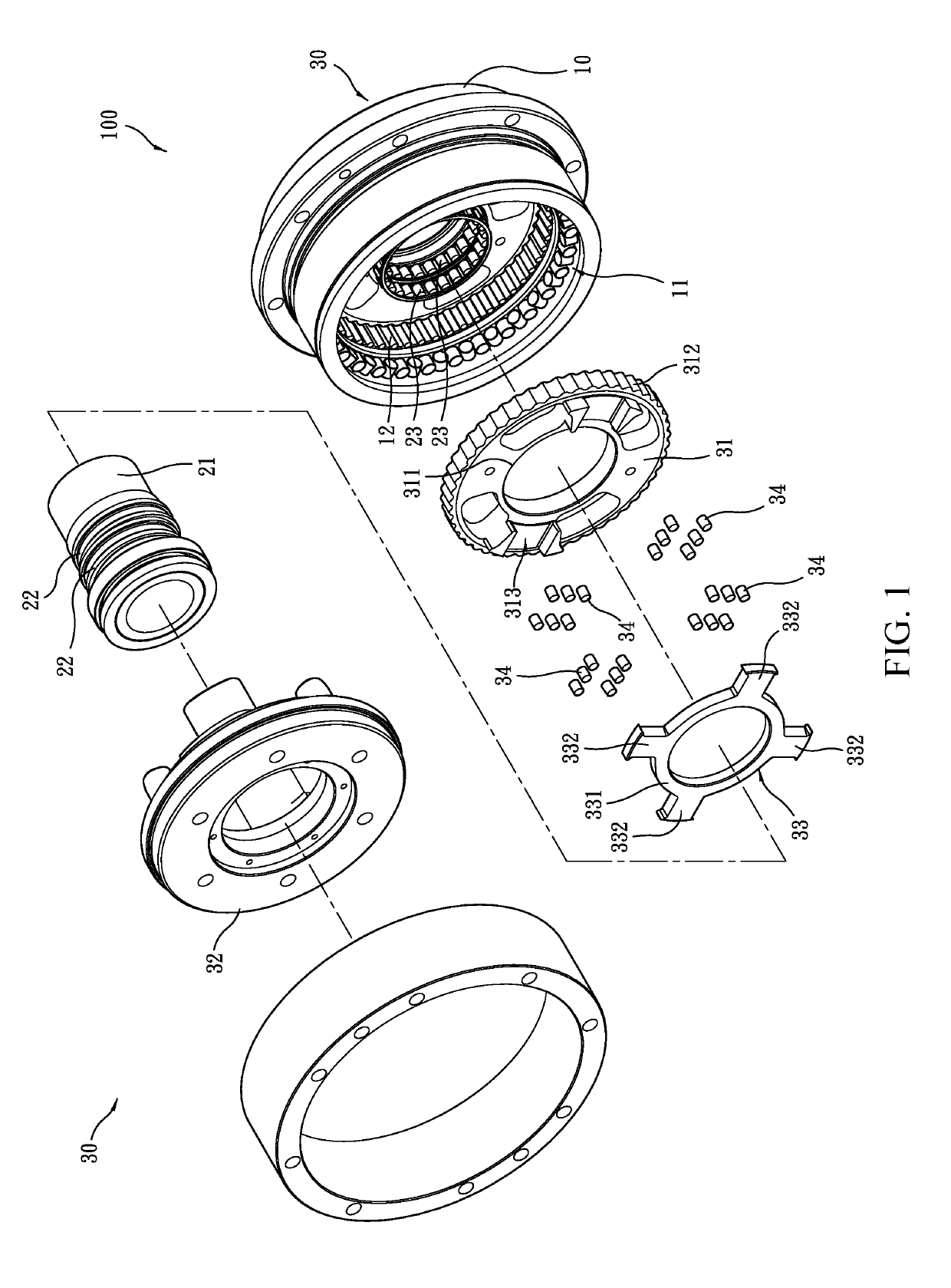
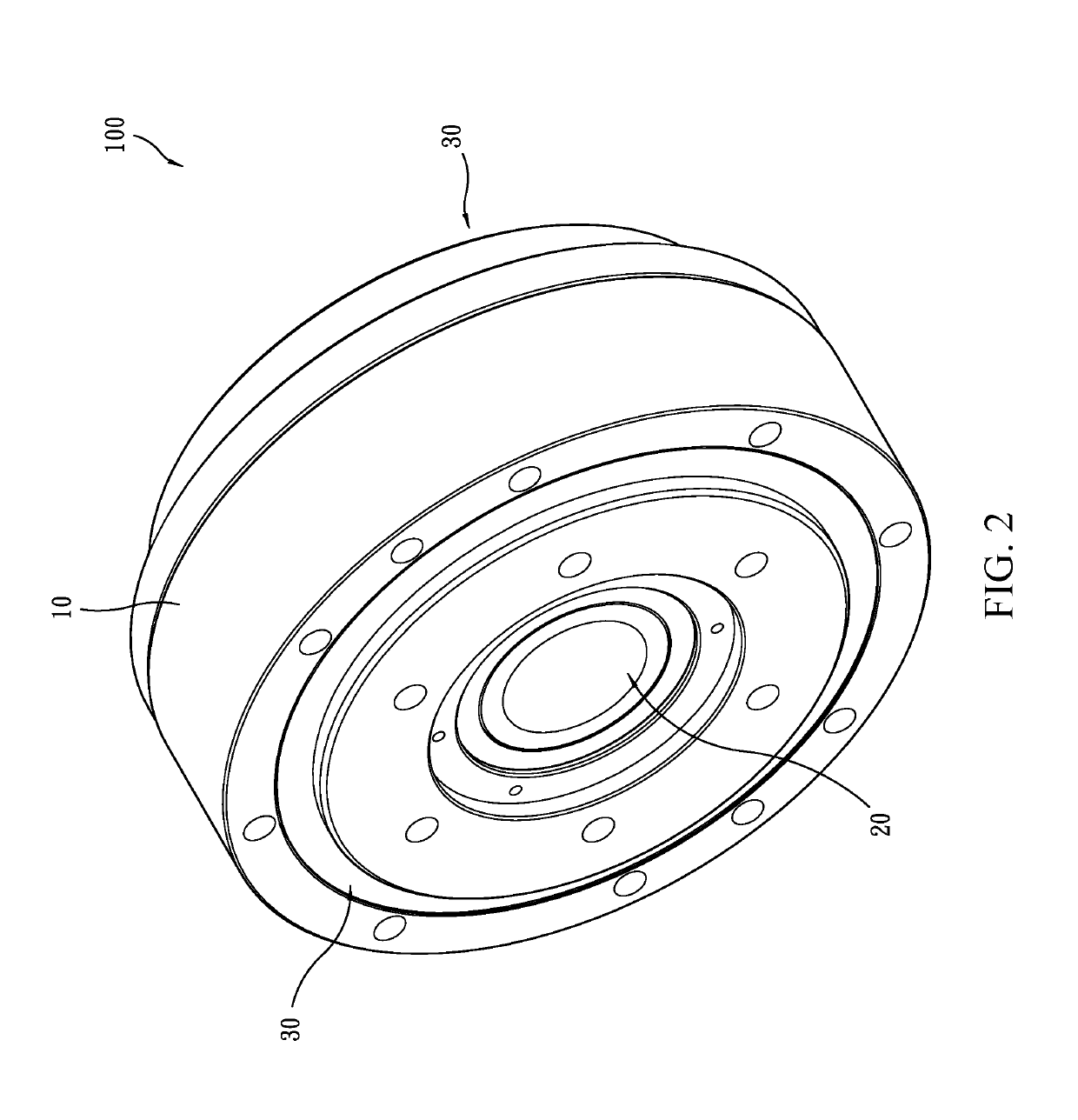
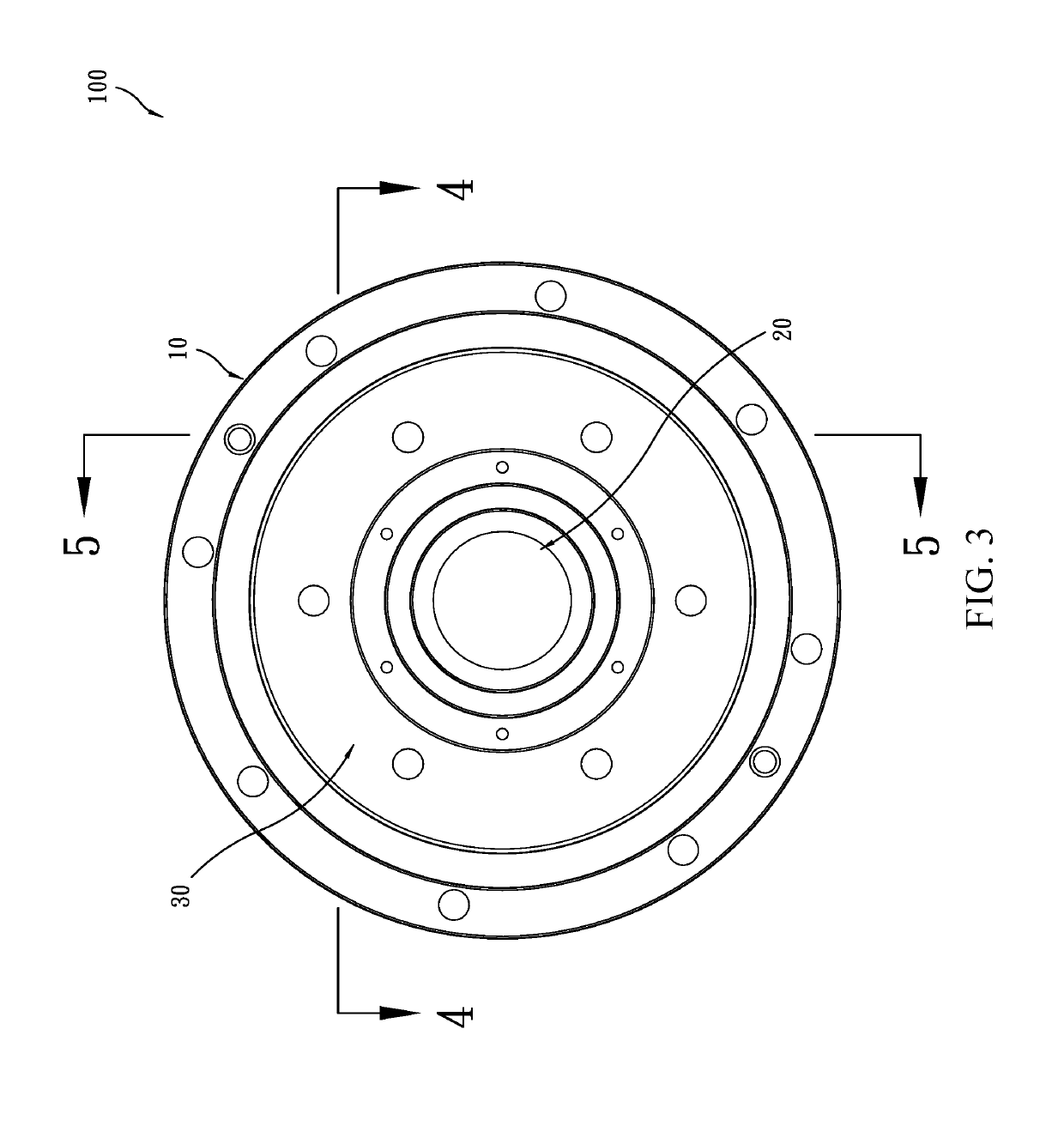
- The cycloidal reducer design incorporates inclined sidewalls on the cycloidal disc, cross Oldham coupling member, and output member troughs, allowing rolling elements to be positioned at an angle, reducing direct impacts and eliminating the need for expanded trough widths, thus enhancing assembly efficiency, reducing backlash, and improving positioning accuracy.

Cycloidal speed reducer and in-wheel motor drive device provided with same
PatentWO2016017351A1
Innovation
- A cycloid reducer design with a second rolling bearing fitted to the input shaft with a clearance fit, featuring a radial second oil supply hole that opens to the fitting portion with the bearing, ensuring efficient lubrication and preventing wear at the bearing surfaces, combined with eccentric portions at 180-degree phases to stabilize the input shaft and evenly distribute lubrication.


Manufacturing Standards for Cycloidal Drives
Manufacturing standards for cycloidal drives represent a critical framework that directly impacts alignment precision and wear reduction. Current international standards, including ISO 12924 and AGMA 6123, establish fundamental requirements for dimensional accuracy, surface finish, and assembly tolerances. However, these standards often lack specific provisions for advanced alignment methodologies that could significantly reduce operational wear patterns.
The manufacturing tolerance specifications for cycloidal components typically range from IT6 to IT8 grade precision, with critical surfaces requiring even tighter controls. Pin positioning accuracy must maintain concentricity within 0.005mm, while cycloidal disc profiles demand form tolerances below 0.003mm. These stringent requirements necessitate specialized manufacturing processes and quality control protocols that extend beyond conventional gear manufacturing standards.
Surface finish requirements play a pivotal role in wear reduction, with Ra values typically specified between 0.4 to 0.8 micrometers for contact surfaces. Advanced manufacturing standards increasingly emphasize surface texture parameters beyond traditional roughness measurements, incorporating skewness and kurtosis values to optimize contact characteristics. These enhanced surface specifications directly correlate with improved alignment stability and reduced friction coefficients during operation.
Assembly standards present unique challenges for cycloidal drives, particularly regarding phase alignment between multiple cycloidal discs and output pin positioning. Current manufacturing protocols often rely on traditional measurement techniques that may not capture dynamic alignment variations under load conditions. Progressive manufacturers are developing enhanced assembly standards that incorporate real-time alignment monitoring and adaptive positioning systems.
Quality assurance standards for cycloidal drives require comprehensive testing protocols that validate both static and dynamic alignment characteristics. These include coordinate measuring machine verification, gear testing equipment validation, and specialized cycloidal motion analyzers. The integration of digital manufacturing standards enables real-time process monitoring and statistical process control, ensuring consistent alignment quality across production batches.
Emerging manufacturing standards increasingly focus on predictive maintenance integration, requiring embedded sensor compatibility and data acquisition capabilities. These forward-looking standards establish protocols for condition monitoring systems that can detect alignment degradation before significant wear occurs, representing a paradigm shift toward proactive maintenance strategies in cycloidal drive applications.
The manufacturing tolerance specifications for cycloidal components typically range from IT6 to IT8 grade precision, with critical surfaces requiring even tighter controls. Pin positioning accuracy must maintain concentricity within 0.005mm, while cycloidal disc profiles demand form tolerances below 0.003mm. These stringent requirements necessitate specialized manufacturing processes and quality control protocols that extend beyond conventional gear manufacturing standards.
Surface finish requirements play a pivotal role in wear reduction, with Ra values typically specified between 0.4 to 0.8 micrometers for contact surfaces. Advanced manufacturing standards increasingly emphasize surface texture parameters beyond traditional roughness measurements, incorporating skewness and kurtosis values to optimize contact characteristics. These enhanced surface specifications directly correlate with improved alignment stability and reduced friction coefficients during operation.
Assembly standards present unique challenges for cycloidal drives, particularly regarding phase alignment between multiple cycloidal discs and output pin positioning. Current manufacturing protocols often rely on traditional measurement techniques that may not capture dynamic alignment variations under load conditions. Progressive manufacturers are developing enhanced assembly standards that incorporate real-time alignment monitoring and adaptive positioning systems.
Quality assurance standards for cycloidal drives require comprehensive testing protocols that validate both static and dynamic alignment characteristics. These include coordinate measuring machine verification, gear testing equipment validation, and specialized cycloidal motion analyzers. The integration of digital manufacturing standards enables real-time process monitoring and statistical process control, ensuring consistent alignment quality across production batches.
Emerging manufacturing standards increasingly focus on predictive maintenance integration, requiring embedded sensor compatibility and data acquisition capabilities. These forward-looking standards establish protocols for condition monitoring systems that can detect alignment degradation before significant wear occurs, representing a paradigm shift toward proactive maintenance strategies in cycloidal drive applications.
Predictive Maintenance for Cycloidal Systems
Predictive maintenance represents a paradigm shift in cycloidal drive system management, transitioning from reactive repair strategies to proactive condition monitoring approaches. This methodology leverages advanced sensor technologies, data analytics, and machine learning algorithms to predict potential failures before they occur, thereby minimizing unplanned downtime and extending equipment lifespan. For cycloidal drives, predictive maintenance becomes particularly crucial due to their complex mechanical interactions and susceptibility to alignment-related wear patterns.
The foundation of predictive maintenance for cycloidal systems relies on continuous monitoring of key performance indicators including vibration signatures, temperature variations, lubricant condition, and acoustic emissions. Modern sensor arrays can detect minute changes in operational parameters that precede catastrophic failures. Vibration analysis proves especially valuable, as misalignment in cycloidal drives generates distinctive frequency patterns that can be identified through spectral analysis and trend monitoring.
Advanced diagnostic algorithms utilize machine learning models trained on historical operational data to establish baseline performance profiles for individual cycloidal units. These models can identify deviations from normal operating conditions, enabling maintenance teams to schedule interventions during planned downtime windows. The integration of Internet of Things (IoT) connectivity allows real-time data transmission to centralized monitoring systems, facilitating remote diagnostics and expert analysis.
Implementation of predictive maintenance strategies requires careful consideration of sensor placement, data acquisition frequencies, and threshold establishment for alarm conditions. Critical monitoring points include input and output shaft bearings, cycloidal disc interfaces, and pin roller assemblies where alignment issues typically manifest first. Temperature sensors positioned at strategic locations can detect localized heating caused by increased friction from misalignment conditions.
The economic benefits of predictive maintenance for cycloidal systems extend beyond simple cost avoidance. Organizations implementing comprehensive monitoring programs report significant improvements in overall equipment effectiveness, reduced spare parts inventory requirements, and optimized maintenance scheduling. Furthermore, the data collected through predictive maintenance initiatives provides valuable insights for design improvements and operational optimization, creating a continuous feedback loop for system enhancement.
The foundation of predictive maintenance for cycloidal systems relies on continuous monitoring of key performance indicators including vibration signatures, temperature variations, lubricant condition, and acoustic emissions. Modern sensor arrays can detect minute changes in operational parameters that precede catastrophic failures. Vibration analysis proves especially valuable, as misalignment in cycloidal drives generates distinctive frequency patterns that can be identified through spectral analysis and trend monitoring.
Advanced diagnostic algorithms utilize machine learning models trained on historical operational data to establish baseline performance profiles for individual cycloidal units. These models can identify deviations from normal operating conditions, enabling maintenance teams to schedule interventions during planned downtime windows. The integration of Internet of Things (IoT) connectivity allows real-time data transmission to centralized monitoring systems, facilitating remote diagnostics and expert analysis.
Implementation of predictive maintenance strategies requires careful consideration of sensor placement, data acquisition frequencies, and threshold establishment for alarm conditions. Critical monitoring points include input and output shaft bearings, cycloidal disc interfaces, and pin roller assemblies where alignment issues typically manifest first. Temperature sensors positioned at strategic locations can detect localized heating caused by increased friction from misalignment conditions.
The economic benefits of predictive maintenance for cycloidal systems extend beyond simple cost avoidance. Organizations implementing comprehensive monitoring programs report significant improvements in overall equipment effectiveness, reduced spare parts inventory requirements, and optimized maintenance scheduling. Furthermore, the data collected through predictive maintenance initiatives provides valuable insights for design improvements and operational optimization, creating a continuous feedback loop for system enhancement.
Unlock deeper insights with PatSnap Eureka Quick Research — get a full tech report to explore trends and direct your research. Try now!
Generate Your Research Report Instantly with AI Agent
Supercharge your innovation with PatSnap Eureka AI Agent Platform!