

Improving Containment Systems in Pressurized Water Reactors
MAR 10, 20269 MIN READ
Generate Your Research Report Instantly with AI Agent
PatSnap Eureka helps you evaluate technical feasibility & market potential.
PWR Containment Evolution and Safety Objectives
The evolution of pressurized water reactor containment systems represents a continuous journey toward enhanced nuclear safety, driven by lessons learned from operational experience, regulatory developments, and technological advancements. Since the inception of commercial nuclear power in the 1950s, containment design philosophy has undergone significant transformations, evolving from basic pressure vessel concepts to sophisticated multi-barrier systems incorporating passive safety features and advanced materials.
Early PWR containment designs primarily focused on containing radioactive materials during design basis accidents, with large dry containments and ice condenser systems representing the dominant approaches. The Three Mile Island accident in 1979 marked a pivotal moment, highlighting the importance of severe accident management and hydrogen control, leading to fundamental shifts in safety objectives and design requirements.
The Chernobyl disaster further emphasized the critical role of robust containment systems, while the Fukushima accident underscored the necessity for beyond-design-basis event preparedness. These events collectively shaped modern containment philosophy, expanding safety objectives beyond traditional design basis accidents to encompass severe accident scenarios, extended station blackout conditions, and external hazards.
Contemporary safety objectives for PWR containment systems encompass multiple layers of protection. Primary objectives include maintaining structural integrity during design basis accidents, preventing uncontrolled release of radioactive materials, and providing adequate heat removal capabilities. Secondary objectives focus on severe accident management, including core melt accommodation, hydrogen management, and maintaining containment function during extended periods without external power.
Modern containment evolution has embraced passive safety concepts, reducing reliance on active systems and operator actions. Generation III+ reactors incorporate enhanced containment designs featuring passive cooling systems, improved filtration capabilities, and advanced materials resistant to high temperatures and radiation. These developments reflect a paradigm shift toward inherently safer designs that can maintain safety functions without external intervention.
The integration of digital technologies and advanced monitoring systems has further enhanced containment capabilities, enabling real-time assessment of containment conditions and automated response systems. Future containment evolution continues to focus on simplification, enhanced reliability, and improved accident tolerance, establishing increasingly robust barriers against radiological release while maintaining economic viability for nuclear power generation.
Early PWR containment designs primarily focused on containing radioactive materials during design basis accidents, with large dry containments and ice condenser systems representing the dominant approaches. The Three Mile Island accident in 1979 marked a pivotal moment, highlighting the importance of severe accident management and hydrogen control, leading to fundamental shifts in safety objectives and design requirements.
The Chernobyl disaster further emphasized the critical role of robust containment systems, while the Fukushima accident underscored the necessity for beyond-design-basis event preparedness. These events collectively shaped modern containment philosophy, expanding safety objectives beyond traditional design basis accidents to encompass severe accident scenarios, extended station blackout conditions, and external hazards.
Contemporary safety objectives for PWR containment systems encompass multiple layers of protection. Primary objectives include maintaining structural integrity during design basis accidents, preventing uncontrolled release of radioactive materials, and providing adequate heat removal capabilities. Secondary objectives focus on severe accident management, including core melt accommodation, hydrogen management, and maintaining containment function during extended periods without external power.
Modern containment evolution has embraced passive safety concepts, reducing reliance on active systems and operator actions. Generation III+ reactors incorporate enhanced containment designs featuring passive cooling systems, improved filtration capabilities, and advanced materials resistant to high temperatures and radiation. These developments reflect a paradigm shift toward inherently safer designs that can maintain safety functions without external intervention.
The integration of digital technologies and advanced monitoring systems has further enhanced containment capabilities, enabling real-time assessment of containment conditions and automated response systems. Future containment evolution continues to focus on simplification, enhanced reliability, and improved accident tolerance, establishing increasingly robust barriers against radiological release while maintaining economic viability for nuclear power generation.
Nuclear Power Market Demand for Enhanced Containment
The global nuclear power industry is experiencing renewed momentum driven by climate change commitments and energy security concerns, creating substantial demand for enhanced containment systems in pressurized water reactors. Major nuclear markets including the United States, France, China, and emerging economies are prioritizing safety upgrades and new reactor construction, with containment system improvements representing a critical component of these initiatives.
Current market drivers stem from multiple regulatory and operational factors. Post-Fukushima safety requirements have mandated comprehensive containment system enhancements across existing reactor fleets, while new reactor projects incorporate advanced containment designs as standard features. The growing emphasis on extending reactor operational lifespans to 60-80 years necessitates containment system upgrades to maintain structural integrity and safety margins throughout extended service periods.
The market demand encompasses several key segments including passive containment cooling systems, filtered containment venting systems, and advanced structural materials for containment vessels. Utilities are increasingly seeking solutions that combine enhanced safety performance with reduced maintenance requirements and operational flexibility. The integration of digital monitoring systems and predictive maintenance technologies represents an expanding market segment within containment system modernization.
Regional market dynamics vary significantly based on nuclear fleet characteristics and regulatory frameworks. Established nuclear markets focus primarily on retrofitting existing facilities with enhanced containment features, while emerging nuclear nations emphasize incorporating state-of-the-art containment technologies in new reactor designs. The small modular reactor segment presents additional opportunities for innovative containment solutions tailored to compact reactor configurations.
Economic factors driving market demand include the need to maintain competitive electricity generation costs while meeting stringent safety standards. Enhanced containment systems that demonstrate improved accident mitigation capabilities support license renewal processes and public acceptance, directly impacting long-term plant viability and profitability in competitive electricity markets.
Current market drivers stem from multiple regulatory and operational factors. Post-Fukushima safety requirements have mandated comprehensive containment system enhancements across existing reactor fleets, while new reactor projects incorporate advanced containment designs as standard features. The growing emphasis on extending reactor operational lifespans to 60-80 years necessitates containment system upgrades to maintain structural integrity and safety margins throughout extended service periods.
The market demand encompasses several key segments including passive containment cooling systems, filtered containment venting systems, and advanced structural materials for containment vessels. Utilities are increasingly seeking solutions that combine enhanced safety performance with reduced maintenance requirements and operational flexibility. The integration of digital monitoring systems and predictive maintenance technologies represents an expanding market segment within containment system modernization.
Regional market dynamics vary significantly based on nuclear fleet characteristics and regulatory frameworks. Established nuclear markets focus primarily on retrofitting existing facilities with enhanced containment features, while emerging nuclear nations emphasize incorporating state-of-the-art containment technologies in new reactor designs. The small modular reactor segment presents additional opportunities for innovative containment solutions tailored to compact reactor configurations.
Economic factors driving market demand include the need to maintain competitive electricity generation costs while meeting stringent safety standards. Enhanced containment systems that demonstrate improved accident mitigation capabilities support license renewal processes and public acceptance, directly impacting long-term plant viability and profitability in competitive electricity markets.
Current PWR Containment Limitations and Challenges
Pressurized Water Reactor containment systems face significant structural integrity challenges under extreme accident conditions. Current containment designs, primarily based on large dry containment or ice condenser configurations, struggle with hydrogen accumulation and distribution during severe accidents. The potential for hydrogen combustion or detonation poses substantial risks to containment integrity, particularly in scenarios involving core melt accidents where large quantities of hydrogen are generated through metal-water reactions.
Thermal management represents another critical limitation in existing PWR containment systems. During loss-of-coolant accidents or station blackout events, containment temperatures can exceed design limits, leading to structural degradation and potential failure of critical safety systems. The passive cooling capabilities of current designs are often insufficient to maintain acceptable temperature profiles during extended accident scenarios without active intervention systems.
Pressure management challenges persist across various PWR containment designs. The rapid pressure rise during design basis accidents can approach or exceed containment design pressure limits. Current pressure suppression systems, while effective under normal operating conditions, may become inadequate during beyond-design-basis events, potentially compromising the containment's ability to prevent radioactive release to the environment.
Aging infrastructure presents mounting concerns for existing PWR containment systems. Many operating reactors have containment structures approaching or exceeding their original design lifespans. Concrete degradation, steel liner corrosion, and prestressed tendon relaxation contribute to reduced structural margins and increased maintenance requirements. These aging effects compound existing design limitations and create additional safety challenges.
Filtration and fission product retention capabilities in current containment systems show notable deficiencies. Existing designs lack adequate provisions for removing radioactive aerosols and gases during severe accidents. The absence of comprehensive filtered containment venting systems in many PWR designs limits operators' ability to manage containment pressure while minimizing environmental releases during extended emergency scenarios.
Human interface and accessibility limitations further constrain containment system effectiveness. Current designs often restrict personnel access during emergency conditions, limiting manual intervention capabilities when automated systems fail. The complexity of existing containment isolation systems can lead to operational errors during high-stress emergency situations, potentially compromising containment integrity when it is most critical for public safety.
Thermal management represents another critical limitation in existing PWR containment systems. During loss-of-coolant accidents or station blackout events, containment temperatures can exceed design limits, leading to structural degradation and potential failure of critical safety systems. The passive cooling capabilities of current designs are often insufficient to maintain acceptable temperature profiles during extended accident scenarios without active intervention systems.
Pressure management challenges persist across various PWR containment designs. The rapid pressure rise during design basis accidents can approach or exceed containment design pressure limits. Current pressure suppression systems, while effective under normal operating conditions, may become inadequate during beyond-design-basis events, potentially compromising the containment's ability to prevent radioactive release to the environment.
Aging infrastructure presents mounting concerns for existing PWR containment systems. Many operating reactors have containment structures approaching or exceeding their original design lifespans. Concrete degradation, steel liner corrosion, and prestressed tendon relaxation contribute to reduced structural margins and increased maintenance requirements. These aging effects compound existing design limitations and create additional safety challenges.
Filtration and fission product retention capabilities in current containment systems show notable deficiencies. Existing designs lack adequate provisions for removing radioactive aerosols and gases during severe accidents. The absence of comprehensive filtered containment venting systems in many PWR designs limits operators' ability to manage containment pressure while minimizing environmental releases during extended emergency scenarios.
Human interface and accessibility limitations further constrain containment system effectiveness. Current designs often restrict personnel access during emergency conditions, limiting manual intervention capabilities when automated systems fail. The complexity of existing containment isolation systems can lead to operational errors during high-stress emergency situations, potentially compromising containment integrity when it is most critical for public safety.
Advanced Containment Design Solutions and Materials
01 Primary containment structures for hazardous materials
Containment systems designed with primary barriers to prevent the release of hazardous materials, chemicals, or radioactive substances. These structures typically include specialized vessels, tanks, or chambers constructed from materials resistant to corrosion and degradation. The primary containment provides the first line of defense against leaks or spills, ensuring safe storage and handling of dangerous materials.- Primary containment structures for hazardous materials: Containment systems designed with primary barriers to prevent the release of hazardous materials, including chemical substances, radioactive materials, or biological agents. These structures typically feature reinforced walls, sealed joints, and specialized materials resistant to corrosion and degradation. The primary containment acts as the first line of defense against leaks or spills, ensuring environmental and personnel safety.
- Secondary containment and backup systems: Implementation of secondary containment layers that provide additional protection in case primary containment fails. These systems include double-walled vessels, catch basins, and overflow prevention mechanisms. The secondary containment is designed to capture and contain any materials that breach the primary barrier, preventing environmental contamination and facilitating safe cleanup procedures.
- Monitoring and detection systems for containment integrity: Integration of advanced monitoring technologies to continuously assess containment system integrity. These include sensors for detecting leaks, pressure changes, temperature variations, and structural deformations. Real-time monitoring systems provide early warning of potential failures, enabling prompt intervention and maintenance to prevent containment breaches.
- Modular and portable containment solutions: Development of flexible containment systems that can be rapidly deployed and reconfigured for various applications. These modular designs allow for easy transportation, installation, and expansion based on operational needs. Portable containment units are particularly useful for temporary storage, emergency response situations, and field operations where permanent structures are impractical.
- Specialized containment for nuclear and high-risk applications: Advanced containment systems specifically engineered for nuclear facilities, radioactive waste storage, and other high-risk environments. These systems incorporate multiple redundant safety features, radiation shielding, pressure suppression mechanisms, and fail-safe designs. The containment structures are built to withstand extreme conditions including natural disasters, equipment failures, and potential accident scenarios.
02 Secondary containment and leak detection systems
Multi-layered containment approaches incorporating secondary barriers and monitoring systems to detect potential breaches. These systems include double-wall constructions, leak detection sensors, and alarm mechanisms that provide early warning of containment failure. The secondary layer acts as a backup to capture any materials that escape the primary containment, preventing environmental contamination.Expand Specific Solutions03 Modular and portable containment solutions
Flexible containment systems designed for temporary deployment or mobile applications. These solutions feature lightweight, transportable components that can be rapidly assembled and disassembled as needed. Applications include emergency response scenarios, temporary storage during facility maintenance, and field operations where permanent infrastructure is impractical.Expand Specific Solutions04 Containment systems with pressure management
Advanced containment designs incorporating pressure control mechanisms to handle materials under varying pressure conditions. These systems include pressure relief valves, vacuum maintenance capabilities, and structural reinforcements to withstand internal or external pressure differentials. Such features are critical for containing volatile substances or maintaining specific atmospheric conditions.Expand Specific Solutions05 Integrated containment and filtration systems
Comprehensive containment solutions that combine physical barriers with filtration and purification technologies. These systems actively process contained atmospheres or liquids to remove contaminants, control temperature, or maintain specific environmental conditions. Integration of filtration extends containment effectiveness and enables longer-term storage or processing of hazardous materials.Expand Specific Solutions
Major Nuclear Vendors and Containment Specialists
The pressurized water reactor containment systems market represents a mature yet evolving sector within the nuclear power industry, currently valued at several billion dollars globally with steady growth driven by new reactor construction and safety upgrades. The competitive landscape is dominated by established players including Toshiba Corp., which brings decades of nuclear engineering expertise, and major Chinese entities like China General Nuclear Power Corp., CGN Power Co. Ltd., and China Nuclear Power Engineering Co. Ltd., reflecting China's aggressive nuclear expansion strategy. Technology maturity varies significantly across players, with companies like Lockheed Martin Corp. and Holtec International Inc. leading in advanced containment technologies and innovative safety systems, while research institutions such as Shanghai Nuclear Engineering Research & Design Institute and China Nuclear Power Technology Research Institute focus on next-generation containment solutions. The market shows regional concentration with strong Asian presence, particularly Chinese state-controlled enterprises, alongside established Western technology leaders, indicating a competitive environment where technological advancement and regulatory compliance drive market positioning.
Toshiba Corp.
Technical Solution: Toshiba has developed advanced containment systems for pressurized water reactors featuring double-wall steel containment structures with enhanced leak-tightness capabilities. Their ABWR (Advanced Boiling Water Reactor) technology incorporates passive safety systems including gravity-driven cooling systems and filtered containment venting systems. The company's containment design utilizes reinforced concrete structures with steel liner plates, providing multiple barriers against radioactive material release. Their systems include hydrogen recombiners and pressure suppression pools to manage severe accident scenarios. Toshiba's containment technology also features advanced sealing systems and penetration designs that maintain structural integrity under extreme conditions, ensuring long-term safety performance in nuclear power applications.
Strengths: Proven track record in nuclear technology with robust double-barrier containment systems and passive safety features. Weaknesses: High capital costs and complex maintenance requirements for advanced containment systems.
Shanghai Nuclear Engineering Research & Design Institute
Technical Solution: Shanghai Nuclear Engineering Research & Design Institute has developed indigenous containment system technologies for Chinese pressurized water reactors, focusing on large dry containment designs with enhanced safety margins. Their approach incorporates advanced concrete containment structures with improved rebar configurations and high-performance concrete formulations to withstand extreme pressure and temperature conditions. The institute has pioneered the development of passive containment cooling systems that utilize natural circulation and heat removal mechanisms without requiring active power systems. Their containment designs feature optimized geometric configurations to improve hydrogen distribution and prevent localized accumulation during accident scenarios. The institute also focuses on advanced penetration sealing technologies and containment isolation systems to ensure leak-tight performance throughout the reactor's operational lifetime.
Strengths: Strong expertise in localized containment solutions with cost-effective designs tailored for domestic nuclear programs. Weaknesses: Limited international experience and relatively newer technology compared to established global players.
Breakthrough Technologies in Containment Integrity
Containment vessel and nuclear power plant therewith
PatentInactiveUS20090323884A1
Innovation
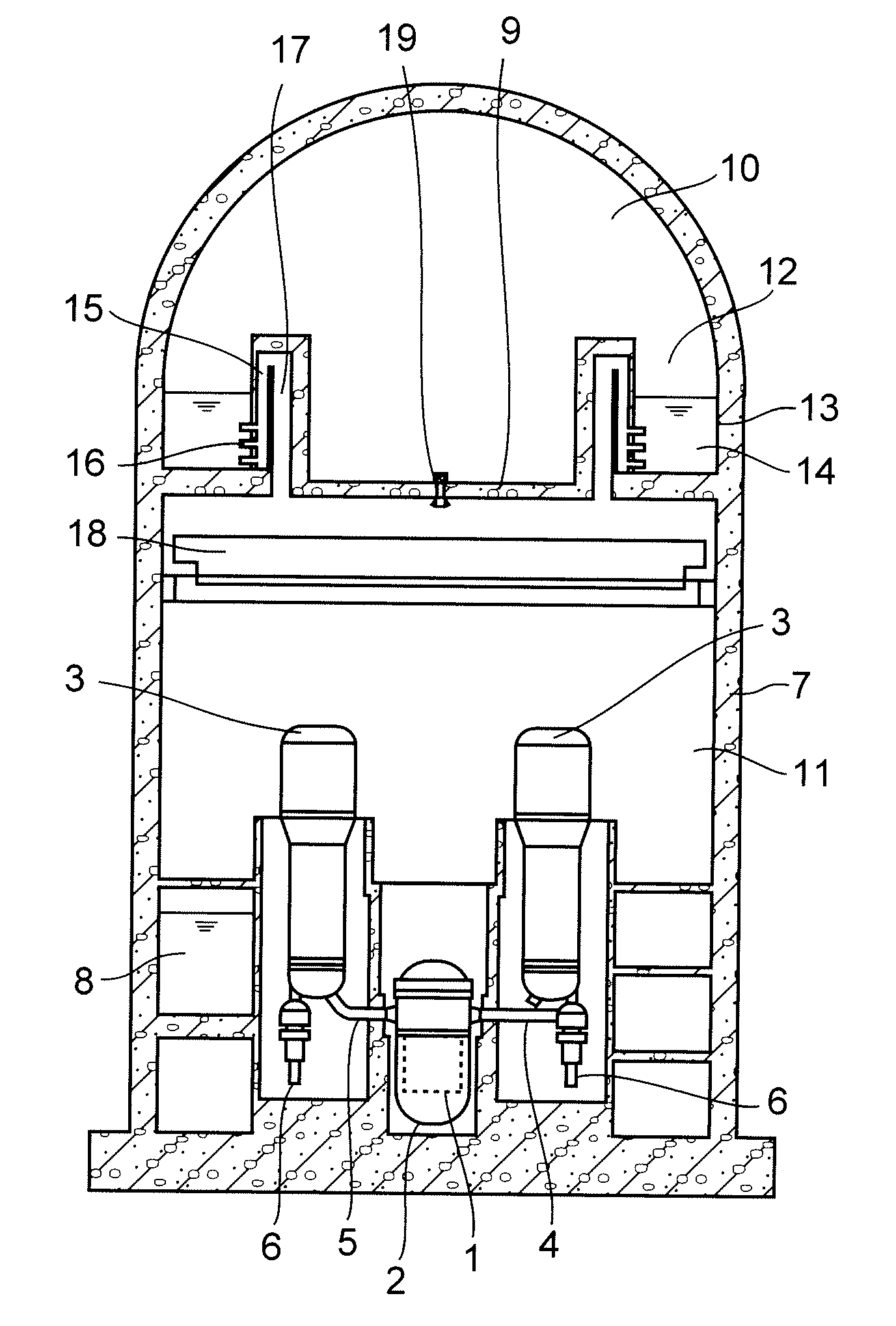
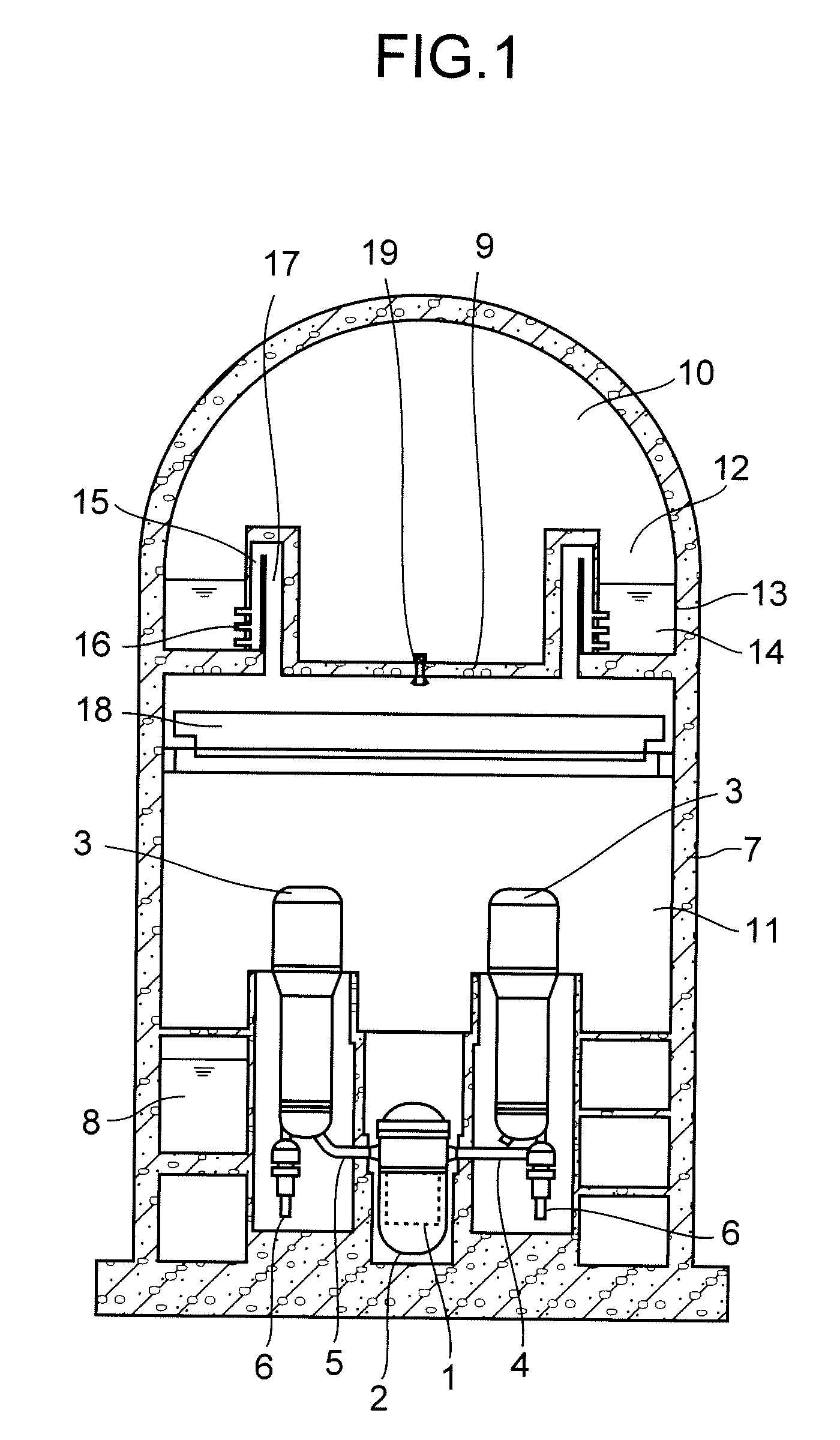
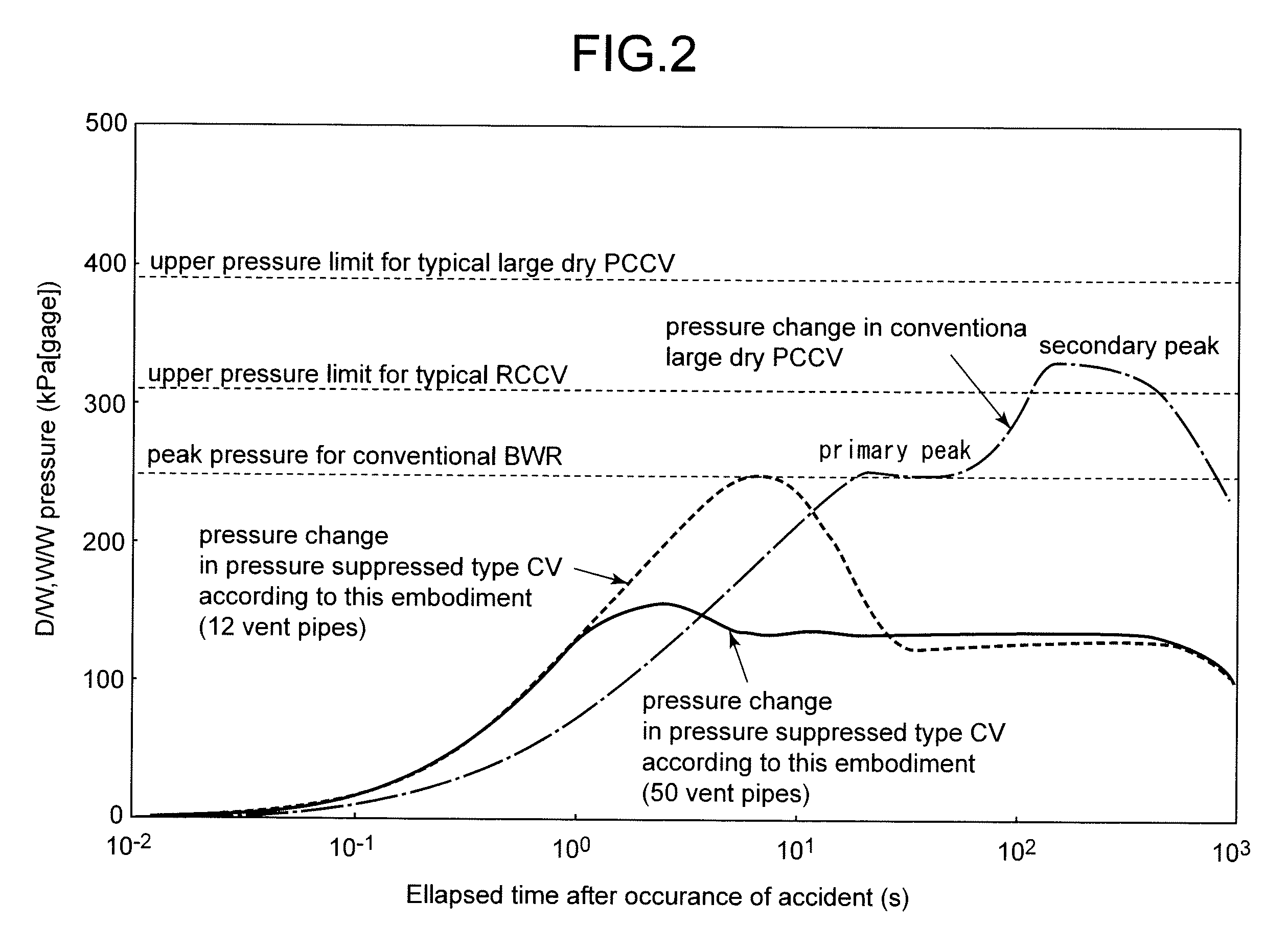
- A containment vessel design that includes a diaphragm partitioning the main body into two spaces, with a pressure suppression chamber in the upper space and LOCA vent pipes connecting to the lower space, allowing for effective venting of noncondensable gases and maintaining a suitable free volume ratio to control pressure rises, thereby reducing the risk of containment vessel rupture.

Integral PWR with diverse emergency cooling and method of operating same
PatentInactiveUS20040196948A1
Innovation
- An integral reactor pressure vessel design with diverse emergency cooling systems, including a containment structure that allows pressure to rise and utilizes a heat exchanger connected to the secondary circuit of the steam generators to cool the reactor pressure vessel, along with suppression tanks and external cooling methods to maintain core cooling and containment integrity, eliminating the need for makeup water and reducing containment pressure.


Nuclear Regulatory Framework for Containment Systems
The nuclear regulatory framework for containment systems in pressurized water reactors represents a comprehensive set of standards, guidelines, and oversight mechanisms designed to ensure the integrity and effectiveness of these critical safety barriers. This framework operates at multiple levels, encompassing international standards, national regulations, and plant-specific requirements that collectively govern the design, construction, operation, and maintenance of containment structures.
International regulatory bodies, particularly the International Atomic Energy Agency (IAEA), establish fundamental safety principles and technical guidelines that serve as the foundation for national regulatory frameworks. These standards address containment design criteria, structural integrity requirements, leak rate specifications, and performance testing protocols. The IAEA Safety Standards Series provides detailed guidance on containment system design basis events, including loss-of-coolant accidents, steam line breaks, and severe accident scenarios.
National regulatory authorities, such as the U.S. Nuclear Regulatory Commission (NRC), the European Nuclear Safety Regulators Group (ENSREG), and similar organizations worldwide, translate international standards into legally binding regulations tailored to their specific jurisdictions. These regulations establish mandatory requirements for containment system design margins, material specifications, quality assurance programs, and periodic surveillance testing. The regulatory framework also defines acceptance criteria for containment performance during both design basis and beyond design basis events.
The licensing process for containment systems involves rigorous review procedures that evaluate design adequacy, construction quality, and operational readiness. Regulatory authorities conduct comprehensive assessments of containment structural analysis, including finite element modeling, fracture mechanics evaluations, and aging management programs. These reviews ensure that containment systems can withstand extreme loading conditions, including internal pressure, temperature transients, seismic events, and potential missile impacts.
Ongoing regulatory oversight includes mandatory inspection programs, performance monitoring requirements, and periodic safety assessments. Operators must demonstrate continued compliance through regular leak rate testing, structural integrity evaluations, and implementation of aging management strategies. The regulatory framework also addresses emergency preparedness requirements and establishes protocols for containment venting systems and filtered containment venting strategies during severe accident conditions.
Recent regulatory developments have focused on incorporating lessons learned from the Fukushima accident, emphasizing enhanced severe accident management capabilities and improved containment performance under extreme conditions. These evolving requirements drive continuous improvements in containment system design and operational practices.
International regulatory bodies, particularly the International Atomic Energy Agency (IAEA), establish fundamental safety principles and technical guidelines that serve as the foundation for national regulatory frameworks. These standards address containment design criteria, structural integrity requirements, leak rate specifications, and performance testing protocols. The IAEA Safety Standards Series provides detailed guidance on containment system design basis events, including loss-of-coolant accidents, steam line breaks, and severe accident scenarios.
National regulatory authorities, such as the U.S. Nuclear Regulatory Commission (NRC), the European Nuclear Safety Regulators Group (ENSREG), and similar organizations worldwide, translate international standards into legally binding regulations tailored to their specific jurisdictions. These regulations establish mandatory requirements for containment system design margins, material specifications, quality assurance programs, and periodic surveillance testing. The regulatory framework also defines acceptance criteria for containment performance during both design basis and beyond design basis events.
The licensing process for containment systems involves rigorous review procedures that evaluate design adequacy, construction quality, and operational readiness. Regulatory authorities conduct comprehensive assessments of containment structural analysis, including finite element modeling, fracture mechanics evaluations, and aging management programs. These reviews ensure that containment systems can withstand extreme loading conditions, including internal pressure, temperature transients, seismic events, and potential missile impacts.
Ongoing regulatory oversight includes mandatory inspection programs, performance monitoring requirements, and periodic safety assessments. Operators must demonstrate continued compliance through regular leak rate testing, structural integrity evaluations, and implementation of aging management strategies. The regulatory framework also addresses emergency preparedness requirements and establishes protocols for containment venting systems and filtered containment venting strategies during severe accident conditions.
Recent regulatory developments have focused on incorporating lessons learned from the Fukushima accident, emphasizing enhanced severe accident management capabilities and improved containment performance under extreme conditions. These evolving requirements drive continuous improvements in containment system design and operational practices.
Post-Fukushima Safety Enhancement Requirements
The Fukushima Daiichi nuclear accident in March 2011 fundamentally transformed global nuclear safety standards and regulatory frameworks, particularly regarding containment system requirements for pressurized water reactors. This catastrophic event exposed critical vulnerabilities in existing safety protocols and prompted comprehensive reassessment of containment design philosophies worldwide.
Following the accident, international regulatory bodies established stringent new requirements focusing on severe accident management and containment integrity preservation. The Nuclear Regulatory Commission introduced enhanced safety measures mandating improved hydrogen control systems, reliable containment venting capabilities, and robust emergency response protocols. These requirements specifically address scenarios where traditional safety systems may be compromised or unavailable.
European nuclear authorities implemented complementary stress test protocols, requiring operators to demonstrate containment system resilience under extreme external events including extended station blackout conditions, loss of ultimate heat sink, and combined natural disasters. These assessments emphasized the importance of passive safety systems that function without external power or operator intervention during emergency situations.
The enhanced requirements mandate installation of filtered containment venting systems to prevent uncontrolled radioactive releases while maintaining containment structural integrity. Additionally, operators must demonstrate adequate hydrogen management capabilities through either passive autocatalytic recombiners or active ignition systems to prevent explosive concentrations during severe accidents.
Post-Fukushima regulations also emphasize multi-barrier defense strategies, requiring redundant and diverse safety systems with improved separation and independence. Containment systems must now withstand prolonged exposure to high temperatures and pressures while maintaining their protective function for extended periods without external support.
Furthermore, new requirements address emergency preparedness and response capabilities, including enhanced instrumentation for monitoring containment conditions during severe accidents, improved communication systems, and pre-positioned emergency equipment. These measures ensure that containment systems can be effectively managed and monitored even under the most challenging circumstances, significantly improving overall nuclear safety standards.
Following the accident, international regulatory bodies established stringent new requirements focusing on severe accident management and containment integrity preservation. The Nuclear Regulatory Commission introduced enhanced safety measures mandating improved hydrogen control systems, reliable containment venting capabilities, and robust emergency response protocols. These requirements specifically address scenarios where traditional safety systems may be compromised or unavailable.
European nuclear authorities implemented complementary stress test protocols, requiring operators to demonstrate containment system resilience under extreme external events including extended station blackout conditions, loss of ultimate heat sink, and combined natural disasters. These assessments emphasized the importance of passive safety systems that function without external power or operator intervention during emergency situations.
The enhanced requirements mandate installation of filtered containment venting systems to prevent uncontrolled radioactive releases while maintaining containment structural integrity. Additionally, operators must demonstrate adequate hydrogen management capabilities through either passive autocatalytic recombiners or active ignition systems to prevent explosive concentrations during severe accidents.
Post-Fukushima regulations also emphasize multi-barrier defense strategies, requiring redundant and diverse safety systems with improved separation and independence. Containment systems must now withstand prolonged exposure to high temperatures and pressures while maintaining their protective function for extended periods without external support.
Furthermore, new requirements address emergency preparedness and response capabilities, including enhanced instrumentation for monitoring containment conditions during severe accidents, improved communication systems, and pre-positioned emergency equipment. These measures ensure that containment systems can be effectively managed and monitored even under the most challenging circumstances, significantly improving overall nuclear safety standards.
Unlock deeper insights with PatSnap Eureka Quick Research — get a full tech report to explore trends and direct your research. Try now!
Generate Your Research Report Instantly with AI Agent
Supercharge your innovation with PatSnap Eureka AI Agent Platform!