

Improving optical neural networks using silicon photonics.
JUL 17, 20259 MIN READ
Generate Your Research Report Instantly with AI Agent
PatSnap Eureka helps you evaluate technical feasibility & market potential.
Silicon Photonics ONN Background and Objectives
Optical neural networks (ONNs) have emerged as a promising technology to address the growing computational demands of artificial intelligence and machine learning. Silicon photonics, a field that integrates optical components with silicon-based microelectronics, has become a key enabler for improving ONN performance and scalability. The convergence of these two technologies offers significant potential for advancing the capabilities of neural networks.
The development of silicon photonics ONNs can be traced back to the early 2000s when researchers began exploring the use of photonic integrated circuits for neural network implementations. Over the past two decades, substantial progress has been made in both silicon photonics technology and neural network architectures, leading to increasingly sophisticated and efficient ONN designs.
The primary objective of improving ONNs using silicon photonics is to overcome the limitations of traditional electronic neural networks, particularly in terms of speed, energy efficiency, and parallelism. Silicon photonics offers several advantages, including high-speed signal processing, low power consumption, and the ability to perform multiple operations simultaneously using different wavelengths of light.
Key technological trends in this field include the development of compact and efficient photonic components, such as microring resonators, Mach-Zehnder interferometers, and phase-change materials. These components serve as building blocks for implementing various neural network operations, including matrix multiplication, activation functions, and synaptic weighting.
Another important trend is the integration of photonic and electronic components on a single chip, known as electronic-photonic integrated circuits (EPICs). This integration allows for seamless interfacing between optical and electronic domains, enabling hybrid systems that leverage the strengths of both technologies.
The evolution of silicon photonics ONNs is closely tied to advancements in fabrication techniques, materials science, and photonic design tools. As these areas continue to progress, we can expect further improvements in the performance, scalability, and cost-effectiveness of silicon photonics-based ONNs.
Looking ahead, the field aims to achieve several ambitious goals, including the development of large-scale ONNs capable of rivaling or surpassing the performance of state-of-the-art electronic neural networks. This involves addressing challenges such as improving the accuracy and stability of photonic components, reducing crosstalk and noise, and developing efficient training algorithms for optical systems.
The development of silicon photonics ONNs can be traced back to the early 2000s when researchers began exploring the use of photonic integrated circuits for neural network implementations. Over the past two decades, substantial progress has been made in both silicon photonics technology and neural network architectures, leading to increasingly sophisticated and efficient ONN designs.
The primary objective of improving ONNs using silicon photonics is to overcome the limitations of traditional electronic neural networks, particularly in terms of speed, energy efficiency, and parallelism. Silicon photonics offers several advantages, including high-speed signal processing, low power consumption, and the ability to perform multiple operations simultaneously using different wavelengths of light.
Key technological trends in this field include the development of compact and efficient photonic components, such as microring resonators, Mach-Zehnder interferometers, and phase-change materials. These components serve as building blocks for implementing various neural network operations, including matrix multiplication, activation functions, and synaptic weighting.
Another important trend is the integration of photonic and electronic components on a single chip, known as electronic-photonic integrated circuits (EPICs). This integration allows for seamless interfacing between optical and electronic domains, enabling hybrid systems that leverage the strengths of both technologies.
The evolution of silicon photonics ONNs is closely tied to advancements in fabrication techniques, materials science, and photonic design tools. As these areas continue to progress, we can expect further improvements in the performance, scalability, and cost-effectiveness of silicon photonics-based ONNs.
Looking ahead, the field aims to achieve several ambitious goals, including the development of large-scale ONNs capable of rivaling or surpassing the performance of state-of-the-art electronic neural networks. This involves addressing challenges such as improving the accuracy and stability of photonic components, reducing crosstalk and noise, and developing efficient training algorithms for optical systems.
Market Analysis for Optical Neural Networks
The market for optical neural networks (ONNs) is experiencing significant growth, driven by the increasing demand for high-speed, energy-efficient computing solutions in various sectors. As traditional electronic neural networks face limitations in processing speed and power consumption, ONNs offer a promising alternative by leveraging the principles of photonics to perform computations at the speed of light.
The global market for ONNs is expected to expand rapidly in the coming years, with applications spanning across multiple industries. In the field of artificial intelligence and machine learning, ONNs are poised to revolutionize data processing capabilities, enabling faster and more efficient training of complex neural networks. This is particularly relevant for industries such as finance, healthcare, and autonomous vehicles, where real-time data analysis and decision-making are critical.
Telecommunications is another sector where ONNs are gaining traction. As 5G and future 6G networks continue to evolve, the need for ultra-fast signal processing and routing becomes paramount. ONNs can potentially address these challenges by offering low-latency, high-bandwidth solutions for network optimization and management.
The data center industry is also showing keen interest in ONN technology. With the exponential growth of data generation and the increasing adoption of cloud computing, data centers are under pressure to improve their processing capabilities while reducing energy consumption. ONNs present an opportunity to significantly enhance data center performance and efficiency, potentially leading to substantial cost savings and environmental benefits.
In the realm of scientific research and high-performance computing, ONNs are attracting attention for their potential to accelerate complex simulations and data analysis tasks. Fields such as climate modeling, drug discovery, and particle physics could benefit greatly from the increased computational power offered by ONNs.
The market for ONNs is still in its early stages, with several challenges to overcome before widespread adoption. These include the need for standardization, integration with existing electronic systems, and the development of scalable manufacturing processes. However, the potential benefits of ONNs are driving significant investment in research and development from both academic institutions and industry players.
As silicon photonics technology continues to mature, it is expected to play a crucial role in advancing ONN capabilities and market penetration. The compatibility of silicon photonics with existing semiconductor manufacturing processes offers a pathway for cost-effective production and integration of ONNs into various applications.
The global market for ONNs is expected to expand rapidly in the coming years, with applications spanning across multiple industries. In the field of artificial intelligence and machine learning, ONNs are poised to revolutionize data processing capabilities, enabling faster and more efficient training of complex neural networks. This is particularly relevant for industries such as finance, healthcare, and autonomous vehicles, where real-time data analysis and decision-making are critical.
Telecommunications is another sector where ONNs are gaining traction. As 5G and future 6G networks continue to evolve, the need for ultra-fast signal processing and routing becomes paramount. ONNs can potentially address these challenges by offering low-latency, high-bandwidth solutions for network optimization and management.
The data center industry is also showing keen interest in ONN technology. With the exponential growth of data generation and the increasing adoption of cloud computing, data centers are under pressure to improve their processing capabilities while reducing energy consumption. ONNs present an opportunity to significantly enhance data center performance and efficiency, potentially leading to substantial cost savings and environmental benefits.
In the realm of scientific research and high-performance computing, ONNs are attracting attention for their potential to accelerate complex simulations and data analysis tasks. Fields such as climate modeling, drug discovery, and particle physics could benefit greatly from the increased computational power offered by ONNs.
The market for ONNs is still in its early stages, with several challenges to overcome before widespread adoption. These include the need for standardization, integration with existing electronic systems, and the development of scalable manufacturing processes. However, the potential benefits of ONNs are driving significant investment in research and development from both academic institutions and industry players.
As silicon photonics technology continues to mature, it is expected to play a crucial role in advancing ONN capabilities and market penetration. The compatibility of silicon photonics with existing semiconductor manufacturing processes offers a pathway for cost-effective production and integration of ONNs into various applications.
Current Challenges in Silicon Photonics ONNs
Silicon photonics-based optical neural networks (ONNs) have shown great promise in accelerating AI computations. However, several challenges currently hinder their widespread adoption and performance optimization. One of the primary obstacles is the precise control of optical components at nanoscale dimensions. The fabrication process for silicon photonic devices requires extremely high precision, as even minor variations can significantly impact the performance of ONNs.
Another major challenge is the nonlinear activation function implementation in silicon photonics ONNs. Traditional neural networks rely heavily on nonlinear activation functions, but replicating these in the optical domain remains difficult. Current solutions often involve hybrid electro-optical approaches, which can introduce latency and energy inefficiencies.
The limited dynamic range of optical components also poses a significant challenge. Silicon photonics devices typically operate within a narrow range of optical powers, limiting the representational capacity of ONNs. This constraint can affect the network's ability to handle complex, high-dimensional data effectively.
Thermal stability is another critical issue in silicon photonics ONNs. Temperature fluctuations can cause phase shifts in optical signals, leading to errors in computations. Developing robust temperature control mechanisms or athermal designs is essential for ensuring reliable ONN operation across various environmental conditions.
Scalability remains a persistent challenge in silicon photonics ONNs. As network architectures grow in complexity, efficiently routing and managing optical signals becomes increasingly difficult. Current chip designs struggle to accommodate the large number of interconnections required for deep neural networks while maintaining low loss and crosstalk.
The integration of efficient on-chip light sources and detectors is another hurdle. While silicon is an excellent material for waveguides and modulators, it is not ideal for light emission or detection. This necessitates the integration of other materials, complicating the fabrication process and potentially increasing costs.
Lastly, the development of specialized software tools and algorithms optimized for silicon photonics ONNs lags behind. Current deep learning frameworks are primarily designed for electronic systems, and adapting these for optical computing presents significant challenges. Creating new tools that can effectively model, simulate, and optimize optical neural networks is crucial for advancing the field.
Another major challenge is the nonlinear activation function implementation in silicon photonics ONNs. Traditional neural networks rely heavily on nonlinear activation functions, but replicating these in the optical domain remains difficult. Current solutions often involve hybrid electro-optical approaches, which can introduce latency and energy inefficiencies.
The limited dynamic range of optical components also poses a significant challenge. Silicon photonics devices typically operate within a narrow range of optical powers, limiting the representational capacity of ONNs. This constraint can affect the network's ability to handle complex, high-dimensional data effectively.
Thermal stability is another critical issue in silicon photonics ONNs. Temperature fluctuations can cause phase shifts in optical signals, leading to errors in computations. Developing robust temperature control mechanisms or athermal designs is essential for ensuring reliable ONN operation across various environmental conditions.
Scalability remains a persistent challenge in silicon photonics ONNs. As network architectures grow in complexity, efficiently routing and managing optical signals becomes increasingly difficult. Current chip designs struggle to accommodate the large number of interconnections required for deep neural networks while maintaining low loss and crosstalk.
The integration of efficient on-chip light sources and detectors is another hurdle. While silicon is an excellent material for waveguides and modulators, it is not ideal for light emission or detection. This necessitates the integration of other materials, complicating the fabrication process and potentially increasing costs.
Lastly, the development of specialized software tools and algorithms optimized for silicon photonics ONNs lags behind. Current deep learning frameworks are primarily designed for electronic systems, and adapting these for optical computing presents significant challenges. Creating new tools that can effectively model, simulate, and optimize optical neural networks is crucial for advancing the field.
Existing Silicon Photonics ONN Architectures
01 Optical neural network architectures
Various architectures for optical neural networks are proposed to enhance performance. These include designs that optimize light propagation, interference patterns, and waveguide structures to improve computational efficiency and speed. Some architectures focus on integrating optical and electronic components for hybrid systems that leverage the strengths of both domains.- Optical neural network architectures: Various architectures for optical neural networks are proposed to enhance performance. These include designs that optimize light propagation, interference patterns, and waveguide structures to improve computational efficiency and speed. Some architectures focus on integrating optical and electronic components for hybrid systems that leverage the strengths of both domains.
- Optical processing elements: Advanced optical processing elements are developed to improve the performance of optical neural networks. These include novel photonic devices, specialized optical modulators, and high-speed photodetectors. These components are designed to enhance signal processing capabilities, reduce latency, and increase the overall computational throughput of optical neural networks.
- Training algorithms for optical neural networks: Specialized training algorithms are developed to optimize the performance of optical neural networks. These algorithms take into account the unique characteristics of optical systems, such as phase information and interference effects. They aim to improve convergence speed, reduce training time, and enhance the accuracy of optical neural network models.
- Integration with quantum computing: Research explores the integration of optical neural networks with quantum computing technologies to achieve superior performance. This approach combines the parallelism of optical processing with the unique capabilities of quantum systems, potentially leading to significant improvements in computational power and efficiency for certain types of problems.
- Energy efficiency and scalability: Efforts are made to improve the energy efficiency and scalability of optical neural networks. This includes developing low-power optical components, optimizing network topologies for reduced energy consumption, and designing scalable architectures that can handle increasing computational demands while maintaining high performance.
02 Optimization techniques for optical neural networks
Performance improvements in optical neural networks are achieved through various optimization techniques. These include advanced training algorithms, parameter tuning methods, and strategies for reducing noise and crosstalk in optical systems. Some approaches focus on optimizing the physical layout of optical components to maximize efficiency and minimize losses.Expand Specific Solutions03 Integration of novel materials in optical neural networks
The incorporation of novel materials in optical neural networks leads to performance enhancements. These materials include photonic crystals, metamaterials, and advanced semiconductors that offer improved light manipulation capabilities. Some innovations focus on materials that enable better nonlinear optical effects or enhanced light-matter interactions for more efficient neural network operations.Expand Specific Solutions04 Scalability and miniaturization of optical neural networks
Efforts to improve the scalability and miniaturization of optical neural networks contribute to enhanced performance. These include developing compact optical components, integrating multiple functions on a single chip, and creating modular designs that allow for easy scaling. Some approaches focus on reducing power consumption and heat generation in miniaturized systems.Expand Specific Solutions05 Hybrid optical-electronic neural network systems
Hybrid systems that combine optical and electronic components offer performance advantages in neural network implementations. These systems leverage the high-speed processing capabilities of optics with the flexibility and control of electronics. Some designs focus on optimizing the interface between optical and electronic domains to minimize conversion losses and maximize overall system efficiency.Expand Specific Solutions
Key Players in Silicon Photonics and ONN Industry
The field of improving optical neural networks using silicon photonics is in a nascent stage of development, characterized by rapid technological advancements and growing market potential. The market size is expanding as researchers and companies recognize the potential for high-speed, energy-efficient computing in various applications. While the technology is still evolving, several key players are driving innovation. Companies like IBM, Intel, and Toshiba are leveraging their expertise in semiconductor technologies to explore silicon photonics integration. Academic institutions such as Tsinghua University, Zhejiang University, and Cornell University are contributing significant research. The technology's maturity is progressing, with organizations like the Naval Research Laboratory and Agency for Science, Technology & Research pushing boundaries in photonic computing architectures.
International Business Machines Corp.
Technical Solution: IBM has developed an integrated silicon photonics platform for optical neural networks (ONNs). Their approach utilizes phase-change materials (PCMs) to create non-volatile photonic synapses, enabling efficient and high-speed optical computing. The platform integrates PCM-based photonic synapses with silicon photonic waveguides and modulators, allowing for on-chip optical weight banks and matrix-vector multiplications. This technology demonstrates potential for accelerating deep learning tasks with significantly reduced energy consumption compared to traditional electronic systems [1][3]. IBM's solution also incorporates wavelength division multiplexing (WDM) to increase the parallelism and computational density of their ONNs, potentially achieving petaFLOPS-scale performance in a single chip [2].
Strengths: High-speed optical computing, energy efficiency, potential for petaFLOPS-scale performance. Weaknesses: Complexity of integration, potential thermal management issues with PCMs.
Intel Corp.
Technical Solution: Intel is advancing optical neural networks through their silicon photonics technology. They have developed a programmable nanophotonic processor that can implement arbitrary linear transformations between multiple optical modes. This processor utilizes a mesh of Mach-Zehnder interferometers (MZIs) and phase shifters to perform matrix operations optically. Intel's approach allows for reconfigurable optical circuits that can adapt to different neural network architectures. The company has demonstrated the potential of this technology for accelerating deep learning inference tasks, showing improvements in both speed and energy efficiency compared to electronic implementations [4][5]. Additionally, Intel is exploring the integration of their silicon photonics technology with neuromorphic computing architectures to create hybrid electro-optical systems for AI applications [6].
Strengths: Reconfigurable optical circuits, potential for seamless integration with existing silicon-based technologies. Weaknesses: Scalability challenges, precision limitations of optical components.
Core Innovations in Silicon Photonics for ONNs
Photonic neural network on silicon substrate based on tunable filter and its modulation method
PatentActiveJP2022542009A
Innovation
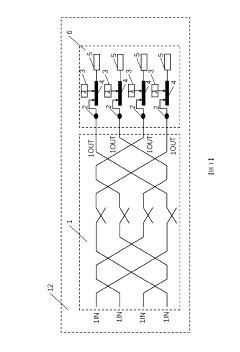
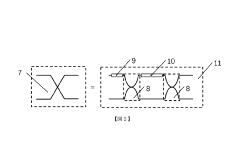
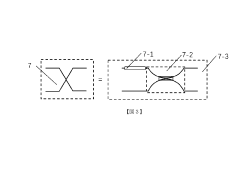
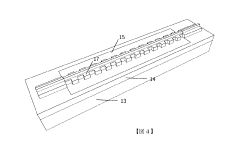
- A photonic neural network on a silicon substrate using tunable filters that integrate linear and nonlinear operations on-chip, utilizing Mach-Zehnder interferometer or Direct coupler networks, and tunable filters like Bragg reflection gratings or F-P cavity filters to achieve nonlinear activation functions through thermal or electrical modulation of refractive indices.
Energy Efficiency Considerations
Energy efficiency is a critical consideration in the development and implementation of optical neural networks using silicon photonics. As these systems scale up to handle increasingly complex tasks, their power consumption becomes a significant factor in both operational costs and environmental impact. Silicon photonics offers several inherent advantages in energy efficiency compared to traditional electronic systems.
The use of light for information processing and transmission in optical neural networks inherently reduces energy loss due to heat generation, which is a major issue in electronic systems. Silicon photonics leverages this advantage by enabling the integration of optical components directly on silicon chips, allowing for compact and efficient designs. This integration minimizes the need for energy-consuming conversions between optical and electrical signals, further enhancing overall system efficiency.
One of the key energy-saving features of silicon photonic-based optical neural networks is the potential for wavelength division multiplexing (WDM). This technique allows multiple signals to be transmitted simultaneously on different wavelengths of light, effectively increasing the information processing capacity without a proportional increase in power consumption. By utilizing WDM, these systems can achieve higher computational densities while maintaining low energy requirements.
Another aspect contributing to energy efficiency is the development of low-loss optical waveguides in silicon photonics. These waveguides can transmit light signals over relatively long distances on-chip with minimal attenuation, reducing the need for signal amplification and associated energy costs. Additionally, advances in photonic integrated circuits (PICs) have led to the creation of more efficient optical modulators and detectors, which are crucial components in optical neural networks.
The use of non-volatile photonic memory elements in silicon photonic neural networks also presents opportunities for energy savings. These components can maintain their state without continuous power input, potentially reducing the static power consumption of the system. This is particularly beneficial for applications requiring intermittent processing or those with long idle periods between computations.
However, challenges remain in fully realizing the energy efficiency potential of optical neural networks using silicon photonics. One significant hurdle is the energy cost associated with laser sources, which are necessary for generating the optical signals. Ongoing research focuses on developing more efficient, integrated laser sources that can be directly incorporated into silicon photonic chips, potentially leading to substantial improvements in overall system energy efficiency.
The use of light for information processing and transmission in optical neural networks inherently reduces energy loss due to heat generation, which is a major issue in electronic systems. Silicon photonics leverages this advantage by enabling the integration of optical components directly on silicon chips, allowing for compact and efficient designs. This integration minimizes the need for energy-consuming conversions between optical and electrical signals, further enhancing overall system efficiency.
One of the key energy-saving features of silicon photonic-based optical neural networks is the potential for wavelength division multiplexing (WDM). This technique allows multiple signals to be transmitted simultaneously on different wavelengths of light, effectively increasing the information processing capacity without a proportional increase in power consumption. By utilizing WDM, these systems can achieve higher computational densities while maintaining low energy requirements.
Another aspect contributing to energy efficiency is the development of low-loss optical waveguides in silicon photonics. These waveguides can transmit light signals over relatively long distances on-chip with minimal attenuation, reducing the need for signal amplification and associated energy costs. Additionally, advances in photonic integrated circuits (PICs) have led to the creation of more efficient optical modulators and detectors, which are crucial components in optical neural networks.
The use of non-volatile photonic memory elements in silicon photonic neural networks also presents opportunities for energy savings. These components can maintain their state without continuous power input, potentially reducing the static power consumption of the system. This is particularly beneficial for applications requiring intermittent processing or those with long idle periods between computations.
However, challenges remain in fully realizing the energy efficiency potential of optical neural networks using silicon photonics. One significant hurdle is the energy cost associated with laser sources, which are necessary for generating the optical signals. Ongoing research focuses on developing more efficient, integrated laser sources that can be directly incorporated into silicon photonic chips, potentially leading to substantial improvements in overall system energy efficiency.
Integration with Electronic Systems
The integration of optical neural networks (ONNs) with electronic systems represents a critical frontier in advancing the capabilities of silicon photonics-based computing. This integration process involves seamlessly combining the high-speed, low-power advantages of optical processing with the flexibility and maturity of electronic systems. One of the primary challenges in this integration is the development of efficient optical-to-electrical (O/E) and electrical-to-optical (E/O) conversion interfaces.
Silicon photonics offers a promising platform for realizing these interfaces due to its compatibility with existing CMOS fabrication processes. High-speed photodetectors and modulators can be integrated on the same chip as the optical neural network, minimizing latency and power consumption associated with data transfer between optical and electrical domains. Recent advancements in silicon-germanium (SiGe) photodetectors have demonstrated bandwidths exceeding 100 GHz, enabling rapid conversion of optical signals to electrical form for further processing or storage.
On the electrical side, advanced CMOS circuits are being developed to interface with these high-speed optical components. These circuits include analog-to-digital converters (ADCs) and digital-to-analog converters (DACs) optimized for the specific requirements of ONNs. The co-design of optical and electrical components is crucial to ensure optimal performance and energy efficiency of the integrated system.
Another important aspect of integration is the development of control systems that can dynamically reconfigure the optical neural network based on input from electronic processing units. This involves the use of tunable optical components, such as microring resonators or Mach-Zehnder interferometers, which can be adjusted using electrical signals to modify the network's behavior in real-time.
Power management is a critical consideration in the integration process. While optical processing can significantly reduce power consumption for certain operations, the energy required for O/E and E/O conversions must be carefully managed. Novel techniques, such as optical power gating and selective activation of photonic components, are being explored to minimize overall system power consumption.
The integration of ONNs with electronic systems also opens up possibilities for hybrid computing architectures. These architectures can leverage the strengths of both optical and electronic processing, using ONNs for specific tasks such as matrix multiplication or convolution, while relying on electronic systems for more flexible, general-purpose computing. This approach could lead to significant performance improvements in applications such as machine learning inference and signal processing.
Silicon photonics offers a promising platform for realizing these interfaces due to its compatibility with existing CMOS fabrication processes. High-speed photodetectors and modulators can be integrated on the same chip as the optical neural network, minimizing latency and power consumption associated with data transfer between optical and electrical domains. Recent advancements in silicon-germanium (SiGe) photodetectors have demonstrated bandwidths exceeding 100 GHz, enabling rapid conversion of optical signals to electrical form for further processing or storage.
On the electrical side, advanced CMOS circuits are being developed to interface with these high-speed optical components. These circuits include analog-to-digital converters (ADCs) and digital-to-analog converters (DACs) optimized for the specific requirements of ONNs. The co-design of optical and electrical components is crucial to ensure optimal performance and energy efficiency of the integrated system.
Another important aspect of integration is the development of control systems that can dynamically reconfigure the optical neural network based on input from electronic processing units. This involves the use of tunable optical components, such as microring resonators or Mach-Zehnder interferometers, which can be adjusted using electrical signals to modify the network's behavior in real-time.
Power management is a critical consideration in the integration process. While optical processing can significantly reduce power consumption for certain operations, the energy required for O/E and E/O conversions must be carefully managed. Novel techniques, such as optical power gating and selective activation of photonic components, are being explored to minimize overall system power consumption.
The integration of ONNs with electronic systems also opens up possibilities for hybrid computing architectures. These architectures can leverage the strengths of both optical and electronic processing, using ONNs for specific tasks such as matrix multiplication or convolution, while relying on electronic systems for more flexible, general-purpose computing. This approach could lead to significant performance improvements in applications such as machine learning inference and signal processing.
Unlock deeper insights with PatSnap Eureka Quick Research — get a full tech report to explore trends and direct your research. Try now!
Generate Your Research Report Instantly with AI Agent
Supercharge your innovation with PatSnap Eureka AI Agent Platform!