Improving Scintillator Reaction Time for External Stimuli
MAR 10, 20269 MIN READ
Generate Your Research Report Instantly with AI Agent
PatSnap Eureka helps you evaluate technical feasibility & market potential.
Scintillator Technology Background and Response Time Goals
Scintillator technology emerged in the early 20th century when researchers discovered that certain materials could convert high-energy radiation into visible light photons. The fundamental principle involves the absorption of ionizing radiation by scintillating materials, which subsequently emit light through fluorescence processes. This discovery revolutionized radiation detection and measurement across multiple scientific and industrial domains.
The evolution of scintillator materials has progressed through several distinct phases, beginning with organic crystals like anthracene and naphthalene in the 1940s. The development of inorganic scintillators such as sodium iodide doped with thallium (NaI:Tl) marked a significant advancement, offering improved light output and detection efficiency. Modern scintillator research has expanded to include plastic scintillators, ceramic materials, and novel nanostructured compounds.
Contemporary applications span diverse fields including medical imaging, nuclear physics research, homeland security, and space exploration. In positron emission tomography (PET) scanners, scintillators enable precise localization of radioactive tracers within the human body. High-energy physics experiments rely on scintillator arrays for particle detection and energy measurement. Security applications utilize scintillator-based systems for cargo screening and nuclear material detection.
Response time performance has become increasingly critical as detection systems demand higher temporal resolution and faster data acquisition rates. Current state-of-the-art scintillators achieve decay times ranging from nanoseconds to microseconds, depending on material composition and crystal structure. However, emerging applications require sub-nanosecond response capabilities to meet stringent timing requirements.
The primary technical goals for improving scintillator reaction time focus on achieving faster photon emission following radiation absorption while maintaining high light yield and detection efficiency. Target specifications include reducing decay time constants below 100 picoseconds for ultra-fast timing applications, minimizing afterglow effects that can compromise measurement accuracy, and enhancing the initial photon burst intensity to improve signal-to-noise ratios.
Advanced research objectives encompass developing novel material compositions that optimize the balance between speed and sensitivity, engineering crystal structures that facilitate rapid energy transfer mechanisms, and implementing surface treatments or dopant strategies that accelerate scintillation processes. These improvements will enable next-generation detection systems with unprecedented temporal resolution capabilities.
The evolution of scintillator materials has progressed through several distinct phases, beginning with organic crystals like anthracene and naphthalene in the 1940s. The development of inorganic scintillators such as sodium iodide doped with thallium (NaI:Tl) marked a significant advancement, offering improved light output and detection efficiency. Modern scintillator research has expanded to include plastic scintillators, ceramic materials, and novel nanostructured compounds.
Contemporary applications span diverse fields including medical imaging, nuclear physics research, homeland security, and space exploration. In positron emission tomography (PET) scanners, scintillators enable precise localization of radioactive tracers within the human body. High-energy physics experiments rely on scintillator arrays for particle detection and energy measurement. Security applications utilize scintillator-based systems for cargo screening and nuclear material detection.
Response time performance has become increasingly critical as detection systems demand higher temporal resolution and faster data acquisition rates. Current state-of-the-art scintillators achieve decay times ranging from nanoseconds to microseconds, depending on material composition and crystal structure. However, emerging applications require sub-nanosecond response capabilities to meet stringent timing requirements.
The primary technical goals for improving scintillator reaction time focus on achieving faster photon emission following radiation absorption while maintaining high light yield and detection efficiency. Target specifications include reducing decay time constants below 100 picoseconds for ultra-fast timing applications, minimizing afterglow effects that can compromise measurement accuracy, and enhancing the initial photon burst intensity to improve signal-to-noise ratios.
Advanced research objectives encompass developing novel material compositions that optimize the balance between speed and sensitivity, engineering crystal structures that facilitate rapid energy transfer mechanisms, and implementing surface treatments or dopant strategies that accelerate scintillation processes. These improvements will enable next-generation detection systems with unprecedented temporal resolution capabilities.
Market Demand for Fast-Response Scintillation Detection
The global scintillation detection market is experiencing unprecedented growth driven by expanding applications across multiple high-technology sectors. Medical imaging represents the largest market segment, where fast-response scintillators are essential for positron emission tomography (PET) scanners, computed tomography (CT) systems, and gamma cameras. The demand for improved temporal resolution in these systems directly correlates with enhanced image quality and reduced patient exposure times, making reaction time optimization a critical performance parameter.
Nuclear security and homeland defense applications constitute another rapidly expanding market segment. Border security systems, cargo inspection facilities, and nuclear material detection equipment require scintillators capable of rapid response to radiation events. The increasing global focus on nuclear non-proliferation and terrorism prevention has intensified demand for detection systems with superior temporal characteristics and reduced false alarm rates.
High-energy physics research facilities worldwide are driving demand for ultra-fast scintillation detectors. Particle accelerators, including those at CERN, Fermilab, and other international research centers, require detection systems capable of handling extremely high event rates with precise timing resolution. The construction of next-generation colliders and detector upgrades represents a substantial market opportunity for advanced scintillator technologies.
Industrial applications are emerging as a significant growth driver, particularly in oil and gas exploration, where well-logging tools demand robust scintillators with fast response times for accurate geological measurements. Nuclear power plant monitoring systems also require reliable, fast-response detection equipment for safety and operational efficiency.
The space and aerospace sectors present specialized market opportunities, where radiation monitoring systems must operate reliably in harsh environments while maintaining rapid response characteristics. Satellite-based detection systems and space exploration missions increasingly rely on advanced scintillation technology.
Market growth is further accelerated by technological convergence trends, including the integration of artificial intelligence with detection systems, miniaturization requirements for portable devices, and the development of hybrid imaging modalities that combine multiple detection techniques. These applications collectively drive sustained demand for scintillators with enhanced temporal performance characteristics.
Nuclear security and homeland defense applications constitute another rapidly expanding market segment. Border security systems, cargo inspection facilities, and nuclear material detection equipment require scintillators capable of rapid response to radiation events. The increasing global focus on nuclear non-proliferation and terrorism prevention has intensified demand for detection systems with superior temporal characteristics and reduced false alarm rates.
High-energy physics research facilities worldwide are driving demand for ultra-fast scintillation detectors. Particle accelerators, including those at CERN, Fermilab, and other international research centers, require detection systems capable of handling extremely high event rates with precise timing resolution. The construction of next-generation colliders and detector upgrades represents a substantial market opportunity for advanced scintillator technologies.
Industrial applications are emerging as a significant growth driver, particularly in oil and gas exploration, where well-logging tools demand robust scintillators with fast response times for accurate geological measurements. Nuclear power plant monitoring systems also require reliable, fast-response detection equipment for safety and operational efficiency.
The space and aerospace sectors present specialized market opportunities, where radiation monitoring systems must operate reliably in harsh environments while maintaining rapid response characteristics. Satellite-based detection systems and space exploration missions increasingly rely on advanced scintillation technology.
Market growth is further accelerated by technological convergence trends, including the integration of artificial intelligence with detection systems, miniaturization requirements for portable devices, and the development of hybrid imaging modalities that combine multiple detection techniques. These applications collectively drive sustained demand for scintillators with enhanced temporal performance characteristics.
Current Scintillator Performance and Response Time Limitations
Current scintillator materials exhibit significant performance limitations that constrain their effectiveness in high-speed detection applications. Traditional organic scintillators, such as anthracene and stilbene, typically demonstrate decay times ranging from 2-10 nanoseconds, while inorganic scintillators like NaI(Tl) and CsI(Tl) show considerably slower response times of 100-1000 nanoseconds. These extended decay times fundamentally limit the temporal resolution achievable in radiation detection systems.
The light output efficiency of existing scintillators presents another critical constraint. Most commercial scintillators convert only 10-20% of incident energy into detectable photons, with the remainder lost through non-radiative processes. This inefficiency necessitates longer integration times to achieve adequate signal-to-noise ratios, directly impacting overall system response speed.
Afterglow phenomena represent a persistent challenge across multiple scintillator types. Many materials exhibit prolonged phosphorescence lasting milliseconds to seconds after initial excitation, creating temporal artifacts that interfere with rapid sequential measurements. This afterglow effect is particularly pronounced in rare-earth doped materials and certain ceramic scintillators.
Temperature dependence significantly affects scintillator performance characteristics. Most materials show decreased light output and altered decay kinetics at elevated temperatures, with some experiencing up to 50% reduction in efficiency at 200°C compared to room temperature operation. This thermal sensitivity limits deployment in high-temperature environments and requires active cooling systems.
Radiation damage accumulation poses long-term performance degradation issues. Extended exposure to high-energy radiation gradually reduces scintillation efficiency and alters spectral characteristics. Organic scintillators are particularly susceptible to radiation-induced chemical bond breaking, while inorganic materials may develop color centers that absorb scintillation light.
Manufacturing inconsistencies contribute to performance variability between individual scintillator elements. Crystal growth defects, dopant concentration variations, and surface quality differences result in non-uniform response characteristics across detector arrays. These variations complicate calibration procedures and limit achievable timing precision in multi-element systems.
The spectral mismatch between scintillator emission and photodetector sensitivity creates additional response time limitations. Many scintillators emit in spectral regions where common photodetectors exhibit reduced quantum efficiency, requiring optical coupling solutions that introduce additional timing delays and light losses.
The light output efficiency of existing scintillators presents another critical constraint. Most commercial scintillators convert only 10-20% of incident energy into detectable photons, with the remainder lost through non-radiative processes. This inefficiency necessitates longer integration times to achieve adequate signal-to-noise ratios, directly impacting overall system response speed.
Afterglow phenomena represent a persistent challenge across multiple scintillator types. Many materials exhibit prolonged phosphorescence lasting milliseconds to seconds after initial excitation, creating temporal artifacts that interfere with rapid sequential measurements. This afterglow effect is particularly pronounced in rare-earth doped materials and certain ceramic scintillators.
Temperature dependence significantly affects scintillator performance characteristics. Most materials show decreased light output and altered decay kinetics at elevated temperatures, with some experiencing up to 50% reduction in efficiency at 200°C compared to room temperature operation. This thermal sensitivity limits deployment in high-temperature environments and requires active cooling systems.
Radiation damage accumulation poses long-term performance degradation issues. Extended exposure to high-energy radiation gradually reduces scintillation efficiency and alters spectral characteristics. Organic scintillators are particularly susceptible to radiation-induced chemical bond breaking, while inorganic materials may develop color centers that absorb scintillation light.
Manufacturing inconsistencies contribute to performance variability between individual scintillator elements. Crystal growth defects, dopant concentration variations, and surface quality differences result in non-uniform response characteristics across detector arrays. These variations complicate calibration procedures and limit achievable timing precision in multi-element systems.
The spectral mismatch between scintillator emission and photodetector sensitivity creates additional response time limitations. Many scintillators emit in spectral regions where common photodetectors exhibit reduced quantum efficiency, requiring optical coupling solutions that introduce additional timing delays and light losses.
Existing Solutions for Accelerating Scintillator Response
01 Fast decay time scintillator materials
Development of scintillator materials with rapid decay times to improve temporal resolution in radiation detection. These materials are designed to quickly return to their ground state after excitation, enabling faster signal processing and reduced dead time in detection systems. The focus is on optimizing the intrinsic properties of scintillator crystals and compositions to achieve nanosecond-level decay times.- Fast decay time scintillator materials: Development of scintillator materials with rapid decay times to improve temporal resolution in radiation detection. These materials are designed to quickly return to their ground state after excitation, enabling faster signal processing and reduced dead time in detection systems. The optimization of crystal composition and dopant concentrations plays a crucial role in achieving shorter decay constants.
- Time-of-flight measurement systems: Implementation of time-of-flight techniques in scintillation detectors to measure the precise timing of photon detection events. These systems utilize fast scintillators combined with high-speed photodetectors to achieve nanosecond or sub-nanosecond timing resolution. The technology is particularly important for applications requiring coincidence detection and event localization.
- Signal processing and readout electronics: Advanced electronic circuits and algorithms designed to process scintillation signals with minimal time delay. These systems incorporate fast amplifiers, discriminators, and timing circuits to accurately capture the temporal characteristics of scintillation events. Digital signal processing techniques are employed to extract timing information while maintaining high signal-to-noise ratios.
- Photodetector coupling and light collection optimization: Methods for improving the efficiency of light collection and transfer from scintillator crystals to photodetectors to minimize timing delays. This includes optimization of optical interfaces, use of light guides, and selection of appropriate coupling materials. The geometric arrangement and surface treatment of scintillator elements are designed to maximize light collection speed and uniformity.
- Coincidence timing resolution enhancement: Techniques for improving the coincidence timing resolution in multi-detector systems through calibration methods, timing correction algorithms, and detector array configurations. These approaches account for variations in signal propagation delays, crystal properties, and electronic response times across different detector channels. System-level optimization ensures consistent timing performance across the entire detector array.
02 Time-of-flight measurement techniques
Implementation of time-of-flight methods in scintillator-based detection systems to enhance timing resolution. These techniques measure the precise time interval between radiation interaction and signal detection, enabling improved spatial localization and event discrimination. Advanced electronics and signal processing algorithms are employed to achieve picosecond-level timing accuracy.Expand Specific Solutions03 Scintillator crystal structure optimization
Modification of crystal structure and composition to reduce response time in scintillation detectors. This includes doping strategies, crystal growth techniques, and material engineering to minimize afterglow and improve light output efficiency. The optimization focuses on reducing trap states and enhancing energy transfer mechanisms within the scintillator matrix.Expand Specific Solutions04 Photodetector coupling and readout systems
Advanced coupling methods between scintillators and photodetectors to minimize signal delay and improve timing performance. This includes optimized optical interfaces, fast photodetector technologies, and high-speed readout electronics. The systems are designed to preserve the fast timing characteristics of the scintillator while maximizing light collection efficiency.Expand Specific Solutions05 Signal processing for timing enhancement
Development of specialized signal processing algorithms and electronics to extract precise timing information from scintillator signals. These methods include pulse shape discrimination, digital filtering, and machine learning approaches to improve timing resolution beyond the intrinsic limitations of the scintillator material. The techniques compensate for signal variations and noise to achieve optimal temporal accuracy.Expand Specific Solutions
Key Players in Scintillator and Detection Technology Industry
The scintillator reaction time improvement field represents an emerging technology sector in its early development stage, characterized by significant growth potential across medical imaging, nuclear detection, and industrial applications. The market demonstrates substantial expansion opportunities, driven by increasing demand for faster, more sensitive detection systems in healthcare diagnostics and security applications. Technology maturity varies considerably among key players, with established corporations like Canon Inc., Samsung Electronics, and Koninklijke Philips NV leveraging their advanced manufacturing capabilities and R&D infrastructure to develop sophisticated scintillator solutions. Academic institutions including Tongji University, University of North Carolina at Chapel Hill, and Shanghai Institute of Ceramics provide fundamental research breakthroughs, while specialized companies such as Boston Scientific Neuromodulation Corp. and MED-EL focus on targeted medical applications. The competitive landscape shows a hybrid ecosystem where traditional electronics giants collaborate with research institutions and niche players to accelerate technological advancement and commercialization.
Shanghai Institute of Ceramics, Chinese Academy of Sciences
Technical Solution: Develops advanced ceramic-based scintillator materials with optimized crystal structures to minimize lattice defects and enhance charge carrier mobility. Their approach focuses on doping strategies using rare earth elements and precise control of crystal growth parameters to achieve sub-nanosecond response times. The institute employs sol-gel synthesis and high-temperature sintering techniques to create uniform microstructures that reduce light scattering and improve photon collection efficiency for faster signal processing.
Strengths: Leading expertise in ceramic materials science and advanced synthesis techniques. Weaknesses: Limited commercial scalability and higher production costs compared to conventional materials.
Canon, Inc.
Technical Solution: Implements advanced scintillator panel technology with structured cesium iodide crystals and optimized fiber optic coupling for enhanced temporal response in imaging systems. Canon's approach focuses on reducing light spread and improving photon collection efficiency through precise crystal orientation and anti-reflective coatings. Their solution incorporates high-speed image sensors with parallel readout architectures and real-time image processing capabilities to minimize system latency and achieve faster overall response times for dynamic imaging applications.
Strengths: Strong imaging technology expertise and established manufacturing infrastructure. Weaknesses: Solutions primarily focused on imaging applications with limited expansion to other scintillator markets.
Core Innovations in Fast Scintillation Materials
Lu1-xI3:Cex-a scintillator for gamma-ray spectroscopy and time-of-flight pet
PatentInactiveUS20060124854A1
Innovation
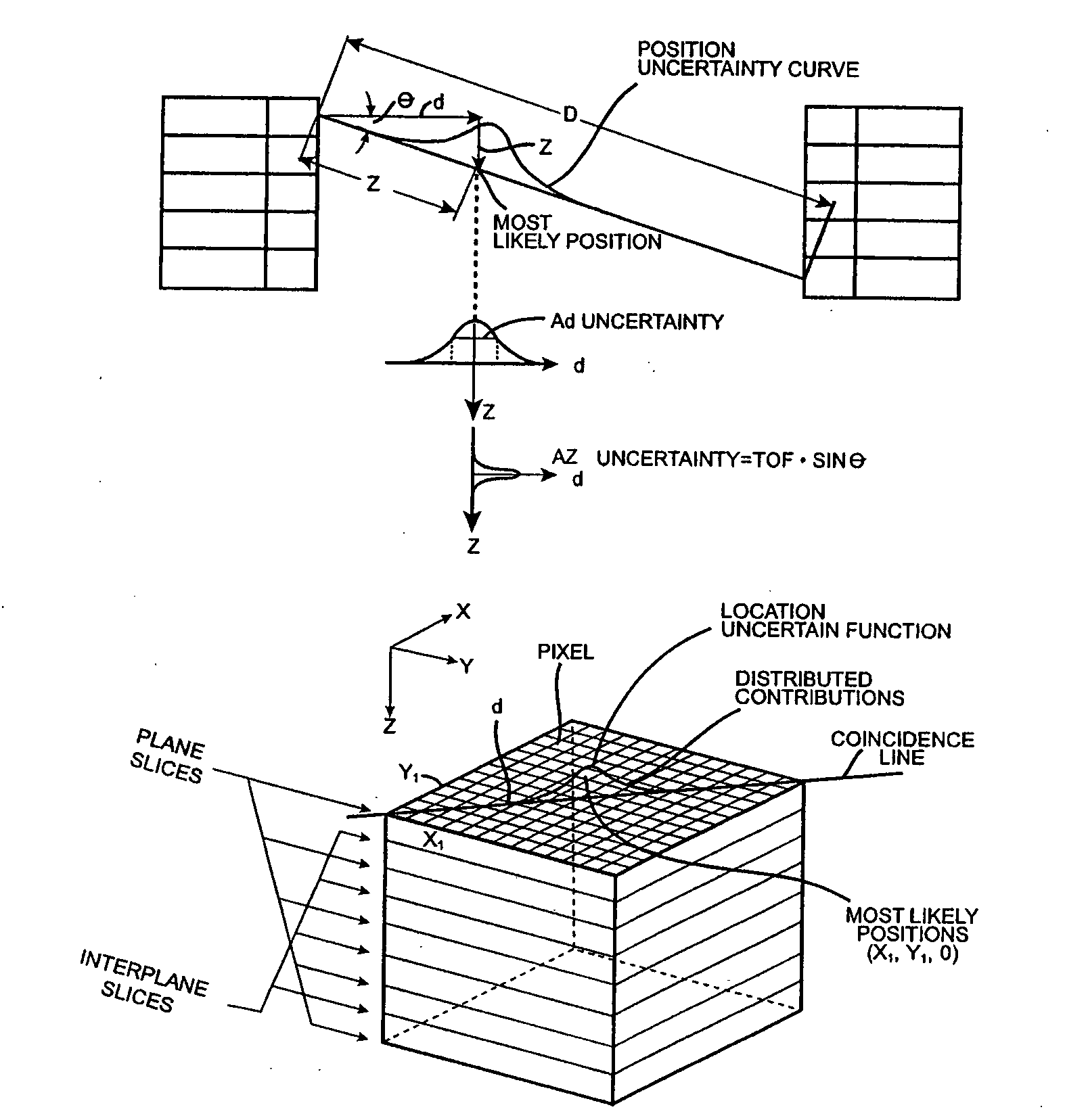
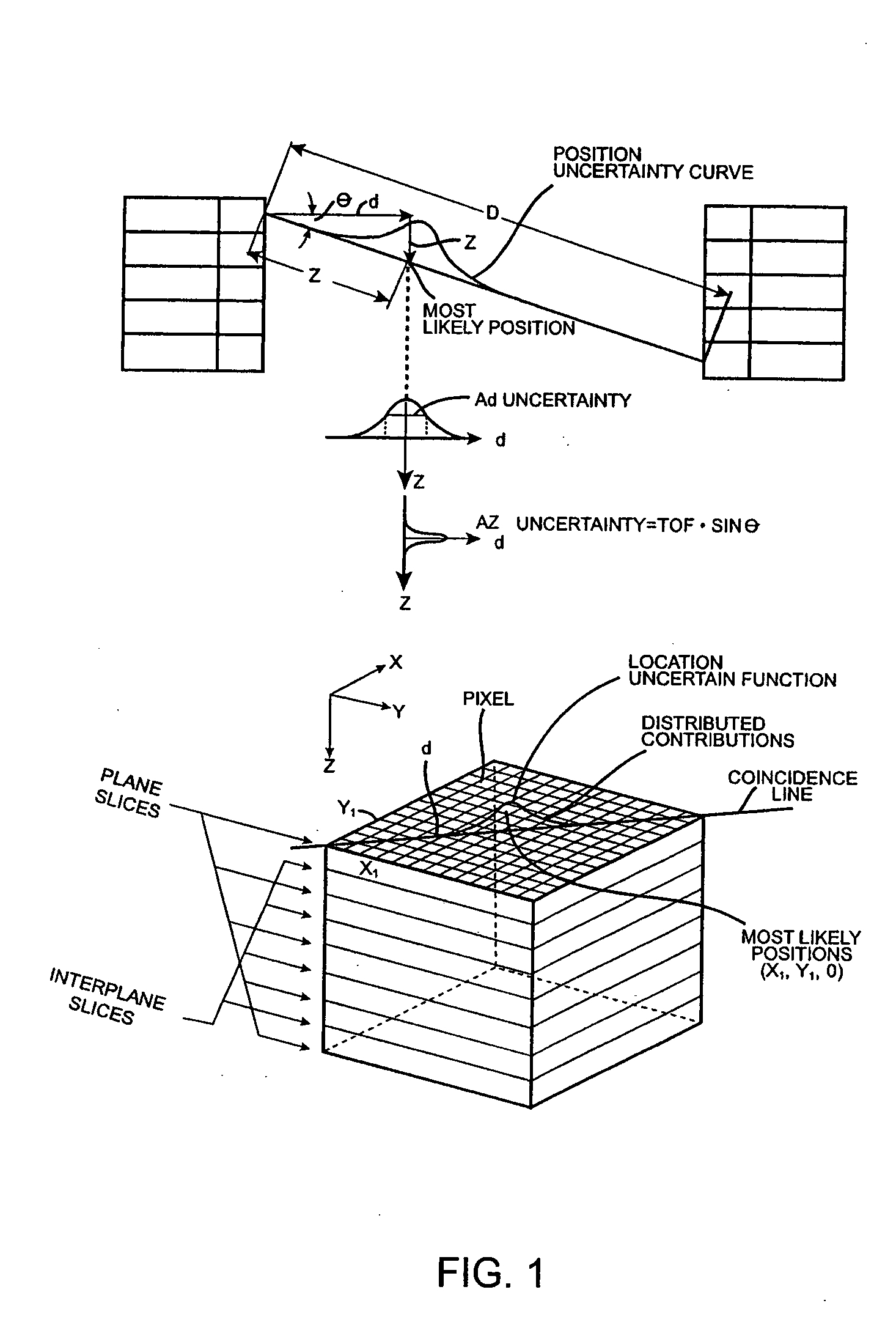
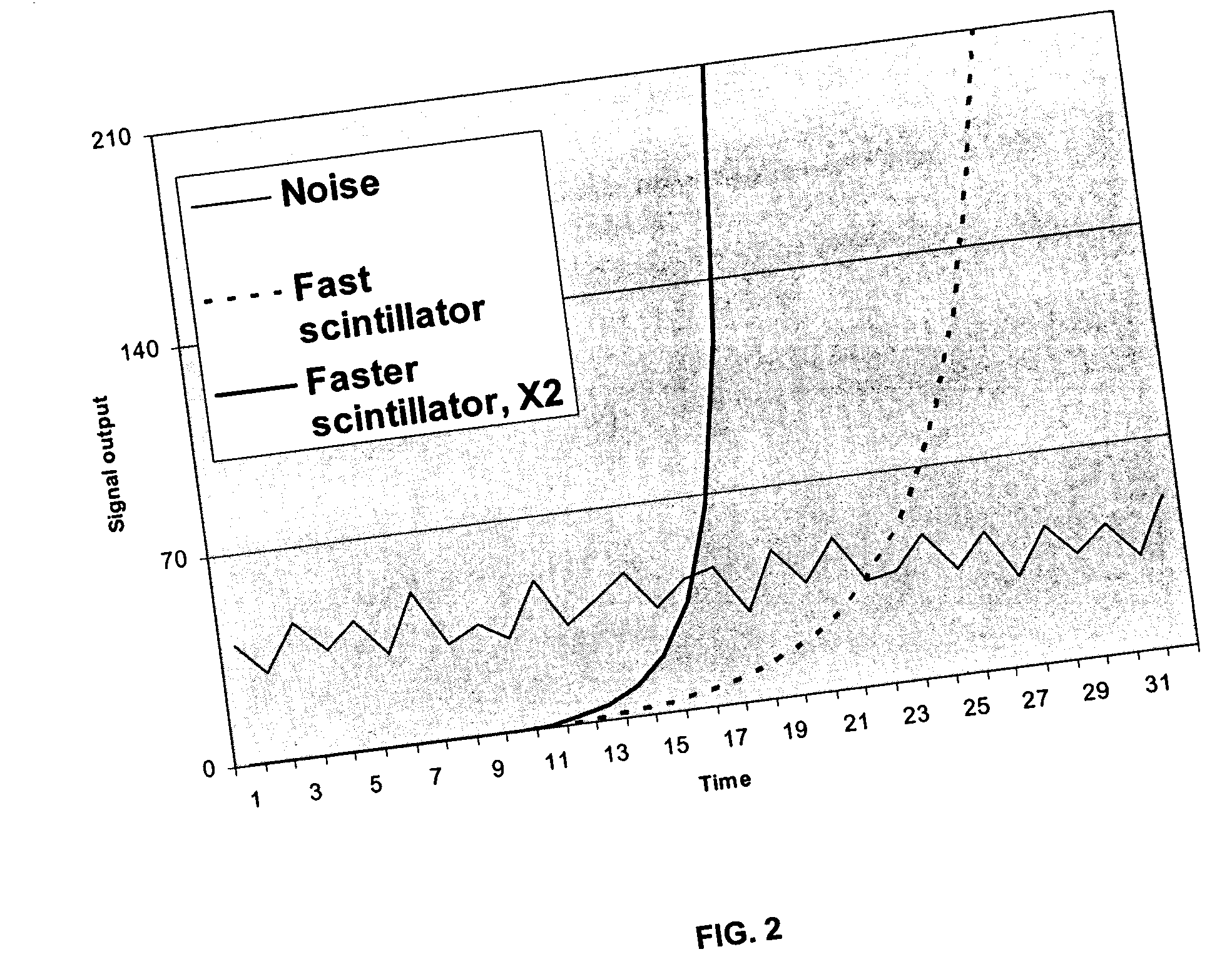
- Development of cerium-doped lutetium iodide (LuI3:Ce) scintillators with a peak emission wavelength matched to photomultiplier tubes, offering higher light output and faster decay times, enabling improved timing resolution and energy resolution, which is crucial for time-of-flight PET imaging.

Organic scintillator
PatentWO2023156957A1
Innovation
- The development of transparent plastic scintillators with elongated alkyl chains in fluorophore compounds, allowing for higher dopant concentrations up to 30% by weight, combined with a secondary dopant and crosslinking agents, results in improved transparency and faster time responses, enabling better temporal resolution and light yield.


Radiation Safety Standards for Scintillator Applications
Radiation safety standards for scintillator applications represent a critical framework governing the deployment and operation of scintillation detection systems across various industries. These standards are primarily established by international organizations including the International Atomic Energy Agency (IAEA), the International Commission on Radiological Protection (ICRP), and national regulatory bodies such as the Nuclear Regulatory Commission (NRC) in the United States and equivalent agencies worldwide.
The fundamental principle underlying these standards is the ALARA concept - keeping radiation exposure As Low As Reasonably Achievable. For scintillator applications, this translates to specific dose limits for occupational workers, typically set at 20 mSv per year averaged over five consecutive years, with no single year exceeding 50 mSv. Public exposure limits are significantly lower, generally restricted to 1 mSv per year above natural background radiation.
Scintillator-based detection systems must comply with stringent calibration and performance verification requirements. Standards mandate regular calibration using certified reference sources, with frequency typically ranging from monthly to annually depending on the application criticality. Detection efficiency, energy resolution, and response linearity must be documented and maintained within specified tolerances to ensure accurate radiation measurements.
Workplace safety protocols for scintillator applications encompass comprehensive radiation protection measures. These include mandatory personal dosimetry monitoring for all personnel, establishment of controlled and supervised radiation areas with appropriate access controls, and implementation of administrative procedures for source handling and detector maintenance. Emergency response procedures must be documented and regularly practiced.
Quality assurance programs are integral to regulatory compliance, requiring systematic documentation of all operational parameters, maintenance activities, and performance checks. Traceability of radioactive sources used for calibration must be maintained throughout their lifecycle, from procurement to disposal. Regular audits by qualified radiation safety officers ensure ongoing compliance with evolving regulatory requirements.
Environmental monitoring standards address potential contamination risks and waste management protocols. Scintillator materials, particularly those containing radioactive components or activated by neutron exposure, must be handled according to specific disposal guidelines. Long-term storage and decommissioning procedures are governed by detailed regulatory frameworks ensuring minimal environmental impact.
The fundamental principle underlying these standards is the ALARA concept - keeping radiation exposure As Low As Reasonably Achievable. For scintillator applications, this translates to specific dose limits for occupational workers, typically set at 20 mSv per year averaged over five consecutive years, with no single year exceeding 50 mSv. Public exposure limits are significantly lower, generally restricted to 1 mSv per year above natural background radiation.
Scintillator-based detection systems must comply with stringent calibration and performance verification requirements. Standards mandate regular calibration using certified reference sources, with frequency typically ranging from monthly to annually depending on the application criticality. Detection efficiency, energy resolution, and response linearity must be documented and maintained within specified tolerances to ensure accurate radiation measurements.
Workplace safety protocols for scintillator applications encompass comprehensive radiation protection measures. These include mandatory personal dosimetry monitoring for all personnel, establishment of controlled and supervised radiation areas with appropriate access controls, and implementation of administrative procedures for source handling and detector maintenance. Emergency response procedures must be documented and regularly practiced.
Quality assurance programs are integral to regulatory compliance, requiring systematic documentation of all operational parameters, maintenance activities, and performance checks. Traceability of radioactive sources used for calibration must be maintained throughout their lifecycle, from procurement to disposal. Regular audits by qualified radiation safety officers ensure ongoing compliance with evolving regulatory requirements.
Environmental monitoring standards address potential contamination risks and waste management protocols. Scintillator materials, particularly those containing radioactive components or activated by neutron exposure, must be handled according to specific disposal guidelines. Long-term storage and decommissioning procedures are governed by detailed regulatory frameworks ensuring minimal environmental impact.
Environmental Impact of Advanced Scintillator Materials
The development of advanced scintillator materials with improved reaction times to external stimuli presents significant environmental considerations that must be carefully evaluated throughout the material lifecycle. Traditional scintillator materials, while effective, often contain heavy metals and rare earth elements that pose substantial environmental risks during extraction, processing, and disposal phases.
Modern high-performance scintillators frequently incorporate cesium iodide, sodium iodide, or lutetium-based compounds to achieve faster response times. However, the mining and refinement of these materials generate considerable environmental footprints, including habitat disruption, water contamination, and greenhouse gas emissions. Lutetium, in particular, requires extensive processing of rare earth ores, resulting in radioactive waste byproducts and chemical pollutants.
Manufacturing processes for next-generation scintillators introduce additional environmental challenges. The production of organic scintillators with enhanced temporal resolution often involves volatile organic compounds and specialized solvents that contribute to air quality degradation. Crystal growth techniques for inorganic scintillators require high-temperature furnaces operating for extended periods, consuming substantial energy and generating carbon emissions.
Emerging nanoscale scintillator materials, while promising for ultrafast response applications, raise concerns about nanoparticle release into environmental systems. These materials may exhibit unpredictable behavior in biological systems and could accumulate in food chains, though comprehensive long-term studies remain limited.
End-of-life disposal presents critical environmental considerations. Many advanced scintillator materials cannot be recycled through conventional methods due to their specialized composition and potential radioactive contamination from operational use. Landfill disposal risks leaching of toxic components into groundwater systems, while incineration may release harmful compounds into the atmosphere.
Sustainable alternatives are emerging through green chemistry approaches, including bio-based organic scintillators and recyclable composite materials. These innovations aim to maintain superior reaction times while minimizing environmental impact through biodegradable components and reduced heavy metal content. However, performance trade-offs and scalability challenges continue to limit widespread adoption of these environmentally conscious solutions.
Modern high-performance scintillators frequently incorporate cesium iodide, sodium iodide, or lutetium-based compounds to achieve faster response times. However, the mining and refinement of these materials generate considerable environmental footprints, including habitat disruption, water contamination, and greenhouse gas emissions. Lutetium, in particular, requires extensive processing of rare earth ores, resulting in radioactive waste byproducts and chemical pollutants.
Manufacturing processes for next-generation scintillators introduce additional environmental challenges. The production of organic scintillators with enhanced temporal resolution often involves volatile organic compounds and specialized solvents that contribute to air quality degradation. Crystal growth techniques for inorganic scintillators require high-temperature furnaces operating for extended periods, consuming substantial energy and generating carbon emissions.
Emerging nanoscale scintillator materials, while promising for ultrafast response applications, raise concerns about nanoparticle release into environmental systems. These materials may exhibit unpredictable behavior in biological systems and could accumulate in food chains, though comprehensive long-term studies remain limited.
End-of-life disposal presents critical environmental considerations. Many advanced scintillator materials cannot be recycled through conventional methods due to their specialized composition and potential radioactive contamination from operational use. Landfill disposal risks leaching of toxic components into groundwater systems, while incineration may release harmful compounds into the atmosphere.
Sustainable alternatives are emerging through green chemistry approaches, including bio-based organic scintillators and recyclable composite materials. These innovations aim to maintain superior reaction times while minimizing environmental impact through biodegradable components and reduced heavy metal content. However, performance trade-offs and scalability challenges continue to limit widespread adoption of these environmentally conscious solutions.
Unlock deeper insights with PatSnap Eureka Quick Research — get a full tech report to explore trends and direct your research. Try now!
Generate Your Research Report Instantly with AI Agent
Supercharge your innovation with PatSnap Eureka AI Agent Platform!