

Optimizing Scintillator Configuration for Structural Integrity
MAR 10, 20269 MIN READ
Generate Your Research Report Instantly with AI Agent
PatSnap Eureka helps you evaluate technical feasibility & market potential.
Scintillator Technology Background and Structural Goals
Scintillator technology emerged in the early 20th century as a revolutionary detection method for ionizing radiation, fundamentally transforming fields ranging from medical imaging to high-energy physics research. The principle underlying scintillation involves the conversion of incident radiation energy into visible or near-visible light photons through luminescent materials, enabling indirect but highly sensitive radiation detection. This photon-based detection mechanism has proven superior to direct electrical methods in many applications due to its exceptional sensitivity, rapid response times, and versatility across different radiation types.
The evolution of scintillator materials has progressed through distinct technological generations, beginning with organic crystals like anthracene and naphthalene in the 1940s, advancing to inorganic crystalline materials such as sodium iodide doped with thallium (NaI:Tl) in the 1950s, and culminating in modern engineered materials including plastic scintillators, ceramic composites, and nanostructured materials. Each generation has addressed specific limitations while introducing new capabilities, particularly in terms of light output efficiency, decay time constants, and mechanical robustness.
Contemporary applications demand increasingly sophisticated performance characteristics that extend far beyond basic radiation detection capabilities. Modern scintillator systems must simultaneously achieve high detection efficiency, excellent energy resolution, fast timing response, and crucially, long-term structural stability under demanding operational conditions. These requirements have driven the development of hybrid approaches combining multiple scintillator types, advanced optical coupling techniques, and sophisticated readout electronics.
The structural integrity challenge has become particularly acute as scintillator systems are deployed in increasingly harsh environments, including space-based applications, industrial process monitoring, and next-generation particle accelerator experiments. These applications subject scintillator assemblies to extreme temperature variations, mechanical vibrations, radiation damage, and chemical exposure over extended operational periods. Traditional approaches focusing solely on optical performance optimization have proven insufficient to address these multifaceted challenges.
Current technological objectives center on developing integrated design methodologies that simultaneously optimize detection performance and structural durability. This involves advancing materials science to create inherently robust scintillator compositions, developing innovative mechanical support structures that minimize stress concentrations while preserving optical coupling efficiency, and implementing predictive modeling capabilities to anticipate and mitigate long-term degradation mechanisms. The ultimate goal is achieving scintillator configurations that maintain consistent performance throughout their intended operational lifetime while meeting increasingly stringent reliability requirements across diverse application domains.
The evolution of scintillator materials has progressed through distinct technological generations, beginning with organic crystals like anthracene and naphthalene in the 1940s, advancing to inorganic crystalline materials such as sodium iodide doped with thallium (NaI:Tl) in the 1950s, and culminating in modern engineered materials including plastic scintillators, ceramic composites, and nanostructured materials. Each generation has addressed specific limitations while introducing new capabilities, particularly in terms of light output efficiency, decay time constants, and mechanical robustness.
Contemporary applications demand increasingly sophisticated performance characteristics that extend far beyond basic radiation detection capabilities. Modern scintillator systems must simultaneously achieve high detection efficiency, excellent energy resolution, fast timing response, and crucially, long-term structural stability under demanding operational conditions. These requirements have driven the development of hybrid approaches combining multiple scintillator types, advanced optical coupling techniques, and sophisticated readout electronics.
The structural integrity challenge has become particularly acute as scintillator systems are deployed in increasingly harsh environments, including space-based applications, industrial process monitoring, and next-generation particle accelerator experiments. These applications subject scintillator assemblies to extreme temperature variations, mechanical vibrations, radiation damage, and chemical exposure over extended operational periods. Traditional approaches focusing solely on optical performance optimization have proven insufficient to address these multifaceted challenges.
Current technological objectives center on developing integrated design methodologies that simultaneously optimize detection performance and structural durability. This involves advancing materials science to create inherently robust scintillator compositions, developing innovative mechanical support structures that minimize stress concentrations while preserving optical coupling efficiency, and implementing predictive modeling capabilities to anticipate and mitigate long-term degradation mechanisms. The ultimate goal is achieving scintillator configurations that maintain consistent performance throughout their intended operational lifetime while meeting increasingly stringent reliability requirements across diverse application domains.
Market Demand for High-Performance Scintillator Systems
The global scintillator market is experiencing robust growth driven by expanding applications across multiple high-technology sectors. Medical imaging represents the largest demand segment, with hospitals and diagnostic centers increasingly adopting advanced PET, SPECT, and CT scanning systems that require high-performance scintillator materials. The aging global population and rising healthcare expenditure are fueling continuous demand for more sensitive and accurate imaging equipment.
Nuclear security and homeland defense applications constitute another significant market driver. Government agencies and border control authorities worldwide are investing heavily in radiation detection systems for cargo screening, nuclear material monitoring, and threat detection. These applications demand scintillators with exceptional structural integrity to withstand harsh operational environments while maintaining consistent performance over extended periods.
The oil and gas industry presents substantial opportunities for well-logging applications, where scintillator-based detectors must operate under extreme downhole conditions including high temperatures, pressures, and mechanical stress. Optimized scintillator configurations that maintain structural integrity under these demanding conditions are increasingly sought after as exploration activities expand into more challenging environments.
High-energy physics research facilities represent a specialized but lucrative market segment. Major particle accelerator projects and experimental facilities require custom scintillator systems with precise geometric configurations and exceptional radiation hardness. These applications often drive innovation in scintillator design and manufacturing techniques.
Industrial non-destructive testing applications are growing rapidly, particularly in aerospace, automotive, and manufacturing sectors where quality control requirements are becoming more stringent. These applications require portable yet robust scintillator systems capable of delivering consistent performance across varying operational conditions.
The market is also witnessing increased demand for miniaturized scintillator systems in emerging applications such as space-based radiation monitoring, environmental sensing, and portable security screening devices. These applications place premium value on optimized configurations that maximize detection efficiency while ensuring long-term structural reliability in compact form factors.
Regional demand patterns show strong growth in Asia-Pacific markets, driven by expanding healthcare infrastructure and increasing industrial automation. North American and European markets continue to demand advanced, high-performance systems with enhanced reliability and operational longevity.
Nuclear security and homeland defense applications constitute another significant market driver. Government agencies and border control authorities worldwide are investing heavily in radiation detection systems for cargo screening, nuclear material monitoring, and threat detection. These applications demand scintillators with exceptional structural integrity to withstand harsh operational environments while maintaining consistent performance over extended periods.
The oil and gas industry presents substantial opportunities for well-logging applications, where scintillator-based detectors must operate under extreme downhole conditions including high temperatures, pressures, and mechanical stress. Optimized scintillator configurations that maintain structural integrity under these demanding conditions are increasingly sought after as exploration activities expand into more challenging environments.
High-energy physics research facilities represent a specialized but lucrative market segment. Major particle accelerator projects and experimental facilities require custom scintillator systems with precise geometric configurations and exceptional radiation hardness. These applications often drive innovation in scintillator design and manufacturing techniques.
Industrial non-destructive testing applications are growing rapidly, particularly in aerospace, automotive, and manufacturing sectors where quality control requirements are becoming more stringent. These applications require portable yet robust scintillator systems capable of delivering consistent performance across varying operational conditions.
The market is also witnessing increased demand for miniaturized scintillator systems in emerging applications such as space-based radiation monitoring, environmental sensing, and portable security screening devices. These applications place premium value on optimized configurations that maximize detection efficiency while ensuring long-term structural reliability in compact form factors.
Regional demand patterns show strong growth in Asia-Pacific markets, driven by expanding healthcare infrastructure and increasing industrial automation. North American and European markets continue to demand advanced, high-performance systems with enhanced reliability and operational longevity.
Current Structural Challenges in Scintillator Design
Scintillator design faces significant structural challenges that directly impact performance and longevity in radiation detection applications. The primary concern lies in the inherent brittleness of most scintillating materials, particularly inorganic crystals such as sodium iodide (NaI), cesium iodide (CsI), and lutetium oxyorthosilicate (LSO). These materials exhibit limited mechanical flexibility, making them susceptible to cracking under thermal stress, mechanical shock, or vibration during operation.
Thermal expansion mismatch represents another critical structural challenge. Scintillator crystals often have different thermal expansion coefficients compared to their housing materials, photomultiplier tubes, or photodiodes. This mismatch creates internal stresses during temperature fluctuations, leading to delamination, micro-fractures, or complete structural failure. The problem becomes particularly acute in applications requiring wide operating temperature ranges or rapid temperature changes.
Hygroscopic degradation poses substantial challenges for certain scintillator materials. Sodium iodide and other alkali halide scintillators readily absorb moisture from ambient air, causing crystal lattice distortion, surface deterioration, and optical property degradation. This moisture sensitivity necessitates hermetic sealing, which introduces additional structural complexity and potential failure points at seal interfaces.
Interface bonding between scintillator crystals and optical coupling materials presents ongoing difficulties. Achieving optimal optical transmission while maintaining mechanical stability requires careful selection of coupling agents and bonding techniques. Poor adhesion can result in optical losses, air gap formation, and mechanical instability under operational stresses.
Size scaling limitations constrain the development of large-area detector systems. As scintillator dimensions increase, structural integrity becomes increasingly difficult to maintain due to higher probability of internal defects, increased thermal gradients, and greater susceptibility to mechanical stress concentration. Manufacturing large, defect-free crystals remains technically challenging and economically prohibitive for many applications.
Radiation-induced structural damage accumulates over extended operational periods. High-energy radiation can create color centers, lattice defects, and chemical decomposition within scintillator materials, gradually degrading both optical and mechanical properties. This degradation mechanism limits detector lifespan and requires consideration of replacement strategies in long-term applications.
Thermal expansion mismatch represents another critical structural challenge. Scintillator crystals often have different thermal expansion coefficients compared to their housing materials, photomultiplier tubes, or photodiodes. This mismatch creates internal stresses during temperature fluctuations, leading to delamination, micro-fractures, or complete structural failure. The problem becomes particularly acute in applications requiring wide operating temperature ranges or rapid temperature changes.
Hygroscopic degradation poses substantial challenges for certain scintillator materials. Sodium iodide and other alkali halide scintillators readily absorb moisture from ambient air, causing crystal lattice distortion, surface deterioration, and optical property degradation. This moisture sensitivity necessitates hermetic sealing, which introduces additional structural complexity and potential failure points at seal interfaces.
Interface bonding between scintillator crystals and optical coupling materials presents ongoing difficulties. Achieving optimal optical transmission while maintaining mechanical stability requires careful selection of coupling agents and bonding techniques. Poor adhesion can result in optical losses, air gap formation, and mechanical instability under operational stresses.
Size scaling limitations constrain the development of large-area detector systems. As scintillator dimensions increase, structural integrity becomes increasingly difficult to maintain due to higher probability of internal defects, increased thermal gradients, and greater susceptibility to mechanical stress concentration. Manufacturing large, defect-free crystals remains technically challenging and economically prohibitive for many applications.
Radiation-induced structural damage accumulates over extended operational periods. High-energy radiation can create color centers, lattice defects, and chemical decomposition within scintillator materials, gradually degrading both optical and mechanical properties. This degradation mechanism limits detector lifespan and requires consideration of replacement strategies in long-term applications.
Existing Structural Optimization Solutions
01 Encapsulation and protective coatings for scintillators
Scintillator structural integrity can be enhanced through the application of protective encapsulation layers and coatings. These protective barriers shield the scintillator material from environmental factors such as moisture, oxygen, and mechanical stress. Various encapsulation techniques including hermetic sealing, polymer coatings, and multi-layer protective structures are employed to maintain the optical and physical properties of the scintillator over extended periods of use.- Encapsulation and protective coatings for scintillators: Scintillator structural integrity can be enhanced through the application of protective encapsulation layers and coatings. These protective barriers shield the scintillator material from environmental factors such as moisture, mechanical stress, and chemical degradation. Various encapsulation techniques including hermetic sealing, polymer coatings, and multi-layer protective structures are employed to maintain the optical and mechanical properties of the scintillator over extended periods of use.
- Crystal growth and material composition optimization: The structural integrity of scintillators is fundamentally determined by the quality of crystal growth and material composition. Advanced manufacturing techniques focus on controlling crystal defects, grain boundaries, and internal stress during the growth process. Optimization of dopant concentrations and base material selection ensures improved mechanical strength, reduced cracking susceptibility, and enhanced resistance to radiation damage while maintaining scintillation efficiency.
- Mechanical reinforcement and structural support systems: Structural integrity is maintained through mechanical reinforcement strategies including support frames, backing structures, and composite assemblies. These systems distribute mechanical loads, prevent deformation under operational conditions, and protect against impact damage. Design considerations include thermal expansion matching, vibration damping, and stress distribution to prevent fracture or delamination of the scintillator material during installation and operation.
- Interface bonding and adhesion technologies: The integrity of scintillator assemblies depends critically on the quality of interfaces between the scintillator and adjacent components such as photodetectors and optical coupling materials. Advanced bonding techniques including optical adhesives, direct bonding methods, and intermediate coupling layers ensure mechanical stability while maintaining optical transmission. These technologies address challenges related to thermal cycling, mechanical shock, and long-term adhesion degradation.
- Non-destructive testing and integrity monitoring: Ensuring scintillator structural integrity requires comprehensive testing and monitoring methodologies. Non-destructive evaluation techniques assess internal defects, cracks, and degradation without compromising the scintillator function. Methods include optical inspection, acoustic testing, and performance monitoring systems that detect changes in scintillation properties indicative of structural compromise. These approaches enable quality control during manufacturing and condition monitoring during operational lifetime.
02 Material composition and crystal structure optimization
The structural integrity of scintillators is fundamentally determined by their material composition and crystal structure. Optimization involves selecting appropriate base materials, dopants, and crystal growth methods to achieve desired mechanical strength and stability. Advanced material formulations focus on reducing internal defects, improving crystal uniformity, and enhancing resistance to radiation damage and thermal stress.Expand Specific Solutions03 Mechanical support structures and mounting systems
Maintaining scintillator structural integrity requires robust mechanical support structures and mounting systems. These systems are designed to securely hold scintillator elements while minimizing mechanical stress and allowing for thermal expansion. Design considerations include vibration dampening, shock resistance, and maintaining optical alignment. Various mounting configurations and support frameworks are employed depending on the application requirements.Expand Specific Solutions04 Radiation damage mitigation and long-term stability
Scintillator structural integrity over time is affected by radiation exposure which can cause material degradation and performance decline. Mitigation strategies include the use of radiation-hard materials, self-healing compositions, and protective shielding. Techniques for monitoring and assessing radiation-induced damage are implemented to ensure continued structural integrity throughout the operational lifetime of the scintillator system.Expand Specific Solutions05 Interface bonding and optical coupling integrity
The structural integrity at interfaces between scintillator elements and photodetectors or other components is critical for system performance. Proper optical coupling requires materials and methods that maintain strong adhesion while preserving optical transmission properties. Techniques include the use of specialized optical adhesives, index-matching materials, and bonding processes that accommodate differential thermal expansion while maintaining mechanical and optical integrity.Expand Specific Solutions
Key Players in Scintillator Manufacturing Industry
The scintillator configuration optimization market represents a mature yet evolving technological landscape spanning multiple high-value applications. The industry has reached a consolidation phase with established players like Hamamatsu Photonics, Shimadzu Corp., and General Electric dominating medical imaging segments, while specialized firms such as Radiation Monitoring Devices focus on detection applications. Market size reflects significant investment across healthcare, nuclear, and industrial sectors, driven by advancing diagnostic capabilities and safety requirements. Technology maturity varies considerably - companies like Philips and GE Healthcare demonstrate advanced integration capabilities in medical systems, while emerging players like iRay Technology represent newer digital approaches. The competitive landscape shows geographic clustering with strong Japanese presence (Hamamatsu, Shimadzu, Toray Industries) in materials science, European leadership through CEA and Philips in research applications, and growing Asian participation via Chinese manufacturers, indicating a globally distributed but technologically stratified market structure.
Koninklijke Philips NV
Technical Solution: Philips develops scintillator optimization solutions focused on medical imaging applications where structural integrity is critical for patient safety and image quality consistency. Their technology incorporates advanced ceramic and polymer matrix systems that provide enhanced mechanical support while maintaining optical performance. The company utilizes predictive modeling and machine learning algorithms to optimize scintillator array configurations, minimizing mechanical stress distribution and maximizing operational lifetime. Philips' solutions include integrated health monitoring systems that track structural integrity parameters in real-time, enabling predictive maintenance and preventing catastrophic failures.
Strengths: Strong medical imaging expertise with advanced modeling capabilities and integrated system approach including health monitoring. Weaknesses: Primary focus on medical applications may limit adaptability to other sectors and proprietary systems may have compatibility constraints.
Radiation Monitoring Devices, Inc.
Technical Solution: RMD specializes in custom scintillator configurations designed for enhanced structural integrity through innovative packaging and assembly techniques. Their solutions incorporate flexible mounting systems that accommodate differential thermal expansion between scintillator materials and housing components. The company develops specialized adhesives and coupling materials that maintain optical transparency while providing mechanical support and protection against environmental factors. RMD's approach includes comprehensive stress analysis and accelerated aging tests to validate long-term structural performance in radiation detection applications.
Strengths: Specialized expertise in radiation detection with custom engineering capabilities and thorough validation testing procedures. Weaknesses: Smaller scale operations may limit production capacity and higher costs for specialized solutions.
Core Patents in Scintillator Structural Engineering
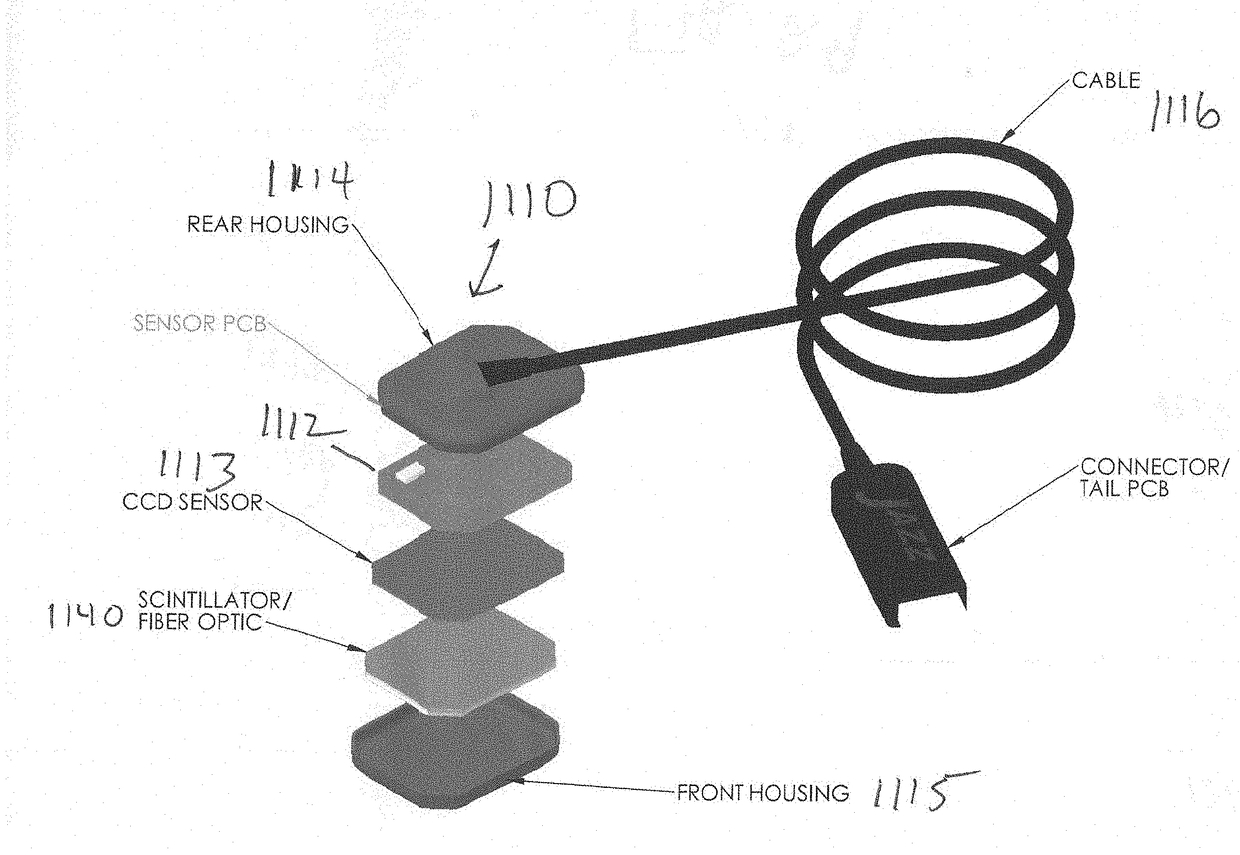
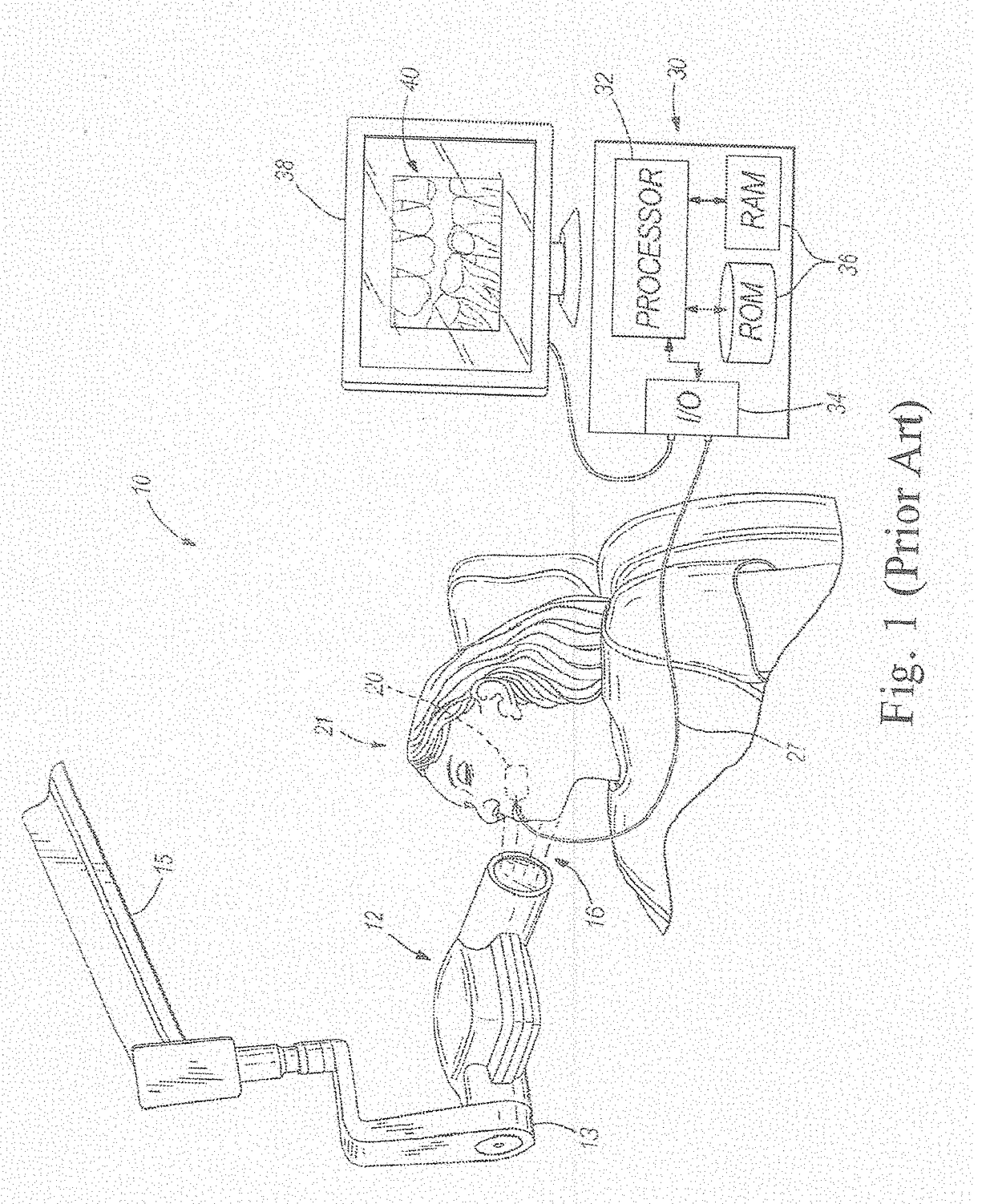
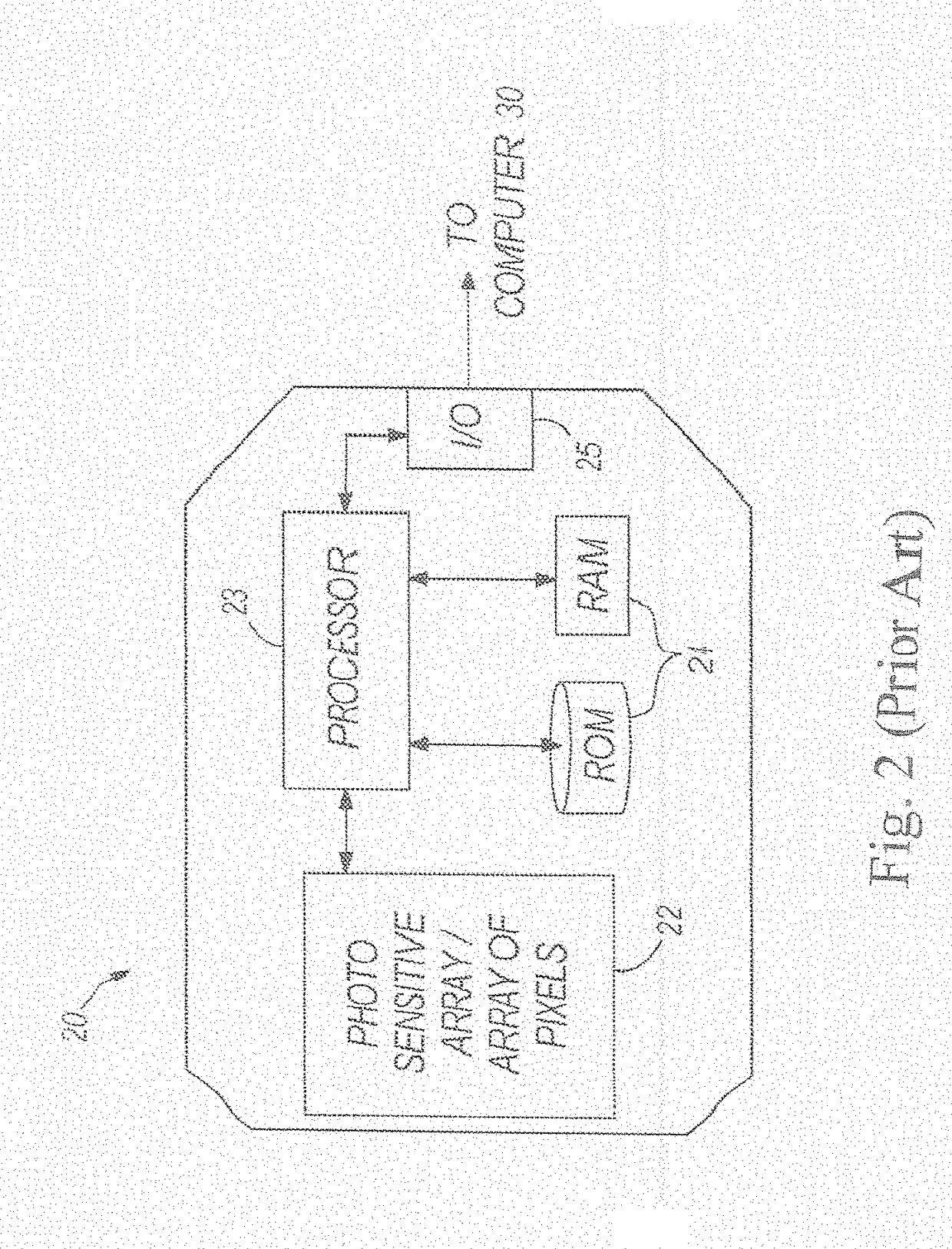
Intraoral Dental Radiological Imaging Sensor
PatentActiveUS20180064405A1
Innovation
- The design of an intraoral x-ray imaging sensor with a housing and electronic interface substrate featuring cut corners and a minimized dead space at the mesial end, allowing for improved ergonomics and increased image capture area by relocating electrical components to the distal side, thereby reducing mechanical stress on sensitive areas and enhancing patient comfort.

Scintillator module, scintillator sensor unit, and manufacturing method
PatentActiveUS20220043171A1
Innovation
- A scintillator module and sensor unit design that incorporates a substrate with a columnar scintillator crystal layer and a non-adhesive moisture-proof film, which forms a void between the film and the crystal peaks, preventing adhesion and maintaining the crystal's sharpness while ensuring moisture protection, thus allowing for higher luminance and resolution without optical loss.


Radiation Safety Standards for Scintillator Systems
Radiation safety standards for scintillator systems represent a critical framework governing the design, deployment, and operation of detection equipment in various applications. These standards encompass comprehensive guidelines that address both ionizing radiation exposure limits and non-ionizing radiation considerations, ensuring that scintillator-based detection systems operate within acceptable safety parameters for personnel and the general public.
International regulatory bodies, including the International Atomic Energy Agency (IAEA), Nuclear Regulatory Commission (NRC), and International Electrotechnical Commission (IEC), have established fundamental safety principles that directly impact scintillator system configurations. These regulations mandate specific dose rate limits, typically maintaining exposure levels below 2.5 microsieverts per hour in unrestricted areas and 25 microsieverts per hour in controlled access zones.
The structural integrity optimization of scintillator configurations must comply with radiation shielding requirements outlined in standards such as NCRP Report 147 and IEC 61331 series. These standards specify minimum lead equivalence values for protective barriers, geometric constraints for detector positioning, and mandatory safety interlocks that prevent unauthorized access during high-radiation operations.
Material certification standards play a crucial role in scintillator system design, requiring comprehensive documentation of radiation-induced degradation characteristics and long-term stability assessments. Standards like ASTM C1392 and ISO 21909 establish testing protocols for evaluating scintillator material performance under prolonged radiation exposure, directly influencing structural design decisions.
Quality assurance protocols mandated by regulatory frameworks require periodic calibration verification, radiation leakage testing, and structural integrity assessments. These requirements necessitate accessible maintenance configurations while maintaining optimal detection performance, creating design constraints that must be balanced against operational efficiency.
Emergency response procedures outlined in radiation safety standards also influence scintillator system architecture, requiring fail-safe mechanisms, remote shutdown capabilities, and contamination containment features that may impact overall structural design approaches and material selection criteria.
International regulatory bodies, including the International Atomic Energy Agency (IAEA), Nuclear Regulatory Commission (NRC), and International Electrotechnical Commission (IEC), have established fundamental safety principles that directly impact scintillator system configurations. These regulations mandate specific dose rate limits, typically maintaining exposure levels below 2.5 microsieverts per hour in unrestricted areas and 25 microsieverts per hour in controlled access zones.
The structural integrity optimization of scintillator configurations must comply with radiation shielding requirements outlined in standards such as NCRP Report 147 and IEC 61331 series. These standards specify minimum lead equivalence values for protective barriers, geometric constraints for detector positioning, and mandatory safety interlocks that prevent unauthorized access during high-radiation operations.
Material certification standards play a crucial role in scintillator system design, requiring comprehensive documentation of radiation-induced degradation characteristics and long-term stability assessments. Standards like ASTM C1392 and ISO 21909 establish testing protocols for evaluating scintillator material performance under prolonged radiation exposure, directly influencing structural design decisions.
Quality assurance protocols mandated by regulatory frameworks require periodic calibration verification, radiation leakage testing, and structural integrity assessments. These requirements necessitate accessible maintenance configurations while maintaining optimal detection performance, creating design constraints that must be balanced against operational efficiency.
Emergency response procedures outlined in radiation safety standards also influence scintillator system architecture, requiring fail-safe mechanisms, remote shutdown capabilities, and contamination containment features that may impact overall structural design approaches and material selection criteria.
Material Science Advances in Scintillator Durability
Recent breakthroughs in material science have fundamentally transformed the approach to scintillator durability, addressing long-standing challenges in radiation detection systems. Advanced crystalline engineering techniques have enabled the development of defect-resistant lattice structures that maintain optical clarity under prolonged radiation exposure. These innovations focus on controlling crystal growth parameters and introducing strategic dopant distributions to enhance mechanical robustness.
Nanostructured composite materials represent a paradigm shift in scintillator design, incorporating protective matrix layers that shield active scintillating regions from environmental degradation. Research has demonstrated that embedding scintillating nanocrystals within polymer or ceramic matrices significantly improves resistance to thermal cycling and mechanical stress while preserving light output efficiency.
Surface modification technologies have emerged as critical enablers for enhanced durability. Advanced coating methodologies, including atomic layer deposition and sol-gel processes, create protective barriers that prevent moisture ingress and chemical corrosion. These surface treatments maintain transparency while providing exceptional resistance to harsh operating environments.
Novel hybrid organic-inorganic materials have shown remarkable promise in addressing traditional brittleness issues associated with conventional scintillators. These materials combine the high light yield of inorganic crystals with the flexibility and processability of organic compounds, resulting in scintillators that can withstand mechanical shock and vibration without performance degradation.
Self-healing material concepts are being explored for next-generation scintillator applications. These systems incorporate microcapsules containing repair agents that activate upon damage, automatically restoring structural integrity and optical properties. While still in early development stages, preliminary results indicate significant potential for extending operational lifetimes.
Advanced characterization techniques, including in-situ stress analysis and accelerated aging protocols, have provided deeper insights into failure mechanisms. This understanding has guided the development of predictive models for durability assessment, enabling more targeted material optimization strategies and improved quality control processes in manufacturing environments.
Nanostructured composite materials represent a paradigm shift in scintillator design, incorporating protective matrix layers that shield active scintillating regions from environmental degradation. Research has demonstrated that embedding scintillating nanocrystals within polymer or ceramic matrices significantly improves resistance to thermal cycling and mechanical stress while preserving light output efficiency.
Surface modification technologies have emerged as critical enablers for enhanced durability. Advanced coating methodologies, including atomic layer deposition and sol-gel processes, create protective barriers that prevent moisture ingress and chemical corrosion. These surface treatments maintain transparency while providing exceptional resistance to harsh operating environments.
Novel hybrid organic-inorganic materials have shown remarkable promise in addressing traditional brittleness issues associated with conventional scintillators. These materials combine the high light yield of inorganic crystals with the flexibility and processability of organic compounds, resulting in scintillators that can withstand mechanical shock and vibration without performance degradation.
Self-healing material concepts are being explored for next-generation scintillator applications. These systems incorporate microcapsules containing repair agents that activate upon damage, automatically restoring structural integrity and optical properties. While still in early development stages, preliminary results indicate significant potential for extending operational lifetimes.
Advanced characterization techniques, including in-situ stress analysis and accelerated aging protocols, have provided deeper insights into failure mechanisms. This understanding has guided the development of predictive models for durability assessment, enabling more targeted material optimization strategies and improved quality control processes in manufacturing environments.
Unlock deeper insights with PatSnap Eureka Quick Research — get a full tech report to explore trends and direct your research. Try now!
Generate Your Research Report Instantly with AI Agent
Supercharge your innovation with PatSnap Eureka AI Agent Platform!