Scintillator vs Superconductors: Energy Detection Efficiency
MAR 10, 20269 MIN READ
Generate Your Research Report Instantly with AI Agent
PatSnap Eureka helps you evaluate technical feasibility & market potential.
Scintillator vs Superconductor Detection Background and Goals
Energy detection technology has undergone remarkable evolution since the early 20th century, driven by the fundamental need to measure and quantify various forms of radiation and energy particles. The development trajectory began with basic photographic plates and ionization chambers, progressing through increasingly sophisticated detection mechanisms that could provide both qualitative and quantitative measurements of energy interactions.
Scintillation detection emerged as a pivotal technology in the 1940s, building upon the discovery that certain materials emit visible light when struck by ionizing radiation. This phenomenon, first systematically studied with zinc sulfide screens, revolutionized radiation detection by enabling real-time measurements with relatively simple optical systems. The technology matured rapidly through the development of organic and inorganic scintillators, each optimized for specific energy ranges and detection requirements.
Superconducting detection technology represents a more recent paradigm shift, leveraging the unique quantum mechanical properties of materials at cryogenic temperatures. The discovery of superconductivity in 1911 laid the groundwork for detection systems that could achieve unprecedented energy resolution through the measurement of minute changes in electrical properties when energy is deposited in superconducting materials.
The primary objective driving current research in both scintillator and superconductor detection systems centers on maximizing energy detection efficiency while minimizing noise and false signals. Energy detection efficiency encompasses multiple critical parameters including quantum efficiency, energy resolution, timing precision, and dynamic range capabilities. These factors directly impact the practical utility of detection systems across diverse applications.
Contemporary research goals focus on pushing the theoretical limits of energy resolution, particularly in applications requiring precise spectroscopic measurements. For scintillators, this involves optimizing light yield, reducing afterglow effects, and improving photon collection efficiency. Superconductor-based systems aim to achieve near-theoretical energy resolution limits by minimizing thermal noise and maximizing signal-to-noise ratios through advanced readout electronics and improved material properties.
The convergence of these technologies toward common performance targets reflects the growing demand for ultra-sensitive detection capabilities in fields ranging from fundamental physics research to medical imaging and security applications. Understanding the comparative advantages and limitations of each approach remains essential for selecting optimal detection solutions for specific energy measurement requirements.
Scintillation detection emerged as a pivotal technology in the 1940s, building upon the discovery that certain materials emit visible light when struck by ionizing radiation. This phenomenon, first systematically studied with zinc sulfide screens, revolutionized radiation detection by enabling real-time measurements with relatively simple optical systems. The technology matured rapidly through the development of organic and inorganic scintillators, each optimized for specific energy ranges and detection requirements.
Superconducting detection technology represents a more recent paradigm shift, leveraging the unique quantum mechanical properties of materials at cryogenic temperatures. The discovery of superconductivity in 1911 laid the groundwork for detection systems that could achieve unprecedented energy resolution through the measurement of minute changes in electrical properties when energy is deposited in superconducting materials.
The primary objective driving current research in both scintillator and superconductor detection systems centers on maximizing energy detection efficiency while minimizing noise and false signals. Energy detection efficiency encompasses multiple critical parameters including quantum efficiency, energy resolution, timing precision, and dynamic range capabilities. These factors directly impact the practical utility of detection systems across diverse applications.
Contemporary research goals focus on pushing the theoretical limits of energy resolution, particularly in applications requiring precise spectroscopic measurements. For scintillators, this involves optimizing light yield, reducing afterglow effects, and improving photon collection efficiency. Superconductor-based systems aim to achieve near-theoretical energy resolution limits by minimizing thermal noise and maximizing signal-to-noise ratios through advanced readout electronics and improved material properties.
The convergence of these technologies toward common performance targets reflects the growing demand for ultra-sensitive detection capabilities in fields ranging from fundamental physics research to medical imaging and security applications. Understanding the comparative advantages and limitations of each approach remains essential for selecting optimal detection solutions for specific energy measurement requirements.
Market Demand for High-Efficiency Energy Detection Systems
The global energy detection systems market is experiencing unprecedented growth driven by expanding applications across multiple high-stakes industries. Nuclear power generation facilities require sophisticated radiation monitoring systems to ensure operational safety and regulatory compliance, creating sustained demand for advanced detection technologies. Medical imaging and radiotherapy sectors continue to drive market expansion as healthcare systems worldwide invest in precision diagnostic equipment and cancer treatment facilities.
Space exploration and satellite technology represent rapidly growing market segments where energy detection efficiency directly impacts mission success and operational costs. The increasing frequency of space missions, both governmental and commercial, has intensified demand for lightweight, highly efficient detection systems capable of operating in extreme environments. Particle physics research facilities and national laboratories constitute another significant market segment, requiring cutting-edge detection capabilities for fundamental research and applied sciences.
The nuclear security and homeland security sectors have emerged as critical market drivers, particularly following heightened global security concerns. Border control systems, port security installations, and nuclear material monitoring applications demand highly sensitive detection systems capable of identifying trace amounts of radioactive materials. Environmental monitoring applications, including nuclear waste management and contamination assessment, further expand market opportunities.
Industrial applications spanning from oil and gas exploration to materials testing create diverse market segments with specific efficiency requirements. The semiconductor industry's quality control processes and the aerospace sector's non-destructive testing applications represent high-value market niches where detection efficiency translates directly to operational effectiveness and cost savings.
Market dynamics reveal a clear preference shift toward systems offering superior energy resolution, faster response times, and enhanced operational reliability. End users increasingly prioritize total cost of ownership over initial acquisition costs, driving demand for systems with lower maintenance requirements and extended operational lifespans. The integration of artificial intelligence and machine learning capabilities into detection systems has become a key market differentiator.
Emerging markets in Asia-Pacific and developing nuclear programs worldwide present significant growth opportunities. The expansion of medical infrastructure in emerging economies and increasing investment in research facilities create new demand centers for high-efficiency energy detection systems, establishing a global market landscape with diverse regional requirements and growth patterns.
Space exploration and satellite technology represent rapidly growing market segments where energy detection efficiency directly impacts mission success and operational costs. The increasing frequency of space missions, both governmental and commercial, has intensified demand for lightweight, highly efficient detection systems capable of operating in extreme environments. Particle physics research facilities and national laboratories constitute another significant market segment, requiring cutting-edge detection capabilities for fundamental research and applied sciences.
The nuclear security and homeland security sectors have emerged as critical market drivers, particularly following heightened global security concerns. Border control systems, port security installations, and nuclear material monitoring applications demand highly sensitive detection systems capable of identifying trace amounts of radioactive materials. Environmental monitoring applications, including nuclear waste management and contamination assessment, further expand market opportunities.
Industrial applications spanning from oil and gas exploration to materials testing create diverse market segments with specific efficiency requirements. The semiconductor industry's quality control processes and the aerospace sector's non-destructive testing applications represent high-value market niches where detection efficiency translates directly to operational effectiveness and cost savings.
Market dynamics reveal a clear preference shift toward systems offering superior energy resolution, faster response times, and enhanced operational reliability. End users increasingly prioritize total cost of ownership over initial acquisition costs, driving demand for systems with lower maintenance requirements and extended operational lifespans. The integration of artificial intelligence and machine learning capabilities into detection systems has become a key market differentiator.
Emerging markets in Asia-Pacific and developing nuclear programs worldwide present significant growth opportunities. The expansion of medical infrastructure in emerging economies and increasing investment in research facilities create new demand centers for high-efficiency energy detection systems, establishing a global market landscape with diverse regional requirements and growth patterns.
Current State and Challenges in Energy Detection Technologies
Energy detection technologies currently face significant performance disparities between scintillator-based and superconductor-based systems, each presenting distinct advantages and limitations in detection efficiency. Scintillator detectors dominate the market due to their mature manufacturing processes and cost-effectiveness, while superconducting detectors offer superior theoretical performance but remain constrained by operational complexities.
Scintillator-based detection systems exhibit well-established performance characteristics with detection efficiencies typically ranging from 20-80% depending on the material composition and energy range. Sodium iodide (NaI), cesium iodide (CsI), and organic plastic scintillators represent the mainstream solutions, with recent developments focusing on rare-earth-doped materials achieving improved light yields. However, these systems face fundamental limitations including temperature sensitivity, radiation damage over time, and energy resolution constraints that plateau around 6-8% for gamma-ray detection.
Superconducting energy detectors, particularly Transition Edge Sensors (TES) and Superconducting Nanowire Single Photon Detectors (SNSPDs), demonstrate exceptional theoretical capabilities with near-unity quantum efficiency and superior energy resolution below 1%. Current implementations achieve detection efficiencies exceeding 95% in controlled laboratory environments, representing a significant advancement over conventional technologies.
The primary challenge constraining superconducting detector adoption lies in their operational requirements. These systems necessitate cryogenic cooling to temperatures below 4K, requiring sophisticated refrigeration infrastructure that increases system complexity and operational costs by orders of magnitude. Additionally, electromagnetic interference sensitivity and limited scalability for large-area applications present significant deployment barriers.
Manufacturing scalability represents another critical challenge differentiating these technologies. Scintillator production benefits from established industrial processes enabling cost-effective large-scale manufacturing, while superconducting detector fabrication requires specialized cleanroom facilities and precise material control, limiting production volumes and increasing unit costs.
Current research efforts focus on addressing the temperature stability of superconducting materials, with high-temperature superconductors showing promise for operation at liquid nitrogen temperatures. Simultaneously, scintillator research emphasizes improving light output efficiency and developing radiation-hard materials for harsh environment applications.
The integration challenge extends beyond individual detector performance to system-level considerations including readout electronics, signal processing capabilities, and long-term stability requirements. Superconducting systems require ultra-low-noise amplification and specialized signal processing, while scintillator systems benefit from mature photomultiplier tube and silicon photomultiplier technologies.
Geographic distribution of technological capabilities shows concentrated expertise in superconducting detector development within specialized research institutions in North America, Europe, and Asia, while scintillator technology maintains broader global manufacturing presence across multiple industrial sectors.
Scintillator-based detection systems exhibit well-established performance characteristics with detection efficiencies typically ranging from 20-80% depending on the material composition and energy range. Sodium iodide (NaI), cesium iodide (CsI), and organic plastic scintillators represent the mainstream solutions, with recent developments focusing on rare-earth-doped materials achieving improved light yields. However, these systems face fundamental limitations including temperature sensitivity, radiation damage over time, and energy resolution constraints that plateau around 6-8% for gamma-ray detection.
Superconducting energy detectors, particularly Transition Edge Sensors (TES) and Superconducting Nanowire Single Photon Detectors (SNSPDs), demonstrate exceptional theoretical capabilities with near-unity quantum efficiency and superior energy resolution below 1%. Current implementations achieve detection efficiencies exceeding 95% in controlled laboratory environments, representing a significant advancement over conventional technologies.
The primary challenge constraining superconducting detector adoption lies in their operational requirements. These systems necessitate cryogenic cooling to temperatures below 4K, requiring sophisticated refrigeration infrastructure that increases system complexity and operational costs by orders of magnitude. Additionally, electromagnetic interference sensitivity and limited scalability for large-area applications present significant deployment barriers.
Manufacturing scalability represents another critical challenge differentiating these technologies. Scintillator production benefits from established industrial processes enabling cost-effective large-scale manufacturing, while superconducting detector fabrication requires specialized cleanroom facilities and precise material control, limiting production volumes and increasing unit costs.
Current research efforts focus on addressing the temperature stability of superconducting materials, with high-temperature superconductors showing promise for operation at liquid nitrogen temperatures. Simultaneously, scintillator research emphasizes improving light output efficiency and developing radiation-hard materials for harsh environment applications.
The integration challenge extends beyond individual detector performance to system-level considerations including readout electronics, signal processing capabilities, and long-term stability requirements. Superconducting systems require ultra-low-noise amplification and specialized signal processing, while scintillator systems benefit from mature photomultiplier tube and silicon photomultiplier technologies.
Geographic distribution of technological capabilities shows concentrated expertise in superconducting detector development within specialized research institutions in North America, Europe, and Asia, while scintillator technology maintains broader global manufacturing presence across multiple industrial sectors.
Existing Solutions for Optimizing Detection Efficiency
01 Scintillator material composition and crystal structure optimization
Advanced scintillator materials with optimized crystal structures and compositions are developed to enhance energy detection efficiency. These materials include rare earth-doped compounds, halide-based crystals, and novel composite structures that improve light yield and energy resolution. The optimization focuses on reducing defects, controlling dopant concentrations, and engineering crystal growth processes to maximize photon conversion efficiency and minimize energy loss during detection events.- Scintillator material composition and crystal structure optimization: Advanced scintillator materials with optimized crystal structures and compositions are developed to enhance energy detection efficiency. These materials include rare earth-doped compounds, halide-based crystals, and novel composite structures that improve light yield and energy resolution. The optimization focuses on reducing defects, controlling dopant concentrations, and engineering crystal growth processes to maximize photon conversion efficiency and minimize energy loss during detection events.
- Superconducting detector configurations for enhanced sensitivity: Superconducting detectors utilize transition edge sensors, superconducting nanowires, and quantum interference devices to achieve superior energy resolution and detection efficiency. These configurations operate at cryogenic temperatures to exploit quantum mechanical properties that enable single-photon detection and precise energy discrimination. The detector architectures incorporate specialized readout electronics and thermal management systems to maintain optimal operating conditions and maximize signal-to-noise ratios.
- Hybrid detection systems combining scintillators and superconductors: Integrated detection systems combine scintillation materials with superconducting readout components to leverage the advantages of both technologies. These hybrid configurations couple scintillator light output to superconducting photodetectors, enabling high-efficiency energy measurement with excellent timing resolution. The systems incorporate optical coupling interfaces, thermal isolation layers, and signal processing circuits designed to optimize the transfer of scintillation photons to superconducting sensors while maintaining their quantum efficiency.
- Signal processing and readout electronics optimization: Advanced signal processing techniques and specialized readout electronics are employed to maximize the information extracted from detection events. These systems include low-noise amplifiers, pulse shape discrimination circuits, and digital signal processing algorithms that enhance energy resolution and reduce background interference. The electronics are designed to handle high count rates while preserving timing information and energy accuracy, incorporating features such as baseline restoration, pile-up rejection, and real-time calibration.
- Detector geometry and packaging for efficiency improvement: Optimized detector geometries and packaging designs enhance collection efficiency and reduce dead zones in energy detection systems. These approaches include pixelated detector arrays, specialized reflector configurations, and hermetic packaging solutions that maximize active detection volume while minimizing material interference. The designs incorporate considerations for radiation hardness, thermal management, and mechanical stability to ensure consistent performance across various operating conditions and energy ranges.
02 Superconducting detector configurations for enhanced sensitivity
Superconducting detectors utilize transition edge sensors and superconducting tunnel junctions to achieve superior energy resolution and detection efficiency. These configurations operate at cryogenic temperatures to maintain superconducting states, enabling single-photon detection capabilities and precise energy measurements. The detector designs incorporate optimized geometries, material selections, and thermal management systems to maximize quantum efficiency and minimize noise contributions.Expand Specific Solutions03 Hybrid detection systems combining scintillators and photodetectors
Integrated detection systems combine scintillator materials with advanced photodetectors to optimize overall detection efficiency. These hybrid configurations utilize silicon photomultipliers, avalanche photodiodes, or photomultiplier tubes coupled with optimized optical interfaces to maximize light collection and conversion. The systems incorporate sophisticated readout electronics and signal processing algorithms to enhance energy resolution and reduce background noise.Expand Specific Solutions04 Energy resolution enhancement through signal processing and calibration
Advanced signal processing techniques and calibration methods are employed to improve energy detection efficiency and resolution. These approaches include digital pulse shaping, baseline correction algorithms, temperature compensation, and multi-parameter calibration procedures. The methods account for various sources of signal degradation and systematically correct for non-linearities, drift effects, and environmental variations to achieve optimal energy measurement accuracy.Expand Specific Solutions05 Cryogenic operation and thermal management for detector performance
Cryogenic cooling systems and thermal management strategies are implemented to maintain optimal operating conditions for high-efficiency energy detectors. These systems utilize liquid helium, closed-cycle refrigerators, or pulse tube coolers to achieve and maintain low temperatures necessary for superconducting operation or reduced thermal noise. The thermal designs incorporate radiation shields, thermal anchoring, and vibration isolation to ensure stable detector performance and maximize detection efficiency.Expand Specific Solutions
Key Players in Energy Detection and Quantum Sensing Industry
The scintillator versus superconductor energy detection efficiency landscape represents a mature yet evolving market driven by diverse application demands across medical imaging, security screening, and high-energy physics. The industry demonstrates significant market expansion, particularly in medical diagnostics and security sectors, with established players like Hamamatsu Photonics, Hitachi, and Philips leading traditional scintillator technologies. Technology maturity varies considerably: scintillator-based systems show high commercial readiness with companies like NUCTECH, United Imaging Healthcare, and Canon delivering production-scale solutions, while superconductor detection remains primarily in advanced research phases at institutions like Caltech, CNRS, and national laboratories including Los Alamos and Oak Ridge. Emerging players such as XpectVision and Kromek are pioneering photon-counting innovations that bridge both technologies, indicating convergence toward hybrid detection approaches optimizing efficiency across different energy ranges and operational requirements.
Hamamatsu Photonics KK
Technical Solution: Hamamatsu has developed advanced photomultiplier tubes (PMTs) and silicon photomultipliers (SiPMs) specifically optimized for scintillator-based detection systems. Their technology focuses on maximizing photon collection efficiency from scintillation events, achieving quantum efficiencies exceeding 40% in the blue-green spectral range where most scintillators emit. The company's multi-anode PMTs and SiPM arrays provide excellent timing resolution below 100 picoseconds, crucial for coincidence detection in medical imaging and high-energy physics applications. Their readout electronics incorporate low-noise amplification and digital signal processing to enhance energy resolution and reduce electronic noise contributions to the overall detection system performance.
Strengths: Industry-leading photodetector technology with exceptional quantum efficiency and timing resolution. Weaknesses: Limited to scintillator-based systems, higher cost compared to conventional photodetectors.
Hitachi Ltd.
Technical Solution: Hitachi has developed hybrid detection systems that combine both scintillator and superconducting technologies for enhanced energy detection efficiency. Their approach utilizes transition edge sensors (TES) coupled with scintillator crystals to achieve energy resolutions below 10 eV FWHM for X-ray detection. The system operates at cryogenic temperatures around 100 mK, where the superconducting TES provides calorimetric measurement of the total energy deposited by scintillation photons. This hybrid approach leverages the high light yield of scintillators with the superior energy resolution of superconducting detectors. Hitachi's technology also incorporates advanced cryogenic systems and SQUID readout electronics to maintain stable operation and minimize thermal noise contributions.
Strengths: Exceptional energy resolution combining benefits of both technologies, suitable for precision spectroscopy applications. Weaknesses: Complex cryogenic requirements, high operational costs, limited scalability for large detector arrays.
Core Technologies in Scintillator and Superconductor Detectors
Thermal kinetic inductance detector
PatentActiveUS20150293236A1
Innovation
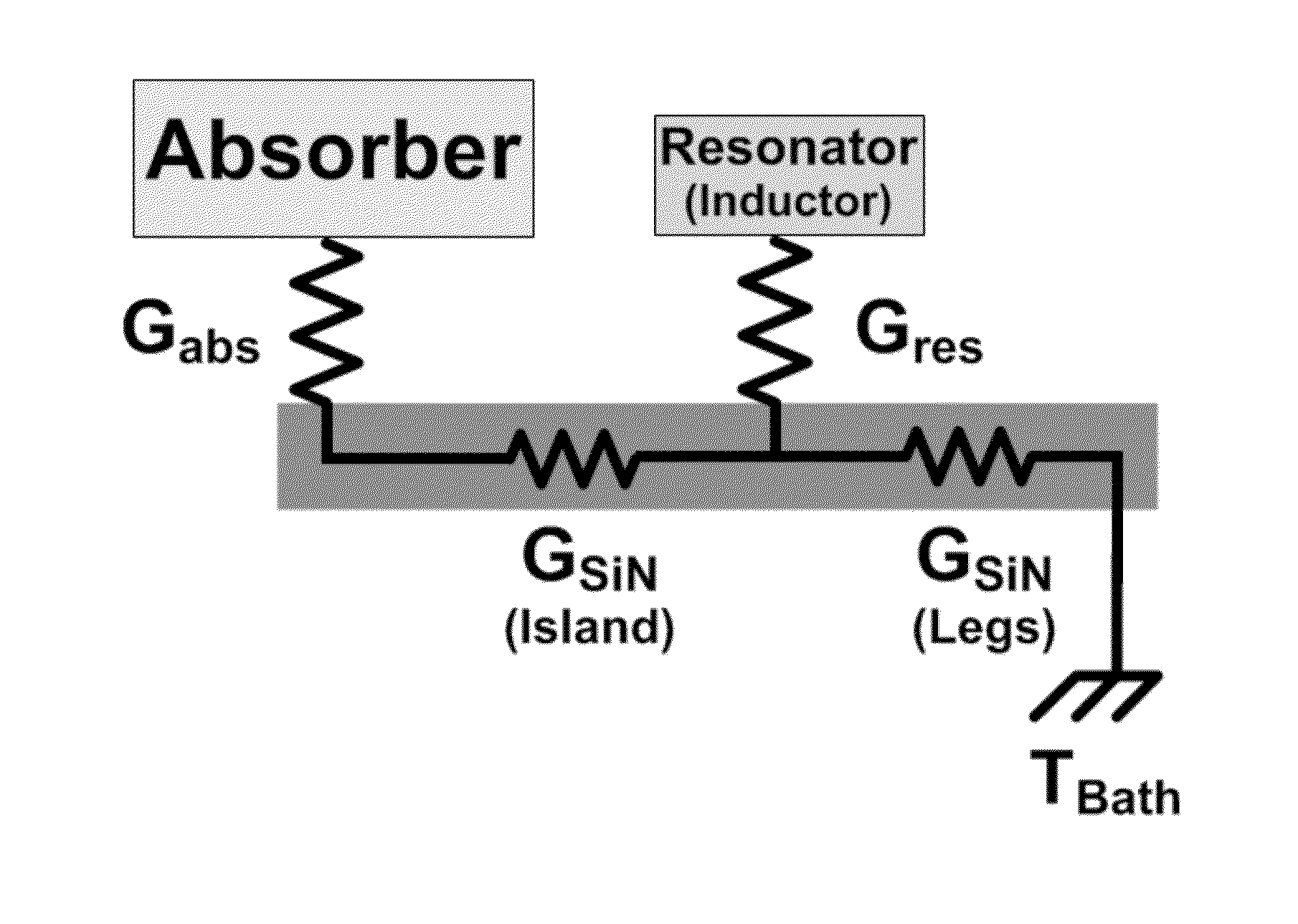
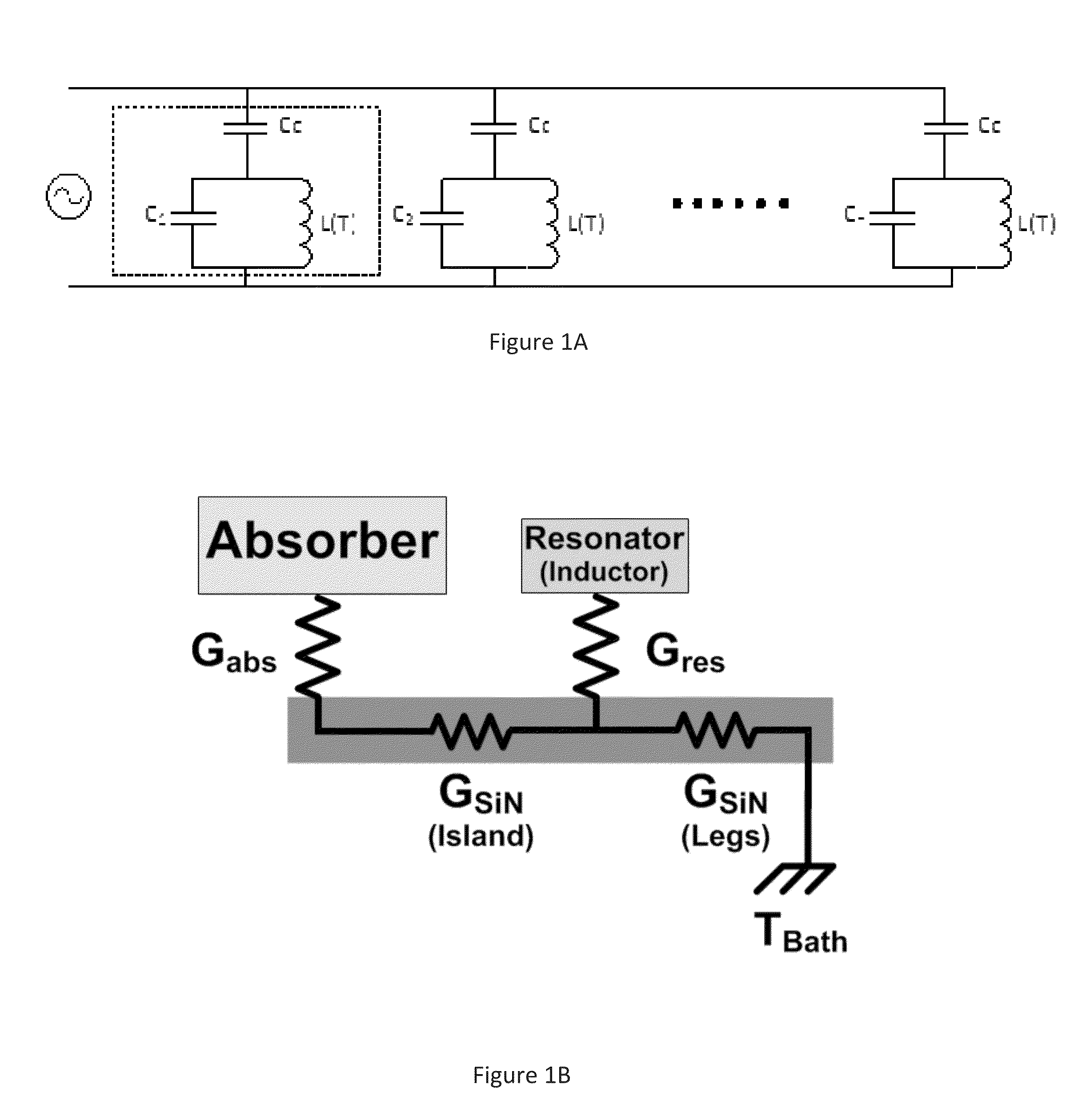
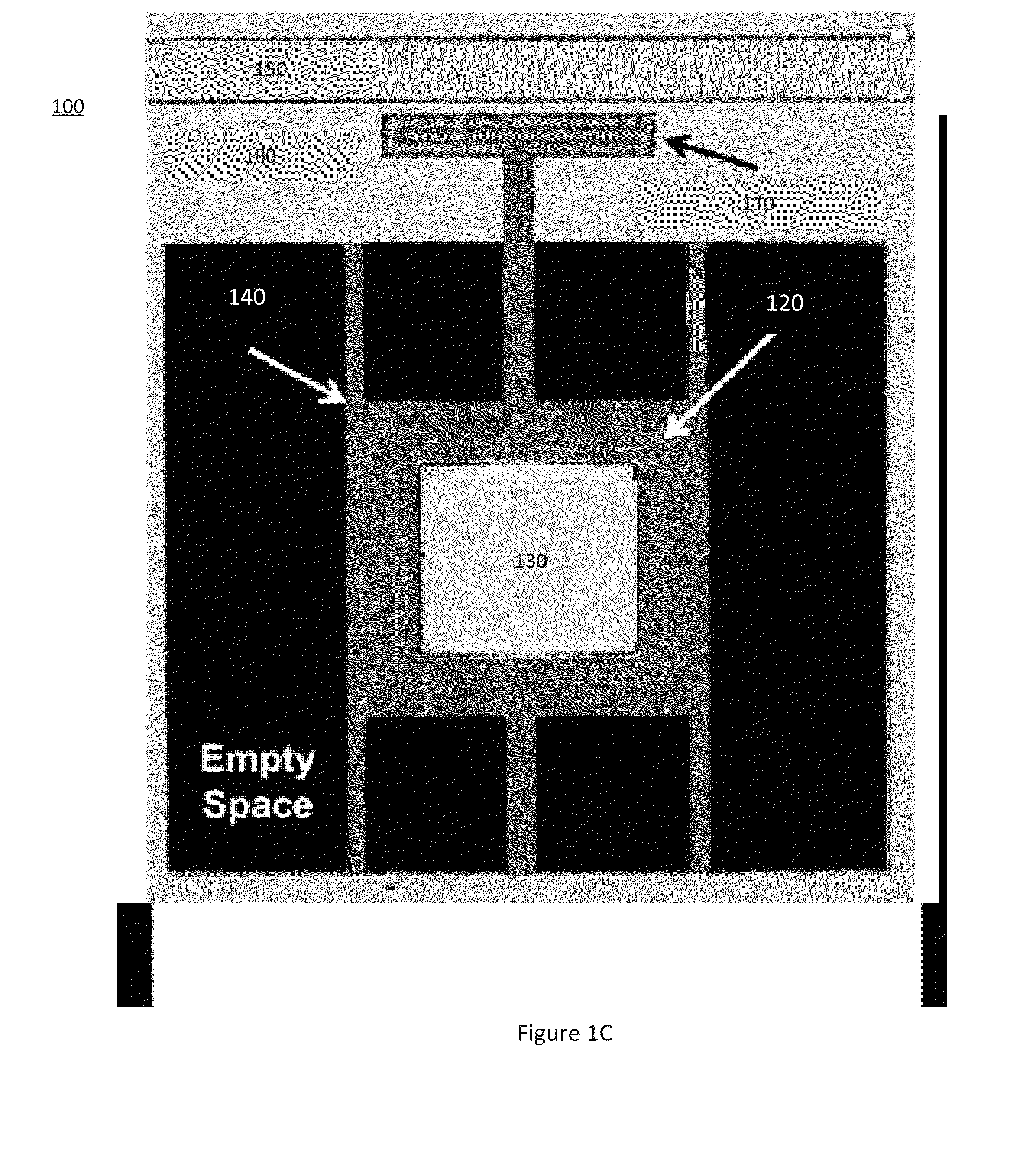
- A thermal kinetic inductance device is developed, comprising a superconducting inductor with thermally variable inductance, an x-ray absorber, and a capacitor forming a resonant circuit, operating near 0.1 K, which measures temperature changes induced by x-ray photons, allowing for frequency-multiplexing and improved energy resolution.

Radiation Detector Assembly, Radiation Detector, and Method for Radiation Detection
PatentActiveUS20090179155A1
Innovation
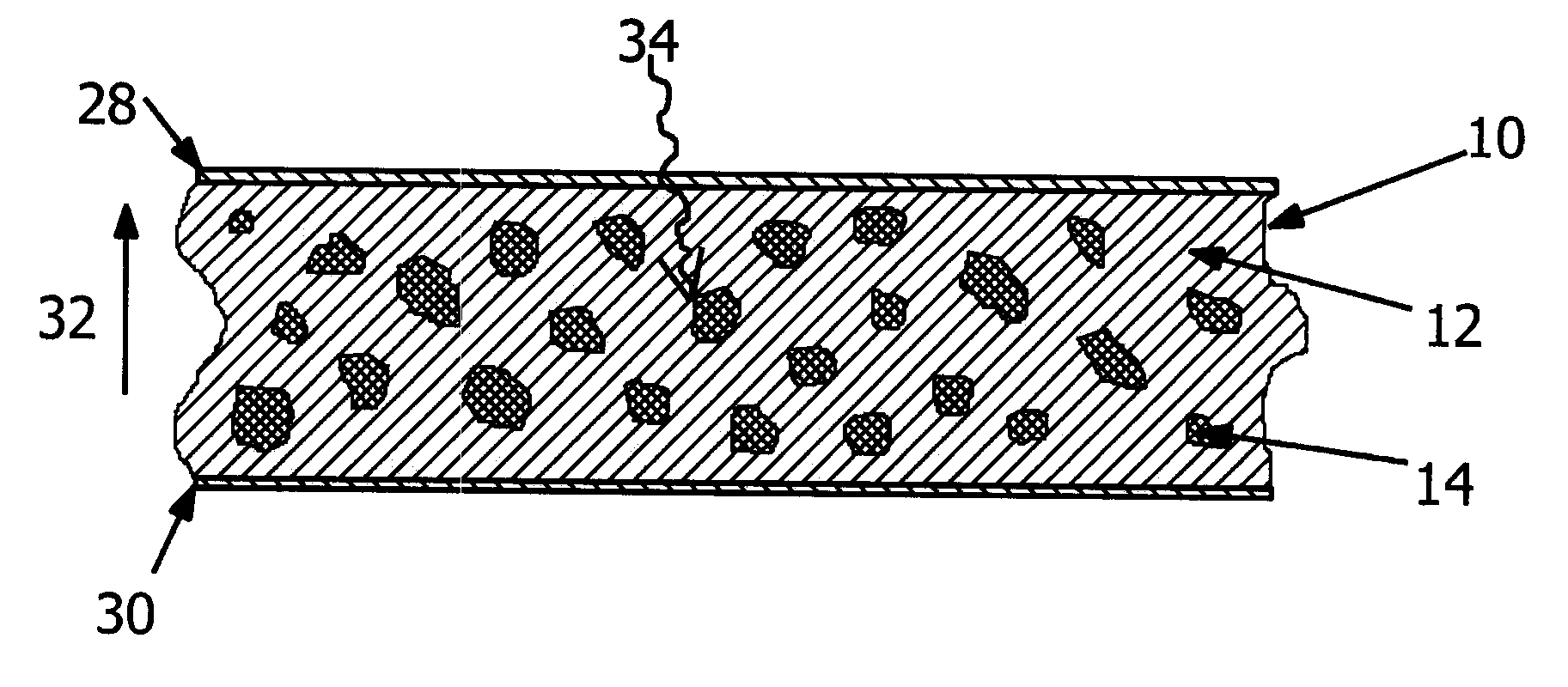
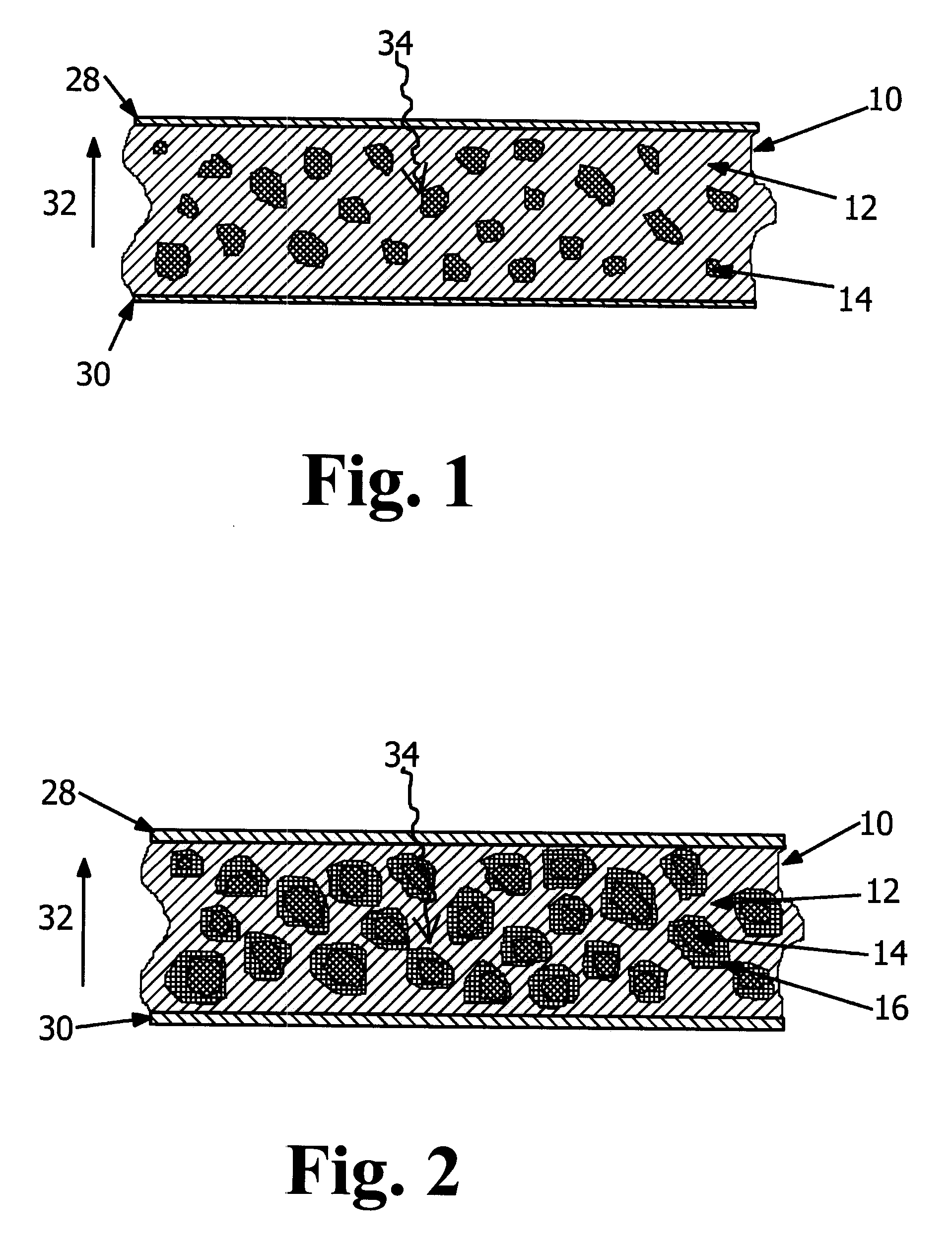
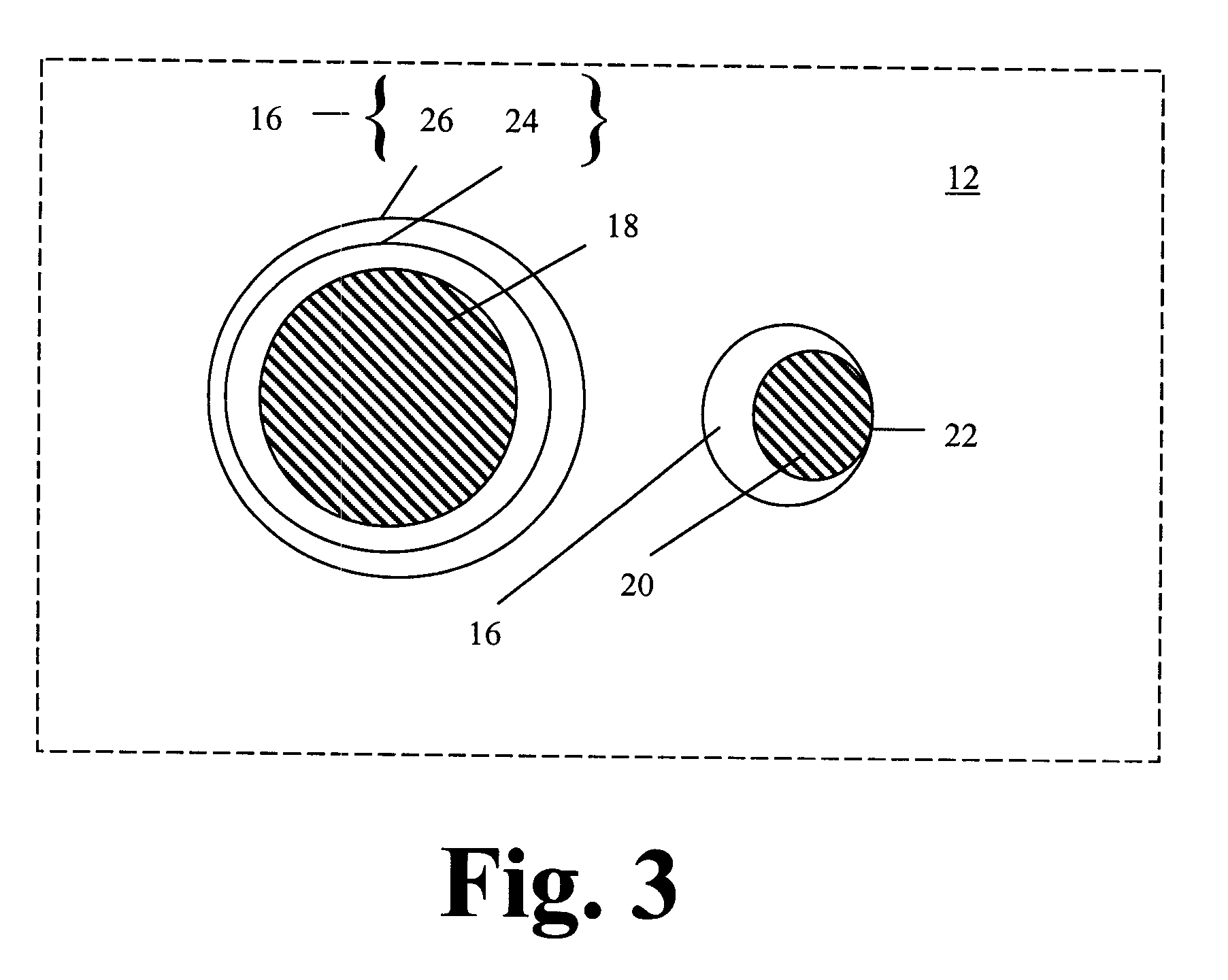
- A direct-detection device with composite layers of a semiconducting polymer host matrix and high atomic number nanoparticles, such as lead sulfide quantum dots, is used to create an electric field for efficient charge carrier collection, enhancing the mobility-lifetime-field strength product and enabling thick detectors for high-energy gamma radiation detection.

Cryogenic Infrastructure Requirements and Standards
The implementation of both scintillator and superconductor-based energy detection systems necessitates sophisticated cryogenic infrastructure that must adhere to stringent operational standards. For superconducting detectors, cryogenic cooling is fundamental to maintaining the superconducting state, typically requiring temperatures below 10 Kelvin for transition edge sensors (TES) and microwave kinetic inductance detectors (MKIDs). These systems demand dilution refrigerators or adiabatic demagnetization refrigerators capable of achieving millikelvin temperatures with exceptional stability.
Scintillator-based detection systems, while not inherently requiring cryogenic operation, often benefit from low-temperature environments to reduce thermal noise in photomultiplier tubes or silicon photomultipliers. The cooling requirements are generally less stringent, typically operating effectively at liquid nitrogen temperatures around 77 Kelvin, making the infrastructure requirements significantly more manageable and cost-effective.
The cryogenic infrastructure standards for superconductor applications must address vibration isolation, electromagnetic shielding, and thermal stability within microkelvin ranges. International standards such as ISO 23208 for cryogenic equipment and IEC 61788 series for superconducting materials provide frameworks for system design and performance validation. These standards specify requirements for vacuum systems, thermal anchoring, and magnetic field control that are critical for maintaining detector performance.
Heat load management represents a critical design consideration, particularly for superconducting systems where even minimal thermal input can compromise detector functionality. The infrastructure must incorporate multi-stage cooling systems with careful attention to thermal links, radiation shields, and conductive pathways. Standard practices include the use of pulse tube coolers for pre-cooling stages and specialized low-vibration systems to minimize mechanical disturbances.
Reliability and maintenance protocols for cryogenic systems require adherence to established safety standards including pressure vessel codes and cryogenic handling procedures. The infrastructure must accommodate periodic maintenance cycles while minimizing system downtime, often necessitating redundant cooling systems or rapid cooldown capabilities to maintain operational continuity in critical detection applications.
Scintillator-based detection systems, while not inherently requiring cryogenic operation, often benefit from low-temperature environments to reduce thermal noise in photomultiplier tubes or silicon photomultipliers. The cooling requirements are generally less stringent, typically operating effectively at liquid nitrogen temperatures around 77 Kelvin, making the infrastructure requirements significantly more manageable and cost-effective.
The cryogenic infrastructure standards for superconductor applications must address vibration isolation, electromagnetic shielding, and thermal stability within microkelvin ranges. International standards such as ISO 23208 for cryogenic equipment and IEC 61788 series for superconducting materials provide frameworks for system design and performance validation. These standards specify requirements for vacuum systems, thermal anchoring, and magnetic field control that are critical for maintaining detector performance.
Heat load management represents a critical design consideration, particularly for superconducting systems where even minimal thermal input can compromise detector functionality. The infrastructure must incorporate multi-stage cooling systems with careful attention to thermal links, radiation shields, and conductive pathways. Standard practices include the use of pulse tube coolers for pre-cooling stages and specialized low-vibration systems to minimize mechanical disturbances.
Reliability and maintenance protocols for cryogenic systems require adherence to established safety standards including pressure vessel codes and cryogenic handling procedures. The infrastructure must accommodate periodic maintenance cycles while minimizing system downtime, often necessitating redundant cooling systems or rapid cooldown capabilities to maintain operational continuity in critical detection applications.
Cost-Performance Trade-offs in Detection Technology Selection
The selection between scintillator and superconductor-based detection systems fundamentally hinges on balancing initial capital investment against long-term operational performance. Scintillator detectors typically present lower upfront costs, with basic photomultiplier tube configurations ranging from thousands to tens of thousands of dollars per channel. In contrast, superconducting detectors require substantial initial investments, often exceeding hundreds of thousands of dollars when factoring in cryogenic infrastructure and specialized electronics.
Operational expenditure patterns reveal contrasting profiles between these technologies. Scintillator systems demonstrate relatively modest ongoing costs, primarily involving periodic calibration, photomultiplier tube replacement, and standard electronic maintenance. However, their energy resolution limitations may necessitate more sophisticated signal processing algorithms and potentially redundant detection channels to achieve desired performance levels.
Superconducting detectors impose significant operational overhead through continuous cryogenic cooling requirements. Liquid helium consumption, specialized maintenance protocols, and the need for highly trained technical personnel substantially elevate lifetime operational costs. Nevertheless, their superior energy resolution often eliminates the need for complex signal processing infrastructure and reduces false positive rates, potentially offsetting some operational expenses.
Performance-to-cost ratios vary dramatically across application domains. For high-throughput screening applications where moderate energy resolution suffices, scintillator systems typically offer superior cost-effectiveness. Their rapid response times and robust operation in ambient conditions make them ideal for industrial and security applications where deployment simplicity outweighs ultimate performance.
Conversely, applications demanding exceptional energy resolution, such as precision spectroscopy or rare event detection, often justify superconductor technology despite higher costs. The ability to distinguish closely spaced energy peaks or detect low-energy events with minimal background interference can provide measurement capabilities unattainable with scintillator alternatives.
Market dynamics increasingly favor hybrid approaches that optimize cost-performance trade-offs through strategic technology deployment. Multi-tier detection architectures employ scintillator arrays for initial event screening, triggering high-resolution superconducting detectors only when specific criteria are met. This approach minimizes superconductor operational time while maintaining overall system sensitivity, representing an emerging paradigm in cost-effective precision detection system design.
Operational expenditure patterns reveal contrasting profiles between these technologies. Scintillator systems demonstrate relatively modest ongoing costs, primarily involving periodic calibration, photomultiplier tube replacement, and standard electronic maintenance. However, their energy resolution limitations may necessitate more sophisticated signal processing algorithms and potentially redundant detection channels to achieve desired performance levels.
Superconducting detectors impose significant operational overhead through continuous cryogenic cooling requirements. Liquid helium consumption, specialized maintenance protocols, and the need for highly trained technical personnel substantially elevate lifetime operational costs. Nevertheless, their superior energy resolution often eliminates the need for complex signal processing infrastructure and reduces false positive rates, potentially offsetting some operational expenses.
Performance-to-cost ratios vary dramatically across application domains. For high-throughput screening applications where moderate energy resolution suffices, scintillator systems typically offer superior cost-effectiveness. Their rapid response times and robust operation in ambient conditions make them ideal for industrial and security applications where deployment simplicity outweighs ultimate performance.
Conversely, applications demanding exceptional energy resolution, such as precision spectroscopy or rare event detection, often justify superconductor technology despite higher costs. The ability to distinguish closely spaced energy peaks or detect low-energy events with minimal background interference can provide measurement capabilities unattainable with scintillator alternatives.
Market dynamics increasingly favor hybrid approaches that optimize cost-performance trade-offs through strategic technology deployment. Multi-tier detection architectures employ scintillator arrays for initial event screening, triggering high-resolution superconducting detectors only when specific criteria are met. This approach minimizes superconductor operational time while maintaining overall system sensitivity, representing an emerging paradigm in cost-effective precision detection system design.
Unlock deeper insights with PatSnap Eureka Quick Research — get a full tech report to explore trends and direct your research. Try now!
Generate Your Research Report Instantly with AI Agent
Supercharge your innovation with PatSnap Eureka AI Agent Platform!