Inter Carrier Interference Reduction in Next-Gen Wireless Systems
MAR 17, 20269 MIN READ
Generate Your Research Report Instantly with AI Agent
Patsnap Eureka helps you evaluate technical feasibility & market potential.
ICI Challenges in Next-Gen Wireless Systems
Inter-carrier interference represents one of the most formidable technical barriers in the evolution of next-generation wireless communication systems. As wireless networks transition toward higher frequency bands, increased spectral efficiency, and massive connectivity requirements, the susceptibility to ICI has intensified significantly. The fundamental challenge stems from the orthogonality loss between subcarriers in orthogonal frequency division multiplexing systems, which occurs when channel conditions deviate from ideal assumptions.
The primary technical constraint originates from Doppler frequency shifts caused by high-mobility scenarios in 5G and beyond networks. When users move at vehicular speeds or when communication occurs with aerial platforms, the resulting frequency offsets destroy the orthogonal relationships between adjacent subcarriers. This phenomenon becomes particularly pronounced in millimeter-wave communications where even minor frequency deviations translate to substantial interference levels.
Carrier frequency offset synchronization presents another critical challenge, especially in massive MIMO deployments where multiple antenna elements must maintain precise phase relationships. The complexity escalates when considering distributed antenna systems and coordinated multipoint transmission scenarios, where timing and frequency synchronization across geographically separated nodes becomes increasingly difficult to achieve and maintain.
Phase noise from local oscillators introduces additional complications, particularly as systems migrate to higher frequency bands where oscillator stability becomes more challenging to maintain. The cumulative effect of phase noise across multiple RF chains in massive MIMO configurations can severely degrade system performance, making traditional ICI mitigation techniques insufficient.
Multipath propagation in dense urban environments creates frequency-selective fading that varies rapidly across both time and frequency domains. This dynamic channel behavior makes it extremely difficult to predict and compensate for ICI using conventional linear processing techniques. The situation becomes more complex when considering non-orthogonal multiple access schemes where intentional interference is introduced as part of the transmission strategy.
Hardware imperfections, including amplifier nonlinearities, I/Q imbalances, and analog-to-digital converter quantization errors, contribute significantly to ICI generation. These impairments become more pronounced as systems push toward higher data rates and wider bandwidths, creating a fundamental trade-off between spectral efficiency and interference management.
The computational complexity associated with advanced ICI cancellation techniques presents implementation challenges, particularly for mobile devices with limited processing capabilities and battery constraints. Real-time processing requirements for adaptive interference mitigation algorithms often exceed the capabilities of current hardware platforms, necessitating innovative approaches to algorithm design and implementation.
The primary technical constraint originates from Doppler frequency shifts caused by high-mobility scenarios in 5G and beyond networks. When users move at vehicular speeds or when communication occurs with aerial platforms, the resulting frequency offsets destroy the orthogonal relationships between adjacent subcarriers. This phenomenon becomes particularly pronounced in millimeter-wave communications where even minor frequency deviations translate to substantial interference levels.
Carrier frequency offset synchronization presents another critical challenge, especially in massive MIMO deployments where multiple antenna elements must maintain precise phase relationships. The complexity escalates when considering distributed antenna systems and coordinated multipoint transmission scenarios, where timing and frequency synchronization across geographically separated nodes becomes increasingly difficult to achieve and maintain.
Phase noise from local oscillators introduces additional complications, particularly as systems migrate to higher frequency bands where oscillator stability becomes more challenging to maintain. The cumulative effect of phase noise across multiple RF chains in massive MIMO configurations can severely degrade system performance, making traditional ICI mitigation techniques insufficient.
Multipath propagation in dense urban environments creates frequency-selective fading that varies rapidly across both time and frequency domains. This dynamic channel behavior makes it extremely difficult to predict and compensate for ICI using conventional linear processing techniques. The situation becomes more complex when considering non-orthogonal multiple access schemes where intentional interference is introduced as part of the transmission strategy.
Hardware imperfections, including amplifier nonlinearities, I/Q imbalances, and analog-to-digital converter quantization errors, contribute significantly to ICI generation. These impairments become more pronounced as systems push toward higher data rates and wider bandwidths, creating a fundamental trade-off between spectral efficiency and interference management.
The computational complexity associated with advanced ICI cancellation techniques presents implementation challenges, particularly for mobile devices with limited processing capabilities and battery constraints. Real-time processing requirements for adaptive interference mitigation algorithms often exceed the capabilities of current hardware platforms, necessitating innovative approaches to algorithm design and implementation.
Market Demand for Advanced Wireless Communication
The global wireless communication market is experiencing unprecedented growth driven by the proliferation of mobile devices, Internet of Things applications, and emerging technologies requiring high-speed, low-latency connectivity. Fifth-generation networks and beyond are becoming critical infrastructure for digital transformation across industries, creating substantial demand for advanced interference mitigation technologies.
Enterprise sectors including manufacturing, healthcare, automotive, and smart cities are increasingly dependent on reliable wireless connectivity. These applications require consistent signal quality and minimal interference to support mission-critical operations such as autonomous vehicle communication, remote surgery, and industrial automation. The stringent performance requirements of these use cases directly translate to market demand for sophisticated inter-carrier interference reduction solutions.
Consumer expectations for seamless connectivity continue to escalate with the adoption of bandwidth-intensive applications including augmented reality, virtual reality, and ultra-high-definition video streaming. Network operators face mounting pressure to deliver consistent quality of service while managing spectrum efficiency in increasingly congested frequency bands. This challenge creates significant market opportunities for technologies that can effectively mitigate interference while maximizing spectral utilization.
The densification of wireless networks through small cell deployments and massive MIMO implementations introduces complex interference scenarios that traditional mitigation techniques cannot adequately address. Network infrastructure vendors and semiconductor companies are actively seeking advanced signal processing solutions to maintain network performance in these challenging environments.
Regulatory bodies worldwide are allocating additional spectrum for next-generation wireless systems while emphasizing efficient spectrum utilization. This regulatory environment favors technologies that can maximize capacity within allocated frequency bands through effective interference management. The combination of spectrum scarcity and increasing data traffic creates a compelling business case for advanced interference reduction technologies.
Market research indicates strong investment momentum in wireless infrastructure upgrades, with telecommunications operators prioritizing technologies that enhance network capacity and reliability. The competitive landscape among network equipment manufacturers is driving innovation in interference mitigation solutions as a key differentiator for next-generation wireless systems.
Enterprise sectors including manufacturing, healthcare, automotive, and smart cities are increasingly dependent on reliable wireless connectivity. These applications require consistent signal quality and minimal interference to support mission-critical operations such as autonomous vehicle communication, remote surgery, and industrial automation. The stringent performance requirements of these use cases directly translate to market demand for sophisticated inter-carrier interference reduction solutions.
Consumer expectations for seamless connectivity continue to escalate with the adoption of bandwidth-intensive applications including augmented reality, virtual reality, and ultra-high-definition video streaming. Network operators face mounting pressure to deliver consistent quality of service while managing spectrum efficiency in increasingly congested frequency bands. This challenge creates significant market opportunities for technologies that can effectively mitigate interference while maximizing spectral utilization.
The densification of wireless networks through small cell deployments and massive MIMO implementations introduces complex interference scenarios that traditional mitigation techniques cannot adequately address. Network infrastructure vendors and semiconductor companies are actively seeking advanced signal processing solutions to maintain network performance in these challenging environments.
Regulatory bodies worldwide are allocating additional spectrum for next-generation wireless systems while emphasizing efficient spectrum utilization. This regulatory environment favors technologies that can maximize capacity within allocated frequency bands through effective interference management. The combination of spectrum scarcity and increasing data traffic creates a compelling business case for advanced interference reduction technologies.
Market research indicates strong investment momentum in wireless infrastructure upgrades, with telecommunications operators prioritizing technologies that enhance network capacity and reliability. The competitive landscape among network equipment manufacturers is driving innovation in interference mitigation solutions as a key differentiator for next-generation wireless systems.
Current ICI Issues in 5G/6G Systems
Inter-carrier interference has emerged as one of the most critical challenges in 5G and 6G wireless systems, fundamentally limiting the achievable spectral efficiency and system performance. The transition from 4G to 5G introduced more aggressive frequency reuse patterns and denser network deployments, significantly exacerbating ICI issues. In 5G networks, the implementation of massive MIMO systems with hundreds of antenna elements creates complex interference patterns that traditional mitigation techniques struggle to address effectively.
The adoption of millimeter-wave frequencies in 5G systems introduces unique ICI characteristics due to increased path loss sensitivity and beam management complexities. These high-frequency bands, while offering substantial bandwidth, suffer from severe propagation limitations that force networks to deploy more base stations, creating overlapping coverage areas and intensifying inter-carrier interference scenarios. The beamforming techniques employed to compensate for path loss often generate side lobes that contribute to interference in adjacent frequency bands.
6G systems face even more severe ICI challenges as they push toward terahertz frequencies and ultra-dense network architectures. The envisioned 6G networks will support up to one million devices per square kilometer, creating unprecedented interference density. The integration of terrestrial and non-terrestrial networks in 6G introduces three-dimensional interference patterns that current ICI mitigation strategies cannot adequately handle.
Orthogonal Frequency Division Multiplexing, while providing robustness against multipath fading, becomes increasingly vulnerable to ICI in next-generation systems due to Doppler shifts and timing synchronization errors. High-mobility scenarios, such as vehicle-to-everything communications and aerial platforms, introduce significant Doppler spreads that destroy subcarrier orthogonality and create substantial ICI.
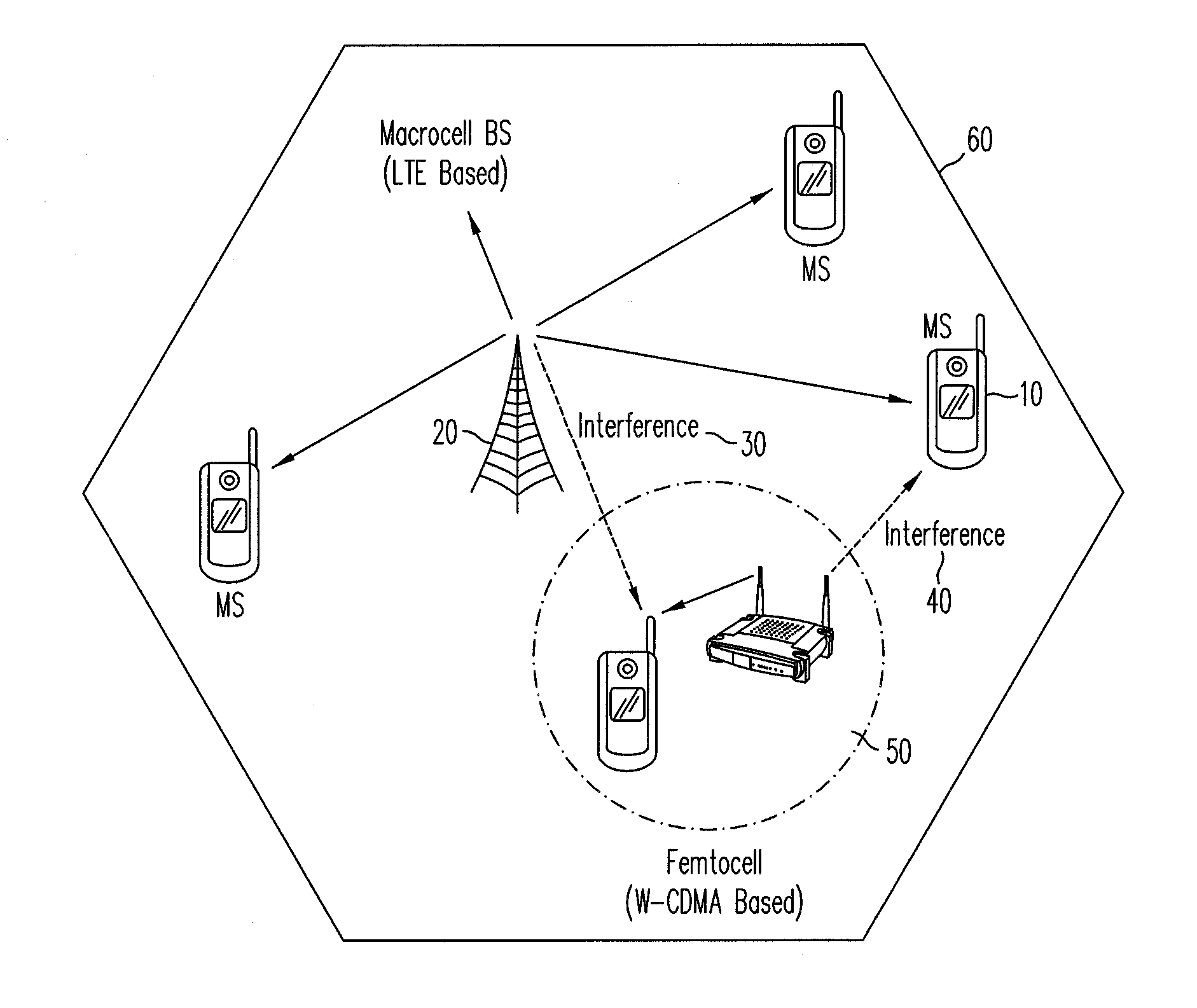
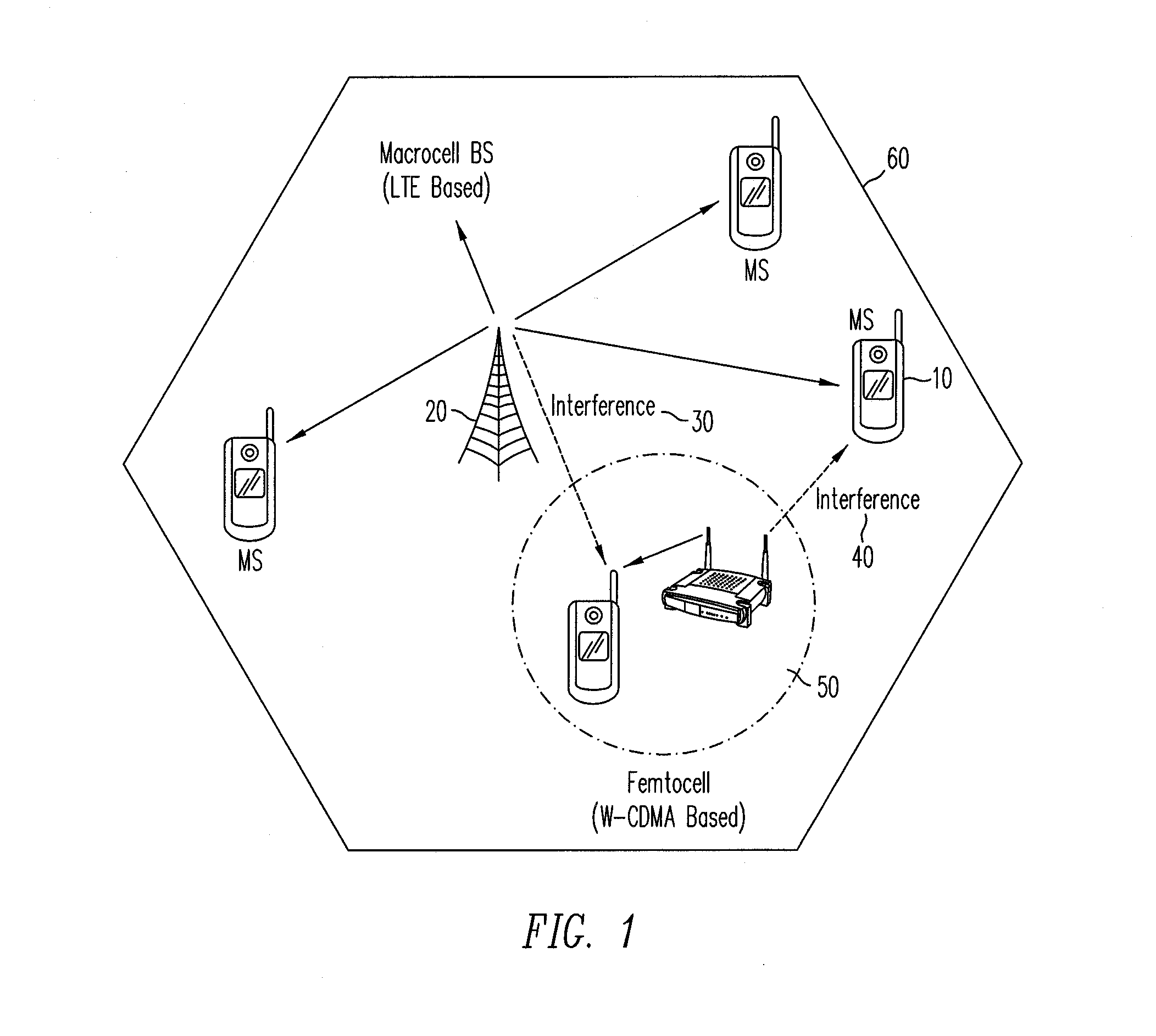
The heterogeneous nature of 5G and 6G networks, incorporating macro cells, small cells, femtocells, and device-to-device communications, creates complex interference environments where traditional frequency planning approaches prove insufficient. Dynamic spectrum sharing mechanisms, while improving spectral efficiency, introduce time-varying interference patterns that require adaptive ICI mitigation strategies.
Current 5G deployments reveal that ICI significantly impacts edge users and cell-edge throughput, with interference levels often exceeding thermal noise by 20-30 dB in dense urban environments. These interference levels directly translate to reduced data rates, increased latency, and compromised quality of service for critical applications such as ultra-reliable low-latency communications.
The adoption of millimeter-wave frequencies in 5G systems introduces unique ICI characteristics due to increased path loss sensitivity and beam management complexities. These high-frequency bands, while offering substantial bandwidth, suffer from severe propagation limitations that force networks to deploy more base stations, creating overlapping coverage areas and intensifying inter-carrier interference scenarios. The beamforming techniques employed to compensate for path loss often generate side lobes that contribute to interference in adjacent frequency bands.
6G systems face even more severe ICI challenges as they push toward terahertz frequencies and ultra-dense network architectures. The envisioned 6G networks will support up to one million devices per square kilometer, creating unprecedented interference density. The integration of terrestrial and non-terrestrial networks in 6G introduces three-dimensional interference patterns that current ICI mitigation strategies cannot adequately handle.
Orthogonal Frequency Division Multiplexing, while providing robustness against multipath fading, becomes increasingly vulnerable to ICI in next-generation systems due to Doppler shifts and timing synchronization errors. High-mobility scenarios, such as vehicle-to-everything communications and aerial platforms, introduce significant Doppler spreads that destroy subcarrier orthogonality and create substantial ICI.
The heterogeneous nature of 5G and 6G networks, incorporating macro cells, small cells, femtocells, and device-to-device communications, creates complex interference environments where traditional frequency planning approaches prove insufficient. Dynamic spectrum sharing mechanisms, while improving spectral efficiency, introduce time-varying interference patterns that require adaptive ICI mitigation strategies.
Current 5G deployments reveal that ICI significantly impacts edge users and cell-edge throughput, with interference levels often exceeding thermal noise by 20-30 dB in dense urban environments. These interference levels directly translate to reduced data rates, increased latency, and compromised quality of service for critical applications such as ultra-reliable low-latency communications.
Existing ICI Reduction Solutions
01 OFDM carrier frequency offset estimation and compensation
Techniques for estimating and compensating carrier frequency offset (CFO) in orthogonal frequency division multiplexing (OFDM) systems to mitigate inter-carrier interference. Methods include using pilot symbols, training sequences, and correlation-based algorithms to detect and correct frequency misalignment between transmitter and receiver oscillators. These approaches help maintain orthogonality between subcarriers and reduce ICI effects.- OFDM carrier frequency offset estimation and compensation: Techniques for estimating and compensating carrier frequency offset (CFO) in orthogonal frequency division multiplexing (OFDM) systems to mitigate inter-carrier interference. Methods include using pilot symbols, training sequences, and correlation-based algorithms to detect and correct frequency misalignment between transmitter and receiver oscillators. These approaches help maintain orthogonality between subcarriers and reduce ICI effects.
- ICI cancellation through equalization techniques: Implementation of equalization methods specifically designed to cancel or suppress inter-carrier interference in multi-carrier communication systems. These techniques employ adaptive filters, decision feedback equalizers, and iterative cancellation schemes that estimate and subtract ICI components from received signals. The methods can operate in time or frequency domain to improve signal quality.
- Windowing and pulse shaping for ICI reduction: Application of window functions and pulse shaping filters to reduce spectral leakage and inter-carrier interference in OFDM systems. These methods modify the transmitted signal envelope to minimize out-of-band emissions and improve subcarrier isolation. Techniques include raised cosine windowing, time-domain windowing, and optimized filter designs that balance ICI suppression with system complexity.
- Multiple antenna and MIMO techniques for ICI mitigation: Utilization of multiple-input multiple-output (MIMO) antenna configurations and spatial processing to combat inter-carrier interference. These approaches leverage spatial diversity, beamforming, and interference alignment to separate desired signals from ICI components. Advanced receiver architectures exploit spatial dimensions to enhance interference suppression capabilities beyond single-antenna systems.
- Subcarrier spacing and numerology optimization: Optimization of subcarrier spacing, symbol duration, and other numerology parameters to minimize inter-carrier interference under various channel conditions. These methods adapt system parameters based on mobility, delay spread, and Doppler effects to maintain subcarrier orthogonality. Flexible numerology designs enable trade-offs between spectral efficiency and ICI robustness for different deployment scenarios.
02 ICI cancellation through equalization techniques
Implementation of equalization methods specifically designed to cancel or suppress inter-carrier interference in multi-carrier communication systems. These techniques employ adaptive filters, decision feedback equalizers, and iterative cancellation schemes that estimate and subtract ICI components from received signals. The methods can operate in time or frequency domain to improve signal quality.Expand Specific Solutions03 Windowing and filtering for ICI reduction
Application of window functions and pulse shaping filters to reduce spectral leakage and inter-carrier interference in OFDM systems. Techniques include using raised cosine windows, Gaussian filters, and time-domain windowing to smooth symbol transitions and reduce out-of-band emissions. These methods help maintain subcarrier orthogonality and minimize interference between adjacent carriers.Expand Specific Solutions04 Multiple antenna and MIMO techniques for ICI mitigation
Utilization of multiple-input multiple-output (MIMO) antenna configurations and spatial processing techniques to combat inter-carrier interference. Methods include beamforming, spatial diversity, and interference alignment strategies that exploit multiple signal paths to separate desired signals from interference. These approaches leverage spatial dimensions to enhance system performance in the presence of ICI.Expand Specific Solutions05 Subcarrier spacing and numerology optimization
Optimization of subcarrier spacing, symbol duration, and other numerology parameters to minimize inter-carrier interference effects. Techniques involve adaptive adjustment of OFDM parameters based on channel conditions, Doppler spread, and timing errors. Methods include using variable subcarrier spacing, cyclic prefix extension, and guard band allocation to reduce sensitivity to frequency offset and maintain orthogonality.Expand Specific Solutions
Key Players in Wireless Communication Industry
The inter-carrier interference reduction technology in next-generation wireless systems represents a rapidly evolving market segment currently in its growth phase, driven by increasing demand for 5G and beyond-5G networks. The market demonstrates substantial scale potential as wireless infrastructure investments accelerate globally. Technology maturity varies significantly across key players, with established telecommunications giants like Ericsson, Huawei, and Qualcomm leading advanced interference mitigation solutions through sophisticated signal processing algorithms. Samsung Electronics, ZTE, and Nokia Technologies contribute robust hardware-software integration capabilities, while Intel and Texas Instruments provide essential semiconductor foundations. Traditional players like NEC, Fujitsu, and NTT Docomo offer carrier-grade implementations, though emerging companies and research institutes like Industrial Technology Research Institute are developing next-generation approaches. The competitive landscape shows consolidation around companies with comprehensive portfolios spanning baseband processing, antenna technologies, and AI-driven interference cancellation techniques.
Telefonaktiebolaget LM Ericsson
Technical Solution: Ericsson has developed sophisticated interference management solutions for next-generation wireless systems, focusing on coordinated scheduling and advanced signal processing techniques. Their ICI reduction framework employs distributed antenna systems with centralized processing, achieving significant interference suppression through joint transmission and reception strategies. The solution incorporates machine learning-based interference prediction models and adaptive resource allocation algorithms that can reduce inter-carrier interference by approximately 20-35% in multi-cell environments.
Strengths: Strong network infrastructure expertise, established operator relationships, comprehensive system-level solutions. Weaknesses: Higher implementation complexity, significant computational requirements for advanced algorithms.
QUALCOMM, Inc.
Technical Solution: QUALCOMM has developed advanced interference cancellation techniques for 5G and beyond systems, including successive interference cancellation (SIC) and coordinated multipoint (CoMP) transmission. Their solutions utilize machine learning algorithms to predict and mitigate inter-carrier interference in real-time, achieving up to 30% improvement in spectral efficiency. The company's interference reduction framework incorporates adaptive beamforming, advanced channel estimation, and dynamic resource allocation to minimize ICI in OFDM-based systems.
Strengths: Industry-leading chipset integration, extensive patent portfolio, proven track record in wireless standards. Weaknesses: High licensing costs, dependency on specific hardware platforms.
Core Patents in ICI Cancellation Techniques
Inter-carrier interference reduction for multi-carrier signals
PatentInactiveUS9001944B2
Innovation
- A method for estimating and reducing ICI in multi-carrier signals using a time-domain approach with cyclic extension, involving the function A~(n) = rx(n) - rx(n-N)/N, followed by ICI estimation and reduction, which can be implemented with a complexity of O(G), where G is the guard interval length, and optionally using a windowing function to correct the received signal.


Method for iterative interference cancellation for co-channel multi-carrier and narrowband systems
PatentActiveUS20100226356A1
Innovation
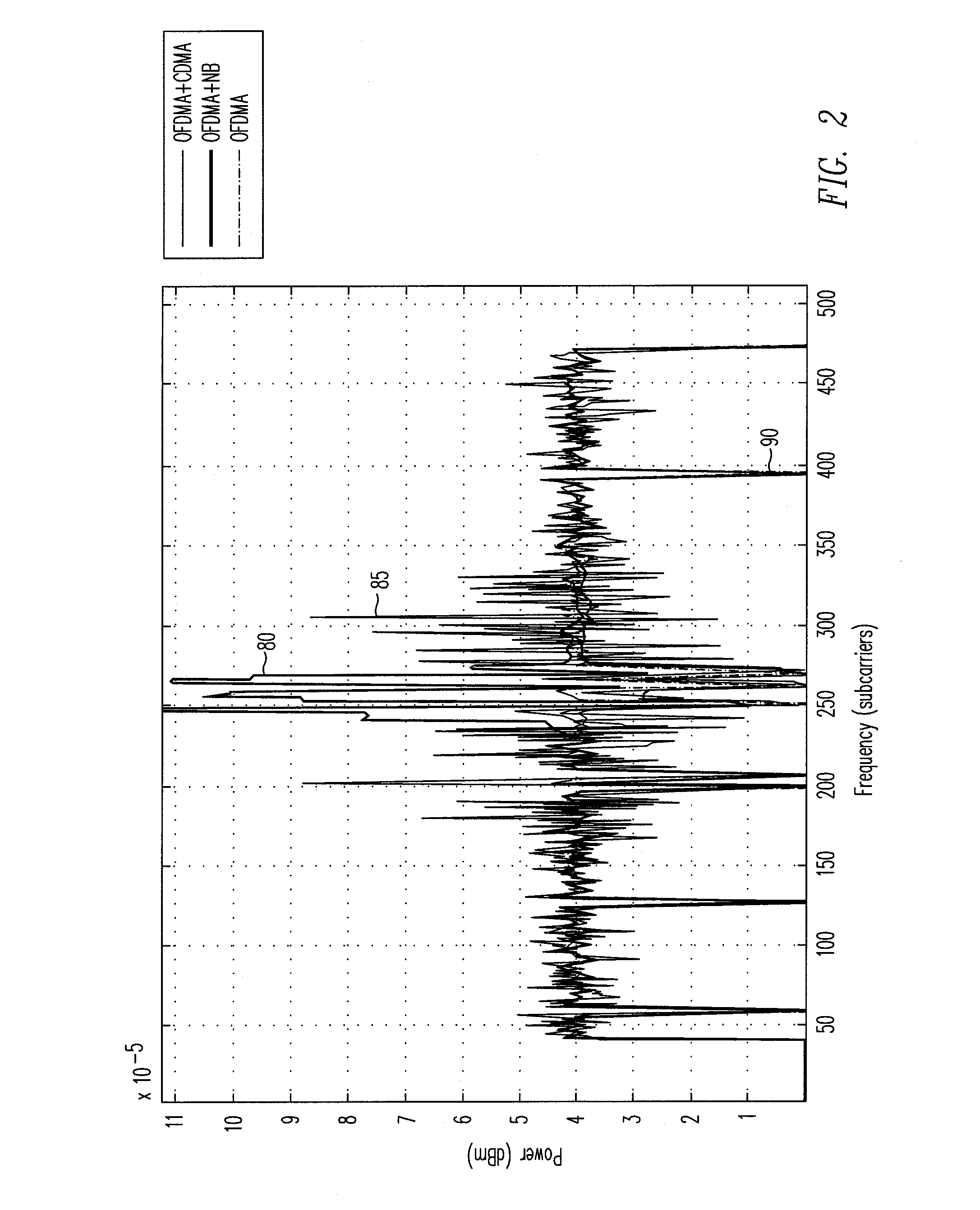
- A method that iteratively demodulates and regenerates both wideband and narrowband signals based on symbol decisions and channel impulse response, treating co-channel signals as desired signals and subtracting the interfering signals to improve performance, particularly for cell-edge users in co-channel deployments.

Spectrum Regulatory Framework Impact
The regulatory landscape governing spectrum allocation and management plays a pivotal role in shaping the development and deployment of inter-carrier interference (ICI) reduction technologies in next-generation wireless systems. Current spectrum regulatory frameworks, primarily managed by national telecommunications authorities and coordinated through international bodies like the ITU, establish the fundamental parameters within which ICI mitigation strategies must operate.
Traditional spectrum allocation approaches, based on exclusive licensing within fixed frequency bands, create inherent constraints for advanced ICI reduction techniques. These rigid frameworks often limit the flexibility required for dynamic spectrum sharing and cognitive radio implementations, which are essential for sophisticated interference management. The regulatory emphasis on preventing harmful interference between licensed operators has historically favored conservative approaches that may not fully exploit the potential of modern ICI reduction algorithms.
Emerging regulatory trends toward more flexible spectrum management are creating new opportunities for innovative ICI mitigation approaches. Dynamic spectrum access regulations, such as those governing Citizens Broadband Radio Service (CBRS) in the United States and Licensed Shared Access (LSA) frameworks in Europe, enable more sophisticated interference coordination mechanisms. These frameworks allow for real-time spectrum sharing based on interference protection criteria, directly supporting advanced ICI reduction technologies.
The transition toward 5G and beyond has prompted regulatory bodies to reconsider traditional interference protection standards. New technical standards for adjacent channel interference and spurious emissions are being developed to accommodate higher spectral efficiency requirements while maintaining service quality. These evolving standards directly influence the design parameters for ICI reduction algorithms and hardware implementations.
International harmonization efforts are crucial for enabling global deployment of ICI reduction technologies. Regulatory alignment on key technical parameters, such as power spectral density limits and out-of-band emission masks, ensures that interference mitigation solutions can be standardized across different markets. However, regional variations in regulatory approaches continue to create challenges for technology developers seeking global solutions.
Future regulatory evolution toward more performance-based standards, rather than prescriptive technical requirements, will likely accelerate innovation in ICI reduction technologies. This shift enables operators to deploy advanced interference management techniques while meeting overall system performance objectives, fostering a more competitive and innovative technological landscape.
Traditional spectrum allocation approaches, based on exclusive licensing within fixed frequency bands, create inherent constraints for advanced ICI reduction techniques. These rigid frameworks often limit the flexibility required for dynamic spectrum sharing and cognitive radio implementations, which are essential for sophisticated interference management. The regulatory emphasis on preventing harmful interference between licensed operators has historically favored conservative approaches that may not fully exploit the potential of modern ICI reduction algorithms.
Emerging regulatory trends toward more flexible spectrum management are creating new opportunities for innovative ICI mitigation approaches. Dynamic spectrum access regulations, such as those governing Citizens Broadband Radio Service (CBRS) in the United States and Licensed Shared Access (LSA) frameworks in Europe, enable more sophisticated interference coordination mechanisms. These frameworks allow for real-time spectrum sharing based on interference protection criteria, directly supporting advanced ICI reduction technologies.
The transition toward 5G and beyond has prompted regulatory bodies to reconsider traditional interference protection standards. New technical standards for adjacent channel interference and spurious emissions are being developed to accommodate higher spectral efficiency requirements while maintaining service quality. These evolving standards directly influence the design parameters for ICI reduction algorithms and hardware implementations.
International harmonization efforts are crucial for enabling global deployment of ICI reduction technologies. Regulatory alignment on key technical parameters, such as power spectral density limits and out-of-band emission masks, ensures that interference mitigation solutions can be standardized across different markets. However, regional variations in regulatory approaches continue to create challenges for technology developers seeking global solutions.
Future regulatory evolution toward more performance-based standards, rather than prescriptive technical requirements, will likely accelerate innovation in ICI reduction technologies. This shift enables operators to deploy advanced interference management techniques while meeting overall system performance objectives, fostering a more competitive and innovative technological landscape.
Energy Efficiency in ICI Mitigation
Energy efficiency has emerged as a critical design consideration in Inter Carrier Interference (ICI) mitigation strategies for next-generation wireless systems. Traditional ICI reduction techniques often consume substantial computational resources and power, creating a fundamental trade-off between interference suppression performance and energy consumption. This challenge becomes particularly acute in battery-powered devices and dense network deployments where energy constraints directly impact system sustainability and operational costs.
The energy consumption in ICI mitigation primarily stems from complex signal processing operations, including channel estimation, interference cancellation algorithms, and adaptive filtering mechanisms. Conventional approaches such as maximum likelihood detection and iterative interference cancellation require intensive matrix computations and multiple processing iterations, resulting in significant power drain. Modern wireless systems must balance the benefits of improved signal quality against the energy overhead introduced by sophisticated interference mitigation techniques.
Recent research has focused on developing energy-aware ICI mitigation algorithms that optimize the performance-to-power ratio. Machine learning-based approaches have shown promise in reducing computational complexity while maintaining interference suppression effectiveness. These techniques leverage predictive models to selectively activate interference mitigation processes only when necessary, thereby minimizing unnecessary energy expenditure during periods of low interference.
Hardware-level optimizations play a crucial role in achieving energy-efficient ICI mitigation. Advanced digital signal processors and specialized interference cancellation chips incorporate power management features such as dynamic voltage scaling and clock gating. These implementations can reduce energy consumption by up to 40% compared to conventional processing architectures while maintaining comparable interference reduction performance.
Adaptive power control mechanisms represent another significant advancement in energy-efficient ICI mitigation. These systems dynamically adjust transmission power levels and processing complexity based on real-time channel conditions and interference patterns. By intelligently scaling mitigation efforts according to actual interference severity, these approaches achieve substantial energy savings without compromising communication quality.
The integration of energy harvesting technologies with ICI mitigation systems presents emerging opportunities for sustainable wireless communications. Solar-powered base stations and RF energy harvesting devices can potentially offset the energy costs associated with interference reduction, creating self-sustaining communication nodes that maintain high performance standards while minimizing environmental impact.
The energy consumption in ICI mitigation primarily stems from complex signal processing operations, including channel estimation, interference cancellation algorithms, and adaptive filtering mechanisms. Conventional approaches such as maximum likelihood detection and iterative interference cancellation require intensive matrix computations and multiple processing iterations, resulting in significant power drain. Modern wireless systems must balance the benefits of improved signal quality against the energy overhead introduced by sophisticated interference mitigation techniques.
Recent research has focused on developing energy-aware ICI mitigation algorithms that optimize the performance-to-power ratio. Machine learning-based approaches have shown promise in reducing computational complexity while maintaining interference suppression effectiveness. These techniques leverage predictive models to selectively activate interference mitigation processes only when necessary, thereby minimizing unnecessary energy expenditure during periods of low interference.
Hardware-level optimizations play a crucial role in achieving energy-efficient ICI mitigation. Advanced digital signal processors and specialized interference cancellation chips incorporate power management features such as dynamic voltage scaling and clock gating. These implementations can reduce energy consumption by up to 40% compared to conventional processing architectures while maintaining comparable interference reduction performance.
Adaptive power control mechanisms represent another significant advancement in energy-efficient ICI mitigation. These systems dynamically adjust transmission power levels and processing complexity based on real-time channel conditions and interference patterns. By intelligently scaling mitigation efforts according to actual interference severity, these approaches achieve substantial energy savings without compromising communication quality.
The integration of energy harvesting technologies with ICI mitigation systems presents emerging opportunities for sustainable wireless communications. Solar-powered base stations and RF energy harvesting devices can potentially offset the energy costs associated with interference reduction, creating self-sustaining communication nodes that maintain high performance standards while minimizing environmental impact.
Unlock deeper insights with Patsnap Eureka Quick Research — get a full tech report to explore trends and direct your research. Try now!
Generate Your Research Report Instantly with AI Agent
Supercharge your innovation with Patsnap Eureka AI Agent Platform!