Inter Carrier Interference vs. ISI: Impact on System Capacity
MAR 17, 20269 MIN READ
Generate Your Research Report Instantly with AI Agent
Patsnap Eureka helps you evaluate technical feasibility & market potential.
ICI vs ISI Background and System Capacity Goals
Inter Carrier Interference (ICI) and Inter Symbol Interference (ISI) represent two fundamental impairments that have shaped the evolution of modern communication systems since the advent of digital transmission technologies. The historical development of wireless communication systems has been characterized by an ongoing battle against these interference mechanisms, which fundamentally limit the achievable data rates and system reliability.
The emergence of ICI became particularly prominent with the widespread adoption of Orthogonal Frequency Division Multiplexing (OFDM) systems in the late 1990s and early 2000s. OFDM's susceptibility to frequency offset and Doppler spread introduced new challenges in maintaining orthogonality between subcarriers, leading to ICI that degrades system performance. Conversely, ISI has been a persistent challenge since the early days of digital communication, arising from multipath propagation and channel dispersion effects that cause symbols to overlap in time domain.
The technological evolution has witnessed several key milestones in addressing these interference types. The development of advanced equalization techniques, including decision feedback equalizers and maximum likelihood sequence estimation, marked significant progress in ISI mitigation. Similarly, ICI cancellation methods evolved from simple frequency domain techniques to sophisticated iterative algorithms and machine learning-based approaches.
Current system capacity goals are driven by the exponential growth in data demand, with 5G networks targeting peak data rates exceeding 10 Gbps and spectral efficiency improvements of 3-5 times compared to 4G systems. The transition toward 6G envisions even more ambitious targets, including terabit-per-second data rates and ultra-low latency applications requiring sub-millisecond response times.
The fundamental challenge lies in the trade-off between spectral efficiency and interference resilience. Higher-order modulation schemes and denser frequency reuse patterns, while increasing theoretical capacity, exacerbate both ICI and ISI effects. This creates a complex optimization problem where system designers must balance aggressive spectral utilization against interference mitigation overhead.
Modern capacity objectives extend beyond traditional metrics to encompass energy efficiency, measured in bits per joule, and massive connectivity supporting up to one million devices per square kilometer. These requirements necessitate innovative approaches to interference management that can maintain high spectral efficiency while accommodating diverse service requirements and deployment scenarios.
The emergence of ICI became particularly prominent with the widespread adoption of Orthogonal Frequency Division Multiplexing (OFDM) systems in the late 1990s and early 2000s. OFDM's susceptibility to frequency offset and Doppler spread introduced new challenges in maintaining orthogonality between subcarriers, leading to ICI that degrades system performance. Conversely, ISI has been a persistent challenge since the early days of digital communication, arising from multipath propagation and channel dispersion effects that cause symbols to overlap in time domain.
The technological evolution has witnessed several key milestones in addressing these interference types. The development of advanced equalization techniques, including decision feedback equalizers and maximum likelihood sequence estimation, marked significant progress in ISI mitigation. Similarly, ICI cancellation methods evolved from simple frequency domain techniques to sophisticated iterative algorithms and machine learning-based approaches.
Current system capacity goals are driven by the exponential growth in data demand, with 5G networks targeting peak data rates exceeding 10 Gbps and spectral efficiency improvements of 3-5 times compared to 4G systems. The transition toward 6G envisions even more ambitious targets, including terabit-per-second data rates and ultra-low latency applications requiring sub-millisecond response times.
The fundamental challenge lies in the trade-off between spectral efficiency and interference resilience. Higher-order modulation schemes and denser frequency reuse patterns, while increasing theoretical capacity, exacerbate both ICI and ISI effects. This creates a complex optimization problem where system designers must balance aggressive spectral utilization against interference mitigation overhead.
Modern capacity objectives extend beyond traditional metrics to encompass energy efficiency, measured in bits per joule, and massive connectivity supporting up to one million devices per square kilometer. These requirements necessitate innovative approaches to interference management that can maintain high spectral efficiency while accommodating diverse service requirements and deployment scenarios.
Market Demand for High-Capacity Interference-Free Systems
The telecommunications industry is experiencing unprecedented demand for high-capacity systems that can deliver interference-free communications across diverse applications. Modern wireless networks face increasing pressure to support massive data throughput while maintaining signal quality, driving the need for advanced interference mitigation technologies. The proliferation of connected devices, streaming services, and real-time applications has created a market environment where system capacity and signal integrity are paramount considerations.
Enterprise communications represent a significant market segment demanding robust interference management solutions. Organizations require reliable high-capacity networks to support cloud computing, video conferencing, and distributed workforce operations. The shift toward remote work and digital transformation initiatives has amplified requirements for systems that can maintain consistent performance despite challenging interference environments.
The 5G and beyond wireless infrastructure market demonstrates substantial appetite for interference-resistant technologies. Network operators are investing heavily in solutions that can maximize spectral efficiency while minimizing the impact of inter-carrier interference and intersymbol interference on overall system capacity. These investments reflect the critical importance of maintaining service quality as network density increases.
Industrial Internet of Things applications present another growing market for high-capacity interference-free systems. Manufacturing facilities, smart cities, and autonomous vehicle networks require ultra-reliable communications that can operate effectively in electromagnetically complex environments. The tolerance for interference-induced capacity degradation in these applications is extremely low, creating demand for sophisticated mitigation techniques.
Satellite communications markets are increasingly focused on interference management as constellation sizes expand and frequency reuse becomes more aggressive. The need to maximize capacity while preventing interference between carriers and symbols drives continuous innovation in signal processing and system design approaches.
The defense and aerospace sectors maintain consistent demand for interference-resistant communication systems capable of operating in contested electromagnetic environments. These applications require solutions that can preserve high data rates even when facing intentional or unintentional interference sources.
Consumer electronics markets, particularly in high-definition streaming and gaming applications, are driving demand for interference-free systems that can deliver consistent high-capacity performance in dense urban environments where multiple wireless systems coexist.
Enterprise communications represent a significant market segment demanding robust interference management solutions. Organizations require reliable high-capacity networks to support cloud computing, video conferencing, and distributed workforce operations. The shift toward remote work and digital transformation initiatives has amplified requirements for systems that can maintain consistent performance despite challenging interference environments.
The 5G and beyond wireless infrastructure market demonstrates substantial appetite for interference-resistant technologies. Network operators are investing heavily in solutions that can maximize spectral efficiency while minimizing the impact of inter-carrier interference and intersymbol interference on overall system capacity. These investments reflect the critical importance of maintaining service quality as network density increases.
Industrial Internet of Things applications present another growing market for high-capacity interference-free systems. Manufacturing facilities, smart cities, and autonomous vehicle networks require ultra-reliable communications that can operate effectively in electromagnetically complex environments. The tolerance for interference-induced capacity degradation in these applications is extremely low, creating demand for sophisticated mitigation techniques.
Satellite communications markets are increasingly focused on interference management as constellation sizes expand and frequency reuse becomes more aggressive. The need to maximize capacity while preventing interference between carriers and symbols drives continuous innovation in signal processing and system design approaches.
The defense and aerospace sectors maintain consistent demand for interference-resistant communication systems capable of operating in contested electromagnetic environments. These applications require solutions that can preserve high data rates even when facing intentional or unintentional interference sources.
Consumer electronics markets, particularly in high-definition streaming and gaming applications, are driving demand for interference-free systems that can deliver consistent high-capacity performance in dense urban environments where multiple wireless systems coexist.
Current ICI and ISI Challenges in Communication Systems
Modern communication systems face significant challenges from both Inter-Carrier Interference (ICI) and Inter-Symbol Interference (ISI), which fundamentally limit system capacity and performance. These interference mechanisms have become increasingly problematic as wireless networks evolve toward higher data rates, denser deployments, and more complex modulation schemes. The growing demand for spectrum efficiency and the proliferation of multi-carrier technologies have intensified these challenges across various communication standards.
ICI primarily manifests in Orthogonal Frequency Division Multiplexing (OFDM) systems, where carrier frequency offset, phase noise, and Doppler shifts destroy the orthogonality between subcarriers. High-mobility scenarios, such as vehicular communications and satellite systems, exacerbate ICI effects due to rapid channel variations. Current 5G networks operating in millimeter-wave bands face particularly severe ICI challenges, as phase noise increases with carrier frequency, leading to substantial capacity degradation in dense urban environments.
ISI continues to plague broadband communication systems, especially in multipath-rich environments where delayed signal replicas interfere with subsequent symbols. The challenge intensifies in high-speed data transmission where symbol periods approach or become shorter than channel delay spreads. Underwater acoustic communications and indoor wireless systems experience severe ISI due to their inherently dispersive channel characteristics, limiting achievable data rates significantly below theoretical capacity bounds.
The interaction between ICI and ISI creates compound interference effects that are particularly challenging to mitigate. In mobile OFDM systems, time-varying channels simultaneously introduce both interference types, requiring sophisticated signal processing techniques that often involve computational complexity trade-offs. Current mitigation approaches, including advanced equalization, interference cancellation, and robust modulation schemes, provide partial solutions but struggle to achieve optimal performance under severe interference conditions.
Emerging applications such as massive MIMO, millimeter-wave communications, and Internet of Things deployments introduce new dimensions to these interference challenges. The increasing system complexity and stringent latency requirements demand innovative approaches that can effectively address both ICI and ISI while maintaining computational efficiency and power consumption constraints in practical implementations.
ICI primarily manifests in Orthogonal Frequency Division Multiplexing (OFDM) systems, where carrier frequency offset, phase noise, and Doppler shifts destroy the orthogonality between subcarriers. High-mobility scenarios, such as vehicular communications and satellite systems, exacerbate ICI effects due to rapid channel variations. Current 5G networks operating in millimeter-wave bands face particularly severe ICI challenges, as phase noise increases with carrier frequency, leading to substantial capacity degradation in dense urban environments.
ISI continues to plague broadband communication systems, especially in multipath-rich environments where delayed signal replicas interfere with subsequent symbols. The challenge intensifies in high-speed data transmission where symbol periods approach or become shorter than channel delay spreads. Underwater acoustic communications and indoor wireless systems experience severe ISI due to their inherently dispersive channel characteristics, limiting achievable data rates significantly below theoretical capacity bounds.
The interaction between ICI and ISI creates compound interference effects that are particularly challenging to mitigate. In mobile OFDM systems, time-varying channels simultaneously introduce both interference types, requiring sophisticated signal processing techniques that often involve computational complexity trade-offs. Current mitigation approaches, including advanced equalization, interference cancellation, and robust modulation schemes, provide partial solutions but struggle to achieve optimal performance under severe interference conditions.
Emerging applications such as massive MIMO, millimeter-wave communications, and Internet of Things deployments introduce new dimensions to these interference challenges. The increasing system complexity and stringent latency requirements demand innovative approaches that can effectively address both ICI and ISI while maintaining computational efficiency and power consumption constraints in practical implementations.
Existing ICI and ISI Mitigation Solutions
01 OFDM-based interference mitigation techniques
Orthogonal Frequency Division Multiplexing (OFDM) systems employ various techniques to mitigate inter-carrier interference (ICI) and inter-symbol interference (ISI). These methods include cyclic prefix insertion, guard interval optimization, and windowing techniques that help maintain orthogonality between subcarriers. Advanced signal processing algorithms are applied to reduce the effects of multipath propagation and frequency offset, thereby improving system capacity and spectral efficiency in wireless communication systems.- OFDM-based interference mitigation techniques: Orthogonal Frequency Division Multiplexing (OFDM) systems employ various techniques to mitigate inter-carrier interference (ICI) and inter-symbol interference (ISI). These methods include cyclic prefix insertion, guard interval optimization, and windowing techniques that help maintain orthogonality between subcarriers. Advanced signal processing algorithms are applied to reduce the effects of multipath propagation and frequency offset, thereby improving overall system capacity and spectral efficiency.
- Equalization and channel estimation methods: Advanced equalization techniques are employed to combat ISI and ICI in wireless communication systems. These include adaptive equalizers, frequency-domain equalization, and time-domain equalization methods. Channel estimation algorithms work in conjunction with equalizers to accurately model the transmission channel characteristics, enabling better compensation for distortions. These techniques significantly enhance system capacity by improving signal quality and reducing error rates in high-speed data transmission.
- Multi-carrier modulation and subcarrier allocation: Multi-carrier modulation schemes optimize subcarrier allocation and spacing to minimize interference between adjacent carriers. Dynamic subcarrier assignment algorithms adapt to channel conditions and interference patterns, maximizing spectral efficiency. These techniques include adaptive bit loading, power allocation across subcarriers, and intelligent resource scheduling that collectively enhance system capacity while managing ICI effects in frequency-selective fading environments.
- Interference cancellation and suppression techniques: Sophisticated interference cancellation methods are implemented to actively suppress ICI and ISI in communication systems. These include successive interference cancellation, parallel interference cancellation, and advanced filtering techniques. Signal processing algorithms detect and estimate interference components, then subtract them from received signals. These methods enable higher system capacity by allowing more aggressive frequency reuse and supporting higher modulation orders in interference-limited scenarios.
- MIMO and spatial diversity techniques: Multiple-Input Multiple-Output (MIMO) systems and spatial diversity techniques leverage multiple antennas to combat interference and improve system capacity. These methods include spatial multiplexing, beamforming, and space-time coding that exploit spatial dimensions to separate interfering signals. Advanced antenna array processing and precoding techniques reduce both ICI and ISI while increasing throughput. The spatial separation of signals enables higher spectral efficiency and improved reliability in interference-prone environments.
02 Equalization and channel estimation methods
Advanced equalization techniques are employed to combat ISI and ICI in communication systems. These include adaptive equalizers, decision feedback equalizers, and frequency-domain equalization methods. Channel estimation algorithms work in conjunction with equalization to accurately model the transmission channel characteristics, enabling better compensation for distortions. These techniques significantly enhance system capacity by improving signal quality and reducing error rates in high-speed data transmission.Expand Specific Solutions03 Multi-carrier modulation and subcarrier spacing optimization
Multi-carrier modulation schemes optimize subcarrier spacing and allocation to minimize interference between adjacent carriers. Techniques include dynamic subcarrier assignment, adaptive modulation, and coding schemes that adjust to channel conditions. By optimizing the frequency spacing and power allocation across subcarriers, these methods reduce both ICI and ISI while maximizing spectral efficiency and overall system capacity in broadband wireless networks.Expand Specific Solutions04 Time and frequency synchronization techniques
Precise synchronization methods are critical for reducing ICI and ISI in communication systems. These techniques include carrier frequency offset compensation, symbol timing recovery, and phase-locked loop implementations. Advanced synchronization algorithms track and correct timing and frequency errors that cause interference between symbols and carriers. Improved synchronization directly enhances system capacity by reducing interference-induced signal degradation and enabling higher-order modulation schemes.Expand Specific Solutions05 MIMO and spatial diversity techniques for interference reduction
Multiple-Input Multiple-Output (MIMO) systems and spatial diversity techniques leverage multiple antennas to combat ICI and ISI. These methods include spatial multiplexing, beamforming, and space-time coding that exploit spatial dimensions to separate interfering signals. Antenna diversity and advanced receiver processing algorithms reduce the impact of multipath-induced interference while increasing system capacity through parallel data streams and improved signal-to-interference ratios.Expand Specific Solutions
Key Players in Advanced Communication System Industry
The Inter Carrier Interference (ICI) versus Inter-Symbol Interference (ISI) technology landscape represents a mature field within telecommunications, driven by the ongoing evolution toward 5G and beyond networks. The market demonstrates substantial growth potential, particularly in wireless communications infrastructure, with established players like Huawei, Samsung Electronics, and Ericsson leading system-level implementations. Technology maturity varies significantly across segments, with companies like Intel, Texas Instruments, and Analog Devices providing advanced signal processing solutions, while telecommunications giants such as ZTE and Nokia Technologies focus on network optimization. Research institutions including California Institute of Technology and Beijing Jiaotong University contribute fundamental research, while semiconductor specialists like TSMC and STMicroelectronics enable hardware implementations. The competitive landscape reflects a multi-tiered ecosystem spanning from theoretical research to commercial deployment.
Huawei Technologies Co., Ltd.
Technical Solution: Huawei has developed advanced interference mitigation techniques for 5G and beyond systems, focusing on multi-carrier modulation schemes like OFDM and FBMC. Their approach includes sophisticated channel estimation algorithms and adaptive equalization methods to combat both ICI and ISI simultaneously. The company implements machine learning-based interference prediction models that can dynamically adjust transmission parameters to optimize system capacity. Their solutions incorporate advanced MIMO techniques with interference alignment algorithms, achieving up to 30% improvement in spectral efficiency compared to conventional methods. Huawei's interference cancellation technology utilizes both time-domain and frequency-domain processing to minimize the impact of channel impairments on overall system performance.
Strengths: Comprehensive interference mitigation portfolio, strong R&D capabilities in wireless communications, extensive field deployment experience. Weaknesses: Limited market access in some regions due to geopolitical concerns, high implementation complexity.
Samsung Electronics Co., Ltd.
Technical Solution: Samsung has developed innovative interference management solutions for mobile communications, particularly focusing on advanced receiver architectures that can effectively handle both ICI and ISI in high-mobility scenarios. Their technology includes adaptive filtering algorithms and sophisticated signal processing techniques optimized for OFDM-based systems. Samsung's approach incorporates joint channel estimation and interference cancellation methods, utilizing turbo equalization principles to iteratively improve signal quality. The company has implemented fractionally-spaced equalizers and decision feedback mechanisms that can adapt to varying channel conditions, achieving significant improvements in bit error rate performance. Their solutions are particularly effective in dense urban environments where multipath propagation creates severe interference challenges.
Strengths: Strong semiconductor manufacturing capabilities, extensive mobile device ecosystem, advanced signal processing expertise. Weaknesses: Primary focus on consumer devices rather than infrastructure, limited presence in some enterprise markets.
Core Patents in Carrier Interference Cancellation
Low noise inter-symbol and inter-carrier interference cancellation for multi-carrier modulation receivers
PatentActiveUS20070053453A1
Innovation
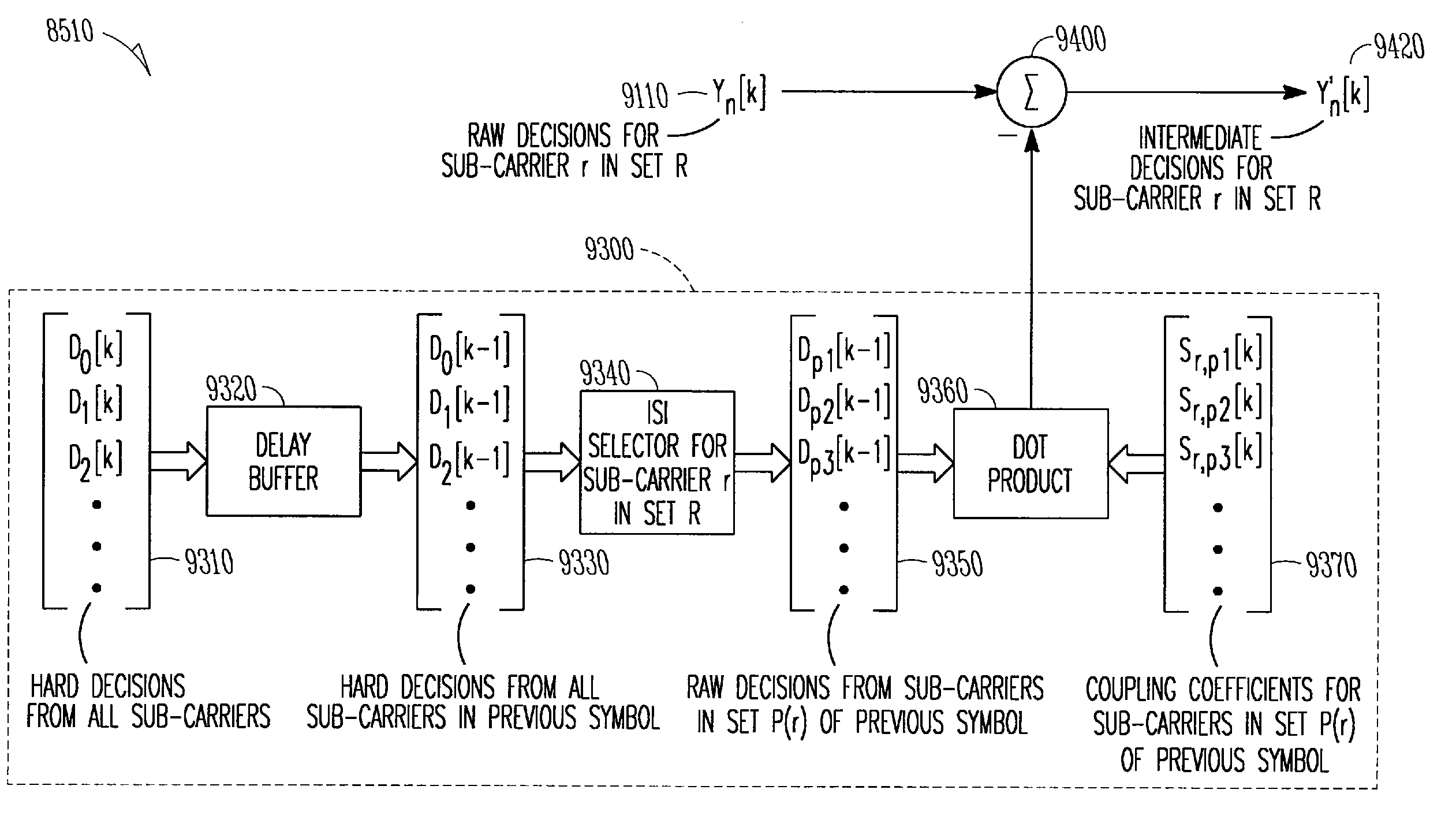
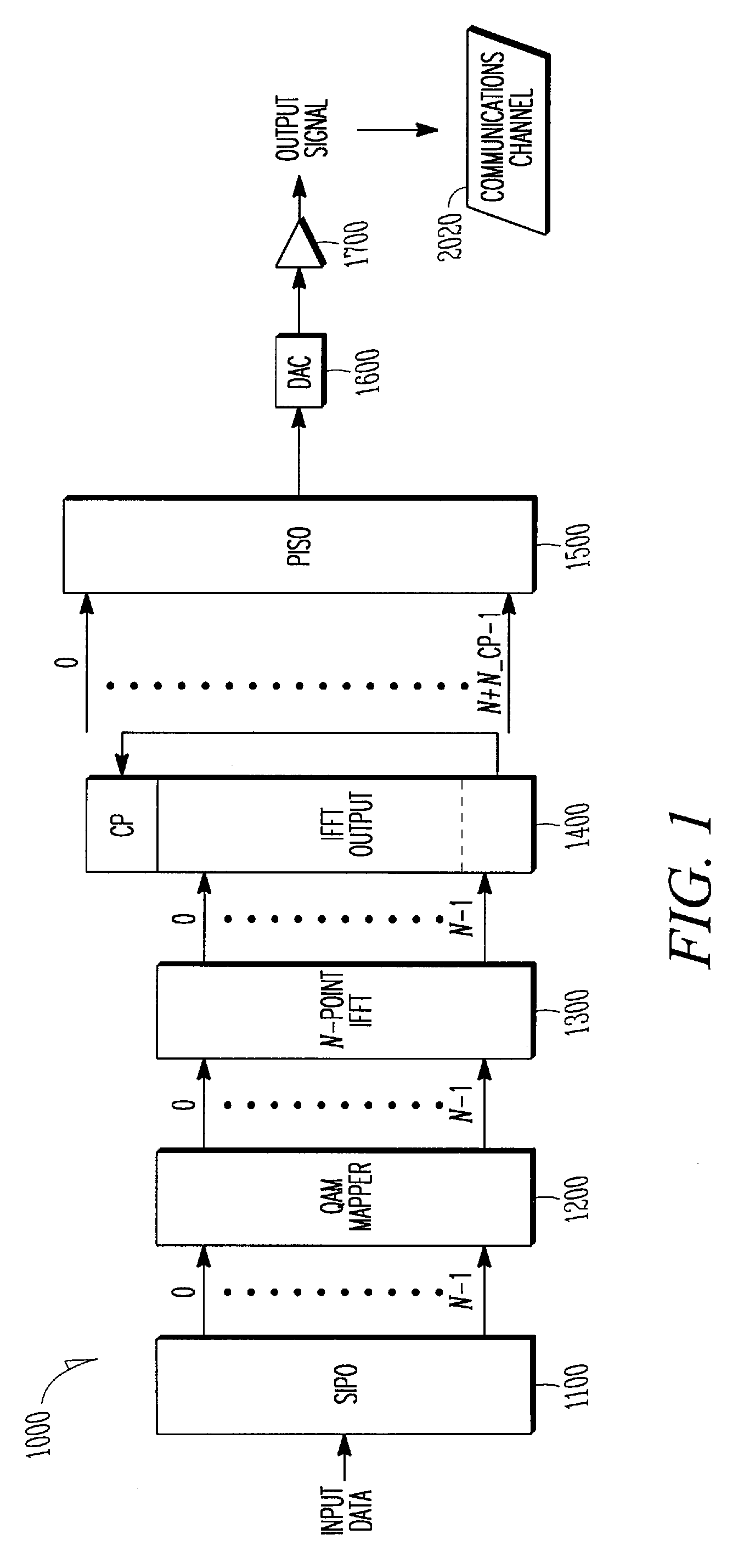
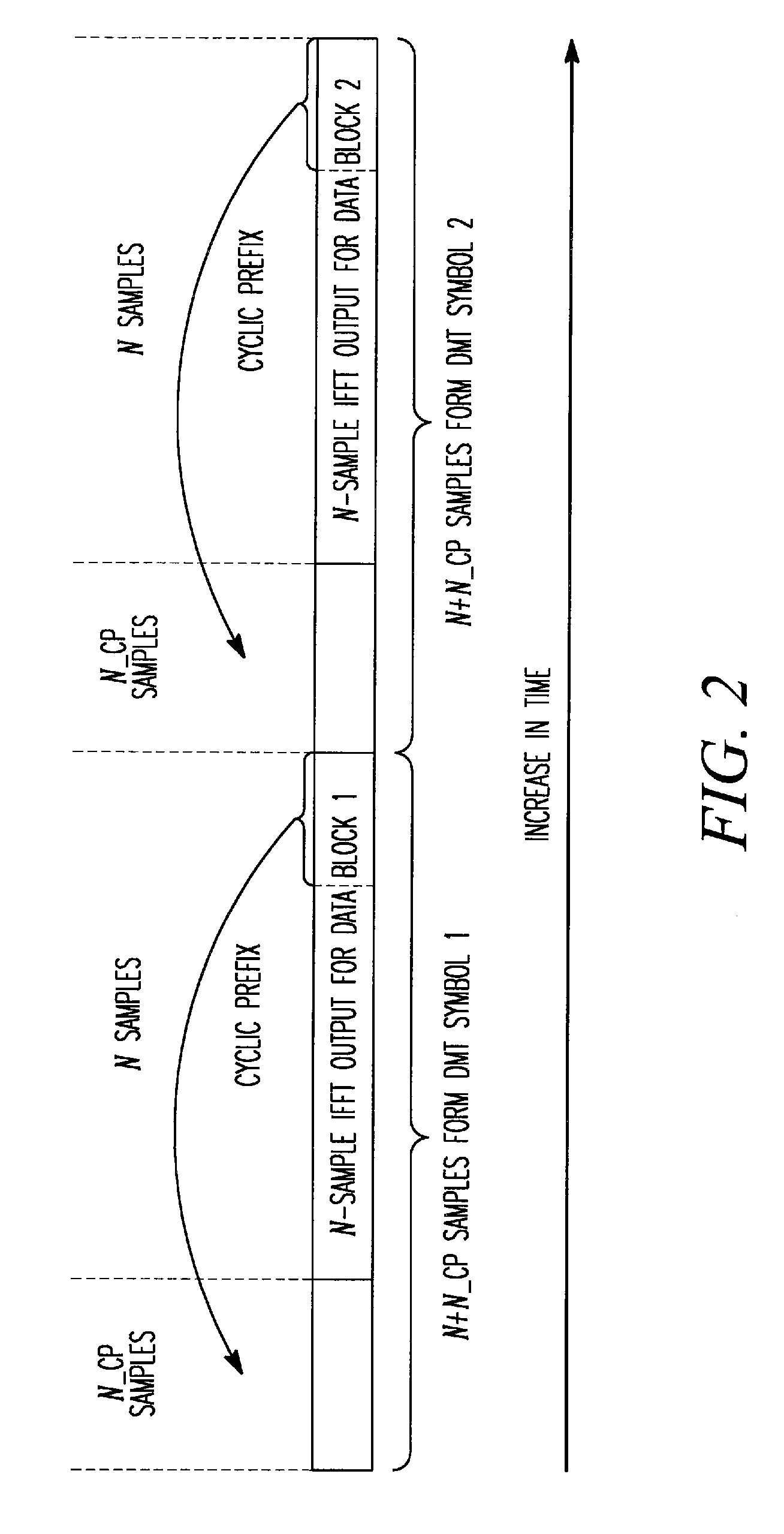
- The proposed solution involves identifying subsets of sub-carriers with negligible and significant interference, performing equalization and interference cancellation separately to minimize cross-coupling, and using channel identification to obtain optimal FEQ/IC coefficients, thereby enhancing cancellation efficiency.

Communication device, communication system, reception method, and communication method
PatentInactiveEP2247015A1
Innovation
- A communication system that includes a second communication device with an iterative detection and decoding unit, which combines signal detection results from multiple received signals to improve signal reliability, reducing the need for retransmissions and iterative processes by using a hybrid automatic repeat request (HARQ) mechanism.


Spectrum Regulatory Framework for Interference Management
The spectrum regulatory framework for interference management represents a critical foundation for addressing the complex interplay between Inter Carrier Interference (ICI) and Inter Symbol Interference (ISI) in modern communication systems. Regulatory bodies worldwide have established comprehensive guidelines that define permissible interference thresholds, spectrum allocation methodologies, and coordination mechanisms to optimize system capacity while maintaining service quality.
International regulatory standards, primarily governed by the International Telecommunication Union (ITU), establish fundamental interference protection criteria that directly impact how ICI and ISI are managed across different frequency bands. These regulations define specific power spectral density limits, adjacent channel leakage ratios, and spurious emission standards that system designers must adhere to when implementing interference mitigation strategies.
Regional regulatory frameworks, such as those implemented by the Federal Communications Commission (FCC) in North America and the European Telecommunications Standards Institute (ETSI) in Europe, provide more granular interference management requirements. These frameworks establish technical parameters including transmit power limitations, guard band specifications, and coordination procedures that influence the severity of both ICI and ISI in deployed systems.
Dynamic spectrum access regulations have emerged as a pivotal component in modern interference management frameworks. These policies enable cognitive radio technologies and spectrum sharing mechanisms that can adaptively respond to interference conditions, potentially reducing both ICI and ISI through intelligent frequency selection and power control algorithms.
Licensing frameworks play a crucial role in interference management by establishing clear operational boundaries and coordination requirements between different spectrum users. Primary and secondary user designations, along with associated protection criteria, create structured environments where ICI and ISI can be systematically controlled through regulatory compliance rather than purely technical solutions.
Enforcement mechanisms within regulatory frameworks include monitoring requirements, interference reporting procedures, and resolution protocols that ensure compliance with established interference limits. These regulatory tools provide essential oversight for maintaining system capacity optimization while preventing harmful interference scenarios that could degrade overall network performance.
International regulatory standards, primarily governed by the International Telecommunication Union (ITU), establish fundamental interference protection criteria that directly impact how ICI and ISI are managed across different frequency bands. These regulations define specific power spectral density limits, adjacent channel leakage ratios, and spurious emission standards that system designers must adhere to when implementing interference mitigation strategies.
Regional regulatory frameworks, such as those implemented by the Federal Communications Commission (FCC) in North America and the European Telecommunications Standards Institute (ETSI) in Europe, provide more granular interference management requirements. These frameworks establish technical parameters including transmit power limitations, guard band specifications, and coordination procedures that influence the severity of both ICI and ISI in deployed systems.
Dynamic spectrum access regulations have emerged as a pivotal component in modern interference management frameworks. These policies enable cognitive radio technologies and spectrum sharing mechanisms that can adaptively respond to interference conditions, potentially reducing both ICI and ISI through intelligent frequency selection and power control algorithms.
Licensing frameworks play a crucial role in interference management by establishing clear operational boundaries and coordination requirements between different spectrum users. Primary and secondary user designations, along with associated protection criteria, create structured environments where ICI and ISI can be systematically controlled through regulatory compliance rather than purely technical solutions.
Enforcement mechanisms within regulatory frameworks include monitoring requirements, interference reporting procedures, and resolution protocols that ensure compliance with established interference limits. These regulatory tools provide essential oversight for maintaining system capacity optimization while preventing harmful interference scenarios that could degrade overall network performance.
Energy Efficiency Considerations in Interference Mitigation
Energy efficiency has emerged as a critical design consideration in modern communication systems, particularly when implementing interference mitigation techniques to address Inter Carrier Interference (ICI) and Inter Symbol Interference (ISI). The computational complexity associated with advanced interference cancellation algorithms directly translates to increased power consumption, creating a fundamental trade-off between system performance and energy sustainability.
Traditional interference mitigation approaches, such as maximum likelihood detection and successive interference cancellation, require intensive matrix operations and iterative processing. These computationally demanding techniques can consume up to 40-60% of the total baseband processing power in modern wireless transceivers. The energy overhead becomes particularly pronounced in massive MIMO systems and millimeter-wave communications, where the number of interference sources scales exponentially with system complexity.
Power-aware algorithm design has become essential for practical deployment of interference mitigation solutions. Adaptive processing techniques that dynamically adjust computational complexity based on channel conditions offer promising energy savings. For instance, selective interference cancellation algorithms can prioritize the strongest interferers while ignoring weaker sources, reducing computational load by 30-50% with minimal performance degradation.
Hardware acceleration through dedicated signal processing units and application-specific integrated circuits (ASICs) provides another avenue for energy optimization. Custom silicon implementations of interference mitigation algorithms can achieve 10-100x improvements in energy efficiency compared to general-purpose processors, though at the cost of reduced flexibility and increased development complexity.
The emergence of machine learning-based interference mitigation introduces new energy considerations. While neural network approaches can potentially reduce computational complexity through learned optimization, the training phase requires substantial energy investment. Edge computing architectures that distribute interference processing across multiple nodes offer load balancing benefits but introduce coordination overhead.
Battery-powered devices, particularly in Internet of Things applications, face severe energy constraints that fundamentally limit the sophistication of implementable interference mitigation techniques. Ultra-low-power design methodologies, including duty cycling and approximate computing, become necessary to maintain acceptable battery life while preserving essential interference suppression capabilities.
Future energy-efficient interference mitigation will likely leverage hybrid approaches combining algorithmic optimization, specialized hardware, and intelligent power management to achieve optimal performance-per-watt ratios in diverse deployment scenarios.
Traditional interference mitigation approaches, such as maximum likelihood detection and successive interference cancellation, require intensive matrix operations and iterative processing. These computationally demanding techniques can consume up to 40-60% of the total baseband processing power in modern wireless transceivers. The energy overhead becomes particularly pronounced in massive MIMO systems and millimeter-wave communications, where the number of interference sources scales exponentially with system complexity.
Power-aware algorithm design has become essential for practical deployment of interference mitigation solutions. Adaptive processing techniques that dynamically adjust computational complexity based on channel conditions offer promising energy savings. For instance, selective interference cancellation algorithms can prioritize the strongest interferers while ignoring weaker sources, reducing computational load by 30-50% with minimal performance degradation.
Hardware acceleration through dedicated signal processing units and application-specific integrated circuits (ASICs) provides another avenue for energy optimization. Custom silicon implementations of interference mitigation algorithms can achieve 10-100x improvements in energy efficiency compared to general-purpose processors, though at the cost of reduced flexibility and increased development complexity.
The emergence of machine learning-based interference mitigation introduces new energy considerations. While neural network approaches can potentially reduce computational complexity through learned optimization, the training phase requires substantial energy investment. Edge computing architectures that distribute interference processing across multiple nodes offer load balancing benefits but introduce coordination overhead.
Battery-powered devices, particularly in Internet of Things applications, face severe energy constraints that fundamentally limit the sophistication of implementable interference mitigation techniques. Ultra-low-power design methodologies, including duty cycling and approximate computing, become necessary to maintain acceptable battery life while preserving essential interference suppression capabilities.
Future energy-efficient interference mitigation will likely leverage hybrid approaches combining algorithmic optimization, specialized hardware, and intelligent power management to achieve optimal performance-per-watt ratios in diverse deployment scenarios.
Unlock deeper insights with Patsnap Eureka Quick Research — get a full tech report to explore trends and direct your research. Try now!
Generate Your Research Report Instantly with AI Agent
Supercharge your innovation with Patsnap Eureka AI Agent Platform!