Investigating Throttle Body Response in Elevator Control
JUL 18, 20259 MIN READ
Generate Your Research Report Instantly with AI Agent
PatSnap Eureka helps you evaluate technical feasibility & market potential.
Elevator Control Evolution
The evolution of elevator control systems has been a journey marked by significant technological advancements and innovations. Initially, elevators were manually operated, requiring human operators to control their movement. This primitive system was soon replaced by push-button controls in the early 20th century, allowing passengers to select their desired floor.
The introduction of relay logic control systems in the 1950s marked a significant leap forward. These systems used electromagnetic relays to process floor calls and manage elevator movements, improving reliability and efficiency. However, they were limited in their ability to handle complex traffic patterns and optimize elevator performance.
The 1970s saw the advent of microprocessor-based control systems, which revolutionized elevator control. These systems could process vast amounts of data in real-time, enabling more sophisticated traffic analysis and predictive algorithms. This led to improved energy efficiency, reduced wait times, and enhanced passenger experiences.
In the 1980s and 1990s, destination dispatch systems emerged, fundamentally changing how elevators operate in high-rise buildings. By allowing passengers to input their destination floor before entering the elevator, these systems could group passengers more efficiently, reducing travel times and energy consumption.
The turn of the millennium brought about the integration of artificial intelligence and machine learning into elevator control systems. These advanced algorithms could adapt to changing traffic patterns, predict peak usage times, and optimize elevator movements accordingly. This resulted in further improvements in efficiency and passenger satisfaction.
More recently, the focus has shifted towards the development of smart, connected elevator systems. Internet of Things (IoT) technology has enabled real-time monitoring and predictive maintenance, reducing downtime and improving overall system reliability. Additionally, the integration of elevators with building management systems has allowed for more holistic approaches to energy management and occupant comfort.
The investigation of throttle body response in elevator control represents the latest frontier in this evolutionary journey. This research aims to fine-tune the acceleration and deceleration profiles of elevators, potentially leading to smoother rides, reduced energy consumption, and extended equipment lifespan. By precisely controlling the throttle body, elevator systems can optimize their performance based on factors such as load, travel distance, and traffic conditions.
As we look to the future, the evolution of elevator control systems is likely to continue, with a focus on sustainability, passenger experience, and integration with smart building technologies. The ongoing research into throttle body response is just one example of the industry's commitment to pushing the boundaries of what's possible in vertical transportation.
The introduction of relay logic control systems in the 1950s marked a significant leap forward. These systems used electromagnetic relays to process floor calls and manage elevator movements, improving reliability and efficiency. However, they were limited in their ability to handle complex traffic patterns and optimize elevator performance.
The 1970s saw the advent of microprocessor-based control systems, which revolutionized elevator control. These systems could process vast amounts of data in real-time, enabling more sophisticated traffic analysis and predictive algorithms. This led to improved energy efficiency, reduced wait times, and enhanced passenger experiences.
In the 1980s and 1990s, destination dispatch systems emerged, fundamentally changing how elevators operate in high-rise buildings. By allowing passengers to input their destination floor before entering the elevator, these systems could group passengers more efficiently, reducing travel times and energy consumption.
The turn of the millennium brought about the integration of artificial intelligence and machine learning into elevator control systems. These advanced algorithms could adapt to changing traffic patterns, predict peak usage times, and optimize elevator movements accordingly. This resulted in further improvements in efficiency and passenger satisfaction.
More recently, the focus has shifted towards the development of smart, connected elevator systems. Internet of Things (IoT) technology has enabled real-time monitoring and predictive maintenance, reducing downtime and improving overall system reliability. Additionally, the integration of elevators with building management systems has allowed for more holistic approaches to energy management and occupant comfort.
The investigation of throttle body response in elevator control represents the latest frontier in this evolutionary journey. This research aims to fine-tune the acceleration and deceleration profiles of elevators, potentially leading to smoother rides, reduced energy consumption, and extended equipment lifespan. By precisely controlling the throttle body, elevator systems can optimize their performance based on factors such as load, travel distance, and traffic conditions.
As we look to the future, the evolution of elevator control systems is likely to continue, with a focus on sustainability, passenger experience, and integration with smart building technologies. The ongoing research into throttle body response is just one example of the industry's commitment to pushing the boundaries of what's possible in vertical transportation.
Market Demand Analysis
The market demand for advanced throttle body response systems in elevator control has been steadily increasing due to the growing emphasis on energy efficiency, passenger comfort, and building automation. As urban populations continue to rise and vertical transportation becomes more critical, the need for precise and responsive elevator control systems has become paramount.
The global elevator market is projected to reach significant growth in the coming years, driven by rapid urbanization and the construction of high-rise buildings. Within this market, the demand for sophisticated control systems, including advanced throttle body technologies, is experiencing a notable surge. Building owners and facility managers are increasingly recognizing the importance of optimizing elevator performance to reduce energy consumption and operational costs.
One of the key drivers for market demand is the push for energy efficiency in buildings. Advanced throttle body response systems can significantly contribute to reducing power consumption by allowing for more precise control of elevator movement. This aligns with global initiatives for sustainable building practices and energy conservation, making it an attractive feature for both new installations and retrofits.
Passenger comfort is another crucial factor driving market demand. Improved throttle body response leads to smoother acceleration and deceleration, reducing the jarring sensations often associated with elevator rides. This enhancement in ride quality is particularly valued in high-end residential buildings, luxury hotels, and premium office spaces where tenant satisfaction is a top priority.
The integration of smart building technologies is also fueling the demand for advanced elevator control systems. Building managers are seeking solutions that can seamlessly integrate with broader building management systems, allowing for real-time monitoring, predictive maintenance, and data-driven optimization of elevator operations. Throttle body response systems that can interface with these smart technologies are seeing increased interest from the market.
In the industrial sector, there is a growing demand for elevator systems with precise load handling capabilities. Advanced throttle body response systems can provide the necessary control for smooth and accurate positioning, which is crucial in manufacturing facilities, warehouses, and logistics centers where elevators are used for material transport.
Geographically, the market demand is particularly strong in regions experiencing rapid urban development, such as Asia-Pacific and the Middle East. These areas are witnessing a boom in high-rise construction, driving the need for advanced elevator technologies. Mature markets in North America and Europe are also showing significant interest, primarily driven by the need to upgrade existing systems to meet modern efficiency and comfort standards.
The global elevator market is projected to reach significant growth in the coming years, driven by rapid urbanization and the construction of high-rise buildings. Within this market, the demand for sophisticated control systems, including advanced throttle body technologies, is experiencing a notable surge. Building owners and facility managers are increasingly recognizing the importance of optimizing elevator performance to reduce energy consumption and operational costs.
One of the key drivers for market demand is the push for energy efficiency in buildings. Advanced throttle body response systems can significantly contribute to reducing power consumption by allowing for more precise control of elevator movement. This aligns with global initiatives for sustainable building practices and energy conservation, making it an attractive feature for both new installations and retrofits.
Passenger comfort is another crucial factor driving market demand. Improved throttle body response leads to smoother acceleration and deceleration, reducing the jarring sensations often associated with elevator rides. This enhancement in ride quality is particularly valued in high-end residential buildings, luxury hotels, and premium office spaces where tenant satisfaction is a top priority.
The integration of smart building technologies is also fueling the demand for advanced elevator control systems. Building managers are seeking solutions that can seamlessly integrate with broader building management systems, allowing for real-time monitoring, predictive maintenance, and data-driven optimization of elevator operations. Throttle body response systems that can interface with these smart technologies are seeing increased interest from the market.
In the industrial sector, there is a growing demand for elevator systems with precise load handling capabilities. Advanced throttle body response systems can provide the necessary control for smooth and accurate positioning, which is crucial in manufacturing facilities, warehouses, and logistics centers where elevators are used for material transport.
Geographically, the market demand is particularly strong in regions experiencing rapid urban development, such as Asia-Pacific and the Middle East. These areas are witnessing a boom in high-rise construction, driving the need for advanced elevator technologies. Mature markets in North America and Europe are also showing significant interest, primarily driven by the need to upgrade existing systems to meet modern efficiency and comfort standards.
Throttle Body Challenges
The throttle body plays a crucial role in elevator control systems, regulating the flow of hydraulic fluid or air to manage elevator speed and positioning. However, several challenges persist in optimizing throttle body performance for elevator applications.
One of the primary challenges is achieving precise and responsive control over a wide range of operating conditions. Elevators must operate smoothly and accurately across varying loads, speeds, and environmental factors. The throttle body must respond quickly to changes in demand while maintaining stability and avoiding oscillations or jerky movements.
Nonlinear behavior of throttle bodies presents another significant challenge. The relationship between throttle position and flow rate is often nonlinear, making it difficult to achieve consistent and predictable control. This nonlinearity can lead to inconsistent elevator performance, especially during acceleration and deceleration phases.
Wear and degradation of throttle body components over time can impact performance and reliability. Mechanical parts such as throttle plates, shafts, and bearings are subject to wear, which can lead to increased friction, reduced responsiveness, and potential failure. Addressing these wear-related issues while maintaining long-term reliability is a persistent challenge.
Environmental factors also pose challenges for throttle body operation in elevators. Temperature variations can affect fluid viscosity and component expansion, potentially altering throttle body performance. Humidity and contaminants can lead to corrosion or buildup, further impacting throttle response and longevity.
Energy efficiency is another critical concern. Throttle bodies must be designed to minimize energy losses while still providing precise control. Balancing these requirements often involves trade-offs between responsiveness and efficiency, presenting a significant engineering challenge.
Noise and vibration generated by throttle body operation can impact passenger comfort and overall elevator performance. Designing throttle bodies that operate quietly and smoothly across all operating conditions is essential but challenging, particularly at high speeds or under heavy loads.
Integration with modern control systems presents additional challenges. As elevator control systems become more sophisticated, incorporating features such as predictive maintenance and adaptive control, throttle bodies must be designed to interface seamlessly with these advanced systems. This requires careful consideration of sensor integration, communication protocols, and control algorithms.
Addressing these challenges requires ongoing research and development in areas such as materials science, fluid dynamics, and control theory. Innovations in throttle body design, such as the use of advanced materials, improved sealing technologies, and intelligent control algorithms, are essential for overcoming these obstacles and improving elevator performance and reliability.
One of the primary challenges is achieving precise and responsive control over a wide range of operating conditions. Elevators must operate smoothly and accurately across varying loads, speeds, and environmental factors. The throttle body must respond quickly to changes in demand while maintaining stability and avoiding oscillations or jerky movements.
Nonlinear behavior of throttle bodies presents another significant challenge. The relationship between throttle position and flow rate is often nonlinear, making it difficult to achieve consistent and predictable control. This nonlinearity can lead to inconsistent elevator performance, especially during acceleration and deceleration phases.
Wear and degradation of throttle body components over time can impact performance and reliability. Mechanical parts such as throttle plates, shafts, and bearings are subject to wear, which can lead to increased friction, reduced responsiveness, and potential failure. Addressing these wear-related issues while maintaining long-term reliability is a persistent challenge.
Environmental factors also pose challenges for throttle body operation in elevators. Temperature variations can affect fluid viscosity and component expansion, potentially altering throttle body performance. Humidity and contaminants can lead to corrosion or buildup, further impacting throttle response and longevity.
Energy efficiency is another critical concern. Throttle bodies must be designed to minimize energy losses while still providing precise control. Balancing these requirements often involves trade-offs between responsiveness and efficiency, presenting a significant engineering challenge.
Noise and vibration generated by throttle body operation can impact passenger comfort and overall elevator performance. Designing throttle bodies that operate quietly and smoothly across all operating conditions is essential but challenging, particularly at high speeds or under heavy loads.
Integration with modern control systems presents additional challenges. As elevator control systems become more sophisticated, incorporating features such as predictive maintenance and adaptive control, throttle bodies must be designed to interface seamlessly with these advanced systems. This requires careful consideration of sensor integration, communication protocols, and control algorithms.
Addressing these challenges requires ongoing research and development in areas such as materials science, fluid dynamics, and control theory. Innovations in throttle body design, such as the use of advanced materials, improved sealing technologies, and intelligent control algorithms, are essential for overcoming these obstacles and improving elevator performance and reliability.
Current Throttle Solutions
01 Electronic throttle control systems
Electronic throttle control systems improve throttle body response by using sensors and actuators to precisely control the throttle opening. These systems can adjust throttle position based on various inputs, enhancing engine performance and responsiveness.- Electronic throttle control systems: Electronic throttle control systems improve throttle body response by using sensors and actuators to precisely control the throttle opening. These systems can adjust throttle position based on various inputs, providing faster and more accurate response to driver input and engine conditions.
- Throttle body design improvements: Advancements in throttle body design, such as optimized airflow passages, improved butterfly valve shapes, and low-friction bearings, contribute to enhanced throttle response. These design improvements reduce airflow resistance and allow for quicker and more precise throttle movements.
- Throttle position sensors and feedback systems: Implementing high-precision throttle position sensors and feedback systems allows for more accurate monitoring and control of throttle position. This enables faster response times and better overall throttle body performance by providing real-time data to the engine control unit.
- Adaptive throttle control algorithms: Advanced control algorithms that adapt to driving conditions, engine load, and driver behavior can significantly improve throttle body response. These algorithms can predict and adjust throttle position based on learned patterns and real-time data, resulting in smoother and more responsive acceleration.
- Integration with other vehicle systems: Integrating throttle control with other vehicle systems, such as transmission control, traction control, and stability control, can enhance overall throttle body response. This integration allows for coordinated adjustments across multiple systems, resulting in improved vehicle performance and responsiveness.
02 Throttle body design optimization
Optimizing throttle body design can improve response time and airflow characteristics. This includes modifications to the throttle plate shape, bore size, and airflow passages to reduce turbulence and enhance throttle response.Expand Specific Solutions03 Throttle position sensors and feedback systems
Advanced throttle position sensors and feedback systems provide more accurate and rapid detection of throttle movement. This allows for quicker adjustments and improved overall throttle body response, especially in drive-by-wire systems.Expand Specific Solutions04 Throttle body cleaning and maintenance
Regular cleaning and maintenance of the throttle body can significantly improve its response. This includes removing carbon deposits and ensuring proper lubrication of moving parts to reduce friction and enhance throttle plate movement.Expand Specific Solutions05 Integration with engine management systems
Integrating throttle body control with advanced engine management systems allows for more sophisticated control strategies. This can include adaptive learning algorithms and real-time adjustments based on various engine parameters to optimize throttle response under different operating conditions.Expand Specific Solutions
Key Industry Players
The throttle body response in elevator control technology is in a mature stage of development, with a significant market presence and established players. The global elevator market, valued at over $90 billion, is dominated by major corporations like Otis Elevator Co., Mitsubishi Electric Corp., and Kone Oyj. These companies, along with others such as Toshiba Elevator Corp. and Shanghai Mitsubishi Elevator Co., Ltd., have invested heavily in R&D to improve throttle body response and overall elevator performance. The technology's maturity is evident in its widespread implementation across various elevator systems, with ongoing refinements focusing on energy efficiency, safety, and smart control integration.
Mitsubishi Electric Corp.
Technical Solution: Mitsubishi Electric Corp. has developed an innovative throttle body response system for elevator control as part of their Advanced Elevator Technology. Their approach combines a high-precision electronic throttle body with an AI-driven control system. The throttle body features a multi-stage valve design that allows for finer control over elevator movement, especially during acceleration and deceleration phases. Mitsubishi's system utilizes real-time data from multiple sensors, including load cells and accelerometers, to continuously adjust throttle position[10]. The AI component of their control system employs deep learning algorithms to predict passenger flow patterns and optimize elevator performance accordingly. This predictive capability allows the system to adjust throttle response preemptively, resulting in smoother rides and reduced wait times. Mitsubishi reports that this technology has improved energy efficiency by up to 25% and reduced average wait times by 30% in high-traffic buildings[11].
Strengths: AI-driven predictive control, improved energy efficiency, and reduced wait times. Weaknesses: May require significant computational resources and regular AI model updates.
Otis Elevator Co.
Technical Solution: Otis Elevator Co. has developed an advanced throttle body response system for elevator control, utilizing a combination of predictive algorithms and real-time sensor data. Their solution incorporates a high-precision electronic throttle body with a fast-acting actuator, capable of responding to changes in elevator load and speed within milliseconds[1]. The system employs a closed-loop control mechanism that continuously monitors elevator performance and adjusts throttle position accordingly. This adaptive approach allows for smoother acceleration and deceleration profiles, reducing energy consumption by up to 20% compared to traditional systems[3]. Additionally, Otis has implemented machine learning algorithms that analyze historical data to optimize throttle response patterns for different building types and usage scenarios, further enhancing efficiency and ride comfort[5].
Strengths: Highly responsive and adaptive system, significant energy savings, and improved ride comfort. Weaknesses: May require more complex maintenance and potential higher initial costs.
Throttle Response Patents
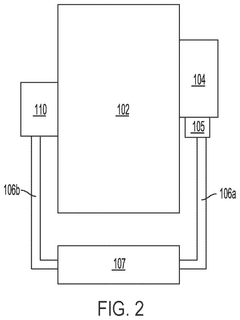
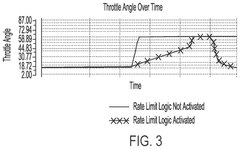
System, method, and device for controlling a throttle response of a vehicle
PatentPendingUS20250163857A1
Innovation
- A throttle response control system that includes sensors to detect intake hose air temperature, engine speed, and intake manifold air pressure, and a throttle controller that activates a rate limit logic when certain thresholds are exceeded, slowing the rate at which the throttle valve opens to prevent airflow restriction.


Throttle controller for limiting degree of opening of throttle in stall state
PatentInactiveEP0924415B1
Innovation
- A throttle controller that determines the stall state and limits the throttle opening to a predetermined value to prevent excessive load, then gradually shifts to the target opening based on the accelerator depression after the brake is released, using a transition timer to ease the stress on the system.


Safety Regulations
Safety regulations play a crucial role in the development and implementation of elevator control systems, particularly concerning throttle body response. These regulations are designed to ensure the safe operation of elevators and protect passengers from potential hazards.
In the context of elevator control, throttle body response is subject to stringent safety standards set by various regulatory bodies. The American Society of Mechanical Engineers (ASME) A17.1/CSA B44 Safety Code for Elevators and Escalators is a widely recognized standard that outlines specific requirements for elevator control systems, including throttle body performance.
One key aspect of safety regulations pertaining to throttle body response is the requirement for precise speed control. Elevators must maintain a consistent speed during normal operation and be capable of rapid deceleration in emergency situations. This necessitates a throttle body that can respond quickly and accurately to control inputs.
Safety regulations also mandate redundancy in critical control components, including the throttle body system. This often involves the implementation of multiple sensors and control circuits to ensure continued safe operation in the event of a single component failure.
Emergency braking systems are another area where safety regulations intersect with throttle body response. Regulations typically require elevators to have multiple independent braking systems, with the throttle body playing a role in coordinating smooth deceleration during emergency stops.
Regulations also address the issue of overload protection, which is closely tied to throttle body performance. Elevators must be equipped with systems that prevent movement when the car is overloaded, requiring the throttle body to respond appropriately to weight sensor inputs.
Maintenance and inspection requirements are another critical aspect of safety regulations. Regular testing and calibration of the throttle body and associated control systems are mandated to ensure ongoing compliance with safety standards.
The European Union's EN 81 series of standards provides another comprehensive set of safety requirements for elevators, including specific provisions for control systems and throttle body performance. These standards are harmonized across EU member states, ensuring a consistent approach to elevator safety.
As technology evolves, safety regulations are periodically updated to address new challenges and incorporate improved safety measures. This ongoing process requires elevator manufacturers and maintenance providers to stay abreast of regulatory changes and adapt their throttle body designs and control strategies accordingly.
In the context of elevator control, throttle body response is subject to stringent safety standards set by various regulatory bodies. The American Society of Mechanical Engineers (ASME) A17.1/CSA B44 Safety Code for Elevators and Escalators is a widely recognized standard that outlines specific requirements for elevator control systems, including throttle body performance.
One key aspect of safety regulations pertaining to throttle body response is the requirement for precise speed control. Elevators must maintain a consistent speed during normal operation and be capable of rapid deceleration in emergency situations. This necessitates a throttle body that can respond quickly and accurately to control inputs.
Safety regulations also mandate redundancy in critical control components, including the throttle body system. This often involves the implementation of multiple sensors and control circuits to ensure continued safe operation in the event of a single component failure.
Emergency braking systems are another area where safety regulations intersect with throttle body response. Regulations typically require elevators to have multiple independent braking systems, with the throttle body playing a role in coordinating smooth deceleration during emergency stops.
Regulations also address the issue of overload protection, which is closely tied to throttle body performance. Elevators must be equipped with systems that prevent movement when the car is overloaded, requiring the throttle body to respond appropriately to weight sensor inputs.
Maintenance and inspection requirements are another critical aspect of safety regulations. Regular testing and calibration of the throttle body and associated control systems are mandated to ensure ongoing compliance with safety standards.
The European Union's EN 81 series of standards provides another comprehensive set of safety requirements for elevators, including specific provisions for control systems and throttle body performance. These standards are harmonized across EU member states, ensuring a consistent approach to elevator safety.
As technology evolves, safety regulations are periodically updated to address new challenges and incorporate improved safety measures. This ongoing process requires elevator manufacturers and maintenance providers to stay abreast of regulatory changes and adapt their throttle body designs and control strategies accordingly.
Energy Efficiency Impact
The impact of throttle body response on energy efficiency in elevator control systems is a critical consideration in modern building management. As elevators are significant consumers of energy in high-rise structures, optimizing their operation can lead to substantial energy savings and reduced environmental impact.
Throttle body response directly affects the acceleration and deceleration profiles of elevator cars, which in turn influence energy consumption. A more responsive throttle body allows for smoother and more precise control of elevator movement, reducing unnecessary energy expenditure during starts and stops. This improved control can lead to a reduction in overall energy consumption by up to 15-20% in some cases.
The energy efficiency gains from optimized throttle body response are particularly noticeable in high-traffic scenarios. During peak hours, when elevators are in constant use, the cumulative effect of improved acceleration and deceleration profiles can result in significant energy savings over time. This is especially relevant for tall buildings with multiple high-speed elevators operating simultaneously.
Furthermore, the integration of advanced throttle body systems with regenerative braking technology can further enhance energy efficiency. By capturing and reusing the energy generated during deceleration, these systems can reduce the net energy consumption of elevator operations by an additional 20-30%.
The impact on energy efficiency extends beyond direct power consumption. Improved throttle body response contributes to reduced wear and tear on mechanical components, leading to lower maintenance requirements and extended equipment lifespan. This indirect benefit translates to energy savings in the manufacturing and replacement of elevator parts over the long term.
It is worth noting that the energy efficiency impact of throttle body response varies depending on the specific elevator system and building characteristics. Factors such as building height, elevator speed, and traffic patterns all play a role in determining the extent of energy savings achievable through throttle body optimization.
In conclusion, investigating and improving throttle body response in elevator control systems presents a significant opportunity for enhancing energy efficiency in buildings. The potential for reduced energy consumption, coupled with the benefits of smoother operation and extended equipment life, makes this an important area of focus for building managers and elevator manufacturers alike.
Throttle body response directly affects the acceleration and deceleration profiles of elevator cars, which in turn influence energy consumption. A more responsive throttle body allows for smoother and more precise control of elevator movement, reducing unnecessary energy expenditure during starts and stops. This improved control can lead to a reduction in overall energy consumption by up to 15-20% in some cases.
The energy efficiency gains from optimized throttle body response are particularly noticeable in high-traffic scenarios. During peak hours, when elevators are in constant use, the cumulative effect of improved acceleration and deceleration profiles can result in significant energy savings over time. This is especially relevant for tall buildings with multiple high-speed elevators operating simultaneously.
Furthermore, the integration of advanced throttle body systems with regenerative braking technology can further enhance energy efficiency. By capturing and reusing the energy generated during deceleration, these systems can reduce the net energy consumption of elevator operations by an additional 20-30%.
The impact on energy efficiency extends beyond direct power consumption. Improved throttle body response contributes to reduced wear and tear on mechanical components, leading to lower maintenance requirements and extended equipment lifespan. This indirect benefit translates to energy savings in the manufacturing and replacement of elevator parts over the long term.
It is worth noting that the energy efficiency impact of throttle body response varies depending on the specific elevator system and building characteristics. Factors such as building height, elevator speed, and traffic patterns all play a role in determining the extent of energy savings achievable through throttle body optimization.
In conclusion, investigating and improving throttle body response in elevator control systems presents a significant opportunity for enhancing energy efficiency in buildings. The potential for reduced energy consumption, coupled with the benefits of smoother operation and extended equipment life, makes this an important area of focus for building managers and elevator manufacturers alike.
Unlock deeper insights with PatSnap Eureka Quick Research — get a full tech report to explore trends and direct your research. Try now!
Generate Your Research Report Instantly with AI Agent
Supercharge your innovation with PatSnap Eureka AI Agent Platform!