

Throttle Body Applications in Robotic Surgery Systems
JUL 18, 20259 MIN READ
Generate Your Research Report Instantly with AI Agent
PatSnap Eureka helps you evaluate technical feasibility & market potential.
Robotic Surgery Throttle Body Evolution
The evolution of throttle body applications in robotic surgery systems has been marked by significant technological advancements and innovative approaches. Initially, throttle bodies were primarily used in automotive applications to control air flow into internal combustion engines. However, their precision control capabilities have found new applications in the field of robotic surgery.
In the early stages of robotic surgery, around the late 1990s and early 2000s, throttle bodies were not commonly integrated into surgical systems. The focus was primarily on developing robotic arms and end-effectors for basic surgical tasks. As the field progressed, researchers and engineers recognized the potential of throttle bodies to enhance the precision and control of robotic surgical instruments.
By the mid-2000s, throttle body technology began to be adapted for use in robotic surgery systems. The primary goal was to improve the fine control of pneumatic and hydraulic actuators used in surgical robots. This adaptation required significant modifications to traditional throttle body designs to meet the stringent requirements of medical applications, including miniaturization and sterilization capabilities.
The next phase of evolution, occurring in the late 2000s and early 2010s, saw the integration of electronic throttle bodies into robotic surgery systems. These electronically controlled devices offered superior precision and responsiveness compared to their mechanical counterparts. This advancement allowed for more intricate surgical procedures and improved overall system performance.
In recent years, the development of smart throttle bodies has marked a new era in robotic surgery. These advanced components incorporate sensors and microprocessors, enabling real-time feedback and adaptive control. This innovation has significantly enhanced the surgeon's ability to perform delicate procedures with unprecedented accuracy and safety.
The latest trend in throttle body applications for robotic surgery involves the integration of artificial intelligence and machine learning algorithms. These technologies allow the throttle bodies to learn from surgical data and optimize their performance over time, leading to more efficient and effective surgical procedures.
Looking ahead, the future of throttle body applications in robotic surgery is likely to focus on further miniaturization, increased energy efficiency, and enhanced integration with other surgical systems. The development of nano-scale throttle bodies and the use of advanced materials are expected to push the boundaries of what is possible in minimally invasive robotic surgery.
In the early stages of robotic surgery, around the late 1990s and early 2000s, throttle bodies were not commonly integrated into surgical systems. The focus was primarily on developing robotic arms and end-effectors for basic surgical tasks. As the field progressed, researchers and engineers recognized the potential of throttle bodies to enhance the precision and control of robotic surgical instruments.
By the mid-2000s, throttle body technology began to be adapted for use in robotic surgery systems. The primary goal was to improve the fine control of pneumatic and hydraulic actuators used in surgical robots. This adaptation required significant modifications to traditional throttle body designs to meet the stringent requirements of medical applications, including miniaturization and sterilization capabilities.
The next phase of evolution, occurring in the late 2000s and early 2010s, saw the integration of electronic throttle bodies into robotic surgery systems. These electronically controlled devices offered superior precision and responsiveness compared to their mechanical counterparts. This advancement allowed for more intricate surgical procedures and improved overall system performance.
In recent years, the development of smart throttle bodies has marked a new era in robotic surgery. These advanced components incorporate sensors and microprocessors, enabling real-time feedback and adaptive control. This innovation has significantly enhanced the surgeon's ability to perform delicate procedures with unprecedented accuracy and safety.
The latest trend in throttle body applications for robotic surgery involves the integration of artificial intelligence and machine learning algorithms. These technologies allow the throttle bodies to learn from surgical data and optimize their performance over time, leading to more efficient and effective surgical procedures.
Looking ahead, the future of throttle body applications in robotic surgery is likely to focus on further miniaturization, increased energy efficiency, and enhanced integration with other surgical systems. The development of nano-scale throttle bodies and the use of advanced materials are expected to push the boundaries of what is possible in minimally invasive robotic surgery.
Market Demand Analysis
The market demand for throttle body applications in robotic surgery systems has been experiencing significant growth in recent years. This surge is primarily driven by the increasing adoption of minimally invasive surgical procedures and the growing preference for precision-controlled surgical instruments. Robotic surgery systems equipped with advanced throttle body mechanisms offer surgeons enhanced control over surgical tools, resulting in improved accuracy and reduced patient trauma.
The global robotic surgery market, which encompasses throttle body applications, is projected to expand at a compound annual growth rate (CAGR) of over 20% from 2021 to 2026. This growth is fueled by factors such as technological advancements in surgical robotics, rising healthcare expenditure, and the growing prevalence of chronic diseases requiring surgical interventions. Throttle body applications play a crucial role in this market expansion by enabling precise control of robotic arms and instruments during complex surgical procedures.
In terms of regional demand, North America currently dominates the market for robotic surgery systems, including those with throttle body applications. This is attributed to the presence of well-established healthcare infrastructure, high adoption rates of advanced medical technologies, and favorable reimbursement policies. However, the Asia-Pacific region is expected to witness the fastest growth in the coming years, driven by increasing healthcare investments, rising awareness about minimally invasive surgeries, and improving access to advanced medical technologies.
The demand for throttle body applications in robotic surgery systems is particularly strong in specialties such as urology, gynecology, and general surgery. These fields benefit greatly from the precise control and maneuverability offered by throttle body mechanisms, enabling surgeons to perform complex procedures with enhanced dexterity and reduced fatigue. As the technology continues to evolve, there is a growing interest in expanding its applications to other surgical specialties, including cardiothoracic surgery and orthopedics.
One of the key trends shaping the market demand is the integration of artificial intelligence (AI) and machine learning algorithms with throttle body mechanisms. This combination aims to further enhance surgical precision and automate certain aspects of the surgical process, potentially reducing procedure times and improving patient outcomes. Additionally, there is an increasing focus on developing more compact and cost-effective robotic surgery systems with advanced throttle body applications, which could drive adoption in smaller hospitals and emerging markets.
The global robotic surgery market, which encompasses throttle body applications, is projected to expand at a compound annual growth rate (CAGR) of over 20% from 2021 to 2026. This growth is fueled by factors such as technological advancements in surgical robotics, rising healthcare expenditure, and the growing prevalence of chronic diseases requiring surgical interventions. Throttle body applications play a crucial role in this market expansion by enabling precise control of robotic arms and instruments during complex surgical procedures.
In terms of regional demand, North America currently dominates the market for robotic surgery systems, including those with throttle body applications. This is attributed to the presence of well-established healthcare infrastructure, high adoption rates of advanced medical technologies, and favorable reimbursement policies. However, the Asia-Pacific region is expected to witness the fastest growth in the coming years, driven by increasing healthcare investments, rising awareness about minimally invasive surgeries, and improving access to advanced medical technologies.
The demand for throttle body applications in robotic surgery systems is particularly strong in specialties such as urology, gynecology, and general surgery. These fields benefit greatly from the precise control and maneuverability offered by throttle body mechanisms, enabling surgeons to perform complex procedures with enhanced dexterity and reduced fatigue. As the technology continues to evolve, there is a growing interest in expanding its applications to other surgical specialties, including cardiothoracic surgery and orthopedics.
One of the key trends shaping the market demand is the integration of artificial intelligence (AI) and machine learning algorithms with throttle body mechanisms. This combination aims to further enhance surgical precision and automate certain aspects of the surgical process, potentially reducing procedure times and improving patient outcomes. Additionally, there is an increasing focus on developing more compact and cost-effective robotic surgery systems with advanced throttle body applications, which could drive adoption in smaller hospitals and emerging markets.
Current Challenges
The integration of throttle body applications in robotic surgery systems presents several significant challenges that researchers and engineers are currently grappling with. One of the primary obstacles is the need for precise control and responsiveness in a surgical environment. Unlike traditional automotive applications, throttle bodies in robotic surgery must operate with extreme accuracy and minimal latency to ensure patient safety and procedural success.
Miniaturization remains a critical challenge in adapting throttle body technology for surgical robots. The compact nature of surgical instruments and the limited space within the human body necessitate the development of ultra-small throttle bodies without compromising functionality. This miniaturization process often leads to issues with heat dissipation and durability, requiring innovative materials and design approaches.
Another significant hurdle is the development of adaptive control algorithms that can seamlessly integrate throttle body operations with the complex movements required in robotic surgery. These algorithms must account for the unpredictable nature of human anatomy and the varying requirements of different surgical procedures, all while maintaining precise control over instrument movements and force application.
The sterilization and biocompatibility of throttle body components pose additional challenges. Materials and designs must withstand repeated sterilization processes without degradation and be compatible with the human body to prevent adverse reactions. This often requires the use of specialized materials and coatings, which can impact the performance and cost-effectiveness of the systems.
Power management and energy efficiency represent ongoing concerns in the application of throttle bodies to robotic surgery. The need for compact, long-lasting power sources that can support the high-precision operations of these systems without frequent interruptions for recharging or replacement is a significant engineering challenge.
Reliability and fail-safe mechanisms are paramount in surgical applications, presenting another layer of complexity. Engineers must design throttle body systems with redundancies and fail-safe modes to ensure that any malfunction does not compromise patient safety or surgical outcomes. This includes developing sophisticated error detection and correction systems.
Lastly, the integration of throttle body technology with existing robotic surgery platforms and workflows presents both technical and practical challenges. Ensuring compatibility with current systems, training medical professionals on new interfaces, and overcoming resistance to technological change within the medical community are all significant hurdles that must be addressed for successful implementation.
Miniaturization remains a critical challenge in adapting throttle body technology for surgical robots. The compact nature of surgical instruments and the limited space within the human body necessitate the development of ultra-small throttle bodies without compromising functionality. This miniaturization process often leads to issues with heat dissipation and durability, requiring innovative materials and design approaches.
Another significant hurdle is the development of adaptive control algorithms that can seamlessly integrate throttle body operations with the complex movements required in robotic surgery. These algorithms must account for the unpredictable nature of human anatomy and the varying requirements of different surgical procedures, all while maintaining precise control over instrument movements and force application.
The sterilization and biocompatibility of throttle body components pose additional challenges. Materials and designs must withstand repeated sterilization processes without degradation and be compatible with the human body to prevent adverse reactions. This often requires the use of specialized materials and coatings, which can impact the performance and cost-effectiveness of the systems.
Power management and energy efficiency represent ongoing concerns in the application of throttle bodies to robotic surgery. The need for compact, long-lasting power sources that can support the high-precision operations of these systems without frequent interruptions for recharging or replacement is a significant engineering challenge.
Reliability and fail-safe mechanisms are paramount in surgical applications, presenting another layer of complexity. Engineers must design throttle body systems with redundancies and fail-safe modes to ensure that any malfunction does not compromise patient safety or surgical outcomes. This includes developing sophisticated error detection and correction systems.
Lastly, the integration of throttle body technology with existing robotic surgery platforms and workflows presents both technical and practical challenges. Ensuring compatibility with current systems, training medical professionals on new interfaces, and overcoming resistance to technological change within the medical community are all significant hurdles that must be addressed for successful implementation.
Existing Throttle Solutions
01 Throttle body design and construction
Throttle bodies are designed to control airflow into an engine's intake manifold. They typically consist of a housing with a butterfly valve that can be opened or closed to regulate air intake. Advanced designs may incorporate electronic control systems, multiple valves, or integrated sensors for improved performance and efficiency.- Throttle body design and construction: Throttle bodies are designed to control airflow into an engine's intake manifold. They typically consist of a housing with a butterfly valve that can be opened or closed to regulate air intake. Various designs focus on improving airflow efficiency, reducing turbulence, and enhancing engine performance.
- Electronic throttle control systems: Modern throttle bodies often incorporate electronic control systems, replacing mechanical linkages with sensors and actuators. These systems allow for more precise control of the throttle position, improving fuel efficiency and engine response. They can also integrate with other engine management systems for optimal performance.
- Throttle body cleaning and maintenance: Throttle bodies can accumulate carbon deposits and other contaminants over time, affecting their performance. Various cleaning methods and maintenance procedures have been developed to keep throttle bodies functioning optimally. Some designs incorporate features to reduce deposit buildup or facilitate easier cleaning.
- Integration with fuel injection systems: Throttle bodies are often integrated with fuel injection systems to optimize air-fuel mixture. This integration can involve positioning fuel injectors near the throttle body, incorporating sensors for air mass measurement, or designing the throttle body to work in conjunction with direct injection systems.
- Throttle body for specific engine configurations: Throttle bodies are designed for various engine configurations, including multi-cylinder engines, rotary engines, and marine applications. These designs take into account factors such as engine layout, intake manifold design, and specific performance requirements of different vehicle types or applications.
02 Electronic throttle control systems
Modern throttle bodies often incorporate electronic control systems, replacing mechanical linkages with sensors and actuators. These systems allow for more precise control of engine performance, improved fuel efficiency, and integration with other vehicle systems such as traction control and cruise control.Expand Specific Solutions03 Throttle body cleaning and maintenance
Throttle bodies require regular cleaning and maintenance to ensure optimal performance. This may involve removing carbon deposits, adjusting idle speed, and replacing worn components. Some designs incorporate self-cleaning mechanisms or coatings to reduce maintenance requirements.Expand Specific Solutions04 Throttle body integration with fuel injection systems
Many throttle bodies are designed to work in conjunction with fuel injection systems. This integration can involve incorporating fuel injectors directly into the throttle body or designing the throttle body to optimize airflow for downstream fuel injection. Such designs aim to improve fuel atomization and engine efficiency.Expand Specific Solutions05 Throttle body innovations for specific applications
Specialized throttle body designs cater to specific engine types or applications. These may include multi-valve configurations for high-performance engines, compact designs for small engines, or throttle bodies optimized for alternative fuels. Innovations in materials and manufacturing processes contribute to improved durability and performance.Expand Specific Solutions
Key Industry Players
The throttle body applications in robotic surgery systems market is in its growth phase, with increasing adoption of robotic-assisted surgeries driving demand. The market size is expanding rapidly, projected to reach several billion dollars by 2025. Technologically, the field is advancing but still maturing, with key players like Intuitive Surgical Operations, Inc. and Covidien Pte Ltd. leading innovation. Companies such as CMR Surgical Ltd. and Auris Health, Inc. are also making significant strides in developing more sophisticated and versatile robotic surgical systems. The competitive landscape is intensifying as both established medical device manufacturers and emerging tech companies enter the market, fostering continuous improvements in precision, control, and integration of throttle body technologies in surgical robotics.
Intuitive Surgical Operations, Inc.
Technical Solution: Intuitive Surgical has developed advanced throttle body applications for their da Vinci robotic surgery system. Their technology utilizes precision-controlled throttle bodies to regulate pneumatic pressure and flow in the robotic arms, enabling smooth and accurate movements during minimally invasive procedures[1]. The system incorporates multiple throttle bodies with integrated sensors for real-time feedback and adjustment, allowing for precise control of instrument positioning and force application[2]. Intuitive's throttle body design also features fail-safe mechanisms and redundancy to ensure patient safety[3].
Strengths: Industry-leading robotic surgery platform with extensive clinical adoption. Advanced throttle body technology enables precise control and safety features. Weaknesses: High system cost may limit accessibility in some markets.
Auris Health, Inc.
Technical Solution: Auris Health has developed innovative throttle body applications for their Monarch robotic bronchoscopy platform. Their system utilizes miniaturized throttle bodies to control the flexion and extension of the robotic catheter, allowing for navigation through small airways[4]. The throttle bodies are designed for high-precision flow control, enabling smooth and responsive catheter movements. Auris's technology also incorporates closed-loop control systems that use sensor feedback to automatically adjust throttle positions, maintaining consistent performance throughout procedures[5].
Strengths: Specialized technology for bronchoscopy procedures with high maneuverability in confined spaces. Weaknesses: Limited application beyond respiratory interventions.
Core Throttle Innovations
Robotic surgical system with an embedded imager
PatentWO2017210500A1
Innovation
- Incorporating a radiation source into a robotic arm and a digital imaging receiver on the surgical table, allowing for the generation of initial images that are transformed based on the orientation of the radiation source, enabling fluoroscopic imaging without moving the robotic system.


Throttle body assembly
PatentInactiveUS5094212A
Innovation
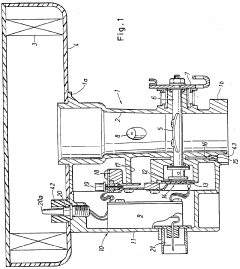
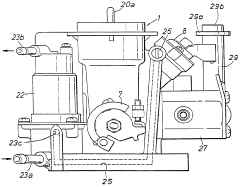
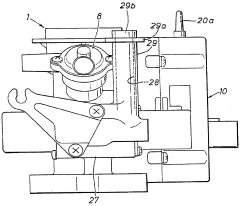
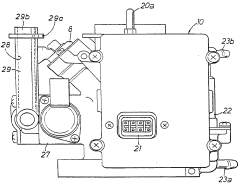
- A throttle body assembly with integrated components such as a fuel pump, fuel pressure control valve, by-pass air passage, and sensors directly mounted on the throttle body, eliminating the need for external tubing and simplifying the structure by incorporating a by-pass air control solenoid valve to prevent valve sticking in cold conditions and utilizing returned fuel for motor cooling.
Regulatory Considerations
The regulatory landscape for robotic surgery systems, including throttle body applications, is complex and multifaceted. In the United States, the Food and Drug Administration (FDA) plays a crucial role in overseeing the safety and efficacy of these advanced medical devices. Robotic surgery systems are typically classified as Class II medical devices, requiring premarket notification (510(k)) or premarket approval (PMA) depending on their specific features and intended use.
For throttle body applications in robotic surgery systems, manufacturers must demonstrate compliance with various regulatory standards. These include ISO 13485 for quality management systems, IEC 60601-1 for medical electrical equipment safety, and IEC 62304 for medical device software lifecycle processes. Additionally, specific standards such as IEC 80601-2-77 for robotically assisted surgical equipment safety must be adhered to.
Risk management is a critical aspect of regulatory compliance for these systems. Manufacturers must conduct thorough risk assessments and implement appropriate risk mitigation strategies, particularly for components like throttle bodies that directly impact system control and patient safety. This process typically involves failure mode and effects analysis (FMEA) and fault tree analysis (FTA) to identify potential hazards and their consequences.
Clinical evaluation and post-market surveillance are essential components of the regulatory framework. Manufacturers must gather and analyze clinical data to support the safety and performance claims of their robotic surgery systems, including the throttle body components. This may involve conducting clinical trials or collecting real-world evidence from existing installations.
Internationally, regulatory requirements vary, but many countries align with or reference FDA and European Union (EU) standards. The EU's Medical Device Regulation (MDR) imposes stringent requirements on robotic surgery systems, including enhanced clinical evidence requirements and post-market surveillance obligations. Manufacturers seeking global market access must navigate these diverse regulatory landscapes and ensure compliance with each target market's specific requirements.
Cybersecurity considerations are increasingly important in the regulatory framework for robotic surgery systems. Regulatory bodies expect manufacturers to implement robust cybersecurity measures to protect against potential vulnerabilities, especially for components like throttle bodies that are critical to system control. This includes secure software design, encryption of data transmission, and regular security updates.
As the field of robotic surgery continues to evolve, regulatory frameworks are likely to adapt. Manufacturers must stay informed about emerging regulations and guidance documents related to artificial intelligence, machine learning, and autonomous features in medical devices, as these may impact future iterations of robotic surgery systems and their components, including throttle bodies.
For throttle body applications in robotic surgery systems, manufacturers must demonstrate compliance with various regulatory standards. These include ISO 13485 for quality management systems, IEC 60601-1 for medical electrical equipment safety, and IEC 62304 for medical device software lifecycle processes. Additionally, specific standards such as IEC 80601-2-77 for robotically assisted surgical equipment safety must be adhered to.
Risk management is a critical aspect of regulatory compliance for these systems. Manufacturers must conduct thorough risk assessments and implement appropriate risk mitigation strategies, particularly for components like throttle bodies that directly impact system control and patient safety. This process typically involves failure mode and effects analysis (FMEA) and fault tree analysis (FTA) to identify potential hazards and their consequences.
Clinical evaluation and post-market surveillance are essential components of the regulatory framework. Manufacturers must gather and analyze clinical data to support the safety and performance claims of their robotic surgery systems, including the throttle body components. This may involve conducting clinical trials or collecting real-world evidence from existing installations.
Internationally, regulatory requirements vary, but many countries align with or reference FDA and European Union (EU) standards. The EU's Medical Device Regulation (MDR) imposes stringent requirements on robotic surgery systems, including enhanced clinical evidence requirements and post-market surveillance obligations. Manufacturers seeking global market access must navigate these diverse regulatory landscapes and ensure compliance with each target market's specific requirements.
Cybersecurity considerations are increasingly important in the regulatory framework for robotic surgery systems. Regulatory bodies expect manufacturers to implement robust cybersecurity measures to protect against potential vulnerabilities, especially for components like throttle bodies that are critical to system control. This includes secure software design, encryption of data transmission, and regular security updates.
As the field of robotic surgery continues to evolve, regulatory frameworks are likely to adapt. Manufacturers must stay informed about emerging regulations and guidance documents related to artificial intelligence, machine learning, and autonomous features in medical devices, as these may impact future iterations of robotic surgery systems and their components, including throttle bodies.
Safety and Risk Assessment
Safety and risk assessment is a critical aspect of integrating throttle body applications in robotic surgery systems. The primary concern is ensuring patient safety while maximizing the benefits of precise control offered by throttle bodies in surgical procedures. A comprehensive risk analysis framework must be established to identify potential hazards associated with throttle body usage in robotic surgery.
One key area of focus is the reliability and accuracy of throttle body control mechanisms. Malfunctions or inaccuracies in throttle response could lead to unintended movements of surgical instruments, potentially causing harm to patients. Rigorous testing protocols must be developed to validate the performance of throttle bodies under various surgical scenarios and environmental conditions.
Electromagnetic interference (EMI) is another significant consideration. Robotic surgery systems operate in environments with multiple electronic devices, and throttle bodies must be designed and shielded to prevent EMI-related issues. Extensive electromagnetic compatibility (EMC) testing is essential to ensure that throttle body functions are not compromised by other equipment in the operating room.
Fail-safe mechanisms and redundancy systems are crucial components of the safety architecture. In the event of a throttle body failure, the robotic surgery system must have backup systems or emergency shutdown procedures to prevent harm to the patient. These safety features should be thoroughly evaluated and tested under simulated failure conditions.
Sterilization and infection control present unique challenges for throttle body applications in surgical environments. Materials used in throttle body construction must withstand repeated sterilization processes without degradation of performance or safety. Protocols for cleaning and sterilizing throttle body components need to be developed and validated to meet stringent medical standards.
Human factors and ergonomics play a vital role in the safe operation of throttle body-equipped robotic surgery systems. The interface between the surgeon and the throttle control mechanism must be intuitive and designed to minimize the risk of user error. Extensive usability testing and surgeon training programs are necessary to ensure proficiency in throttle body operation during surgical procedures.
Long-term reliability and wear characteristics of throttle bodies in surgical applications require careful assessment. Accelerated life testing and durability studies should be conducted to predict and mitigate potential failure modes over the expected lifespan of the robotic surgery system. Regular maintenance schedules and component replacement guidelines must be established to maintain optimal performance and safety.
One key area of focus is the reliability and accuracy of throttle body control mechanisms. Malfunctions or inaccuracies in throttle response could lead to unintended movements of surgical instruments, potentially causing harm to patients. Rigorous testing protocols must be developed to validate the performance of throttle bodies under various surgical scenarios and environmental conditions.
Electromagnetic interference (EMI) is another significant consideration. Robotic surgery systems operate in environments with multiple electronic devices, and throttle bodies must be designed and shielded to prevent EMI-related issues. Extensive electromagnetic compatibility (EMC) testing is essential to ensure that throttle body functions are not compromised by other equipment in the operating room.
Fail-safe mechanisms and redundancy systems are crucial components of the safety architecture. In the event of a throttle body failure, the robotic surgery system must have backup systems or emergency shutdown procedures to prevent harm to the patient. These safety features should be thoroughly evaluated and tested under simulated failure conditions.
Sterilization and infection control present unique challenges for throttle body applications in surgical environments. Materials used in throttle body construction must withstand repeated sterilization processes without degradation of performance or safety. Protocols for cleaning and sterilizing throttle body components need to be developed and validated to meet stringent medical standards.
Human factors and ergonomics play a vital role in the safe operation of throttle body-equipped robotic surgery systems. The interface between the surgeon and the throttle control mechanism must be intuitive and designed to minimize the risk of user error. Extensive usability testing and surgeon training programs are necessary to ensure proficiency in throttle body operation during surgical procedures.
Long-term reliability and wear characteristics of throttle bodies in surgical applications require careful assessment. Accelerated life testing and durability studies should be conducted to predict and mitigate potential failure modes over the expected lifespan of the robotic surgery system. Regular maintenance schedules and component replacement guidelines must be established to maintain optimal performance and safety.
Unlock deeper insights with PatSnap Eureka Quick Research — get a full tech report to explore trends and direct your research. Try now!
Generate Your Research Report Instantly with AI Agent
Supercharge your innovation with PatSnap Eureka AI Agent Platform!