

Ion Selective Electrode in Pulp and Paper: Functional Efficiency
MAR 8, 20269 MIN READ
Generate Your Research Report Instantly with AI Agent
PatSnap Eureka helps you evaluate technical feasibility & market potential.
Ion Selective Electrode Technology Background and Pulp Industry Goals
Ion selective electrodes represent a sophisticated analytical technology that emerged from fundamental electrochemical principles developed in the early 20th century. These sensors operate on the principle of selective ion recognition through specialized membrane materials that exhibit preferential permeability to specific ionic species. The technology evolved from glass pH electrodes to encompass a broad spectrum of ion-specific sensors utilizing various membrane types including crystalline, liquid, and polymer-based materials.
The development trajectory of ISE technology has been marked by significant advances in membrane chemistry and miniaturization. Early applications focused primarily on laboratory analysis, but technological maturation has enabled robust industrial implementations. Modern ISE systems incorporate advanced signal processing, temperature compensation, and interference rejection capabilities that enhance measurement reliability in complex industrial environments.
Within the pulp and paper industry, ISE technology addresses critical analytical challenges inherent to chemical recovery processes and environmental compliance. The industry's reliance on alkaline cooking processes, chlorine dioxide bleaching, and complex chemical recovery cycles creates demanding measurement requirements for multiple ionic species including chloride, sulfide, sodium, and various organic ions.
The primary technological objective centers on achieving real-time, accurate measurement of ionic concentrations throughout the production process. This capability enables precise control of chemical addition rates, optimization of cooking liquor composition, and monitoring of bleaching efficiency. Enhanced process control directly translates to improved fiber yield, reduced chemical consumption, and consistent product quality.
Environmental compliance represents another crucial goal driving ISE adoption. Stringent regulations governing effluent discharge require continuous monitoring of ionic pollutants. ISE systems provide the analytical foundation for automated treatment system control and regulatory reporting, ensuring compliance while minimizing operational costs.
Economic objectives focus on reducing analytical labor costs and improving process efficiency through automated monitoring. Traditional wet chemistry methods require significant technician time and laboratory resources, while ISE systems enable continuous, unattended operation with minimal maintenance requirements.
The technology aims to integrate seamlessly with existing distributed control systems, providing real-time data streams that support advanced process optimization algorithms. This integration capability represents a fundamental shift from periodic grab sampling toward continuous process analytics, enabling more responsive and efficient mill operations.
The development trajectory of ISE technology has been marked by significant advances in membrane chemistry and miniaturization. Early applications focused primarily on laboratory analysis, but technological maturation has enabled robust industrial implementations. Modern ISE systems incorporate advanced signal processing, temperature compensation, and interference rejection capabilities that enhance measurement reliability in complex industrial environments.
Within the pulp and paper industry, ISE technology addresses critical analytical challenges inherent to chemical recovery processes and environmental compliance. The industry's reliance on alkaline cooking processes, chlorine dioxide bleaching, and complex chemical recovery cycles creates demanding measurement requirements for multiple ionic species including chloride, sulfide, sodium, and various organic ions.
The primary technological objective centers on achieving real-time, accurate measurement of ionic concentrations throughout the production process. This capability enables precise control of chemical addition rates, optimization of cooking liquor composition, and monitoring of bleaching efficiency. Enhanced process control directly translates to improved fiber yield, reduced chemical consumption, and consistent product quality.
Environmental compliance represents another crucial goal driving ISE adoption. Stringent regulations governing effluent discharge require continuous monitoring of ionic pollutants. ISE systems provide the analytical foundation for automated treatment system control and regulatory reporting, ensuring compliance while minimizing operational costs.
Economic objectives focus on reducing analytical labor costs and improving process efficiency through automated monitoring. Traditional wet chemistry methods require significant technician time and laboratory resources, while ISE systems enable continuous, unattended operation with minimal maintenance requirements.
The technology aims to integrate seamlessly with existing distributed control systems, providing real-time data streams that support advanced process optimization algorithms. This integration capability represents a fundamental shift from periodic grab sampling toward continuous process analytics, enabling more responsive and efficient mill operations.
Market Demand for Advanced Process Control in Pulp and Paper Industry
The global pulp and paper industry is experiencing unprecedented pressure to enhance operational efficiency while meeting increasingly stringent environmental regulations. This convergence of factors has created substantial market demand for advanced process control technologies, particularly ion selective electrode systems that can provide real-time monitoring and optimization capabilities. Traditional monitoring methods often lack the precision and responsiveness required for modern production environments, driving manufacturers to seek more sophisticated analytical solutions.
Environmental compliance requirements represent a primary driver of market demand. Regulatory bodies worldwide are implementing stricter limits on effluent discharge parameters, including chloride, fluoride, and other ionic species commonly monitored by ion selective electrodes. Mills must demonstrate continuous compliance through accurate measurement and control systems, creating a compelling business case for advanced electrode technologies that can provide reliable, continuous monitoring with minimal maintenance requirements.
Production optimization needs further amplify market demand as manufacturers strive to maximize yield while minimizing chemical consumption and waste generation. Ion selective electrodes enable precise control of bleaching sequences, pH adjustment processes, and chemical recovery operations, directly impacting production costs and product quality. The ability to implement closed-loop control systems based on real-time ionic measurements represents a significant competitive advantage in an industry where margins are increasingly compressed.
The shift toward digitalization and Industry 4.0 principles has created additional market momentum for advanced process control solutions. Modern pulp and paper operations require integrated sensor networks capable of providing continuous data streams for predictive analytics and automated decision-making systems. Ion selective electrodes that can seamlessly integrate with digital control platforms and provide reliable data for machine learning algorithms are experiencing particularly strong demand.
Market growth is also driven by the increasing complexity of raw materials and recycled fiber utilization. As mills process more diverse feedstock sources, including recycled papers with varying contamination levels, the need for precise ionic monitoring becomes critical for maintaining process stability and product consistency. Advanced electrode systems capable of handling challenging sample matrices while maintaining measurement accuracy are essential for these evolving operational requirements.
Environmental compliance requirements represent a primary driver of market demand. Regulatory bodies worldwide are implementing stricter limits on effluent discharge parameters, including chloride, fluoride, and other ionic species commonly monitored by ion selective electrodes. Mills must demonstrate continuous compliance through accurate measurement and control systems, creating a compelling business case for advanced electrode technologies that can provide reliable, continuous monitoring with minimal maintenance requirements.
Production optimization needs further amplify market demand as manufacturers strive to maximize yield while minimizing chemical consumption and waste generation. Ion selective electrodes enable precise control of bleaching sequences, pH adjustment processes, and chemical recovery operations, directly impacting production costs and product quality. The ability to implement closed-loop control systems based on real-time ionic measurements represents a significant competitive advantage in an industry where margins are increasingly compressed.
The shift toward digitalization and Industry 4.0 principles has created additional market momentum for advanced process control solutions. Modern pulp and paper operations require integrated sensor networks capable of providing continuous data streams for predictive analytics and automated decision-making systems. Ion selective electrodes that can seamlessly integrate with digital control platforms and provide reliable data for machine learning algorithms are experiencing particularly strong demand.
Market growth is also driven by the increasing complexity of raw materials and recycled fiber utilization. As mills process more diverse feedstock sources, including recycled papers with varying contamination levels, the need for precise ionic monitoring becomes critical for maintaining process stability and product consistency. Advanced electrode systems capable of handling challenging sample matrices while maintaining measurement accuracy are essential for these evolving operational requirements.
Current ISE Performance Challenges in Pulp and Paper Applications
Ion selective electrodes face significant operational challenges when deployed in pulp and paper manufacturing environments. The harsh chemical conditions, characterized by extreme pH variations ranging from highly acidic bleaching stages to strongly alkaline pulping processes, create substantial stress on electrode materials and sensing membranes. These pH fluctuations, often occurring within short time intervals, compromise the stability and accuracy of ISE measurements, leading to drift in calibration and reduced sensor lifespan.
Temperature variations present another critical challenge for ISE performance in pulp and paper applications. Process temperatures can range from ambient conditions to over 80°C during various manufacturing stages. Such thermal cycling affects the electrode's Nernstian response, alters membrane permeability, and influences the stability of reference electrodes. The temperature coefficient variations become particularly problematic when maintaining consistent measurement accuracy across different process conditions.
Chemical interference represents a major limitation in ISE functionality within pulp and paper environments. The presence of multiple ionic species, including sulfates, chlorides, and organic compounds from wood extractives, creates complex interference patterns that affect ion selectivity. Lignin derivatives and other organic molecules can adsorb onto electrode surfaces, forming fouling layers that impede proper ion transport and alter the electrode's response characteristics.
Mechanical stress and abrasion from fiber suspensions and process equipment pose additional challenges to ISE durability. The continuous exposure to flowing pulp slurries containing suspended solids can cause physical damage to electrode surfaces and protective housings. This mechanical wear accelerates electrode degradation and necessitates frequent maintenance or replacement, increasing operational costs and reducing system reliability.
Calibration stability issues emerge as a persistent challenge in dynamic pulp and paper processes. The rapidly changing chemical matrix makes it difficult to maintain accurate calibration references, while the presence of interfering substances complicates the establishment of reliable calibration curves. Drift in electrode response over time requires frequent recalibration procedures, which can be disruptive to continuous manufacturing operations.
Response time limitations become critical in fast-moving process streams where rapid measurement feedback is essential for process control. Traditional ISE designs may exhibit sluggish response characteristics in high-flow conditions or when dealing with complex sample matrices, limiting their effectiveness in real-time process monitoring and control applications.
Temperature variations present another critical challenge for ISE performance in pulp and paper applications. Process temperatures can range from ambient conditions to over 80°C during various manufacturing stages. Such thermal cycling affects the electrode's Nernstian response, alters membrane permeability, and influences the stability of reference electrodes. The temperature coefficient variations become particularly problematic when maintaining consistent measurement accuracy across different process conditions.
Chemical interference represents a major limitation in ISE functionality within pulp and paper environments. The presence of multiple ionic species, including sulfates, chlorides, and organic compounds from wood extractives, creates complex interference patterns that affect ion selectivity. Lignin derivatives and other organic molecules can adsorb onto electrode surfaces, forming fouling layers that impede proper ion transport and alter the electrode's response characteristics.
Mechanical stress and abrasion from fiber suspensions and process equipment pose additional challenges to ISE durability. The continuous exposure to flowing pulp slurries containing suspended solids can cause physical damage to electrode surfaces and protective housings. This mechanical wear accelerates electrode degradation and necessitates frequent maintenance or replacement, increasing operational costs and reducing system reliability.
Calibration stability issues emerge as a persistent challenge in dynamic pulp and paper processes. The rapidly changing chemical matrix makes it difficult to maintain accurate calibration references, while the presence of interfering substances complicates the establishment of reliable calibration curves. Drift in electrode response over time requires frequent recalibration procedures, which can be disruptive to continuous manufacturing operations.
Response time limitations become critical in fast-moving process streams where rapid measurement feedback is essential for process control. Traditional ISE designs may exhibit sluggish response characteristics in high-flow conditions or when dealing with complex sample matrices, limiting their effectiveness in real-time process monitoring and control applications.
Existing ISE Solutions for Pulp and Paper Process Monitoring
01 Electrode membrane composition and materials
The functional efficiency of ion selective electrodes can be enhanced through optimized membrane compositions. This includes the use of specific polymeric materials, plasticizers, and ionophores that improve selectivity and sensitivity. The membrane matrix can incorporate various organic compounds and ion-exchange materials to achieve better ion recognition and transport properties. Material selection directly impacts the electrode's response time, detection limit, and operational stability.- Electrode membrane composition and materials: The functional efficiency of ion selective electrodes can be enhanced through optimized membrane compositions. This includes the use of specific polymeric materials, plasticizers, and ionophores that improve selectivity and sensitivity. The membrane matrix can incorporate various organic compounds and ion-exchange materials to achieve better ion recognition and transport properties. Material selection directly impacts the electrode's response time, detection limit, and operational stability.
- Internal reference system and electrode structure: The internal reference system design significantly affects electrode performance and longevity. This includes the configuration of internal filling solutions, reference electrodes, and contact layers between different electrode components. Optimized structural designs can minimize potential drift, reduce response time, and enhance measurement stability. The integration of solid-state reference systems or gel-based internal solutions can improve the overall functional efficiency and reduce maintenance requirements.
- Signal processing and measurement optimization: Advanced signal processing techniques and measurement protocols enhance the functional efficiency of ion selective electrodes. This includes calibration methods, temperature compensation algorithms, and noise reduction strategies. Electronic circuitry design and data acquisition systems play crucial roles in improving measurement accuracy and precision. Implementation of digital signal processing and automated calibration routines can significantly enhance electrode performance in various applications.
- Surface modification and conditioning methods: Surface treatment and conditioning procedures are critical for maintaining optimal electrode functionality. This includes pretreatment protocols, surface activation techniques, and regeneration methods that restore electrode sensitivity. Various chemical and physical modification approaches can be employed to enhance the electrode surface properties, reduce fouling, and extend operational lifetime. Proper conditioning and storage procedures ensure consistent performance over extended periods.
- Multi-ion detection and selectivity enhancement: Advanced electrode designs enable simultaneous detection of multiple ions or enhanced selectivity for target ions in complex matrices. This involves the development of multi-sensor arrays, selective ionophores, and interference suppression techniques. The use of specific recognition elements and optimized membrane formulations allows for improved discrimination between target and interfering ions. These approaches expand the application range and improve the reliability of measurements in challenging sample conditions.
02 Internal reference system and electrode structure
The internal reference system design significantly affects electrode performance and longevity. This includes the configuration of internal filling solutions, reference electrodes, and contact layers between different electrode components. Optimized structural designs can minimize potential drift, reduce response time, and enhance measurement stability. The integration of solid-state reference systems or gel-based internal solutions can improve the overall functional efficiency and reduce maintenance requirements.Expand Specific Solutions03 Signal processing and measurement optimization
Advanced signal processing techniques and measurement protocols enhance the functional efficiency of ion selective electrodes. This includes calibration methods, temperature compensation algorithms, and noise reduction strategies. Electronic circuitry design and data acquisition systems play crucial roles in improving measurement accuracy and precision. Implementation of digital signal processing and automated calibration routines can significantly enhance electrode performance in various applications.Expand Specific Solutions04 Surface modification and conditioning methods
Surface treatment and conditioning procedures are critical for maintaining optimal electrode functionality. This includes pretreatment protocols, surface activation techniques, and regeneration methods that restore electrode sensitivity. Various chemical and physical modification approaches can enhance the electrode surface properties, improve response characteristics, and extend operational lifetime. Regular conditioning and proper storage conditions are essential for maintaining consistent performance.Expand Specific Solutions05 Application-specific electrode designs and multi-ion detection
Specialized electrode configurations tailored for specific applications or multi-ion detection systems improve overall functional efficiency. This includes miniaturized designs for in-situ measurements, flow-through configurations for continuous monitoring, and array-based systems for simultaneous multi-ion analysis. Integration with microfluidic systems and development of portable devices expand the practical applications. Application-specific optimizations address unique challenges in different measurement environments.Expand Specific Solutions
Key Players in ISE Manufacturing and Pulp Process Control Systems
The ion selective electrode technology in pulp and paper applications represents a mature yet evolving market segment within the broader industrial automation and process control industry. The competitive landscape is characterized by established chemical suppliers like Buckman Laboratories International and Kemira Oyj providing specialized water treatment and process optimization solutions, while major paper manufacturers including International Paper Co., UPM-Kymmene Oyj, Stora Enso Oyj, and Suzano SA drive demand for enhanced process monitoring capabilities. Technology maturity varies across applications, with companies like Solenis Technologies and DSM IP Assets BV advancing sensor integration and data analytics. Research institutions such as Tianjin University and Nanjing Tech University contribute to fundamental electrode technology improvements. The market demonstrates steady growth driven by sustainability requirements and operational efficiency demands, positioning ion selective electrodes as critical components for real-time chemical monitoring in modern pulp and paper manufacturing processes.
Buckman Laboratories International, Inc.
Technical Solution: Buckman develops advanced ion selective electrode systems specifically designed for pulp and paper manufacturing processes. Their technology focuses on real-time monitoring of critical ions such as chloride, sulfate, and metal ions in process waters and bleaching stages. The company's ISE solutions integrate with automated control systems to optimize chemical dosing and maintain consistent paper quality. Their electrodes feature enhanced durability coatings to withstand harsh alkaline conditions typical in pulp processing, with response times under 30 seconds for most ion measurements. The technology enables precise control of ionic strength during various papermaking stages, from pulping to final product formation.
Advantages: Specialized expertise in paper industry applications, proven durability in harsh chemical environments. Disadvantages: Limited to specific ion types, requires regular calibration and maintenance in industrial settings.
Kemira Oyj
Technical Solution: Kemira has developed comprehensive ion selective electrode monitoring systems integrated with their chemical treatment programs for pulp and paper mills. Their ISE technology monitors key process parameters including pH, chloride, and heavy metal concentrations throughout the papermaking process. The system provides continuous monitoring capabilities with automated data logging and alarm systems when ion concentrations exceed optimal ranges. Kemira's approach combines ISE measurements with their expertise in water chemistry to optimize coagulation, flocculation, and bleaching processes. Their electrodes are designed with anti-fouling properties and can operate effectively in high-temperature environments up to 80°C, typical in paper mill operations.
Advantages: Integrated chemical treatment expertise, robust high-temperature operation capabilities. Disadvantages: Higher initial investment costs, dependency on proprietary chemical systems for optimal performance.
Core Patents in ISE Functional Efficiency Enhancement Technologies
Ion-selective electrodes
PatentInactiveUS20050191428A1
Innovation
- A stable, compact ion-selective electrode design featuring a water-impermeable substrate, an electrically conductive metal/metal salt layer, a hydrophobic conductive layer with ions for stable potential, an ion-selective layer, and a water-impermeable barrier layer to prevent exposure to aqueous solutions, eliminating the need for calibration and reducing equilibration time.
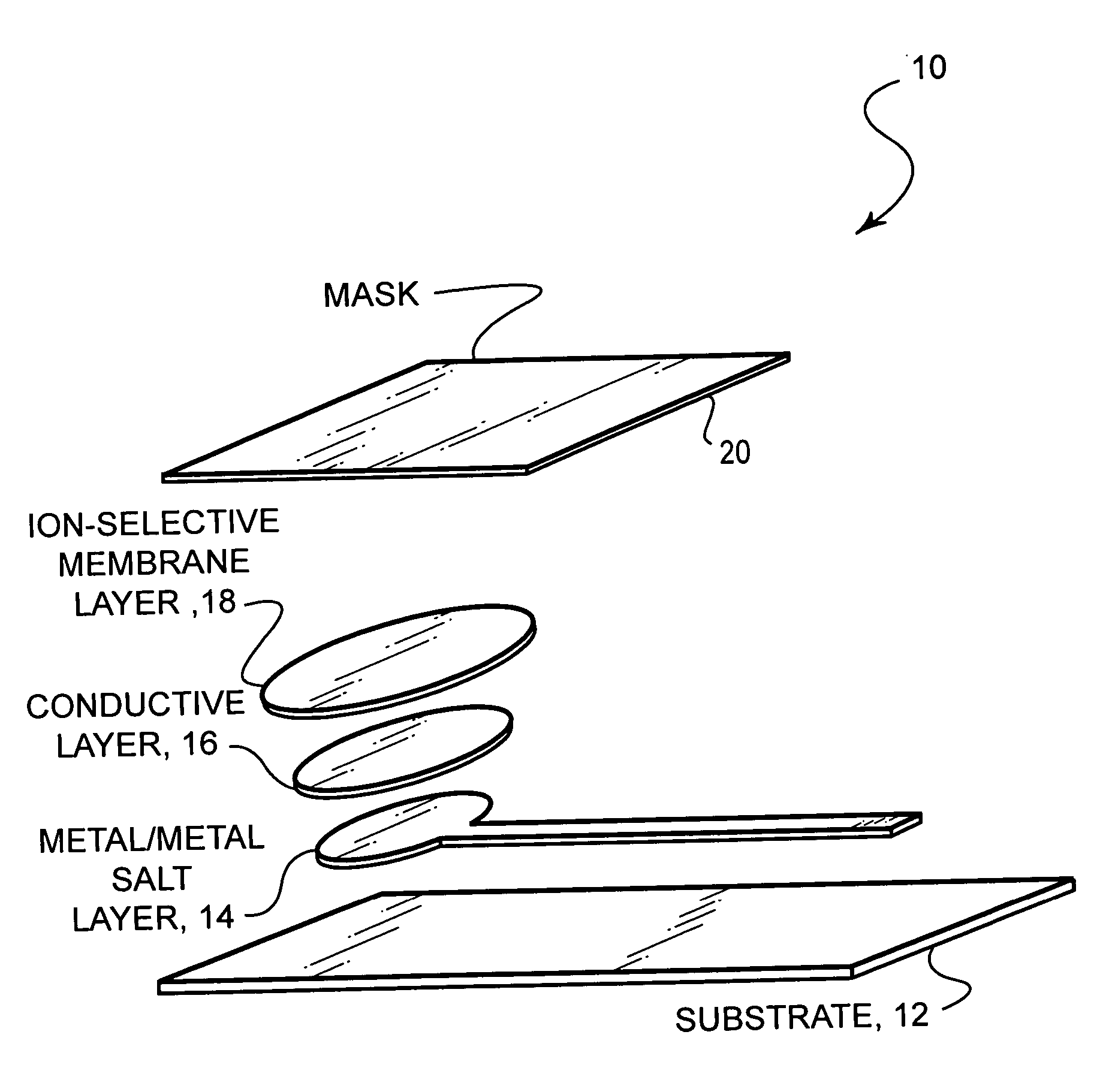
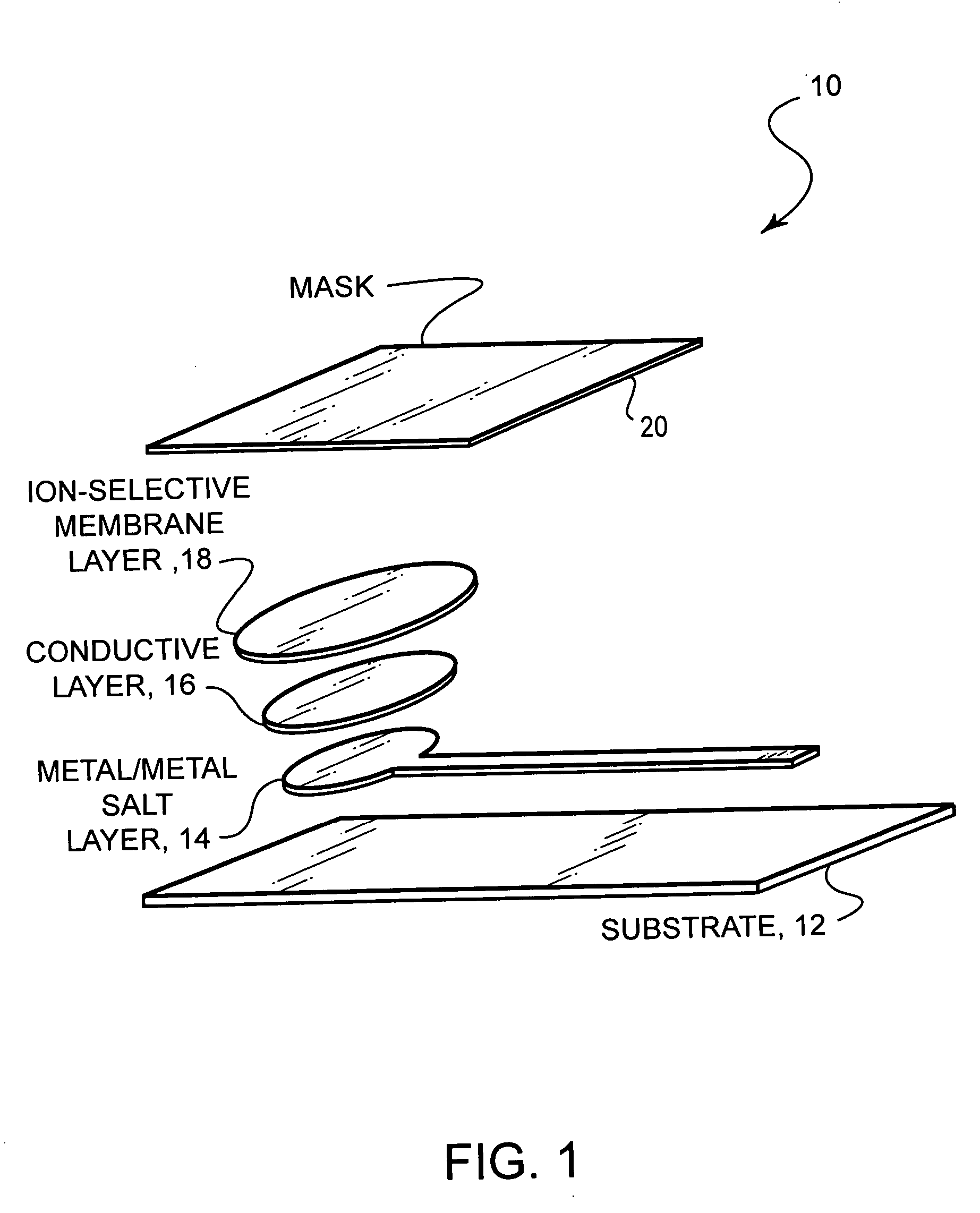
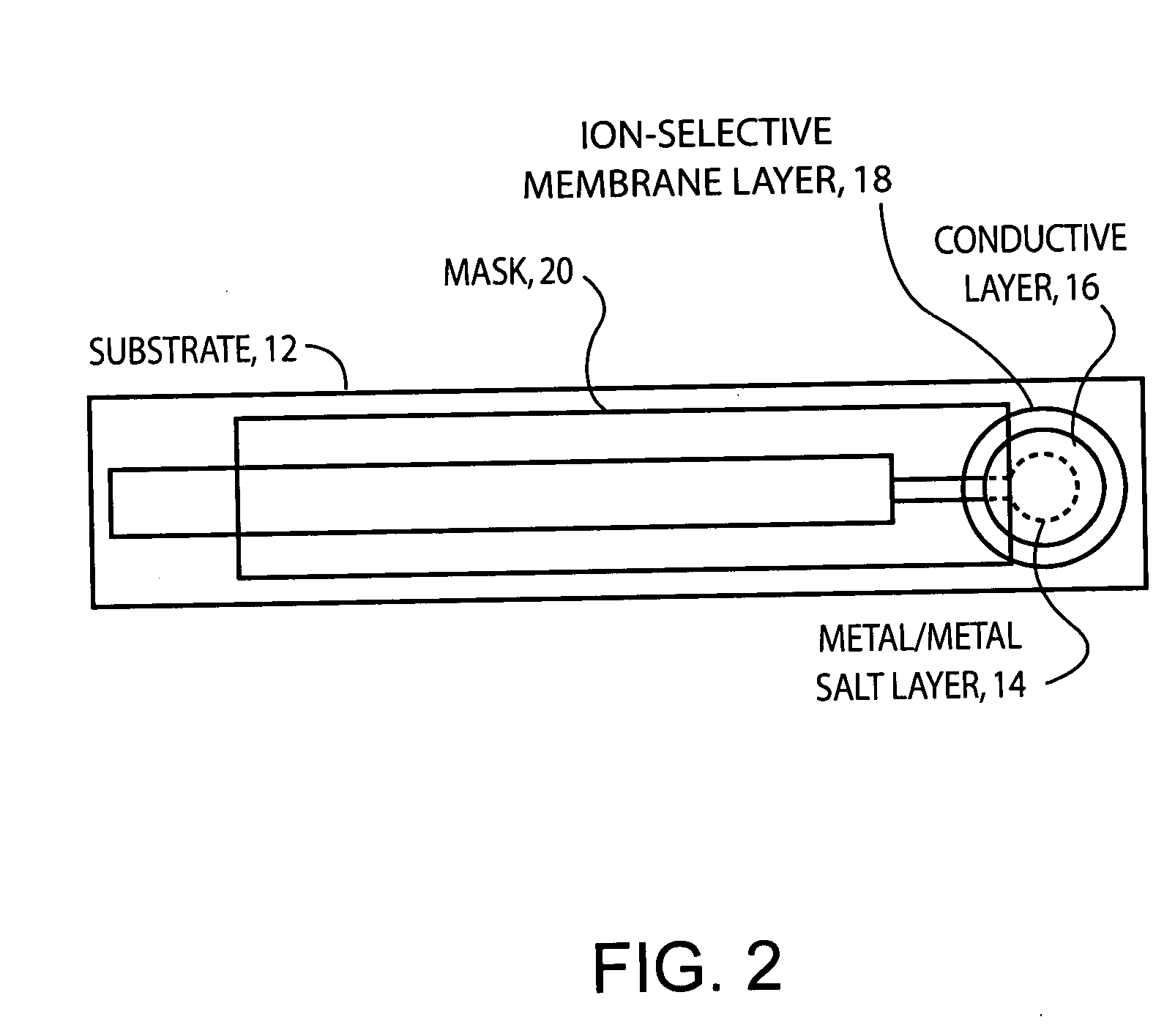

Ion selective electrode
PatentWO2012067490A1
Innovation
- A solution-cast conductive polymer transducer layer comprising bisphenol A propoxylate diglycidyl ether, a purified diamine binder, and a polar solvent is used, which includes polypyrrole as the primary polymer, minimizing the need for continuous stirring and allowing for a homogenous layer formation, even on small electrodes, with a retaining dam to contain the sensing membrane.


Environmental Regulations Impact on Pulp Industry Process Control
Environmental regulations have fundamentally transformed the operational landscape of the pulp and paper industry, creating unprecedented demands for precise process control and real-time monitoring systems. The implementation of stringent discharge limits for chlorinated compounds, suspended solids, and chemical oxygen demand has necessitated the adoption of advanced analytical technologies, with ion selective electrodes emerging as critical components in regulatory compliance strategies.
The Clean Water Act and subsequent amendments have established increasingly restrictive effluent guidelines, requiring pulp mills to maintain continuous monitoring of ionic species in both process streams and wastewater discharge. These regulatory frameworks mandate real-time measurement capabilities that traditional analytical methods cannot adequately provide, driving the industry toward electrochemical sensing solutions that offer immediate feedback for process adjustments.
Regulatory compliance costs have escalated significantly, with non-compliance penalties reaching millions of dollars annually for major violations. This economic pressure has accelerated investment in automated monitoring systems, where ion selective electrodes play a pivotal role in maintaining operational parameters within regulatory boundaries. The technology enables mills to demonstrate continuous compliance through documented measurement records, reducing regulatory scrutiny and potential enforcement actions.
International environmental standards, particularly ISO 14001 and emerging carbon footprint regulations, have expanded the scope of required monitoring beyond traditional water quality parameters. These standards demand comprehensive tracking of chemical usage efficiency and waste minimization, areas where ion selective electrode technology provides essential data for process optimization and regulatory reporting.
The regulatory trend toward real-time monitoring requirements has eliminated the feasibility of laboratory-based compliance testing for many parameters. Ion selective electrodes offer the immediate response characteristics necessary to meet these evolving regulatory demands while providing the accuracy and reliability required for legal documentation. This regulatory evolution continues to drive technological advancement in electrode design and application methodologies within the pulp and paper sector.
The Clean Water Act and subsequent amendments have established increasingly restrictive effluent guidelines, requiring pulp mills to maintain continuous monitoring of ionic species in both process streams and wastewater discharge. These regulatory frameworks mandate real-time measurement capabilities that traditional analytical methods cannot adequately provide, driving the industry toward electrochemical sensing solutions that offer immediate feedback for process adjustments.
Regulatory compliance costs have escalated significantly, with non-compliance penalties reaching millions of dollars annually for major violations. This economic pressure has accelerated investment in automated monitoring systems, where ion selective electrodes play a pivotal role in maintaining operational parameters within regulatory boundaries. The technology enables mills to demonstrate continuous compliance through documented measurement records, reducing regulatory scrutiny and potential enforcement actions.
International environmental standards, particularly ISO 14001 and emerging carbon footprint regulations, have expanded the scope of required monitoring beyond traditional water quality parameters. These standards demand comprehensive tracking of chemical usage efficiency and waste minimization, areas where ion selective electrode technology provides essential data for process optimization and regulatory reporting.
The regulatory trend toward real-time monitoring requirements has eliminated the feasibility of laboratory-based compliance testing for many parameters. Ion selective electrodes offer the immediate response characteristics necessary to meet these evolving regulatory demands while providing the accuracy and reliability required for legal documentation. This regulatory evolution continues to drive technological advancement in electrode design and application methodologies within the pulp and paper sector.
Sustainability Requirements for Chemical Monitoring in Paper Manufacturing
The paper manufacturing industry faces increasing pressure to adopt sustainable practices, particularly in chemical monitoring systems where environmental compliance and resource efficiency have become paramount concerns. Ion selective electrodes represent a critical technology in meeting these sustainability requirements, as they enable real-time monitoring of chemical parameters while minimizing environmental impact through reduced reagent consumption and waste generation.
Environmental regulations governing paper manufacturing have become increasingly stringent, requiring continuous monitoring of effluent quality, chemical oxygen demand, and ionic concentrations in process streams. Traditional analytical methods often involve extensive sample preparation, hazardous reagents, and generate significant chemical waste. Ion selective electrodes address these sustainability challenges by providing direct, reagent-free measurements that eliminate the need for complex sample preprocessing and reduce laboratory waste streams.
Energy efficiency represents another crucial sustainability dimension where ion selective electrodes demonstrate significant advantages. Conventional monitoring systems typically require energy-intensive laboratory equipment, sample transportation, and extended analysis times. In contrast, ion selective electrode systems operate with minimal power consumption and provide instantaneous results, substantially reducing the overall energy footprint of chemical monitoring operations.
The circular economy principles increasingly adopted by paper manufacturers emphasize resource recovery and waste minimization. Ion selective electrodes support these objectives by enabling precise control of chemical dosing systems, optimizing bleaching sequences, and facilitating the recovery of valuable chemicals from process streams. This precision monitoring capability directly translates to reduced chemical consumption and improved resource utilization efficiency.
Water stewardship has emerged as a fundamental sustainability requirement, given the paper industry's significant water consumption. Ion selective electrodes enable comprehensive monitoring of water quality parameters throughout the manufacturing process, supporting closed-loop water systems and minimizing freshwater intake. The technology's ability to monitor multiple ionic species simultaneously provides essential data for optimizing water treatment processes and ensuring compliance with discharge regulations.
Carbon footprint reduction initiatives within paper manufacturing increasingly rely on process optimization enabled by advanced monitoring technologies. Ion selective electrodes contribute to these efforts by providing the analytical precision necessary for optimizing chemical processes, reducing energy consumption through improved process control, and minimizing transportation requirements associated with off-site analytical services.
Environmental regulations governing paper manufacturing have become increasingly stringent, requiring continuous monitoring of effluent quality, chemical oxygen demand, and ionic concentrations in process streams. Traditional analytical methods often involve extensive sample preparation, hazardous reagents, and generate significant chemical waste. Ion selective electrodes address these sustainability challenges by providing direct, reagent-free measurements that eliminate the need for complex sample preprocessing and reduce laboratory waste streams.
Energy efficiency represents another crucial sustainability dimension where ion selective electrodes demonstrate significant advantages. Conventional monitoring systems typically require energy-intensive laboratory equipment, sample transportation, and extended analysis times. In contrast, ion selective electrode systems operate with minimal power consumption and provide instantaneous results, substantially reducing the overall energy footprint of chemical monitoring operations.
The circular economy principles increasingly adopted by paper manufacturers emphasize resource recovery and waste minimization. Ion selective electrodes support these objectives by enabling precise control of chemical dosing systems, optimizing bleaching sequences, and facilitating the recovery of valuable chemicals from process streams. This precision monitoring capability directly translates to reduced chemical consumption and improved resource utilization efficiency.
Water stewardship has emerged as a fundamental sustainability requirement, given the paper industry's significant water consumption. Ion selective electrodes enable comprehensive monitoring of water quality parameters throughout the manufacturing process, supporting closed-loop water systems and minimizing freshwater intake. The technology's ability to monitor multiple ionic species simultaneously provides essential data for optimizing water treatment processes and ensuring compliance with discharge regulations.
Carbon footprint reduction initiatives within paper manufacturing increasingly rely on process optimization enabled by advanced monitoring technologies. Ion selective electrodes contribute to these efforts by providing the analytical precision necessary for optimizing chemical processes, reducing energy consumption through improved process control, and minimizing transportation requirements associated with off-site analytical services.
Unlock deeper insights with PatSnap Eureka Quick Research — get a full tech report to explore trends and direct your research. Try now!
Generate Your Research Report Instantly with AI Agent
Supercharge your innovation with PatSnap Eureka AI Agent Platform!