

Laser Engineered Net Shaping for Aerospace Applications
APR 1, 20269 MIN READ
Generate Your Research Report Instantly with AI Agent
PatSnap Eureka helps you evaluate technical feasibility & market potential.
LENS Technology Background and Aerospace Goals
Laser Engineered Net Shaping (LENS) represents a revolutionary additive manufacturing technology that emerged in the mid-1990s at Sandia National Laboratories. This direct metal deposition process utilizes a high-powered laser beam to simultaneously melt metal powder and substrate material, creating fully dense, metallurgically bonded structures layer by layer. The technology fundamentally differs from traditional subtractive manufacturing by building components directly from computer-aided design files, enabling unprecedented geometric complexity and material efficiency.
The aerospace industry has historically relied on conventional manufacturing methods such as machining, forging, and casting to produce critical components. However, these traditional approaches often result in significant material waste, lengthy lead times, and design limitations imposed by tooling constraints. The evolution toward more complex aircraft geometries, lightweight structures, and high-performance materials has created substantial manufacturing challenges that conventional methods struggle to address effectively.
LENS technology addresses these aerospace manufacturing challenges through its unique capability to produce near-net-shape components with complex internal geometries, including cooling channels, lattice structures, and integrated features that would be impossible or prohibitively expensive to manufacture using traditional methods. The process enables direct fabrication of functional prototypes and production parts from various aerospace-grade materials, including titanium alloys, nickel-based superalloys, and stainless steels.
The primary aerospace goals driving LENS adoption include achieving significant weight reduction through optimized component designs, reducing manufacturing lead times from months to weeks, and minimizing material waste in an industry where raw materials can cost hundreds of dollars per kilogram. Additionally, the technology aims to enable on-demand manufacturing capabilities for spare parts, particularly valuable for legacy aircraft systems where traditional supply chains may be disrupted or discontinued.
Furthermore, LENS technology supports the aerospace industry's sustainability initiatives by dramatically reducing material waste compared to traditional machining processes, which can waste up to 90% of raw material for complex components. The ability to repair and refurbish high-value aerospace components through additive restoration represents another critical goal, potentially extending component lifecycles and reducing replacement costs.
The strategic implementation of LENS technology in aerospace applications ultimately aims to transform manufacturing paradigms, enabling more agile production systems, enhanced design freedom, and improved cost-effectiveness while maintaining the stringent quality and reliability standards required for aerospace applications.
The aerospace industry has historically relied on conventional manufacturing methods such as machining, forging, and casting to produce critical components. However, these traditional approaches often result in significant material waste, lengthy lead times, and design limitations imposed by tooling constraints. The evolution toward more complex aircraft geometries, lightweight structures, and high-performance materials has created substantial manufacturing challenges that conventional methods struggle to address effectively.
LENS technology addresses these aerospace manufacturing challenges through its unique capability to produce near-net-shape components with complex internal geometries, including cooling channels, lattice structures, and integrated features that would be impossible or prohibitively expensive to manufacture using traditional methods. The process enables direct fabrication of functional prototypes and production parts from various aerospace-grade materials, including titanium alloys, nickel-based superalloys, and stainless steels.
The primary aerospace goals driving LENS adoption include achieving significant weight reduction through optimized component designs, reducing manufacturing lead times from months to weeks, and minimizing material waste in an industry where raw materials can cost hundreds of dollars per kilogram. Additionally, the technology aims to enable on-demand manufacturing capabilities for spare parts, particularly valuable for legacy aircraft systems where traditional supply chains may be disrupted or discontinued.
Furthermore, LENS technology supports the aerospace industry's sustainability initiatives by dramatically reducing material waste compared to traditional machining processes, which can waste up to 90% of raw material for complex components. The ability to repair and refurbish high-value aerospace components through additive restoration represents another critical goal, potentially extending component lifecycles and reducing replacement costs.
The strategic implementation of LENS technology in aerospace applications ultimately aims to transform manufacturing paradigms, enabling more agile production systems, enhanced design freedom, and improved cost-effectiveness while maintaining the stringent quality and reliability standards required for aerospace applications.
Aerospace Market Demand for LENS Manufacturing
The aerospace industry's demand for LENS manufacturing technology is experiencing unprecedented growth driven by the sector's continuous pursuit of lightweight, high-performance components and the increasing adoption of additive manufacturing solutions. Traditional aerospace manufacturing faces significant challenges in producing complex geometries, reducing material waste, and achieving rapid prototyping capabilities, creating substantial market opportunities for advanced manufacturing technologies like LENS.
Commercial aviation represents the largest segment driving LENS adoption, with aircraft manufacturers seeking to reduce fuel consumption through weight optimization and improved component performance. The technology's ability to create near-net-shape components with superior material properties addresses critical industry requirements for enhanced fuel efficiency and operational cost reduction. Airlines worldwide are increasingly demanding aircraft with lower operating costs and improved environmental performance, directly translating to higher demand for advanced manufacturing solutions.
The defense and space sectors constitute another major demand driver, where mission-critical applications require components with exceptional reliability and performance characteristics. Military aircraft programs and space exploration initiatives demand manufacturing technologies capable of producing complex, high-strength components that can withstand extreme operational conditions. LENS technology's capability to repair and refurbish expensive aerospace components presents significant cost-saving opportunities for defense contractors and space agencies.
Engine component manufacturing represents a particularly high-value application area, where LENS technology enables the production of intricate cooling channels, turbine blades, and other critical engine parts that are difficult or impossible to manufacture using conventional methods. The growing trend toward more efficient engine designs with complex internal geometries creates substantial demand for LENS manufacturing capabilities.
Supply chain resilience has emerged as a critical factor influencing aerospace manufacturers' adoption of LENS technology. Recent global disruptions have highlighted the importance of distributed manufacturing capabilities and reduced dependence on traditional supply chains. LENS technology enables on-demand production and repair capabilities, allowing aerospace companies to maintain operational flexibility while reducing inventory costs and lead times.
The increasing focus on sustainability within the aerospace industry further amplifies demand for LENS manufacturing. The technology's material efficiency, reduced waste generation, and ability to use recycled materials align with industry sustainability goals and regulatory requirements for environmental performance improvement.
Commercial aviation represents the largest segment driving LENS adoption, with aircraft manufacturers seeking to reduce fuel consumption through weight optimization and improved component performance. The technology's ability to create near-net-shape components with superior material properties addresses critical industry requirements for enhanced fuel efficiency and operational cost reduction. Airlines worldwide are increasingly demanding aircraft with lower operating costs and improved environmental performance, directly translating to higher demand for advanced manufacturing solutions.
The defense and space sectors constitute another major demand driver, where mission-critical applications require components with exceptional reliability and performance characteristics. Military aircraft programs and space exploration initiatives demand manufacturing technologies capable of producing complex, high-strength components that can withstand extreme operational conditions. LENS technology's capability to repair and refurbish expensive aerospace components presents significant cost-saving opportunities for defense contractors and space agencies.
Engine component manufacturing represents a particularly high-value application area, where LENS technology enables the production of intricate cooling channels, turbine blades, and other critical engine parts that are difficult or impossible to manufacture using conventional methods. The growing trend toward more efficient engine designs with complex internal geometries creates substantial demand for LENS manufacturing capabilities.
Supply chain resilience has emerged as a critical factor influencing aerospace manufacturers' adoption of LENS technology. Recent global disruptions have highlighted the importance of distributed manufacturing capabilities and reduced dependence on traditional supply chains. LENS technology enables on-demand production and repair capabilities, allowing aerospace companies to maintain operational flexibility while reducing inventory costs and lead times.
The increasing focus on sustainability within the aerospace industry further amplifies demand for LENS manufacturing. The technology's material efficiency, reduced waste generation, and ability to use recycled materials align with industry sustainability goals and regulatory requirements for environmental performance improvement.
Current LENS Status and Aerospace Challenges
Laser Engineered Net Shaping has emerged as a mature additive manufacturing technology with significant penetration in aerospace applications. The process demonstrates exceptional capability in producing complex geometries with high material utilization efficiency, making it particularly attractive for aerospace components where weight reduction and design optimization are critical. Current LENS systems can process a wide range of aerospace-grade materials including titanium alloys, nickel-based superalloys, and stainless steels with dimensional accuracies typically ranging from ±0.1 to ±0.5mm.
The technology has achieved commercial viability in several aerospace sectors, with established applications in repair and refurbishment of high-value components such as turbine blades, landing gear parts, and structural elements. Major aerospace manufacturers have integrated LENS into their production workflows, particularly for low-volume, high-complexity parts where traditional manufacturing methods prove economically unfeasible. The process offers build rates of 1-10 cubic inches per hour depending on material and geometry requirements.
Despite technological maturity, LENS faces persistent challenges in aerospace implementation. Surface finish quality remains a primary concern, with as-built surfaces typically requiring post-processing to achieve aerospace surface roughness standards of Ra 1.6-3.2 micrometers. Residual stress management presents another significant challenge, as the thermal cycling inherent in the LENS process can introduce stress concentrations that compromise fatigue performance in critical aerospace applications.
Material qualification represents the most substantial barrier to widespread aerospace adoption. Current aerospace certification processes require extensive testing and validation protocols that can span multiple years and cost millions of dollars per material-process combination. The lack of standardized qualification procedures specifically designed for LENS-produced components creates uncertainty in certification timelines and regulatory approval processes.
Process repeatability and quality assurance present ongoing technical challenges. Aerospace applications demand consistent mechanical properties and microstructural characteristics across production batches, yet LENS processes can exhibit sensitivity to environmental conditions, powder characteristics, and machine-specific parameters. Real-time monitoring and closed-loop control systems are still evolving to address these variability concerns.
Scalability limitations constrain LENS adoption for larger aerospace structures. Current commercial systems typically accommodate build volumes up to 1500mm x 1500mm x 1500mm, restricting applications to smaller components or requiring assembly of multiple LENS-produced parts. The aerospace industry's increasing demand for larger, integrated structures challenges current LENS system capabilities and necessitates technological advancement in build envelope expansion.
The technology has achieved commercial viability in several aerospace sectors, with established applications in repair and refurbishment of high-value components such as turbine blades, landing gear parts, and structural elements. Major aerospace manufacturers have integrated LENS into their production workflows, particularly for low-volume, high-complexity parts where traditional manufacturing methods prove economically unfeasible. The process offers build rates of 1-10 cubic inches per hour depending on material and geometry requirements.
Despite technological maturity, LENS faces persistent challenges in aerospace implementation. Surface finish quality remains a primary concern, with as-built surfaces typically requiring post-processing to achieve aerospace surface roughness standards of Ra 1.6-3.2 micrometers. Residual stress management presents another significant challenge, as the thermal cycling inherent in the LENS process can introduce stress concentrations that compromise fatigue performance in critical aerospace applications.
Material qualification represents the most substantial barrier to widespread aerospace adoption. Current aerospace certification processes require extensive testing and validation protocols that can span multiple years and cost millions of dollars per material-process combination. The lack of standardized qualification procedures specifically designed for LENS-produced components creates uncertainty in certification timelines and regulatory approval processes.
Process repeatability and quality assurance present ongoing technical challenges. Aerospace applications demand consistent mechanical properties and microstructural characteristics across production batches, yet LENS processes can exhibit sensitivity to environmental conditions, powder characteristics, and machine-specific parameters. Real-time monitoring and closed-loop control systems are still evolving to address these variability concerns.
Scalability limitations constrain LENS adoption for larger aerospace structures. Current commercial systems typically accommodate build volumes up to 1500mm x 1500mm x 1500mm, restricting applications to smaller components or requiring assembly of multiple LENS-produced parts. The aerospace industry's increasing demand for larger, integrated structures challenges current LENS system capabilities and necessitates technological advancement in build envelope expansion.
Current LENS Solutions for Aerospace Components
01 Laser cladding and surface modification techniques
Laser Engineered Net Shaping technology can be applied for laser cladding processes to modify surface properties of materials. This technique involves depositing material layer by layer using a laser beam to create coatings or repair worn surfaces. The process enables precise control over material composition and microstructure, resulting in enhanced wear resistance, corrosion protection, and improved mechanical properties of the substrate material.- Laser cladding and surface modification techniques: Laser Engineered Net Shaping technology can be applied for laser cladding processes to modify surface properties of materials. This involves depositing material layers onto substrates using laser energy to create enhanced surface characteristics such as improved wear resistance, corrosion resistance, and hardness. The process allows for precise control of material deposition and can be used to repair or enhance existing components.
- Powder feeding and material delivery systems: Advanced powder feeding mechanisms are critical for laser net shaping processes. These systems control the delivery of metal powders or other materials to the laser interaction zone with precise flow rates and distribution patterns. The powder delivery system ensures uniform material deposition and affects the quality of the final manufactured part. Various nozzle designs and powder transport methods can be employed to optimize the deposition process.
- Process parameter optimization and control: The quality of laser engineered net shaped components depends heavily on optimizing process parameters such as laser power, scanning speed, powder feed rate, and layer thickness. Advanced control systems monitor and adjust these parameters in real-time to ensure consistent part quality. Process optimization involves balancing multiple factors to achieve desired mechanical properties, dimensional accuracy, and surface finish while minimizing defects such as porosity and cracking.
- Multi-material and gradient structure fabrication: Laser net shaping technology enables the fabrication of components with functionally graded materials or multi-material compositions. This capability allows for creating parts with varying material properties across different regions, such as transitioning from one alloy to another or incorporating different material phases. The technology can produce complex structures with tailored properties for specific applications, including components with enhanced performance characteristics in different zones.
- Defect detection and quality monitoring: Quality assurance in laser engineered net shaping requires sophisticated monitoring and inspection systems. These systems employ various sensing technologies to detect defects during the manufacturing process, including thermal imaging, optical monitoring, and acoustic emission detection. Real-time monitoring enables immediate process adjustments to prevent defect formation. Post-process inspection methods verify dimensional accuracy, internal structure integrity, and mechanical properties of the fabricated components.
02 Powder feeding and material delivery systems
Advanced powder feeding mechanisms are essential for controlling the material deposition rate and ensuring uniform distribution during the laser net shaping process. These systems utilize precise powder flow control, multiple powder feeders, and optimized nozzle designs to deliver metal or ceramic powders into the laser melt pool. The powder delivery system significantly affects the quality, density, and dimensional accuracy of the fabricated components.Expand Specific Solutions03 Process parameter optimization and control
The quality of laser engineered net shaped parts depends heavily on optimizing various process parameters including laser power, scanning speed, powder feed rate, and layer thickness. Advanced control systems monitor and adjust these parameters in real-time to minimize defects such as porosity, cracking, and deformation. Computational models and feedback control mechanisms are employed to predict and control the thermal history and resulting microstructure of the deposited material.Expand Specific Solutions04 Multi-material and functionally graded structures
Laser Engineered Net Shaping enables the fabrication of components with varying material compositions throughout the structure. This capability allows for creating functionally graded materials where properties transition gradually from one region to another. Multiple powder feeders can be used simultaneously or sequentially to deposit different materials, enabling the production of complex parts with tailored properties in specific regions for enhanced performance in demanding applications.Expand Specific Solutions05 Repair and remanufacturing applications
The technology is extensively used for repairing high-value components and extending the service life of damaged parts. Laser net shaping allows for adding material to worn or damaged areas with minimal heat-affected zones and distortion. This approach is particularly valuable for aerospace, automotive, and tooling industries where component replacement costs are high. The process can restore dimensional accuracy and mechanical properties while maintaining the integrity of the base material.Expand Specific Solutions
Major LENS and Aerospace Industry Players
The Laser Engineered Net Shaping (LENS) technology for aerospace applications represents a rapidly evolving sector within the additive manufacturing landscape, currently in its growth phase with significant market expansion driven by aerospace industry demands for lightweight, complex geometries. The market demonstrates substantial potential, valued in hundreds of millions globally, with aerospace applications commanding premium positioning due to stringent quality requirements. Technology maturity varies significantly across stakeholders, with established aerospace giants like Boeing, General Electric, and Rolls-Royce leading commercial implementation, while research institutions including Xi'an Jiaotong University, Texas A&M University, and California Institute of Technology drive fundamental innovations. Component suppliers such as Laserline GmbH, Trumpf Photonic Components, and Wolfspeed provide critical enabling technologies, while specialized manufacturers like AVIC Xac Commercial Aircraft and Kawasaki Heavy Industries integrate LENS capabilities into production workflows, creating a competitive ecosystem spanning from research-stage developments to mature industrial applications.
General Electric Company
Technical Solution: GE has developed advanced LENS technology for manufacturing complex aerospace components including turbine blades and engine parts. Their LENS process utilizes high-power laser systems with precise powder delivery mechanisms to create near-net-shape components with superior metallurgical properties. The company has successfully implemented LENS for repair and manufacturing of critical rotating components in jet engines, achieving significant cost reductions and lead time improvements. GE's LENS technology enables the production of functionally graded materials and complex internal geometries that are impossible with traditional manufacturing methods.
Strengths: Extensive aerospace industry experience, proven track record in engine component manufacturing. Weaknesses: High equipment costs and limited material selection compared to traditional methods.
Rolls-Royce Plc
Technical Solution: Rolls-Royce has pioneered the use of LENS technology for aerospace propulsion systems, particularly focusing on turbine blade manufacturing and repair. Their LENS process incorporates advanced powder metallurgy techniques with laser processing to create high-performance superalloy components. The company has developed proprietary powder compositions and processing parameters optimized for jet engine applications, enabling the production of components with enhanced creep resistance and thermal properties. Rolls-Royce's LENS technology supports both new part manufacturing and in-service repair of critical engine components, extending component life and reducing maintenance costs.
Strengths: Deep expertise in aerospace propulsion systems, advanced materials knowledge. Weaknesses: Limited to specific high-value applications, complex process control requirements.
Core LENS Patents for Aerospace Applications
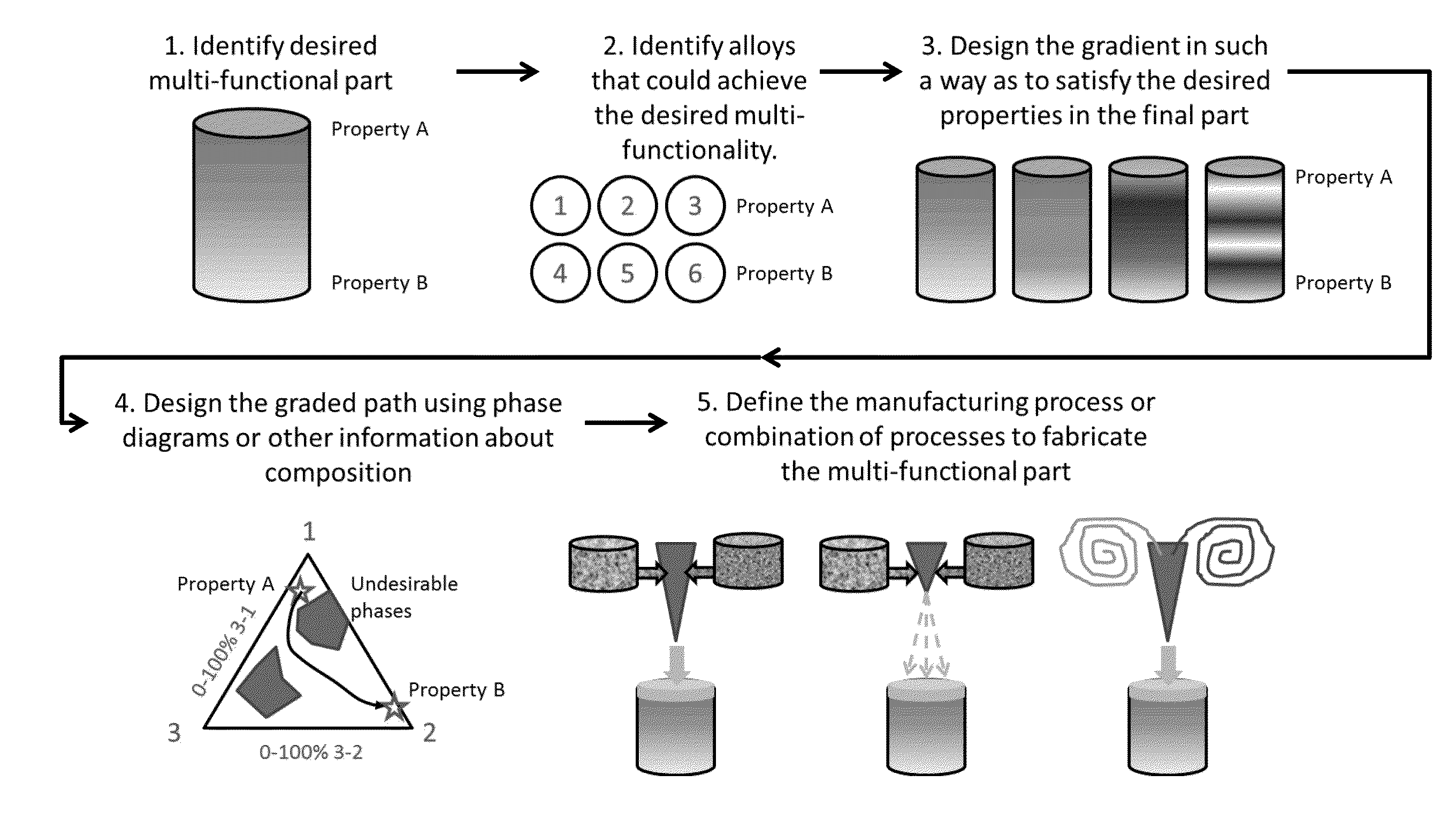
Methods for fabricating gradient alloy articles with multi-functional properties
PatentActiveUS20150044084A1
Innovation
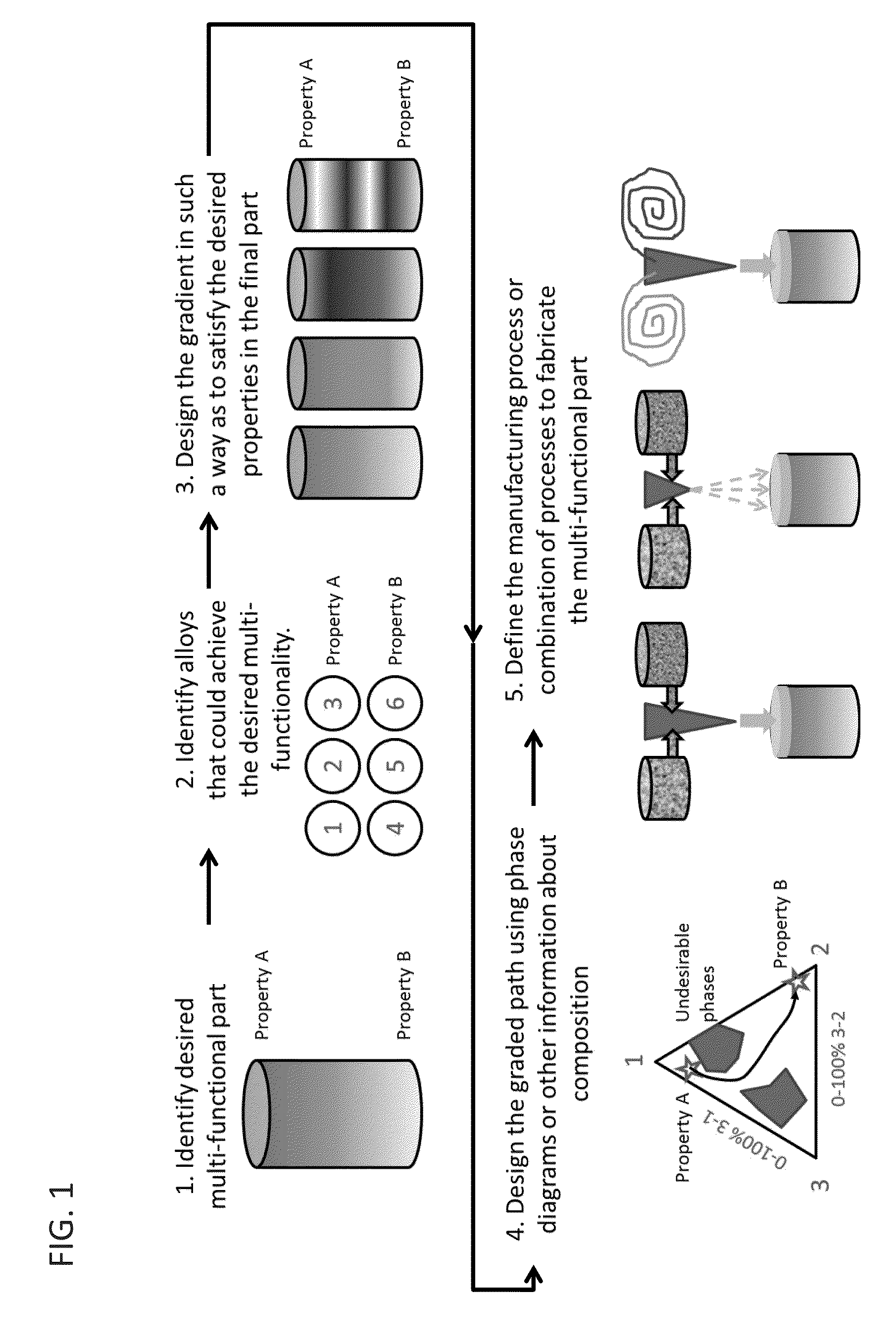
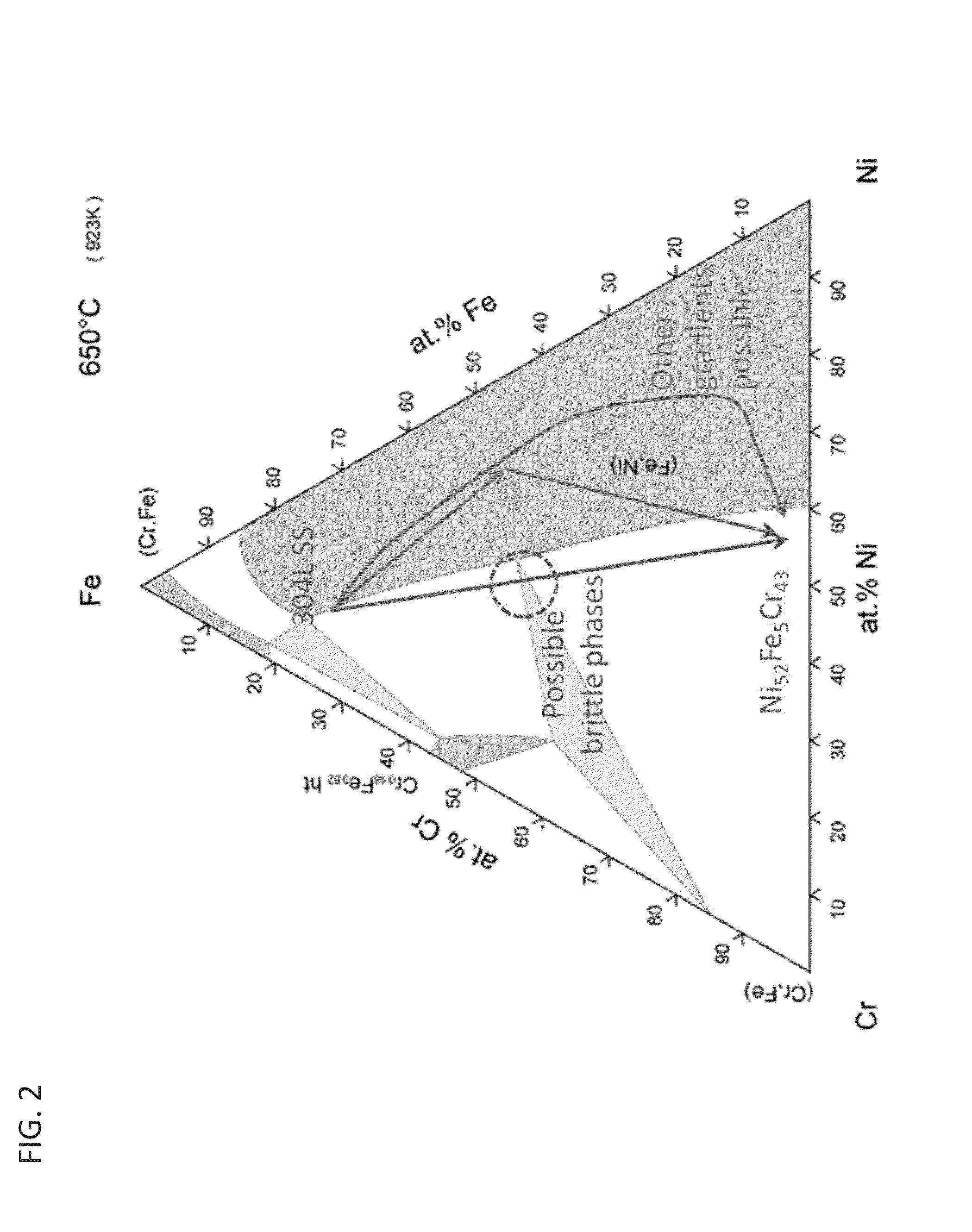
- The method involves determining a compositional gradient pathway between distinct materials using phase diagrams to avoid undesirable phases, and then using additive manufacturing techniques like Laser Engineered Net Shaping (LENS) to form multi-functional articles with precise compositional transitions, allowing for the creation of gradient layers with varying mechanical and thermophysical properties.

Laser net shape manufactured component using an adaptive toolpath deposition method
PatentActiveUS20160076374A1
Innovation
- The adaptive toolpath deposition method in Laser Net Shape Manufacturing (LNSM) uses a laser to deposit thin layers of metal powder with variable bead widths and controlled overlap ratios, allowing for precise 3D geometry creation and minimizing fusion imperfections by dynamically adjusting laser power and toolpath parameters.


Aerospace Certification Standards for LENS Parts
Aerospace certification standards for LENS parts represent a critical framework governing the qualification and acceptance of additively manufactured components in aviation and space applications. The Federal Aviation Administration (FAA) and European Union Aviation Safety Agency (EASA) have established comprehensive guidelines that address the unique characteristics of laser-engineered net shaping technology, requiring extensive documentation of process parameters, material properties, and quality control measures.
The certification process begins with material qualification, where LENS-produced materials must demonstrate equivalent or superior properties to conventionally manufactured counterparts. This involves comprehensive testing protocols including tensile strength, fatigue resistance, fracture toughness, and microstructural analysis. Aerospace standards such as AS9100 and NADCAP accreditation specifically address additive manufacturing processes, establishing traceability requirements from powder feedstock to final component delivery.
Process validation constitutes another fundamental aspect of certification standards. Manufacturers must demonstrate statistical process control through documented evidence of repeatability and reproducibility across multiple build cycles. This includes real-time monitoring of laser power, powder feed rates, substrate temperature, and atmospheric conditions during deposition. The standards mandate that any deviation from established process windows triggers immediate corrective actions and potential part rejection.
Non-destructive testing requirements for LENS parts exceed those of traditional manufacturing methods due to the layer-by-layer build process. Standards specify mandatory ultrasonic inspection, computed tomography scanning, and dye penetrant testing protocols. These inspections must detect internal porosity, lack of fusion defects, and surface irregularities that could compromise structural integrity under aerospace operating conditions.
Post-processing certification standards address heat treatment, machining, and surface finishing operations that are typically required for LENS components. The standards define acceptable surface roughness parameters, dimensional tolerances, and residual stress levels. Heat treatment protocols must be validated to ensure consistent microstructural properties throughout the component volume, with particular attention to the heat-affected zones between deposited layers.
Documentation requirements under aerospace certification standards are exceptionally rigorous for LENS parts. Complete traceability records must include powder lot certification, process parameter logs, inspection reports, and operator qualifications. These records must be maintained for the entire service life of the aircraft or spacecraft, often spanning decades. The standards also require periodic audits and recertification to ensure continued compliance with evolving regulatory requirements.
The certification process begins with material qualification, where LENS-produced materials must demonstrate equivalent or superior properties to conventionally manufactured counterparts. This involves comprehensive testing protocols including tensile strength, fatigue resistance, fracture toughness, and microstructural analysis. Aerospace standards such as AS9100 and NADCAP accreditation specifically address additive manufacturing processes, establishing traceability requirements from powder feedstock to final component delivery.
Process validation constitutes another fundamental aspect of certification standards. Manufacturers must demonstrate statistical process control through documented evidence of repeatability and reproducibility across multiple build cycles. This includes real-time monitoring of laser power, powder feed rates, substrate temperature, and atmospheric conditions during deposition. The standards mandate that any deviation from established process windows triggers immediate corrective actions and potential part rejection.
Non-destructive testing requirements for LENS parts exceed those of traditional manufacturing methods due to the layer-by-layer build process. Standards specify mandatory ultrasonic inspection, computed tomography scanning, and dye penetrant testing protocols. These inspections must detect internal porosity, lack of fusion defects, and surface irregularities that could compromise structural integrity under aerospace operating conditions.
Post-processing certification standards address heat treatment, machining, and surface finishing operations that are typically required for LENS components. The standards define acceptable surface roughness parameters, dimensional tolerances, and residual stress levels. Heat treatment protocols must be validated to ensure consistent microstructural properties throughout the component volume, with particular attention to the heat-affected zones between deposited layers.
Documentation requirements under aerospace certification standards are exceptionally rigorous for LENS parts. Complete traceability records must include powder lot certification, process parameter logs, inspection reports, and operator qualifications. These records must be maintained for the entire service life of the aircraft or spacecraft, often spanning decades. The standards also require periodic audits and recertification to ensure continued compliance with evolving regulatory requirements.
Quality Control Framework for LENS Aerospace Manufacturing
The quality control framework for LENS aerospace manufacturing represents a critical systematic approach to ensuring consistent production of high-performance components that meet stringent aerospace standards. This comprehensive framework integrates multiple monitoring and validation stages throughout the entire manufacturing process, from raw material qualification to final component certification.
Real-time process monitoring forms the foundation of effective quality control in LENS operations. Advanced sensor systems continuously track key parameters including laser power stability, powder feed rate consistency, substrate temperature distribution, and build chamber atmospheric conditions. These monitoring systems employ pyrometers for temperature measurement, photodiodes for laser power verification, and mass flow controllers for precise powder delivery tracking.
In-situ quality assessment techniques enable immediate detection of defects during the build process. Optical coherence tomography and high-speed imaging systems provide layer-by-layer analysis, identifying porosity, cracking, or dimensional deviations as they occur. Acoustic emission monitoring detects stress-related phenomena, while thermal imaging reveals heat distribution anomalies that could indicate process instabilities.
Post-process inspection protocols encompass both non-destructive and destructive testing methodologies. Non-destructive evaluation includes computed tomography scanning for internal defect detection, ultrasonic testing for structural integrity assessment, and surface profilometry for dimensional accuracy verification. Destructive testing involves mechanical property evaluation through tensile, fatigue, and impact testing of representative samples.
Statistical process control implementation ensures consistent quality through data-driven decision making. Control charts track process parameters and quality metrics over time, enabling early identification of process drift or equipment degradation. Design of experiments methodologies optimize process windows while maintaining quality standards, establishing robust parameter ranges for different aerospace alloys and component geometries.
Traceability systems maintain comprehensive documentation linking each component to its complete manufacturing history, including raw material batch information, process parameters, inspection results, and operator certifications. This digital thread enables rapid root cause analysis and supports aerospace industry requirements for complete component genealogy throughout the product lifecycle.
Real-time process monitoring forms the foundation of effective quality control in LENS operations. Advanced sensor systems continuously track key parameters including laser power stability, powder feed rate consistency, substrate temperature distribution, and build chamber atmospheric conditions. These monitoring systems employ pyrometers for temperature measurement, photodiodes for laser power verification, and mass flow controllers for precise powder delivery tracking.
In-situ quality assessment techniques enable immediate detection of defects during the build process. Optical coherence tomography and high-speed imaging systems provide layer-by-layer analysis, identifying porosity, cracking, or dimensional deviations as they occur. Acoustic emission monitoring detects stress-related phenomena, while thermal imaging reveals heat distribution anomalies that could indicate process instabilities.
Post-process inspection protocols encompass both non-destructive and destructive testing methodologies. Non-destructive evaluation includes computed tomography scanning for internal defect detection, ultrasonic testing for structural integrity assessment, and surface profilometry for dimensional accuracy verification. Destructive testing involves mechanical property evaluation through tensile, fatigue, and impact testing of representative samples.
Statistical process control implementation ensures consistent quality through data-driven decision making. Control charts track process parameters and quality metrics over time, enabling early identification of process drift or equipment degradation. Design of experiments methodologies optimize process windows while maintaining quality standards, establishing robust parameter ranges for different aerospace alloys and component geometries.
Traceability systems maintain comprehensive documentation linking each component to its complete manufacturing history, including raw material batch information, process parameters, inspection results, and operator certifications. This digital thread enables rapid root cause analysis and supports aerospace industry requirements for complete component genealogy throughout the product lifecycle.
Unlock deeper insights with PatSnap Eureka Quick Research — get a full tech report to explore trends and direct your research. Try now!
Generate Your Research Report Instantly with AI Agent
Supercharge your innovation with PatSnap Eureka AI Agent Platform!