
Streamline Setup Time for Laser Engineered Net Shaping Projects
APR 1, 20269 MIN READ
Generate Your Research Report Instantly with AI Agent
Patsnap Eureka helps you evaluate technical feasibility & market potential.
LENS Technology Background and Setup Optimization Goals
Laser Engineered Net Shaping (LENS) technology represents a revolutionary advancement in additive manufacturing, emerging from the convergence of laser processing, powder metallurgy, and computer-aided design. Developed in the mid-1990s at Sandia National Laboratories, LENS belongs to the directed energy deposition family of additive manufacturing processes, where metallic powders are simultaneously fed and melted by a focused laser beam to build three-dimensional components layer by layer.
The fundamental principle of LENS involves the precise delivery of metal powder particles into a molten pool created by a high-power laser, enabling the fabrication of fully dense metallic parts with complex geometries. This technology has evolved significantly since its inception, transitioning from laboratory-scale research equipment to industrial-grade manufacturing systems capable of producing critical components for aerospace, defense, and medical applications.
The evolution of LENS technology has been marked by continuous improvements in laser power control, powder delivery systems, and process monitoring capabilities. Early systems required extensive manual calibration and setup procedures, often consuming several hours before production could commence. These lengthy preparation phases included laser alignment, powder flow calibration, substrate preparation, and atmospheric control system initialization.
Contemporary LENS systems have witnessed substantial technological maturation, incorporating advanced automation features, real-time process monitoring, and sophisticated control algorithms. However, setup time optimization remains a critical challenge that directly impacts manufacturing efficiency and cost-effectiveness. The complexity of coordinating multiple subsystems including laser optics, powder feeders, motion control, and environmental controls continues to present significant operational hurdles.
The primary optimization goals for LENS setup procedures center on achieving rapid system initialization while maintaining process reliability and part quality consistency. Key objectives include automated calibration sequences that can reduce manual intervention, standardized setup protocols that minimize operator dependency, and integrated diagnostic systems that can predict and prevent setup-related failures.
Advanced process monitoring integration aims to establish real-time feedback loops that can automatically adjust critical parameters during setup phases. This includes laser power stabilization, powder flow rate optimization, and thermal management system coordination. The development of machine learning algorithms for predictive setup optimization represents an emerging frontier, where historical process data can inform automated setup decisions.
The strategic importance of setup time reduction extends beyond immediate productivity gains, encompassing broader manufacturing flexibility and responsiveness to market demands. Streamlined setup procedures enable smaller batch production runs to become economically viable, supporting the growing trend toward mass customization and on-demand manufacturing paradigms that define the future of advanced manufacturing technologies.
The fundamental principle of LENS involves the precise delivery of metal powder particles into a molten pool created by a high-power laser, enabling the fabrication of fully dense metallic parts with complex geometries. This technology has evolved significantly since its inception, transitioning from laboratory-scale research equipment to industrial-grade manufacturing systems capable of producing critical components for aerospace, defense, and medical applications.
The evolution of LENS technology has been marked by continuous improvements in laser power control, powder delivery systems, and process monitoring capabilities. Early systems required extensive manual calibration and setup procedures, often consuming several hours before production could commence. These lengthy preparation phases included laser alignment, powder flow calibration, substrate preparation, and atmospheric control system initialization.
Contemporary LENS systems have witnessed substantial technological maturation, incorporating advanced automation features, real-time process monitoring, and sophisticated control algorithms. However, setup time optimization remains a critical challenge that directly impacts manufacturing efficiency and cost-effectiveness. The complexity of coordinating multiple subsystems including laser optics, powder feeders, motion control, and environmental controls continues to present significant operational hurdles.
The primary optimization goals for LENS setup procedures center on achieving rapid system initialization while maintaining process reliability and part quality consistency. Key objectives include automated calibration sequences that can reduce manual intervention, standardized setup protocols that minimize operator dependency, and integrated diagnostic systems that can predict and prevent setup-related failures.
Advanced process monitoring integration aims to establish real-time feedback loops that can automatically adjust critical parameters during setup phases. This includes laser power stabilization, powder flow rate optimization, and thermal management system coordination. The development of machine learning algorithms for predictive setup optimization represents an emerging frontier, where historical process data can inform automated setup decisions.
The strategic importance of setup time reduction extends beyond immediate productivity gains, encompassing broader manufacturing flexibility and responsiveness to market demands. Streamlined setup procedures enable smaller batch production runs to become economically viable, supporting the growing trend toward mass customization and on-demand manufacturing paradigms that define the future of advanced manufacturing technologies.
Market Demand for Rapid LENS Manufacturing Solutions
The aerospace and defense sectors represent the primary driving force behind the demand for rapid LENS manufacturing solutions, particularly for mission-critical components requiring immediate replacement or customization. These industries face increasing pressure to reduce aircraft downtime and maintain operational readiness, creating substantial market pull for technologies that can dramatically reduce setup times from days to hours.
Automotive manufacturers, especially those focused on high-performance and luxury vehicles, demonstrate growing interest in rapid LENS capabilities for producing complex geometries and hybrid material components. The shift toward electric vehicles has intensified demand for lightweight, thermally efficient components that traditional manufacturing methods struggle to produce economically in small batches.
Medical device manufacturing presents another significant market segment, where patient-specific implants and surgical instruments require rapid prototyping and small-batch production capabilities. The ability to quickly transition between different part geometries without extensive setup procedures aligns perfectly with the personalized medicine trend driving healthcare innovation.
Energy sector applications, particularly in oil and gas exploration and renewable energy infrastructure, create demand for rapid repair and replacement of specialized components in remote locations. The ability to minimize setup time enables on-site or near-site manufacturing capabilities, reducing logistics costs and operational downtime significantly.
The broader additive manufacturing market's expansion has created awareness and acceptance of metal 3D printing technologies, establishing a foundation for LENS adoption. However, current market penetration remains limited by setup complexity and time requirements, indicating substantial growth potential for streamlined solutions.
Small and medium-sized manufacturers represent an underserved market segment that could benefit significantly from reduced setup complexity. These organizations often lack the specialized expertise required for current LENS systems but possess strong demand for flexible, rapid manufacturing capabilities to compete with larger enterprises.
Research institutions and universities constitute an important market segment requiring frequent parameter changes and material experimentation. Streamlined setup procedures would enable more efficient research workflows and accelerate technology development cycles, supporting broader market growth through improved understanding and application development.
Automotive manufacturers, especially those focused on high-performance and luxury vehicles, demonstrate growing interest in rapid LENS capabilities for producing complex geometries and hybrid material components. The shift toward electric vehicles has intensified demand for lightweight, thermally efficient components that traditional manufacturing methods struggle to produce economically in small batches.
Medical device manufacturing presents another significant market segment, where patient-specific implants and surgical instruments require rapid prototyping and small-batch production capabilities. The ability to quickly transition between different part geometries without extensive setup procedures aligns perfectly with the personalized medicine trend driving healthcare innovation.
Energy sector applications, particularly in oil and gas exploration and renewable energy infrastructure, create demand for rapid repair and replacement of specialized components in remote locations. The ability to minimize setup time enables on-site or near-site manufacturing capabilities, reducing logistics costs and operational downtime significantly.
The broader additive manufacturing market's expansion has created awareness and acceptance of metal 3D printing technologies, establishing a foundation for LENS adoption. However, current market penetration remains limited by setup complexity and time requirements, indicating substantial growth potential for streamlined solutions.
Small and medium-sized manufacturers represent an underserved market segment that could benefit significantly from reduced setup complexity. These organizations often lack the specialized expertise required for current LENS systems but possess strong demand for flexible, rapid manufacturing capabilities to compete with larger enterprises.
Research institutions and universities constitute an important market segment requiring frequent parameter changes and material experimentation. Streamlined setup procedures would enable more efficient research workflows and accelerate technology development cycles, supporting broader market growth through improved understanding and application development.
Current LENS Setup Challenges and Time Constraints
Laser Engineered Net Shaping (LENS) technology faces significant setup challenges that substantially impact project timelines and operational efficiency. The current setup process typically requires 4-8 hours for complex geometries, with experienced operators needing 2-3 hours even for standard configurations. This extended preparation time stems from the intricate nature of multi-parameter calibration and the precision requirements inherent to additive manufacturing processes.
Parameter optimization represents one of the most time-consuming aspects of LENS setup. Operators must carefully calibrate laser power, powder feed rate, traverse speed, and substrate temperature for each specific material and geometry combination. The interdependent nature of these parameters means that adjusting one variable often necessitates recalibration of others, creating an iterative process that can extend setup times significantly. Material-specific calibration adds another layer of complexity, as different metal powders require distinct parameter sets.
Powder delivery system preparation constitutes another major bottleneck in the setup process. The system requires thorough cleaning between material changes to prevent contamination, followed by careful loading and flow rate calibration. Achieving consistent powder flow distribution across multiple nozzles demands precise adjustment and verification, often requiring multiple test runs before optimal conditions are achieved.
Substrate preparation and fixturing present additional time constraints. Each project requires custom fixturing solutions to ensure proper part orientation and thermal management. The substrate must be precisely leveled and positioned, with thermal barriers and support structures configured according to the specific geometry requirements. This process becomes particularly challenging for complex or large-scale components.
Quality assurance protocols further extend setup duration. Pre-build verification procedures include laser beam quality checks, powder flow uniformity testing, and atmospheric control validation. These essential steps, while critical for ensuring build quality, add substantial time to the overall setup process.
Equipment warm-up and stabilization requirements impose additional temporal constraints. The laser system requires thermal stabilization, typically taking 30-60 minutes to reach optimal operating conditions. Similarly, the powder delivery system needs time to achieve steady-state flow characteristics, and the build chamber atmosphere must be properly conditioned.
The lack of standardized setup procedures across different LENS systems and applications compounds these challenges. Operators often rely on experience-based approaches rather than systematic methodologies, leading to inconsistent setup times and potential quality variations. Documentation and knowledge transfer between operators remain inadequate, creating dependencies on individual expertise.
Parameter optimization represents one of the most time-consuming aspects of LENS setup. Operators must carefully calibrate laser power, powder feed rate, traverse speed, and substrate temperature for each specific material and geometry combination. The interdependent nature of these parameters means that adjusting one variable often necessitates recalibration of others, creating an iterative process that can extend setup times significantly. Material-specific calibration adds another layer of complexity, as different metal powders require distinct parameter sets.
Powder delivery system preparation constitutes another major bottleneck in the setup process. The system requires thorough cleaning between material changes to prevent contamination, followed by careful loading and flow rate calibration. Achieving consistent powder flow distribution across multiple nozzles demands precise adjustment and verification, often requiring multiple test runs before optimal conditions are achieved.
Substrate preparation and fixturing present additional time constraints. Each project requires custom fixturing solutions to ensure proper part orientation and thermal management. The substrate must be precisely leveled and positioned, with thermal barriers and support structures configured according to the specific geometry requirements. This process becomes particularly challenging for complex or large-scale components.
Quality assurance protocols further extend setup duration. Pre-build verification procedures include laser beam quality checks, powder flow uniformity testing, and atmospheric control validation. These essential steps, while critical for ensuring build quality, add substantial time to the overall setup process.
Equipment warm-up and stabilization requirements impose additional temporal constraints. The laser system requires thermal stabilization, typically taking 30-60 minutes to reach optimal operating conditions. Similarly, the powder delivery system needs time to achieve steady-state flow characteristics, and the build chamber atmosphere must be properly conditioned.
The lack of standardized setup procedures across different LENS systems and applications compounds these challenges. Operators often rely on experience-based approaches rather than systematic methodologies, leading to inconsistent setup times and potential quality variations. Documentation and knowledge transfer between operators remain inadequate, creating dependencies on individual expertise.
Key Players in LENS Equipment and Software Industry
The Laser Engineered Net Shaping (LENS) technology market is currently in a mature growth phase, driven by increasing demand for additive manufacturing solutions across aerospace, automotive, and industrial sectors. The market demonstrates significant expansion potential, with established players like EOS GmbH, Concept Laser GmbH, and Siemens AG leading technological advancement through sophisticated laser processing systems. Technology maturity varies considerably among market participants - while companies such as Intel Corp., Mitsubishi Electric Corp., and Rolls-Royce Plc have developed robust industrial-grade solutions with proven track records, emerging players like LSP Technologies Inc. and Smarter Alloys Inc. are pioneering specialized applications. Research institutions including CEA and National University of Defense Technology contribute fundamental innovations, while telecommunications giants like Huawei Technologies and Ericsson explore integration opportunities. The competitive landscape reflects a convergence of traditional manufacturing expertise with cutting-edge photonic technologies, positioning the sector for continued technological evolution and market penetration.
Electro Scientific Industries, Inc.
Technical Solution: ESI has developed comprehensive setup automation solutions for laser-based manufacturing systems, including LENS applications. Their technology platform incorporates machine learning algorithms for parameter optimization, automated recipe management systems, and intelligent setup wizards that guide operators through streamlined configuration processes. The system features predictive maintenance capabilities, automated laser alignment procedures, and integrated quality control checkpoints that collectively reduce setup time by approximately 45%. Their solutions are particularly effective for high-volume production environments requiring consistent setup repeatability.
Strengths: Machine learning integration, high-volume production optimization, excellent repeatability. Weaknesses: Complex system requirements, significant learning curve for implementation.
Siemens AG
Technical Solution: Siemens has developed integrated digital manufacturing solutions that streamline LENS project setup through their NX software suite and Sinumerik CNC platform. Their approach combines digital twin technology, automated toolpath generation, and intelligent process planning to reduce setup times significantly. The system features cloud-based parameter libraries, AI-driven optimization algorithms, and seamless integration with PLM systems that enable rapid project initialization. Their technology can reduce setup time by 35-40% while improving process reliability and reducing material waste through better pre-process simulation and validation.
Strengths: Comprehensive digital integration, strong PLM connectivity, extensive industrial experience. Weaknesses: High complexity for smaller operations, requires significant IT infrastructure investment.
Core Innovations in LENS Process Automation
Laser consolidation apparatus for manufacturing precise structures
PatentInactiveUS20030116542A1
Innovation
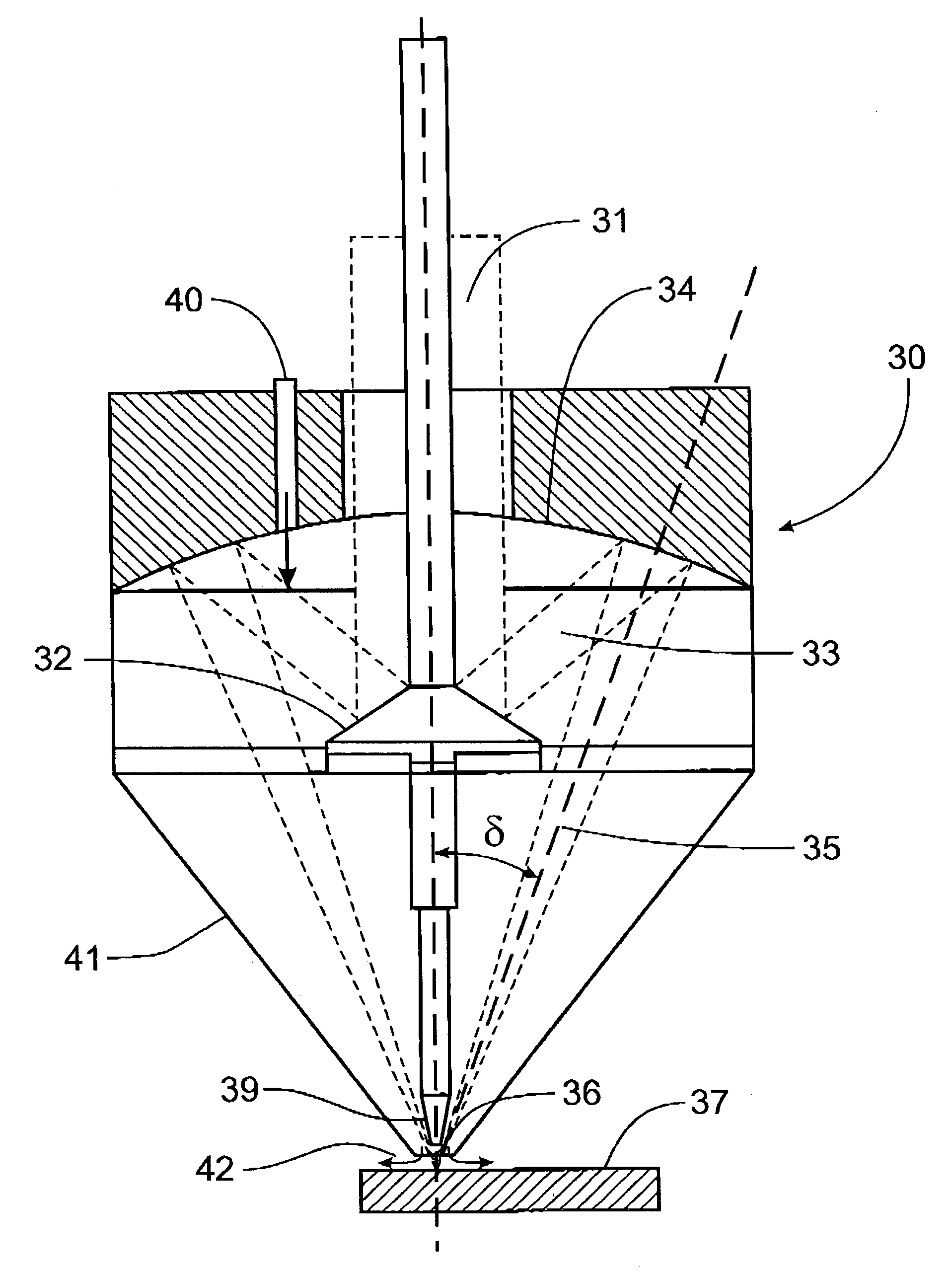
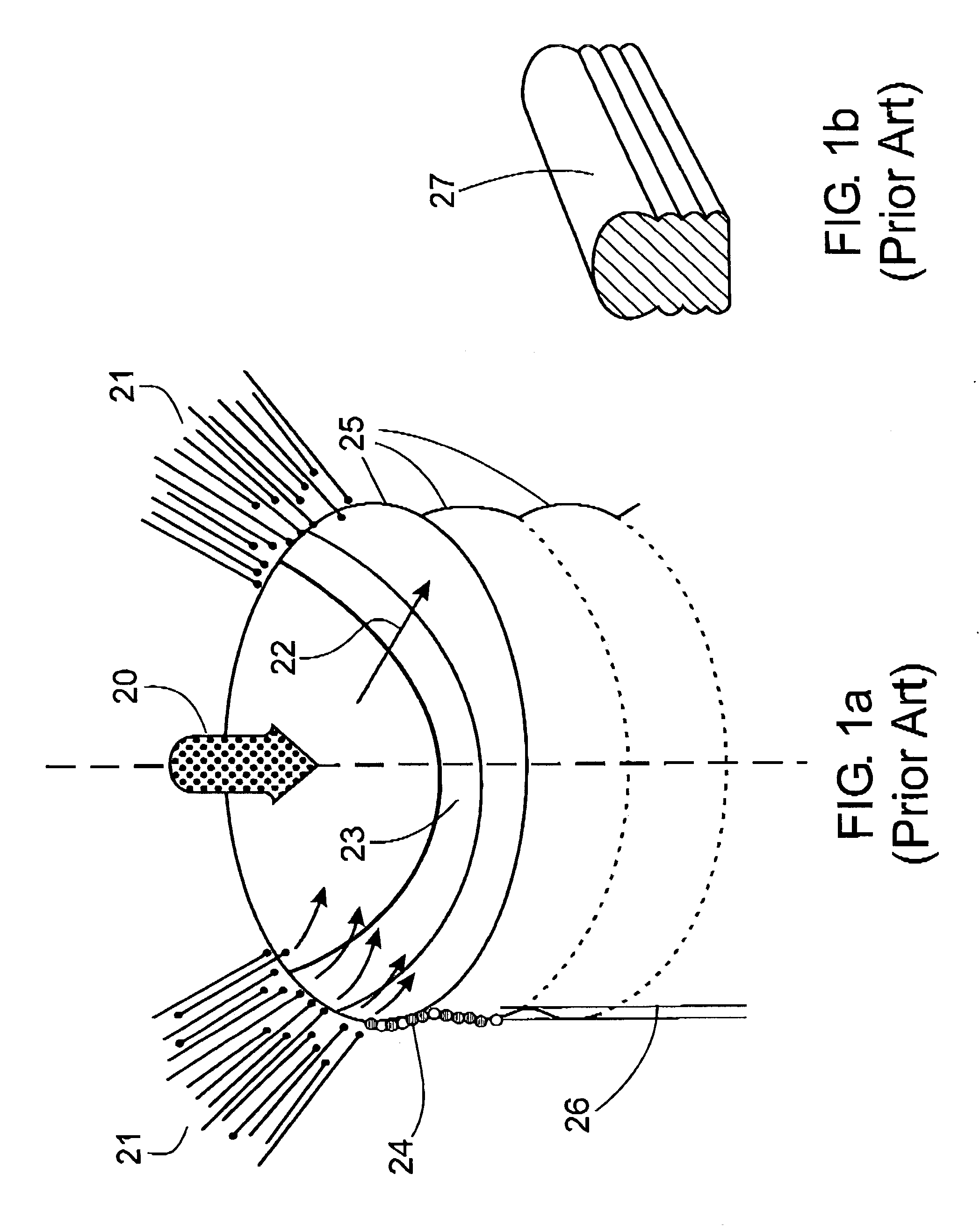
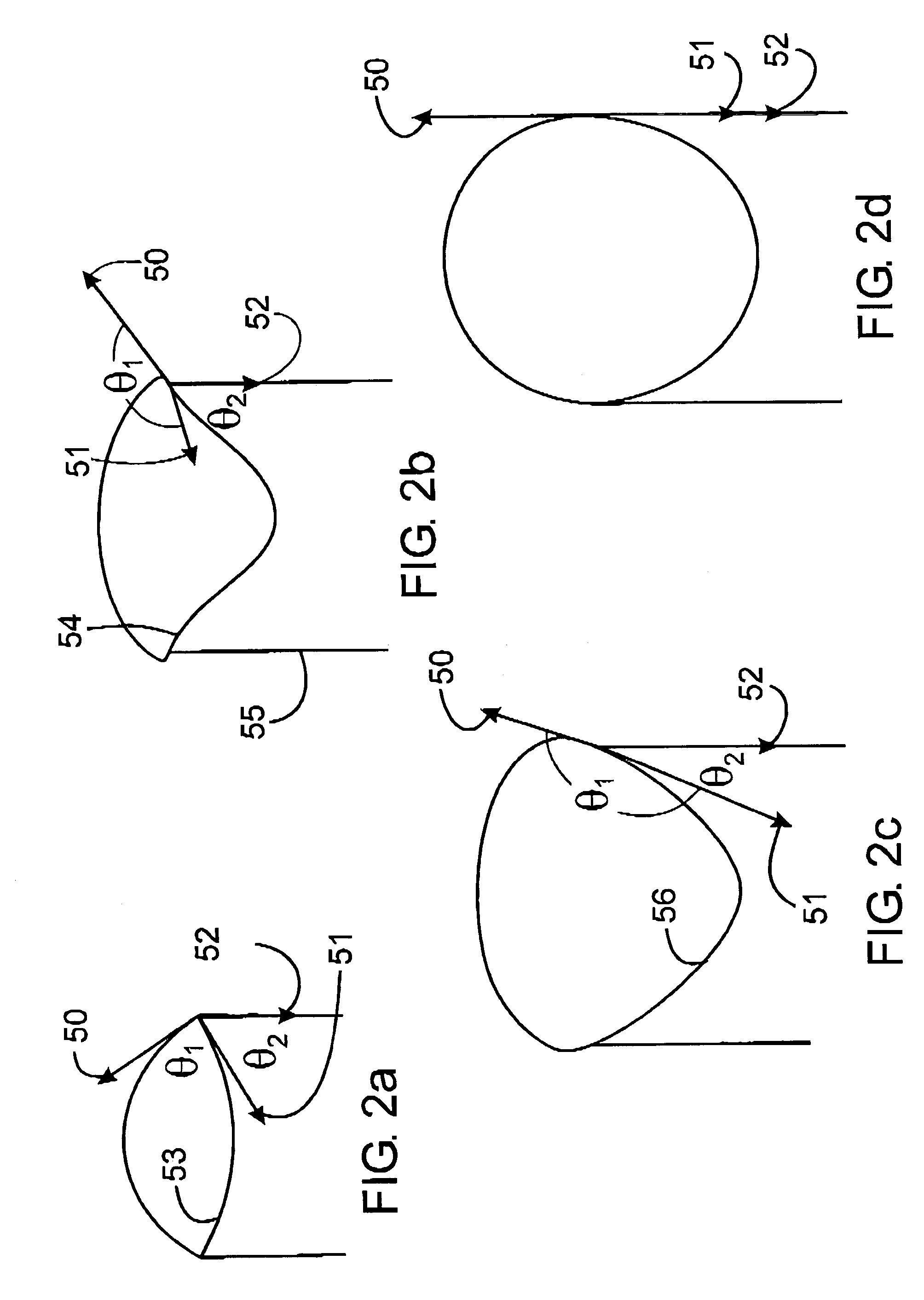
- A laser consolidation method where laser energy enters the molten pool at an angle of about 30 degrees symmetrically around the pool, and metallic powder is injected vertically at the top, creating a uniform temperature and surface tension, allowing for precise control of the melt pool shape and surface finish.

Deposition of aluminum 5xxx alloy using laser engineered net shaping
PatentInactiveUS20230033494A1
Innovation
- The method involves depositing Al 5xxx alloy powders using LENS with adjustable parameters such as laser power, scan speed, mass flow rate, hatch spacing, and oxygen concentration, which are varied over time to control the thermal conditions and minimize defects, ensuring proper formation of 2D or 3D patterns or objects with improved density and mechanical properties.


Quality Standards for Additive Manufacturing Processes
Quality standards for additive manufacturing processes, particularly in Laser Engineered Net Shaping (LENS) applications, represent a critical framework that directly impacts setup time optimization. The establishment of comprehensive quality benchmarks requires standardized protocols that can be rapidly implemented across different project configurations, thereby reducing the time-intensive calibration phases that traditionally plague LENS operations.
International standards such as ISO/ASTM 52900 series and ASTM F2792 provide foundational guidelines for additive manufacturing quality assurance, yet their application to LENS-specific workflows often requires customization. These standards emphasize dimensional accuracy, surface finish requirements, mechanical property validation, and material traceability protocols that must be integrated into streamlined setup procedures without compromising manufacturing efficiency.
Process qualification standards mandate rigorous documentation of build parameters, including laser power settings, powder feed rates, substrate preparation protocols, and environmental controls. However, the challenge lies in developing standardized quality checkpoints that can be executed rapidly during project initialization phases, minimizing the traditional extensive validation cycles that extend setup times.
Material certification requirements under current quality frameworks demand comprehensive testing protocols for powder characteristics, including particle size distribution, chemical composition, and flowability metrics. Streamlined approaches necessitate the development of rapid qualification methods that maintain compliance with established standards while reducing material preparation and validation timeframes from hours to minutes.
Geometric tolerance standards for LENS applications require precise control over build accuracy and repeatability. Quality frameworks must accommodate the unique characteristics of directed energy deposition processes, including thermal gradients, residual stress patterns, and microstructural variations that influence final part quality and dimensional stability.
Real-time monitoring integration within quality standards represents an emerging paradigm that enables continuous process validation during manufacturing rather than post-build inspection. This approach significantly reduces setup time by providing immediate feedback on process stability and part quality, allowing for rapid parameter adjustments without complete process restart.
Documentation and traceability requirements, while essential for quality assurance, often create bottlenecks in project setup phases. Modern quality standards must balance comprehensive record-keeping with operational efficiency, potentially through automated data collection systems and standardized reporting templates that minimize manual documentation overhead while maintaining regulatory compliance.
International standards such as ISO/ASTM 52900 series and ASTM F2792 provide foundational guidelines for additive manufacturing quality assurance, yet their application to LENS-specific workflows often requires customization. These standards emphasize dimensional accuracy, surface finish requirements, mechanical property validation, and material traceability protocols that must be integrated into streamlined setup procedures without compromising manufacturing efficiency.
Process qualification standards mandate rigorous documentation of build parameters, including laser power settings, powder feed rates, substrate preparation protocols, and environmental controls. However, the challenge lies in developing standardized quality checkpoints that can be executed rapidly during project initialization phases, minimizing the traditional extensive validation cycles that extend setup times.
Material certification requirements under current quality frameworks demand comprehensive testing protocols for powder characteristics, including particle size distribution, chemical composition, and flowability metrics. Streamlined approaches necessitate the development of rapid qualification methods that maintain compliance with established standards while reducing material preparation and validation timeframes from hours to minutes.
Geometric tolerance standards for LENS applications require precise control over build accuracy and repeatability. Quality frameworks must accommodate the unique characteristics of directed energy deposition processes, including thermal gradients, residual stress patterns, and microstructural variations that influence final part quality and dimensional stability.
Real-time monitoring integration within quality standards represents an emerging paradigm that enables continuous process validation during manufacturing rather than post-build inspection. This approach significantly reduces setup time by providing immediate feedback on process stability and part quality, allowing for rapid parameter adjustments without complete process restart.
Documentation and traceability requirements, while essential for quality assurance, often create bottlenecks in project setup phases. Modern quality standards must balance comprehensive record-keeping with operational efficiency, potentially through automated data collection systems and standardized reporting templates that minimize manual documentation overhead while maintaining regulatory compliance.
Cost-Benefit Analysis of LENS Setup Optimization
The economic evaluation of LENS setup optimization reveals substantial financial benefits that justify investment in streamlined processes. Initial analysis indicates that reducing setup time from traditional 4-6 hours to optimized 1-2 hours generates immediate cost savings of $200-400 per project cycle, considering typical operator hourly rates and equipment utilization costs. These savings compound significantly across multiple projects, with facilities processing 50+ projects annually realizing potential savings exceeding $15,000-20,000.
Investment requirements for setup optimization encompass both technological and procedural improvements. Automated powder handling systems require capital expenditure of $25,000-50,000, while advanced process monitoring equipment adds $15,000-30,000. Software integration for automated parameter loading and job scheduling typically costs $10,000-20,000. Training programs for operators and technicians represent additional investment of $5,000-10,000 per facility.
Return on investment calculations demonstrate favorable payback periods ranging from 8-18 months depending on facility throughput and optimization scope. High-volume production environments achieve faster payback through increased equipment utilization and reduced labor costs. The analysis shows that facilities processing more than 30 projects monthly typically recover optimization investments within the first year of implementation.
Operational cost reductions extend beyond direct setup time savings. Improved process consistency reduces material waste by 15-25%, translating to annual savings of $8,000-15,000 for typical facilities. Enhanced equipment utilization increases effective production capacity by 20-30% without additional capital investment in machinery. Reduced operator intervention minimizes human error-related rework, saving an estimated $5,000-12,000 annually.
Long-term financial benefits include improved competitive positioning through faster project turnaround times and enhanced customer satisfaction. Market analysis suggests that facilities offering 40-50% faster delivery times can command 10-15% premium pricing for expedited services. Additionally, standardized setup procedures reduce training costs for new operators and minimize production variability, contributing to sustained operational efficiency improvements that enhance overall profitability and market competitiveness in the additive manufacturing sector.
Investment requirements for setup optimization encompass both technological and procedural improvements. Automated powder handling systems require capital expenditure of $25,000-50,000, while advanced process monitoring equipment adds $15,000-30,000. Software integration for automated parameter loading and job scheduling typically costs $10,000-20,000. Training programs for operators and technicians represent additional investment of $5,000-10,000 per facility.
Return on investment calculations demonstrate favorable payback periods ranging from 8-18 months depending on facility throughput and optimization scope. High-volume production environments achieve faster payback through increased equipment utilization and reduced labor costs. The analysis shows that facilities processing more than 30 projects monthly typically recover optimization investments within the first year of implementation.
Operational cost reductions extend beyond direct setup time savings. Improved process consistency reduces material waste by 15-25%, translating to annual savings of $8,000-15,000 for typical facilities. Enhanced equipment utilization increases effective production capacity by 20-30% without additional capital investment in machinery. Reduced operator intervention minimizes human error-related rework, saving an estimated $5,000-12,000 annually.
Long-term financial benefits include improved competitive positioning through faster project turnaround times and enhanced customer satisfaction. Market analysis suggests that facilities offering 40-50% faster delivery times can command 10-15% premium pricing for expedited services. Additionally, standardized setup procedures reduce training costs for new operators and minimize production variability, contributing to sustained operational efficiency improvements that enhance overall profitability and market competitiveness in the additive manufacturing sector.
Unlock deeper insights with Patsnap Eureka Quick Research — get a full tech report to explore trends and direct your research. Try now!
Generate Your Research Report Instantly with AI Agent
Supercharge your innovation with Patsnap Eureka AI Agent Platform!