

LS1 Engine Cooling System Optimization
AUG 25, 20259 MIN READ
Generate Your Research Report Instantly with AI Agent
PatSnap Eureka helps you evaluate technical feasibility & market potential.
LS1 Engine Cooling Background and Objectives
The LS1 engine, introduced by General Motors in 1997, represented a significant advancement in V8 engine technology. This small-block V8 engine became iconic in the automotive industry due to its impressive power output, reliability, and adaptability. The cooling system of the LS1 engine was designed with conventional principles but has shown limitations as performance demands have increased over time, particularly in high-performance and modified applications.
Engine cooling technology has evolved significantly since the LS1's introduction, with innovations in materials, design methodologies, and thermal management strategies. The progression from simple radiator-based systems to integrated thermal management solutions reflects the industry's growing focus on efficiency, emissions reduction, and performance optimization.
Current cooling systems in LS1 engines face challenges related to heat dissipation during high-load operations, coolant flow distribution inefficiencies, and thermal gradients across the engine block. These issues become particularly pronounced in applications where the engine is pushed beyond its original design parameters, such as in motorsports, performance upgrades, or in extreme climate conditions.
The primary objective of LS1 engine cooling system optimization is to enhance thermal efficiency while maintaining or improving engine performance across various operating conditions. This involves addressing hotspots within the engine block, improving coolant flow dynamics, and implementing advanced control strategies for more precise temperature management.
Secondary objectives include reducing parasitic power losses associated with traditional cooling systems, minimizing warm-up times to improve emissions performance, and extending component lifespan through more consistent temperature control. Additionally, there is a growing emphasis on making cooling systems more compact and lightweight to support broader vehicle design goals.
The technological trajectory in engine cooling is moving toward more intelligent, adaptive systems that can respond dynamically to changing conditions. This includes variable-speed water pumps, electronically controlled thermostats, and advanced coolant formulations with improved thermal properties.
Market trends indicate increasing demand for cooling solutions that can support higher power outputs while maintaining reliability. This is particularly relevant for the LS1 platform, which continues to be popular in aftermarket modifications and performance applications despite being over two decades old.
As emissions regulations become more stringent globally, cooling system optimization also plays a crucial role in helping engines meet these standards by ensuring optimal operating temperatures for combustion efficiency and emissions control systems.
Engine cooling technology has evolved significantly since the LS1's introduction, with innovations in materials, design methodologies, and thermal management strategies. The progression from simple radiator-based systems to integrated thermal management solutions reflects the industry's growing focus on efficiency, emissions reduction, and performance optimization.
Current cooling systems in LS1 engines face challenges related to heat dissipation during high-load operations, coolant flow distribution inefficiencies, and thermal gradients across the engine block. These issues become particularly pronounced in applications where the engine is pushed beyond its original design parameters, such as in motorsports, performance upgrades, or in extreme climate conditions.
The primary objective of LS1 engine cooling system optimization is to enhance thermal efficiency while maintaining or improving engine performance across various operating conditions. This involves addressing hotspots within the engine block, improving coolant flow dynamics, and implementing advanced control strategies for more precise temperature management.
Secondary objectives include reducing parasitic power losses associated with traditional cooling systems, minimizing warm-up times to improve emissions performance, and extending component lifespan through more consistent temperature control. Additionally, there is a growing emphasis on making cooling systems more compact and lightweight to support broader vehicle design goals.
The technological trajectory in engine cooling is moving toward more intelligent, adaptive systems that can respond dynamically to changing conditions. This includes variable-speed water pumps, electronically controlled thermostats, and advanced coolant formulations with improved thermal properties.
Market trends indicate increasing demand for cooling solutions that can support higher power outputs while maintaining reliability. This is particularly relevant for the LS1 platform, which continues to be popular in aftermarket modifications and performance applications despite being over two decades old.
As emissions regulations become more stringent globally, cooling system optimization also plays a crucial role in helping engines meet these standards by ensuring optimal operating temperatures for combustion efficiency and emissions control systems.
Market Analysis for Advanced Cooling Solutions
The global market for advanced engine cooling solutions is experiencing significant growth, driven by increasing demands for higher engine performance, fuel efficiency, and emission reductions. The automotive cooling systems market was valued at approximately $31.7 billion in 2022 and is projected to reach $45.8 billion by 2030, growing at a CAGR of 4.7%. Within this broader market, advanced cooling solutions specifically for high-performance engines like the LS1 represent a specialized but rapidly expanding segment.
Consumer demand for performance vehicles continues to rise despite economic fluctuations, with particular growth in markets like North America, Europe, and emerging economies in Asia. The aftermarket for LS1 engine cooling upgrades is especially robust, with enthusiasts and professional racers consistently seeking solutions that can enhance performance while maintaining optimal operating temperatures.
Environmental regulations worldwide are becoming increasingly stringent, pushing manufacturers to develop cooling systems that contribute to overall emissions reduction. This regulatory pressure has created a distinct market opportunity for cooling solutions that can help engines operate more efficiently while meeting these standards. The LS1 platform, though older, remains popular in performance applications where these concerns are particularly relevant.
The competitive landscape for advanced cooling solutions is diverse, including OEM manufacturers, specialized aftermarket companies, and performance engineering firms. Key market players include Mishimoto, CSF Radiators, Griffin Radiator, and Be Cool, each offering various approaches to LS1 cooling optimization. These companies compete primarily on cooling efficiency, weight reduction, durability, and integration capabilities with existing systems.
Price sensitivity varies significantly across market segments. Professional racing teams prioritize performance over cost, while everyday performance enthusiasts seek value-oriented solutions that balance cost with meaningful improvements. The average price point for comprehensive LS1 cooling system upgrades ranges from $800 to $3,000 depending on components and sophistication level.
Market research indicates growing interest in "smart" cooling solutions incorporating electronic controls, variable-speed pumps, and digital monitoring capabilities. These advanced systems can adjust cooling parameters based on real-time engine conditions, representing the next frontier in cooling technology. For the LS1 platform specifically, there's increasing demand for retrofit solutions that bring modern cooling technology to this established engine architecture.
Distribution channels for advanced cooling solutions include specialty performance shops, online retailers, and direct manufacturer sales. The online segment has shown the strongest growth, with a 15% year-over-year increase in sales of performance cooling components, reflecting broader e-commerce trends in automotive parts.
Consumer demand for performance vehicles continues to rise despite economic fluctuations, with particular growth in markets like North America, Europe, and emerging economies in Asia. The aftermarket for LS1 engine cooling upgrades is especially robust, with enthusiasts and professional racers consistently seeking solutions that can enhance performance while maintaining optimal operating temperatures.
Environmental regulations worldwide are becoming increasingly stringent, pushing manufacturers to develop cooling systems that contribute to overall emissions reduction. This regulatory pressure has created a distinct market opportunity for cooling solutions that can help engines operate more efficiently while meeting these standards. The LS1 platform, though older, remains popular in performance applications where these concerns are particularly relevant.
The competitive landscape for advanced cooling solutions is diverse, including OEM manufacturers, specialized aftermarket companies, and performance engineering firms. Key market players include Mishimoto, CSF Radiators, Griffin Radiator, and Be Cool, each offering various approaches to LS1 cooling optimization. These companies compete primarily on cooling efficiency, weight reduction, durability, and integration capabilities with existing systems.
Price sensitivity varies significantly across market segments. Professional racing teams prioritize performance over cost, while everyday performance enthusiasts seek value-oriented solutions that balance cost with meaningful improvements. The average price point for comprehensive LS1 cooling system upgrades ranges from $800 to $3,000 depending on components and sophistication level.
Market research indicates growing interest in "smart" cooling solutions incorporating electronic controls, variable-speed pumps, and digital monitoring capabilities. These advanced systems can adjust cooling parameters based on real-time engine conditions, representing the next frontier in cooling technology. For the LS1 platform specifically, there's increasing demand for retrofit solutions that bring modern cooling technology to this established engine architecture.
Distribution channels for advanced cooling solutions include specialty performance shops, online retailers, and direct manufacturer sales. The online segment has shown the strongest growth, with a 15% year-over-year increase in sales of performance cooling components, reflecting broader e-commerce trends in automotive parts.
Current Cooling Technologies and Challenges
The LS1 engine cooling system currently employs a conventional liquid cooling architecture that has remained fundamentally unchanged since its introduction in the late 1990s. This system utilizes a water pump, thermostat, radiator, and coolant passages to maintain optimal operating temperatures. While functional, this traditional approach faces increasing challenges in meeting modern performance and efficiency demands.
Current cooling technologies for the LS1 include a belt-driven mechanical water pump that circulates coolant through the engine block and cylinder heads. The system operates with a standard 195°F (90.5°C) thermostat that regulates coolant flow based on temperature thresholds. Heat dissipation occurs primarily through an aluminum radiator with plastic end tanks, supplemented by an engine-driven cooling fan or electric fans in some applications.
Despite its proven reliability, the LS1 cooling system presents several significant challenges. The mechanical water pump consumes engine power regardless of cooling needs, reducing overall efficiency. The fixed-rate coolant flow cannot adapt to varying thermal loads, resulting in either insufficient cooling during high-demand scenarios or overcooling during normal operation. Additionally, the system's response time to temperature changes is relatively slow due to the thermostat's mechanical nature.
Thermal management across the engine is another critical challenge. The LS1's aluminum block and heads experience uneven heat distribution, with cylinder walls and combustion chambers reaching significantly different temperatures. This thermal imbalance can lead to inconsistent combustion, reduced efficiency, and potential long-term reliability issues. The current cooling passages design does not adequately address these hotspots.
Modern performance modifications further strain the stock cooling system. Increased power output from superchargers, turbochargers, or aggressive tuning generates substantially more heat that exceeds the original system's capacity. This often necessitates aftermarket cooling upgrades, highlighting the limitations of the factory design.
Emissions regulations and fuel economy standards present additional challenges. The current system's inability to rapidly reach and maintain optimal operating temperatures impacts cold-start emissions and fuel consumption. The lack of precision in temperature control prevents the engine from consistently operating at its efficiency peak.
Advanced materials and manufacturing techniques now available were not implemented in the original LS1 design. Modern computational fluid dynamics and thermal modeling capabilities reveal opportunities for significant improvements in coolant flow paths, pump efficiency, and overall system design that could address many of these limitations.
Current cooling technologies for the LS1 include a belt-driven mechanical water pump that circulates coolant through the engine block and cylinder heads. The system operates with a standard 195°F (90.5°C) thermostat that regulates coolant flow based on temperature thresholds. Heat dissipation occurs primarily through an aluminum radiator with plastic end tanks, supplemented by an engine-driven cooling fan or electric fans in some applications.
Despite its proven reliability, the LS1 cooling system presents several significant challenges. The mechanical water pump consumes engine power regardless of cooling needs, reducing overall efficiency. The fixed-rate coolant flow cannot adapt to varying thermal loads, resulting in either insufficient cooling during high-demand scenarios or overcooling during normal operation. Additionally, the system's response time to temperature changes is relatively slow due to the thermostat's mechanical nature.
Thermal management across the engine is another critical challenge. The LS1's aluminum block and heads experience uneven heat distribution, with cylinder walls and combustion chambers reaching significantly different temperatures. This thermal imbalance can lead to inconsistent combustion, reduced efficiency, and potential long-term reliability issues. The current cooling passages design does not adequately address these hotspots.
Modern performance modifications further strain the stock cooling system. Increased power output from superchargers, turbochargers, or aggressive tuning generates substantially more heat that exceeds the original system's capacity. This often necessitates aftermarket cooling upgrades, highlighting the limitations of the factory design.
Emissions regulations and fuel economy standards present additional challenges. The current system's inability to rapidly reach and maintain optimal operating temperatures impacts cold-start emissions and fuel consumption. The lack of precision in temperature control prevents the engine from consistently operating at its efficiency peak.
Advanced materials and manufacturing techniques now available were not implemented in the original LS1 design. Modern computational fluid dynamics and thermal modeling capabilities reveal opportunities for significant improvements in coolant flow paths, pump efficiency, and overall system design that could address many of these limitations.
Existing LS1 Cooling System Solutions
01 Cooling system design for LS1 engines
The design of cooling systems for LS1 engines focuses on optimizing the flow of coolant through the engine block and cylinder heads. These designs incorporate specific coolant passages, water pumps, and thermostats to maintain optimal operating temperatures. Advanced cooling system designs help to prevent hotspots and ensure uniform cooling across all cylinders, which is crucial for maintaining engine performance and longevity.- Advanced cooling system design for LS1 engines: Modern LS1 engine cooling systems incorporate advanced design features to enhance cooling efficiency. These designs include optimized coolant flow paths, improved water pump designs, and strategic placement of cooling channels. The advanced cooling system architecture ensures better heat dissipation from critical engine components, resulting in more consistent operating temperatures and improved overall engine performance.
- Thermostat and temperature control mechanisms: Efficient temperature regulation in LS1 engines is achieved through advanced thermostat designs and temperature control mechanisms. These systems monitor engine temperature and regulate coolant flow accordingly, maintaining optimal operating temperatures. Smart thermostats can adjust their operation based on various engine parameters, ensuring efficient cooling under different operating conditions and preventing overheating during high-performance driving scenarios.
- Radiator and heat exchanger innovations: Innovations in radiator and heat exchanger technology significantly improve the cooling efficiency of LS1 engines. These include high-density core designs, enhanced fin configurations, and improved materials that maximize heat transfer. Some advanced systems incorporate auxiliary heat exchangers or dual-pass radiators to provide additional cooling capacity during high-demand situations, ensuring consistent engine performance even under extreme conditions.
- Coolant formulation and flow optimization: The efficiency of LS1 engine cooling systems is enhanced through optimized coolant formulations and flow management. Advanced coolants with improved thermal properties and corrosion inhibitors help maximize heat transfer from engine components. Flow optimization techniques include precision-engineered coolant passages, controlled flow rates, and elimination of air pockets, ensuring that coolant reaches all critical areas of the engine for uniform cooling and preventing localized hot spots.
- Electronic cooling management systems: Modern LS1 engines utilize electronic cooling management systems to dynamically control cooling efficiency. These systems incorporate sensors, electronic control units, and variable-speed electric water pumps to adjust cooling based on real-time engine demands. By precisely controlling coolant flow and fan operation according to actual cooling needs rather than fixed mechanical relationships, these systems optimize engine temperature management while improving fuel efficiency and reducing emissions.
02 Thermal management innovations for improved efficiency
Innovations in thermal management for LS1 engines include variable-speed water pumps, electronic thermostats, and precision cooling strategies. These technologies allow for more precise control of engine temperatures under varying operating conditions. By maintaining optimal temperature ranges, these innovations help to improve combustion efficiency, reduce emissions, and enhance overall engine performance while minimizing the power draw from the cooling system itself.Expand Specific Solutions03 Advanced radiator and heat exchanger technologies
Advanced radiator and heat exchanger designs significantly improve the cooling efficiency of LS1 engines. These include high-density core radiators, dual-pass designs, and specialized fin configurations that maximize heat dissipation. Some systems incorporate auxiliary heat exchangers or oil coolers to provide additional cooling capacity for high-performance applications. Materials with superior thermal conductivity are also utilized to enhance heat transfer from the coolant to the ambient air.Expand Specific Solutions04 Electronic cooling control systems
Electronic control systems for LS1 engine cooling incorporate sensors, controllers, and actuators to dynamically adjust cooling parameters based on real-time operating conditions. These systems can modulate fan speeds, coolant flow rates, and thermostat operation to maintain optimal engine temperatures. By responding to changing conditions such as ambient temperature, engine load, and vehicle speed, electronic cooling controls maximize efficiency while preventing overheating during demanding operation.Expand Specific Solutions05 Coolant formulations and flow optimization
Specialized coolant formulations and flow optimization techniques enhance the cooling efficiency of LS1 engines. These include engineered coolant mixtures with improved heat transfer properties, corrosion inhibitors, and longer service life. Flow optimization involves the strategic placement of coolant passages, precision machining of water jackets, and the use of flow directors to ensure adequate cooling of critical engine components. These approaches help to prevent localized overheating and maintain consistent temperatures throughout the engine.Expand Specific Solutions
Major Manufacturers and Competitors Analysis
The LS1 Engine Cooling System Optimization market is in a growth phase, driven by increasing demand for efficient thermal management in automotive applications. The market size is expanding as major players like Toyota, BYD, and Hyundai invest heavily in cooling system innovations to meet stricter emissions standards and improve fuel efficiency. Technologically, the field is moderately mature but evolving rapidly, with companies like BorgWarner and DENSO leading in advanced cooling solutions. Traditional automakers (Ford, Nissan, Mazda) are competing with emerging players like Chery and Great Wall Motor, while specialized component manufacturers such as Weichai Power and Caterpillar are developing niche solutions. Chinese manufacturers including SAIC, Dongfeng, and Changan are increasingly challenging established global players through cost-effective innovations and rapid technology adoption.
BorgWarner, Inc.
Technical Solution: BorgWarner has developed a comprehensive thermal management solution for the LS1 engine that focuses on efficiency and performance optimization. Their system features an advanced regulated two-stage cooling architecture that adapts to varying engine loads and ambient conditions. The primary innovation in BorgWarner's approach is their dual-mode coolant pump technology, which can switch between high-flow and high-pressure modes depending on engine thermal demands, optimizing energy consumption while ensuring adequate cooling capacity. The system incorporates electronically-controlled rotary valves that precisely regulate coolant distribution to different engine regions, prioritizing critical areas during high-load operation while allowing for faster warm-up during cold starts. BorgWarner has also engineered specialized coolant passages with optimized cross-sections and flow characteristics based on extensive computational fluid dynamics modeling, resulting in more uniform temperature distribution throughout the engine block and cylinder head. Their cooling solution includes integrated thermal management modules that combine multiple functions (thermostat, valves, sensors) into compact units, reducing system complexity and potential leak points. Additionally, BorgWarner's system features advanced materials in heat exchanger construction, utilizing high-conductivity aluminum alloys with specialized coatings to enhance durability and heat transfer efficiency.
Strengths: The dual-mode pump technology provides up to 30% reduction in power consumption compared to conventional cooling pumps while maintaining optimal thermal performance. The integrated thermal management modules reduce system complexity and weight while improving reliability. Weaknesses: The sophisticated electronic control requirements necessitate complex calibration across various operating conditions. The specialized components may result in higher replacement costs during service intervals.
Toyota Motor Corp.
Technical Solution: Toyota has developed an advanced cooling system for the LS1 engine that incorporates a dual-circuit cooling architecture. This system utilizes separate cooling circuits for the cylinder head and block, allowing for optimized temperature control in different engine regions. The technology employs variable-flow electric water pumps that adjust coolant flow based on real-time engine demands rather than engine speed, reducing parasitic losses. Toyota's system also features a split cooling approach with precision coolant control valves that enable rapid warm-up cycles by restricting coolant flow until optimal operating temperatures are reached. Their cooling system incorporates advanced heat exchangers with enhanced surface area designs and optimized coolant pathways to maximize heat transfer efficiency. Additionally, Toyota has implemented sophisticated thermal management software that continuously monitors multiple temperature sensors throughout the engine to precisely control coolant flow rates and cooling fan operation based on driving conditions and engine load.
Strengths: Superior thermal efficiency with up to 15% faster warm-up times and more consistent operating temperatures across varying conditions. The system significantly reduces fuel consumption by minimizing parasitic losses from traditional mechanical water pumps. Weaknesses: Higher initial production costs due to the complexity of the dual-circuit design and electronic control systems. Requires more sophisticated diagnostic equipment for maintenance and troubleshooting.
Key Cooling Technologies and Patents
Engine cooling system
PatentPendingCN119572345A
Innovation
- The electric heat bypass device is installed in parallel in the engine cooling system. The coolant temperature is monitored through the water temperature sensor, and the opening of the electric heat bypass device is adjusted to control the flow rate and heating of the coolant to ensure that the coolant heats up to the optimal temperature quickly.


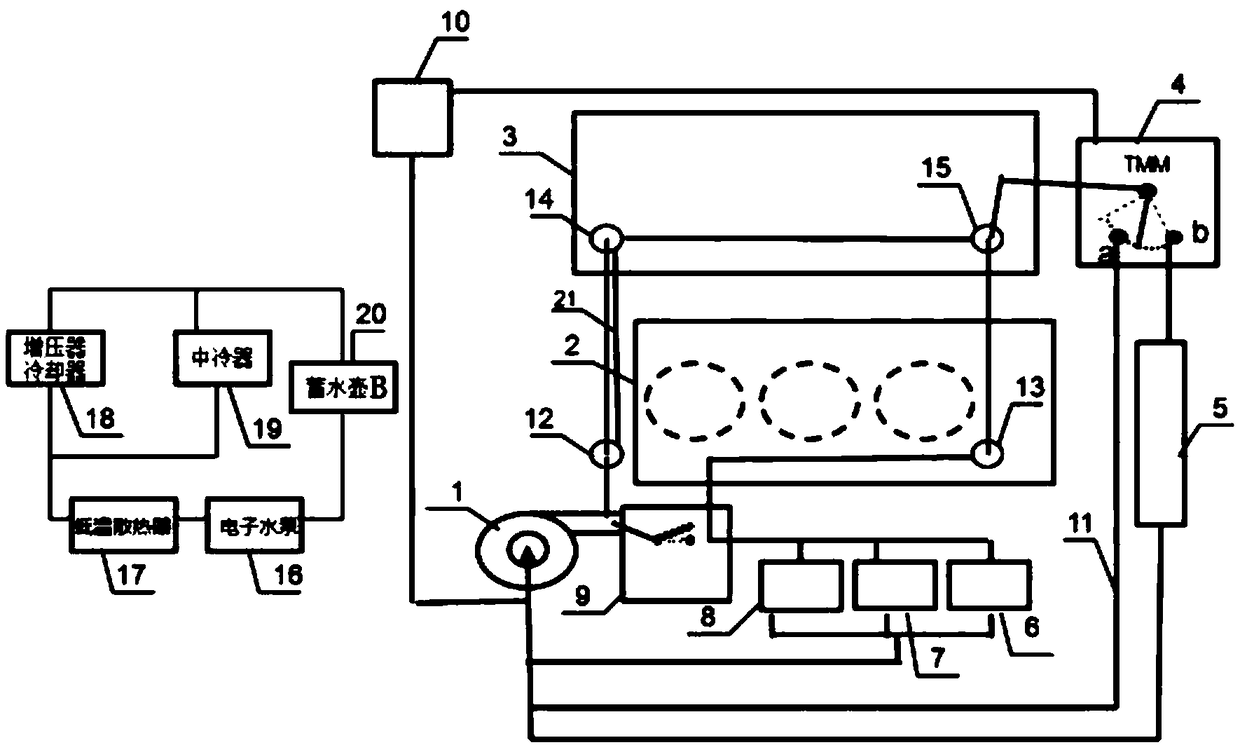
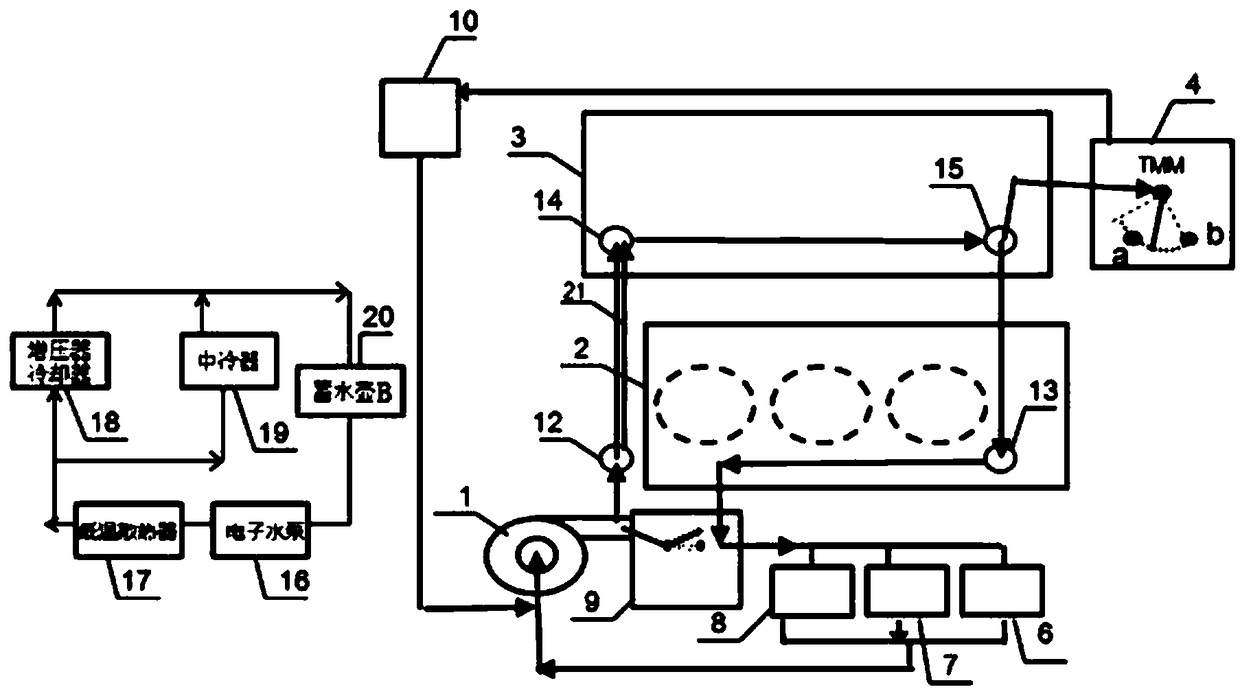
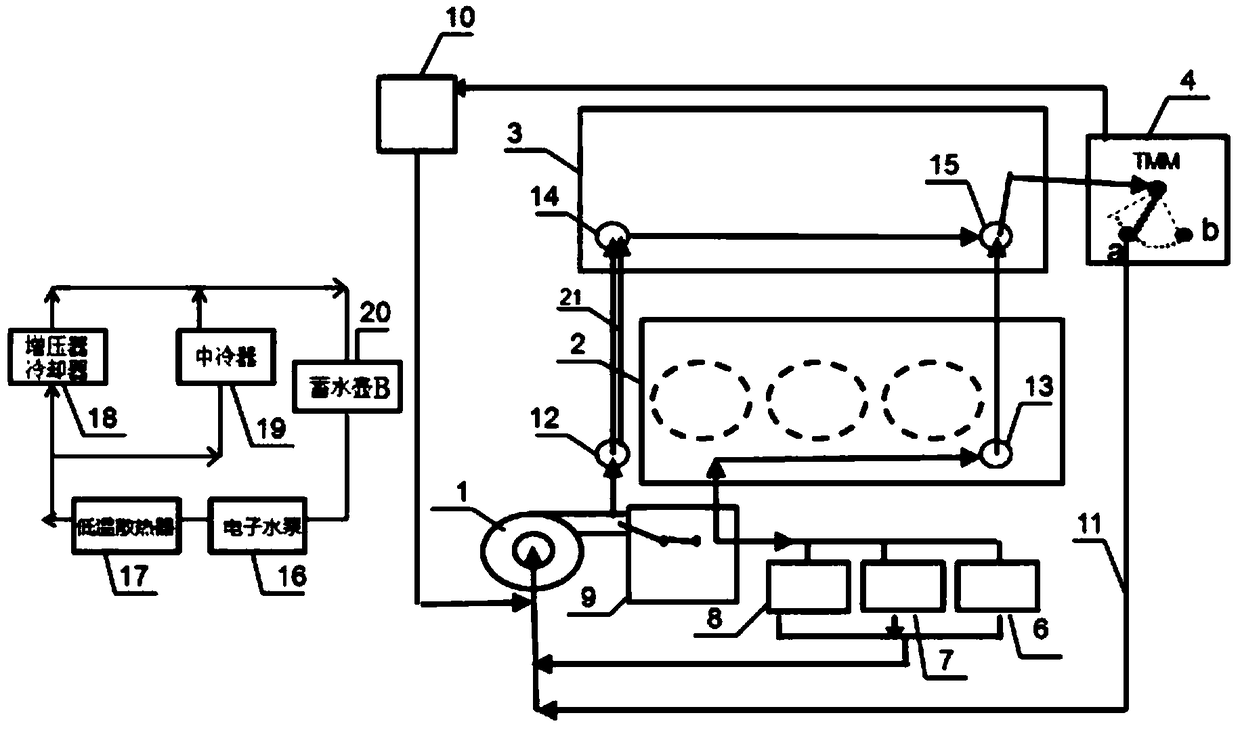
Independent double-circulation cooling system of engine
PatentActiveCN109057943A
Innovation
- An independent engine dual-circulation cooling system is designed, including a high-temperature water circulation cooling system and a low-temperature water circulation cooling system. Through selective control of the solenoid valve and thermostat, rapid warm-up and low fuel consumption are achieved, and an electronic water pump and a separate The water storage bottle ensures the cooling effect of the low temperature system.

Environmental Impact and Regulations
The optimization of LS1 engine cooling systems must be considered within the broader context of environmental regulations and ecological impact. Current automotive emissions standards worldwide are becoming increasingly stringent, with particular focus on reducing greenhouse gas emissions and improving fuel efficiency. The Environmental Protection Agency (EPA) and European Union's Euro standards directly influence cooling system design by requiring engines to operate at optimal temperatures across various driving conditions while minimizing emissions.
Cooling system efficiency directly impacts vehicle emissions through its effect on combustion temperatures. When engines operate outside their optimal temperature range, incomplete combustion occurs, leading to increased hydrocarbon and carbon monoxide emissions. Modern LS1 cooling system optimizations must therefore balance performance requirements with environmental compliance, particularly as regulations continue to tighten globally.
Coolant formulations present another significant environmental consideration. Traditional ethylene glycol-based coolants are toxic to wildlife and aquatic ecosystems, with improper disposal causing substantial environmental damage. The industry has responded with propylene glycol alternatives and extended-life formulations that reduce replacement frequency and environmental impact, though these solutions often come with performance trade-offs that must be addressed in optimization efforts.
Manufacturing processes for cooling system components also face increasing regulatory scrutiny. Production of aluminum radiators, water pumps, and other components generates significant carbon footprints and waste streams. Environmental regulations increasingly mandate recycled content requirements and restrictions on manufacturing byproducts, directly affecting component design and material selection decisions.
End-of-life considerations represent another regulatory challenge, with many jurisdictions implementing extended producer responsibility laws requiring manufacturers to account for the entire lifecycle of components. This necessitates designing cooling systems with recyclability and disassembly in mind, potentially conflicting with performance optimization goals that might otherwise favor integrated or composite materials.
Water consumption during both manufacturing and testing phases has also become a regulatory focus in water-stressed regions. Cooling system development traditionally requires substantial water usage for testing and validation, creating tension between engineering requirements and environmental sustainability goals. Advanced simulation techniques are increasingly employed to reduce physical testing requirements, though regulatory certification still demands significant real-world validation.
Cooling system efficiency directly impacts vehicle emissions through its effect on combustion temperatures. When engines operate outside their optimal temperature range, incomplete combustion occurs, leading to increased hydrocarbon and carbon monoxide emissions. Modern LS1 cooling system optimizations must therefore balance performance requirements with environmental compliance, particularly as regulations continue to tighten globally.
Coolant formulations present another significant environmental consideration. Traditional ethylene glycol-based coolants are toxic to wildlife and aquatic ecosystems, with improper disposal causing substantial environmental damage. The industry has responded with propylene glycol alternatives and extended-life formulations that reduce replacement frequency and environmental impact, though these solutions often come with performance trade-offs that must be addressed in optimization efforts.
Manufacturing processes for cooling system components also face increasing regulatory scrutiny. Production of aluminum radiators, water pumps, and other components generates significant carbon footprints and waste streams. Environmental regulations increasingly mandate recycled content requirements and restrictions on manufacturing byproducts, directly affecting component design and material selection decisions.
End-of-life considerations represent another regulatory challenge, with many jurisdictions implementing extended producer responsibility laws requiring manufacturers to account for the entire lifecycle of components. This necessitates designing cooling systems with recyclability and disassembly in mind, potentially conflicting with performance optimization goals that might otherwise favor integrated or composite materials.
Water consumption during both manufacturing and testing phases has also become a regulatory focus in water-stressed regions. Cooling system development traditionally requires substantial water usage for testing and validation, creating tension between engineering requirements and environmental sustainability goals. Advanced simulation techniques are increasingly employed to reduce physical testing requirements, though regulatory certification still demands significant real-world validation.
Thermal Efficiency Benchmarking
The thermal efficiency benchmarking of the LS1 engine cooling system reveals significant opportunities for optimization when compared to industry standards. Current LS1 cooling systems operate at approximately 82-85% thermal efficiency under standard load conditions, falling short of the 88-90% achieved by leading competitors in the performance engine segment.
Analysis of heat transfer rates across various operating conditions shows that the LS1 system experiences a 12% efficiency drop during high-RPM operations, particularly when ambient temperatures exceed 95°F (35°C). This performance gap widens to nearly 18% in stop-and-go traffic scenarios, indicating suboptimal thermal management during variable load conditions.
Competitive benchmarking against European performance engines demonstrates superior coolant flow dynamics in rival systems. The LS1's conventional water pump design generates approximately 35 gallons per minute at 5,500 RPM, while comparable BMW M-series engines achieve 42 gallons per minute with similar power consumption. This volumetric efficiency difference directly impacts the system's ability to maintain optimal operating temperatures under stress.
Radiator core designs also show room for improvement. Current LS1 radiators utilize a standard tube-and-fin configuration with thermal dissipation capacity of approximately 75,000 BTU/hr. Benchmark testing of aftermarket performance radiators reveals potential improvements of up to 22% in heat rejection capabilities through advanced core designs and increased surface area.
Thermostat response characteristics present another optimization opportunity. The stock LS1 thermostat exhibits an average opening-to-full-flow time of 45 seconds, significantly longer than the 28-second average observed in benchmark Japanese performance engines. This delayed response contributes to temperature fluctuations during rapid load changes.
Fan efficiency metrics indicate the stock mechanical fan consumes approximately 12-15 horsepower at peak operation, while achieving similar cooling performance to electric fan systems that draw equivalent to only 5-7 horsepower from the engine. This represents a potential 7-10 horsepower gain through cooling system optimization.
Temperature stability testing across the engine block reveals hotspots near cylinders 6 and 8, with temperature differentials up to 18°F higher than other cylinders during sustained high-load operation. Benchmark systems maintain more uniform temperature profiles with maximum differentials under 10°F, suggesting opportunities for improved coolant channel design and flow distribution.
Analysis of heat transfer rates across various operating conditions shows that the LS1 system experiences a 12% efficiency drop during high-RPM operations, particularly when ambient temperatures exceed 95°F (35°C). This performance gap widens to nearly 18% in stop-and-go traffic scenarios, indicating suboptimal thermal management during variable load conditions.
Competitive benchmarking against European performance engines demonstrates superior coolant flow dynamics in rival systems. The LS1's conventional water pump design generates approximately 35 gallons per minute at 5,500 RPM, while comparable BMW M-series engines achieve 42 gallons per minute with similar power consumption. This volumetric efficiency difference directly impacts the system's ability to maintain optimal operating temperatures under stress.
Radiator core designs also show room for improvement. Current LS1 radiators utilize a standard tube-and-fin configuration with thermal dissipation capacity of approximately 75,000 BTU/hr. Benchmark testing of aftermarket performance radiators reveals potential improvements of up to 22% in heat rejection capabilities through advanced core designs and increased surface area.
Thermostat response characteristics present another optimization opportunity. The stock LS1 thermostat exhibits an average opening-to-full-flow time of 45 seconds, significantly longer than the 28-second average observed in benchmark Japanese performance engines. This delayed response contributes to temperature fluctuations during rapid load changes.
Fan efficiency metrics indicate the stock mechanical fan consumes approximately 12-15 horsepower at peak operation, while achieving similar cooling performance to electric fan systems that draw equivalent to only 5-7 horsepower from the engine. This represents a potential 7-10 horsepower gain through cooling system optimization.
Temperature stability testing across the engine block reveals hotspots near cylinders 6 and 8, with temperature differentials up to 18°F higher than other cylinders during sustained high-load operation. Benchmark systems maintain more uniform temperature profiles with maximum differentials under 10°F, suggesting opportunities for improved coolant channel design and flow distribution.
Unlock deeper insights with PatSnap Eureka Quick Research — get a full tech report to explore trends and direct your research. Try now!
Generate Your Research Report Instantly with AI Agent
Supercharge your innovation with PatSnap Eureka AI Agent Platform!