

LS1 Engine Supercharger vs Turbo: Comparison
AUG 25, 20259 MIN READ
Generate Your Research Report Instantly with AI Agent
Patsnap Eureka helps you evaluate technical feasibility & market potential.
LS1 Forced Induction Background and Objectives
The LS1 engine, introduced by General Motors in 1997, revolutionized the automotive industry with its lightweight aluminum construction and impressive power output. This small-block V8 engine became the heart of numerous performance vehicles, including the Chevrolet Corvette C5 and Camaro SS. As enthusiasts sought to extract more power from this platform, forced induction emerged as a primary method for significant performance gains.
Forced induction systems increase engine power by compressing air before it enters the combustion chamber, allowing more oxygen to be available for combustion. For the LS1 platform, two main forced induction technologies have dominated the market: superchargers and turbochargers. Each system represents a distinct approach to air compression with unique characteristics that affect performance, drivability, and installation complexity.
The evolution of forced induction technology for LS1 engines has followed broader automotive industry trends, with early systems focusing on raw power gains while modern solutions emphasize efficiency, reliability, and drivability. Initial aftermarket solutions often required significant modifications to the engine bay and supporting systems, whereas contemporary options offer more integrated designs with comprehensive management systems.
Market demand for LS1 forced induction has been driven by the platform's widespread adoption and excellent response to power modifications. The LS1's robust bottom end and efficient cylinder head design make it particularly receptive to forced induction, capable of supporting significant power increases with minimal internal modifications compared to many contemporary engines.
The technical objectives of this analysis are to comprehensively compare supercharger and turbocharger systems for the LS1 platform across multiple dimensions: power delivery characteristics, installation complexity, heat management, reliability, cost considerations, and suitability for different applications. We aim to establish clear performance profiles for each technology to guide decision-making for various use cases.
Additionally, this research seeks to identify the technological trajectory of forced induction systems for LS architecture engines, examining how innovations in materials science, manufacturing techniques, and electronic control systems have influenced system design and performance. Understanding these trends is crucial for anticipating future developments in the field.
This analysis will also consider the broader ecosystem of supporting modifications necessary for optimal forced induction performance, including fuel system upgrades, cooling system enhancements, and engine management solutions. The interplay between these systems significantly impacts the overall performance, reliability, and user experience of forced induction LS1 engines.
Forced induction systems increase engine power by compressing air before it enters the combustion chamber, allowing more oxygen to be available for combustion. For the LS1 platform, two main forced induction technologies have dominated the market: superchargers and turbochargers. Each system represents a distinct approach to air compression with unique characteristics that affect performance, drivability, and installation complexity.
The evolution of forced induction technology for LS1 engines has followed broader automotive industry trends, with early systems focusing on raw power gains while modern solutions emphasize efficiency, reliability, and drivability. Initial aftermarket solutions often required significant modifications to the engine bay and supporting systems, whereas contemporary options offer more integrated designs with comprehensive management systems.
Market demand for LS1 forced induction has been driven by the platform's widespread adoption and excellent response to power modifications. The LS1's robust bottom end and efficient cylinder head design make it particularly receptive to forced induction, capable of supporting significant power increases with minimal internal modifications compared to many contemporary engines.
The technical objectives of this analysis are to comprehensively compare supercharger and turbocharger systems for the LS1 platform across multiple dimensions: power delivery characteristics, installation complexity, heat management, reliability, cost considerations, and suitability for different applications. We aim to establish clear performance profiles for each technology to guide decision-making for various use cases.
Additionally, this research seeks to identify the technological trajectory of forced induction systems for LS architecture engines, examining how innovations in materials science, manufacturing techniques, and electronic control systems have influenced system design and performance. Understanding these trends is crucial for anticipating future developments in the field.
This analysis will also consider the broader ecosystem of supporting modifications necessary for optimal forced induction performance, including fuel system upgrades, cooling system enhancements, and engine management solutions. The interplay between these systems significantly impacts the overall performance, reliability, and user experience of forced induction LS1 engines.
Market Analysis for LS1 Performance Upgrades
The LS1 performance aftermarket has experienced substantial growth over the past decade, with forced induction systems representing one of the most significant segments. Market research indicates that the global automotive supercharger market was valued at approximately $7.5 billion in 2022, with a projected CAGR of 5.8% through 2030. Within this market, LS1 engine modifications account for a notable portion due to the platform's widespread adoption and versatility.
Consumer demand analysis reveals distinct market segments for supercharger and turbocharger systems. Supercharger installations typically attract enthusiasts seeking immediate throttle response, simplified installation, and consistent power delivery. This segment tends to be less price-sensitive, with consumers willing to pay premium prices ranging from $3,500 to $7,000 for complete supercharger kits from established brands like Magnuson, Edelbrock, and ProCharger.
Turbocharger systems, conversely, appeal to a more technically-inclined demographic focused on maximum power potential and customization options. The turbocharger market for LS1 applications has seen 15% year-over-year growth since 2018, outpacing supercharger sales which have maintained steady 8-10% growth during the same period.
Regional market distribution shows interesting patterns, with supercharger systems dominating sales in North America (62% market share), while turbocharger systems see stronger adoption in European and Asian markets where tuning culture emphasizes high-output builds and track performance.
Sales channel analysis indicates that 68% of forced induction systems are purchased through specialized performance retailers and online direct-to-consumer channels, with the remaining 32% installed through professional performance shops. This distribution highlights the importance of technical support and installation services as value-added components of the market ecosystem.
Market forecasts suggest continued growth for both segments, with turbocharger systems expected to gain market share due to improving low-end response technologies and increasing consumer comfort with more complex installations. The entry of major OEM suppliers into the aftermarket space is also reshaping competitive dynamics, with companies like Garrett and BorgWarner introducing LS1-specific turbo kits to compete with established aftermarket brands.
Consumer price sensitivity varies significantly between segments, with supercharger customers demonstrating 30% less price elasticity compared to turbocharger customers, who often assemble systems from individual components to optimize cost-performance ratios.
Consumer demand analysis reveals distinct market segments for supercharger and turbocharger systems. Supercharger installations typically attract enthusiasts seeking immediate throttle response, simplified installation, and consistent power delivery. This segment tends to be less price-sensitive, with consumers willing to pay premium prices ranging from $3,500 to $7,000 for complete supercharger kits from established brands like Magnuson, Edelbrock, and ProCharger.
Turbocharger systems, conversely, appeal to a more technically-inclined demographic focused on maximum power potential and customization options. The turbocharger market for LS1 applications has seen 15% year-over-year growth since 2018, outpacing supercharger sales which have maintained steady 8-10% growth during the same period.
Regional market distribution shows interesting patterns, with supercharger systems dominating sales in North America (62% market share), while turbocharger systems see stronger adoption in European and Asian markets where tuning culture emphasizes high-output builds and track performance.
Sales channel analysis indicates that 68% of forced induction systems are purchased through specialized performance retailers and online direct-to-consumer channels, with the remaining 32% installed through professional performance shops. This distribution highlights the importance of technical support and installation services as value-added components of the market ecosystem.
Market forecasts suggest continued growth for both segments, with turbocharger systems expected to gain market share due to improving low-end response technologies and increasing consumer comfort with more complex installations. The entry of major OEM suppliers into the aftermarket space is also reshaping competitive dynamics, with companies like Garrett and BorgWarner introducing LS1-specific turbo kits to compete with established aftermarket brands.
Consumer price sensitivity varies significantly between segments, with supercharger customers demonstrating 30% less price elasticity compared to turbocharger customers, who often assemble systems from individual components to optimize cost-performance ratios.
Current Supercharger and Turbocharger Technologies
The current landscape of forced induction technologies for the LS1 engine is dominated by two primary systems: superchargers and turbochargers. Each system represents distinct approaches to increasing engine power through air compression, with significant differences in design philosophy, performance characteristics, and implementation challenges.
Supercharger technology for the LS1 platform has evolved into three main variants: Roots-type, Twin-screw, and Centrifugal designs. Roots-type superchargers remain popular for their immediate throttle response and low-end torque production, typically delivering 6-8 PSI of boost with minimal lag. These systems mount directly to the intake manifold, creating a compact installation profile ideal for vehicles with limited hood clearance.
Twin-screw superchargers offer improved thermal efficiency compared to Roots designs, with internal compression occurring before air enters the intake manifold. This results in cooler charge temperatures and potentially higher power outputs, though at increased manufacturing complexity and cost. Current twin-screw systems for LS1 applications can reliably produce 8-12 PSI while maintaining streetable characteristics.
Centrifugal superchargers represent the highest-efficiency option among belt-driven systems, utilizing impeller designs similar to turbochargers but driven mechanically rather than by exhaust gases. Modern centrifugal units from manufacturers like ProCharger and Vortech deliver progressive boost that increases with engine RPM, making them particularly effective for high-RPM applications and racing scenarios.
On the turbocharger front, single-turbo setups have gained significant traction in the LS1 community, with variable geometry turbines (VGT) addressing traditional turbo lag concerns. These systems can now deliver responsive power from as low as 2,500 RPM while still providing substantial top-end performance. Advanced ceramic bearing technology has improved durability while reducing rotational mass.
Twin-turbo configurations have become increasingly refined, with smaller twin turbos offering quicker spool-up times compared to single larger units. Modern twin-turbo kits for the LS1 typically utilize turbos in the 62-76mm range, striking a balance between response and maximum airflow capacity.
Water-methanol injection systems have emerged as complementary technologies for both supercharged and turbocharged applications, allowing for increased boost levels through charge cooling and detonation suppression. Similarly, air-to-water intercoolers have become standard equipment on premium forced induction packages, offering superior thermal efficiency compared to traditional air-to-air designs.
Electronic management systems have evolved significantly, with standalone ECUs and piggyback controllers now offering sophisticated boost control strategies, including boost-by-gear functionality and integration with traction control systems to optimize power delivery across varying conditions.
Supercharger technology for the LS1 platform has evolved into three main variants: Roots-type, Twin-screw, and Centrifugal designs. Roots-type superchargers remain popular for their immediate throttle response and low-end torque production, typically delivering 6-8 PSI of boost with minimal lag. These systems mount directly to the intake manifold, creating a compact installation profile ideal for vehicles with limited hood clearance.
Twin-screw superchargers offer improved thermal efficiency compared to Roots designs, with internal compression occurring before air enters the intake manifold. This results in cooler charge temperatures and potentially higher power outputs, though at increased manufacturing complexity and cost. Current twin-screw systems for LS1 applications can reliably produce 8-12 PSI while maintaining streetable characteristics.
Centrifugal superchargers represent the highest-efficiency option among belt-driven systems, utilizing impeller designs similar to turbochargers but driven mechanically rather than by exhaust gases. Modern centrifugal units from manufacturers like ProCharger and Vortech deliver progressive boost that increases with engine RPM, making them particularly effective for high-RPM applications and racing scenarios.
On the turbocharger front, single-turbo setups have gained significant traction in the LS1 community, with variable geometry turbines (VGT) addressing traditional turbo lag concerns. These systems can now deliver responsive power from as low as 2,500 RPM while still providing substantial top-end performance. Advanced ceramic bearing technology has improved durability while reducing rotational mass.
Twin-turbo configurations have become increasingly refined, with smaller twin turbos offering quicker spool-up times compared to single larger units. Modern twin-turbo kits for the LS1 typically utilize turbos in the 62-76mm range, striking a balance between response and maximum airflow capacity.
Water-methanol injection systems have emerged as complementary technologies for both supercharged and turbocharged applications, allowing for increased boost levels through charge cooling and detonation suppression. Similarly, air-to-water intercoolers have become standard equipment on premium forced induction packages, offering superior thermal efficiency compared to traditional air-to-air designs.
Electronic management systems have evolved significantly, with standalone ECUs and piggyback controllers now offering sophisticated boost control strategies, including boost-by-gear functionality and integration with traction control systems to optimize power delivery across varying conditions.
Technical Comparison of Supercharger vs Turbo Solutions
01 Supercharger systems for LS1 engines
Supercharger systems for LS1 engines provide immediate power boost by mechanically driving air compression using the engine's crankshaft. These systems typically deliver consistent power across the RPM range with minimal lag. Superchargers for LS1 engines often feature intercooling systems to reduce intake air temperatures, improving efficiency and power output. The direct mechanical connection results in predictable power delivery characteristics that are beneficial for street applications and drag racing.- Supercharger systems for LS1 engines: Supercharger systems for LS1 engines provide immediate power boost by mechanically driving air compression using the engine's crankshaft. These systems typically deliver consistent power throughout the RPM range with minimal lag. Superchargers for LS1 engines often feature intercooling systems to reduce intake air temperatures, improving efficiency and power output. The direct mechanical connection results in predictable power delivery characteristics that are beneficial for street applications and drag racing.
- Turbocharger systems for LS1 engines: Turbocharger systems utilize exhaust gas energy to drive a turbine that compresses intake air, offering significant power gains for LS1 engines. These systems typically provide greater top-end power compared to superchargers but may exhibit turbo lag at lower RPMs. Modern turbocharger designs for LS1 applications incorporate variable geometry technology and advanced wastegate controls to minimize lag and improve throttle response. Twin-turbo configurations can be employed to balance low-end response with high-end power.
- Cooling and intercooler systems for forced induction: Cooling systems are critical components in forced induction setups for LS1 engines, as compressed air generates heat that reduces power and efficiency. Intercoolers, either air-to-air or liquid-to-air designs, significantly reduce intake air temperatures, allowing for higher boost levels without detonation. Advanced cooling technologies incorporate multi-stage heat exchangers and dedicated cooling circuits to maintain optimal operating temperatures under high-load conditions. Proper thermal management directly impacts performance characteristics, reliability, and power output of forced induction systems.
- Electronic control systems for forced induction: Electronic control systems optimize the performance of forced induction on LS1 engines by managing boost levels, fuel delivery, and ignition timing. Advanced engine management systems can adjust boost pressure based on various parameters including throttle position, engine load, and ambient conditions. Integrated safety features prevent engine damage by reducing boost under adverse conditions. Modern control systems also provide data logging capabilities to analyze performance characteristics and make tuning adjustments for maximum efficiency and power output.
- Hybrid and compound forced induction systems: Hybrid and compound forced induction systems combine supercharger and turbocharger technologies to maximize the benefits of both approaches for LS1 engines. These systems typically use a supercharger for immediate low-end response while turbochargers provide additional boost at higher RPMs. Sequential setups may employ smaller turbochargers for quick spool-up followed by larger units for maximum top-end power. Compound systems can achieve higher overall boost levels while maintaining drivability across the entire RPM range, though they require sophisticated control systems to manage the interaction between components.
02 Turbocharger systems for LS1 engines
Turbocharger systems utilize exhaust gas energy to drive a turbine that compresses intake air, offering significant power gains for LS1 engines. These systems typically provide higher peak power at higher RPMs compared to superchargers, though they may exhibit turbo lag at lower engine speeds. Modern turbo systems for LS1 engines often incorporate variable geometry technology and advanced wastegate controls to optimize performance across different operating conditions. Twin-turbo configurations can be employed to reduce lag while maintaining high boost potential.Expand Specific Solutions03 Cooling and intercooler systems for forced induction
Effective cooling systems are critical for forced induction applications on LS1 engines to manage increased heat loads. Intercoolers reduce the temperature of compressed air, increasing density and allowing for higher boost levels without detonation. Air-to-air intercoolers offer simplicity and reliability, while air-to-water systems provide more efficient cooling with compact packaging. Proper heat exchanger sizing and placement significantly impacts the performance characteristics of both supercharged and turbocharged LS1 engines, with efficient cooling systems enabling sustained performance during extended high-output operation.Expand Specific Solutions04 Electronic control systems for forced induction
Advanced electronic control systems optimize forced induction performance on LS1 engines by managing boost levels, fuel delivery, and ignition timing. These systems can adjust parameters based on operating conditions to maximize power while preventing engine damage. Integrated sensors monitor critical variables such as intake air temperature, manifold pressure, and detonation to enable real-time adjustments. Modern control systems often feature user-programmable maps that allow customization of power delivery characteristics to suit different driving conditions, from daily commuting to track performance.Expand Specific Solutions05 Hybrid and compound forced induction systems
Hybrid and compound forced induction systems combine supercharger and turbocharger technologies to leverage the advantages of both approaches on LS1 engines. These systems typically use a supercharger for low-end response and a turbocharger for high-end power, creating a broader, more usable power band. Sequential setups may engage different components at various RPM ranges to optimize performance throughout the operating range. Compound systems, where one compressor feeds another, can achieve extremely high boost levels while maintaining drivability. These sophisticated setups require complex control strategies but can deliver exceptional performance characteristics across the entire RPM range.Expand Specific Solutions
Major Manufacturers in LS1 Forced Induction Market
The LS1 Engine Supercharger vs Turbo market is in a growth phase, with increasing demand for performance enhancement solutions. Major automotive manufacturers like Ford, GM, Toyota, and Mercedes-Benz are investing in forced induction technologies, while specialized companies such as SuperTurbo Technologies, BorgWarner, and Eaton lead in innovation. The market shows varying degrees of technical maturity, with established players like Bosch and HKS offering refined solutions, while newer entrants focus on niche applications. Supercharger technology demonstrates higher immediate reliability, while turbocharging continues to evolve with efficiency improvements, particularly in the performance aftermarket segment where companies compete to balance power delivery, fuel efficiency, and durability.
SuperTurbo Technologies, Inc.
Technical Solution: SuperTurbo has developed a hybrid forced induction system that combines supercharger and turbocharger technologies specifically applicable to LS1 platforms. Their patented "SuperTurbo" device functions as a mechanically-driven supercharger at low RPMs and transitions to turbocharger operation at higher engine speeds. This system utilizes a continuously variable transmission (CVT) to modulate the mechanical drive ratio based on engine load and speed. The technology incorporates a unique turbine-compressor assembly that can be both mechanically driven and exhaust-gas powered, eliminating traditional turbo lag while maximizing efficiency across the entire RPM range. Their control systems dynamically adjust the power split between mechanical and exhaust energy recovery to optimize performance and efficiency. Testing has shown up to 30% improvement in low-end torque compared to traditional turbochargers while maintaining similar high-RPM efficiency.
Strengths: Eliminates turbo lag while maintaining turbocharger efficiency at higher RPMs, offers broader powerband than either technology alone, and provides better fuel efficiency than pure supercharging. Weaknesses: Significantly more complex system with additional failure points, higher initial cost than either standalone technology, and requires sophisticated control systems for optimal operation.
GM Global Technology Operations LLC
Technical Solution: GM's approach to LS1 forced induction centers on their patented supercharger technology optimized specifically for the LS1 platform. Their Eaton-based roots-type supercharger systems deliver immediate throttle response with boost available from idle. GM's technical solution incorporates integrated charge cooling, optimized pulley ratios for different power targets, and proprietary ECU calibration strategies that maintain reliability while maximizing performance. Their Gen V small block architecture further evolved this technology with direct injection compatibility and variable valve timing integration. GM's supercharger systems typically operate at 8-12 psi boost levels while maintaining OEM-level durability standards and emissions compliance. The company has extensively tested these systems through their performance divisions (including over 100,000 durability test miles) to ensure they meet GM's reliability standards.
Strengths: Immediate throttle response with no lag, simpler installation compared to turbo systems, factory-level integration with engine management systems, and proven reliability with OEM validation. Weaknesses: Less efficient than turbocharging at higher RPMs, parasitic power loss at low boost demands, and generally higher operating temperatures than equivalent turbo setups.
Key Patents and Innovations in Forced Induction
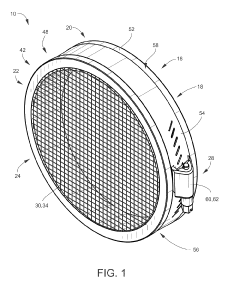
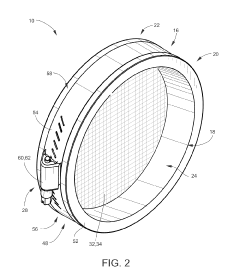
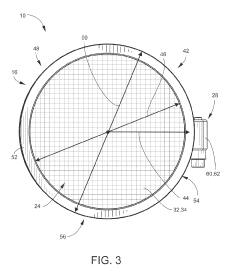
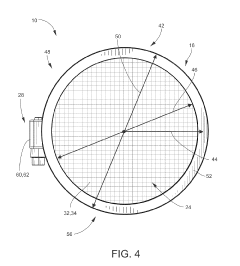
Screen filter for the intake of a turbocharger or supercharger
PatentInactiveUS20190331070A1
Innovation
- A compact screen filter design with a coupling device and securing means that fits around the intake of turbochargers or superchargers, featuring a screen that filters debris and allows unrestricted airflow, made from materials like stainless-steel mesh or wire screens, and a flexible coupling device for secure installation.
Axial seal for roots-style supercharger
PatentWO2014144648A1
Innovation
- The implementation of axial rotor seals with radially outwardly facing sealing surfaces and inwardly facing sealing surfaces within the shaft openings, forming radial sealing interfaces with clearances less than or equal to 1.1 times the rotor tip clearance, to minimize air leakage and enhance sealing efficiency.


Installation and Integration Considerations
When comparing superchargers and turbochargers for the LS1 engine, installation and integration considerations play a crucial role in determining which forced induction system is more suitable for specific applications. These factors significantly impact not only the performance outcomes but also the feasibility and cost-effectiveness of the modification.
Superchargers for the LS1 engine typically offer more straightforward installation processes. Most supercharger kits are designed as bolt-on systems that mount directly atop the engine, replacing the factory intake manifold. This positioning allows for relatively simple integration with existing engine components and requires minimal modification to the engine bay architecture. The direct mechanical connection to the crankshaft via a belt system eliminates the need for extensive exhaust system modifications, making supercharger installations generally less invasive.
Turbocharger installations, conversely, present more complex integration challenges. They require significant exhaust system modifications to accommodate the turbine housing and associated plumbing. For the LS1 platform, this often necessitates custom fabrication of exhaust manifolds or headers, wastegate systems, and downpipes. Additionally, oil feed and return lines must be properly integrated with the engine's lubrication system, adding another layer of complexity to the installation process.
Space constraints represent another critical consideration. The LS1 engine bay in most vehicle applications (particularly in the F-body Camaro/Firebird and C5 Corvette platforms) offers limited room for additional components. Superchargers maintain a more compact overall footprint since they're centrally located above the engine. Turbocharger systems, requiring both hot-side (exhaust) and cold-side (intake) routing, demand more comprehensive spatial planning and often necessitate relocation of factory components like power steering pumps or A/C compressors.
Heat management differs substantially between the two systems. Superchargers generate less extreme temperatures but dissipate heat directly into the engine bay. Turbochargers produce significantly higher temperatures in the exhaust components, requiring proper heat shielding and strategic placement to prevent thermal damage to surrounding components and potential heat soak issues.
Control system integration also varies between the two forced induction methods. Modern supercharger kits typically include pre-programmed engine management solutions that integrate relatively seamlessly with the LS1's factory ECU. Turbocharger systems often require more extensive engine management modifications, including boost control solenoids, wastegate controllers, and sometimes complete standalone engine management systems to properly manage the less predictable boost characteristics.
Maintenance accessibility represents the final key integration consideration. Superchargers, being positioned atop the engine, generally offer better service access for maintenance procedures like oil changes or belt replacements. Turbocharger components, particularly those mounted low in the engine bay or near exhaust components, can present significant challenges for routine maintenance and inspection.
Superchargers for the LS1 engine typically offer more straightforward installation processes. Most supercharger kits are designed as bolt-on systems that mount directly atop the engine, replacing the factory intake manifold. This positioning allows for relatively simple integration with existing engine components and requires minimal modification to the engine bay architecture. The direct mechanical connection to the crankshaft via a belt system eliminates the need for extensive exhaust system modifications, making supercharger installations generally less invasive.
Turbocharger installations, conversely, present more complex integration challenges. They require significant exhaust system modifications to accommodate the turbine housing and associated plumbing. For the LS1 platform, this often necessitates custom fabrication of exhaust manifolds or headers, wastegate systems, and downpipes. Additionally, oil feed and return lines must be properly integrated with the engine's lubrication system, adding another layer of complexity to the installation process.
Space constraints represent another critical consideration. The LS1 engine bay in most vehicle applications (particularly in the F-body Camaro/Firebird and C5 Corvette platforms) offers limited room for additional components. Superchargers maintain a more compact overall footprint since they're centrally located above the engine. Turbocharger systems, requiring both hot-side (exhaust) and cold-side (intake) routing, demand more comprehensive spatial planning and often necessitate relocation of factory components like power steering pumps or A/C compressors.
Heat management differs substantially between the two systems. Superchargers generate less extreme temperatures but dissipate heat directly into the engine bay. Turbochargers produce significantly higher temperatures in the exhaust components, requiring proper heat shielding and strategic placement to prevent thermal damage to surrounding components and potential heat soak issues.
Control system integration also varies between the two forced induction methods. Modern supercharger kits typically include pre-programmed engine management solutions that integrate relatively seamlessly with the LS1's factory ECU. Turbocharger systems often require more extensive engine management modifications, including boost control solenoids, wastegate controllers, and sometimes complete standalone engine management systems to properly manage the less predictable boost characteristics.
Maintenance accessibility represents the final key integration consideration. Superchargers, being positioned atop the engine, generally offer better service access for maintenance procedures like oil changes or belt replacements. Turbocharger components, particularly those mounted low in the engine bay or near exhaust components, can present significant challenges for routine maintenance and inspection.
Emissions Compliance and Regulatory Factors
Emissions regulations have become increasingly stringent worldwide, significantly impacting forced induction choices for LS1 engine modifications. When comparing superchargers and turbochargers, compliance with these regulations represents a critical decision factor that extends beyond pure performance considerations.
Superchargers generally offer more predictable emissions profiles due to their linear power delivery and consistent air-fuel ratios. This characteristic makes them somewhat easier to calibrate for emissions compliance, particularly in states with strict regulations like California with its California Air Resources Board (CARB) standards. Many aftermarket supercharger kits for LS1 engines come with CARB Executive Orders (EOs), legally permitting their installation on emissions-controlled vehicles.
Turbochargers, while potentially more efficient, present greater emissions challenges due to their variable boost characteristics. The lag-to-surge power delivery can create transient emissions spikes that are difficult to manage with stock engine management systems. Turbo systems often require more sophisticated engine control units and extensive tuning to maintain emissions compliance, particularly regarding NOx emissions that increase with higher combustion temperatures.
Recent regulatory trends have introduced additional complexities. The EPA's enforcement actions against aftermarket manufacturers have intensified, with particular focus on defeat devices and modifications that alter emissions characteristics. This regulatory environment has pushed manufacturers to develop more sophisticated compliance strategies, including integrated catalytic converters and advanced electronic controls specifically designed for forced induction applications.
From a global perspective, Euro 6/7 standards and similar regulations in Asian markets have further complicated the international market for forced induction systems. These standards often incorporate real-world driving emissions tests that can reveal compliance issues not apparent in laboratory testing, particularly affecting turbocharged applications that may experience more variable real-world conditions.
Manufacturers have responded with technological innovations such as electronically controlled wastegates for turbos and bypass valves for superchargers that help maintain emissions compliance across various operating conditions. Additionally, some newer systems incorporate secondary air injection or enhanced catalytic converter designs specifically engineered to address the emissions challenges of forced induction.
For LS1 engine owners considering modifications, the emissions compliance landscape now requires careful consideration of not just the initial installation but also ongoing compliance through inspection cycles. Superchargers generally present fewer regulatory hurdles in this regard, though the gap is narrowing as turbocharger technology and control systems continue to advance with emissions compliance as a primary design consideration.
Superchargers generally offer more predictable emissions profiles due to their linear power delivery and consistent air-fuel ratios. This characteristic makes them somewhat easier to calibrate for emissions compliance, particularly in states with strict regulations like California with its California Air Resources Board (CARB) standards. Many aftermarket supercharger kits for LS1 engines come with CARB Executive Orders (EOs), legally permitting their installation on emissions-controlled vehicles.
Turbochargers, while potentially more efficient, present greater emissions challenges due to their variable boost characteristics. The lag-to-surge power delivery can create transient emissions spikes that are difficult to manage with stock engine management systems. Turbo systems often require more sophisticated engine control units and extensive tuning to maintain emissions compliance, particularly regarding NOx emissions that increase with higher combustion temperatures.
Recent regulatory trends have introduced additional complexities. The EPA's enforcement actions against aftermarket manufacturers have intensified, with particular focus on defeat devices and modifications that alter emissions characteristics. This regulatory environment has pushed manufacturers to develop more sophisticated compliance strategies, including integrated catalytic converters and advanced electronic controls specifically designed for forced induction applications.
From a global perspective, Euro 6/7 standards and similar regulations in Asian markets have further complicated the international market for forced induction systems. These standards often incorporate real-world driving emissions tests that can reveal compliance issues not apparent in laboratory testing, particularly affecting turbocharged applications that may experience more variable real-world conditions.
Manufacturers have responded with technological innovations such as electronically controlled wastegates for turbos and bypass valves for superchargers that help maintain emissions compliance across various operating conditions. Additionally, some newer systems incorporate secondary air injection or enhanced catalytic converter designs specifically engineered to address the emissions challenges of forced induction.
For LS1 engine owners considering modifications, the emissions compliance landscape now requires careful consideration of not just the initial installation but also ongoing compliance through inspection cycles. Superchargers generally present fewer regulatory hurdles in this regard, though the gap is narrowing as turbocharger technology and control systems continue to advance with emissions compliance as a primary design consideration.
Unlock deeper insights with Patsnap Eureka Quick Research — get a full tech report to explore trends and direct your research. Try now!
Generate Your Research Report Instantly with AI Agent
Supercharge your innovation with Patsnap Eureka AI Agent Platform!