

Machine Olfaction for Explosive Detection: Efficiency Metrics
APR 29, 20269 MIN READ
Generate Your Research Report Instantly with AI Agent
PatSnap Eureka helps you evaluate technical feasibility & market potential.
Machine Olfaction Explosive Detection Background and Objectives
Machine olfaction technology represents a revolutionary approach to explosive detection that mimics the biological olfactory systems found in nature. This field has emerged from the convergence of advanced sensor technologies, artificial intelligence, and materials science to create electronic nose systems capable of detecting trace amounts of explosive compounds. The technology addresses critical security challenges in airports, border crossings, military operations, and public venues where traditional detection methods may prove insufficient or impractical.
The historical development of machine olfaction for explosive detection began in the 1980s with early chemical sensor arrays and has evolved through several technological generations. Initial systems relied on simple gas chromatography principles, while modern implementations incorporate sophisticated nanomaterial-based sensors, machine learning algorithms, and real-time processing capabilities. This evolution has been driven by increasing security threats and the limitations of conventional detection methods such as X-ray screening and manual inspection procedures.
Current technological objectives focus on achieving detection capabilities that surpass human and canine olfactory performance while maintaining operational efficiency. The primary goal involves developing systems capable of detecting explosive vapors at concentrations as low as parts-per-trillion levels, which represents the typical vapor pressure signatures of common explosive materials including TNT, RDX, PETN, and improvised explosive devices. These systems must demonstrate high selectivity to minimize false positive rates while maintaining rapid response times suitable for high-throughput security applications.
Efficiency metrics serve as critical benchmarks for evaluating machine olfaction systems in explosive detection applications. Key performance indicators include detection sensitivity measured in minimum detectable concentrations, response time from sample introduction to alarm generation, selectivity ratios comparing target explosive signals to background interference, and operational stability over extended deployment periods. Additional metrics encompass power consumption requirements, maintenance intervals, and environmental robustness across varying temperature and humidity conditions.
The strategic importance of advancing machine olfaction technology extends beyond immediate security applications to encompass broader societal benefits. Enhanced detection capabilities can significantly reduce security processing times while improving threat identification accuracy, ultimately contributing to more efficient transportation systems and safer public environments. Furthermore, the technology's potential applications span environmental monitoring, industrial safety, and medical diagnostics, creating opportunities for cross-sector innovation and commercial development.
The historical development of machine olfaction for explosive detection began in the 1980s with early chemical sensor arrays and has evolved through several technological generations. Initial systems relied on simple gas chromatography principles, while modern implementations incorporate sophisticated nanomaterial-based sensors, machine learning algorithms, and real-time processing capabilities. This evolution has been driven by increasing security threats and the limitations of conventional detection methods such as X-ray screening and manual inspection procedures.
Current technological objectives focus on achieving detection capabilities that surpass human and canine olfactory performance while maintaining operational efficiency. The primary goal involves developing systems capable of detecting explosive vapors at concentrations as low as parts-per-trillion levels, which represents the typical vapor pressure signatures of common explosive materials including TNT, RDX, PETN, and improvised explosive devices. These systems must demonstrate high selectivity to minimize false positive rates while maintaining rapid response times suitable for high-throughput security applications.
Efficiency metrics serve as critical benchmarks for evaluating machine olfaction systems in explosive detection applications. Key performance indicators include detection sensitivity measured in minimum detectable concentrations, response time from sample introduction to alarm generation, selectivity ratios comparing target explosive signals to background interference, and operational stability over extended deployment periods. Additional metrics encompass power consumption requirements, maintenance intervals, and environmental robustness across varying temperature and humidity conditions.
The strategic importance of advancing machine olfaction technology extends beyond immediate security applications to encompass broader societal benefits. Enhanced detection capabilities can significantly reduce security processing times while improving threat identification accuracy, ultimately contributing to more efficient transportation systems and safer public environments. Furthermore, the technology's potential applications span environmental monitoring, industrial safety, and medical diagnostics, creating opportunities for cross-sector innovation and commercial development.
Market Demand for Electronic Nose Explosive Detection Systems
The global security landscape has witnessed unprecedented demand for advanced explosive detection technologies, with electronic nose systems emerging as a critical component in comprehensive threat mitigation strategies. Traditional detection methods, while effective in controlled environments, often fall short in addressing the dynamic nature of modern security challenges, creating substantial market opportunities for machine olfaction solutions.
Airport security represents the largest market segment for electronic nose explosive detection systems, driven by increasing passenger volumes and evolving regulatory requirements. International aviation authorities have progressively tightened security protocols, necessitating deployment of multi-layered detection approaches that complement existing X-ray and manual inspection procedures. The integration of electronic nose technology offers significant advantages in detecting trace explosive vapors that conventional methods might overlook.
Critical infrastructure protection constitutes another rapidly expanding market vertical, encompassing government buildings, military installations, transportation hubs, and energy facilities. The heightened awareness of asymmetric threats has prompted facility operators to invest in proactive detection capabilities that can identify potential explosive materials before they reach sensitive areas. Electronic nose systems provide continuous monitoring capabilities that align with the operational requirements of these high-security environments.
Border security applications have gained substantial traction as nations seek to enhance their defensive capabilities against smuggling operations and terrorist infiltration attempts. Customs agencies and border patrol organizations increasingly recognize the value of portable electronic nose systems that can rapidly screen vehicles, cargo containers, and personal belongings without requiring extensive manual intervention or causing significant delays in legitimate commerce.
The commercial sector presents emerging opportunities, particularly in venues hosting large gatherings such as sports stadiums, concert halls, and convention centers. Event organizers face mounting pressure to implement comprehensive security measures while maintaining positive visitor experiences. Electronic nose technology offers discrete screening capabilities that can enhance security posture without creating bottlenecks or invasive inspection procedures.
Market growth drivers include technological maturation, cost reduction trends, and increasing integration with artificial intelligence platforms that enhance detection accuracy and reduce false positive rates. The convergence of these factors has created favorable conditions for widespread adoption across multiple application domains, establishing electronic nose explosive detection as an essential component of modern security infrastructure.
Airport security represents the largest market segment for electronic nose explosive detection systems, driven by increasing passenger volumes and evolving regulatory requirements. International aviation authorities have progressively tightened security protocols, necessitating deployment of multi-layered detection approaches that complement existing X-ray and manual inspection procedures. The integration of electronic nose technology offers significant advantages in detecting trace explosive vapors that conventional methods might overlook.
Critical infrastructure protection constitutes another rapidly expanding market vertical, encompassing government buildings, military installations, transportation hubs, and energy facilities. The heightened awareness of asymmetric threats has prompted facility operators to invest in proactive detection capabilities that can identify potential explosive materials before they reach sensitive areas. Electronic nose systems provide continuous monitoring capabilities that align with the operational requirements of these high-security environments.
Border security applications have gained substantial traction as nations seek to enhance their defensive capabilities against smuggling operations and terrorist infiltration attempts. Customs agencies and border patrol organizations increasingly recognize the value of portable electronic nose systems that can rapidly screen vehicles, cargo containers, and personal belongings without requiring extensive manual intervention or causing significant delays in legitimate commerce.
The commercial sector presents emerging opportunities, particularly in venues hosting large gatherings such as sports stadiums, concert halls, and convention centers. Event organizers face mounting pressure to implement comprehensive security measures while maintaining positive visitor experiences. Electronic nose technology offers discrete screening capabilities that can enhance security posture without creating bottlenecks or invasive inspection procedures.
Market growth drivers include technological maturation, cost reduction trends, and increasing integration with artificial intelligence platforms that enhance detection accuracy and reduce false positive rates. The convergence of these factors has created favorable conditions for widespread adoption across multiple application domains, establishing electronic nose explosive detection as an essential component of modern security infrastructure.
Current State and Challenges of Olfactory Sensing Technologies
Machine olfaction technologies for explosive detection have evolved significantly over the past two decades, yet several fundamental challenges continue to impede their widespread deployment in security applications. Current olfactory sensing systems primarily rely on three core technologies: metal oxide semiconductor sensors, conducting polymer sensors, and surface acoustic wave devices. Each technology demonstrates distinct advantages and limitations in detecting trace explosive compounds.
Metal oxide semiconductor sensors represent the most mature technology in the field, offering robust performance in detecting volatile organic compounds associated with explosives. These sensors operate through resistance changes when target molecules interact with the sensing material, typically tin oxide or tungsten oxide. However, their performance is significantly affected by environmental conditions, particularly humidity and temperature variations, which can lead to false positives and reduced sensitivity in field applications.
Conducting polymer sensors have emerged as a promising alternative, demonstrating superior selectivity for specific explosive compounds. These sensors utilize changes in electrical conductivity when polymer chains interact with target molecules. While they offer enhanced discrimination capabilities, their long-term stability remains problematic, with sensor drift occurring over extended operational periods. Additionally, their response time can be slower compared to other sensing modalities.
Surface acoustic wave sensors provide exceptional sensitivity, capable of detecting explosive traces at parts-per-billion levels. These devices measure frequency shifts caused by mass loading when explosive molecules adsorb onto the sensor surface. Despite their impressive detection limits, they suffer from cross-sensitivity to interferents commonly found in real-world environments, including perfumes, cleaning agents, and industrial chemicals.
The integration of multiple sensing technologies into electronic nose systems has shown promise in addressing individual sensor limitations. However, these multi-sensor arrays introduce complexity in data processing and require sophisticated pattern recognition algorithms. Machine learning approaches, particularly neural networks and support vector machines, have been employed to improve discrimination accuracy, yet they demand extensive training datasets that are often difficult to obtain for explosive compounds due to safety and regulatory constraints.
Environmental interference remains the most significant challenge across all olfactory sensing technologies. Airport environments, where explosive detection is most critical, present particularly harsh conditions with varying temperature, humidity, and the presence of numerous chemical interferents. Current systems struggle to maintain consistent performance across these diverse operating conditions.
Power consumption and miniaturization represent additional technical hurdles. Portable explosive detection systems require low power operation while maintaining high sensitivity, creating a fundamental trade-off that current technologies have not fully resolved. Furthermore, the need for frequent calibration and maintenance limits the practical deployment of these systems in unmanned or remote applications.
Metal oxide semiconductor sensors represent the most mature technology in the field, offering robust performance in detecting volatile organic compounds associated with explosives. These sensors operate through resistance changes when target molecules interact with the sensing material, typically tin oxide or tungsten oxide. However, their performance is significantly affected by environmental conditions, particularly humidity and temperature variations, which can lead to false positives and reduced sensitivity in field applications.
Conducting polymer sensors have emerged as a promising alternative, demonstrating superior selectivity for specific explosive compounds. These sensors utilize changes in electrical conductivity when polymer chains interact with target molecules. While they offer enhanced discrimination capabilities, their long-term stability remains problematic, with sensor drift occurring over extended operational periods. Additionally, their response time can be slower compared to other sensing modalities.
Surface acoustic wave sensors provide exceptional sensitivity, capable of detecting explosive traces at parts-per-billion levels. These devices measure frequency shifts caused by mass loading when explosive molecules adsorb onto the sensor surface. Despite their impressive detection limits, they suffer from cross-sensitivity to interferents commonly found in real-world environments, including perfumes, cleaning agents, and industrial chemicals.
The integration of multiple sensing technologies into electronic nose systems has shown promise in addressing individual sensor limitations. However, these multi-sensor arrays introduce complexity in data processing and require sophisticated pattern recognition algorithms. Machine learning approaches, particularly neural networks and support vector machines, have been employed to improve discrimination accuracy, yet they demand extensive training datasets that are often difficult to obtain for explosive compounds due to safety and regulatory constraints.
Environmental interference remains the most significant challenge across all olfactory sensing technologies. Airport environments, where explosive detection is most critical, present particularly harsh conditions with varying temperature, humidity, and the presence of numerous chemical interferents. Current systems struggle to maintain consistent performance across these diverse operating conditions.
Power consumption and miniaturization represent additional technical hurdles. Portable explosive detection systems require low power operation while maintaining high sensitivity, creating a fundamental trade-off that current technologies have not fully resolved. Furthermore, the need for frequent calibration and maintenance limits the practical deployment of these systems in unmanned or remote applications.
Existing Machine Olfaction Solutions for Explosive Detection
01 Sensor array optimization and calibration methods
Advanced techniques for optimizing sensor arrays in electronic nose systems to improve detection accuracy and reduce cross-sensitivity. These methods involve calibration algorithms that enhance the precision of odor identification by adjusting sensor responses and compensating for environmental factors. The optimization includes sensor selection strategies and array configuration methods that maximize the discrimination capability of the olfactory system.- Sensor array optimization and calibration methods: Advanced techniques for optimizing electronic nose sensor arrays to improve detection accuracy and reduce cross-sensitivity. These methods involve systematic calibration procedures, sensor selection algorithms, and array configuration optimization to enhance overall system performance. The approaches focus on maximizing signal-to-noise ratios and minimizing interference between different sensor elements.
- Signal processing and pattern recognition algorithms: Implementation of sophisticated data processing techniques including machine learning algorithms, neural networks, and statistical pattern recognition methods for analyzing olfactory sensor data. These approaches enable better discrimination between different odor signatures and improve classification accuracy through advanced computational methods and feature extraction techniques.
- Real-time detection and response time optimization: Methods for achieving rapid odor detection and analysis with minimal latency. These techniques focus on streamlining data acquisition, processing pipelines, and decision-making algorithms to provide immediate feedback. The optimization includes hardware acceleration, parallel processing, and efficient algorithmic implementations for time-critical applications.
- Multi-sensor fusion and data integration techniques: Advanced methodologies for combining data from multiple sensor types and sources to create comprehensive olfactory profiles. These approaches integrate information from different sensing modalities, apply weighted fusion algorithms, and utilize complementary sensor technologies to achieve superior detection performance compared to individual sensor systems.
- Performance evaluation and validation metrics: Standardized methods for assessing and benchmarking machine olfaction system performance including accuracy measurements, sensitivity analysis, and reliability testing protocols. These evaluation frameworks provide quantitative metrics for comparing different systems and validating performance under various operating conditions and environmental factors.
02 Signal processing and pattern recognition algorithms
Implementation of sophisticated signal processing techniques and machine learning algorithms to analyze complex odor patterns. These approaches utilize advanced computational methods to extract meaningful features from sensor data and classify different odor signatures. The algorithms incorporate noise reduction, feature extraction, and classification techniques that significantly improve the accuracy and speed of odor recognition systems.Expand Specific Solutions03 Real-time performance evaluation metrics
Development of standardized metrics and benchmarking methods to evaluate the performance of machine olfaction systems in real-time applications. These metrics assess response time, detection sensitivity, selectivity, and overall system reliability under various operating conditions. The evaluation framework includes statistical measures and validation protocols that ensure consistent performance assessment across different olfactory sensing platforms.Expand Specific Solutions04 Multi-sensor fusion and data integration techniques
Advanced methodologies for combining data from multiple sensor types and sources to enhance overall system performance. These techniques involve sophisticated fusion algorithms that integrate information from different sensing modalities to provide more robust and accurate odor detection. The integration methods include weighted averaging, neural network fusion, and probabilistic approaches that optimize the collective performance of heterogeneous sensor systems.Expand Specific Solutions05 Adaptive learning and system optimization frameworks
Implementation of adaptive learning mechanisms that enable machine olfaction systems to continuously improve their performance through experience and environmental adaptation. These frameworks incorporate self-learning algorithms, dynamic recalibration methods, and performance optimization strategies that allow the system to adapt to changing conditions and maintain high efficiency over time. The adaptive mechanisms include online learning, drift compensation, and automatic parameter tuning.Expand Specific Solutions
Key Players in Electronic Nose and Explosive Detection Industry
The machine olfaction for explosive detection market represents an emerging technology sector in the early growth stage, driven by increasing security demands across aviation, defense, and public safety applications. The market demonstrates significant expansion potential as traditional detection methods face limitations in sensitivity and deployment flexibility. Technology maturity varies considerably across key players, with established companies like Hitachi Ltd., Airbus Operations GmbH, and Battelle Memorial Institute leading advanced sensor development and system integration capabilities. Chemical industry leaders including BASF Corp., Henkel AG, and Symrise GmbH contribute specialized materials and sensing compounds, while research institutions such as California Institute of Technology and East China University of Science & Technology advance fundamental detection algorithms and sensor technologies. The competitive landscape shows a convergence of aerospace, chemical, semiconductor, and research entities, indicating the interdisciplinary nature required for effective explosive detection solutions through artificial olfactory systems.
Airbus Operations GmbH
Technical Solution: Airbus has developed machine olfaction systems for aviation security, focusing on detecting explosive materials in airport environments. Their technology employs a combination of ion mobility spectrometry and electronic nose sensors to create a comprehensive detection platform. The system is designed to operate in challenging airport conditions with varying temperature and humidity levels. Their approach emphasizes rapid throughput screening while maintaining high detection accuracy for common explosive threats including liquid explosives and improvised explosive devices. The technology integrates with existing airport security infrastructure and provides automated threat assessment capabilities.
Strengths: Aviation industry expertise, integration with existing security systems. Weaknesses: Limited to controlled indoor environments, high maintenance requirements.
Hitachi Ltd.
Technical Solution: Hitachi has developed portable electronic nose devices for explosive detection using their proprietary sensor technology. Their system combines quartz crystal microbalance sensors with pattern recognition algorithms to identify explosive vapors. The technology focuses on miniaturization and portability while maintaining detection sensitivity for military and security applications. Their approach utilizes machine learning techniques to continuously improve detection accuracy and reduce training time for new explosive compounds. The system is designed for field deployment with battery operation and wireless connectivity for remote monitoring and data analysis.
Strengths: Portable design, strong electronics integration capabilities. Weaknesses: Limited detection range, susceptible to environmental interference.
Core Innovations in Chemical Sensor Arrays and Pattern Recognition
Multi-parametric machine olfaction
PatentActiveUS11828742B2
Innovation
- A system comprising an array of chemical, pressure, and temperature sensors, along with a temporal airflow modulator, which provides sniffed vapors in a temporally-modulated sequence through multiple air paths, expanding the feature space and mimicking biological olfaction by incorporating spatiotemporal time signatures and physical properties of odors.


Method for detecting and identifying toxic and harmful gases based on machine olfaction
PatentActiveUS20200200724A1
Innovation
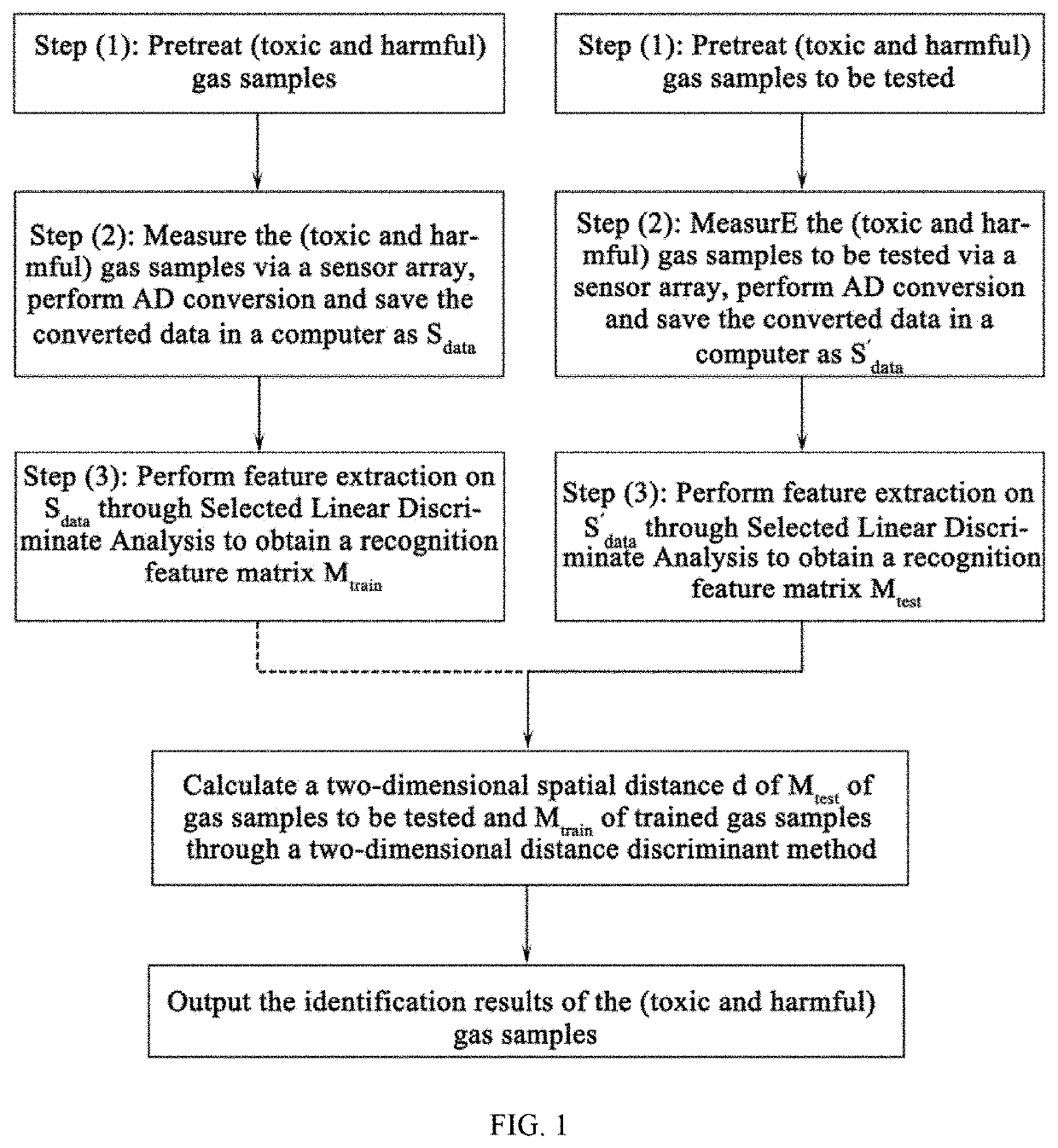
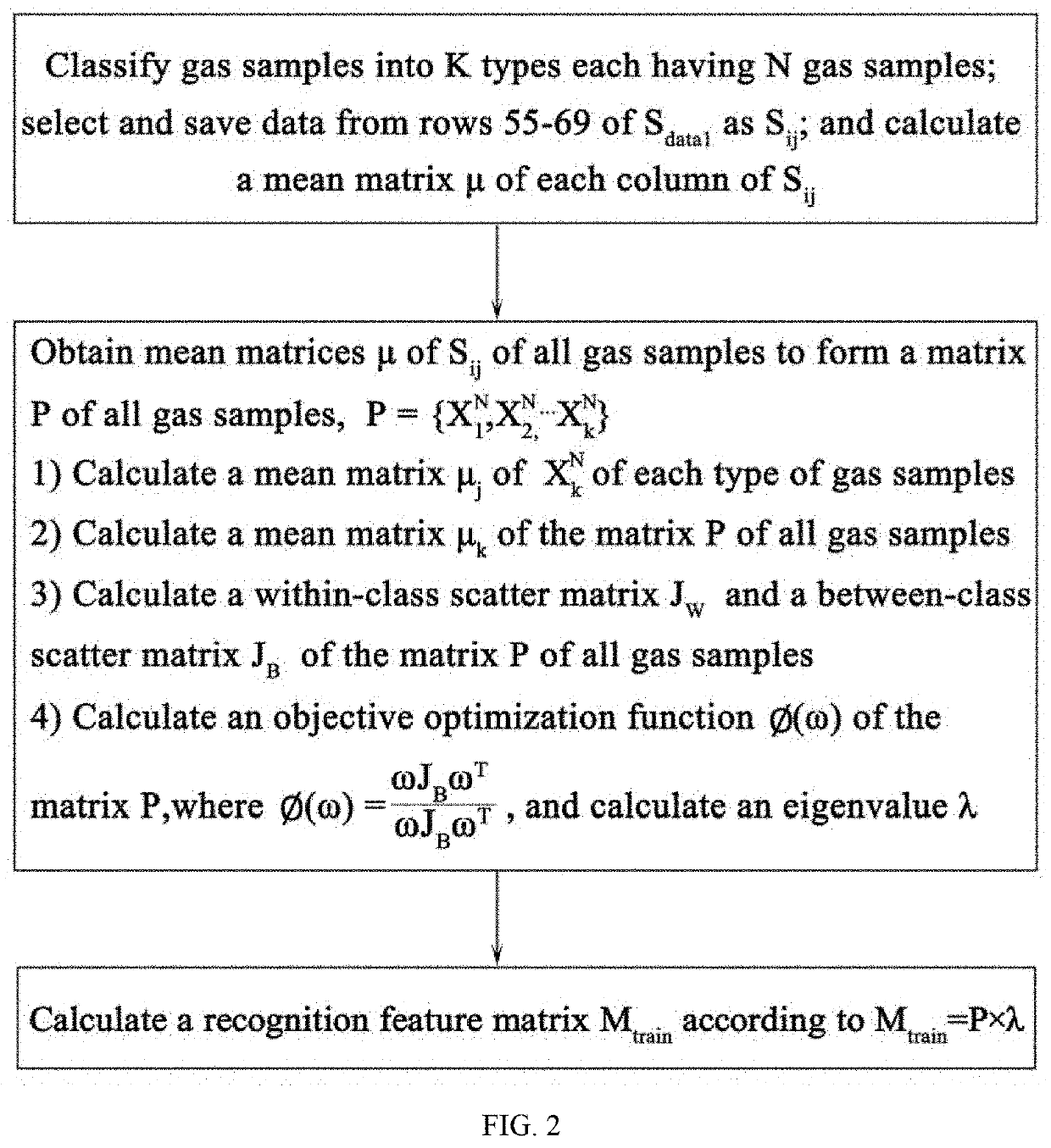
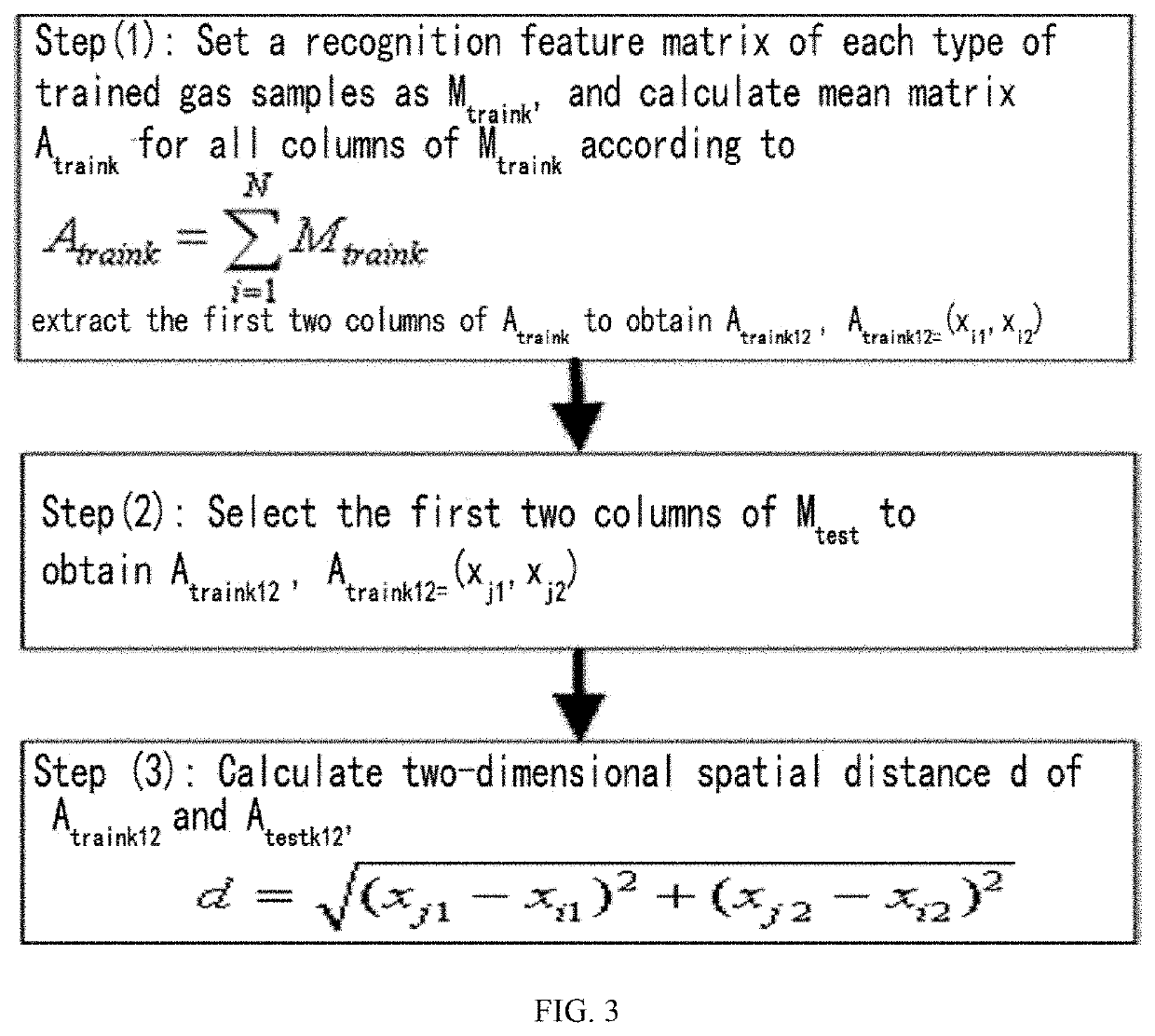
- A method utilizing a machine olfactory system combined with Selected Linear Discriminate Analysis (SLDA) and a two-dimensional distance discriminant method to analyze gas samples, extracting recognition features and identifying gases through a recognition feature matrix comparison.

Security Regulations and Standards for Explosive Detection
The regulatory landscape for explosive detection technologies operates within a complex framework of international, national, and industry-specific standards that directly impact the development and deployment of machine olfaction systems. The International Civil Aviation Organization (ICAO) establishes fundamental requirements through Annex 17, which mandates specific detection capabilities for aviation security applications. These standards require explosive detection systems to achieve minimum detection rates while maintaining acceptable false alarm thresholds, creating performance benchmarks that machine olfaction technologies must meet or exceed.
Transportation Security Administration (TSA) regulations in the United States provide detailed specifications for explosive detection equipment used in airport security screening. TSA's qualification standards encompass detection probability requirements, false alarm rates, and throughput specifications that significantly influence the efficiency metrics used to evaluate machine olfaction systems. The European Civil Aviation Conference (ECAC) maintains parallel standards that often align with but may differ from TSA requirements, necessitating adaptive design approaches for global deployment.
International standards organizations contribute essential frameworks through documents such as IEC 31010 for risk management and ISO 27001 for security management systems. These standards establish methodologies for assessing detection system performance and defining acceptable risk levels. The International Electrotechnical Commission (IEC) provides technical standards for electronic detection equipment, including environmental testing requirements and electromagnetic compatibility specifications that affect sensor reliability and measurement accuracy.
Military and defense applications operate under distinct regulatory frameworks, including NATO standards and national defense specifications. These requirements often demand higher sensitivity levels and more stringent environmental performance criteria compared to civilian applications. The detection of military-grade explosives requires compliance with specialized protocols that influence algorithm development and sensor calibration procedures.
Emerging regulatory trends focus on artificial intelligence governance and algorithmic transparency, particularly relevant for machine learning-based olfaction systems. The European Union's proposed AI Act introduces requirements for high-risk AI applications, potentially including explosive detection systems, mandating documentation of training data, performance metrics, and decision-making processes. These evolving regulations will likely require enhanced traceability and explainability features in machine olfaction algorithms, affecting both development costs and system complexity.
Transportation Security Administration (TSA) regulations in the United States provide detailed specifications for explosive detection equipment used in airport security screening. TSA's qualification standards encompass detection probability requirements, false alarm rates, and throughput specifications that significantly influence the efficiency metrics used to evaluate machine olfaction systems. The European Civil Aviation Conference (ECAC) maintains parallel standards that often align with but may differ from TSA requirements, necessitating adaptive design approaches for global deployment.
International standards organizations contribute essential frameworks through documents such as IEC 31010 for risk management and ISO 27001 for security management systems. These standards establish methodologies for assessing detection system performance and defining acceptable risk levels. The International Electrotechnical Commission (IEC) provides technical standards for electronic detection equipment, including environmental testing requirements and electromagnetic compatibility specifications that affect sensor reliability and measurement accuracy.
Military and defense applications operate under distinct regulatory frameworks, including NATO standards and national defense specifications. These requirements often demand higher sensitivity levels and more stringent environmental performance criteria compared to civilian applications. The detection of military-grade explosives requires compliance with specialized protocols that influence algorithm development and sensor calibration procedures.
Emerging regulatory trends focus on artificial intelligence governance and algorithmic transparency, particularly relevant for machine learning-based olfaction systems. The European Union's proposed AI Act introduces requirements for high-risk AI applications, potentially including explosive detection systems, mandating documentation of training data, performance metrics, and decision-making processes. These evolving regulations will likely require enhanced traceability and explainability features in machine olfaction algorithms, affecting both development costs and system complexity.
Performance Metrics and Efficiency Benchmarking Frameworks
The establishment of comprehensive performance metrics and efficiency benchmarking frameworks for machine olfaction systems in explosive detection represents a critical foundation for advancing this technology toward practical deployment. Current evaluation methodologies often lack standardization, making it challenging to compare different systems and assess their readiness for real-world applications.
Detection accuracy metrics form the cornerstone of performance evaluation, encompassing sensitivity, specificity, and precision measurements. Sensitivity metrics quantify the system's ability to correctly identify explosive compounds at various concentration levels, while specificity measures the capacity to distinguish target explosives from interfering substances. False positive and false negative rates serve as complementary indicators, with particular emphasis on minimizing false negatives given the security implications of missed detections.
Response time benchmarks constitute another essential dimension of efficiency assessment. These metrics include initial detection time, confirmation time, and system recovery time between successive measurements. Real-time performance requirements vary significantly across applications, from checkpoint screening requiring rapid throughput to forensic analysis where accuracy may supersede speed considerations.
Operational reliability metrics address system stability and consistency under varying environmental conditions. Temperature sensitivity, humidity tolerance, and pressure variation responses must be quantified to establish operational boundaries. Drift characteristics and calibration frequency requirements directly impact deployment feasibility and maintenance costs.
Standardized testing protocols ensure reproducible and comparable results across different research groups and commercial systems. These frameworks define sample preparation procedures, environmental control parameters, and statistical analysis methods. Reference materials and certified explosive simulants provide consistent baselines for inter-laboratory comparisons and system validation.
Benchmarking frameworks increasingly incorporate multi-dimensional performance indices that balance detection capability against practical constraints such as power consumption, size limitations, and cost considerations. These composite metrics enable more holistic system comparisons and facilitate technology transfer decisions for specific application scenarios.
Detection accuracy metrics form the cornerstone of performance evaluation, encompassing sensitivity, specificity, and precision measurements. Sensitivity metrics quantify the system's ability to correctly identify explosive compounds at various concentration levels, while specificity measures the capacity to distinguish target explosives from interfering substances. False positive and false negative rates serve as complementary indicators, with particular emphasis on minimizing false negatives given the security implications of missed detections.
Response time benchmarks constitute another essential dimension of efficiency assessment. These metrics include initial detection time, confirmation time, and system recovery time between successive measurements. Real-time performance requirements vary significantly across applications, from checkpoint screening requiring rapid throughput to forensic analysis where accuracy may supersede speed considerations.
Operational reliability metrics address system stability and consistency under varying environmental conditions. Temperature sensitivity, humidity tolerance, and pressure variation responses must be quantified to establish operational boundaries. Drift characteristics and calibration frequency requirements directly impact deployment feasibility and maintenance costs.
Standardized testing protocols ensure reproducible and comparable results across different research groups and commercial systems. These frameworks define sample preparation procedures, environmental control parameters, and statistical analysis methods. Reference materials and certified explosive simulants provide consistent baselines for inter-laboratory comparisons and system validation.
Benchmarking frameworks increasingly incorporate multi-dimensional performance indices that balance detection capability against practical constraints such as power consumption, size limitations, and cost considerations. These composite metrics enable more holistic system comparisons and facilitate technology transfer decisions for specific application scenarios.
Unlock deeper insights with PatSnap Eureka Quick Research — get a full tech report to explore trends and direct your research. Try now!
Generate Your Research Report Instantly with AI Agent
Supercharge your innovation with PatSnap Eureka AI Agent Platform!