

Machine Olfaction vs. Human Analysis: Accuracy in Identification
APR 29, 20269 MIN READ
Generate Your Research Report Instantly with AI Agent
PatSnap Eureka helps you evaluate technical feasibility & market potential.
Machine Olfaction Technology Background and Objectives
Machine olfaction technology represents a revolutionary advancement in chemical sensing systems that aims to replicate and potentially surpass human olfactory capabilities through electronic means. This interdisciplinary field emerged from the convergence of sensor technology, pattern recognition algorithms, and materials science, seeking to create artificial systems capable of detecting, identifying, and quantifying volatile organic compounds with precision comparable to or exceeding human sensory analysis.
The historical development of machine olfaction traces back to the 1980s when researchers first conceptualized electronic nose systems. Early implementations utilized arrays of gas sensors combined with pattern recognition techniques to mimic the biological olfactory process. The technology has evolved significantly from simple metal oxide semiconductor sensors to sophisticated systems incorporating conducting polymers, surface acoustic wave devices, and mass spectrometry-based detection methods.
Current technological evolution demonstrates a clear trajectory toward enhanced sensitivity, selectivity, and miniaturization. Modern machine olfaction systems leverage advanced materials such as graphene-based sensors, molecularly imprinted polymers, and bio-inspired receptor arrays. These developments have been accelerated by breakthroughs in artificial intelligence, particularly machine learning algorithms that can process complex chemical signatures and identify subtle patterns in multi-dimensional sensor data.
The primary technical objectives driving machine olfaction development focus on achieving superior accuracy in chemical identification compared to human analysis. Key performance targets include detection limits in the parts-per-billion range, real-time processing capabilities, and robust operation across diverse environmental conditions. The technology aims to eliminate human subjectivity and variability while providing quantitative measurements that traditional sensory evaluation cannot deliver.
Strategic objectives encompass establishing machine olfaction as a reliable alternative to human panels in quality control, safety monitoring, and diagnostic applications. The technology seeks to address limitations inherent in human olfactory analysis, including fatigue effects, individual variations in sensitivity, and the inability to detect certain hazardous compounds. Long-term goals include developing portable, cost-effective systems that can democratize advanced chemical analysis across industries ranging from food safety to environmental monitoring and medical diagnostics.
The historical development of machine olfaction traces back to the 1980s when researchers first conceptualized electronic nose systems. Early implementations utilized arrays of gas sensors combined with pattern recognition techniques to mimic the biological olfactory process. The technology has evolved significantly from simple metal oxide semiconductor sensors to sophisticated systems incorporating conducting polymers, surface acoustic wave devices, and mass spectrometry-based detection methods.
Current technological evolution demonstrates a clear trajectory toward enhanced sensitivity, selectivity, and miniaturization. Modern machine olfaction systems leverage advanced materials such as graphene-based sensors, molecularly imprinted polymers, and bio-inspired receptor arrays. These developments have been accelerated by breakthroughs in artificial intelligence, particularly machine learning algorithms that can process complex chemical signatures and identify subtle patterns in multi-dimensional sensor data.
The primary technical objectives driving machine olfaction development focus on achieving superior accuracy in chemical identification compared to human analysis. Key performance targets include detection limits in the parts-per-billion range, real-time processing capabilities, and robust operation across diverse environmental conditions. The technology aims to eliminate human subjectivity and variability while providing quantitative measurements that traditional sensory evaluation cannot deliver.
Strategic objectives encompass establishing machine olfaction as a reliable alternative to human panels in quality control, safety monitoring, and diagnostic applications. The technology seeks to address limitations inherent in human olfactory analysis, including fatigue effects, individual variations in sensitivity, and the inability to detect certain hazardous compounds. Long-term goals include developing portable, cost-effective systems that can democratize advanced chemical analysis across industries ranging from food safety to environmental monitoring and medical diagnostics.
Market Demand for Automated Scent Analysis Solutions
The global market for automated scent analysis solutions is experiencing unprecedented growth driven by increasing demands for precision, consistency, and scalability across multiple industries. Traditional human-based olfactory analysis, while historically valuable, faces inherent limitations in terms of subjectivity, fatigue, and training requirements that automated systems can effectively address.
Food and beverage industries represent the largest market segment for automated scent analysis technologies. Quality control processes in manufacturing facilities require continuous monitoring of product consistency, contamination detection, and shelf-life assessment. The pharmaceutical sector demonstrates strong adoption patterns, particularly for drug formulation verification and sterility testing where human sensory analysis proves insufficient for regulatory compliance requirements.
Environmental monitoring applications constitute a rapidly expanding market vertical. Air quality assessment, industrial emission monitoring, and hazardous gas detection systems increasingly rely on machine olfaction technologies to provide real-time, accurate measurements that exceed human detection capabilities. Municipal waste management and water treatment facilities are implementing automated scent analysis for operational efficiency and regulatory adherence.
Healthcare applications show significant market potential, particularly in diagnostic medicine where breath analysis and disease detection through volatile organic compounds offer non-invasive screening opportunities. Medical device manufacturers are investing heavily in portable electronic nose technologies for point-of-care applications, creating substantial market opportunities for specialized sensor technologies.
The automotive industry drives demand for cabin air quality monitoring and material testing applications. Consumer electronics manufacturers require automated scent analysis for product safety testing and material certification processes. Security and defense sectors increasingly adopt these technologies for explosive detection and chemical threat identification.
Market growth factors include stringent regulatory requirements across industries, increasing automation trends, and growing awareness of workplace safety standards. Cost reduction pressures in manufacturing environments favor automated solutions over human-dependent processes, while technological advances in sensor miniaturization and artificial intelligence enhance system capabilities and market accessibility.
Regional market dynamics show strong growth in Asia-Pacific manufacturing hubs, European regulatory-driven adoption, and North American technology development centers. Market barriers include initial capital investment requirements, integration complexity with existing systems, and ongoing calibration maintenance needs that influence adoption rates across different industry segments.
Food and beverage industries represent the largest market segment for automated scent analysis technologies. Quality control processes in manufacturing facilities require continuous monitoring of product consistency, contamination detection, and shelf-life assessment. The pharmaceutical sector demonstrates strong adoption patterns, particularly for drug formulation verification and sterility testing where human sensory analysis proves insufficient for regulatory compliance requirements.
Environmental monitoring applications constitute a rapidly expanding market vertical. Air quality assessment, industrial emission monitoring, and hazardous gas detection systems increasingly rely on machine olfaction technologies to provide real-time, accurate measurements that exceed human detection capabilities. Municipal waste management and water treatment facilities are implementing automated scent analysis for operational efficiency and regulatory adherence.
Healthcare applications show significant market potential, particularly in diagnostic medicine where breath analysis and disease detection through volatile organic compounds offer non-invasive screening opportunities. Medical device manufacturers are investing heavily in portable electronic nose technologies for point-of-care applications, creating substantial market opportunities for specialized sensor technologies.
The automotive industry drives demand for cabin air quality monitoring and material testing applications. Consumer electronics manufacturers require automated scent analysis for product safety testing and material certification processes. Security and defense sectors increasingly adopt these technologies for explosive detection and chemical threat identification.
Market growth factors include stringent regulatory requirements across industries, increasing automation trends, and growing awareness of workplace safety standards. Cost reduction pressures in manufacturing environments favor automated solutions over human-dependent processes, while technological advances in sensor miniaturization and artificial intelligence enhance system capabilities and market accessibility.
Regional market dynamics show strong growth in Asia-Pacific manufacturing hubs, European regulatory-driven adoption, and North American technology development centers. Market barriers include initial capital investment requirements, integration complexity with existing systems, and ongoing calibration maintenance needs that influence adoption rates across different industry segments.
Current State of E-nose vs Human Sensory Limitations
Electronic nose technology has achieved significant advancement in recent years, with modern e-nose systems demonstrating remarkable capabilities in chemical compound detection and classification. Current commercial e-nose devices utilize arrays of cross-reactive sensors, typically incorporating metal oxide semiconductors, conducting polymers, or surface acoustic wave sensors. These systems can process complex odor signatures within seconds to minutes, providing quantitative measurements and pattern recognition capabilities that surpass human consistency in controlled environments.
The accuracy of contemporary e-nose systems varies considerably depending on application complexity and environmental conditions. In controlled laboratory settings, advanced e-nose platforms achieve identification accuracies exceeding 95% for simple compound mixtures and specific target molecules. However, performance degrades significantly when confronting complex real-world scenarios involving multiple interfering compounds, varying humidity levels, and temperature fluctuations.
Human olfactory analysis, while possessing extraordinary sensitivity to certain compounds at parts-per-trillion levels, faces inherent biological limitations that impact consistency and reliability. Individual variations in olfactory receptor genetics result in substantial differences in odor perception among human assessors. Sensory fatigue occurs rapidly during extended analysis sessions, typically within 15-30 minutes, leading to decreased discrimination ability and increased error rates.
Training and experience significantly influence human analytical performance, with expert perfumers and sommeliers demonstrating superior identification capabilities compared to untrained individuals. However, even highly trained human assessors exhibit day-to-day variability influenced by health status, environmental factors, and psychological conditions. Subjective interpretation remains a persistent challenge, as human descriptors often lack standardization and reproducibility across different assessors.
Current e-nose systems excel in applications requiring consistent, repeatable measurements and can operate continuously without fatigue. They demonstrate superior performance in detecting specific target compounds and monitoring gradual changes in odor profiles over time. However, these systems struggle with novel compound identification and lack the contextual understanding that human assessors bring to complex analytical tasks.
The integration of machine learning algorithms has enhanced e-nose performance, enabling better pattern recognition and adaptive learning capabilities. Deep learning approaches show promise in improving identification accuracy, particularly when trained on extensive datasets. Nevertheless, current artificial olfaction systems remain limited by sensor selectivity and the challenge of replicating the human olfactory system's remarkable dynamic range and adaptability.
Human sensory analysis continues to provide irreplaceable value in applications requiring nuanced interpretation, quality assessment, and detection of off-odors that may not be adequately represented in training datasets. The combination of both approaches often yields optimal results, leveraging the consistency of electronic systems with the interpretive capabilities of human expertise.
The accuracy of contemporary e-nose systems varies considerably depending on application complexity and environmental conditions. In controlled laboratory settings, advanced e-nose platforms achieve identification accuracies exceeding 95% for simple compound mixtures and specific target molecules. However, performance degrades significantly when confronting complex real-world scenarios involving multiple interfering compounds, varying humidity levels, and temperature fluctuations.
Human olfactory analysis, while possessing extraordinary sensitivity to certain compounds at parts-per-trillion levels, faces inherent biological limitations that impact consistency and reliability. Individual variations in olfactory receptor genetics result in substantial differences in odor perception among human assessors. Sensory fatigue occurs rapidly during extended analysis sessions, typically within 15-30 minutes, leading to decreased discrimination ability and increased error rates.
Training and experience significantly influence human analytical performance, with expert perfumers and sommeliers demonstrating superior identification capabilities compared to untrained individuals. However, even highly trained human assessors exhibit day-to-day variability influenced by health status, environmental factors, and psychological conditions. Subjective interpretation remains a persistent challenge, as human descriptors often lack standardization and reproducibility across different assessors.
Current e-nose systems excel in applications requiring consistent, repeatable measurements and can operate continuously without fatigue. They demonstrate superior performance in detecting specific target compounds and monitoring gradual changes in odor profiles over time. However, these systems struggle with novel compound identification and lack the contextual understanding that human assessors bring to complex analytical tasks.
The integration of machine learning algorithms has enhanced e-nose performance, enabling better pattern recognition and adaptive learning capabilities. Deep learning approaches show promise in improving identification accuracy, particularly when trained on extensive datasets. Nevertheless, current artificial olfaction systems remain limited by sensor selectivity and the challenge of replicating the human olfactory system's remarkable dynamic range and adaptability.
Human sensory analysis continues to provide irreplaceable value in applications requiring nuanced interpretation, quality assessment, and detection of off-odors that may not be adequately represented in training datasets. The combination of both approaches often yields optimal results, leveraging the consistency of electronic systems with the interpretive capabilities of human expertise.
Existing Solutions for Automated Smell Detection Systems
01 Electronic nose sensor array optimization
Advanced sensor array configurations and optimization techniques are employed to enhance the detection capabilities of electronic nose systems. These approaches focus on improving sensor sensitivity, selectivity, and response characteristics through careful selection and arrangement of sensing elements. The optimization includes signal processing algorithms and sensor fusion methods to maximize detection accuracy across different odor compounds.- Electronic nose sensor array optimization: Advanced sensor array configurations and optimization techniques are employed to enhance the detection capabilities of electronic nose systems. These approaches focus on improving sensor sensitivity, selectivity, and response characteristics through careful selection and arrangement of sensing elements. The optimization includes signal processing algorithms and sensor fusion methods to maximize the discrimination power of different odor compounds.
- Machine learning algorithms for odor recognition: Sophisticated machine learning and artificial intelligence algorithms are implemented to improve pattern recognition and classification accuracy in olfactory systems. These methods include neural networks, support vector machines, and deep learning approaches that can effectively process complex odor signatures and reduce false positives. The algorithms are trained on large datasets to enhance their ability to distinguish between similar odor profiles.
- Signal processing and data preprocessing techniques: Advanced signal processing methods are utilized to enhance the quality and reliability of olfactory sensor data. These techniques include noise reduction, baseline correction, drift compensation, and feature extraction algorithms that improve the signal-to-noise ratio and stability of measurements. The preprocessing methods help eliminate environmental interferences and sensor aging effects that can compromise accuracy.
- Multi-sensor fusion and calibration systems: Integration of multiple sensing technologies and calibration methodologies to achieve higher accuracy and reliability in odor detection. These systems combine different types of sensors with complementary characteristics and employ sophisticated calibration procedures to maintain consistent performance over time. The fusion approach leverages the strengths of individual sensors while compensating for their limitations.
- Environmental compensation and drift correction: Techniques for compensating environmental factors and correcting sensor drift to maintain long-term accuracy and stability. These methods address issues such as temperature variations, humidity changes, and sensor aging that can affect measurement precision. The compensation algorithms continuously monitor and adjust for these factors to ensure consistent performance across different operating conditions.
02 Machine learning algorithms for odor recognition
Sophisticated machine learning and artificial intelligence algorithms are implemented to improve pattern recognition and classification accuracy in olfactory systems. These methods include neural networks, deep learning models, and advanced statistical analysis techniques that can learn from training data to better identify and distinguish between different odor signatures with higher precision.Expand Specific Solutions03 Signal processing and data analysis enhancement
Advanced signal processing techniques and data analysis methods are utilized to extract meaningful information from sensor responses and reduce noise interference. These approaches include digital filtering, feature extraction algorithms, and statistical analysis methods that help improve the reliability and accuracy of odor detection and identification systems.Expand Specific Solutions04 Calibration and standardization methods
Systematic calibration procedures and standardization protocols are developed to ensure consistent and accurate performance of machine olfaction systems. These methods address issues such as sensor drift, environmental variations, and baseline corrections to maintain measurement accuracy over time and across different operating conditions.Expand Specific Solutions05 Multi-modal sensing and fusion techniques
Integration of multiple sensing modalities and data fusion techniques are employed to enhance overall system accuracy and robustness. These approaches combine information from different types of sensors or measurement principles to provide more comprehensive and reliable odor analysis capabilities, reducing false positives and improving detection confidence.Expand Specific Solutions
Key Players in Machine Olfaction and Sensor Industry
The machine olfaction field is experiencing rapid growth as an emerging technology sector, transitioning from early research phases to commercial viability. The market demonstrates significant expansion potential, driven by applications across healthcare, security, food safety, and industrial monitoring. Technology maturity varies considerably across players, with established corporations like IBM, Google, Sony, and Panasonic leveraging their AI and sensor expertise to develop sophisticated olfactory systems, while specialized companies such as Koniku and Realnose focus exclusively on digital olfaction platforms. Academic institutions including MIT, Brown University, and various Chinese universities contribute foundational research, particularly in sensor development and pattern recognition algorithms. Industrial giants like BASF, Shimadzu, and Symrise bring domain expertise in chemical analysis and fragrance technology. The competitive landscape shows a convergence of traditional analytical instrument manufacturers, tech giants applying machine learning to sensory data, and innovative startups developing bio-inspired solutions, indicating the technology's progression toward mainstream adoption.
International Business Machines Corp.
Technical Solution: IBM develops advanced machine olfaction systems using artificial intelligence and sensor fusion technologies. Their approach combines electronic nose sensors with machine learning algorithms to achieve high-precision odor identification and classification. The system utilizes pattern recognition techniques and neural networks to analyze complex chemical signatures, enabling automated quality control in manufacturing processes. IBM's Watson AI platform integrates with olfactory sensors to provide real-time analysis and comparison against human sensory evaluation standards. Their technology demonstrates significant improvements in consistency and repeatability compared to traditional human analysis methods, particularly in industrial applications where objective measurement is critical.
Strengths: Advanced AI integration, high consistency and repeatability, scalable enterprise solutions. Weaknesses: High implementation costs, requires extensive training data, limited emotional context understanding.
Koniku, Inc.
Technical Solution: Koniku specializes in bioengineered olfactory systems that combine living neurons with silicon chips to create hybrid biological-digital sensors. Their technology mimics human olfactory receptors using genetically modified cells that respond to specific chemical compounds. The system provides real-time odor detection and identification with sensitivity levels that often exceed human capabilities. Koniku's approach bridges the gap between biological and artificial intelligence, offering both the sensitivity of biological systems and the consistency of digital processing. Their sensors can detect trace amounts of chemicals and provide quantitative analysis that complements human sensory evaluation, particularly in security screening and medical diagnostics applications.
Strengths: Biological sensitivity, real-time detection capabilities, hybrid bio-digital approach innovation. Weaknesses: Complex maintenance requirements, limited sensor lifespan, scalability challenges in mass production.
Core Innovations in Electronic Nose Accuracy Enhancement
Multi-parametric machine olfaction
PatentActiveUS11828742B2
Innovation
- A system comprising an array of chemical, pressure, and temperature sensors, along with a temporal airflow modulator, which provides sniffed vapors in a temporally-modulated sequence through multiple air paths, expanding the feature space and mimicking biological olfaction by incorporating spatiotemporal time signatures and physical properties of odors.


Built-in bionic smell recognition method and device
PatentInactiveCN101470121A
Innovation
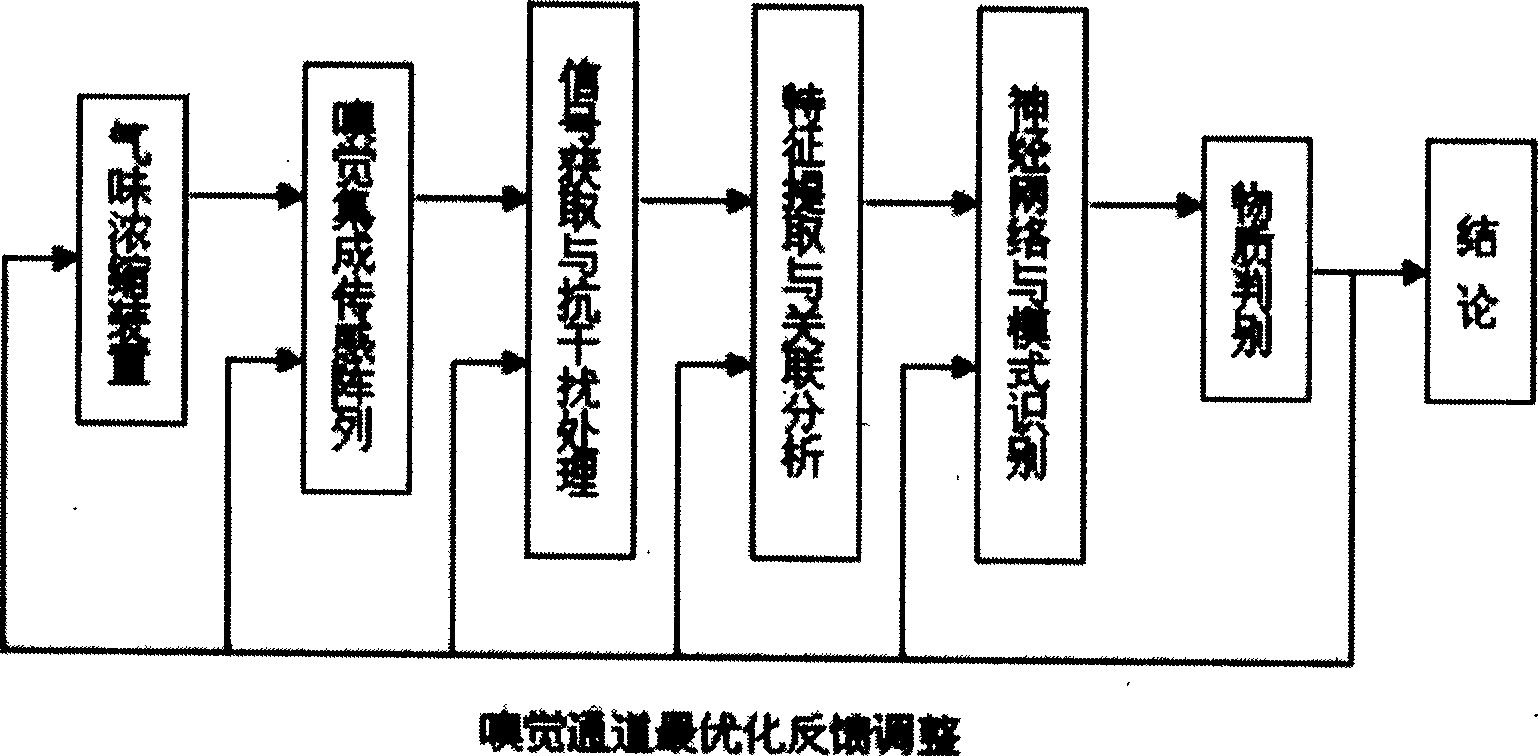
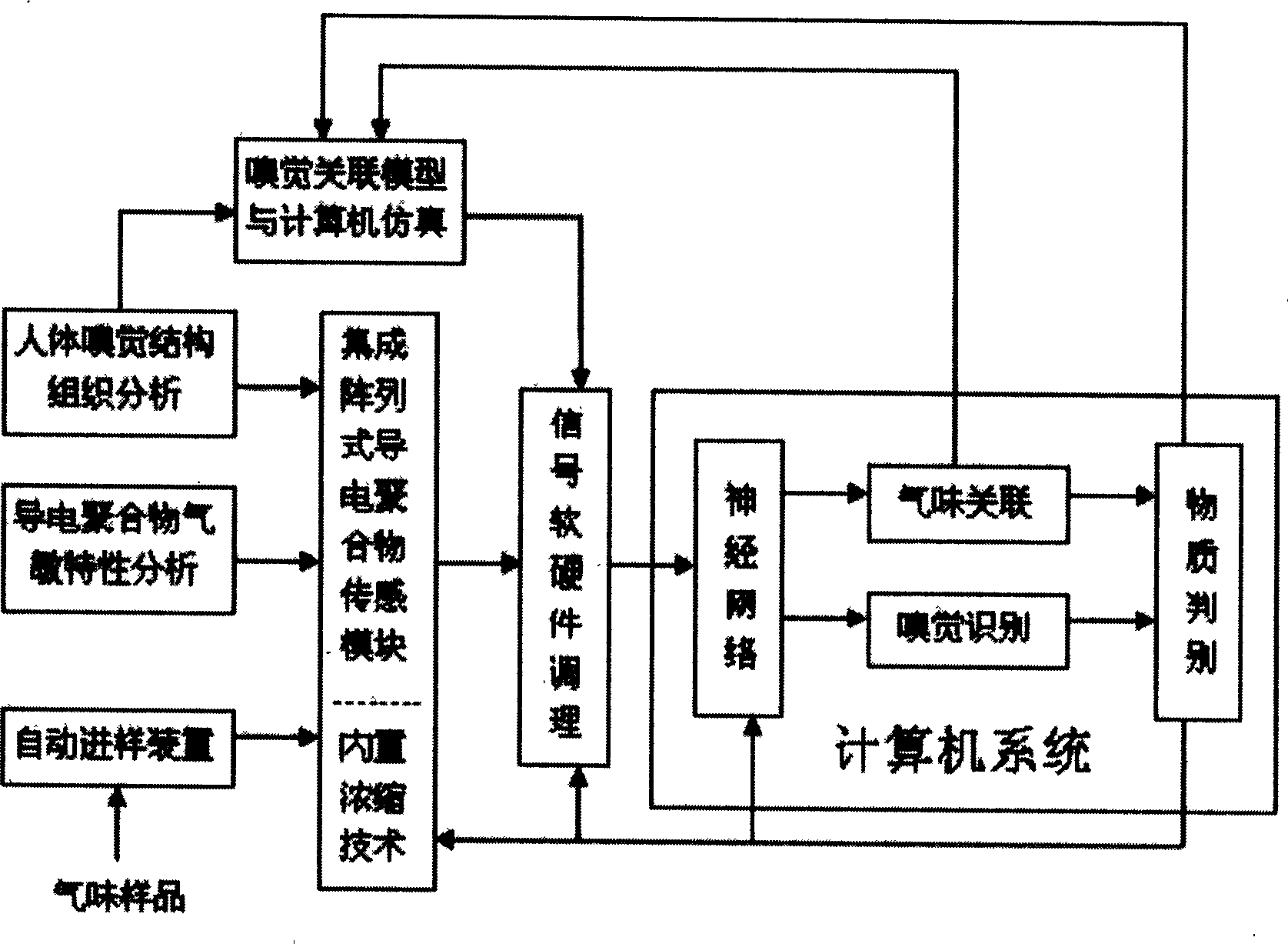
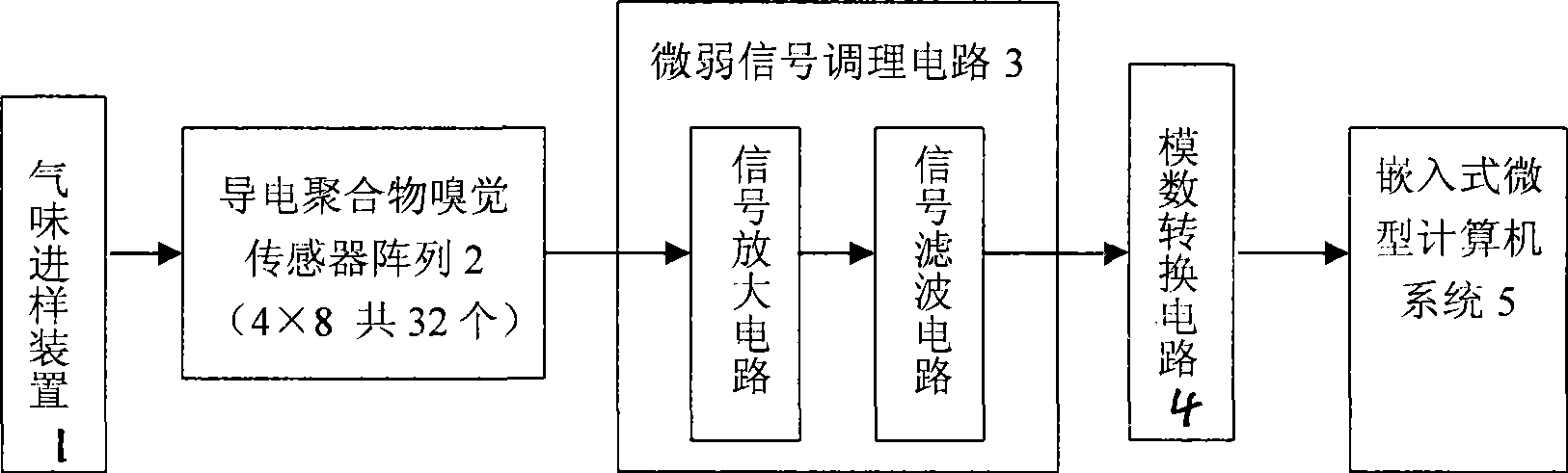
- Array sensors are used to establish an odor information database, and odor features are extracted through pre-processing and post-processing. K nearest neighbor, Bayesian and artificial neural network classification methods are combined for feature classification. Conductive polymer sensor arrays and embedded microcomputer systems are used to realize multi-component odor detection. identification.

Standardization Framework for Olfactory Measurement Systems
The establishment of a comprehensive standardization framework for olfactory measurement systems represents a critical foundation for advancing machine olfaction technology and enabling meaningful comparisons with human analytical capabilities. Current fragmentation in measurement protocols, sensor calibration methods, and data interpretation standards significantly hampers the development of reliable olfactory identification systems.
A robust standardization framework must encompass multiple interconnected components, beginning with sensor calibration protocols that ensure consistent baseline measurements across different devices and manufacturers. This includes defining reference materials, environmental conditions, and temporal stability requirements that enable reproducible results. The framework should establish standardized sample preparation procedures, including concentration ranges, carrier gas specifications, and contamination prevention protocols.
Data acquisition standards form another crucial pillar, requiring unified approaches to signal processing, noise reduction, and temporal resolution. The framework must define standardized metrics for sensitivity, selectivity, and response time measurements, enabling direct performance comparisons between different olfactory systems. Additionally, establishing common data formats and communication protocols facilitates interoperability between diverse measurement platforms.
Quality assurance mechanisms within the framework should include mandatory validation procedures using certified reference materials and blind testing protocols. These measures ensure measurement accuracy and enable traceability to international standards. The framework must also address drift compensation methods and long-term stability monitoring to maintain measurement integrity over extended operational periods.
International collaboration through organizations such as ISO and ASTM is essential for developing globally accepted standards that accommodate regional variations while maintaining core consistency. The framework should incorporate feedback mechanisms allowing continuous refinement based on technological advances and practical implementation experiences.
Implementation guidelines must address training requirements for operators, maintenance protocols, and documentation standards to ensure consistent application across different organizations and geographical regions. This comprehensive approach will establish the foundation necessary for meaningful accuracy assessments between machine olfaction systems and human analytical capabilities.
A robust standardization framework must encompass multiple interconnected components, beginning with sensor calibration protocols that ensure consistent baseline measurements across different devices and manufacturers. This includes defining reference materials, environmental conditions, and temporal stability requirements that enable reproducible results. The framework should establish standardized sample preparation procedures, including concentration ranges, carrier gas specifications, and contamination prevention protocols.
Data acquisition standards form another crucial pillar, requiring unified approaches to signal processing, noise reduction, and temporal resolution. The framework must define standardized metrics for sensitivity, selectivity, and response time measurements, enabling direct performance comparisons between different olfactory systems. Additionally, establishing common data formats and communication protocols facilitates interoperability between diverse measurement platforms.
Quality assurance mechanisms within the framework should include mandatory validation procedures using certified reference materials and blind testing protocols. These measures ensure measurement accuracy and enable traceability to international standards. The framework must also address drift compensation methods and long-term stability monitoring to maintain measurement integrity over extended operational periods.
International collaboration through organizations such as ISO and ASTM is essential for developing globally accepted standards that accommodate regional variations while maintaining core consistency. The framework should incorporate feedback mechanisms allowing continuous refinement based on technological advances and practical implementation experiences.
Implementation guidelines must address training requirements for operators, maintenance protocols, and documentation standards to ensure consistent application across different organizations and geographical regions. This comprehensive approach will establish the foundation necessary for meaningful accuracy assessments between machine olfaction systems and human analytical capabilities.
Cross-Cultural Validation in Global Scent Identification
The validation of machine olfaction systems across diverse cultural contexts presents significant methodological challenges that extend beyond traditional technical performance metrics. Cultural variations in scent perception, identification terminology, and olfactory preferences create complex validation requirements that must be systematically addressed to ensure global applicability of automated scent identification technologies.
Regional differences in scent exposure and cultural significance substantially impact identification accuracy benchmarks. Populations with extensive exposure to specific aromatic compounds, such as spice-rich cuisines or traditional incense practices, demonstrate enhanced discrimination capabilities for related scent families. These variations necessitate culturally-adapted validation protocols that account for baseline perceptual differences across demographic groups.
Linguistic frameworks for describing olfactory experiences vary dramatically across cultures, creating standardization challenges for validation methodologies. Western descriptive systems emphasizing floral, fruity, or woody categories may inadequately capture scent identification patterns in cultures with more nuanced or entirely different classification approaches. This linguistic diversity requires development of culturally-neutral validation metrics that transcend language-specific descriptive limitations.
Standardized validation protocols must incorporate representative sampling from diverse geographic regions and cultural backgrounds to establish meaningful global performance benchmarks. Current validation approaches often exhibit Western-centric bias, potentially overestimating system performance in non-Western contexts where scent identification patterns may differ significantly from training datasets.
Cross-cultural validation studies reveal substantial performance variations in machine olfaction systems when deployed across different cultural contexts. Systems trained primarily on Western scent databases frequently demonstrate reduced accuracy when identifying culturally-specific aromatics or interpreting scent combinations prevalent in non-Western traditions. These findings highlight the critical importance of diverse training datasets and culturally-inclusive validation frameworks.
The development of culturally-agnostic validation standards requires collaboration between technologists, anthropologists, and regional scent experts to establish comprehensive testing protocols. Such interdisciplinary approaches ensure that machine olfaction systems achieve consistent performance across global markets while respecting cultural diversity in olfactory perception and identification practices.
Regional differences in scent exposure and cultural significance substantially impact identification accuracy benchmarks. Populations with extensive exposure to specific aromatic compounds, such as spice-rich cuisines or traditional incense practices, demonstrate enhanced discrimination capabilities for related scent families. These variations necessitate culturally-adapted validation protocols that account for baseline perceptual differences across demographic groups.
Linguistic frameworks for describing olfactory experiences vary dramatically across cultures, creating standardization challenges for validation methodologies. Western descriptive systems emphasizing floral, fruity, or woody categories may inadequately capture scent identification patterns in cultures with more nuanced or entirely different classification approaches. This linguistic diversity requires development of culturally-neutral validation metrics that transcend language-specific descriptive limitations.
Standardized validation protocols must incorporate representative sampling from diverse geographic regions and cultural backgrounds to establish meaningful global performance benchmarks. Current validation approaches often exhibit Western-centric bias, potentially overestimating system performance in non-Western contexts where scent identification patterns may differ significantly from training datasets.
Cross-cultural validation studies reveal substantial performance variations in machine olfaction systems when deployed across different cultural contexts. Systems trained primarily on Western scent databases frequently demonstrate reduced accuracy when identifying culturally-specific aromatics or interpreting scent combinations prevalent in non-Western traditions. These findings highlight the critical importance of diverse training datasets and culturally-inclusive validation frameworks.
The development of culturally-agnostic validation standards requires collaboration between technologists, anthropologists, and regional scent experts to establish comprehensive testing protocols. Such interdisciplinary approaches ensure that machine olfaction systems achieve consistent performance across global markets while respecting cultural diversity in olfactory perception and identification practices.
Unlock deeper insights with PatSnap Eureka Quick Research — get a full tech report to explore trends and direct your research. Try now!
Generate Your Research Report Instantly with AI Agent
Supercharge your innovation with PatSnap Eureka AI Agent Platform!