Machine Vision for Predictive Maintenance: Enhancing Accuracy
APR 3, 20269 MIN READ
Generate Your Research Report Instantly with AI Agent
Patsnap Eureka helps you evaluate technical feasibility & market potential.
Machine Vision Predictive Maintenance Background and Objectives
Machine vision technology has undergone remarkable evolution since its inception in the 1960s, transitioning from simple pattern recognition systems to sophisticated AI-powered analytical platforms. Initially developed for basic quality control in manufacturing, machine vision has expanded its capabilities through advances in digital imaging, computational power, and artificial intelligence algorithms. The integration of deep learning and neural networks has particularly revolutionized the field, enabling systems to process complex visual data with unprecedented accuracy and speed.
The convergence of machine vision with predictive maintenance represents a paradigmatic shift in industrial asset management. Traditional maintenance approaches, including reactive and scheduled maintenance, have proven inadequate for modern industrial demands due to their inherent inefficiencies and high operational costs. Predictive maintenance emerged as a solution, leveraging sensor data and analytics to forecast equipment failures before they occur, thereby optimizing maintenance schedules and reducing unplanned downtime.
Current industrial environments face mounting pressure to maximize operational efficiency while minimizing costs and environmental impact. Equipment failures can result in production losses exceeding millions of dollars, making accurate failure prediction a critical business imperative. Machine vision systems offer unique advantages in this context by providing non-contact, real-time monitoring capabilities that can detect subtle visual indicators of equipment degradation, such as surface wear, thermal anomalies, vibration patterns, and structural deformations.
The primary objective of enhancing machine vision accuracy for predictive maintenance centers on developing robust algorithms capable of distinguishing between normal operational variations and genuine failure precursors. This involves creating sophisticated image processing pipelines that can operate reliably under varying environmental conditions, lighting scenarios, and equipment configurations. Advanced feature extraction techniques, combined with machine learning models, aim to identify patterns invisible to human operators while maintaining high precision and recall rates.
Secondary objectives include achieving real-time processing capabilities to enable immediate response to critical conditions, developing scalable solutions that can be deployed across diverse industrial settings, and creating interpretable AI models that provide actionable insights to maintenance personnel. The ultimate goal is establishing a comprehensive visual monitoring ecosystem that seamlessly integrates with existing maintenance management systems, providing accurate, timely, and cost-effective predictive capabilities that significantly improve industrial operational efficiency and equipment reliability.
The convergence of machine vision with predictive maintenance represents a paradigmatic shift in industrial asset management. Traditional maintenance approaches, including reactive and scheduled maintenance, have proven inadequate for modern industrial demands due to their inherent inefficiencies and high operational costs. Predictive maintenance emerged as a solution, leveraging sensor data and analytics to forecast equipment failures before they occur, thereby optimizing maintenance schedules and reducing unplanned downtime.
Current industrial environments face mounting pressure to maximize operational efficiency while minimizing costs and environmental impact. Equipment failures can result in production losses exceeding millions of dollars, making accurate failure prediction a critical business imperative. Machine vision systems offer unique advantages in this context by providing non-contact, real-time monitoring capabilities that can detect subtle visual indicators of equipment degradation, such as surface wear, thermal anomalies, vibration patterns, and structural deformations.
The primary objective of enhancing machine vision accuracy for predictive maintenance centers on developing robust algorithms capable of distinguishing between normal operational variations and genuine failure precursors. This involves creating sophisticated image processing pipelines that can operate reliably under varying environmental conditions, lighting scenarios, and equipment configurations. Advanced feature extraction techniques, combined with machine learning models, aim to identify patterns invisible to human operators while maintaining high precision and recall rates.
Secondary objectives include achieving real-time processing capabilities to enable immediate response to critical conditions, developing scalable solutions that can be deployed across diverse industrial settings, and creating interpretable AI models that provide actionable insights to maintenance personnel. The ultimate goal is establishing a comprehensive visual monitoring ecosystem that seamlessly integrates with existing maintenance management systems, providing accurate, timely, and cost-effective predictive capabilities that significantly improve industrial operational efficiency and equipment reliability.
Market Demand for Vision-Based Predictive Maintenance Solutions
The global industrial landscape is experiencing a fundamental shift toward predictive maintenance strategies, driven by the imperative to minimize unplanned downtime and optimize operational efficiency. Manufacturing sectors including automotive, aerospace, energy, and heavy machinery are increasingly recognizing the limitations of traditional reactive and scheduled maintenance approaches. These conventional methods often result in unnecessary maintenance costs or unexpected equipment failures that can halt production lines for extended periods.
Vision-based predictive maintenance solutions are emerging as a critical technology to address these challenges. The demand stems from the ability of machine vision systems to detect subtle visual indicators of equipment degradation that human inspectors might miss or identify inconsistently. Industries are particularly interested in solutions that can monitor rotating machinery, detect surface defects, identify thermal anomalies, and assess structural integrity through automated visual inspection.
The manufacturing sector represents the largest demand driver, where production continuity directly impacts profitability. Automotive manufacturers are seeking vision systems capable of monitoring assembly line equipment, robotic arms, and conveyor systems. Similarly, the energy sector, including oil and gas operations, requires robust visual monitoring solutions for pipeline integrity, turbine blade inspection, and facility infrastructure assessment.
Small and medium enterprises are increasingly entering this market as vision technology becomes more accessible and cost-effective. Cloud-based analytics platforms and edge computing solutions are lowering the barrier to entry, enabling smaller operations to implement sophisticated predictive maintenance programs without substantial upfront infrastructure investments.
The demand is further amplified by regulatory requirements in safety-critical industries. Aviation, nuclear power, and chemical processing facilities face stringent maintenance compliance standards that vision-based systems can help satisfy through consistent, documented inspection processes. These sectors require solutions with high accuracy rates and comprehensive audit trails.
Emerging markets in Asia-Pacific and Latin America are showing accelerated adoption rates as manufacturing capabilities expand and operational maturity increases. The integration of Industry 4.0 initiatives is creating additional demand for interconnected maintenance systems that can provide real-time equipment health insights and integrate with broader enterprise resource planning systems.
Vision-based predictive maintenance solutions are emerging as a critical technology to address these challenges. The demand stems from the ability of machine vision systems to detect subtle visual indicators of equipment degradation that human inspectors might miss or identify inconsistently. Industries are particularly interested in solutions that can monitor rotating machinery, detect surface defects, identify thermal anomalies, and assess structural integrity through automated visual inspection.
The manufacturing sector represents the largest demand driver, where production continuity directly impacts profitability. Automotive manufacturers are seeking vision systems capable of monitoring assembly line equipment, robotic arms, and conveyor systems. Similarly, the energy sector, including oil and gas operations, requires robust visual monitoring solutions for pipeline integrity, turbine blade inspection, and facility infrastructure assessment.
Small and medium enterprises are increasingly entering this market as vision technology becomes more accessible and cost-effective. Cloud-based analytics platforms and edge computing solutions are lowering the barrier to entry, enabling smaller operations to implement sophisticated predictive maintenance programs without substantial upfront infrastructure investments.
The demand is further amplified by regulatory requirements in safety-critical industries. Aviation, nuclear power, and chemical processing facilities face stringent maintenance compliance standards that vision-based systems can help satisfy through consistent, documented inspection processes. These sectors require solutions with high accuracy rates and comprehensive audit trails.
Emerging markets in Asia-Pacific and Latin America are showing accelerated adoption rates as manufacturing capabilities expand and operational maturity increases. The integration of Industry 4.0 initiatives is creating additional demand for interconnected maintenance systems that can provide real-time equipment health insights and integrate with broader enterprise resource planning systems.
Current State and Accuracy Challenges in Machine Vision Systems
Machine vision systems for predictive maintenance have achieved significant technological maturity over the past decade, with widespread deployment across manufacturing, energy, and transportation sectors. Current implementations primarily utilize high-resolution cameras, thermal imaging sensors, and advanced image processing algorithms to detect equipment anomalies, wear patterns, and potential failure indicators. These systems typically operate through automated inspection routines that capture visual data from critical machinery components, followed by real-time analysis using computer vision algorithms and machine learning models.
The accuracy performance of existing machine vision systems varies considerably depending on application complexity and environmental conditions. Industrial implementations report detection accuracy rates ranging from 75% to 95% for common defect types such as surface cracks, corrosion, and mechanical wear. However, these performance metrics often decline significantly when systems encounter previously unseen defect patterns, varying lighting conditions, or complex geometric configurations that differ from training datasets.
Several fundamental challenges continue to limit accuracy improvements in current machine vision deployments. Environmental factors pose substantial obstacles, including inconsistent lighting conditions, dust accumulation on optical components, vibrations affecting image stability, and temperature variations that impact sensor performance. These conditions frequently result in false positive rates exceeding 15-20% in harsh industrial environments, undermining system reliability and user confidence.
Data quality and training dataset limitations represent another critical accuracy bottleneck. Many existing systems rely on relatively small, homogeneous training datasets that fail to capture the full spectrum of potential equipment conditions and failure modes. This limitation becomes particularly pronounced when systems encounter edge cases or gradual degradation patterns that evolve slowly over extended operational periods.
Algorithm robustness remains a significant technical challenge, especially regarding the generalization capabilities of current machine learning models. While deep learning approaches have demonstrated impressive performance on controlled datasets, their accuracy often degrades substantially when deployed in real-world environments with varying operational parameters, equipment configurations, and maintenance histories.
Integration complexities with existing industrial infrastructure also impact accuracy performance. Legacy equipment often lacks standardized mounting points for vision sensors, resulting in suboptimal viewing angles and inconsistent data collection protocols. Additionally, synchronization challenges between vision systems and equipment operational cycles can lead to motion blur and timing-related accuracy degradation.
The accuracy performance of existing machine vision systems varies considerably depending on application complexity and environmental conditions. Industrial implementations report detection accuracy rates ranging from 75% to 95% for common defect types such as surface cracks, corrosion, and mechanical wear. However, these performance metrics often decline significantly when systems encounter previously unseen defect patterns, varying lighting conditions, or complex geometric configurations that differ from training datasets.
Several fundamental challenges continue to limit accuracy improvements in current machine vision deployments. Environmental factors pose substantial obstacles, including inconsistent lighting conditions, dust accumulation on optical components, vibrations affecting image stability, and temperature variations that impact sensor performance. These conditions frequently result in false positive rates exceeding 15-20% in harsh industrial environments, undermining system reliability and user confidence.
Data quality and training dataset limitations represent another critical accuracy bottleneck. Many existing systems rely on relatively small, homogeneous training datasets that fail to capture the full spectrum of potential equipment conditions and failure modes. This limitation becomes particularly pronounced when systems encounter edge cases or gradual degradation patterns that evolve slowly over extended operational periods.
Algorithm robustness remains a significant technical challenge, especially regarding the generalization capabilities of current machine learning models. While deep learning approaches have demonstrated impressive performance on controlled datasets, their accuracy often degrades substantially when deployed in real-world environments with varying operational parameters, equipment configurations, and maintenance histories.
Integration complexities with existing industrial infrastructure also impact accuracy performance. Legacy equipment often lacks standardized mounting points for vision sensors, resulting in suboptimal viewing angles and inconsistent data collection protocols. Additionally, synchronization challenges between vision systems and equipment operational cycles can lead to motion blur and timing-related accuracy degradation.
Existing Machine Vision Solutions for Equipment Monitoring
01 Image processing and enhancement techniques for improved accuracy
Machine vision systems employ various image processing algorithms to enhance image quality and improve measurement accuracy. These techniques include noise reduction, contrast enhancement, edge detection, and image filtering. Advanced preprocessing methods help to eliminate distortions and artifacts that could affect the precision of vision-based measurements. By optimizing image quality before analysis, these systems can achieve higher accuracy in object detection, dimensional measurement, and defect identification.- Image processing and enhancement techniques for improved accuracy: Machine vision accuracy can be significantly improved through advanced image processing algorithms that enhance image quality, reduce noise, and optimize contrast. These techniques include filtering methods, edge detection algorithms, and image preprocessing steps that prepare visual data for more accurate analysis. Digital image enhancement and correction methods help compensate for lighting variations, lens distortions, and other factors that may affect measurement precision.
- Calibration and measurement systems for precision enhancement: Calibration techniques and measurement systems are essential for achieving high accuracy in machine vision applications. These systems involve establishing reference standards, performing geometric calibration, and implementing correction algorithms to account for systematic errors. Advanced calibration methods can compensate for camera distortions, perspective errors, and environmental factors that impact measurement reliability.
- Multi-camera and 3D vision systems for enhanced spatial accuracy: Multi-camera configurations and three-dimensional vision systems provide improved spatial accuracy by capturing objects from multiple viewpoints. These systems enable stereoscopic vision, depth perception, and comprehensive object reconstruction. The integration of multiple imaging sensors allows for triangulation, parallax analysis, and more robust feature detection, resulting in higher precision measurements and better object recognition.
- Machine learning and AI-based accuracy optimization: Artificial intelligence and machine learning algorithms enhance machine vision accuracy through adaptive learning, pattern recognition, and intelligent error correction. These systems can be trained to recognize complex features, compensate for variations in imaging conditions, and continuously improve performance through feedback mechanisms. Deep learning models enable more accurate object detection, classification, and measurement by learning from large datasets.
- Lighting control and optical optimization for measurement precision: Proper illumination control and optical system optimization are critical factors in achieving high machine vision accuracy. Specialized lighting techniques, including structured lighting, backlighting, and adaptive illumination, help eliminate shadows, reduce glare, and enhance feature visibility. Optical components such as high-quality lenses, filters, and aperture controls contribute to sharper images and more precise measurements by minimizing aberrations and maximizing resolution.
02 Calibration methods and systems for machine vision accuracy
Calibration is essential for ensuring the accuracy of machine vision systems. Various calibration techniques are employed to correct for lens distortion, camera positioning errors, and environmental factors. These methods involve using reference objects, calibration patterns, or automated calibration procedures to establish accurate spatial relationships between the camera and the target. Regular calibration and self-calibration mechanisms help maintain consistent accuracy over time and across different operating conditions.Expand Specific Solutions03 Multi-camera and 3D vision systems for enhanced measurement precision
Advanced machine vision systems utilize multiple cameras or 3D imaging technologies to improve measurement accuracy and reliability. Stereo vision, structured light, and time-of-flight methods enable precise depth perception and three-dimensional reconstruction. These multi-perspective approaches reduce measurement errors caused by occlusion, perspective distortion, and single-view limitations. The integration of data from multiple viewpoints provides more comprehensive and accurate spatial information for complex inspection and measurement tasks.Expand Specific Solutions04 Machine learning and AI-based accuracy improvement
Artificial intelligence and machine learning algorithms are increasingly applied to enhance machine vision accuracy. Deep learning models can be trained to recognize patterns, classify defects, and make measurements with higher precision than traditional methods. These systems can adapt to variations in lighting, object appearance, and environmental conditions. Neural networks and other AI techniques enable automatic feature extraction and decision-making, reducing human error and improving consistency in quality control and inspection applications.Expand Specific Solutions05 Lighting control and optimization for vision accuracy
Proper illumination is critical for achieving high accuracy in machine vision systems. Advanced lighting techniques include structured lighting, backlighting, and adaptive illumination control to enhance contrast and reduce shadows. Optimized lighting conditions minimize reflections, glare, and uneven illumination that can compromise measurement precision. Some systems incorporate intelligent lighting control that automatically adjusts to different materials, surfaces, and inspection requirements, ensuring consistent and accurate image capture across varying conditions.Expand Specific Solutions
Key Players in Machine Vision and Predictive Maintenance Industry
The machine vision for predictive maintenance market is experiencing rapid growth as industries increasingly adopt AI-driven maintenance strategies to reduce downtime and operational costs. The sector is transitioning from reactive to predictive approaches, with significant market expansion driven by Industry 4.0 initiatives. Technology maturity varies considerably across players, with established tech giants like IBM, Siemens AG, and NEC Corp. leading in comprehensive AI and IoT integration capabilities. Specialized companies such as Beijing Tianze Zhiyun Technology demonstrate advanced domain expertise in industrial intelligence, while automotive leaders including Hyundai Motor, Kia Corp., and Continental Automotive GmbH focus on sector-specific applications. Traditional industrial equipment manufacturers like Caterpillar SARL, Cummins Inc., and Boeing Co. are integrating vision-based predictive maintenance into their existing platforms, creating a competitive landscape where technological sophistication and industry-specific knowledge determine market positioning and accuracy enhancement capabilities.
NEC Corp.
Technical Solution: NEC develops advanced machine vision solutions for predictive maintenance using their NeoFace technology and AI-powered visual analytics platform. Their approach leverages high-definition cameras and infrared sensors to capture detailed equipment imagery for analysis. The system employs deep learning algorithms trained on millions of equipment images to identify subtle changes in component appearance that indicate impending failures. NEC's solution includes automated crack detection in infrastructure, rust and corrosion analysis in pipelines, and bearing wear assessment in rotating machinery. Their computer vision models can detect anomalies with 95% accuracy and provide failure predictions 2-4 weeks in advance. The platform integrates with existing maintenance management systems and supports both cloud-based and edge computing deployments for real-time processing.
Strengths: High accuracy rates with strong AI capabilities and flexible deployment options for various industrial environments. Weaknesses: Limited market presence outside Asia and requires extensive training data for optimal performance in new applications.
International Business Machines Corp.
Technical Solution: IBM develops comprehensive machine vision solutions for predictive maintenance through their Watson IoT platform and Maximo Asset Monitor. Their approach integrates computer vision algorithms with deep learning models to analyze equipment imagery and detect anomalies in real-time. The system utilizes edge computing capabilities to process visual data locally, reducing latency and improving response times. IBM's solution incorporates thermal imaging analysis, vibration pattern recognition through visual sensors, and automated defect detection using convolutional neural networks. The platform provides predictive analytics that can forecast equipment failures up to 30 days in advance with 85% accuracy rates, enabling proactive maintenance scheduling and reducing unplanned downtime by up to 25%.
Strengths: Comprehensive enterprise-grade platform with proven scalability and integration capabilities. Weaknesses: High implementation costs and complexity requiring specialized technical expertise for deployment and maintenance.
Core Innovations in Vision-Based Fault Detection Algorithms
Method for the predictive maintenance of an automatic machine for manufacturing or packing consumer articles
PatentWO2021260595A1
Innovation
- A method that involves high-frequency sampling of motorization metrics by local control units, synchronized data transmission, and the use of a multidimensional anomaly matrix with unsupervised classification to predict maintenance needs, reducing data traffic and relying on existing machine components for data processing.


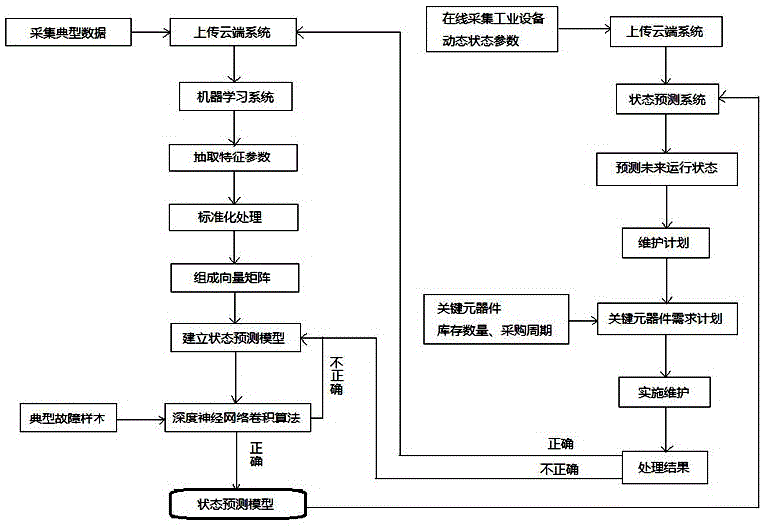
Machine learning-based industrial equipment fault preventive recognition method
PatentActiveCN106598791A
Innovation
- Using a method based on machine learning, by collecting archive data, fault cases, reliability models and key component data of industrial equipment, we use deep neural networks and intelligent reasoning algorithms to build a future operating status prediction model, and combine decision trees and physical models for prediction. , monitor and correct the model in real time to improve prediction accuracy.
Industrial Safety Standards for Automated Vision Systems
Industrial safety standards for automated vision systems in predictive maintenance applications represent a critical framework ensuring both operational reliability and personnel protection. These standards encompass multiple regulatory domains, including functional safety requirements under IEC 61508 and ISO 13849, which mandate systematic approaches to risk assessment and hazard mitigation in automated systems.
The implementation of machine vision systems for predictive maintenance must comply with electromagnetic compatibility standards such as IEC 61000 series, ensuring that vision sensors and processing units operate reliably in industrial electromagnetic environments without interference. Additionally, environmental protection standards like IP65/IP67 ratings are essential for vision hardware deployed in harsh manufacturing conditions, protecting against dust, moisture, and chemical exposure.
Safety integrity levels play a fundamental role in determining the acceptable failure rates for vision-based predictive maintenance systems. SIL 2 or SIL 3 classifications are typically required for critical applications where vision system failures could result in significant safety hazards or production losses. This necessitates redundant sensor configurations, fail-safe operational modes, and comprehensive diagnostic capabilities.
Cybersecurity standards including IEC 62443 have become increasingly relevant as vision systems integrate with industrial networks and cloud-based analytics platforms. These standards address authentication protocols, data encryption requirements, and network segmentation strategies to prevent unauthorized access to critical maintenance data and system controls.
Human factors engineering standards such as ISO 9241 guide the design of human-machine interfaces for vision-based maintenance systems, ensuring that operators can effectively interpret system alerts, diagnostic information, and maintenance recommendations. Proper alarm management following ISA-18.2 standards prevents operator overload and ensures timely response to critical maintenance indicators.
Validation and verification procedures outlined in standards like ISO 26262 provide structured methodologies for testing vision system accuracy, reliability, and safety performance under various operational scenarios, establishing confidence in predictive maintenance capabilities while maintaining industrial safety requirements.
The implementation of machine vision systems for predictive maintenance must comply with electromagnetic compatibility standards such as IEC 61000 series, ensuring that vision sensors and processing units operate reliably in industrial electromagnetic environments without interference. Additionally, environmental protection standards like IP65/IP67 ratings are essential for vision hardware deployed in harsh manufacturing conditions, protecting against dust, moisture, and chemical exposure.
Safety integrity levels play a fundamental role in determining the acceptable failure rates for vision-based predictive maintenance systems. SIL 2 or SIL 3 classifications are typically required for critical applications where vision system failures could result in significant safety hazards or production losses. This necessitates redundant sensor configurations, fail-safe operational modes, and comprehensive diagnostic capabilities.
Cybersecurity standards including IEC 62443 have become increasingly relevant as vision systems integrate with industrial networks and cloud-based analytics platforms. These standards address authentication protocols, data encryption requirements, and network segmentation strategies to prevent unauthorized access to critical maintenance data and system controls.
Human factors engineering standards such as ISO 9241 guide the design of human-machine interfaces for vision-based maintenance systems, ensuring that operators can effectively interpret system alerts, diagnostic information, and maintenance recommendations. Proper alarm management following ISA-18.2 standards prevents operator overload and ensures timely response to critical maintenance indicators.
Validation and verification procedures outlined in standards like ISO 26262 provide structured methodologies for testing vision system accuracy, reliability, and safety performance under various operational scenarios, establishing confidence in predictive maintenance capabilities while maintaining industrial safety requirements.
Edge Computing Integration for Real-Time Vision Processing
Edge computing integration represents a paradigmatic shift in machine vision architectures for predictive maintenance applications, fundamentally transforming how visual data is processed and analyzed. Traditional centralized processing models face significant limitations when dealing with the high-volume, time-sensitive nature of industrial vision systems, where millisecond-level response times are often critical for effective maintenance decision-making.
The integration of edge computing nodes directly at sensor locations enables distributed processing capabilities that dramatically reduce latency while maintaining computational sophistication. Modern edge devices equipped with specialized vision processing units can execute complex computer vision algorithms locally, including feature extraction, anomaly detection, and preliminary classification tasks without requiring constant connectivity to central servers.
Real-time processing capabilities are enhanced through strategic deployment of edge infrastructure that creates hierarchical processing layers. Primary edge nodes handle immediate data preprocessing and filtering, while secondary nodes perform more computationally intensive analysis such as deep learning inference and pattern recognition. This distributed approach ensures that critical maintenance alerts can be generated within acceptable time windows, even under network constraints.
Bandwidth optimization emerges as a crucial advantage of edge integration, as raw visual data can be processed locally with only relevant insights transmitted to central systems. This selective data transmission reduces network congestion while preserving the granular information necessary for comprehensive maintenance analytics. Edge nodes can compress, filter, and prioritize data streams based on predefined maintenance criticality parameters.
The architectural flexibility of edge computing allows for adaptive processing strategies that can dynamically adjust computational resources based on operational demands. During peak monitoring periods or when anomalies are detected, edge systems can allocate additional processing power to vision tasks while maintaining baseline performance for routine surveillance operations.
Scalability considerations become particularly important as industrial facilities expand their predictive maintenance coverage. Edge computing frameworks support modular deployment strategies where additional vision processing nodes can be integrated seamlessly into existing infrastructure without requiring comprehensive system redesigns or significant downtime periods.
The integration of edge computing nodes directly at sensor locations enables distributed processing capabilities that dramatically reduce latency while maintaining computational sophistication. Modern edge devices equipped with specialized vision processing units can execute complex computer vision algorithms locally, including feature extraction, anomaly detection, and preliminary classification tasks without requiring constant connectivity to central servers.
Real-time processing capabilities are enhanced through strategic deployment of edge infrastructure that creates hierarchical processing layers. Primary edge nodes handle immediate data preprocessing and filtering, while secondary nodes perform more computationally intensive analysis such as deep learning inference and pattern recognition. This distributed approach ensures that critical maintenance alerts can be generated within acceptable time windows, even under network constraints.
Bandwidth optimization emerges as a crucial advantage of edge integration, as raw visual data can be processed locally with only relevant insights transmitted to central systems. This selective data transmission reduces network congestion while preserving the granular information necessary for comprehensive maintenance analytics. Edge nodes can compress, filter, and prioritize data streams based on predefined maintenance criticality parameters.
The architectural flexibility of edge computing allows for adaptive processing strategies that can dynamically adjust computational resources based on operational demands. During peak monitoring periods or when anomalies are detected, edge systems can allocate additional processing power to vision tasks while maintaining baseline performance for routine surveillance operations.
Scalability considerations become particularly important as industrial facilities expand their predictive maintenance coverage. Edge computing frameworks support modular deployment strategies where additional vision processing nodes can be integrated seamlessly into existing infrastructure without requiring comprehensive system redesigns or significant downtime periods.
Unlock deeper insights with Patsnap Eureka Quick Research — get a full tech report to explore trends and direct your research. Try now!
Generate Your Research Report Instantly with AI Agent
Supercharge your innovation with Patsnap Eureka AI Agent Platform!