Maximizing Impact Energy Absorption with UHMWPE
AUG 6, 20259 MIN READ
Generate Your Research Report Instantly with AI Agent
PatSnap Eureka helps you evaluate technical feasibility & market potential.
UHMWPE Impact Absorption Background and Objectives
Ultra-high-molecular-weight polyethylene (UHMWPE) has emerged as a revolutionary material in the field of impact energy absorption. Its unique molecular structure, characterized by extremely long polymer chains, confers exceptional properties that make it ideal for applications requiring high impact resistance. The development of UHMWPE for impact absorption can be traced back to the 1950s, with significant advancements occurring in the following decades.
The primary objective in maximizing impact energy absorption with UHMWPE is to enhance its already impressive capabilities, pushing the boundaries of what is possible in protective gear, automotive safety components, and industrial applications. Researchers and engineers aim to optimize the material's structure and composition to achieve even greater energy dissipation during impact events, without compromising other desirable properties such as lightweight nature and flexibility.
One of the key trends in UHMWPE development for impact absorption is the exploration of composite structures. By combining UHMWPE with other materials or reinforcing it with various additives, scientists seek to create synergistic effects that amplify the material's energy-absorbing capacity. This approach has led to the development of hybrid materials that offer superior performance in specific impact scenarios.
Another significant focus is on the manipulation of UHMWPE at the molecular level. Techniques such as crosslinking and the introduction of nanoparticles are being investigated to enhance the material's ability to dissipate energy through controlled deformation and recovery processes. These molecular-level modifications aim to increase the material's resilience and its capacity to absorb multiple impacts without degradation.
The evolution of manufacturing processes for UHMWPE is also a critical aspect of maximizing its impact energy absorption. Advanced production techniques, such as gel spinning and compression molding, are being refined to create UHMWPE products with optimized molecular orientation and density. These improvements directly contribute to the material's ability to absorb and distribute impact forces more effectively.
As research in this field progresses, the goals extend beyond merely increasing the absolute amount of energy absorbed. Scientists are also focusing on developing UHMWPE-based solutions that can provide better protection against specific types of impacts, such as high-velocity projectiles or repetitive low-energy collisions. This targeted approach aims to tailor UHMWPE's properties to meet the diverse requirements of different applications, from personal protective equipment to aerospace components.
The primary objective in maximizing impact energy absorption with UHMWPE is to enhance its already impressive capabilities, pushing the boundaries of what is possible in protective gear, automotive safety components, and industrial applications. Researchers and engineers aim to optimize the material's structure and composition to achieve even greater energy dissipation during impact events, without compromising other desirable properties such as lightweight nature and flexibility.
One of the key trends in UHMWPE development for impact absorption is the exploration of composite structures. By combining UHMWPE with other materials or reinforcing it with various additives, scientists seek to create synergistic effects that amplify the material's energy-absorbing capacity. This approach has led to the development of hybrid materials that offer superior performance in specific impact scenarios.
Another significant focus is on the manipulation of UHMWPE at the molecular level. Techniques such as crosslinking and the introduction of nanoparticles are being investigated to enhance the material's ability to dissipate energy through controlled deformation and recovery processes. These molecular-level modifications aim to increase the material's resilience and its capacity to absorb multiple impacts without degradation.
The evolution of manufacturing processes for UHMWPE is also a critical aspect of maximizing its impact energy absorption. Advanced production techniques, such as gel spinning and compression molding, are being refined to create UHMWPE products with optimized molecular orientation and density. These improvements directly contribute to the material's ability to absorb and distribute impact forces more effectively.
As research in this field progresses, the goals extend beyond merely increasing the absolute amount of energy absorbed. Scientists are also focusing on developing UHMWPE-based solutions that can provide better protection against specific types of impacts, such as high-velocity projectiles or repetitive low-energy collisions. This targeted approach aims to tailor UHMWPE's properties to meet the diverse requirements of different applications, from personal protective equipment to aerospace components.
Market Analysis for High-Performance Impact Materials
The market for high-performance impact materials, particularly those utilizing Ultra-High Molecular Weight Polyethylene (UHMWPE), has been experiencing significant growth and transformation in recent years. This trend is driven by the increasing demand for advanced protective solutions across various industries, including defense, aerospace, automotive, and sports equipment.
In the defense sector, there is a growing need for lightweight yet highly effective personal protective equipment (PPE) for military personnel. UHMWPE-based materials have gained traction due to their superior strength-to-weight ratio and excellent impact resistance properties. The global military body armor market, where UHMWPE plays a crucial role, is projected to expand substantially over the next decade.
The aerospace industry is another key market for high-performance impact materials. With the rising number of commercial flights and space exploration missions, there is an increased focus on developing advanced materials that can withstand extreme conditions and provide enhanced protection against debris and micrometeoroid impacts. UHMWPE composites are being explored for use in spacecraft shielding and aircraft structures.
In the automotive sector, the push for improved safety features and lightweight materials to enhance fuel efficiency has created new opportunities for UHMWPE-based impact absorption solutions. These materials are being incorporated into vehicle bumpers, side-impact protection systems, and other safety-critical components.
The sports equipment industry has also embraced UHMWPE for its exceptional impact resistance and durability. From helmets and protective gear to high-performance footwear, manufacturers are leveraging the material's properties to develop products that offer superior protection without compromising on weight or comfort.
The market for UHMWPE in impact-resistant applications is characterized by ongoing research and development efforts aimed at enhancing the material's performance. Innovations in fiber technology, composite structures, and manufacturing processes are driving the evolution of UHMWPE-based solutions, opening up new application areas and market segments.
Geographically, North America and Europe currently dominate the high-performance impact materials market, owing to their advanced defense and aerospace industries. However, the Asia-Pacific region is expected to witness the fastest growth, driven by increasing defense spending, rapid industrialization, and growing awareness of safety standards in emerging economies.
As environmental concerns gain prominence, there is also a growing interest in developing sustainable and recyclable high-performance impact materials. This trend is likely to shape the future of the market, with manufacturers exploring bio-based alternatives and circular economy approaches to UHMWPE production and utilization.
In the defense sector, there is a growing need for lightweight yet highly effective personal protective equipment (PPE) for military personnel. UHMWPE-based materials have gained traction due to their superior strength-to-weight ratio and excellent impact resistance properties. The global military body armor market, where UHMWPE plays a crucial role, is projected to expand substantially over the next decade.
The aerospace industry is another key market for high-performance impact materials. With the rising number of commercial flights and space exploration missions, there is an increased focus on developing advanced materials that can withstand extreme conditions and provide enhanced protection against debris and micrometeoroid impacts. UHMWPE composites are being explored for use in spacecraft shielding and aircraft structures.
In the automotive sector, the push for improved safety features and lightweight materials to enhance fuel efficiency has created new opportunities for UHMWPE-based impact absorption solutions. These materials are being incorporated into vehicle bumpers, side-impact protection systems, and other safety-critical components.
The sports equipment industry has also embraced UHMWPE for its exceptional impact resistance and durability. From helmets and protective gear to high-performance footwear, manufacturers are leveraging the material's properties to develop products that offer superior protection without compromising on weight or comfort.
The market for UHMWPE in impact-resistant applications is characterized by ongoing research and development efforts aimed at enhancing the material's performance. Innovations in fiber technology, composite structures, and manufacturing processes are driving the evolution of UHMWPE-based solutions, opening up new application areas and market segments.
Geographically, North America and Europe currently dominate the high-performance impact materials market, owing to their advanced defense and aerospace industries. However, the Asia-Pacific region is expected to witness the fastest growth, driven by increasing defense spending, rapid industrialization, and growing awareness of safety standards in emerging economies.
As environmental concerns gain prominence, there is also a growing interest in developing sustainable and recyclable high-performance impact materials. This trend is likely to shape the future of the market, with manufacturers exploring bio-based alternatives and circular economy approaches to UHMWPE production and utilization.
Current Challenges in UHMWPE Impact Energy Absorption
Despite the remarkable properties of Ultra-High Molecular Weight Polyethylene (UHMWPE), several challenges persist in maximizing its impact energy absorption capabilities. One of the primary obstacles is the inherent trade-off between strength and toughness. While UHMWPE exhibits exceptional strength-to-weight ratio, enhancing its impact resistance often comes at the expense of other mechanical properties.
The molecular structure of UHMWPE, characterized by long chains of polyethylene, presents difficulties in achieving uniform dispersion of reinforcing agents. This non-homogeneous distribution can lead to inconsistent energy absorption across the material, resulting in localized weak points that compromise overall performance under impact loads.
Another significant challenge lies in the temperature-dependent behavior of UHMWPE. At elevated temperatures, the material's impact resistance tends to decrease, limiting its applicability in high-temperature environments. Conversely, at extremely low temperatures, UHMWPE may become brittle, further complicating its use in diverse operational conditions.
The processing of UHMWPE for enhanced impact energy absorption poses additional hurdles. Traditional manufacturing methods often struggle to maintain the material's unique properties while incorporating impact-resistant features. Advanced techniques like gel spinning and hot compaction show promise but are yet to be optimized for large-scale production of impact-resistant UHMWPE components.
Surface modification of UHMWPE to improve its impact resistance remains a complex task. While various treatments have been explored, achieving a balance between surface hardness and core toughness without compromising the material's overall integrity continues to challenge researchers and engineers.
The long-term performance and durability of impact-resistant UHMWPE structures are also areas of concern. Under repeated impact loads, the material may experience fatigue and gradual degradation of its energy absorption capabilities. Developing predictive models for long-term behavior and implementing effective monitoring systems for in-service components are ongoing challenges.
Furthermore, the environmental impact and recyclability of modified UHMWPE materials present additional complexities. As sustainability becomes increasingly crucial, finding eco-friendly methods to enhance impact resistance without compromising the material's recyclability is a pressing challenge for the industry.
Lastly, the cost-effectiveness of producing high-performance, impact-resistant UHMWPE remains a significant hurdle for widespread adoption. Balancing the enhanced properties with economically viable manufacturing processes is essential for the material's broader application in impact-critical industries.
The molecular structure of UHMWPE, characterized by long chains of polyethylene, presents difficulties in achieving uniform dispersion of reinforcing agents. This non-homogeneous distribution can lead to inconsistent energy absorption across the material, resulting in localized weak points that compromise overall performance under impact loads.
Another significant challenge lies in the temperature-dependent behavior of UHMWPE. At elevated temperatures, the material's impact resistance tends to decrease, limiting its applicability in high-temperature environments. Conversely, at extremely low temperatures, UHMWPE may become brittle, further complicating its use in diverse operational conditions.
The processing of UHMWPE for enhanced impact energy absorption poses additional hurdles. Traditional manufacturing methods often struggle to maintain the material's unique properties while incorporating impact-resistant features. Advanced techniques like gel spinning and hot compaction show promise but are yet to be optimized for large-scale production of impact-resistant UHMWPE components.
Surface modification of UHMWPE to improve its impact resistance remains a complex task. While various treatments have been explored, achieving a balance between surface hardness and core toughness without compromising the material's overall integrity continues to challenge researchers and engineers.
The long-term performance and durability of impact-resistant UHMWPE structures are also areas of concern. Under repeated impact loads, the material may experience fatigue and gradual degradation of its energy absorption capabilities. Developing predictive models for long-term behavior and implementing effective monitoring systems for in-service components are ongoing challenges.
Furthermore, the environmental impact and recyclability of modified UHMWPE materials present additional complexities. As sustainability becomes increasingly crucial, finding eco-friendly methods to enhance impact resistance without compromising the material's recyclability is a pressing challenge for the industry.
Lastly, the cost-effectiveness of producing high-performance, impact-resistant UHMWPE remains a significant hurdle for widespread adoption. Balancing the enhanced properties with economically viable manufacturing processes is essential for the material's broader application in impact-critical industries.
Existing UHMWPE Impact Absorption Solutions
01 UHMWPE in vehicle impact absorption systems
Ultra-high molecular weight polyethylene (UHMWPE) is utilized in vehicle impact absorption systems due to its excellent energy absorption properties. It is incorporated into various components such as bumpers, side impact protection, and crash pads to enhance vehicle safety by absorbing and dissipating impact energy during collisions.- UHMWPE in vehicle impact absorption structures: Ultra-high molecular weight polyethylene (UHMWPE) is utilized in vehicle impact absorption structures due to its excellent energy absorption properties. These structures are designed to enhance passenger safety by absorbing and dissipating impact energy during collisions. UHMWPE components are incorporated into various parts of the vehicle, such as bumpers, side impact beams, and crash boxes.
- Composite materials with UHMWPE for impact resistance: Composite materials incorporating UHMWPE fibers or sheets are developed to improve impact resistance and energy absorption. These composites combine the high strength and low weight of UHMWPE with other materials to create structures with enhanced impact protection. Applications include protective gear, armor, and industrial safety equipment.
- UHMWPE in sports equipment for impact protection: UHMWPE is used in sports equipment to provide impact protection and energy absorption. Its high strength-to-weight ratio and impact resistance make it suitable for applications such as helmets, protective pads, and impact-absorbing components in various sports gear. The material helps reduce the risk of injuries during high-impact activities.
- Energy-absorbing UHMWPE foams and structures: Specialized UHMWPE foams and structures are developed to enhance energy absorption capabilities. These materials feature engineered designs, such as honeycomb structures or multi-layered configurations, to maximize impact energy dissipation. Applications include packaging, transportation, and personal protective equipment.
- UHMWPE in marine and offshore impact protection: UHMWPE is employed in marine and offshore applications for impact protection and energy absorption. Its high abrasion resistance and low friction coefficient make it suitable for use in fenders, buoys, and other structures that require protection against collisions and impacts in marine environments.
02 UHMWPE composite materials for impact resistance
Composite materials incorporating UHMWPE fibers or sheets are developed to improve impact resistance in various applications. These composites combine the high strength and energy absorption capabilities of UHMWPE with other materials to create lightweight yet highly impact-resistant structures for use in protective equipment, aerospace components, and industrial applications.Expand Specific Solutions03 UHMWPE in personal protective equipment
UHMWPE is employed in the manufacture of personal protective equipment due to its superior impact energy absorption properties. It is used in helmets, body armor, and other protective gear to enhance safety by absorbing and distributing impact forces, reducing the risk of injury to the wearer.Expand Specific Solutions04 UHMWPE in sports equipment for impact protection
Sports equipment incorporates UHMWPE to provide enhanced impact protection for athletes. The material is used in various applications such as protective padding, shoe insoles, and impact-resistant surfaces in sports facilities to absorb and dissipate energy from impacts, reducing the risk of injuries during athletic activities.Expand Specific Solutions05 UHMWPE processing techniques for improved impact absorption
Advanced processing techniques are developed to enhance the impact energy absorption properties of UHMWPE. These methods include specialized heat treatments, orientation processes, and the incorporation of additives or nanoparticles to optimize the material's molecular structure and improve its ability to absorb and dissipate impact energy in various applications.Expand Specific Solutions
Key Players in UHMWPE Material Development
The market for maximizing impact energy absorption with UHMWPE is in a growth phase, driven by increasing demand in industries such as aerospace, defense, and sports equipment. The global UHMWPE market size is projected to expand significantly in the coming years. Technologically, the field is advancing rapidly, with companies like DSM IP Assets BV, Toray Industries, and SABIC Global Technologies BV leading innovation. Research institutions such as Tsinghua Shenzhen International Graduate School and Sichuan University are contributing to technological advancements. While established players dominate, emerging companies like Shanghai Lianle Chemical Science & Technology Co., Ltd. are also making strides, indicating a competitive and dynamic market landscape.
Toray Industries, Inc.
Technical Solution: Toray has developed a high-performance UHMWPE fiber called Toyobo®. Their approach focuses on improving the molecular orientation and crystallinity of the polymer chains during the production process. Toray employs a multi-stage drawing technique that enhances the fiber's tensile strength and modulus, resulting in improved impact energy absorption[3]. Additionally, Toray has implemented surface modification technologies to improve the adhesion between UHMWPE fibers and matrix materials in composites, leading to enhanced overall impact resistance[4]. The company has also explored the use of nanoparticle reinforcements to further improve the energy absorption capabilities of their UHMWPE-based materials.
Strengths: Advanced fiber production techniques, improved fiber-matrix adhesion in composites, and potential for nanoparticle reinforcement. Weaknesses: Complexity of manufacturing process may lead to higher costs, and potential scalability issues for large-scale production.
DSM IP Assets BV
Technical Solution: DSM has developed a proprietary UHMWPE fiber called Dyneema®, which is used in various applications requiring high impact energy absorption. Their technology involves a gel-spinning process that produces ultra-long molecular chains, resulting in fibers with exceptional strength-to-weight ratios[1]. DSM has also introduced Dyneema® Force Multiplier Technology, which enhances the energy absorption capabilities of the material by up to 20% compared to standard UHMWPE[2]. This innovation is achieved through a combination of advanced fiber technology and unique unidirectional (UD) construction techniques, allowing for optimized energy dissipation across the material's structure.
Strengths: Superior strength-to-weight ratio, enhanced energy absorption, and versatility in applications. Weaknesses: Higher production costs compared to standard polymers, and potential limitations in high-temperature environments.
Core Innovations in UHMWPE Energy Dissipation
Ultra-High Molecular Weight Polyethylene
PatentActiveUS20120289667A1
Innovation
- A novel UHMW-PE is produced using a blend of metallocene-type catalysts, with a bimetallic catalyst residue comprising Hf and Cr, which are present as ionic compounds or complexes, to achieve superior abrasion and Charpy impact resistance, along with a medium density and suitable grain size, utilizing specific polymerization conditions and analytical methods to quantify the catalyst residues.
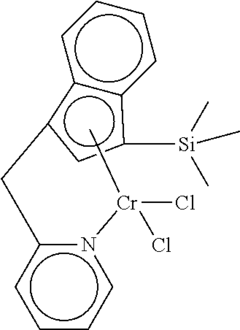
Ultra-high molecular weight polyethylene
PatentWO2011089017A1
Innovation
- The use of a blend of two metallocene-type catalysts, with Hafnium (Hf) and Chromium (Cr) as catalyst residues, to produce UHMW-PE with medium density and enhanced Charpy impact resistance, achieving a synergistic effect that improves both abrasion and impact resistance, and maintaining a suitable average grain size.
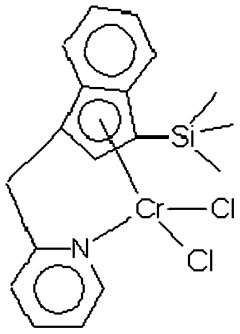
Environmental Impact of UHMWPE Production and Use
The production and use of Ultra-High Molecular Weight Polyethylene (UHMWPE) have significant environmental implications that warrant careful consideration. The manufacturing process of UHMWPE is energy-intensive, primarily due to the high temperatures and pressures required for polymerization and molding. This energy consumption contributes to greenhouse gas emissions, particularly when fossil fuels are the primary energy source. Additionally, the production of ethylene, the primary raw material for UHMWPE, is derived from petroleum or natural gas, further increasing the carbon footprint of the material.
Water usage is another environmental concern in UHMWPE production. The cooling processes and cleaning of equipment require substantial amounts of water, potentially leading to water stress in regions where manufacturing facilities are located. Moreover, the use of catalysts and additives in the production process can result in the generation of hazardous waste, which requires proper treatment and disposal to prevent environmental contamination.
Despite these production-related environmental challenges, UHMWPE offers some positive environmental aspects in its use phase. The material's exceptional durability and resistance to wear and corrosion mean that products made from UHMWPE have longer lifespans compared to alternatives. This longevity reduces the frequency of replacement and, consequently, the overall resource consumption and waste generation associated with product turnover.
In applications such as impact energy absorption, UHMWPE's high strength-to-weight ratio allows for the creation of lighter yet effective protective structures. This can lead to reduced fuel consumption in transportation applications, indirectly contributing to lower emissions. Furthermore, UHMWPE's chemical resistance and low friction properties can enhance the efficiency of various industrial processes, potentially reducing energy consumption and the need for lubricants or frequent maintenance.
End-of-life management of UHMWPE products presents both challenges and opportunities. While the material is theoretically recyclable, its high molecular weight and cross-linked structure make conventional recycling methods difficult. Advanced recycling technologies, such as chemical recycling or pyrolysis, are being explored to address this issue. However, the current limited recyclability of UHMWPE contributes to plastic waste accumulation, particularly in marine environments where it can persist for extended periods.
Efforts to mitigate the environmental impact of UHMWPE are ongoing. Research into bio-based alternatives and more energy-efficient production methods shows promise for reducing the material's carbon footprint. Additionally, the development of more effective recycling technologies and the implementation of circular economy principles in UHMWPE product design could significantly improve its environmental profile throughout its lifecycle.
Water usage is another environmental concern in UHMWPE production. The cooling processes and cleaning of equipment require substantial amounts of water, potentially leading to water stress in regions where manufacturing facilities are located. Moreover, the use of catalysts and additives in the production process can result in the generation of hazardous waste, which requires proper treatment and disposal to prevent environmental contamination.
Despite these production-related environmental challenges, UHMWPE offers some positive environmental aspects in its use phase. The material's exceptional durability and resistance to wear and corrosion mean that products made from UHMWPE have longer lifespans compared to alternatives. This longevity reduces the frequency of replacement and, consequently, the overall resource consumption and waste generation associated with product turnover.
In applications such as impact energy absorption, UHMWPE's high strength-to-weight ratio allows for the creation of lighter yet effective protective structures. This can lead to reduced fuel consumption in transportation applications, indirectly contributing to lower emissions. Furthermore, UHMWPE's chemical resistance and low friction properties can enhance the efficiency of various industrial processes, potentially reducing energy consumption and the need for lubricants or frequent maintenance.
End-of-life management of UHMWPE products presents both challenges and opportunities. While the material is theoretically recyclable, its high molecular weight and cross-linked structure make conventional recycling methods difficult. Advanced recycling technologies, such as chemical recycling or pyrolysis, are being explored to address this issue. However, the current limited recyclability of UHMWPE contributes to plastic waste accumulation, particularly in marine environments where it can persist for extended periods.
Efforts to mitigate the environmental impact of UHMWPE are ongoing. Research into bio-based alternatives and more energy-efficient production methods shows promise for reducing the material's carbon footprint. Additionally, the development of more effective recycling technologies and the implementation of circular economy principles in UHMWPE product design could significantly improve its environmental profile throughout its lifecycle.
Safety Standards for UHMWPE in Impact Protection
Safety standards for UHMWPE in impact protection applications are crucial to ensure the material's effectiveness and reliability in safeguarding users from potential harm. These standards encompass a range of requirements and testing protocols designed to evaluate the performance of UHMWPE-based protective gear across various impact scenarios.
One of the primary safety standards for UHMWPE in impact protection is the ASTM F1292, which specifically addresses impact attenuation of surfacing materials within the use zone of playground equipment. This standard sets forth the criteria for measuring the shock-absorbing properties of materials, including UHMWPE, when used in protective surfaces.
The EN 1621 standard, widely recognized in Europe, focuses on motorcyclists' protective clothing against mechanical impact. It includes specific requirements for limb protectors, which often incorporate UHMWPE due to its excellent impact resistance properties. The standard outlines test methods and performance criteria for assessing the energy absorption capabilities of protective gear.
For sports applications, particularly in protective equipment like helmets, the ASTM F1045 standard is relevant. It establishes performance requirements for ice hockey helmets, where UHMWPE is increasingly being used due to its lightweight and high-strength characteristics. This standard ensures that helmets provide adequate protection against impacts commonly encountered in ice hockey.
The NIJ Standard-0101.06, developed by the National Institute of Justice, is crucial for body armor applications. While primarily focused on ballistic resistance, it also addresses blunt trauma protection, where UHMWPE plays a significant role. The standard outlines rigorous testing procedures to evaluate the material's ability to dissipate impact energy and prevent injury.
In the automotive industry, the Federal Motor Vehicle Safety Standard (FMVSS) No. 214 is pertinent to side impact protection. UHMWPE's potential application in vehicle side panels and door reinforcements makes this standard relevant for assessing its performance in automotive safety contexts.
For military and law enforcement applications, the NIJ Standard-0115.00 for stab-resistant body armor is applicable. Although focused on stab resistance, the standard also considers impact protection, where UHMWPE's properties can be advantageous.
These safety standards collectively ensure that UHMWPE-based impact protection solutions meet rigorous performance criteria across diverse applications. They provide a framework for manufacturers to develop and validate products that effectively maximize impact energy absorption while meeting regulatory requirements and user safety needs.
One of the primary safety standards for UHMWPE in impact protection is the ASTM F1292, which specifically addresses impact attenuation of surfacing materials within the use zone of playground equipment. This standard sets forth the criteria for measuring the shock-absorbing properties of materials, including UHMWPE, when used in protective surfaces.
The EN 1621 standard, widely recognized in Europe, focuses on motorcyclists' protective clothing against mechanical impact. It includes specific requirements for limb protectors, which often incorporate UHMWPE due to its excellent impact resistance properties. The standard outlines test methods and performance criteria for assessing the energy absorption capabilities of protective gear.
For sports applications, particularly in protective equipment like helmets, the ASTM F1045 standard is relevant. It establishes performance requirements for ice hockey helmets, where UHMWPE is increasingly being used due to its lightweight and high-strength characteristics. This standard ensures that helmets provide adequate protection against impacts commonly encountered in ice hockey.
The NIJ Standard-0101.06, developed by the National Institute of Justice, is crucial for body armor applications. While primarily focused on ballistic resistance, it also addresses blunt trauma protection, where UHMWPE plays a significant role. The standard outlines rigorous testing procedures to evaluate the material's ability to dissipate impact energy and prevent injury.
In the automotive industry, the Federal Motor Vehicle Safety Standard (FMVSS) No. 214 is pertinent to side impact protection. UHMWPE's potential application in vehicle side panels and door reinforcements makes this standard relevant for assessing its performance in automotive safety contexts.
For military and law enforcement applications, the NIJ Standard-0115.00 for stab-resistant body armor is applicable. Although focused on stab resistance, the standard also considers impact protection, where UHMWPE's properties can be advantageous.
These safety standards collectively ensure that UHMWPE-based impact protection solutions meet rigorous performance criteria across diverse applications. They provide a framework for manufacturers to develop and validate products that effectively maximize impact energy absorption while meeting regulatory requirements and user safety needs.
Unlock deeper insights with PatSnap Eureka Quick Research — get a full tech report to explore trends and direct your research. Try now!
Generate Your Research Report Instantly with AI Agent
Supercharge your innovation with PatSnap Eureka AI Agent Platform!