
Modeling Lithium Transport in Solid State Anodes
OCT 21, 20259 MIN READ
Generate Your Research Report Instantly with AI Agent
Patsnap Eureka helps you evaluate technical feasibility & market potential.
Solid-State Battery Technology Evolution and Objectives
Solid-state battery technology has evolved significantly over the past decades, transitioning from theoretical concepts to increasingly practical implementations. The journey began in the 1970s with the discovery of solid electrolytes exhibiting ionic conductivity comparable to liquid counterparts. However, it wasn't until the early 2000s that serious commercial interest emerged, driven by growing demands for safer, higher-energy-density energy storage solutions.
The evolution accelerated around 2010 when limitations of conventional lithium-ion batteries became increasingly apparent, particularly regarding energy density ceilings and safety concerns. This catalyzed intensive research into solid-state architectures, with particular focus on understanding and optimizing lithium transport mechanisms within solid-state anodes - a critical bottleneck in performance.
Between 2015-2020, significant breakthroughs in materials science enabled the development of solid electrolytes with conductivities approaching 10^-3 S/cm at room temperature, a threshold considered viable for commercial applications. Concurrently, computational modeling techniques advanced substantially, allowing for more accurate prediction of lithium transport behavior across solid interfaces.
The current technological landscape is characterized by intense competition to overcome remaining challenges, particularly the lithium transport phenomena at electrode-electrolyte interfaces. Understanding and modeling these transport mechanisms has emerged as perhaps the most critical objective in the field, as they directly impact charging rates, cycle life, and overall battery performance.
Looking forward, the primary objectives in solid-state battery development center around three interconnected goals. First, achieving comprehensive models of lithium transport in solid-state anodes that account for multi-scale phenomena from atomic to macroscopic levels. Second, leveraging these models to design interfaces that minimize transport resistance while maintaining mechanical stability. Third, translating these scientific insights into scalable manufacturing processes.
The modeling of lithium transport specifically aims to elucidate several key phenomena: ion diffusion pathways through crystalline and amorphous structures, interfacial resistance mechanisms, stress-induced transport modifications, and degradation processes over extended cycling. Advanced computational techniques including density functional theory, molecular dynamics, and phase-field modeling are being integrated to create multi-physics frameworks capable of predicting performance across operating conditions.
Success in these objectives would potentially enable solid-state batteries with energy densities exceeding 500 Wh/kg, charging times under 15 minutes, and lifespans of thousands of cycles - representing a step-change improvement over current lithium-ion technology and opening new possibilities across transportation, consumer electronics, and grid storage applications.
The evolution accelerated around 2010 when limitations of conventional lithium-ion batteries became increasingly apparent, particularly regarding energy density ceilings and safety concerns. This catalyzed intensive research into solid-state architectures, with particular focus on understanding and optimizing lithium transport mechanisms within solid-state anodes - a critical bottleneck in performance.
Between 2015-2020, significant breakthroughs in materials science enabled the development of solid electrolytes with conductivities approaching 10^-3 S/cm at room temperature, a threshold considered viable for commercial applications. Concurrently, computational modeling techniques advanced substantially, allowing for more accurate prediction of lithium transport behavior across solid interfaces.
The current technological landscape is characterized by intense competition to overcome remaining challenges, particularly the lithium transport phenomena at electrode-electrolyte interfaces. Understanding and modeling these transport mechanisms has emerged as perhaps the most critical objective in the field, as they directly impact charging rates, cycle life, and overall battery performance.
Looking forward, the primary objectives in solid-state battery development center around three interconnected goals. First, achieving comprehensive models of lithium transport in solid-state anodes that account for multi-scale phenomena from atomic to macroscopic levels. Second, leveraging these models to design interfaces that minimize transport resistance while maintaining mechanical stability. Third, translating these scientific insights into scalable manufacturing processes.
The modeling of lithium transport specifically aims to elucidate several key phenomena: ion diffusion pathways through crystalline and amorphous structures, interfacial resistance mechanisms, stress-induced transport modifications, and degradation processes over extended cycling. Advanced computational techniques including density functional theory, molecular dynamics, and phase-field modeling are being integrated to create multi-physics frameworks capable of predicting performance across operating conditions.
Success in these objectives would potentially enable solid-state batteries with energy densities exceeding 500 Wh/kg, charging times under 15 minutes, and lifespans of thousands of cycles - representing a step-change improvement over current lithium-ion technology and opening new possibilities across transportation, consumer electronics, and grid storage applications.
Market Analysis for Advanced Energy Storage Solutions
The global energy storage market is experiencing unprecedented growth, driven by the increasing adoption of renewable energy sources and the electrification of transportation. The market for advanced energy storage solutions reached approximately $59 billion in 2022 and is projected to grow at a CAGR of 15-20% through 2030, potentially reaching $190-230 billion by the end of the decade. This growth trajectory is particularly relevant for solid-state battery technologies, which are positioned as the next generation solution for energy storage challenges.
Solid-state batteries featuring advanced lithium transport modeling in anodes represent a high-growth segment within this broader market. Current lithium-ion batteries dominate with over 90% market share, but solid-state technologies are gaining significant investment attention due to their superior safety profiles and potential for higher energy densities.
The electric vehicle sector remains the primary demand driver, accounting for roughly 60% of advanced battery market applications. Major automotive manufacturers have announced commitments totaling over $300 billion toward electric vehicle development, with a significant portion allocated to next-generation battery technologies including solid-state solutions.
Consumer electronics represents the second largest application segment at approximately 20% of the market, with manufacturers seeking higher energy density and safer battery solutions. Grid storage applications, currently at 15% market share, are expected to grow substantially as renewable energy integration accelerates globally.
Regionally, Asia Pacific leads the advanced energy storage market with approximately 45% share, driven by China's dominant manufacturing capacity and Japan's technological innovation. North America follows at 30%, with significant growth in both EV adoption and grid storage implementations. Europe accounts for 20% of the market with aggressive climate policies driving demand.
Investor interest in solid-state battery technologies has surged, with venture capital and corporate investment exceeding $6 billion since 2020. Companies focused specifically on modeling lithium transport in solid-state anodes have attracted over $1.2 billion in funding during this period, highlighting the strategic importance of this technological approach.
Market barriers include high production costs, with solid-state batteries currently 2-3 times more expensive than conventional lithium-ion batteries, and manufacturing scalability challenges. However, cost projections indicate potential price parity with conventional lithium-ion by 2028-2030, contingent upon successful resolution of lithium transport modeling challenges in solid anodes.
Solid-state batteries featuring advanced lithium transport modeling in anodes represent a high-growth segment within this broader market. Current lithium-ion batteries dominate with over 90% market share, but solid-state technologies are gaining significant investment attention due to their superior safety profiles and potential for higher energy densities.
The electric vehicle sector remains the primary demand driver, accounting for roughly 60% of advanced battery market applications. Major automotive manufacturers have announced commitments totaling over $300 billion toward electric vehicle development, with a significant portion allocated to next-generation battery technologies including solid-state solutions.
Consumer electronics represents the second largest application segment at approximately 20% of the market, with manufacturers seeking higher energy density and safer battery solutions. Grid storage applications, currently at 15% market share, are expected to grow substantially as renewable energy integration accelerates globally.
Regionally, Asia Pacific leads the advanced energy storage market with approximately 45% share, driven by China's dominant manufacturing capacity and Japan's technological innovation. North America follows at 30%, with significant growth in both EV adoption and grid storage implementations. Europe accounts for 20% of the market with aggressive climate policies driving demand.
Investor interest in solid-state battery technologies has surged, with venture capital and corporate investment exceeding $6 billion since 2020. Companies focused specifically on modeling lithium transport in solid-state anodes have attracted over $1.2 billion in funding during this period, highlighting the strategic importance of this technological approach.
Market barriers include high production costs, with solid-state batteries currently 2-3 times more expensive than conventional lithium-ion batteries, and manufacturing scalability challenges. However, cost projections indicate potential price parity with conventional lithium-ion by 2028-2030, contingent upon successful resolution of lithium transport modeling challenges in solid anodes.
Current Challenges in Lithium Transport Modeling
Despite significant advancements in solid-state battery technology, modeling lithium transport in solid-state anodes remains fraught with multifaceted challenges. The complexity of ion transport mechanisms across different material interfaces presents a fundamental obstacle. Current models struggle to accurately capture the heterogeneous nature of solid electrolyte-anode interfaces, where phenomena such as space charge layers and interphase formation significantly alter transport properties.
Scale disparity represents another critical challenge, as lithium transport occurs across multiple length scales—from atomic diffusion pathways to macroscopic electrode architectures. Existing computational frameworks often excel at specific scales but fail to integrate these disparate phenomena into cohesive multi-scale models. This limitation severely restricts the predictive capability of current simulation approaches.
The dynamic evolution of interfaces during cycling introduces temporal complexity that most static models cannot adequately address. As solid-state batteries undergo charge-discharge cycles, interfacial morphology changes, stress accumulation occurs, and new phases form—all dynamically altering lithium transport pathways. Current modeling approaches typically treat these interfaces as static entities, missing crucial evolutionary aspects of transport behavior.
Computational resource constraints further complicate modeling efforts. First-principles calculations offer high accuracy but remain prohibitively expensive for realistic system sizes and time scales. Meanwhile, continuum models provide computational efficiency but often oversimplify critical atomic-scale phenomena essential to understanding transport mechanisms.
Experimental validation presents perhaps the most significant practical challenge. The difficulty in directly observing lithium transport within solid-state materials during operation creates a validation gap for theoretical models. Advanced characterization techniques like in-situ neutron depth profiling and isotope exchange measurements provide valuable but limited insights, often insufficient for comprehensive model validation.
Material property variability across different synthesis methods and processing conditions introduces additional modeling uncertainties. Parameters critical to transport models—such as diffusion coefficients, activation energies, and interfacial resistances—can vary significantly between nominally identical materials depending on their preparation history, creating reproducibility challenges in both experimental measurements and modeling predictions.
Addressing these challenges requires innovative approaches combining advanced computational methods, novel experimental techniques, and theoretical frameworks that can bridge multiple time and length scales while capturing the dynamic nature of solid-state interfaces.
Scale disparity represents another critical challenge, as lithium transport occurs across multiple length scales—from atomic diffusion pathways to macroscopic electrode architectures. Existing computational frameworks often excel at specific scales but fail to integrate these disparate phenomena into cohesive multi-scale models. This limitation severely restricts the predictive capability of current simulation approaches.
The dynamic evolution of interfaces during cycling introduces temporal complexity that most static models cannot adequately address. As solid-state batteries undergo charge-discharge cycles, interfacial morphology changes, stress accumulation occurs, and new phases form—all dynamically altering lithium transport pathways. Current modeling approaches typically treat these interfaces as static entities, missing crucial evolutionary aspects of transport behavior.
Computational resource constraints further complicate modeling efforts. First-principles calculations offer high accuracy but remain prohibitively expensive for realistic system sizes and time scales. Meanwhile, continuum models provide computational efficiency but often oversimplify critical atomic-scale phenomena essential to understanding transport mechanisms.
Experimental validation presents perhaps the most significant practical challenge. The difficulty in directly observing lithium transport within solid-state materials during operation creates a validation gap for theoretical models. Advanced characterization techniques like in-situ neutron depth profiling and isotope exchange measurements provide valuable but limited insights, often insufficient for comprehensive model validation.
Material property variability across different synthesis methods and processing conditions introduces additional modeling uncertainties. Parameters critical to transport models—such as diffusion coefficients, activation energies, and interfacial resistances—can vary significantly between nominally identical materials depending on their preparation history, creating reproducibility challenges in both experimental measurements and modeling predictions.
Addressing these challenges requires innovative approaches combining advanced computational methods, novel experimental techniques, and theoretical frameworks that can bridge multiple time and length scales while capturing the dynamic nature of solid-state interfaces.
Contemporary Approaches to Solid-State Anode Modeling
01 Solid-state electrolyte materials for lithium transport
Various solid-state electrolyte materials can be used to facilitate lithium ion transport in battery anodes. These materials include ceramic, glass, and polymer-based electrolytes that provide pathways for lithium ions to move through the anode structure. The solid-state electrolytes offer advantages such as improved safety, higher energy density, and better thermal stability compared to liquid electrolytes. These materials can be engineered to have high ionic conductivity while maintaining mechanical stability.- Solid-state electrolyte interfaces for lithium transport: Solid-state electrolyte interfaces play a crucial role in facilitating lithium ion transport between the anode and electrolyte in solid-state batteries. These interfaces are designed to enhance lithium ion conductivity while minimizing resistance. Various materials and structures are employed to create stable interfaces that allow efficient lithium transport while preventing dendrite formation and maintaining mechanical integrity during cycling.
- Composite anode materials for enhanced lithium transport: Composite anode materials combine different components to improve lithium transport properties. These materials often incorporate lithium-conducting phases with mechanically robust structures to create pathways for efficient lithium ion movement. By engineering the composition and microstructure of these composite anodes, researchers can achieve higher ionic conductivity, better mechanical stability, and improved electrochemical performance in solid-state battery systems.
- Protective coatings and interlayers for lithium anodes: Protective coatings and interlayers are applied to lithium metal or lithium-containing anodes to stabilize the electrode-electrolyte interface and facilitate lithium transport. These layers help prevent unwanted side reactions, suppress dendrite growth, and maintain consistent lithium ion flux during battery operation. Various organic, inorganic, and hybrid materials are used to create these protective layers with optimized lithium transport properties.
- Nanostructured anode designs for improved lithium kinetics: Nanostructured anode designs utilize specific architectures at the nanoscale to enhance lithium transport kinetics. These designs include porous structures, nanoparticles, nanowires, and other engineered morphologies that provide short diffusion paths for lithium ions. By controlling the nanostructure, researchers can optimize the surface area, reduce diffusion distances, and create efficient pathways for lithium transport, resulting in faster charging capabilities and improved battery performance.
- Doping strategies to enhance lithium conductivity in solid anodes: Doping strategies involve introducing specific elements or compounds into anode materials to enhance lithium conductivity. These dopants can modify the crystal structure, create defects, or alter the electronic properties of the host material to facilitate faster lithium ion movement. Various dopants are used to create favorable lithium transport channels, reduce energy barriers for ion migration, and improve the overall ionic conductivity of solid-state anode materials.
02 Composite anode structures for enhanced lithium transport
Composite anode structures combine multiple materials to enhance lithium transport properties. These structures typically incorporate a lithium-conducting phase with other components that provide mechanical support or electronic conductivity. By creating these composite structures, the lithium transport pathways can be optimized while maintaining structural integrity during cycling. The interfaces between different materials in these composites play a crucial role in determining the overall lithium transport efficiency.Expand Specific Solutions03 Surface modification techniques for improved lithium transport
Various surface modification techniques can be applied to solid-state anodes to improve lithium transport properties. These include coatings, dopants, and interface engineering approaches that reduce resistance at boundaries. Surface modifications can help prevent unwanted side reactions, stabilize the solid electrolyte interphase, and create more favorable pathways for lithium ions to move through the anode material. These techniques are essential for overcoming the challenges associated with solid-state interfaces.Expand Specific Solutions04 Novel anode materials with high lithium conductivity
Research has led to the development of novel anode materials specifically designed for high lithium conductivity in solid-state batteries. These materials include advanced alloys, nanostructured composites, and engineered crystalline structures that provide efficient pathways for lithium ion movement. The materials are designed to accommodate the volume changes during lithium insertion and extraction while maintaining good contact with the solid electrolyte. These innovations help overcome the limitations of traditional anode materials in solid-state configurations.Expand Specific Solutions05 Manufacturing processes for solid-state anodes
Specialized manufacturing processes have been developed for producing solid-state anodes with optimal lithium transport properties. These processes include advanced sintering techniques, thin-film deposition methods, and precision interface engineering approaches. The manufacturing methods focus on creating uniform structures with minimal defects and optimized interfaces to facilitate lithium ion movement. Process parameters such as temperature, pressure, and atmosphere during fabrication significantly impact the resulting lithium transport characteristics of the anode.Expand Specific Solutions
Leading Research Institutions and Industry Collaborations
The solid-state lithium transport modeling market is in an early growth phase, characterized by significant R&D investment but limited commercial deployment. The global market is projected to expand rapidly as electric vehicle adoption accelerates, with estimates suggesting a $10+ billion opportunity by 2030. Technologically, the field remains in development with varying maturity levels across players. Major automotive manufacturers (GM, Toyota, Ford, Hyundai) are heavily investing to secure competitive advantages, while specialized battery developers like A123 Systems, Honeycomb Battery, and Sakti3 focus on breakthrough innovations. Academic institutions (University of Maryland, Michigan, California) provide fundamental research support. The competitive landscape shows a strategic race between established automotive giants seeking vertical integration and specialized technology companies developing proprietary solutions for this critical EV technology.
University of Maryland
Technical Solution: The University of Maryland has pioneered advanced computational frameworks for modeling lithium transport in solid-state anodes, with particular focus on garnet-type solid electrolytes and their interfaces with lithium metal. Their research employs ab initio molecular dynamics simulations to elucidate atomic-scale lithium diffusion mechanisms and identify rate-limiting steps in ion transport. The university has developed novel phase-field models that capture the evolution of lithium dendrites at solid-solid interfaces, incorporating mechanical stress effects and electrochemical driving forces. Their multi-physics approach integrates electronic structure calculations with continuum modeling to predict interfacial resistance development during cycling. Recent work has focused on machine learning techniques to accelerate the discovery of novel solid electrolyte materials with optimized lithium transport properties.
Strengths: Strong fundamental scientific approach with extensive peer-reviewed publications; excellent integration of theoretical models with experimental validation. Weaknesses: Academic focus may limit immediate commercial applications; models sometimes prioritize scientific insight over practical engineering implementation.
The Regents of the University of California
Technical Solution: The University of California has developed comprehensive multi-scale modeling approaches for lithium transport in solid-state battery anodes. Their research combines first-principles calculations, molecular dynamics, and continuum modeling to create predictive frameworks for ion diffusion across interfaces. UC researchers have pioneered the use of phase-field models coupled with chemo-mechanical simulations to predict stress evolution and crack propagation during lithium insertion/extraction. Their work has revealed critical insights into the formation of solid-electrolyte interphases and their impact on lithium transport kinetics. The university has also developed machine learning algorithms that can predict ionic conductivity based on material composition and structure, accelerating the discovery of novel solid electrolytes with enhanced transport properties. Recent advances include atomistically-informed continuum models that capture the heterogeneous nature of lithium transport across grain boundaries.
Strengths: Exceptional breadth of modeling approaches from atomic to device scales; strong interdisciplinary collaboration between materials science, physics, and engineering departments. Weaknesses: Complex models may require significant computational resources; some approaches remain primarily theoretical with limited validation in commercial battery systems.
Critical Patents and Breakthroughs in Transport Phenomena
Solid-state medium for lithium ion transport, lithium batteries and manufacturing method
PatentPendingUS20220263070A1
Innovation
- A rechargeable lithium battery design featuring a solid-state lithium ion-transporting medium, composed of materials like graphite, graphene, sulfonated conducting polymers, and organic or organometallic compounds, which form dual networks of lithium ion-conducting and electron-conducting pathways, enabling efficient lithium ion transport and high charge storage capacity without the need for conventional electrolytes.


Preparation method and application of fast ionic conductor based on in-situ polymerization
PatentPendingUS20240128504A1
Innovation
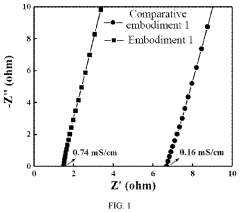
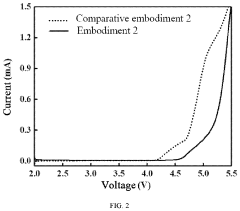
- A method involving in-situ polymerization using high steric hindrance monomers and highly reactive crosslinkers to create a three-dimensional network structure, enhancing ionic conductivity and mechanical strength while stabilizing the electrode-electrolyte interface, achieved by mixing specific monomers, crosslinkers, and lithium salts, followed by in-situ polymerization within a cell with a porous skeleton film.
Materials Science Advancements for Solid-State Electrolytes
Recent advancements in materials science have significantly propelled the development of solid-state electrolytes, addressing critical challenges in lithium transport modeling for solid-state anodes. The evolution of ceramic and polymer-based electrolytes has been particularly noteworthy, with innovations in material composition and structure enabling enhanced ionic conductivity comparable to liquid electrolytes while maintaining superior safety profiles.
Oxide-based solid electrolytes, including LLZO (Li7La3Zr2O12) and NASICON-type materials, have demonstrated remarkable improvements in lithium-ion conductivity through strategic doping and microstructural engineering. These materials exhibit conductivities approaching 10^-3 S/cm at room temperature, a significant milestone for practical applications. The incorporation of aliovalent dopants has proven effective in stabilizing high-conductivity phases and reducing grain boundary resistance.
Sulfide-based electrolytes represent another breakthrough category, with materials like Li10GeP2S12 (LGPS) achieving exceptional conductivity values exceeding 10^-2 S/cm. Recent research has focused on addressing their environmental sensitivity and mechanical properties through surface modification techniques and composite formulations. The development of argyrodite-type sulfides has further expanded the material options with tunable properties.
Polymer-based and hybrid electrolytes have emerged as versatile alternatives, combining the flexibility of polymers with the high conductivity of ceramic fillers. PEO-based systems modified with ceramic nanoparticles demonstrate enhanced mechanical stability and reduced crystallinity, facilitating faster lithium transport across material interfaces. Novel cross-linking strategies and the incorporation of ionic liquids have further improved their electrochemical performance.
Computational modeling has become instrumental in accelerating materials discovery, with density functional theory (DFT) and molecular dynamics simulations providing atomic-level insights into lithium diffusion pathways and energy barriers. Machine learning approaches have enabled high-throughput screening of candidate materials, identifying promising compositions with optimal transport properties before experimental validation.
Interface engineering represents the frontier of current research, focusing on minimizing resistance at electrode-electrolyte interfaces. Techniques such as atomic layer deposition and solution-based coating methods have demonstrated effectiveness in creating stable interphases that facilitate lithium transport while preventing unwanted side reactions. The development of gradient-structured interfaces with tailored composition profiles has shown promise in addressing mechanical stress during cycling.
Oxide-based solid electrolytes, including LLZO (Li7La3Zr2O12) and NASICON-type materials, have demonstrated remarkable improvements in lithium-ion conductivity through strategic doping and microstructural engineering. These materials exhibit conductivities approaching 10^-3 S/cm at room temperature, a significant milestone for practical applications. The incorporation of aliovalent dopants has proven effective in stabilizing high-conductivity phases and reducing grain boundary resistance.
Sulfide-based electrolytes represent another breakthrough category, with materials like Li10GeP2S12 (LGPS) achieving exceptional conductivity values exceeding 10^-2 S/cm. Recent research has focused on addressing their environmental sensitivity and mechanical properties through surface modification techniques and composite formulations. The development of argyrodite-type sulfides has further expanded the material options with tunable properties.
Polymer-based and hybrid electrolytes have emerged as versatile alternatives, combining the flexibility of polymers with the high conductivity of ceramic fillers. PEO-based systems modified with ceramic nanoparticles demonstrate enhanced mechanical stability and reduced crystallinity, facilitating faster lithium transport across material interfaces. Novel cross-linking strategies and the incorporation of ionic liquids have further improved their electrochemical performance.
Computational modeling has become instrumental in accelerating materials discovery, with density functional theory (DFT) and molecular dynamics simulations providing atomic-level insights into lithium diffusion pathways and energy barriers. Machine learning approaches have enabled high-throughput screening of candidate materials, identifying promising compositions with optimal transport properties before experimental validation.
Interface engineering represents the frontier of current research, focusing on minimizing resistance at electrode-electrolyte interfaces. Techniques such as atomic layer deposition and solution-based coating methods have demonstrated effectiveness in creating stable interphases that facilitate lithium transport while preventing unwanted side reactions. The development of gradient-structured interfaces with tailored composition profiles has shown promise in addressing mechanical stress during cycling.
Computational Methods for Electrochemical Interface Modeling
Computational methods have become indispensable tools for understanding and predicting lithium transport phenomena in solid-state anodes. These methods span multiple length and time scales, from quantum mechanical calculations at the atomic level to continuum models at the macroscopic scale. Density Functional Theory (DFT) serves as the foundation for many electrochemical interface simulations, providing insights into electronic structures, binding energies, and reaction pathways at the electrode-electrolyte interface.
Molecular Dynamics (MD) simulations complement DFT by capturing the dynamic behavior of lithium ions and their interactions with the surrounding environment. Classical MD employs empirical force fields to simulate larger systems over longer timescales, while ab initio MD incorporates quantum mechanical calculations for more accurate representation of chemical reactions and bond breaking/formation processes at interfaces.
Phase-field modeling has emerged as a powerful approach for simulating microstructural evolution during lithium transport across interfaces. This method can capture phenomena such as phase separation, interface migration, and stress generation during lithium insertion/extraction processes. The coupling of phase-field models with electrochemical kinetics provides valuable insights into the complex interplay between mechanical and electrochemical processes at solid-state interfaces.
Machine learning techniques are increasingly being integrated with traditional computational methods to accelerate materials discovery and property prediction. Neural networks trained on DFT calculations can predict interfacial properties with near-quantum accuracy but at a fraction of the computational cost. Graph neural networks have shown particular promise for modeling complex electrode structures and their electrochemical behavior.
Multi-scale modeling frameworks that bridge atomic, mesoscopic, and macroscopic scales represent the cutting edge of computational electrochemistry. These approaches integrate information from quantum mechanical calculations into higher-level models, enabling the simulation of realistic electrode geometries while retaining atomic-level accuracy at critical interfaces.
Recent advances in high-performance computing have enabled the simulation of increasingly complex interfacial phenomena. Parallel computing architectures and GPU acceleration have made it possible to simulate larger systems over longer time scales, providing unprecedented insights into lithium transport mechanisms across solid-state interfaces.
The validation of computational models against experimental data remains a critical challenge. Advanced characterization techniques such as in-situ X-ray diffraction, neutron scattering, and electron microscopy provide valuable benchmarks for refining and validating computational predictions of interfacial phenomena in solid-state battery materials.
Molecular Dynamics (MD) simulations complement DFT by capturing the dynamic behavior of lithium ions and their interactions with the surrounding environment. Classical MD employs empirical force fields to simulate larger systems over longer timescales, while ab initio MD incorporates quantum mechanical calculations for more accurate representation of chemical reactions and bond breaking/formation processes at interfaces.
Phase-field modeling has emerged as a powerful approach for simulating microstructural evolution during lithium transport across interfaces. This method can capture phenomena such as phase separation, interface migration, and stress generation during lithium insertion/extraction processes. The coupling of phase-field models with electrochemical kinetics provides valuable insights into the complex interplay between mechanical and electrochemical processes at solid-state interfaces.
Machine learning techniques are increasingly being integrated with traditional computational methods to accelerate materials discovery and property prediction. Neural networks trained on DFT calculations can predict interfacial properties with near-quantum accuracy but at a fraction of the computational cost. Graph neural networks have shown particular promise for modeling complex electrode structures and their electrochemical behavior.
Multi-scale modeling frameworks that bridge atomic, mesoscopic, and macroscopic scales represent the cutting edge of computational electrochemistry. These approaches integrate information from quantum mechanical calculations into higher-level models, enabling the simulation of realistic electrode geometries while retaining atomic-level accuracy at critical interfaces.
Recent advances in high-performance computing have enabled the simulation of increasingly complex interfacial phenomena. Parallel computing architectures and GPU acceleration have made it possible to simulate larger systems over longer time scales, providing unprecedented insights into lithium transport mechanisms across solid-state interfaces.
The validation of computational models against experimental data remains a critical challenge. Advanced characterization techniques such as in-situ X-ray diffraction, neutron scattering, and electron microscopy provide valuable benchmarks for refining and validating computational predictions of interfacial phenomena in solid-state battery materials.
Unlock deeper insights with Patsnap Eureka Quick Research — get a full tech report to explore trends and direct your research. Try now!
Generate Your Research Report Instantly with AI Agent
Supercharge your innovation with Patsnap Eureka AI Agent Platform!