

Multiphysics Simulation vs Reduced Order Models: Accuracy vs Speed
MAR 26, 20268 MIN READ
Generate Your Research Report Instantly with AI Agent
PatSnap Eureka helps you evaluate technical feasibility & market potential.
Multiphysics Simulation Evolution and ROM Development Goals
Multiphysics simulation has undergone significant evolution since its inception in the 1960s, transitioning from simple coupled heat transfer and structural analysis to sophisticated multi-domain modeling encompassing fluid dynamics, electromagnetics, thermal effects, and mechanical deformation. Early developments were primarily driven by aerospace and nuclear industries, where understanding complex physical interactions was critical for safety and performance optimization.
The computational landscape transformed dramatically with the advent of finite element methods in the 1970s and 1980s, enabling more accurate representation of complex geometries and boundary conditions. Commercial software packages like ANSYS, COMSOL, and Abaqus emerged, democratizing access to multiphysics capabilities across various industries including automotive, electronics, and biomedical engineering.
The exponential growth in computational power during the 1990s and 2000s facilitated the simulation of increasingly complex systems with millions of degrees of freedom. However, this advancement revealed a fundamental challenge: while accuracy improved substantially, computational costs became prohibitive for real-time applications, optimization studies, and uncertainty quantification scenarios requiring thousands of simulation runs.
Reduced Order Models emerged as a response to this computational bottleneck, with early developments in the 1990s focusing on modal reduction techniques and proper orthogonal decomposition. The field gained momentum in the 2000s with advances in machine learning and data-driven modeling approaches, offering the potential to achieve near real-time simulation speeds while maintaining acceptable accuracy levels.
Current technological objectives center on developing hybrid approaches that intelligently balance accuracy and computational efficiency. Key goals include creating adaptive ROM frameworks that can automatically determine when full-order simulations are necessary versus when reduced models suffice. Additionally, there is significant focus on developing physics-informed machine learning models that incorporate fundamental physical laws while leveraging data-driven acceleration techniques.
The integration of artificial intelligence and high-performance computing architectures represents the next frontier, aiming to achieve real-time multiphysics simulation capabilities for complex engineering systems while maintaining the fidelity required for critical design decisions.
The computational landscape transformed dramatically with the advent of finite element methods in the 1970s and 1980s, enabling more accurate representation of complex geometries and boundary conditions. Commercial software packages like ANSYS, COMSOL, and Abaqus emerged, democratizing access to multiphysics capabilities across various industries including automotive, electronics, and biomedical engineering.
The exponential growth in computational power during the 1990s and 2000s facilitated the simulation of increasingly complex systems with millions of degrees of freedom. However, this advancement revealed a fundamental challenge: while accuracy improved substantially, computational costs became prohibitive for real-time applications, optimization studies, and uncertainty quantification scenarios requiring thousands of simulation runs.
Reduced Order Models emerged as a response to this computational bottleneck, with early developments in the 1990s focusing on modal reduction techniques and proper orthogonal decomposition. The field gained momentum in the 2000s with advances in machine learning and data-driven modeling approaches, offering the potential to achieve near real-time simulation speeds while maintaining acceptable accuracy levels.
Current technological objectives center on developing hybrid approaches that intelligently balance accuracy and computational efficiency. Key goals include creating adaptive ROM frameworks that can automatically determine when full-order simulations are necessary versus when reduced models suffice. Additionally, there is significant focus on developing physics-informed machine learning models that incorporate fundamental physical laws while leveraging data-driven acceleration techniques.
The integration of artificial intelligence and high-performance computing architectures represents the next frontier, aiming to achieve real-time multiphysics simulation capabilities for complex engineering systems while maintaining the fidelity required for critical design decisions.
Market Demand for Fast Accurate Multiphysics Solutions
The global engineering simulation market is experiencing unprecedented growth driven by the increasing complexity of modern product development and the urgent need for faster time-to-market cycles. Industries ranging from aerospace and automotive to energy and healthcare are demanding simulation solutions that can deliver both high accuracy and computational efficiency, creating a significant market opportunity for advanced multiphysics simulation technologies.
Aerospace and defense sectors represent one of the largest demand drivers, where engineers require precise modeling of fluid-structure interactions, thermal management, and electromagnetic effects in aircraft and spacecraft design. The automotive industry similarly demands rapid simulation capabilities for electric vehicle battery thermal management, crash analysis, and aerodynamic optimization, particularly as manufacturers accelerate their transition to electric mobility.
The energy sector, including renewable energy systems and oil and gas operations, requires sophisticated multiphysics modeling for wind turbine design, geothermal systems, and complex reservoir simulations. These applications often involve coupled thermal, mechanical, and fluid dynamics phenomena that traditional single-physics approaches cannot adequately address.
Manufacturing industries are increasingly adopting digital twin technologies, creating substantial demand for real-time or near-real-time multiphysics simulations. These applications require the speed advantages of reduced order models while maintaining sufficient accuracy for process optimization and predictive maintenance applications.
The semiconductor industry presents another significant market segment, where thermal-electrical-mechanical coupling in chip design and manufacturing processes demands both precision and computational speed. As device miniaturization continues, the need for accurate multiphysics modeling becomes more critical while design cycles become shorter.
Cloud computing and high-performance computing infrastructure development is expanding market accessibility, enabling smaller companies to leverage sophisticated simulation capabilities previously available only to large enterprises. This democratization of simulation technology is broadening the total addressable market significantly.
The convergence of artificial intelligence and machine learning with traditional simulation methods is creating new market opportunities, particularly in developing hybrid approaches that combine the accuracy of full multiphysics models with the speed of AI-enhanced reduced order models.
Aerospace and defense sectors represent one of the largest demand drivers, where engineers require precise modeling of fluid-structure interactions, thermal management, and electromagnetic effects in aircraft and spacecraft design. The automotive industry similarly demands rapid simulation capabilities for electric vehicle battery thermal management, crash analysis, and aerodynamic optimization, particularly as manufacturers accelerate their transition to electric mobility.
The energy sector, including renewable energy systems and oil and gas operations, requires sophisticated multiphysics modeling for wind turbine design, geothermal systems, and complex reservoir simulations. These applications often involve coupled thermal, mechanical, and fluid dynamics phenomena that traditional single-physics approaches cannot adequately address.
Manufacturing industries are increasingly adopting digital twin technologies, creating substantial demand for real-time or near-real-time multiphysics simulations. These applications require the speed advantages of reduced order models while maintaining sufficient accuracy for process optimization and predictive maintenance applications.
The semiconductor industry presents another significant market segment, where thermal-electrical-mechanical coupling in chip design and manufacturing processes demands both precision and computational speed. As device miniaturization continues, the need for accurate multiphysics modeling becomes more critical while design cycles become shorter.
Cloud computing and high-performance computing infrastructure development is expanding market accessibility, enabling smaller companies to leverage sophisticated simulation capabilities previously available only to large enterprises. This democratization of simulation technology is broadening the total addressable market significantly.
The convergence of artificial intelligence and machine learning with traditional simulation methods is creating new market opportunities, particularly in developing hybrid approaches that combine the accuracy of full multiphysics models with the speed of AI-enhanced reduced order models.
Current Multiphysics vs ROM Accuracy-Speed Trade-offs
The fundamental trade-off between multiphysics simulation accuracy and computational speed represents one of the most critical challenges in modern engineering simulation. Traditional high-fidelity multiphysics models, while providing exceptional accuracy through detailed physics representation, often require substantial computational resources and extended processing times that can span hours to days for complex systems.
Current multiphysics simulations achieve accuracy levels typically ranging from 95-99% when properly validated against experimental data. These models excel in capturing complex phenomena such as fluid-structure interactions, thermal-mechanical coupling, and electromagnetic effects with high spatial and temporal resolution. However, this accuracy comes at the cost of computational efficiency, with simulation times often measured in CPU-hours or even CPU-days for industrial-scale problems.
Reduced Order Models present a compelling alternative by sacrificing some accuracy to achieve dramatic speed improvements. Modern ROM techniques, including Proper Orthogonal Decomposition and machine learning-enhanced approaches, can reduce computational time by factors of 100 to 10,000 while maintaining accuracy levels between 85-95% for well-characterized systems. This speed advantage enables real-time applications, parametric studies, and optimization workflows that would be impractical with full-order models.
The accuracy-speed trade-off varies significantly across different physics domains and application contexts. Structural mechanics ROMs typically maintain higher accuracy ratios compared to fluid dynamics applications, where turbulent flows and nonlinear phenomena pose greater challenges for model reduction. Thermal simulations often represent a middle ground, with ROMs achieving good accuracy for steady-state and quasi-steady problems.
Current hybrid approaches attempt to optimize this trade-off through adaptive modeling strategies. These methods dynamically switch between high-fidelity and reduced-order representations based on solution characteristics, achieving accuracy levels of 90-97% while reducing computational time by factors of 10-100. Such approaches represent the current state-of-the-art in balancing simulation fidelity with practical computational constraints.
The selection between multiphysics and ROM approaches increasingly depends on specific use case requirements, with design optimization and real-time control applications favoring speed, while safety-critical analyses prioritizing accuracy retention.
Current multiphysics simulations achieve accuracy levels typically ranging from 95-99% when properly validated against experimental data. These models excel in capturing complex phenomena such as fluid-structure interactions, thermal-mechanical coupling, and electromagnetic effects with high spatial and temporal resolution. However, this accuracy comes at the cost of computational efficiency, with simulation times often measured in CPU-hours or even CPU-days for industrial-scale problems.
Reduced Order Models present a compelling alternative by sacrificing some accuracy to achieve dramatic speed improvements. Modern ROM techniques, including Proper Orthogonal Decomposition and machine learning-enhanced approaches, can reduce computational time by factors of 100 to 10,000 while maintaining accuracy levels between 85-95% for well-characterized systems. This speed advantage enables real-time applications, parametric studies, and optimization workflows that would be impractical with full-order models.
The accuracy-speed trade-off varies significantly across different physics domains and application contexts. Structural mechanics ROMs typically maintain higher accuracy ratios compared to fluid dynamics applications, where turbulent flows and nonlinear phenomena pose greater challenges for model reduction. Thermal simulations often represent a middle ground, with ROMs achieving good accuracy for steady-state and quasi-steady problems.
Current hybrid approaches attempt to optimize this trade-off through adaptive modeling strategies. These methods dynamically switch between high-fidelity and reduced-order representations based on solution characteristics, achieving accuracy levels of 90-97% while reducing computational time by factors of 10-100. Such approaches represent the current state-of-the-art in balancing simulation fidelity with practical computational constraints.
The selection between multiphysics and ROM approaches increasingly depends on specific use case requirements, with design optimization and real-time control applications favoring speed, while safety-critical analyses prioritizing accuracy retention.
Current ROM Techniques for Multiphysics Applications
01 Model order reduction techniques for multiphysics simulation
Reduced order models (ROMs) are developed to decrease computational complexity while maintaining accuracy in multiphysics simulations. These techniques involve projecting high-dimensional systems onto lower-dimensional subspaces using methods such as proper orthogonal decomposition, Krylov subspace methods, and balanced truncation. The reduced models enable faster simulation times while preserving essential system dynamics and behaviors across multiple physical domains.- Model order reduction techniques for computational efficiency: Reduced order models (ROMs) are developed to decrease computational complexity while maintaining accuracy in multiphysics simulations. These techniques involve mathematical transformations and dimensionality reduction methods that compress high-fidelity models into simplified representations. The approaches enable faster simulation times by reducing the number of degrees of freedom while preserving essential system dynamics and behaviors across multiple physical domains.
- Coupled physics simulation frameworks: Advanced simulation frameworks integrate multiple physical phenomena such as thermal, structural, electromagnetic, and fluid dynamics into unified computational models. These frameworks employ sophisticated coupling algorithms and iterative solvers to handle interactions between different physics domains. The systems provide comprehensive analysis capabilities while managing the trade-offs between simulation accuracy and computational speed through adaptive meshing and time-stepping strategies.
- Machine learning enhanced model reduction: Artificial intelligence and machine learning algorithms are applied to accelerate multiphysics simulations and improve reduced order model accuracy. Neural networks and data-driven approaches learn patterns from high-fidelity simulation data to create surrogate models that predict system behavior rapidly. These methods combine physics-based modeling with statistical learning to achieve both speed improvements and accuracy retention in complex multiphysics scenarios.
- Adaptive refinement and error estimation methods: Dynamic adaptation techniques automatically adjust model fidelity based on solution characteristics and error indicators during simulation execution. These methods employ posteriori error estimators and adaptive mesh refinement to concentrate computational resources in regions requiring higher accuracy. The approaches balance speed and precision by selectively applying detailed modeling only where necessary while using simplified representations elsewhere.
- Parallel computing and distributed simulation architectures: High-performance computing infrastructures enable acceleration of multiphysics simulations through parallelization and distributed processing. These architectures partition computational workloads across multiple processors or computing nodes to reduce overall simulation time. Domain decomposition methods and parallel solvers are implemented to maintain model accuracy while achieving significant speedup through concurrent execution of simulation tasks.
02 Adaptive mesh refinement and domain decomposition for simulation accuracy
Advanced meshing strategies and domain decomposition methods are employed to improve both accuracy and computational efficiency in multiphysics simulations. These approaches dynamically refine mesh resolution in regions requiring higher fidelity while maintaining coarser meshes elsewhere. The techniques enable parallel processing and load balancing, significantly reducing simulation time without compromising solution accuracy in critical regions.Expand Specific Solutions03 Machine learning-enhanced surrogate modeling for rapid simulation
Machine learning algorithms are integrated with traditional simulation methods to create surrogate models that provide rapid predictions. Neural networks, Gaussian processes, and other learning-based approaches are trained on high-fidelity simulation data to approximate complex multiphysics behaviors. These surrogate models achieve significant speedup in computational time while maintaining acceptable accuracy levels for design optimization and real-time applications.Expand Specific Solutions04 Parametric model reduction for multi-query simulation scenarios
Parametric reduced order modeling techniques are developed to handle simulations with varying input parameters efficiently. These methods construct parameter-dependent reduced bases that remain valid across a range of operating conditions. The approach enables rapid evaluation of multiple design configurations or operating scenarios without requiring full-scale simulations for each parameter set, thereby accelerating design space exploration and optimization processes.Expand Specific Solutions05 Error estimation and adaptive refinement for ROM accuracy control
Error estimation frameworks and adaptive refinement strategies are implemented to ensure reduced order models maintain specified accuracy levels. These methods include a posteriori error indicators, residual-based estimators, and adaptive basis enrichment techniques. The approaches automatically detect when ROM accuracy degrades and trigger refinement procedures, balancing computational speed with solution fidelity throughout the simulation process.Expand Specific Solutions
Key Players in Multiphysics Software and ROM Development
The multiphysics simulation versus reduced order models landscape represents a mature technology sector experiencing rapid evolution driven by computational demands across industries. The market demonstrates significant growth potential, particularly in aerospace, energy, and automotive sectors, where simulation accuracy and computational efficiency are critical. Technology maturity varies considerably among key players: established simulation leaders like ANSYS and Siemens offer comprehensive multiphysics platforms, while energy giants including China National Petroleum Corp., PetroChina, and Schlumberger drive domain-specific applications. Academic institutions such as MIT, Xi'an Jiaotong University, and Ghent University advance fundamental research in reduced order modeling techniques. Technology companies like Google, IBM, and Hitachi contribute AI-enhanced simulation capabilities, while Boeing and aerospace firms push performance boundaries. The competitive landscape shows convergence toward hybrid approaches combining high-fidelity multiphysics with accelerated reduced order methods, indicating industry recognition that the accuracy-speed tradeoff requires sophisticated balancing rather than binary choices.
Siemens Corp.
Technical Solution: Siemens offers multiphysics simulation through Simcenter portfolio, integrating CFD, structural, and electromagnetic analysis with their Digital Twin technology. Their approach emphasizes the balance between simulation accuracy and computational efficiency through adaptive mesh refinement and model order reduction techniques. Simcenter STAR-CCM+ provides multiphysics coupling capabilities while Simcenter Amesim focuses on system-level reduced order modeling for real-time simulation. The platform supports automated ROM generation from high-fidelity models, enabling rapid design exploration and optimization while maintaining engineering accuracy for industrial applications.
Strengths: Strong industrial integration, automated ROM generation, real-time simulation capabilities. Weaknesses: Limited academic accessibility, complex workflow setup, vendor lock-in concerns.
ANSYS, Inc.
Technical Solution: ANSYS provides comprehensive multiphysics simulation solutions through their flagship software suite including Fluent, Mechanical, and Maxwell. Their approach combines high-fidelity multiphysics modeling with reduced order modeling (ROM) capabilities through ANSYS Twin Builder and Model Reduction technology. The platform enables users to create detailed physics-based models and then generate computationally efficient reduced models for real-time applications. Their ROM technology uses advanced mathematical techniques like proper orthogonal decomposition (POD) and Krylov subspace methods to maintain accuracy while dramatically reducing computational time from hours to seconds.
Strengths: Industry-leading multiphysics accuracy, comprehensive ROM capabilities, extensive validation. Weaknesses: High licensing costs, steep learning curve, resource-intensive for complex models.
Core Innovations in Advanced Model Reduction Methods
Model order reduction of physical systems
PatentInactiveUS20230030993A1
Innovation
- The method involves generating and selecting reduced-order models (ROMs) through model order reduction techniques that provide flexible tradeoffs between time cost and accuracy, with a priori error bounds and preservation of physical properties, using semi-discretization and projection-based schemes to convert full-order models into smaller ordinary or differential-algebraic equations.


Multi-fidelity simulation optimization method and equipment applied to workshop planned production
PatentActiveCN111445079A
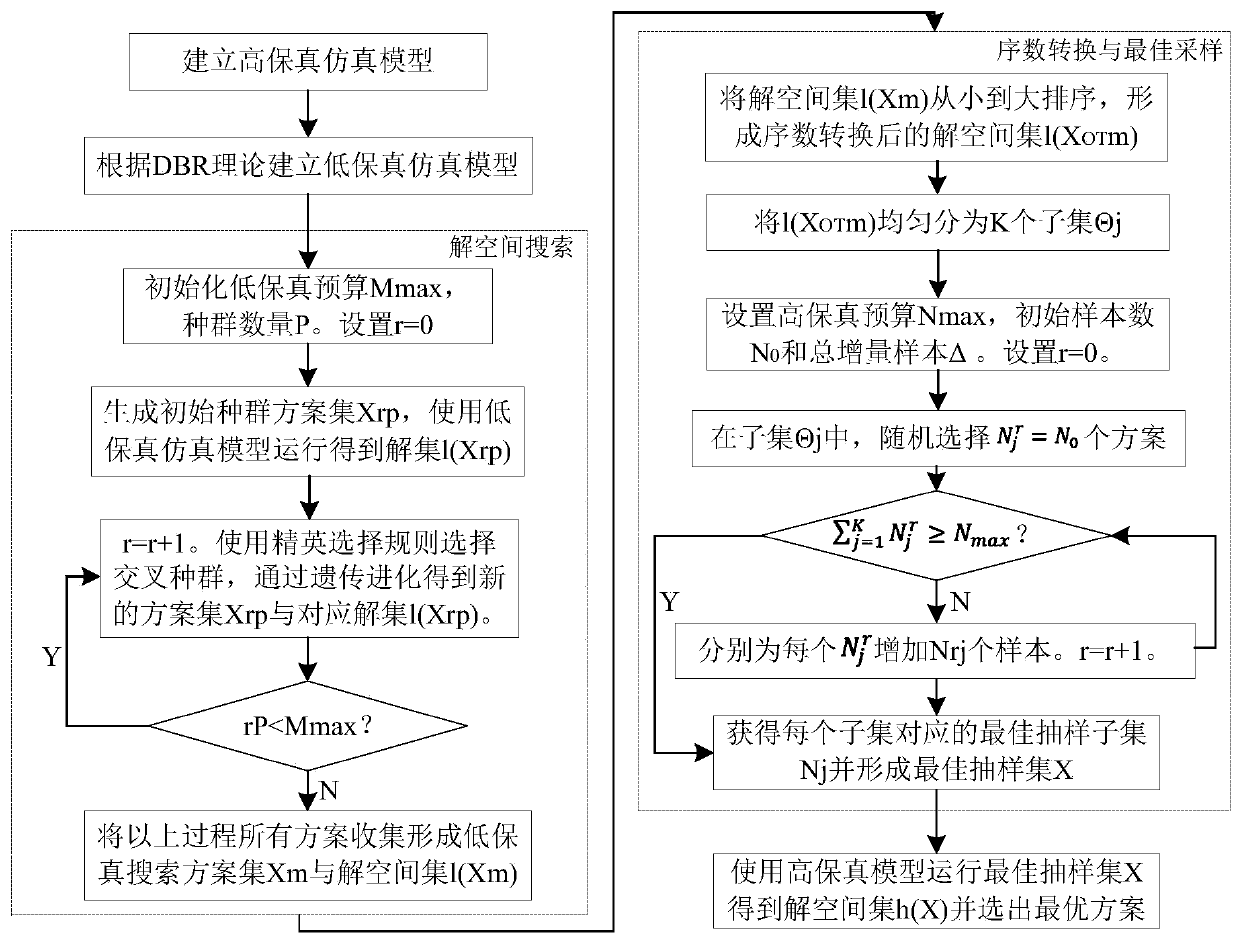
Innovation
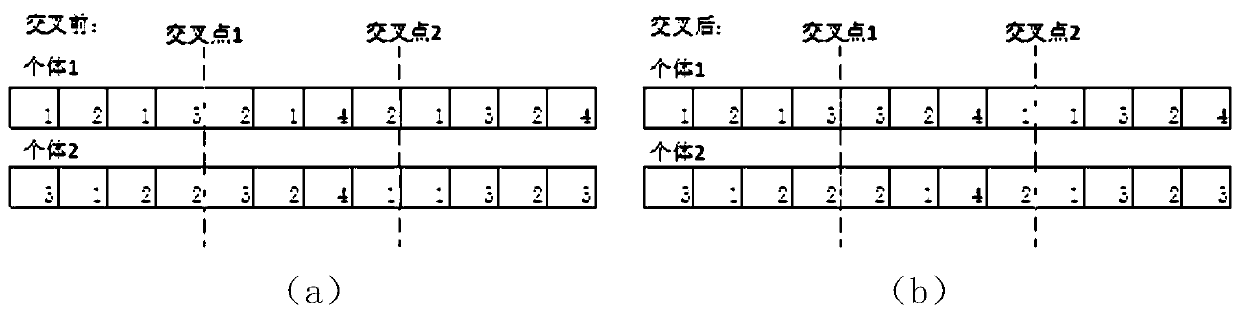
- A multi-fidelity simulation optimization method based on DBR theory is adopted, by establishing high-fidelity and low-fidelity simulation models, using a genetic algorithm (GA) to search the solution space in the low-fidelity model, performing ordinal conversion and optimal sampling, and finally using high-fidelity The real model verifies the best solution, improving solution efficiency and accuracy.

Computational Resource Optimization Strategies
The optimization of computational resources in multiphysics simulation versus reduced order modeling represents a critical balance between computational efficiency and solution fidelity. Organizations must strategically allocate their computing infrastructure to maximize throughput while maintaining acceptable accuracy levels for their specific applications.
Hardware acceleration strategies form the cornerstone of computational optimization. Graphics Processing Units (GPUs) demonstrate exceptional performance for parallel matrix operations inherent in both full-scale simulations and ROM computations. Modern GPU architectures with high-bandwidth memory can accelerate finite element assembly and linear algebra operations by factors of 10-50 compared to traditional CPU implementations. Field-Programmable Gate Arrays (FPGAs) offer specialized acceleration for specific algorithmic patterns, particularly beneficial for real-time ROM evaluations in control applications.
Memory management optimization significantly impacts computational efficiency. Full multiphysics simulations require careful memory hierarchy utilization, employing techniques such as domain decomposition and out-of-core solvers to handle large-scale problems exceeding available RAM. Conversely, ROMs benefit from optimized data structures that exploit the compressed representation, utilizing cache-friendly memory access patterns and vectorized operations to maximize throughput during online evaluation phases.
Parallel computing strategies differ substantially between approaches. Multiphysics simulations leverage domain-based parallelization, distributing spatial regions across multiple processors with careful attention to load balancing and communication overhead. ROM implementations focus on task-level parallelism, enabling concurrent evaluation of multiple parameter sets or ensemble simulations with minimal inter-process communication requirements.
Cloud computing integration provides scalable resource allocation capabilities. Elastic computing environments allow dynamic scaling based on computational demands, particularly valuable for ROM training phases that require extensive parameter sweeps. Containerization technologies enable consistent deployment across heterogeneous computing environments, facilitating seamless transitions between development and production systems while maintaining computational reproducibility and resource isolation.
Hardware acceleration strategies form the cornerstone of computational optimization. Graphics Processing Units (GPUs) demonstrate exceptional performance for parallel matrix operations inherent in both full-scale simulations and ROM computations. Modern GPU architectures with high-bandwidth memory can accelerate finite element assembly and linear algebra operations by factors of 10-50 compared to traditional CPU implementations. Field-Programmable Gate Arrays (FPGAs) offer specialized acceleration for specific algorithmic patterns, particularly beneficial for real-time ROM evaluations in control applications.
Memory management optimization significantly impacts computational efficiency. Full multiphysics simulations require careful memory hierarchy utilization, employing techniques such as domain decomposition and out-of-core solvers to handle large-scale problems exceeding available RAM. Conversely, ROMs benefit from optimized data structures that exploit the compressed representation, utilizing cache-friendly memory access patterns and vectorized operations to maximize throughput during online evaluation phases.
Parallel computing strategies differ substantially between approaches. Multiphysics simulations leverage domain-based parallelization, distributing spatial regions across multiple processors with careful attention to load balancing and communication overhead. ROM implementations focus on task-level parallelism, enabling concurrent evaluation of multiple parameter sets or ensemble simulations with minimal inter-process communication requirements.
Cloud computing integration provides scalable resource allocation capabilities. Elastic computing environments allow dynamic scaling based on computational demands, particularly valuable for ROM training phases that require extensive parameter sweeps. Containerization technologies enable consistent deployment across heterogeneous computing environments, facilitating seamless transitions between development and production systems while maintaining computational reproducibility and resource isolation.
Industry Standards for Multiphysics Validation
The validation of multiphysics simulations requires adherence to established industry standards that ensure reliability, accuracy, and reproducibility across different computational approaches. These standards become particularly critical when evaluating the trade-offs between full-scale multiphysics simulations and reduced order models, as each approach demands distinct validation methodologies.
The American Society of Mechanical Engineers (ASME) V&V 10 standard provides the foundational framework for computational solid mechanics verification and validation. This standard establishes systematic procedures for code verification, solution verification, and model validation that apply to both high-fidelity multiphysics simulations and their reduced counterparts. The standard emphasizes the importance of quantifying uncertainty and establishing confidence levels in computational predictions.
IEEE Standards Association has developed complementary guidelines specifically addressing multiphysics coupling validation, particularly IEEE 1597 series standards for validation of computational electromagnetics. These standards define rigorous benchmarking procedures and error quantification methods essential for validating coupled field simulations where electromagnetic, thermal, and mechanical phenomena interact simultaneously.
The International Organization for Standardization (ISO) 16269 series provides statistical methods for validation processes, offering frameworks for comparing simulation results against experimental data. These standards are particularly relevant when validating reduced order models, as they provide methodologies for assessing model fidelity across reduced parameter spaces while maintaining statistical significance.
Industry-specific standards further refine validation requirements. The nuclear industry follows ASME NQA-1 standards for quality assurance in computational modeling, while aerospace applications adhere to AIAA standards for computational fluid dynamics validation. These sector-specific guidelines address unique challenges in multiphysics validation, including safety-critical applications where model accuracy directly impacts operational safety.
Emerging standards from organizations like NAFEMS focus specifically on multiphysics validation benchmarks, providing standardized test cases that enable systematic comparison between different modeling approaches. These benchmarks serve as crucial reference points for evaluating when reduced order models maintain acceptable accuracy levels compared to full multiphysics simulations.
The American Society of Mechanical Engineers (ASME) V&V 10 standard provides the foundational framework for computational solid mechanics verification and validation. This standard establishes systematic procedures for code verification, solution verification, and model validation that apply to both high-fidelity multiphysics simulations and their reduced counterparts. The standard emphasizes the importance of quantifying uncertainty and establishing confidence levels in computational predictions.
IEEE Standards Association has developed complementary guidelines specifically addressing multiphysics coupling validation, particularly IEEE 1597 series standards for validation of computational electromagnetics. These standards define rigorous benchmarking procedures and error quantification methods essential for validating coupled field simulations where electromagnetic, thermal, and mechanical phenomena interact simultaneously.
The International Organization for Standardization (ISO) 16269 series provides statistical methods for validation processes, offering frameworks for comparing simulation results against experimental data. These standards are particularly relevant when validating reduced order models, as they provide methodologies for assessing model fidelity across reduced parameter spaces while maintaining statistical significance.
Industry-specific standards further refine validation requirements. The nuclear industry follows ASME NQA-1 standards for quality assurance in computational modeling, while aerospace applications adhere to AIAA standards for computational fluid dynamics validation. These sector-specific guidelines address unique challenges in multiphysics validation, including safety-critical applications where model accuracy directly impacts operational safety.
Emerging standards from organizations like NAFEMS focus specifically on multiphysics validation benchmarks, providing standardized test cases that enable systematic comparison between different modeling approaches. These benchmarks serve as crucial reference points for evaluating when reduced order models maintain acceptable accuracy levels compared to full multiphysics simulations.
Unlock deeper insights with PatSnap Eureka Quick Research — get a full tech report to explore trends and direct your research. Try now!
Generate Your Research Report Instantly with AI Agent
Supercharge your innovation with PatSnap Eureka AI Agent Platform!