

Optimal Material Selection for Rail Gun Rail Longevity
AUG 6, 20259 MIN READ
Generate Your Research Report Instantly with AI Agent
PatSnap Eureka helps you evaluate technical feasibility & market potential.
Rail Gun Technology Evolution and Objectives
Rail gun technology has evolved significantly since its inception in the early 20th century. Initially conceived as a theoretical concept, rail guns have progressed from laboratory experiments to practical military applications. The primary objective of rail gun development has been to create a weapon system capable of launching projectiles at hypersonic speeds without the use of chemical propellants.
The evolution of rail gun technology can be traced through several key phases. In the 1970s and 1980s, research focused on proving the concept and developing basic prototypes. The 1990s saw increased investment in rail gun research, with a focus on improving power supplies and materials. The early 2000s marked a turning point, with significant advancements in pulsed power technology and the development of more robust rail materials.
One of the primary objectives in rail gun technology has been to increase muzzle velocity. Early prototypes achieved velocities of around 2 km/s, while modern systems can reach velocities exceeding 7 km/s. This dramatic increase in velocity has been made possible through improvements in power supply systems, projectile design, and rail materials.
Another critical objective has been to enhance the longevity of the rail system. The extreme conditions during firing, including high temperatures and electromagnetic forces, cause rapid wear on the rails. Improving rail durability has been a key focus, with research into advanced materials and cooling systems to mitigate wear and extend operational life.
The miniaturization of rail gun systems has also been a significant goal. Early rail guns were massive, requiring large power supplies and cooling systems. Recent developments have focused on creating more compact and mobile systems, suitable for naval and potentially land-based applications.
Energy efficiency has been another important objective in rail gun development. Researchers have worked to improve the conversion of electrical energy into kinetic energy, reducing energy losses and increasing the overall efficiency of the system. This has involved advancements in capacitor technology, pulse shaping, and projectile design.
Looking forward, the objectives for rail gun technology continue to evolve. Current goals include further increasing muzzle velocity, improving accuracy and range, and developing more advanced power supply systems. Additionally, there is a growing focus on integrating rail guns with existing weapon systems and exploring their potential for non-military applications, such as space launch systems.
The evolution of rail gun technology can be traced through several key phases. In the 1970s and 1980s, research focused on proving the concept and developing basic prototypes. The 1990s saw increased investment in rail gun research, with a focus on improving power supplies and materials. The early 2000s marked a turning point, with significant advancements in pulsed power technology and the development of more robust rail materials.
One of the primary objectives in rail gun technology has been to increase muzzle velocity. Early prototypes achieved velocities of around 2 km/s, while modern systems can reach velocities exceeding 7 km/s. This dramatic increase in velocity has been made possible through improvements in power supply systems, projectile design, and rail materials.
Another critical objective has been to enhance the longevity of the rail system. The extreme conditions during firing, including high temperatures and electromagnetic forces, cause rapid wear on the rails. Improving rail durability has been a key focus, with research into advanced materials and cooling systems to mitigate wear and extend operational life.
The miniaturization of rail gun systems has also been a significant goal. Early rail guns were massive, requiring large power supplies and cooling systems. Recent developments have focused on creating more compact and mobile systems, suitable for naval and potentially land-based applications.
Energy efficiency has been another important objective in rail gun development. Researchers have worked to improve the conversion of electrical energy into kinetic energy, reducing energy losses and increasing the overall efficiency of the system. This has involved advancements in capacitor technology, pulse shaping, and projectile design.
Looking forward, the objectives for rail gun technology continue to evolve. Current goals include further increasing muzzle velocity, improving accuracy and range, and developing more advanced power supply systems. Additionally, there is a growing focus on integrating rail guns with existing weapon systems and exploring their potential for non-military applications, such as space launch systems.
Market Analysis for Advanced Weapon Systems
The market for advanced weapon systems, particularly rail guns, has been experiencing significant growth and transformation in recent years. This trend is driven by the increasing demand for more sophisticated and powerful military technologies, especially in the context of evolving global security challenges. The rail gun market, as a subset of advanced weapon systems, is particularly noteworthy due to its potential to revolutionize long-range artillery and naval warfare.
Major defense contractors and military organizations worldwide are investing heavily in rail gun technology, recognizing its potential to provide superior firepower, extended range, and reduced logistics burden compared to conventional artillery systems. The United States, China, and Russia are at the forefront of rail gun development, with several other nations also pursuing research and development in this field.
The global market for advanced weapon systems, including rail guns, is projected to grow substantially over the next decade. This growth is fueled by increasing defense budgets in many countries, particularly in regions such as Asia-Pacific and the Middle East. The rail gun segment, while still relatively small, is expected to see rapid expansion as the technology matures and becomes more viable for practical military applications.
Key market drivers for rail gun technology include the need for enhanced naval capabilities, the desire for more cost-effective long-range strike options, and the pursuit of technological superiority in military operations. The potential for rail guns to provide rapid, high-volume fire support with extended range is particularly attractive to naval forces, as it could significantly enhance ship-to-shore and anti-ship capabilities.
However, the market for rail gun technology faces several challenges. The high power requirements, material wear issues, and the need for advanced power storage and delivery systems are significant hurdles that need to be overcome. These technical challenges directly impact the longevity and reliability of rail gun systems, making material selection a critical factor in their development and marketability.
The competitive landscape in the rail gun market is characterized by a mix of established defense contractors and emerging technology companies. Major players are focusing on research and development to address key technical challenges, particularly in the areas of materials science and power systems. Collaborations between industry, academia, and government research institutions are becoming increasingly common as stakeholders seek to accelerate technological progress and overcome development hurdles.
Major defense contractors and military organizations worldwide are investing heavily in rail gun technology, recognizing its potential to provide superior firepower, extended range, and reduced logistics burden compared to conventional artillery systems. The United States, China, and Russia are at the forefront of rail gun development, with several other nations also pursuing research and development in this field.
The global market for advanced weapon systems, including rail guns, is projected to grow substantially over the next decade. This growth is fueled by increasing defense budgets in many countries, particularly in regions such as Asia-Pacific and the Middle East. The rail gun segment, while still relatively small, is expected to see rapid expansion as the technology matures and becomes more viable for practical military applications.
Key market drivers for rail gun technology include the need for enhanced naval capabilities, the desire for more cost-effective long-range strike options, and the pursuit of technological superiority in military operations. The potential for rail guns to provide rapid, high-volume fire support with extended range is particularly attractive to naval forces, as it could significantly enhance ship-to-shore and anti-ship capabilities.
However, the market for rail gun technology faces several challenges. The high power requirements, material wear issues, and the need for advanced power storage and delivery systems are significant hurdles that need to be overcome. These technical challenges directly impact the longevity and reliability of rail gun systems, making material selection a critical factor in their development and marketability.
The competitive landscape in the rail gun market is characterized by a mix of established defense contractors and emerging technology companies. Major players are focusing on research and development to address key technical challenges, particularly in the areas of materials science and power systems. Collaborations between industry, academia, and government research institutions are becoming increasingly common as stakeholders seek to accelerate technological progress and overcome development hurdles.
Current Challenges in Rail Gun Rail Materials
The development of rail guns faces significant challenges in material selection for rails, which are critical components subjected to extreme conditions during operation. The primary issue is the rapid degradation of rail materials due to the intense electromagnetic forces, high temperatures, and mechanical stresses experienced during projectile acceleration.
One of the foremost challenges is the erosion and wear of rail surfaces. The high-speed movement of the projectile along the rails, coupled with the intense electrical current, leads to severe abrasion and material loss. This erosion not only reduces the operational lifespan of the rails but also affects the performance and accuracy of the rail gun system.
Thermal management presents another major hurdle. The enormous electrical currents passing through the rails generate substantial heat, causing thermal expansion and potential warping of the rail structure. This thermal stress can lead to material fatigue, cracking, and ultimately, rail failure. Finding materials that can withstand these extreme temperatures while maintaining structural integrity is a critical challenge.
The intense electromagnetic forces exerted during firing create significant mechanical stress on the rail materials. These forces can cause deformation, bending, or even fracturing of the rails, particularly at high repetition rates. Developing materials that can withstand these forces without compromising the rail gun's performance is essential.
Another challenge lies in managing the electrical conductivity of rail materials. While high conductivity is crucial for efficient energy transfer, it must be balanced with other material properties such as strength and heat resistance. Materials that excel in one area often fall short in others, making the selection process complex.
Corrosion resistance is also a significant concern, especially in naval applications where rail guns may be exposed to saltwater environments. Materials must be able to withstand corrosive elements while maintaining their electrical and mechanical properties over extended periods.
The search for suitable rail materials is further complicated by the need for manufacturability and cost-effectiveness. Advanced materials that meet the performance requirements are often expensive or difficult to produce at scale, limiting their practical application in rail gun systems.
Lastly, the longevity of rail materials remains a persistent challenge. Even with current advancements, the operational life of rails is limited, necessitating frequent replacements. This not only increases maintenance costs but also affects the overall readiness and deployment capabilities of rail gun systems.
One of the foremost challenges is the erosion and wear of rail surfaces. The high-speed movement of the projectile along the rails, coupled with the intense electrical current, leads to severe abrasion and material loss. This erosion not only reduces the operational lifespan of the rails but also affects the performance and accuracy of the rail gun system.
Thermal management presents another major hurdle. The enormous electrical currents passing through the rails generate substantial heat, causing thermal expansion and potential warping of the rail structure. This thermal stress can lead to material fatigue, cracking, and ultimately, rail failure. Finding materials that can withstand these extreme temperatures while maintaining structural integrity is a critical challenge.
The intense electromagnetic forces exerted during firing create significant mechanical stress on the rail materials. These forces can cause deformation, bending, or even fracturing of the rails, particularly at high repetition rates. Developing materials that can withstand these forces without compromising the rail gun's performance is essential.
Another challenge lies in managing the electrical conductivity of rail materials. While high conductivity is crucial for efficient energy transfer, it must be balanced with other material properties such as strength and heat resistance. Materials that excel in one area often fall short in others, making the selection process complex.
Corrosion resistance is also a significant concern, especially in naval applications where rail guns may be exposed to saltwater environments. Materials must be able to withstand corrosive elements while maintaining their electrical and mechanical properties over extended periods.
The search for suitable rail materials is further complicated by the need for manufacturability and cost-effectiveness. Advanced materials that meet the performance requirements are often expensive or difficult to produce at scale, limiting their practical application in rail gun systems.
Lastly, the longevity of rail materials remains a persistent challenge. Even with current advancements, the operational life of rails is limited, necessitating frequent replacements. This not only increases maintenance costs but also affects the overall readiness and deployment capabilities of rail gun systems.
Existing Rail Material Solutions
01 Material selection for rail longevity
Choosing appropriate materials for rail gun rails is crucial for enhancing their longevity. Advanced alloys and composite materials that can withstand high temperatures and pressures are being developed. These materials aim to reduce wear and erosion, thereby extending the operational life of the rails.- Rail material selection and coating: Selecting appropriate materials and applying specialized coatings for rail gun rails can significantly improve their longevity. High-strength, heat-resistant alloys and advanced surface treatments help withstand the extreme conditions during firing, reducing wear and erosion.
- Cooling systems for rail guns: Implementing effective cooling systems can extend the lifespan of rail gun rails. These systems help manage the intense heat generated during firing, preventing thermal damage and maintaining structural integrity over repeated use.
- Rail design optimization: Optimizing the design of rail gun rails, including their shape, cross-section, and mounting mechanisms, can enhance their durability. Advanced modeling and simulation techniques are used to develop designs that better distribute stress and minimize wear during operation.
- Projectile and sabot design: Improving the design of projectiles and sabots can reduce rail wear and increase rail longevity. This includes developing materials and shapes that minimize friction and rail damage during launch, while maintaining performance.
- Maintenance and monitoring systems: Implementing advanced maintenance procedures and real-time monitoring systems can extend rail gun rail life. These systems detect wear patterns, predict failures, and allow for timely maintenance or replacement, ensuring optimal performance and longevity.
02 Cooling systems for rail preservation
Implementing effective cooling systems is essential for preserving rail gun rails. Various cooling techniques, including liquid cooling and heat dissipation mechanisms, are being explored to manage the extreme heat generated during firing. These systems help prevent thermal damage and extend the lifespan of the rails.Expand Specific Solutions03 Surface treatment and coatings
Applying specialized surface treatments and coatings to rail gun rails can significantly improve their durability. These treatments may include hardening processes, anti-wear coatings, or lubricating layers that reduce friction and protect the rail surface from erosion and damage during projectile acceleration.Expand Specific Solutions04 Rail design optimization
Optimizing the design of rail gun rails is crucial for enhancing their longevity. This includes considerations such as rail geometry, cross-sectional shape, and contact surface area. Advanced modeling and simulation techniques are used to develop rail designs that distribute stress more evenly and minimize wear points.Expand Specific Solutions05 Maintenance and monitoring systems
Developing sophisticated maintenance and monitoring systems is key to extending rail gun rail longevity. These systems may include real-time wear detection, predictive maintenance algorithms, and automated repair processes. By identifying and addressing issues early, the operational life of the rails can be significantly extended.Expand Specific Solutions
Key Players in Rail Gun Technology
The competition landscape for optimal material selection in rail gun rail longevity is characterized by a developing industry in an early growth stage. The market size is expanding as military and research institutions invest in advanced electromagnetic launch technologies. Technical maturity varies, with established steel manufacturers like JFE Steel, Nippon Steel, and Tata Steel UK possessing relevant metallurgical expertise. Emerging players such as Shaanxi Sirui Advanced Materials and Black Frozen Technology are focusing on specialized materials. Academic institutions like Shanghai Jiao Tong University and Xi'an Jiaotong University are contributing to R&D efforts. The involvement of defense contractors like BAE Systems indicates growing commercial interest, though significant technical challenges remain in developing materials that can withstand the extreme conditions of rail gun operation.
JFE Steel Corp.
Technical Solution: JFE Steel has developed a novel approach to railgun rail materials, focusing on laminated composite structures. Their design incorporates alternating layers of high-strength steel and highly conductive copper alloys, bonded using advanced metallurgical techniques. This layered structure aims to combine the mechanical strength of steel with the electrical conductivity of copper, addressing both the structural and electrical requirements of railgun rails[6]. JFE Steel has also invested in advanced surface treatment technologies to enhance the wear resistance of the rail surface, including the application of nanostructured coatings that can withstand extreme temperatures and pressures[7]. Their research includes computational modeling to optimize the layer thicknesses and compositions for maximum performance and longevity.
Strengths: Innovative composite material approach, strong metallurgical research capabilities, and expertise in large-scale steel production. Weaknesses: Potential challenges in scaling up the production of complex laminated structures for full-size railgun systems.
NIPPON STEEL CORP.
Technical Solution: Nippon Steel has focused on developing high-strength, low-resistivity steel alloys specifically designed for railgun applications. Their approach involves precise control of the microstructure and composition of the steel to achieve an optimal balance between electrical conductivity and mechanical strength. They have implemented advanced heat treatment processes to enhance the material's resistance to wear and thermal fatigue[4]. Nippon Steel's materials have shown promising results in laboratory tests, demonstrating reduced rail erosion and improved longevity compared to conventional materials[5]. Their research also includes the development of nano-structured surface coatings to further enhance rail durability.
Strengths: Extensive metallurgical expertise, advanced manufacturing capabilities, and a strong focus on material innovation. Weaknesses: Limited direct experience with complete railgun systems integration.
Innovative Rail Materials Research
Rail and method for manufacturing same
PatentWO2015146150A1
Innovation
- A rail composition with specific chemical elements (C: 0.60-1.0%, Si: 0.1-1.5%, Mn: 0.01-1.5%, P: 0.035% or less, S: 0.030% or less, Cr: 0.1-2.0%, and optional Cu, Ni, Mo, V) and a manufacturing process involving hot-rolling at temperatures above 1200°C, multiple passes with controlled inter-pass times, and controlled cooling rates to achieve a surface hardness variation of ±HB15 or less, ensuring uniform wear resistance.


ILP rail-gun armature and rails
PatentActiveUS8132562B1
Innovation
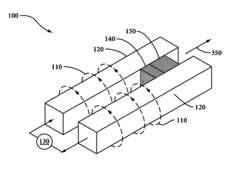
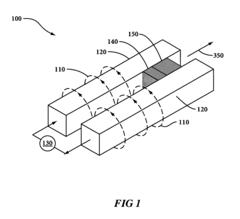
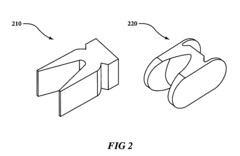
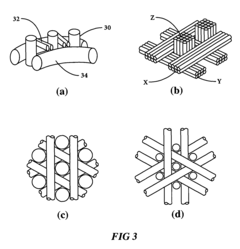
- The use of carbon-carbon composite materials for both armatures and rails, fabricated through a process of carbonization, infusion with a carbon matrix, and graphitization, along with reinforcement and additional refractory metals, to create a durable and conductive structure that minimizes damage during high-velocity projectile launches.
Environmental Impact of Rail Gun Materials
The environmental impact of rail gun materials is a critical consideration in the development and deployment of these advanced weapon systems. The primary materials used in rail guns, such as copper alloys and aluminum, have significant environmental implications throughout their lifecycle, from extraction to disposal.
Mining and processing of copper and aluminum ores can lead to substantial environmental degradation, including deforestation, soil erosion, and water pollution. The energy-intensive nature of these processes contributes to increased carbon emissions and climate change. Furthermore, the extraction of rare earth elements, often used in rail gun components, can result in the release of radioactive materials and toxic chemicals into the environment.
During the operational phase, the high-energy discharge and extreme conditions in rail guns can cause rapid wear and erosion of rail materials. This leads to the release of metal particles and potentially harmful compounds into the surrounding environment. The dispersion of these materials may contaminate soil and water sources, posing risks to local ecosystems and human health.
The disposal of worn-out rail gun components presents another environmental challenge. Many of the materials used are not easily biodegradable and may persist in the environment for extended periods. Improper disposal can lead to leaching of heavy metals and other toxic substances into groundwater and soil.
However, there are opportunities to mitigate these environmental impacts through sustainable material selection and design practices. Research into more environmentally friendly materials, such as bio-based composites or recycled metals, could reduce the reliance on virgin resources and minimize the ecological footprint of rail gun production.
Implementing closed-loop recycling systems for rail gun materials can significantly reduce waste and the need for new raw materials. Advanced recycling technologies can recover valuable metals and alloys from decommissioned rail guns, reducing the environmental burden of disposal and conserving natural resources.
Efforts to improve the longevity of rail materials through advanced coatings and surface treatments can also contribute to environmental sustainability by reducing the frequency of replacement and associated material consumption. Additionally, the development of more efficient rail gun designs that minimize material wear could lead to reduced environmental impact over the system's lifecycle.
In conclusion, while the environmental impact of rail gun materials is substantial, ongoing research and technological advancements offer promising avenues for mitigating these effects. Balancing performance requirements with environmental considerations will be crucial in the future development of rail gun technologies.
Mining and processing of copper and aluminum ores can lead to substantial environmental degradation, including deforestation, soil erosion, and water pollution. The energy-intensive nature of these processes contributes to increased carbon emissions and climate change. Furthermore, the extraction of rare earth elements, often used in rail gun components, can result in the release of radioactive materials and toxic chemicals into the environment.
During the operational phase, the high-energy discharge and extreme conditions in rail guns can cause rapid wear and erosion of rail materials. This leads to the release of metal particles and potentially harmful compounds into the surrounding environment. The dispersion of these materials may contaminate soil and water sources, posing risks to local ecosystems and human health.
The disposal of worn-out rail gun components presents another environmental challenge. Many of the materials used are not easily biodegradable and may persist in the environment for extended periods. Improper disposal can lead to leaching of heavy metals and other toxic substances into groundwater and soil.
However, there are opportunities to mitigate these environmental impacts through sustainable material selection and design practices. Research into more environmentally friendly materials, such as bio-based composites or recycled metals, could reduce the reliance on virgin resources and minimize the ecological footprint of rail gun production.
Implementing closed-loop recycling systems for rail gun materials can significantly reduce waste and the need for new raw materials. Advanced recycling technologies can recover valuable metals and alloys from decommissioned rail guns, reducing the environmental burden of disposal and conserving natural resources.
Efforts to improve the longevity of rail materials through advanced coatings and surface treatments can also contribute to environmental sustainability by reducing the frequency of replacement and associated material consumption. Additionally, the development of more efficient rail gun designs that minimize material wear could lead to reduced environmental impact over the system's lifecycle.
In conclusion, while the environmental impact of rail gun materials is substantial, ongoing research and technological advancements offer promising avenues for mitigating these effects. Balancing performance requirements with environmental considerations will be crucial in the future development of rail gun technologies.
Rail Gun Integration with Defense Systems
The integration of rail guns with defense systems represents a significant advancement in military technology, offering potential advantages in range, speed, and firepower. This integration process involves several key considerations and challenges that must be addressed to ensure optimal performance and compatibility within existing defense frameworks.
One of the primary aspects of rail gun integration is the development of power supply systems capable of meeting the enormous energy requirements of these weapons. Traditional power generation and distribution systems may need substantial upgrades or complete redesigns to accommodate the high-energy pulses required for rail gun operation. This necessitates the implementation of advanced energy storage technologies, such as capacitor banks or pulsed power systems, which can rapidly discharge the required energy.
Another critical factor in rail gun integration is the development of targeting and fire control systems that can effectively utilize the weapon's extended range and hypervelocity projectiles. Existing radar and tracking systems may need to be enhanced to accurately detect and track targets at extreme distances, while fire control algorithms must be adapted to account for the unique ballistic properties of rail gun projectiles.
The integration of rail guns also presents challenges in terms of platform compatibility. Naval vessels, for instance, may require significant structural modifications to accommodate the size, weight, and recoil forces associated with rail gun systems. This could involve reinforcing deck structures, redesigning weapon mounts, and implementing advanced stabilization systems to maintain accuracy in various sea states.
Furthermore, the integration process must address the electromagnetic interference (EMI) generated by rail guns. The intense electromagnetic fields produced during firing can potentially disrupt other onboard electronic systems, necessitating robust EMI shielding and mitigation strategies to ensure the continued operation of critical defense systems.
Logistical considerations also play a crucial role in rail gun integration. The unique ammunition requirements of rail guns, including specialized projectiles and the potential need for cryogenic cooling systems, may necessitate changes in ammunition storage, handling, and supply chain management within defense systems.
Lastly, the integration of rail guns into defense systems requires comprehensive training programs for personnel. Operators and maintenance crews must be educated on the unique operational characteristics, safety protocols, and maintenance requirements of these advanced weapon systems to ensure their effective deployment and sustained performance in combat scenarios.
One of the primary aspects of rail gun integration is the development of power supply systems capable of meeting the enormous energy requirements of these weapons. Traditional power generation and distribution systems may need substantial upgrades or complete redesigns to accommodate the high-energy pulses required for rail gun operation. This necessitates the implementation of advanced energy storage technologies, such as capacitor banks or pulsed power systems, which can rapidly discharge the required energy.
Another critical factor in rail gun integration is the development of targeting and fire control systems that can effectively utilize the weapon's extended range and hypervelocity projectiles. Existing radar and tracking systems may need to be enhanced to accurately detect and track targets at extreme distances, while fire control algorithms must be adapted to account for the unique ballistic properties of rail gun projectiles.
The integration of rail guns also presents challenges in terms of platform compatibility. Naval vessels, for instance, may require significant structural modifications to accommodate the size, weight, and recoil forces associated with rail gun systems. This could involve reinforcing deck structures, redesigning weapon mounts, and implementing advanced stabilization systems to maintain accuracy in various sea states.
Furthermore, the integration process must address the electromagnetic interference (EMI) generated by rail guns. The intense electromagnetic fields produced during firing can potentially disrupt other onboard electronic systems, necessitating robust EMI shielding and mitigation strategies to ensure the continued operation of critical defense systems.
Logistical considerations also play a crucial role in rail gun integration. The unique ammunition requirements of rail guns, including specialized projectiles and the potential need for cryogenic cooling systems, may necessitate changes in ammunition storage, handling, and supply chain management within defense systems.
Lastly, the integration of rail guns into defense systems requires comprehensive training programs for personnel. Operators and maintenance crews must be educated on the unique operational characteristics, safety protocols, and maintenance requirements of these advanced weapon systems to ensure their effective deployment and sustained performance in combat scenarios.
Unlock deeper insights with PatSnap Eureka Quick Research — get a full tech report to explore trends and direct your research. Try now!
Generate Your Research Report Instantly with AI Agent
Supercharge your innovation with PatSnap Eureka AI Agent Platform!