
Optimize Biodegradable Materials for Additive Manufacturing
OCT 9, 20269 MIN READ
Generate Your Research Report Instantly with AI Agent
Patsnap Eureka helps you evaluate technical feasibility & market potential.
Biodegradable AM Materials Background and Objectives
Additive manufacturing, commonly known as 3D printing, has revolutionized production processes across industries by enabling complex geometries, customization, and reduced material waste. However, the environmental impact of conventional AM materials, particularly petroleum-based polymers, has raised significant sustainability concerns. The accumulation of non-degradable plastic waste in ecosystems and landfills has prompted urgent calls for environmentally responsible alternatives that maintain manufacturing performance while minimizing ecological footprints.
Biodegradable materials represent a promising solution to address these environmental challenges in additive manufacturing. These materials, derived from renewable resources such as polylactic acid (PLA), polyhydroxyalkanoates (PHA), and cellulose-based composites, offer the potential to decompose naturally after their functional lifecycle. Despite their environmental advantages, biodegradable materials currently face substantial limitations in AM applications, including insufficient mechanical strength, poor thermal stability, limited processing windows, and inconsistent layer adhesion during printing processes.
The optimization of biodegradable materials for additive manufacturing has emerged as a critical research frontier at the intersection of materials science, sustainable engineering, and advanced manufacturing technologies. This field encompasses multiple dimensions including polymer chemistry modification, composite formulation, processing parameter optimization, and post-processing enhancement techniques. Researchers and industry practitioners are actively exploring methods to enhance the printability, mechanical properties, and functional performance of biodegradable materials without compromising their environmental degradability.
The primary objective of this technical domain is to develop biodegradable AM materials that achieve performance parity with conventional polymers while maintaining complete biodegradability. Specific goals include improving interlayer bonding strength, expanding the operational temperature range, enhancing dimensional accuracy, reducing warping and shrinkage, and accelerating printing speeds. Additionally, objectives extend to developing materials suitable for diverse applications ranging from medical devices and packaging to automotive components and consumer products, thereby enabling widespread adoption of sustainable additive manufacturing practices across multiple industrial sectors.
Biodegradable materials represent a promising solution to address these environmental challenges in additive manufacturing. These materials, derived from renewable resources such as polylactic acid (PLA), polyhydroxyalkanoates (PHA), and cellulose-based composites, offer the potential to decompose naturally after their functional lifecycle. Despite their environmental advantages, biodegradable materials currently face substantial limitations in AM applications, including insufficient mechanical strength, poor thermal stability, limited processing windows, and inconsistent layer adhesion during printing processes.
The optimization of biodegradable materials for additive manufacturing has emerged as a critical research frontier at the intersection of materials science, sustainable engineering, and advanced manufacturing technologies. This field encompasses multiple dimensions including polymer chemistry modification, composite formulation, processing parameter optimization, and post-processing enhancement techniques. Researchers and industry practitioners are actively exploring methods to enhance the printability, mechanical properties, and functional performance of biodegradable materials without compromising their environmental degradability.
The primary objective of this technical domain is to develop biodegradable AM materials that achieve performance parity with conventional polymers while maintaining complete biodegradability. Specific goals include improving interlayer bonding strength, expanding the operational temperature range, enhancing dimensional accuracy, reducing warping and shrinkage, and accelerating printing speeds. Additionally, objectives extend to developing materials suitable for diverse applications ranging from medical devices and packaging to automotive components and consumer products, thereby enabling widespread adoption of sustainable additive manufacturing practices across multiple industrial sectors.
Market Demand for Sustainable Additive Manufacturing
The global additive manufacturing industry is experiencing a fundamental shift toward sustainability, driven by mounting environmental concerns and evolving regulatory frameworks. Traditional petroleum-based polymers, which have dominated 3D printing applications, are increasingly scrutinized for their environmental footprint and end-of-life disposal challenges. This transition has created substantial market demand for biodegradable materials that maintain performance standards while offering environmental benefits.
Manufacturing sectors are actively seeking alternatives that align with circular economy principles and corporate sustainability commitments. The packaging industry represents a particularly significant demand driver, where brands face consumer pressure and legislative mandates to reduce plastic waste. Medical device manufacturers also demonstrate strong interest, as biodegradable materials enable implantable devices that eliminate secondary removal procedures. Consumer goods companies are exploring biodegradable additive manufacturing for customized products, prototyping, and limited production runs that minimize environmental impact.
Regulatory developments across major markets are accelerating adoption timelines. European Union directives on single-use plastics and extended producer responsibility schemes are compelling manufacturers to explore sustainable alternatives. Similar regulatory trends are emerging in North America and Asia-Pacific regions, where governments are implementing stricter waste management requirements and incentivizing bio-based material adoption through tax benefits and research funding programs.
The automotive and aerospace sectors present emerging opportunities, particularly for non-structural components and tooling applications. These industries are integrating sustainability metrics into supplier evaluation criteria, creating procurement advantages for manufacturers utilizing biodegradable materials. Educational institutions and research laboratories also contribute to demand growth, as they increasingly prioritize environmentally responsible practices in prototyping and experimental work.
Market barriers remain significant, particularly regarding material performance consistency, processing reliability, and cost competitiveness compared to conventional polymers. End-users require materials that deliver predictable mechanical properties, dimensional stability, and processing characteristics across diverse printing platforms. Price sensitivity varies by application, with premium segments willing to absorb higher material costs for sustainability benefits, while cost-sensitive applications require near-parity pricing with traditional materials to achieve market penetration.
Manufacturing sectors are actively seeking alternatives that align with circular economy principles and corporate sustainability commitments. The packaging industry represents a particularly significant demand driver, where brands face consumer pressure and legislative mandates to reduce plastic waste. Medical device manufacturers also demonstrate strong interest, as biodegradable materials enable implantable devices that eliminate secondary removal procedures. Consumer goods companies are exploring biodegradable additive manufacturing for customized products, prototyping, and limited production runs that minimize environmental impact.
Regulatory developments across major markets are accelerating adoption timelines. European Union directives on single-use plastics and extended producer responsibility schemes are compelling manufacturers to explore sustainable alternatives. Similar regulatory trends are emerging in North America and Asia-Pacific regions, where governments are implementing stricter waste management requirements and incentivizing bio-based material adoption through tax benefits and research funding programs.
The automotive and aerospace sectors present emerging opportunities, particularly for non-structural components and tooling applications. These industries are integrating sustainability metrics into supplier evaluation criteria, creating procurement advantages for manufacturers utilizing biodegradable materials. Educational institutions and research laboratories also contribute to demand growth, as they increasingly prioritize environmentally responsible practices in prototyping and experimental work.
Market barriers remain significant, particularly regarding material performance consistency, processing reliability, and cost competitiveness compared to conventional polymers. End-users require materials that deliver predictable mechanical properties, dimensional stability, and processing characteristics across diverse printing platforms. Price sensitivity varies by application, with premium segments willing to absorb higher material costs for sustainability benefits, while cost-sensitive applications require near-parity pricing with traditional materials to achieve market penetration.
Current Status and Challenges in Biodegradable Feedstocks
Biodegradable feedstocks for additive manufacturing have gained significant attention as sustainable alternatives to conventional petroleum-based materials. Currently, the most widely adopted biodegradable polymers include polylactic acid (PLA), polyhydroxyalkanoates (PHA), polybutylene succinate (PBS), and starch-based composites. PLA dominates the market due to its favorable processing characteristics, reasonable mechanical properties, and commercial availability. However, these materials exhibit inherent limitations that constrain their broader application in industrial-scale additive manufacturing.
The primary technical challenge lies in the narrow processing window of biodegradable polymers. Most biodegradable feedstocks demonstrate high sensitivity to temperature fluctuations during extrusion and layer deposition, leading to inconsistent dimensional accuracy and poor interlayer adhesion. PLA, while processable, suffers from brittleness and limited heat resistance, restricting its use in functional prototypes and end-use parts. PHA materials offer superior biodegradability but present difficulties in achieving uniform melt flow and consistent filament diameter, critical parameters for reliable 3D printing.
Material degradation during processing represents another significant obstacle. Biodegradable polymers are susceptible to thermal and hydrolytic degradation when exposed to elevated temperatures required for melting and extrusion. This degradation results in molecular weight reduction, compromising mechanical strength and print quality. Moisture absorption further exacerbates this issue, as many biodegradable materials are hygroscopic and require stringent storage conditions and pre-processing drying protocols.
Mechanical performance limitations pose substantial barriers to industrial adoption. Current biodegradable feedstocks generally exhibit lower tensile strength, impact resistance, and thermal stability compared to traditional engineering thermoplastics. The anisotropic nature of additively manufactured parts amplifies these weaknesses, particularly in the Z-direction where layer bonding is critical. Additionally, the limited availability of biodegradable materials with tailored properties for specific applications restricts design flexibility.
Supply chain and cost factors also present challenges. The production volume of biodegradable polymers suitable for additive manufacturing remains relatively small, resulting in higher material costs compared to conventional plastics. Feedstock consistency varies between suppliers, affecting print reproducibility and quality assurance. Furthermore, the lack of standardized testing protocols and material specifications for biodegradable AM feedstocks complicates material selection and qualification processes for industrial users.
The primary technical challenge lies in the narrow processing window of biodegradable polymers. Most biodegradable feedstocks demonstrate high sensitivity to temperature fluctuations during extrusion and layer deposition, leading to inconsistent dimensional accuracy and poor interlayer adhesion. PLA, while processable, suffers from brittleness and limited heat resistance, restricting its use in functional prototypes and end-use parts. PHA materials offer superior biodegradability but present difficulties in achieving uniform melt flow and consistent filament diameter, critical parameters for reliable 3D printing.
Material degradation during processing represents another significant obstacle. Biodegradable polymers are susceptible to thermal and hydrolytic degradation when exposed to elevated temperatures required for melting and extrusion. This degradation results in molecular weight reduction, compromising mechanical strength and print quality. Moisture absorption further exacerbates this issue, as many biodegradable materials are hygroscopic and require stringent storage conditions and pre-processing drying protocols.
Mechanical performance limitations pose substantial barriers to industrial adoption. Current biodegradable feedstocks generally exhibit lower tensile strength, impact resistance, and thermal stability compared to traditional engineering thermoplastics. The anisotropic nature of additively manufactured parts amplifies these weaknesses, particularly in the Z-direction where layer bonding is critical. Additionally, the limited availability of biodegradable materials with tailored properties for specific applications restricts design flexibility.
Supply chain and cost factors also present challenges. The production volume of biodegradable polymers suitable for additive manufacturing remains relatively small, resulting in higher material costs compared to conventional plastics. Feedstock consistency varies between suppliers, affecting print reproducibility and quality assurance. Furthermore, the lack of standardized testing protocols and material specifications for biodegradable AM feedstocks complicates material selection and qualification processes for industrial users.
Existing Biodegradable Material Formulations for AM
01 Biodegradable Medical Implants and Tissue Engineering
Additive manufacturing technologies are utilized to fabricate biodegradable medical devices, implants, and tissue engineering scaffolds. These include bone regenerative materials, biodegradable polymer implants, and porous orthopaedic screws designed to safely degrade within the body while supporting tissue growth.- Biodegradable Medical Implants and Tissue Engineering: Additive manufacturing technologies are utilized to fabricate biodegradable implants and scaffold materials for medical applications, such as bone tissue engineering, bone augmentation, and orthopaedic implants.
- Biodegradable and Biobased Feedstock Powders: Formulations and production methods for biodegradable, biobased, and compostable powders or material compositions specifically engineered for use as feedstocks in additive manufacturing processes.
- Natural Fiber and Density-Reducing Bio-Additives: Incorporation of biodegradable additives, density-reducing agents, and natural fiber composites into additive manufacturing materials to enhance sustainability, bonding, and environmental performance.
- Material Handling, Feeding, and Deposition Systems: Apparatuses, systems, and deposition techniques for handling, compressing, and supplying single or multi-material feedstocks to additive manufacturing platforms, including controlled thermal processing and vacuum environments.
- Additive Manufacturing Equipment and Process Optimization: Devices, support materials, and process monitoring methods designed to control layer-by-layer deposition, generate machining paths, and detect process abnormalities for optimized three-dimensional printing.
02 Development of Biobased and Degradable Feedstock Powders
Formulations and production methods for biodegradable, biobased, or compostable powder feedstocks designed specifically for 3D printing and additive manufacturing applications. These materials serve as sustainable alternatives to conventional non-degradable polymer powders.Expand Specific Solutions03 Biodegradable Composites and Material Additives
Incorporation of biodegradable additives, natural fibers, and density-reducing components into composite materials for additive manufacturing. These approaches enhance material compatibility, structural bonding, and environmental sustainability for industrial products.Expand Specific Solutions04 Hardware, Devices, and Processing Methods for Additive Manufacturing
Innovations in additive manufacturing systems, equipment, and layer-by-layer deposition methods. This includes hybrid feedstock delivery, thermal processing controls, compression mechanisms, and abnormality detection systems to optimize 3D printing performance.Expand Specific Solutions05 Material Supply and Handling Systems in Additive Manufacturing
Mechanisms and processes designed for feeding, preheating, and controlling raw materials—including powders, liquids, and support formulations—within 3D printing systems, including specialized operating environments like vacuum chambers.Expand Specific Solutions
Key Players in Biodegradable AM Materials Sector
Optimizing biodegradable materials for additive manufacturing is transitioning from growth to early maturation, fueled by an expanding multi-billion-dollar eco-friendly manufacturing market. Commercial industrial leaders like EOS GmbH, EOS of North America, Stratasys, Eastman Chemical, and Evonik demonstrate high technology readiness, providing production-grade printers and optimized bio-based polymers. Meanwhile, global chemical giants like Sinopec and Dow Global Technologies actively advance foundational material formulations. Academic and specialized research institutions, including South China University of Technology, Tongji University, and Scion, aggressively drive novel biopolymer synthesis and processing optimization. Overall, the market showcases commercial viability led by established 3D printing titans, backed by continuous academic R&D expanding technical feasibility.
EOS of North America, Inc.
Technical Solution: EOS has developed advanced polymer powder bed fusion technology specifically optimized for biodegradable materials in additive manufacturing. Their approach focuses on precise thermal control and layer-by-layer sintering of bio-based polymers including PLA, PHA, and starch-based composites. The system utilizes optimized laser parameters and controlled build chamber environments to ensure consistent material properties and dimensional accuracy. EOS's technology enables the processing of medical-grade biodegradable polymers with controlled degradation rates, making it suitable for biomedical implants and tissue engineering scaffolds. Their material qualification process includes comprehensive testing of mechanical properties, degradation kinetics, and biocompatibility to ensure reliable performance in end-use applications.
Strengths: Industry-leading precision in polymer sintering, extensive material qualification protocols, strong presence in medical applications. Weaknesses: Higher equipment costs, limited material portfolio compared to emerging biodegradable options, requires specialized operator training.
Stratasys, Inc.
Technical Solution: Stratasys has pioneered FDM (Fused Deposition Modeling) technology adapted for biodegradable thermoplastics, particularly focusing on PLA and bio-based polyesters. Their multi-material printing platforms enable the combination of biodegradable support materials with structural biodegradable polymers, facilitating complex geometries. The company has developed proprietary extrusion heads with temperature control algorithms optimized for the rheological properties of biodegradable materials, preventing thermal degradation during processing. Stratasys offers soluble support materials derived from renewable resources that dissolve in water or mild alkaline solutions, eliminating manual removal and reducing post-processing time. Their material development includes partnerships with chemical companies to formulate biodegradable filaments with enhanced mechanical properties and printability.
Strengths: Versatile multi-material capabilities, user-friendly systems with broad market adoption, strong ecosystem of compatible biodegradable materials. Weaknesses: Lower resolution compared to powder-based methods, visible layer lines affecting surface finish, limited high-temperature biodegradable material options.
Core Technologies in Material Degradation Control
Biodegradable and/or compostable biobased powders for additive manufacturing, and methods for the use thereof
PatentActiveUS12686787B2
Innovation
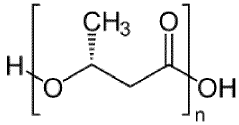
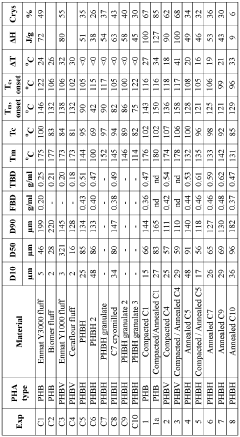
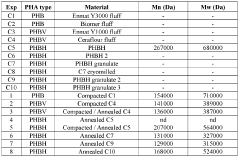
- A method involving compaction, annealing, and milling of 3-hydroxy butyric acid homopolymers or copolymers to produce PHA powders with controlled particle size and sinterability region, enhancing flowability and mechanical properties for additive manufacturing.


Biodegradable and/or compostable biobased powders for additive manufacturing, and methods for the use thereof
PatentWO2022258698A1
Innovation
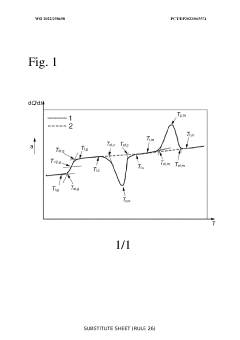
- A method involving compacting and annealing a homopolymer or copolymer of 3-hydroxy butyric acid to create a PHA powder with enhanced sinterability, characterized by a specific particle size distribution and increased sinterability region, allowing for improved flowability and mechanical properties in additive manufacturing.
Environmental Regulations for Biodegradable Polymers
The regulatory landscape for biodegradable polymers in additive manufacturing has evolved significantly in response to growing environmental concerns and the need for sustainable production practices. International frameworks such as the European Union's Single-Use Plastics Directive and various national waste management policies have established stringent requirements for materials claiming biodegradability. These regulations mandate comprehensive testing protocols, including standards like ASTM D6400 and EN 13432, which specify degradation timelines, compostability criteria, and environmental safety thresholds that biodegradable polymers must meet before market entry.
Compliance with these environmental regulations presents both opportunities and constraints for optimizing biodegradable materials in additive manufacturing. Manufacturers must ensure that their materials not only perform adequately during the printing process but also degrade within specified timeframes under defined environmental conditions. The regulations typically require materials to achieve at least 90% biodegradation within 180 days in industrial composting facilities, while maintaining non-toxicity throughout the degradation process. This dual requirement influences material formulation strategies and necessitates extensive documentation and certification processes.
Regional variations in regulatory frameworks add complexity to material development efforts. While European standards emphasize industrial composting compatibility, North American regulations increasingly focus on home composting scenarios and marine biodegradability. Asian markets are developing their own certification systems, often incorporating elements from both Western frameworks while addressing local environmental priorities. These geographical differences require material developers to adopt flexible formulation approaches that can meet multiple regulatory standards simultaneously.
The certification process itself impacts innovation timelines and cost structures in biodegradable polymer development. Third-party testing and verification can extend product development cycles by six to twelve months, requiring manufacturers to integrate regulatory considerations early in the research phase. Additionally, evolving regulations regarding microplastic formation and ecotoxicity are pushing the industry toward more rigorous testing protocols, including assessment of degradation byproducts and their environmental fate. These requirements are driving investment in advanced analytical capabilities and closer collaboration between material scientists and environmental testing laboratories.
Compliance with these environmental regulations presents both opportunities and constraints for optimizing biodegradable materials in additive manufacturing. Manufacturers must ensure that their materials not only perform adequately during the printing process but also degrade within specified timeframes under defined environmental conditions. The regulations typically require materials to achieve at least 90% biodegradation within 180 days in industrial composting facilities, while maintaining non-toxicity throughout the degradation process. This dual requirement influences material formulation strategies and necessitates extensive documentation and certification processes.
Regional variations in regulatory frameworks add complexity to material development efforts. While European standards emphasize industrial composting compatibility, North American regulations increasingly focus on home composting scenarios and marine biodegradability. Asian markets are developing their own certification systems, often incorporating elements from both Western frameworks while addressing local environmental priorities. These geographical differences require material developers to adopt flexible formulation approaches that can meet multiple regulatory standards simultaneously.
The certification process itself impacts innovation timelines and cost structures in biodegradable polymer development. Third-party testing and verification can extend product development cycles by six to twelve months, requiring manufacturers to integrate regulatory considerations early in the research phase. Additionally, evolving regulations regarding microplastic formation and ecotoxicity are pushing the industry toward more rigorous testing protocols, including assessment of degradation byproducts and their environmental fate. These requirements are driving investment in advanced analytical capabilities and closer collaboration between material scientists and environmental testing laboratories.
Lifecycle Assessment and Circular Economy Integration
Lifecycle assessment (LCA) has emerged as a critical framework for evaluating the environmental performance of biodegradable materials in additive manufacturing throughout their entire existence, from raw material extraction to end-of-life disposal. This comprehensive evaluation methodology enables manufacturers to quantify environmental impacts across multiple categories including carbon footprint, energy consumption, water usage, and ecosystem toxicity. For biodegradable polymers such as polylactic acid (PLA), polyhydroxyalkanoates (PHA), and bio-based polyamides, LCA studies reveal that while these materials demonstrate superior end-of-life profiles compared to conventional plastics, their production phases often present significant environmental burdens related to agricultural feedstock cultivation, processing energy requirements, and chemical conversion processes.
The integration of circular economy principles into biodegradable additive manufacturing represents a paradigm shift from linear "take-make-dispose" models toward regenerative systems that maximize resource efficiency and minimize waste generation. This integration encompasses multiple strategic dimensions including design for disassembly, material recovery protocols, and closed-loop manufacturing systems. Biodegradable materials offer unique advantages within circular frameworks through their capacity for industrial composting, anaerobic digestion, and biological nutrient cycling, effectively returning organic matter to productive use rather than accumulating as persistent waste.
However, realizing circular economy benefits requires addressing critical infrastructure gaps in collection, sorting, and processing systems specifically adapted for biodegradable 3D-printed components. Current waste management systems often lack the capability to distinguish between different biodegradable polymers or to process complex geometries typical of additively manufactured parts. Furthermore, contamination issues arising from mixed material streams can compromise both recycling and composting pathways, necessitating improved material identification technologies and standardized labeling protocols.
Emerging approaches combine LCA insights with circular design strategies to optimize material formulations and manufacturing parameters that enhance both environmental performance and end-of-life recovery potential. These include developing hybrid materials with tailored degradation profiles, implementing distributed manufacturing networks that reduce transportation impacts, and establishing reverse logistics systems for post-consumer material collection. The convergence of rigorous lifecycle thinking with circular economy implementation creates pathways toward truly sustainable biodegradable additive manufacturing ecosystems.
The integration of circular economy principles into biodegradable additive manufacturing represents a paradigm shift from linear "take-make-dispose" models toward regenerative systems that maximize resource efficiency and minimize waste generation. This integration encompasses multiple strategic dimensions including design for disassembly, material recovery protocols, and closed-loop manufacturing systems. Biodegradable materials offer unique advantages within circular frameworks through their capacity for industrial composting, anaerobic digestion, and biological nutrient cycling, effectively returning organic matter to productive use rather than accumulating as persistent waste.
However, realizing circular economy benefits requires addressing critical infrastructure gaps in collection, sorting, and processing systems specifically adapted for biodegradable 3D-printed components. Current waste management systems often lack the capability to distinguish between different biodegradable polymers or to process complex geometries typical of additively manufactured parts. Furthermore, contamination issues arising from mixed material streams can compromise both recycling and composting pathways, necessitating improved material identification technologies and standardized labeling protocols.
Emerging approaches combine LCA insights with circular design strategies to optimize material formulations and manufacturing parameters that enhance both environmental performance and end-of-life recovery potential. These include developing hybrid materials with tailored degradation profiles, implementing distributed manufacturing networks that reduce transportation impacts, and establishing reverse logistics systems for post-consumer material collection. The convergence of rigorous lifecycle thinking with circular economy implementation creates pathways toward truly sustainable biodegradable additive manufacturing ecosystems.
Unlock deeper insights with Patsnap Eureka Quick Research — get a full tech report to explore trends and direct your research. Try now!
Generate Your Research Report Instantly with AI Agent
Supercharge your innovation with Patsnap Eureka AI Agent Platform!