

Optimize Phased Array Aperture Size for Angular Resolution
SEP 19, 20269 MIN READ
Generate Your Research Report Instantly with AI Agent
Patsnap Eureka helps you evaluate technical feasibility & market potential.
Phased Array Aperture Optimization Background and Objectives
Phased array technology has evolved significantly since its inception in the mid-20th century, initially driven by military radar applications requiring rapid beam steering without mechanical movement. The fundamental principle relies on controlling the phase relationships between multiple antenna elements to electronically steer electromagnetic beams. Over decades, this technology has expanded beyond defense applications into commercial sectors including telecommunications, automotive radar systems, medical imaging, and satellite communications.
Angular resolution represents a critical performance parameter in phased array systems, directly determining the ability to distinguish between closely spaced targets or signal sources. The relationship between aperture size and angular resolution follows the Rayleigh criterion, where resolution is inversely proportional to the array aperture dimension. However, practical implementations face constraints including cost, physical space limitations, power consumption, and system complexity that prevent indefinite aperture expansion.
Current technological trends indicate growing demand for compact yet high-performance phased array systems. The proliferation of autonomous vehicles requires millimeter-wave radar with sufficient angular resolution to detect pedestrians and obstacles in dense urban environments. Fifth-generation wireless networks demand massive MIMO arrays that balance beamforming precision with deployment feasibility. Space-based applications increasingly require lightweight, power-efficient arrays capable of precise beam control for satellite communications and Earth observation missions.
The primary objective of aperture optimization research is to establish systematic methodologies for determining the minimum aperture size that satisfies specific angular resolution requirements while considering practical constraints. This involves developing mathematical models that account for element spacing, array geometry, operating frequency, and environmental factors. Secondary objectives include exploring sparse array configurations, investigating non-uniform element distributions, and integrating advanced signal processing techniques to enhance effective resolution beyond physical aperture limitations.
Achieving optimal aperture design requires balancing multiple competing factors: larger apertures improve resolution but increase manufacturing costs, weight, and power requirements. The research aims to provide engineers with decision-making frameworks and design tools that enable informed trade-offs between performance specifications and implementation constraints across diverse application domains.
Market Demand for High-Resolution Phased Array Systems
The demand for high-resolution phased array systems has experienced substantial growth across multiple sectors, driven by the increasing need for precise angular resolution in complex operational environments. Aerospace and defense applications represent a primary market segment, where advanced radar systems require enhanced target discrimination capabilities for surveillance, missile guidance, and electronic warfare. The ability to distinguish closely spaced objects or signals directly correlates with aperture size optimization, making this technical challenge central to meeting operational requirements.
Commercial telecommunications infrastructure has emerged as another significant demand driver, particularly with the deployment of fifth-generation wireless networks and satellite communication constellations. These systems require phased arrays capable of forming narrow beams to maximize spectral efficiency and minimize interference in congested frequency bands. The push toward higher frequency operations, including millimeter-wave and terahertz bands, intensifies the need for optimized aperture designs that balance resolution performance with practical size and cost constraints.
Automotive radar systems for autonomous driving applications constitute a rapidly expanding market segment. Advanced driver assistance systems and fully autonomous vehicles depend on high-resolution imaging radar to detect and classify objects with precision comparable to optical sensors. The automotive industry's volume production requirements create unique demands for cost-effective aperture optimization solutions that maintain performance while meeting stringent size, weight, and power constraints.
Medical imaging and industrial sensing applications also demonstrate growing interest in phased array technology. Ultrasound imaging systems benefit from improved angular resolution for diagnostic accuracy, while non-destructive testing applications in manufacturing and infrastructure inspection require precise defect localization. These sectors value compact, high-performance solutions that can be integrated into portable or automated inspection systems.
The convergence of these diverse market needs has created sustained demand for research and development focused on aperture size optimization methodologies. Market participants increasingly seek solutions that address the fundamental trade-offs between physical aperture dimensions, angular resolution performance, system complexity, and implementation costs across varied application contexts.
Current Aperture Design Challenges and Constraints
Phased array aperture design faces fundamental tradeoffs between angular resolution performance and practical implementation constraints. The Rayleigh criterion dictates that angular resolution is directly proportional to aperture size and inversely proportional to operating wavelength, creating pressure for larger apertures. However, physical size limitations imposed by platform constraints, particularly in aerospace and mobile applications, severely restrict achievable aperture dimensions. This conflict between theoretical requirements and practical boundaries represents the primary challenge in contemporary aperture optimization.
Manufacturing precision emerges as a critical constraint affecting aperture scalability. As aperture size increases, maintaining phase coherence across all array elements becomes progressively difficult. Element positioning errors, typically required to be within a fraction of the operating wavelength, accumulate across larger arrays and degrade beamforming accuracy. Surface flatness tolerances and thermal expansion coefficients further complicate large-aperture implementations, particularly for systems operating across wide temperature ranges or at millimeter-wave frequencies where dimensional tolerances become extremely stringent.
Cost considerations impose significant practical limitations on aperture expansion strategies. The relationship between aperture area and system cost is typically superlinear, as larger arrays require more transceiver modules, increased computational resources for beamforming, and more complex calibration procedures. Power consumption scales proportionally with element count, creating thermal management challenges that necessitate additional cooling infrastructure. These economic factors often force designers to accept suboptimal angular resolution rather than pursue theoretically ideal aperture dimensions.
Electromagnetic coupling between adjacent elements introduces performance degradation that intensifies with aperture density optimization attempts. Mutual coupling effects alter element radiation patterns and impedance characteristics, causing scan-dependent beamforming errors. Edge effects at aperture boundaries create additional complications, as peripheral elements experience asymmetric coupling environments compared to interior elements. These phenomena become particularly problematic when attempting to maximize aperture efficiency through reduced element spacing, creating a practical lower bound on inter-element distances.
Dynamic operational requirements add temporal constraints to aperture design optimization. Applications requiring rapid beam steering or multi-beam formation demand high-speed phase control across all elements, with computational complexity increasing quadratically with element count. Calibration procedures necessary to maintain phase coherence must be performed periodically, with calibration time growing proportionally to aperture size. These temporal constraints effectively limit the maximum practical aperture size for time-critical applications, independent of spatial or cost considerations.
Existing Aperture Sizing Solutions and Methods
01 Signal processing and algorithm optimization for super-resolution radar
Advanced signal processing algorithms and mathematical modeling can be applied to radar and imaging systems to achieve angular super-resolution. By utilizing techniques such as MIMO system processing, array geometric manifolds, digital processing, and orbital angular momentum, systems can resolve targets with fine angular precision beyond conventional hardware limits.- Optimizing array element layout and geometry: Techniques involve designing specific physical arrangements, geometric manifolds, and non-uniform angular separations or offsets for antenna array elements. By strategically grouping elements or configuring non-uniform structures, these methods optimize spatial distribution to enhance the overall angular resolution and array response.
- Advanced signal processing for MIMO radar and super-resolution: Digital signal processing algorithms and processing frameworks are applied to radar and imaging systems to achieve super-resolution. These methods process signals from digital low-element arrays or MIMO systems to refine target angular resolution and perform high-resolution object identification beyond physical array limits.
- Phase control and phase shifter resolution enhancement: Focuses on hardware-level phase manipulation, including the design of combined resolution phase shifters, phase delay elements, and multi-phase clock generators. These innovations enable precise phase steering and control across the antenna array to improve beamforming accuracy and resolution while reducing power consumption.
- Orbital angular momentum and novel wave mode techniques: Leveraging specialized electromagnetic and optical wave characteristics, such as orbital angular momentum vortex modes and high-order angular terms, to encode and manipulate signals. These approaches significantly improve both angular and spatial resolution in radar, imaging, and audio playback systems.
- Phase aberration correction and tracking systems: Methods designed to compensate for phase and amplitude aberrations or finite resolution limitations in imaging and tracking systems. These systems actively adjust phase responses and correct signal distortions to ensure precise angular tracking and clear image reconstruction across various array sensors.
02 Antenna array configuration and geometry design
Optimizing the physical geometry and spatial layout of array elements directly enhances angular resolution. Techniques include grouping antenna elements, implementing non-uniform angular separations, arranging element positions along circular or semicircular planes, and adding angular offsets to improve beamforming and directional response.Expand Specific Solutions03 Optical and electromagnetic mode manipulation
Controlling advanced physical properties of waves, such as phase shifters, optical angular momentum, and specialized diffractive lens technologies, enables high-resolution directional steering and imaging. These technologies increase angular magnification and field-of-view efficiency across millimeter-wave and optical spectrums.Expand Specific Solutions04 Phase aberration correction and tracking mechanisms
Incorporating precise phase control and correction mechanisms allows systems to continuously compensate for phase or amplitude aberrations. Using phased responsive tracking, phase gradient interferometry, and active phase control mechanisms maintains high spatial and angular resolution during target tracking and imaging.Expand Specific Solutions05 Specialized sensor and camera resolution compensation
Targeted hardware and calibration methods can compensate for finite angular resolution in non-standard array sensors, such as neutron scatter cameras, collimated scintillation cameras, and ultrasound transducer arrays, effectively boosting overall system measurement precision.Expand Specific Solutions
Key Players in Phased Array System Development
The phased array aperture optimization for angular resolution represents a mature technology domain experiencing sustained growth across defense, aerospace, and telecommunications sectors. The market demonstrates strong expansion driven by increasing demand for radar systems, satellite communications, and 5G infrastructure, with established players like Boeing, Raytheon, and Siemens leading commercial applications alongside government entities such as the European Space Agency. Technology maturity varies significantly: defense contractors like Boeing and Raytheon possess advanced operational systems, while academic institutions including Xidian University, Tsinghua University, and Harbin Institute of Technology drive fundamental research innovations. Emerging players like Analog Photonics are pioneering photonic-based solutions for LiDAR applications. The competitive landscape shows clear segmentation between established aerospace/defense manufacturers with proven technologies and research institutions exploring next-generation approaches, indicating both market consolidation in traditional applications and innovation opportunities in emerging sectors.
The Boeing Co.
Technical Solution: Boeing implements phased array aperture optimization through integrated system-level design approaches for aerospace and defense platforms. Their methodology emphasizes weight-to-performance ratios critical for airborne applications, utilizing sparse array configurations to reduce aperture size while maintaining acceptable angular resolution. Boeing's designs incorporate conformal array geometries that adapt aperture dimensions to aircraft surfaces, employing computational electromagnetic modeling to predict resolution performance. The company leverages machine learning algorithms for aperture layout optimization, balancing element count reduction against sidelobe levels and mainlobe beamwidth. Their systems typically achieve angular resolutions between 1-5 degrees depending on frequency bands and platform constraints, with particular emphasis on X-band and Ka-band applications for surveillance and communication systems.
Strengths: Strong integration with aerospace platforms; expertise in conformal array design; weight optimization capabilities. Weaknesses: Focus primarily on airborne applications limits ground-based system experience; proprietary solutions with limited technology transfer.
Xidian University
Technical Solution: Xidian University conducts extensive research on phased array aperture optimization focusing on theoretical foundations and novel array architectures. Their research encompasses sparse array synthesis techniques using genetic algorithms and particle swarm optimization to minimize aperture size while achieving specified angular resolution targets. The university has developed methodologies for non-uniform element spacing that reduce aperture dimensions by 20-40% compared to conventional uniform arrays while maintaining comparable resolution. Their work includes comprehensive studies on the relationship between aperture taper functions and resolution-sidelobe trade-offs, with particular emphasis on millimeter-wave frequencies. Research teams have published extensively on MIMO array configurations that achieve enhanced angular resolution through virtual aperture extension, effectively doubling resolution without proportional physical aperture increases.
Strengths: Strong theoretical research foundation; innovative sparse array synthesis methods; cost-effective research solutions. Weaknesses: Limited commercial product development; technology readiness levels typically lower than industry players; focus on academic publications rather than deployment.
Core Innovations in Aperture-Resolution Trade-offs
Curved sensor array for improved angular resolution
PatentActiveUS20170222332A1
Innovation
- A method for optimizing angular resolution across a field-of-view by positioning antenna elements along a curved surface to maximize angular resolution, using a specific angular resolution function and geometry to determine optimal positions, thereby minimizing the number of elements required.


Optimal design method of phased array feed source based on focal plane field sampling of reflector antenna
PatentActiveCN114372380A
Innovation
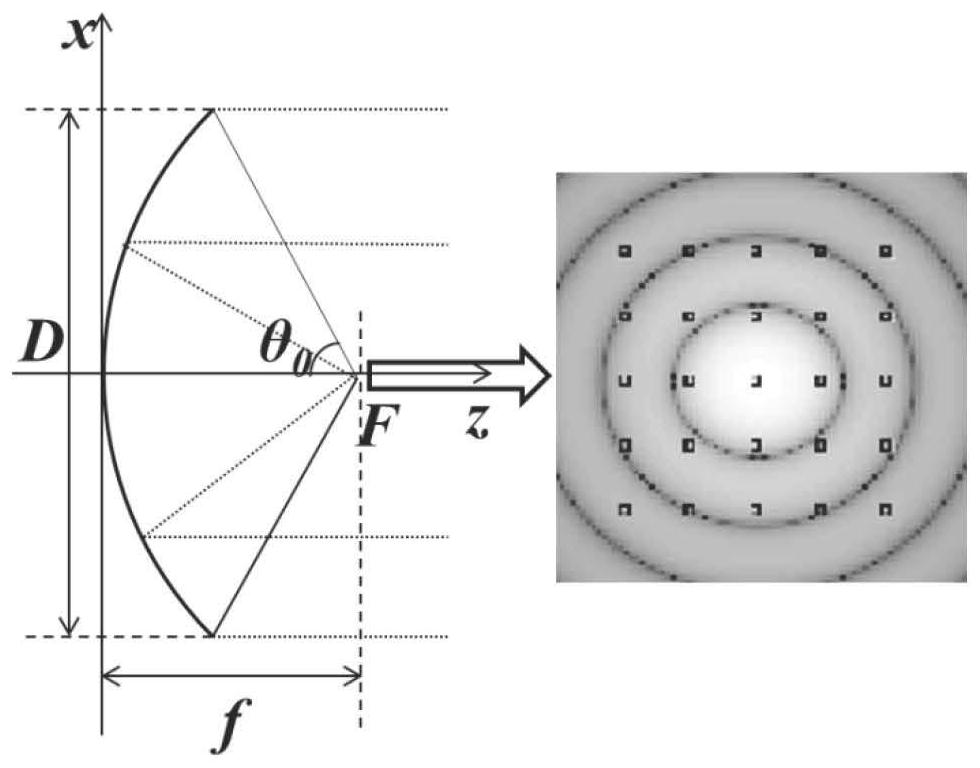
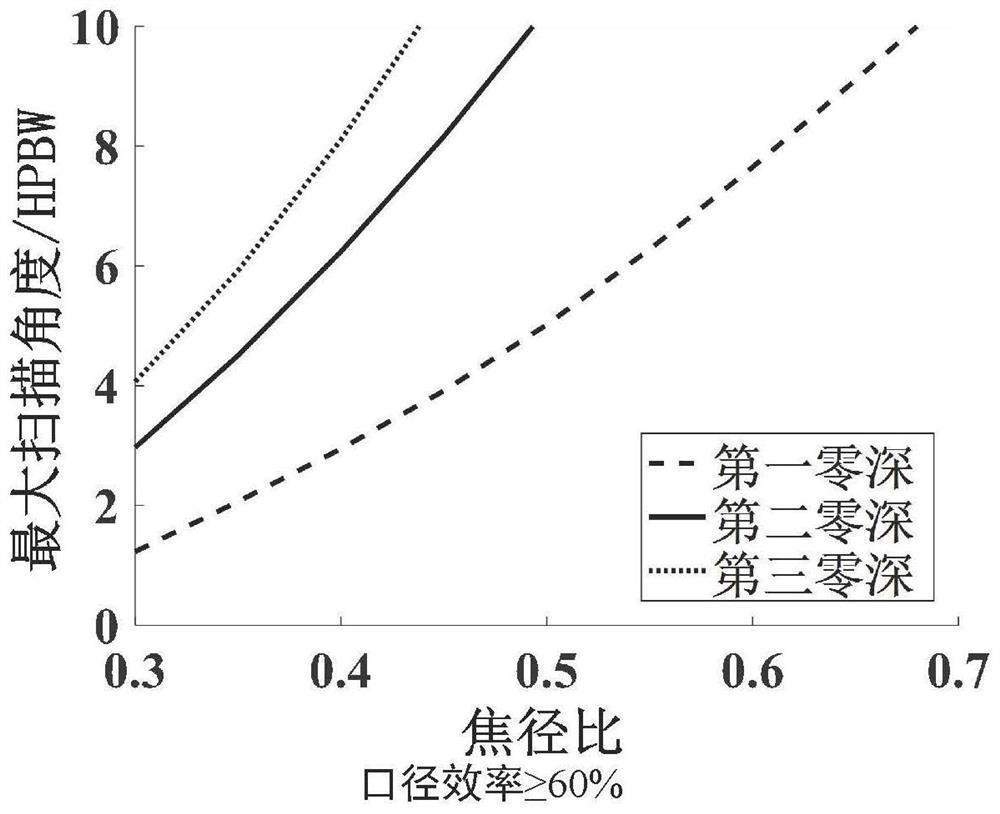
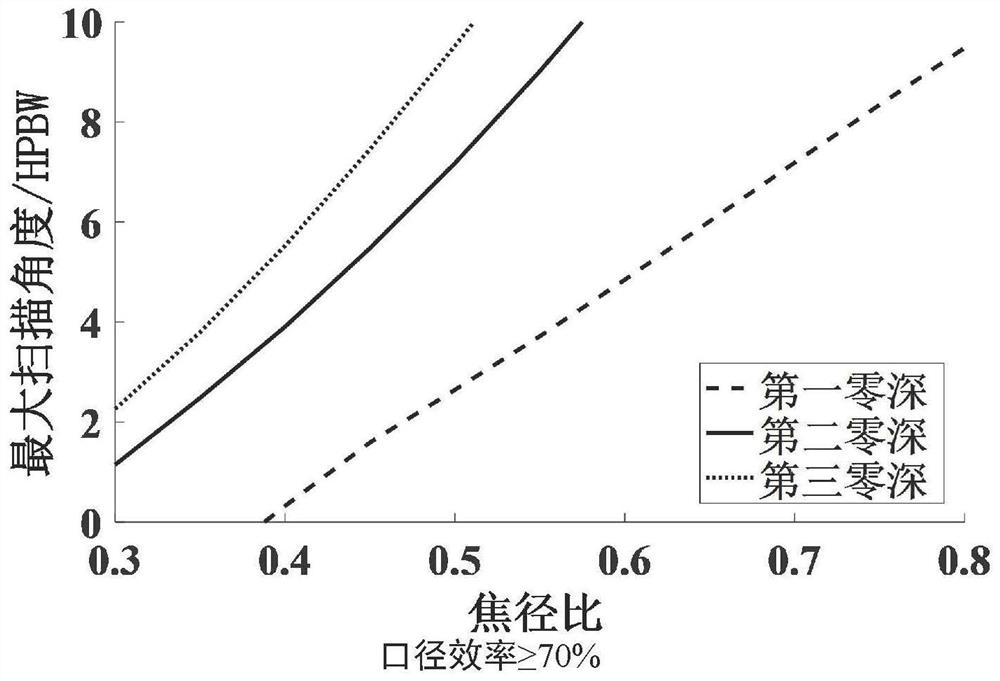
- By calculating the change of antenna aperture efficiency with scanning angle, determine the maximum scanning angle diagram, find the focal diameter ratio and sampling range, analyze the impact of unit spacing on aperture efficiency, select the optimal unit spacing and arrangement, and use a specific formula to calculate the number of units , ensuring a design with the minimum number of units for maximum efficiency.

Cost-Performance Trade-offs in Aperture Scaling
The relationship between phased array aperture size and system cost follows a non-linear scaling pattern that significantly impacts deployment decisions. Manufacturing costs increase proportionally with aperture area due to the number of antenna elements required, while additional expenses arise from the complexity of feed networks, phase shifters, and signal processing hardware. For applications demanding sub-degree angular resolution, aperture dimensions may exceed several meters, resulting in exponential cost growth that challenges budget constraints in commercial implementations.
Performance gains from aperture expansion exhibit diminishing returns beyond certain thresholds. While angular resolution improves linearly with aperture diameter according to the Rayleigh criterion, practical benefits plateau when resolution surpasses the requirements of specific applications. For instance, automotive radar systems typically achieve sufficient performance with apertures under 20 centimeters, whereas satellite communication systems may justify meter-scale arrays to meet stringent beamwidth specifications. This variance necessitates application-specific optimization rather than pursuing maximum aperture size indiscriminately.
Power consumption and thermal management introduce additional cost considerations that scale with aperture size. Larger arrays require more transmit-receive modules, each contributing to overall power draw and heat generation. Cooling systems and power supply infrastructure must accommodate these demands, particularly in high-duty-cycle applications such as continuous surveillance or communication links. The operational expenditure associated with energy consumption can surpass initial capital costs over the system lifecycle, making efficiency optimization critical for large-scale deployments.
Modular design strategies offer pathways to balance cost and performance by enabling incremental scaling. Implementing subarrays with independent control allows systems to activate only the necessary aperture portions for specific tasks, reducing power consumption during low-resolution operations. This approach also facilitates phased deployment, where initial installations use smaller apertures with provisions for future expansion as budget availability or performance requirements evolve. Such flexibility proves particularly valuable in research environments and adaptive defense systems where operational parameters may change over time.
System Integration Considerations for Aperture Optimization
When optimizing phased array aperture size for enhanced angular resolution, system integration considerations become paramount to ensure practical implementation and operational effectiveness. The aperture dimensions must be carefully balanced against physical constraints imposed by the host platform, whether airborne, ground-based, or space-borne. Structural load-bearing capacity, available mounting space, and weight distribution requirements directly influence the maximum achievable aperture size. Additionally, thermal management systems must accommodate the heat dissipation needs of larger arrays, as increased element count typically correlates with higher power consumption and thermal output.
The electrical infrastructure supporting aperture optimization requires comprehensive evaluation. Power distribution networks must deliver stable voltage and current to potentially thousands of individual elements while maintaining phase coherence across the entire array. Signal routing complexity escalates exponentially with aperture expansion, necessitating sophisticated beamforming networks and calibration mechanisms. The integration of analog-to-digital converters, phase shifters, and control electronics must account for signal integrity preservation across extended physical distances within larger apertures.
Mechanical stability and environmental resilience constitute critical integration factors. Larger apertures exhibit increased susceptibility to mechanical deformation from vibration, thermal expansion, and gravitational effects, all of which degrade angular resolution performance. Precision mounting structures and active compensation mechanisms may be required to maintain element positioning accuracy within fractions of a wavelength. Environmental protection systems must shield sensitive components from moisture, temperature extremes, and electromagnetic interference without compromising aperture efficiency.
Cost-benefit analysis plays a decisive role in determining optimal aperture dimensions within system constraints. Manufacturing complexity, assembly precision requirements, and testing procedures scale non-linearly with aperture size. The integration approach must consider lifecycle costs including maintenance accessibility, component replaceability, and upgrade pathways. Modular design architectures can facilitate incremental aperture expansion while maintaining system operability during phased implementation. These multifaceted integration considerations ultimately define the practical boundaries within which aperture optimization for angular resolution enhancement can be successfully realized.
Unlock deeper insights with Patsnap Eureka Quick Research — get a full tech report to explore trends and direct your research. Try now!
Generate Your Research Report Instantly with AI Agent
Supercharge your innovation with Patsnap Eureka AI Agent Platform!