

Optimize Phased Array Calibration for Manufacturing Variability
SEP 19, 20269 MIN READ
Generate Your Research Report Instantly with AI Agent
Patsnap Eureka helps you evaluate technical feasibility & market potential.
Phased Array Calibration Background and Objectives
Phased array technology has evolved significantly since its inception in the mid-20th century, initially driven by military radar applications requiring electronic beam steering without mechanical movement. The fundamental principle relies on controlling the phase relationships among multiple antenna elements to achieve directional signal transmission and reception. Over decades, this technology has expanded into commercial sectors including telecommunications, medical imaging, automotive radar systems, and satellite communications, demonstrating its versatility and critical importance in modern wireless systems.
The manufacturing of phased array systems presents inherent challenges due to the precision required across numerous components. Each array element must exhibit consistent electrical characteristics, including gain, phase response, and impedance matching. However, manufacturing processes inevitably introduce variability through component tolerances, assembly imperfections, thermal variations, and material inconsistencies. These deviations accumulate across the array, degrading beam pattern accuracy, increasing sidelobe levels, and reducing overall system performance. Traditional calibration methods often prove inadequate when confronting the scale and complexity of modern arrays containing hundreds or thousands of elements.
The primary objective of this research focuses on developing robust calibration methodologies that effectively compensate for manufacturing-induced variability while maintaining practical implementation feasibility. This involves creating algorithms capable of identifying and correcting phase and amplitude errors across individual elements without requiring prohibitively expensive measurement equipment or excessive production time. The goal extends beyond simple error correction to establishing predictive models that can anticipate variability patterns based on manufacturing parameters, enabling proactive quality control measures.
Furthermore, the research aims to balance calibration accuracy with computational efficiency and cost-effectiveness, recognizing that industrial applications demand solutions scalable to high-volume production environments. Success in this domain would significantly reduce production costs, improve yield rates, and enhance the performance consistency of phased array systems across diverse applications, ultimately accelerating the adoption of this technology in emerging markets such as 5G infrastructure and autonomous vehicle sensing systems.
Market Demand for Robust Phased Array Systems
The global demand for robust phased array systems has experienced substantial growth across multiple sectors, driven by the increasing complexity of communication networks, defense applications, and emerging commercial technologies. Telecommunications infrastructure, particularly fifth-generation wireless networks and future sixth-generation systems, requires phased array antennas capable of maintaining performance consistency despite manufacturing variations. The proliferation of base stations and small cell deployments has created urgent requirements for cost-effective yet reliable beamforming solutions that can tolerate component-level inconsistencies without compromising signal quality.
Defense and aerospace sectors represent critical market segments where phased array reliability directly impacts mission success. Radar systems for surveillance, missile guidance, and electronic warfare demand exceptional calibration stability across diverse environmental conditions and extended operational lifespans. Manufacturing variability in these high-stakes applications can lead to beam pointing errors, reduced detection range, and compromised system effectiveness, making optimization of calibration processes a strategic priority for defense contractors and military organizations worldwide.
Satellite communications and space exploration applications have intensified market pressure for robust phased array technologies. The rapid expansion of low Earth orbit satellite constellations for global broadband coverage necessitates antenna systems that maintain performance across large-scale production runs. Manufacturing inconsistencies in phase shifters, amplifiers, and radiating elements can significantly degrade link budgets and coverage patterns, directly affecting service quality and economic viability of satellite networks.
Automotive radar systems for advanced driver assistance and autonomous vehicles constitute an emerging high-volume market with stringent reliability requirements. Mass production of millimeter-wave phased arrays for collision avoidance and environmental sensing demands calibration methodologies that accommodate manufacturing tolerances while ensuring safety-critical performance. The automotive industry's cost sensitivity combined with zero-defect quality expectations creates unique challenges for phased array manufacturers.
Medical imaging technologies, particularly ultrasound systems employing phased array transducers, require consistent beam characteristics for accurate diagnostic imaging. Manufacturing variations affecting element sensitivity and phase response directly impact image resolution and clinical utility, driving demand for advanced calibration optimization techniques that can be implemented efficiently in high-volume medical device production environments.
Manufacturing Variability Challenges in Phased Arrays
Manufacturing variability represents one of the most significant challenges in phased array system production, directly impacting the performance consistency and reliability of these sophisticated antenna systems. The inherent variations introduced during fabrication processes create substantial deviations from ideal design parameters, necessitating comprehensive calibration strategies to maintain system specifications.
Component-level variations constitute the primary source of manufacturing inconsistencies in phased array systems. Individual radiating elements, phase shifters, amplifiers, and transmission lines exhibit parameter deviations due to material property variations, dimensional tolerances, and process control limitations. These variations manifest as amplitude and phase errors across array elements, with typical phase deviations ranging from 5 to 15 degrees and amplitude variations reaching 1 to 2 dB in commercial production environments.
The complexity escalates significantly when considering the cumulative effects of multiple component variations within integrated phased array modules. Modern arrays incorporating thousands of elements face multiplicative error propagation, where individual component tolerances compound to create substantial beam pattern distortions. This phenomenon particularly affects sidelobe levels, beam pointing accuracy, and null depth performance, potentially degrading system specifications beyond acceptable operational thresholds.
Temperature-dependent variations further complicate the manufacturing variability landscape. Different materials within the array structure exhibit varying thermal expansion coefficients and temperature-dependent electrical properties. These characteristics introduce dynamic performance shifts across operational temperature ranges, requiring calibration solutions that account for both initial manufacturing deviations and thermal drift behaviors.
Substrate material inconsistencies present another critical challenge, particularly in printed circuit board based implementations. Dielectric constant variations, thickness tolerances, and copper roughness differences directly influence transmission line characteristics and impedance matching. These substrate-level variations create frequency-dependent phase and amplitude errors that prove especially problematic in wideband phased array applications.
The economic implications of manufacturing variability cannot be overlooked. Stringent component selection and binning processes increase production costs substantially, while excessive rejection rates impact manufacturing yield and overall system affordability. Balancing performance requirements against manufacturing feasibility remains a persistent challenge for phased array system developers seeking cost-effective solutions without compromising operational capabilities.
Current Calibration Solutions for Manufacturing Tolerances
01 Advanced Machine Learning and Algorithmic Calibration Techniques
Implement data-driven models and advanced algorithms, such as Convolutional Neural Networks (CNN), Long Short-Term Memory (LSTM) networks, and Residual Neural Networks (ResNet), to perform rapid and automated calibration of phased array antennas based on power measurements or phase deviations.- Advanced algorithmic and AI-based calibration methods: Advanced algorithms, such as Convolutional Neural Network-Long Short-Term Memory (CNN-LSTM) networks and Residual Neural Networks (ResNet), are utilized to achieve fast and accurate calibration. These data-driven models process power measurements and operational metrics to automatically predict and compensate for phase and amplitude variations caused by manufacturing imperfections.
- Hardware-integrated calibration networks and embedded testing: Phased array systems can incorporate integrated calibration networks directly on-chip or within the antenna board architecture. These built-in networks route reference signals across elements to continuously evaluate channel responses, allowing fast, automated testing and dynamic alignment without requiring complex external measurement setups.
- Real-time and self-calibration for operational variations: Self-calibration techniques allow phased array antennas and onboard phase shifters to perform real-time corrections during active operation. This approach dynamically addresses element cross-coupling, environmental shifts, and hardware gains/phase drifts to maintain beam steering accuracy over time.
- Field and near-field spatial calibration techniques: Near-field and midfield measurement systems provide spatial phase and amplitude mapping across the antenna array. By precisely evaluating phase characteristics across multi-plane geometries or spherical surfaces, these techniques resolve spatial position errors and channel inconsistencies across all airspace regions.
- Integrated optical and chip-level array calibration: Specialized calibration mechanisms are implemented for integrated optical phased array (OPA) chips and semiconductor transceivers. These methods compensate for micro-scale manufacturing variability, wave-guide phase shifts, and physical alignment tolerances, reducing unit production costs while ensuring precise optical beamforming.
02 Integrated and Built-in Calibration Networks
Utilize dedicated hardware calibration networks integrated directly within the phased array structure or antenna board to calibrate gain, phase, and coupling effects internally, enabling robust calibration even in the presence of external interfering bodies or field variations.Expand Specific Solutions03 Amplitude and Phase Distortion Correction
Apply specialized routines to calibrate amplitude and phase channel inconsistencies, mutual cross-coupling, gain variations, and individual component shifts (such as phase shifters) across various operational conditions and antenna configurations.Expand Specific Solutions04 Near-Field and Mid-Field Calibration Methods
Deploy near-field and mid-field measurement techniques to compensate for element spatial position errors, manufacturing tolerances, and channel inconsistencies across all-airspace operational domains, facilitating precise alignment and reduced testing overhead.Expand Specific Solutions05 Real-Time and Self-Calibration for Autonomous or On-Board Systems
Integrate real-time, dynamic self-calibration functionality within vehicular radar systems, flexible arrays, and dynamic transceiver arrays to correct manufacturing variability and operational drift continuously during field use.Expand Specific Solutions
Leading Companies in Phased Array Technology
The phased array calibration optimization field is experiencing rapid growth driven by expanding applications in 5G infrastructure, satellite communications, and defense systems, with the market transitioning from early adoption to mainstream deployment. Technology maturity varies significantly across players: established defense contractors like ELTA Systems, Raytheon, and Boeing demonstrate advanced capabilities in military-grade phased arrays, while semiconductor leaders including Infineon Technologies, GLOBALFOUNDRIES, and Taiwan Semiconductor Manufacturing provide critical manufacturing infrastructure. Chinese research institutions such as University of Electronic Science & Technology of China, Xidian University, and Shanghai Jiao Tong University are advancing calibration algorithms, alongside specialized firms like Chengdu Tianrui Xingtong Technology focusing on active phased array solutions. Technology giants Google and IBM contribute through AI-driven optimization approaches, while component manufacturers including C-COM Satellite Systems and Microelectronics Technology address specific application segments. The competitive landscape reflects a convergence of semiconductor fabrication precision, algorithmic innovation, and systems integration expertise to address manufacturing variability challenges.
ELTA Systems Ltd.
Technical Solution: ELTA Systems has developed advanced phased array calibration techniques that address manufacturing variability through adaptive compensation algorithms. Their approach incorporates real-time monitoring of array element performance variations and implements dynamic correction coefficients to maintain beam pattern integrity. The system utilizes built-in test equipment (BITE) to characterize individual element deviations during production and operational phases, enabling continuous calibration updates. Their methodology includes statistical analysis of manufacturing tolerances across antenna elements, phase shifters, and amplifier chains, with automated correction routines that compensate for component-level variations. The calibration framework supports both initial factory calibration and field recalibration procedures, ensuring consistent performance throughout the system lifecycle despite inherent manufacturing inconsistencies in RF components and substrate materials.
Strengths: Comprehensive real-time adaptive calibration with robust field recalibration capabilities; proven track record in military-grade phased array systems. Weaknesses: Higher implementation complexity and cost; requires sophisticated BITE infrastructure for continuous monitoring.
International Business Machines Corp.
Technical Solution: IBM has applied advanced computational techniques and AI-driven optimization to phased array calibration challenges arising from manufacturing variability. Their research focuses on using neural network models trained on manufacturing data to predict calibration coefficients, reducing measurement time during production testing. The approach leverages IBM's expertise in semiconductor manufacturing analytics to correlate process parameters with array performance deviations. Their calibration optimization framework employs cloud-based processing of calibration data across multiple production facilities, enabling continuous improvement of calibration algorithms through aggregated learning. The system incorporates digital twin technology to simulate manufacturing variations and validate calibration strategies before physical implementation. IBM's methodology emphasizes scalability for high-volume production environments, with automated calibration routines that adapt to evolving manufacturing processes and equipment drift over time, ensuring consistent calibration quality across different production batches and facilities.
Strengths: Cutting-edge AI and cloud-based analytics enabling continuous calibration improvement; excellent scalability for high-volume manufacturing. Weaknesses: Requires substantial computational infrastructure and data management systems; less specialized in RF-specific phased array domain compared to dedicated defense contractors.
Key Patents in Variability-Robust Calibration
Method and apparatus for phased antenna array calibration
PatentActiveCA2946011A1
Innovation
- A method and apparatus that use a calibration antenna to apply a sequence of excitation patterns corresponding to phase values of a two-dimensional discrete Fourier transform, allowing for concurrent excitation of multiple antennas, and utilize an inverse two-dimensional discrete Fourier transform to obtain indications of radiated fields for calibration, reducing the number of measurements required.


Final fabrication and calibration steps for hierarchically elaborated phased-array antenna and subarray manufacturing process
PatentInactiveUS20170187109A1
Innovation
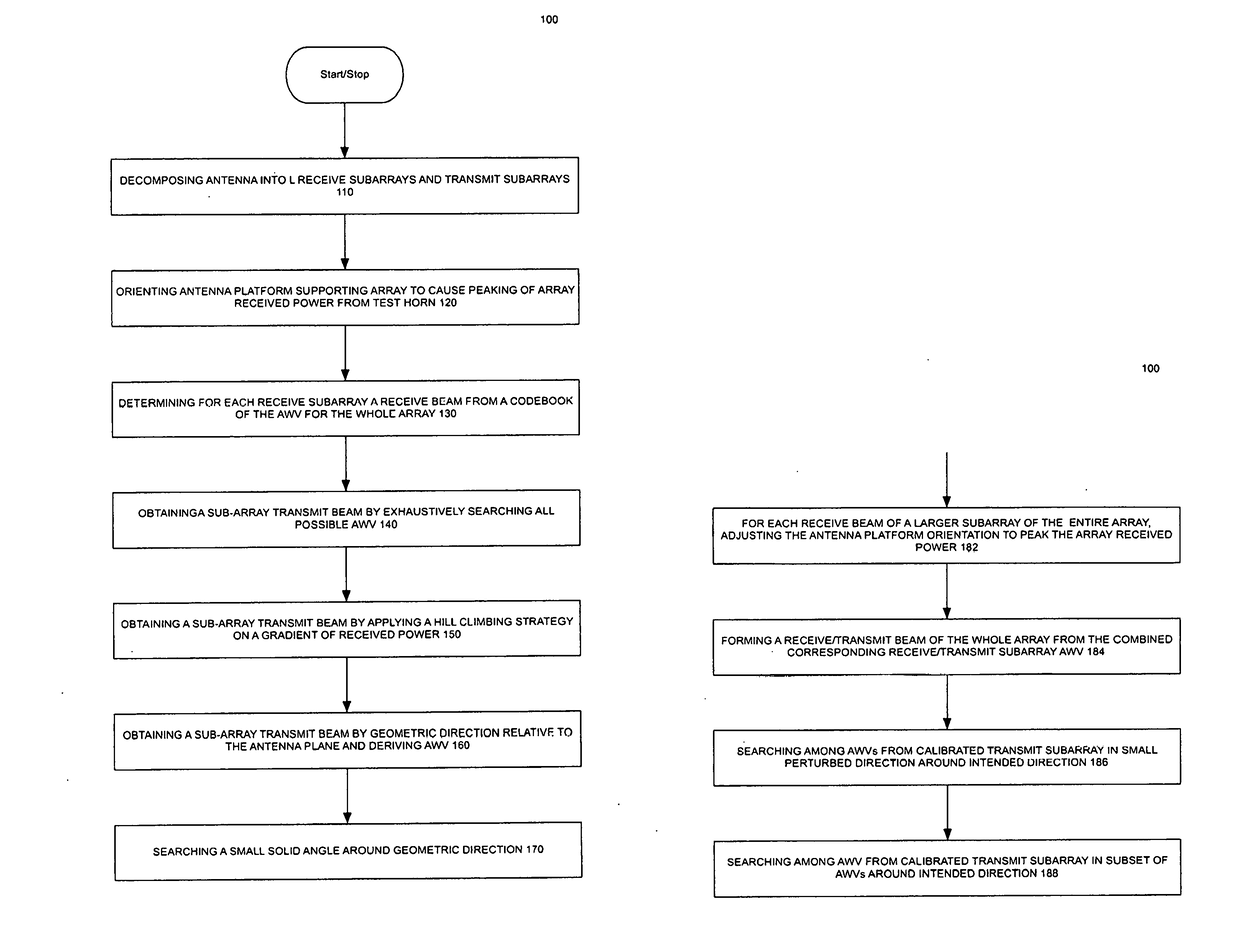
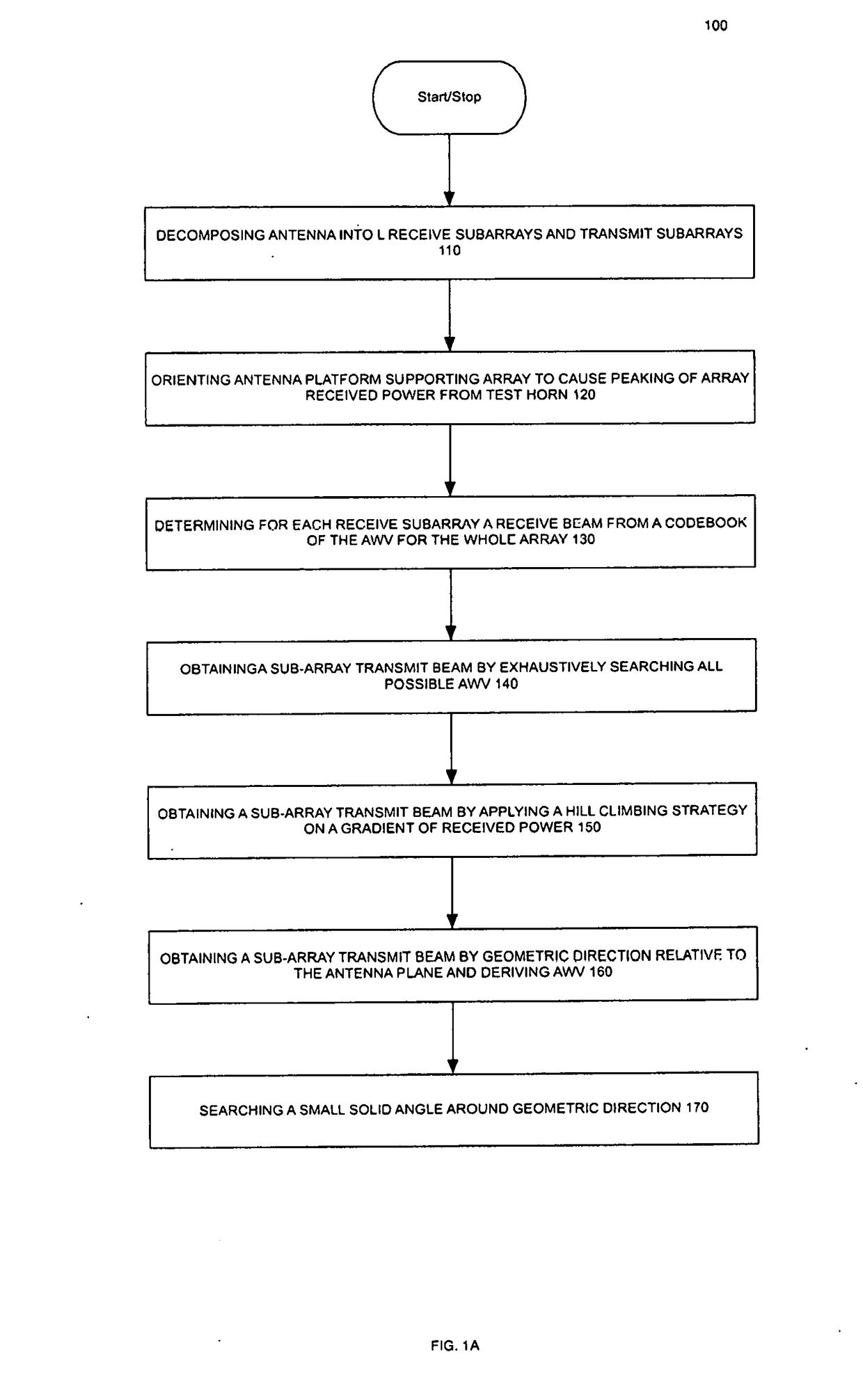
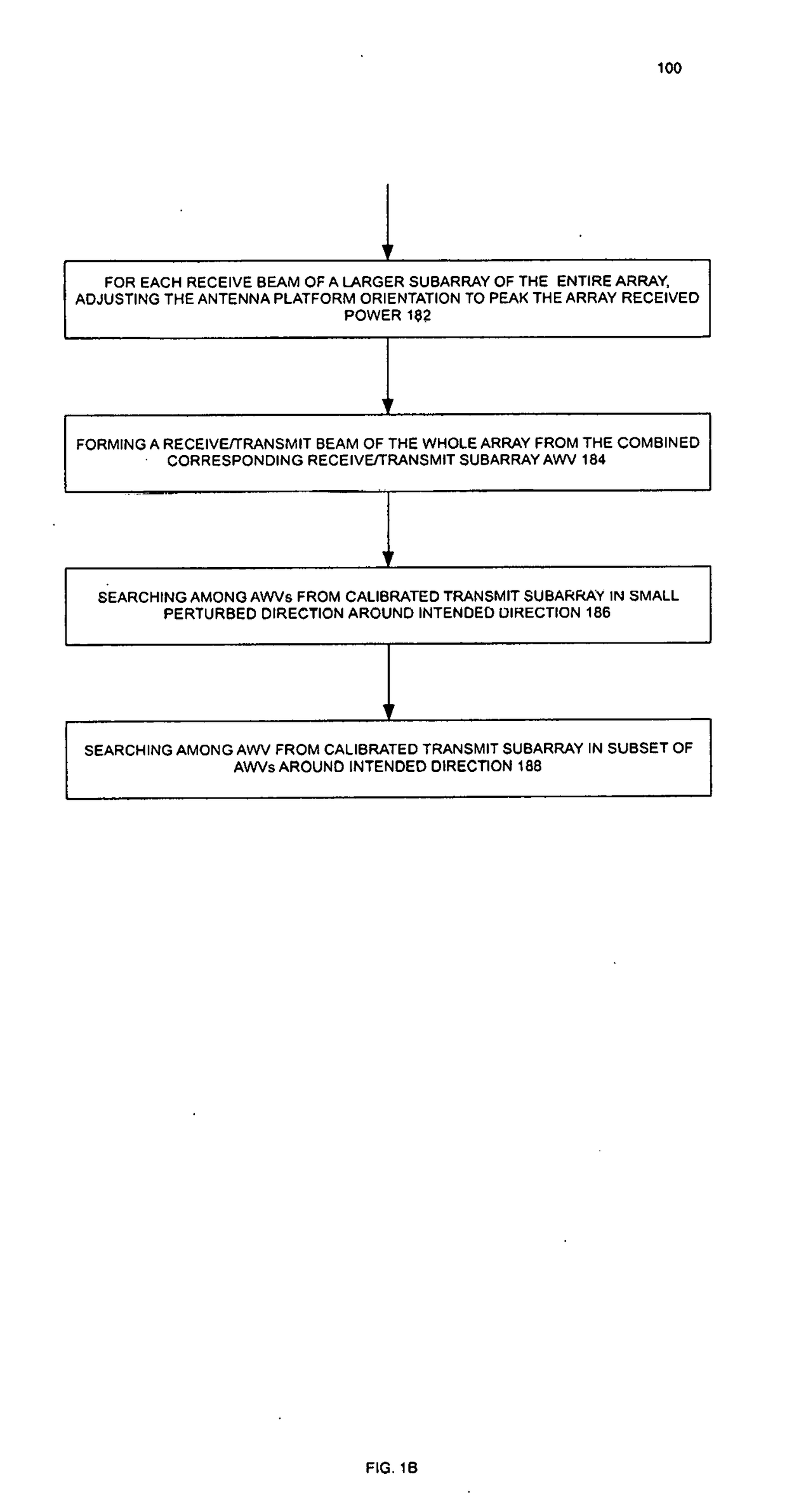
- A hierarchical calibration approach that breaks down the phased-array antenna into smaller subarrays, measures axial ratios, and iteratively applies phase shift corrections to each subarray, using a combination of REV method and axial ratio scoring to optimize phase shifter values and reduce the number of calibration states, thereby simplifying the calibration process and improving precision.

Quality Standards for Phased Array Manufacturing
Establishing comprehensive quality standards for phased array manufacturing is essential to address the inherent challenges posed by manufacturing variability. These standards must encompass both component-level specifications and system-level performance metrics to ensure consistent calibration outcomes across production batches. The framework should define acceptable tolerance ranges for critical parameters including element spacing accuracy, phase shifter linearity, amplitude uniformity, and mutual coupling coefficients. Industry consensus suggests that phase accuracy should be maintained within ±5 degrees and amplitude variations should not exceed ±1 dB across array elements to achieve optimal beamforming performance.
Manufacturing quality control protocols must incorporate statistical process control methodologies to monitor production consistency. This includes implementing in-process inspection points at critical manufacturing stages, such as substrate fabrication, component placement, and RF interconnection assembly. Automated optical inspection systems combined with electrical testing at intermediate stages can identify deviations before final assembly, reducing rework costs and improving yield rates. Documentation requirements should mandate traceability for each array element, enabling correlation between manufacturing parameters and calibration performance.
Standardized testing procedures form the cornerstone of quality assurance in phased array production. These procedures should specify environmental conditions, measurement equipment calibration requirements, and acceptance criteria for both individual components and integrated arrays. Reference calibration methods must be established using traceable measurement standards, with periodic verification against known reference arrays. The testing protocol should address temperature sensitivity, aging effects, and long-term stability to ensure calibration validity throughout the product lifecycle.
Supplier qualification and material certification represent critical aspects of maintaining manufacturing quality. Raw materials, particularly substrate materials and semiconductor components, must meet stringent specifications for electrical properties, dimensional stability, and thermal characteristics. Establishing approved vendor lists and requiring material certifications helps minimize variability introduced through the supply chain. Regular audits of supplier processes and incoming material inspection protocols ensure continued compliance with established standards, creating a robust foundation for consistent phased array manufacturing and simplified calibration procedures.
Cost-Benefit Analysis of Calibration Strategies
Evaluating calibration strategies for phased array systems requires comprehensive cost-benefit analysis that accounts for manufacturing variability impacts across the product lifecycle. Initial calibration investments must be weighed against long-term performance gains, yield improvements, and maintenance cost reductions. Factory-level calibration typically involves significant capital expenditure for automated test equipment, environmental chambers, and measurement systems, with costs ranging from hundreds of thousands to millions of dollars depending on array complexity and production volume. However, these upfront investments can substantially reduce per-unit calibration time and improve measurement repeatability compared to manual approaches.
The economic justification for advanced calibration strategies becomes compelling when considering yield enhancement benefits. Manufacturing variability often results in 15-30% of arrays failing initial performance specifications without proper calibration. Implementing adaptive calibration algorithms that compensate for component tolerances can recover a significant portion of these marginal units, directly improving manufacturing yield and reducing scrap costs. For high-volume production scenarios, even modest yield improvements of 5-10% can generate substantial financial returns that justify sophisticated calibration infrastructure investments within 12-18 months.
Operational cost considerations extend beyond initial implementation to include ongoing calibration maintenance, recalibration intervals, and field service requirements. Simplified calibration approaches may reduce factory complexity but often necessitate more frequent field calibrations, increasing lifetime support costs. Conversely, comprehensive factory calibration with robust compensation algorithms can extend calibration intervals from months to years, significantly reducing total cost of ownership. The optimal strategy depends on application requirements, with aerospace and defense systems typically justifying higher initial calibration investments due to stringent performance requirements and high field service costs.
Risk mitigation represents another critical dimension in cost-benefit evaluation. Inadequate calibration strategies expose manufacturers to warranty claims, performance degradation issues, and potential system failures in critical applications. The financial impact of field failures can far exceed initial calibration cost savings, particularly in safety-critical or mission-critical deployments. Therefore, comprehensive calibration strategies that address manufacturing variability proactively often prove more economically viable when total lifecycle costs and risk factors are properly quantified and incorporated into decision-making frameworks.
Unlock deeper insights with Patsnap Eureka Quick Research — get a full tech report to explore trends and direct your research. Try now!
Generate Your Research Report Instantly with AI Agent
Supercharge your innovation with Patsnap Eureka AI Agent Platform!