

Optimize Phased Array Scan Scheduling for Radar Resource Use
SEP 19, 20269 MIN READ
Generate Your Research Report Instantly with AI Agent
Patsnap Eureka helps you evaluate technical feasibility & market potential.
Phased Array Radar Background and Scheduling Objectives
Phased array radar technology represents a transformative advancement in electromagnetic sensing systems, fundamentally altering how radar resources are managed and deployed across military, aerospace, and civilian applications. Unlike traditional mechanically-steered radar systems that physically rotate antennas to scan different directions, phased array radars employ electronically controlled antenna elements that can rapidly redirect radar beams through phase shifting. This electronic beam steering capability enables simultaneous multi-target tracking, adaptive scanning patterns, and significantly reduced response times, making phased array systems indispensable for modern air defense, missile guidance, weather monitoring, and space surveillance operations.
The evolution of phased array technology has progressed through several distinct generations, beginning with passive electronically scanned arrays (PESA) in the 1960s and advancing to active electronically scanned arrays (AESA) that integrate transmit/receive modules at each antenna element. Contemporary systems face increasing operational complexity as they must balance competing demands: tracking multiple high-priority targets, conducting surveillance sweeps, performing target identification, and managing communication functions—all within finite energy, computational, and time budgets.
The core scheduling challenge emerges from the fundamental constraint that phased array radars cannot simultaneously point in all directions. Each beam position, dwell time, and waveform selection represents a resource allocation decision with direct implications for detection probability, tracking accuracy, and overall system effectiveness. As threat environments become more dynamic and saturated with targets, the optimization of scan scheduling has transitioned from a tactical consideration to a strategic imperative that directly impacts mission success rates.
Current scheduling objectives center on maximizing radar utility through intelligent resource allocation algorithms. Primary goals include minimizing target tracking errors while ensuring adequate revisit rates for surveillance sectors, dynamically prioritizing high-value or high-threat targets, reducing energy consumption to extend operational periods, and maintaining system adaptability to rapidly changing tactical scenarios. Advanced scheduling frameworks must also account for uncertainty in target behavior, sensor measurement noise, and the probabilistic nature of detection events, requiring sophisticated optimization techniques that balance exploration and exploitation in real-time operational contexts.
Market Demand for Advanced Radar Systems
The global radar systems market is experiencing robust growth driven by escalating defense modernization programs and the increasing complexity of airspace management requirements. Nations worldwide are investing heavily in next-generation radar capabilities to address emerging threats from hypersonic weapons, stealth aircraft, and unmanned aerial systems. This strategic imperative has created substantial demand for phased array radar systems that can simultaneously track multiple targets while optimizing resource allocation through intelligent scan scheduling.
Commercial aviation sectors are equally driving market expansion as air traffic density continues to rise in major corridors. Airport authorities and air navigation service providers require advanced radar solutions capable of managing congested airspace with enhanced precision and reliability. The integration of phased array technology with optimized scheduling algorithms addresses critical operational challenges including reduced detection latency and improved target discrimination in cluttered environments.
Defense applications represent the dominant market segment, with military organizations seeking radar systems that maximize operational effectiveness under resource constraints. Modern warfare scenarios demand radars capable of prioritizing threats dynamically, allocating beam time efficiently across surveillance, tracking, and fire control functions. The ability to optimize scan patterns based on tactical situations directly translates to enhanced situational awareness and mission success rates.
Emerging applications in autonomous vehicles and smart city infrastructure are creating new market opportunities beyond traditional aerospace and defense domains. These sectors require cost-effective phased array solutions with sophisticated resource management capabilities to support real-time environmental sensing and object tracking. The convergence of radar technology with artificial intelligence and machine learning is accelerating adoption across diverse industries.
Market analysts identify scan scheduling optimization as a critical differentiator among competing radar platforms. End users increasingly prioritize systems demonstrating measurable improvements in target detection rates, false alarm reduction, and energy efficiency. The economic value proposition extends beyond initial procurement costs to encompass lifecycle operational expenses, where intelligent resource management directly impacts power consumption and system longevity. This multifaceted demand landscape underscores the strategic importance of advancing phased array scan scheduling technologies to meet evolving operational requirements across military, civil, and commercial sectors.
Current Scan Scheduling Challenges and Constraints
Phased array radar systems face significant scheduling challenges stemming from the fundamental conflict between mission requirements and limited hardware resources. Modern radar platforms must simultaneously handle multiple tasks including target tracking, volume search, threat confirmation, and fire control support. Each task demands specific beam positioning, dwell times, and update rates, creating a complex resource allocation problem where temporal and spatial constraints must be carefully balanced.
The primary constraint lies in the single-beam limitation of most phased array systems, which can only point in one direction at any given moment. This creates a zero-sum competition among tasks, where servicing one function necessarily delays others. Time-critical tasks such as tracking fast-moving threats or guiding interceptors require guaranteed service intervals, yet these rigid requirements reduce scheduling flexibility and can lead to resource fragmentation.
Energy management presents another critical constraint, as phased arrays consume substantial power during transmission. Thermal limitations restrict continuous operation at maximum power levels, forcing schedulers to consider duty cycle constraints and cooling periods. High-priority tasks demanding maximum range performance exacerbate this issue by requiring longer dwell times and higher energy expenditure, potentially degrading overall system availability.
Uncertainty in task execution further complicates scheduling decisions. Detection probabilities vary with target characteristics and environmental conditions, making it difficult to predict actual dwell time requirements. Schedulers must balance between allocating sufficient time to ensure mission success and avoiding excessive resource commitment that wastes capacity. This uncertainty propagates through the schedule, potentially causing cascading delays when tasks require longer than anticipated.
Dynamic operational environments introduce additional complexity as new high-priority tasks emerge unpredictably, requiring immediate schedule revision. Traditional static scheduling approaches prove inadequate when threat scenarios evolve rapidly, demanding adaptive algorithms capable of real-time replanning while maintaining service guarantees for critical functions. The challenge intensifies in multi-function radar systems where diverse mission types compete for the same aperture resource.
Latency constraints in modern engagement scenarios further restrict scheduling freedom. Weapon system timelines and decision-making cycles impose hard deadlines that schedulers must respect, limiting the temporal window for optimization. These constraints often conflict with efficiency objectives, forcing trade-offs between optimal resource utilization and mission effectiveness.
Existing Scan Scheduling Algorithms and Methods
01 Adaptive Time and Interval Resource Scheduling
Methods designed to dynamically allocate radar time resources and tracking intervals based on real-time task priorities and environmental conditions. These techniques optimize search and tracking workflows by adaptively adjusting scheduling windows and time pointers to improve operational efficiency.- Adaptive Time and Interval Resource Scheduling: Methods for managing radar time resources dynamically by adapting tracking time intervals, search-and-track tasks, and utilizing pointer-based scheduling mechanisms. These approaches optimize time resource allocation to prevent delay and enhance real-time operational efficiency.
- Task Importance and Priority-Based Scheduling: Scheduling strategies focused on prioritizing radar tasks based on their importance, adaptive task requirements, or multi-functional constraints. This ensures critical operational tasks receive necessary array resources while maximizing system utility.
- Phased Array Beam Resource Allocation and Optimization: Techniques centered on optimizing beam direction, dwell times, and spatial resources across full-airspace or multi-beam environments. Methods like Lagrange relaxation and rolling optimization are applied to balance beam resources effectively across communications and measurement stations.
- Rotational and Segmented Array Hardware Resource Management: Resource scheduling and antenna control technologies tailored for specific physical antenna configurations, such as rotating phased array radars, segmented arrays, or large-scale curved surface setups, addressing time-matching and subset decomposition challenges.
- Phased Array Scanning Probes and Nondestructive Inspection Systems: Apparatus and system designs utilizing phased array scanning for ultrasonic non-destructive testing, fluid sensing, and imaging applications. These systems schedule and coordinate sensor elements to inspect materials like rails, turbine blades, and weld points.
02 Beam Resource Allocation and Task Optimization
Strategies for scheduling phased array beams and optimizing task execution based on task importance, mathematical relaxation, or rolling optimization. These solutions solve resource conflict problems, reduce task delays, and enhance full-airspace communication or radar resource utilization.Expand Specific Solutions03 Multi-Beam and Specialized Station Scheduling Architectures
Advanced architectures and decomposition methods tailored for space stations, large curved surface arrays, and rotating phased array systems. These technologies enable multi-beam coordination, compensate for antenna rotation speed inconsistencies, and facilitate complex multi-function radar scheduling.Expand Specific Solutions04 Phased Array Hardware, Probes, and Scanning Housings
Physical structures, probes, and compact housings designed for phased array inspection and signal collection. These hardware innovations enable efficient scanning mechanisms across diverse industrial applications, such as ultrasonic non-destructive testing and fluid sensing.Expand Specific Solutions05 Optical and Antenna Beamforming and Scan Control
Methods for controlling beam formation, scan conversion, and phase shifting in both electromagnetic and optical phased array systems. These techniques streamline element processing, eliminate scan angle errors, and maintain wide bandwidth performance during beam steering.Expand Specific Solutions
Key Players in Phased Array Radar Industry
The phased array radar scan scheduling optimization field is experiencing rapid technological advancement, driven by increasing demands for efficient multi-target tracking and resource management in defense and aerospace applications. The market demonstrates substantial growth potential, particularly in military radar systems and air traffic control, with estimated values reaching billions globally. Technology maturity varies significantly across players: established defense contractors like Lockheed Martin Corp., The Boeing Co., and Saab AB lead with mature, deployed systems, while Chinese research institutions including University of Electronic Science & Technology of China, Xidian University, and 724 Research Institute of China Shipbuilding Industry Corporation are advancing rapidly through intensive R&D. Companies like General Electric Company and Telefonaktiebolaget LM Ericsson contribute cross-domain expertise from telecommunications and industrial applications. The competitive landscape reflects a mix of mature commercial solutions and emerging innovations, with traditional defense giants competing against specialized research institutes and technology integrators like Aerospace Nanhu Electronic Information Technology Co., positioning the industry in a growth-to-maturity transition phase.
University of Electronic Science & Technology of China
Technical Solution: UESTC has conducted extensive research on phased array radar scheduling optimization, developing algorithms based on pulse interleaving techniques and intelligent task prioritization frameworks. Their research focuses on multi-objective optimization approaches that simultaneously minimize radar timeline conflicts while maximizing target detection and tracking performance. The proposed methods employ adaptive dwell scheduling that adjusts beam revisit rates based on target dynamics and tracking filter covariance predictions. UESTC's work includes development of heuristic algorithms such as modified particle swarm optimization and ant colony optimization tailored for radar scheduling problems, achieving computational efficiency suitable for real-time implementation. Their research addresses the challenge of scheduling flexibility by incorporating dynamic priority adjustment mechanisms that respond to changing tactical situations. The approaches demonstrate capability to handle hundreds of simultaneous tasks with millisecond-level scheduling resolution, supporting both search and track functions in congested electromagnetic environments.
Strengths: Innovative algorithmic approaches with strong theoretical foundations, excellent computational efficiency through heuristic methods, comprehensive consideration of multi-objective optimization. Weaknesses: Primarily research-focused with limited operational deployment validation, integration challenges with existing radar systems, requires further maturation for production environments.
Lockheed Martin Corp.
Technical Solution: Lockheed Martin has developed advanced phased array radar resource management systems utilizing adaptive scheduling algorithms that prioritize target tracking and search functions based on threat assessment and mission requirements. Their approach employs Quality of Service (QoS) based scheduling frameworks that dynamically allocate radar beam dwell times and revisit intervals to optimize detection probability while minimizing resource consumption. The system incorporates predictive tracking algorithms that adjust scan parameters in real-time based on target dynamics and environmental conditions. Their Multi-Function Phased Array Radar (MFPAR) technology implements hierarchical task scheduling with priority queuing mechanisms, enabling simultaneous execution of search, track, and fire control functions. The resource manager utilizes optimization techniques including genetic algorithms and heuristic methods to solve the NP-hard scheduling problem, achieving near-optimal solutions with computational efficiency suitable for real-time operations.
Strengths: Mature integration with weapon systems, proven performance in operational environments, robust multi-mission capability. Weaknesses: Proprietary architecture limits interoperability, high system complexity requires extensive training and maintenance.
Core Innovations in Adaptive Scheduling Techniques
Phased array radar searching and tracking time resource scheduling method based on rolling optimization
PatentPendingCN120577800A
Innovation
- The phased array radar search and tracking time resource scheduling method based on rolling optimization is adopted, and the time resource allocation is dynamically optimized by establishing a joint scheduling optimization model, using the idea of rolling optimization and the alternating direction multiplier algorithm (MPADMM).


Pulse staggered scheduling method in phased array radar resource management
PatentInactiveCN103838623A
Innovation
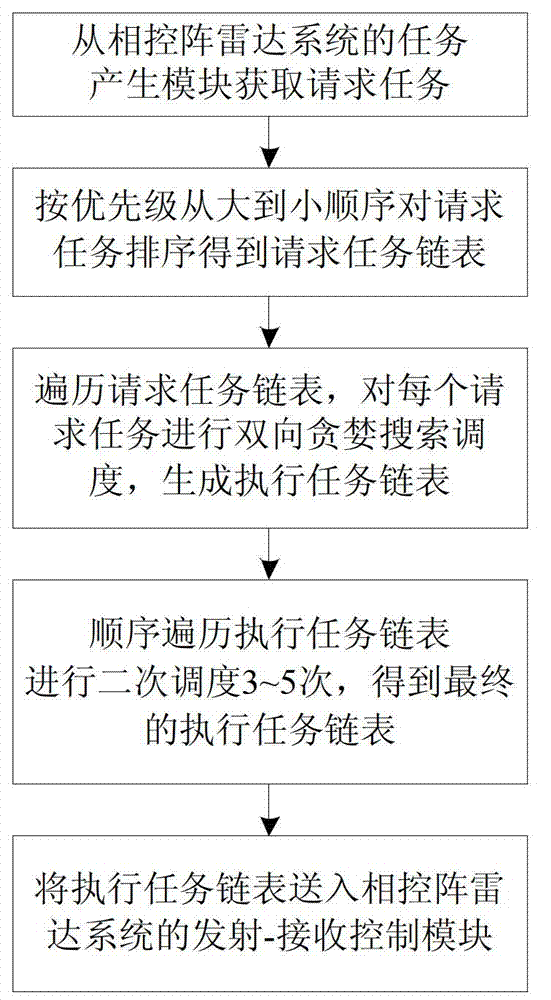
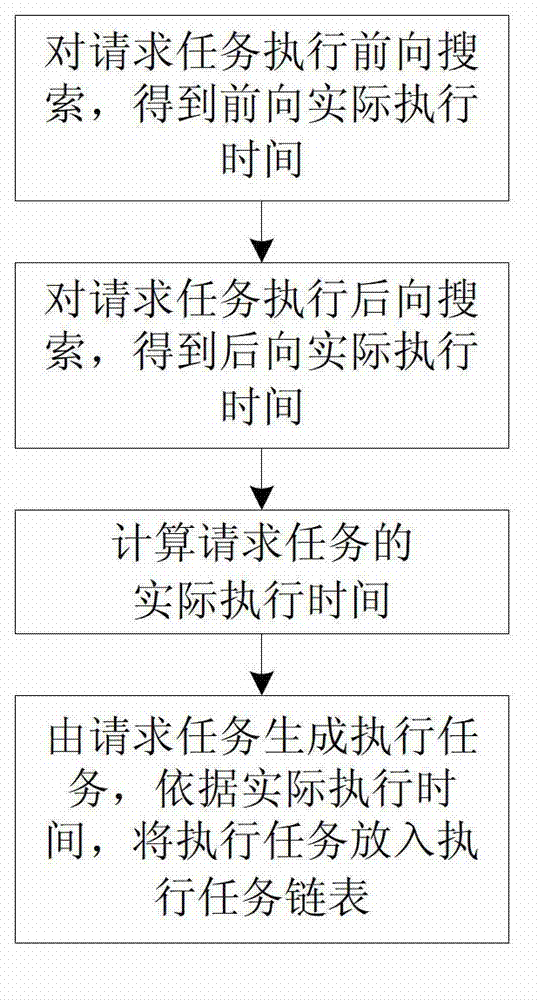
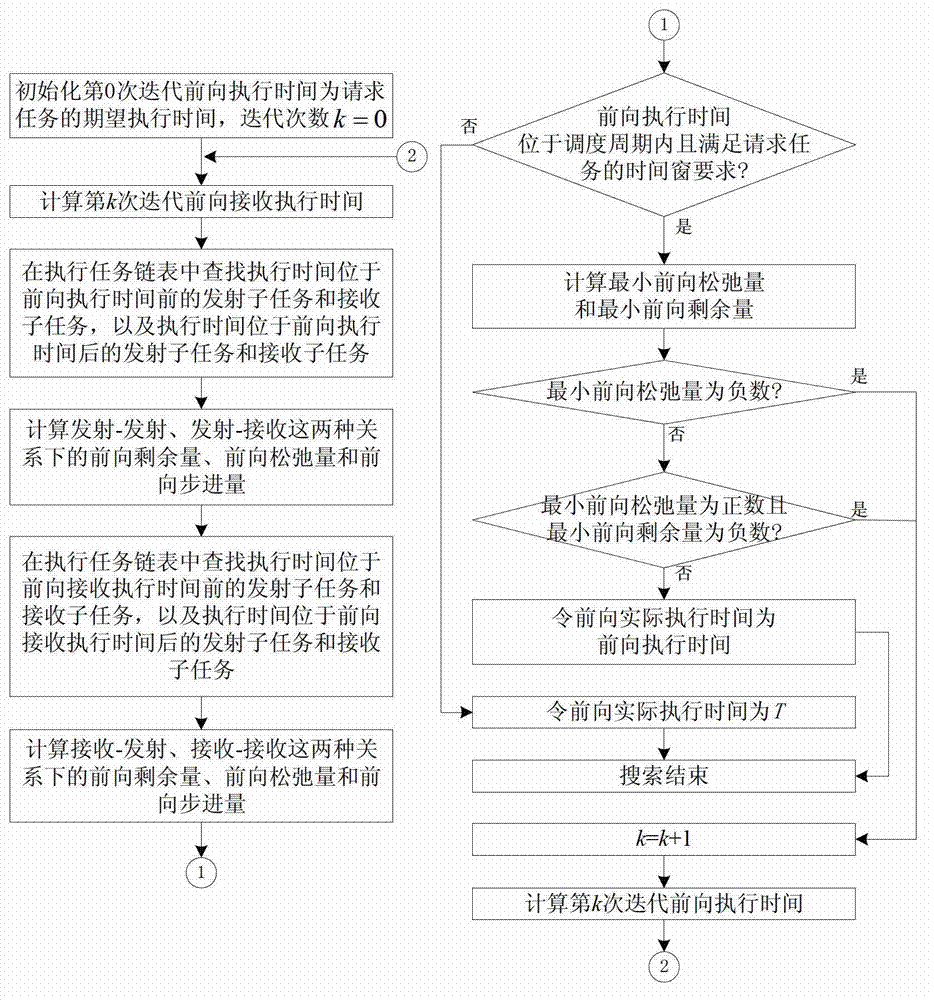
- Using the bidirectional greedy search scheduling method and secondary scheduling scan, the actual execution time is calculated by sorting the request task list and bidirectional greedy search, and the task scheduling is optimized by releasing and re-scheduling, combined with the natural order secondary scheduling scan to improve scheduling Gain and time resource utilization.

Spectrum Regulation and Frequency Management Policies
Spectrum regulation and frequency management policies constitute a critical framework governing the operational parameters of phased array radar systems. These policies are established by national and international regulatory bodies to ensure efficient spectrum utilization while minimizing interference among diverse wireless systems. For radar applications, particularly those employing adaptive scan scheduling algorithms, compliance with allocated frequency bands and emission standards is mandatory. Regulatory frameworks such as those defined by the International Telecommunication Union (ITU) and national authorities like the Federal Communications Commission (FCC) specify permissible frequency ranges, power spectral density limits, and out-of-band emission constraints that directly impact radar design and operational flexibility.
The dynamic nature of modern phased array radar systems, which frequently adjust beam patterns and dwell times to optimize resource allocation, introduces unique challenges in spectrum management. Cognitive radio techniques and dynamic spectrum access mechanisms are increasingly being explored to enable radars to operate more flexibly within regulatory boundaries. However, these approaches require sophisticated coordination protocols to avoid interference with primary spectrum users, including communication systems and other radar installations. Regulatory policies are evolving to accommodate such adaptive technologies, with some jurisdictions implementing spectrum sharing frameworks that permit secondary usage under specific conditions.
Frequency coordination procedures are particularly relevant for multi-function radar systems that must balance surveillance, tracking, and communication tasks across potentially fragmented spectrum allocations. Policies governing spectrum licensing, whether through exclusive assignments or shared access models, fundamentally shape the feasibility of implementing advanced scan scheduling algorithms. Recent regulatory trends toward more flexible spectrum management, including database-driven coordination systems and real-time interference mitigation requirements, offer both opportunities and constraints for optimizing radar resource utilization.
Compliance with electromagnetic compatibility standards and spectrum etiquette protocols remains essential for operational approval. These requirements influence technical parameters such as pulse repetition frequency selection, bandwidth utilization, and adaptive power control strategies, all of which are integral to effective scan scheduling optimization in resource-constrained environments.
Real-Time Performance and Latency Requirements
Real-time performance stands as a critical determinant in phased array radar scan scheduling optimization, where temporal constraints directly influence system effectiveness and operational reliability. Modern radar systems must process incoming signals, execute scheduling decisions, and adjust beam parameters within microsecond to millisecond timeframes to maintain tracking continuity and threat detection capabilities. The scheduling algorithm's computational complexity becomes paramount, as any delay in decision-making translates to missed opportunities for target observation or suboptimal resource allocation that compromises mission objectives.
Latency requirements in phased array systems manifest across multiple operational layers, each imposing distinct temporal boundaries. At the hardware level, beam steering commands must propagate through phase shifter networks within nanoseconds to achieve coherent radiation patterns. The scheduling layer operates on a different timescale, typically requiring decision cycles between 1 to 10 milliseconds depending on target dynamics and environmental conditions. This hierarchical timing structure necessitates careful algorithm design where computational overhead remains bounded and predictable, avoiding worst-case scenarios that could cascade into system-wide performance degradation.
The challenge intensifies when considering multi-function radar operations where surveillance, tracking, and fire control tasks compete for limited aperture time. Each function carries unique latency tolerances: surveillance scans may accommodate longer processing delays, while missile guidance demands near-instantaneous beam repositioning with latencies under 5 milliseconds. Scheduling algorithms must therefore incorporate priority-based preemption mechanisms and predictive resource reservation strategies that guarantee hard real-time constraints for critical tasks while maintaining acceptable service levels for lower-priority functions.
Contemporary implementations increasingly leverage parallel processing architectures and hardware acceleration to meet stringent latency requirements. Field-programmable gate arrays and application-specific integrated circuits enable deterministic execution of scheduling logic, reducing jitter and ensuring consistent response times. However, the trade-off between algorithmic sophistication and real-time feasibility remains central to system design, requiring careful validation through timing analysis and worst-case execution time profiling to certify operational readiness under all anticipated scenarios.
Unlock deeper insights with Patsnap Eureka Quick Research — get a full tech report to explore trends and direct your research. Try now!
Generate Your Research Report Instantly with AI Agent
Supercharge your innovation with Patsnap Eureka AI Agent Platform!