

Optimizing Epoxy Materials for Reliable Chip Embedding in PCBs
MAY 29, 20269 MIN READ
Generate Your Research Report Instantly with AI Agent
PatSnap Eureka helps you evaluate technical feasibility & market potential.
Epoxy Materials Background and PCB Embedding Objectives
Epoxy materials have served as fundamental components in electronic packaging and printed circuit board manufacturing for over five decades. Initially developed in the 1940s as thermosetting polymers, epoxies gained prominence in electronics due to their excellent adhesion properties, chemical resistance, and dimensional stability. The evolution from simple bisphenol-A based formulations to advanced multi-functional systems reflects the industry's continuous pursuit of enhanced performance characteristics.
The integration of semiconductor chips directly into PCB substrates represents a paradigm shift from traditional surface-mount technology. This embedded chip approach emerged in the late 1990s as a response to miniaturization demands and performance requirements in portable electronics. The technique involves placing bare semiconductor dies within cavities or layers of the PCB structure, requiring specialized encapsulation materials that can withstand multiple thermal cycles while maintaining electrical integrity.
Modern PCB embedding applications demand epoxy formulations that address multiple technical challenges simultaneously. These materials must exhibit low coefficient of thermal expansion to match semiconductor and substrate properties, preventing stress-induced failures during temperature cycling. Additionally, they require controlled viscosity profiles for precise dispensing and void-free encapsulation around complex chip geometries with fine-pitch interconnects.
The primary objective of optimizing epoxy materials for chip embedding centers on achieving long-term reliability under operational stress conditions. This encompasses thermal cycling resistance from -40°C to 125°C, moisture absorption control below 0.1% to prevent delamination, and maintenance of dielectric properties throughout the product lifecycle. Furthermore, the materials must demonstrate compatibility with lead-free soldering processes and emerging packaging technologies.
Contemporary research focuses on developing epoxy systems with enhanced filler integration capabilities. Silica nanoparticles, aluminum oxide, and boron nitride fillers are incorporated to achieve thermal conductivity improvements while maintaining processability. The challenge lies in optimizing filler loading levels to balance thermal performance with mechanical properties and manufacturing feasibility.
Processing objectives emphasize achieving complete chip encapsulation without introducing air bubbles or incomplete fill conditions that compromise reliability. This requires precise control of cure kinetics, enabling adequate flow time for complex geometries while preventing excessive bleeding onto adjacent circuit features. Advanced formulations incorporate rheology modifiers and cure accelerators to achieve optimal processing windows for high-volume manufacturing environments.
The integration of semiconductor chips directly into PCB substrates represents a paradigm shift from traditional surface-mount technology. This embedded chip approach emerged in the late 1990s as a response to miniaturization demands and performance requirements in portable electronics. The technique involves placing bare semiconductor dies within cavities or layers of the PCB structure, requiring specialized encapsulation materials that can withstand multiple thermal cycles while maintaining electrical integrity.
Modern PCB embedding applications demand epoxy formulations that address multiple technical challenges simultaneously. These materials must exhibit low coefficient of thermal expansion to match semiconductor and substrate properties, preventing stress-induced failures during temperature cycling. Additionally, they require controlled viscosity profiles for precise dispensing and void-free encapsulation around complex chip geometries with fine-pitch interconnects.
The primary objective of optimizing epoxy materials for chip embedding centers on achieving long-term reliability under operational stress conditions. This encompasses thermal cycling resistance from -40°C to 125°C, moisture absorption control below 0.1% to prevent delamination, and maintenance of dielectric properties throughout the product lifecycle. Furthermore, the materials must demonstrate compatibility with lead-free soldering processes and emerging packaging technologies.
Contemporary research focuses on developing epoxy systems with enhanced filler integration capabilities. Silica nanoparticles, aluminum oxide, and boron nitride fillers are incorporated to achieve thermal conductivity improvements while maintaining processability. The challenge lies in optimizing filler loading levels to balance thermal performance with mechanical properties and manufacturing feasibility.
Processing objectives emphasize achieving complete chip encapsulation without introducing air bubbles or incomplete fill conditions that compromise reliability. This requires precise control of cure kinetics, enabling adequate flow time for complex geometries while preventing excessive bleeding onto adjacent circuit features. Advanced formulations incorporate rheology modifiers and cure accelerators to achieve optimal processing windows for high-volume manufacturing environments.
Market Demand for Advanced Chip Embedding Solutions
The global electronics industry is experiencing unprecedented demand for miniaturization and enhanced performance, driving significant market interest in advanced chip embedding solutions. Traditional surface-mount technology faces limitations in achieving the compact form factors required for modern applications, creating substantial opportunities for embedded chip technologies that can deliver superior electrical performance while reducing overall device thickness.
Consumer electronics manufacturers are increasingly seeking solutions that enable thinner smartphones, tablets, and wearable devices without compromising functionality. The automotive sector presents another major growth driver, with electric vehicles and autonomous driving systems requiring highly integrated electronic modules that can withstand harsh environmental conditions while maintaining reliable performance over extended operational lifespans.
The Internet of Things ecosystem continues expanding rapidly, generating demand for ultra-compact sensor modules and communication devices where traditional packaging approaches prove inadequate. Medical device manufacturers similarly require miniaturized solutions that can integrate multiple functions within space-constrained implantable and portable diagnostic equipment.
Data center and telecommunications infrastructure providers face mounting pressure to increase processing density while managing thermal challenges. Advanced chip embedding technologies offer pathways to achieve higher component densities and improved thermal management compared to conventional assembly methods, addressing critical performance bottlenecks in high-speed computing applications.
Industrial automation and aerospace applications demand robust electronic solutions capable of operating reliably under extreme temperature variations and mechanical stress. These sectors increasingly recognize embedded chip technologies as essential for achieving the reliability standards required for mission-critical applications while reducing system complexity and potential failure points.
The convergence of artificial intelligence processing requirements with edge computing demands creates additional market pressure for innovative packaging solutions. Advanced chip embedding enables the integration of multiple processing elements within single modules, supporting the computational density required for real-time AI applications across diverse market segments.
Consumer electronics manufacturers are increasingly seeking solutions that enable thinner smartphones, tablets, and wearable devices without compromising functionality. The automotive sector presents another major growth driver, with electric vehicles and autonomous driving systems requiring highly integrated electronic modules that can withstand harsh environmental conditions while maintaining reliable performance over extended operational lifespans.
The Internet of Things ecosystem continues expanding rapidly, generating demand for ultra-compact sensor modules and communication devices where traditional packaging approaches prove inadequate. Medical device manufacturers similarly require miniaturized solutions that can integrate multiple functions within space-constrained implantable and portable diagnostic equipment.
Data center and telecommunications infrastructure providers face mounting pressure to increase processing density while managing thermal challenges. Advanced chip embedding technologies offer pathways to achieve higher component densities and improved thermal management compared to conventional assembly methods, addressing critical performance bottlenecks in high-speed computing applications.
Industrial automation and aerospace applications demand robust electronic solutions capable of operating reliably under extreme temperature variations and mechanical stress. These sectors increasingly recognize embedded chip technologies as essential for achieving the reliability standards required for mission-critical applications while reducing system complexity and potential failure points.
The convergence of artificial intelligence processing requirements with edge computing demands creates additional market pressure for innovative packaging solutions. Advanced chip embedding enables the integration of multiple processing elements within single modules, supporting the computational density required for real-time AI applications across diverse market segments.
Current Epoxy Performance Issues in PCB Applications
Current epoxy materials used in PCB chip embedding applications face several critical performance limitations that significantly impact manufacturing yield and long-term reliability. Thermal expansion mismatch represents one of the most persistent challenges, where the coefficient of thermal expansion (CTE) difference between epoxy resins and embedded silicon chips creates substantial mechanical stress during temperature cycling. This mismatch typically ranges from 15-25 ppm/°C for standard epoxy formulations compared to 2.6 ppm/°C for silicon, leading to interfacial delamination and micro-crack formation.
Adhesion failures constitute another major concern, particularly at the epoxy-chip interface and epoxy-copper trace boundaries. Poor interfacial bonding results from inadequate surface preparation, contamination, or chemical incompatibility between materials. These adhesion issues manifest as progressive delamination during thermal cycling, moisture absorption, or mechanical stress, ultimately compromising electrical connectivity and signal integrity.
Moisture absorption characteristics of current epoxy systems present significant reliability risks in humid operating environments. Standard epoxy resins can absorb 2-4% moisture by weight, causing dimensional changes, reduced glass transition temperature, and decreased dielectric properties. This moisture uptake creates internal stress concentrations around embedded components and degrades the insulation resistance between adjacent circuits.
Thermal conductivity limitations in conventional epoxy formulations restrict heat dissipation from embedded chips, leading to elevated operating temperatures and potential thermal runaway conditions. Most standard epoxy systems exhibit thermal conductivity values below 0.3 W/mK, insufficient for high-power applications or dense chip embedding configurations where effective heat management is critical.
Processing-related challenges include inadequate flow characteristics during lamination, resulting in void formation around chip edges and incomplete encapsulation. Current epoxy systems often exhibit narrow processing windows, requiring precise temperature and pressure control to achieve proper flow without causing chip displacement or wire bond damage.
Dielectric property degradation over time represents an emerging concern as embedded PCB applications demand higher frequency performance. Standard epoxy materials show increasing dielectric loss and permittivity drift under prolonged thermal and electrical stress, affecting signal transmission quality and electromagnetic compatibility in advanced electronic systems.
Adhesion failures constitute another major concern, particularly at the epoxy-chip interface and epoxy-copper trace boundaries. Poor interfacial bonding results from inadequate surface preparation, contamination, or chemical incompatibility between materials. These adhesion issues manifest as progressive delamination during thermal cycling, moisture absorption, or mechanical stress, ultimately compromising electrical connectivity and signal integrity.
Moisture absorption characteristics of current epoxy systems present significant reliability risks in humid operating environments. Standard epoxy resins can absorb 2-4% moisture by weight, causing dimensional changes, reduced glass transition temperature, and decreased dielectric properties. This moisture uptake creates internal stress concentrations around embedded components and degrades the insulation resistance between adjacent circuits.
Thermal conductivity limitations in conventional epoxy formulations restrict heat dissipation from embedded chips, leading to elevated operating temperatures and potential thermal runaway conditions. Most standard epoxy systems exhibit thermal conductivity values below 0.3 W/mK, insufficient for high-power applications or dense chip embedding configurations where effective heat management is critical.
Processing-related challenges include inadequate flow characteristics during lamination, resulting in void formation around chip edges and incomplete encapsulation. Current epoxy systems often exhibit narrow processing windows, requiring precise temperature and pressure control to achieve proper flow without causing chip displacement or wire bond damage.
Dielectric property degradation over time represents an emerging concern as embedded PCB applications demand higher frequency performance. Standard epoxy materials show increasing dielectric loss and permittivity drift under prolonged thermal and electrical stress, affecting signal transmission quality and electromagnetic compatibility in advanced electronic systems.
Existing Epoxy Solutions for Chip Embedding
01 Epoxy resin composition and formulation optimization
Development of improved epoxy resin compositions through optimization of base resin formulations, curing agents, and additive systems to enhance overall material performance and reliability. This includes modifications to molecular structure and cross-linking density to achieve better mechanical properties and durability under various operating conditions.- Epoxy resin composition and formulation optimization: Development of improved epoxy resin compositions through optimization of base resin formulations, curing agents, and additive systems to enhance overall material performance and reliability. These formulations focus on achieving better mechanical properties, thermal stability, and long-term durability through careful selection and balance of chemical components.
- Thermal stability and heat resistance enhancement: Methods and compositions for improving the thermal stability and heat resistance of epoxy materials to maintain reliability under elevated temperature conditions. These approaches involve incorporating heat-resistant additives, modifying polymer structures, and developing curing systems that provide superior thermal performance and dimensional stability over extended periods.
- Mechanical property reinforcement and durability: Techniques for enhancing the mechanical properties of epoxy materials including tensile strength, flexural modulus, impact resistance, and fatigue performance. These improvements contribute to long-term reliability by incorporating reinforcing agents, modifying polymer networks, and optimizing cross-linking density to resist mechanical stress and prevent failure.
- Environmental resistance and aging protection: Development of epoxy materials with enhanced resistance to environmental factors such as moisture, chemicals, UV radiation, and oxidation that can degrade material properties over time. These solutions focus on protective additives, barrier coatings, and stabilizing agents that maintain material integrity and reliability under harsh environmental conditions.
- Testing methods and reliability assessment: Standardized testing procedures and evaluation methods for assessing the reliability and long-term performance of epoxy materials. These methodologies include accelerated aging tests, stress analysis, failure prediction models, and quality control measures to ensure consistent material performance and predict service life under various operating conditions.
02 Thermal stability and heat resistance enhancement
Methods for improving the thermal stability and heat resistance of epoxy materials through incorporation of thermally stable components, heat-resistant additives, and specialized curing systems. These approaches focus on maintaining material integrity and preventing degradation at elevated temperatures during service life.Expand Specific Solutions03 Mechanical property reinforcement and durability
Techniques for enhancing mechanical properties such as tensile strength, flexural strength, and impact resistance through the use of reinforcing agents, fillers, and fiber reinforcements. These modifications aim to improve long-term durability and resistance to mechanical stress and fatigue.Expand Specific Solutions04 Environmental resistance and chemical stability
Development of epoxy systems with improved resistance to environmental factors including moisture, chemicals, UV radiation, and corrosive substances. These formulations focus on maintaining material properties and preventing degradation when exposed to harsh environmental conditions over extended periods.Expand Specific Solutions05 Testing methods and reliability assessment
Standardized testing procedures and evaluation methods for assessing epoxy material reliability, including accelerated aging tests, stress testing protocols, and performance monitoring techniques. These methods enable prediction of long-term performance and validation of material improvements.Expand Specific Solutions
Key Players in Epoxy Materials and PCB Industry
The epoxy materials optimization for chip embedding in PCBs represents a mature technology sector experiencing steady growth driven by miniaturization demands and advanced packaging requirements. The market demonstrates significant scale with established players like Sumitomo Bakelite, Resonac Corp, and DuPont leading material innovation, while semiconductor giants including Infineon Technologies, Micron Technology, and Texas Instruments drive application development. Technology maturity varies across segments, with traditional epoxy formulations well-established but next-generation materials for high-density embedding still evolving. Asian manufacturers such as Samsung Electro-Mechanics and Chinese companies like Kunshan Xingkai Semiconductor Materials are rapidly advancing capabilities, intensifying global competition. The competitive landscape shows convergence between material suppliers and end-users, with companies like Nitto Denko and Nordson providing integrated solutions spanning materials and processing equipment for comprehensive chip embedding applications.
Sumitomo Bakelite Co., Ltd.
Technical Solution: Sumitomo Bakelite specializes in high-performance epoxy molding compounds (EMC) for semiconductor packaging and PCB embedding applications. Their technology focuses on ultra-low stress formulations with controlled rheological properties for precise chip encapsulation. The company has developed proprietary silica filler systems that provide optimal thermal conductivity while maintaining low moisture absorption rates. Their epoxy materials feature enhanced flow characteristics during molding processes and superior adhesion to both silicon chips and PCB substrates, ensuring minimal delamination risks during thermal stress testing.
Strengths: Strong expertise in molding compound technology, excellent thermal management properties, established supply chain in Asia. Weaknesses: Limited presence in European and American markets, dependency on semiconductor industry cycles.
Resonac Corp.
Technical Solution: Resonac Corporation has developed next-generation epoxy materials specifically engineered for embedded chip applications in advanced PCB designs. Their technology platform includes low-temperature curing epoxy systems that minimize thermal stress on sensitive components during processing. The materials feature optimized filler loading with nano-scale additives to achieve superior mechanical properties and dimensional stability. Resonac's solutions incorporate advanced coupling agents that enhance interfacial bonding between the epoxy matrix and both semiconductor surfaces and PCB substrates, resulting in improved long-term reliability under thermal cycling conditions.
Strengths: Advanced nanotechnology integration, strong R&D capabilities, focus on next-generation applications. Weaknesses: Relatively new market presence, limited track record in high-volume production applications.
Core Innovations in Epoxy Chemistry for Electronics
Printed circuits prepared from filled epoxy compositions
PatentInactiveUS20070231469A1
Innovation
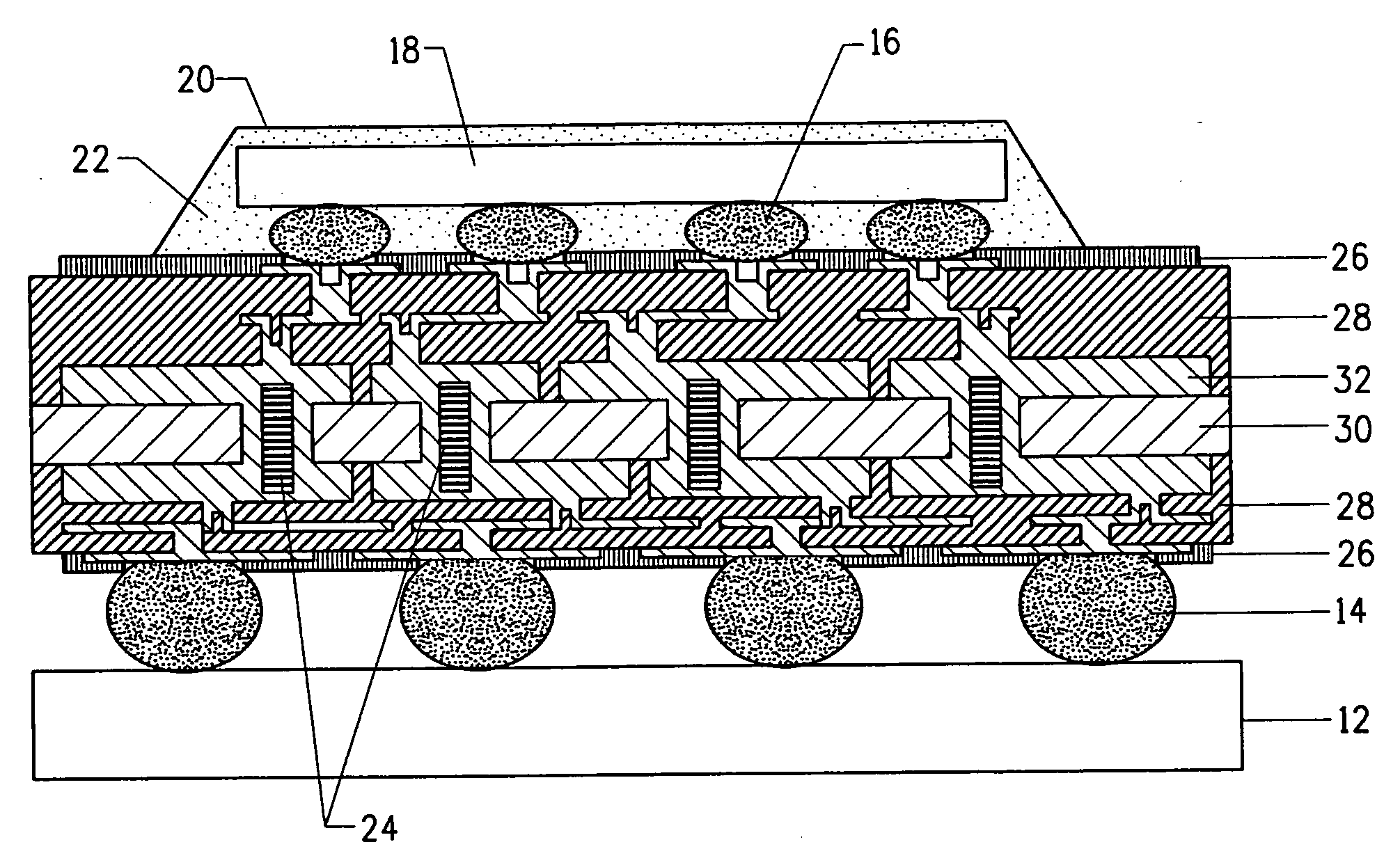
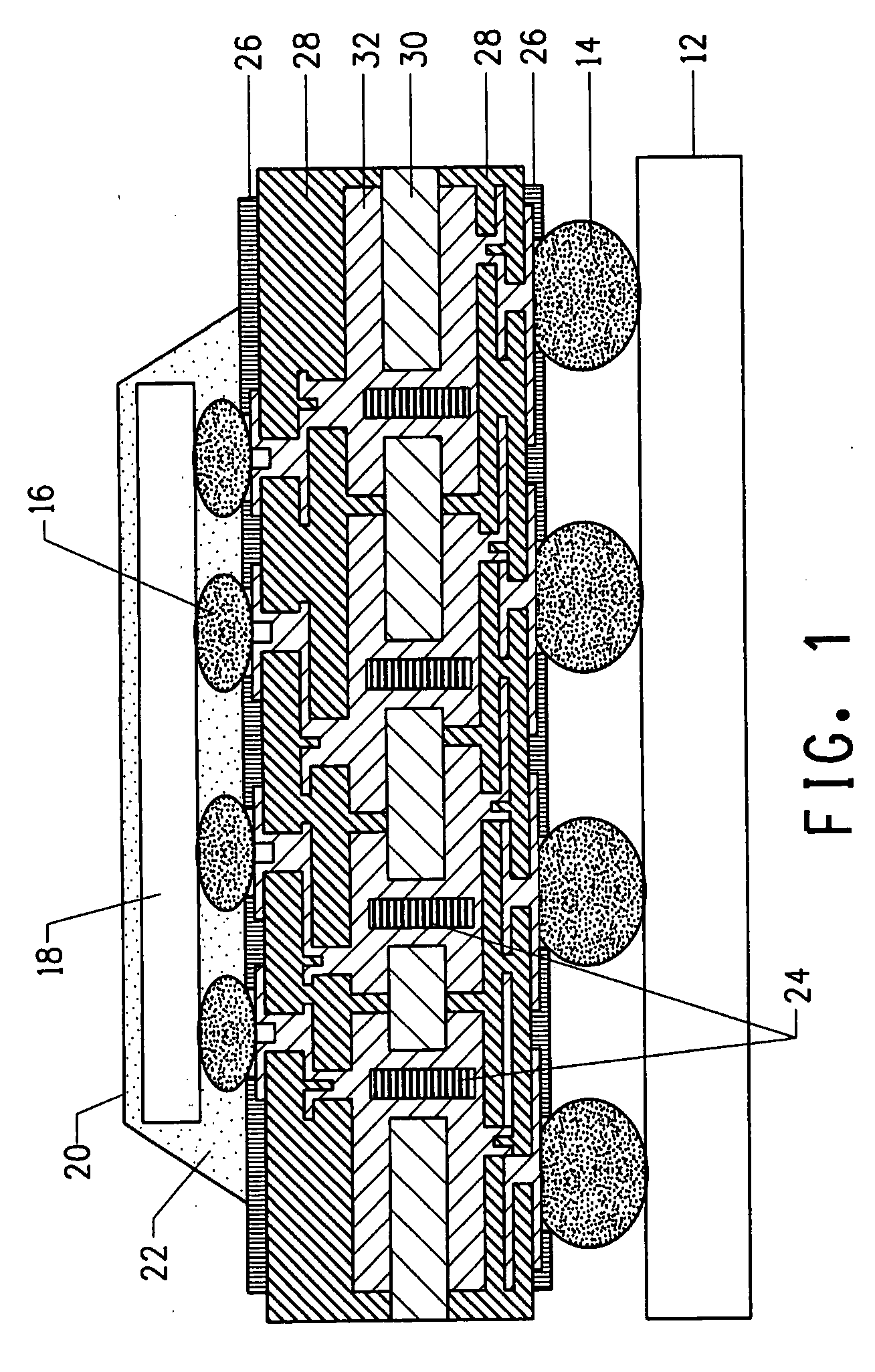
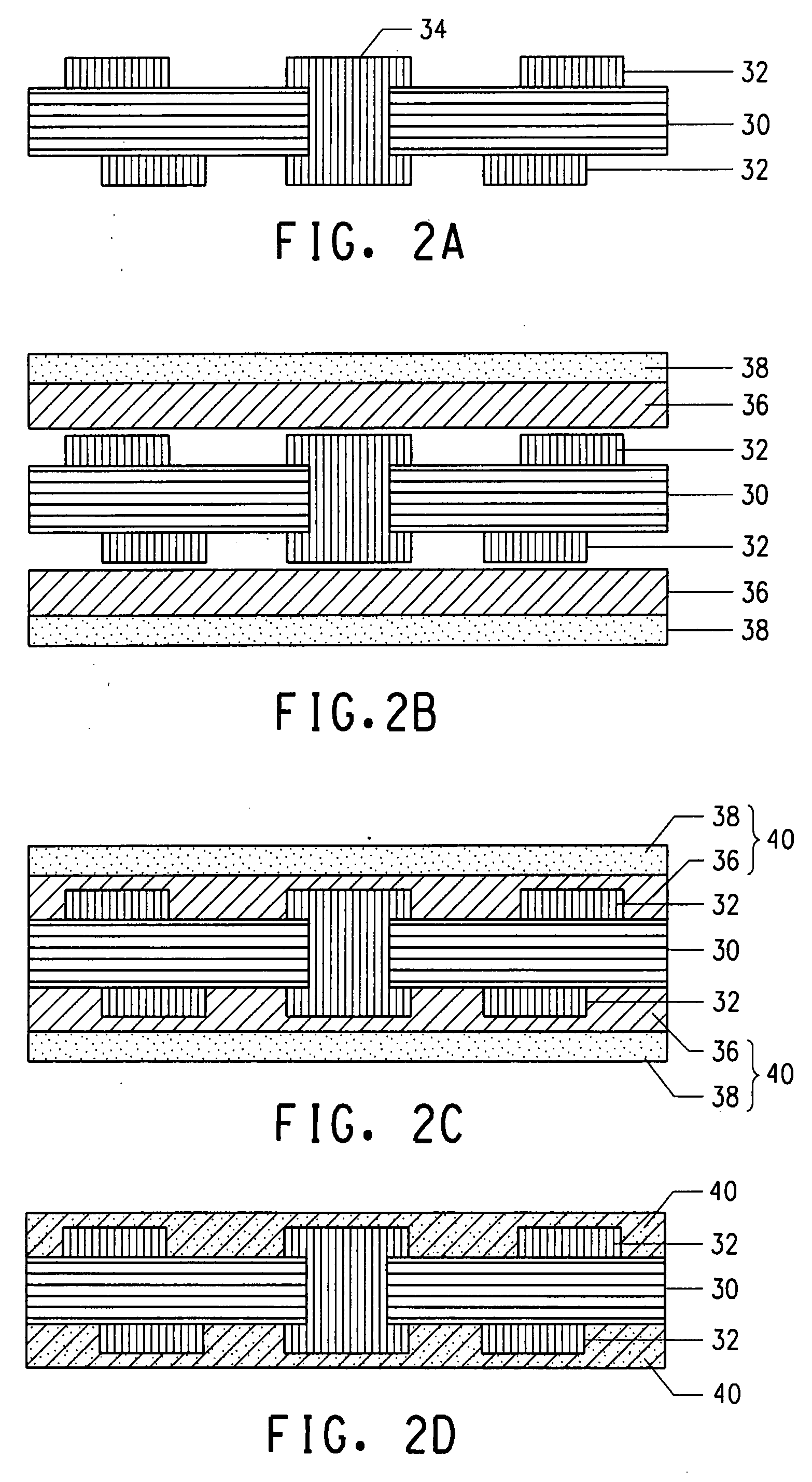
- The use of a particulate mixture with a bimodal particle size distribution of nanoscale particles dispersed in an aromatic epoxy and cross-linking agent, which maintains low viscosity in the uncured state and achieves a CTE of less than 50 ppm/°C in the cured state, while maintaining toughness and dielectric properties.

Rehealable and reworkable polymer for electronic packaging
PatentWO2023156145A1
Innovation
- A polymer composition formed by reacting an epoxy compound with an amine curing agent, incorporating Diels-Alder dimer and ester moieties, which can be depolymerized using a protic solvent and rehealed with heat, allowing for the formation of a composite material with filler particles for use in capillary underfills and thermal interface materials.


Environmental Regulations for Electronic Materials
The regulatory landscape for electronic materials, particularly epoxy compounds used in chip embedding applications, has become increasingly stringent across global markets. The European Union's RoHS (Restriction of Hazardous Substances) directive serves as a cornerstone regulation, limiting the use of specific hazardous materials including lead, mercury, cadmium, and certain flame retardants in electronic equipment. This directive directly impacts epoxy formulations, requiring manufacturers to eliminate or significantly reduce restricted substances while maintaining performance standards.
REACH (Registration, Evaluation, Authorization and Restriction of Chemicals) regulation in Europe establishes comprehensive chemical safety requirements that affect epoxy material suppliers. Under REACH, manufacturers must register chemical substances, provide safety data, and obtain authorization for substances of very high concern. This regulation particularly impacts epoxy hardeners and additives, many of which contain chemicals subject to registration requirements.
The United States implements environmental controls through EPA regulations, including the Toxic Substances Control Act (TSCA) and various state-level initiatives. California's Proposition 65 requires disclosure of chemicals known to cause cancer or reproductive harm, affecting labeling and formulation decisions for epoxy materials. Additionally, emerging PFAS (per- and polyfluoroalkyl substances) regulations are beginning to impact specialty epoxy formulations that incorporate fluorinated compounds for enhanced performance.
Asian markets present diverse regulatory frameworks, with China's RoHS implementation and Japan's Green Procurement guidelines establishing material restrictions. South Korea's K-REACH regulation mirrors European REACH requirements, creating additional compliance burdens for global epoxy suppliers. These regulations collectively drive the need for comprehensive material documentation and traceability throughout the supply chain.
Compliance challenges extend beyond individual substance restrictions to encompass lifecycle assessment requirements and end-of-life disposal considerations. Emerging regulations increasingly focus on circular economy principles, requiring manufacturers to consider recyclability and environmental impact throughout the product lifecycle. This regulatory evolution necessitates proactive material selection strategies and robust compliance management systems for epoxy-based chip embedding solutions.
REACH (Registration, Evaluation, Authorization and Restriction of Chemicals) regulation in Europe establishes comprehensive chemical safety requirements that affect epoxy material suppliers. Under REACH, manufacturers must register chemical substances, provide safety data, and obtain authorization for substances of very high concern. This regulation particularly impacts epoxy hardeners and additives, many of which contain chemicals subject to registration requirements.
The United States implements environmental controls through EPA regulations, including the Toxic Substances Control Act (TSCA) and various state-level initiatives. California's Proposition 65 requires disclosure of chemicals known to cause cancer or reproductive harm, affecting labeling and formulation decisions for epoxy materials. Additionally, emerging PFAS (per- and polyfluoroalkyl substances) regulations are beginning to impact specialty epoxy formulations that incorporate fluorinated compounds for enhanced performance.
Asian markets present diverse regulatory frameworks, with China's RoHS implementation and Japan's Green Procurement guidelines establishing material restrictions. South Korea's K-REACH regulation mirrors European REACH requirements, creating additional compliance burdens for global epoxy suppliers. These regulations collectively drive the need for comprehensive material documentation and traceability throughout the supply chain.
Compliance challenges extend beyond individual substance restrictions to encompass lifecycle assessment requirements and end-of-life disposal considerations. Emerging regulations increasingly focus on circular economy principles, requiring manufacturers to consider recyclability and environmental impact throughout the product lifecycle. This regulatory evolution necessitates proactive material selection strategies and robust compliance management systems for epoxy-based chip embedding solutions.
Thermal Management Strategies in Embedded Systems
Thermal management represents one of the most critical challenges in embedded chip systems within PCBs, where epoxy materials play a pivotal role in heat dissipation and thermal stability. The encapsulation of chips using optimized epoxy formulations directly impacts the thermal performance of the entire embedded system, requiring sophisticated strategies to maintain operational reliability under varying temperature conditions.
Effective thermal management in embedded systems relies heavily on the thermal conductivity properties of epoxy materials. Advanced epoxy formulations incorporate thermally conductive fillers such as aluminum oxide, boron nitride, or graphene nanoplatelets to enhance heat transfer pathways from embedded chips to the surrounding PCB substrate. These modified epoxy systems can achieve thermal conductivities ranging from 1 to 10 W/mK, significantly improving heat dissipation compared to standard epoxy resins.
Heat spreading techniques constitute another fundamental aspect of thermal management strategies. The design of thermal vias and copper planes within the PCB structure works synergistically with thermally enhanced epoxy materials to create efficient heat conduction paths. Strategic placement of these thermal elements around embedded chips ensures uniform temperature distribution and prevents localized hot spots that could compromise system reliability.
Active cooling integration represents an emerging approach in high-performance embedded systems. Micro-channel cooling systems and embedded heat pipes can be incorporated into the PCB design, working in conjunction with thermally optimized epoxy materials to achieve superior thermal performance. These hybrid cooling solutions are particularly relevant for power-dense applications where passive thermal management alone proves insufficient.
Temperature cycling resistance forms a crucial consideration in thermal management strategy development. Epoxy materials must maintain their thermal properties and mechanical integrity across multiple heating and cooling cycles typical in embedded system operation. Advanced epoxy formulations with controlled coefficient of thermal expansion help minimize thermal stress at chip-epoxy interfaces, ensuring long-term reliability.
Thermal interface optimization between embedded chips and epoxy encapsulants requires careful consideration of surface preparation and material compatibility. Proper surface treatments and the use of thermal interface materials can significantly reduce thermal resistance at critical junctions, enhancing overall system thermal performance and extending operational lifespan under demanding thermal conditions.
Effective thermal management in embedded systems relies heavily on the thermal conductivity properties of epoxy materials. Advanced epoxy formulations incorporate thermally conductive fillers such as aluminum oxide, boron nitride, or graphene nanoplatelets to enhance heat transfer pathways from embedded chips to the surrounding PCB substrate. These modified epoxy systems can achieve thermal conductivities ranging from 1 to 10 W/mK, significantly improving heat dissipation compared to standard epoxy resins.
Heat spreading techniques constitute another fundamental aspect of thermal management strategies. The design of thermal vias and copper planes within the PCB structure works synergistically with thermally enhanced epoxy materials to create efficient heat conduction paths. Strategic placement of these thermal elements around embedded chips ensures uniform temperature distribution and prevents localized hot spots that could compromise system reliability.
Active cooling integration represents an emerging approach in high-performance embedded systems. Micro-channel cooling systems and embedded heat pipes can be incorporated into the PCB design, working in conjunction with thermally optimized epoxy materials to achieve superior thermal performance. These hybrid cooling solutions are particularly relevant for power-dense applications where passive thermal management alone proves insufficient.
Temperature cycling resistance forms a crucial consideration in thermal management strategy development. Epoxy materials must maintain their thermal properties and mechanical integrity across multiple heating and cooling cycles typical in embedded system operation. Advanced epoxy formulations with controlled coefficient of thermal expansion help minimize thermal stress at chip-epoxy interfaces, ensuring long-term reliability.
Thermal interface optimization between embedded chips and epoxy encapsulants requires careful consideration of surface preparation and material compatibility. Proper surface treatments and the use of thermal interface materials can significantly reduce thermal resistance at critical junctions, enhancing overall system thermal performance and extending operational lifespan under demanding thermal conditions.
Unlock deeper insights with PatSnap Eureka Quick Research — get a full tech report to explore trends and direct your research. Try now!
Generate Your Research Report Instantly with AI Agent
Supercharge your innovation with PatSnap Eureka AI Agent Platform!