Optimizing Solar Array Configuration for Max Energy Output
MAR 5, 20269 MIN READ
Generate Your Research Report Instantly with AI Agent
Patsnap Eureka helps you evaluate technical feasibility & market potential.
Solar Array Optimization Background and Energy Goals
Solar photovoltaic technology has undergone remarkable evolution since the first practical silicon solar cell was developed at Bell Laboratories in 1954. Initially achieving only 6% efficiency, solar cells have progressed through multiple generations of technological advancement. The journey from early space applications in the 1960s to today's utility-scale installations demonstrates continuous innovation in materials science, manufacturing processes, and system design methodologies.
The development trajectory of solar array optimization has been driven by the fundamental challenge of maximizing energy conversion efficiency while minimizing costs. Early solar installations relied on fixed-tilt configurations with limited consideration for site-specific optimization. The introduction of tracking systems in the 1970s marked the first significant advancement in array configuration optimization, enabling panels to follow the sun's path and increase energy capture by 15-35%.
Modern solar array optimization encompasses multiple technological dimensions including advanced photovoltaic materials, intelligent tracking mechanisms, and sophisticated energy management systems. The integration of bifacial solar panels, micro-inverters, and power optimizers has created new possibilities for configuration strategies that were previously impractical or economically unfeasible.
Contemporary optimization objectives extend beyond simple efficiency maximization to include comprehensive energy output goals that consider temporal variations, environmental factors, and grid integration requirements. The primary technical goal involves achieving maximum annual energy yield through optimal spatial arrangement, tilt angles, and inter-row spacing that minimizes shading losses while maximizing land utilization efficiency.
Advanced optimization targets now incorporate predictive analytics and machine learning algorithms to adapt array configurations dynamically based on weather patterns, seasonal variations, and real-time performance data. These systems aim to achieve energy output improvements of 8-15% compared to conventional fixed installations through intelligent configuration management.
The emergence of agrivoltaics and floating solar installations has introduced new optimization paradigms that balance energy generation with secondary land use objectives. These applications require sophisticated modeling approaches that optimize not only for energy output but also for agricultural productivity or water conservation benefits, representing the next frontier in solar array configuration optimization.
The development trajectory of solar array optimization has been driven by the fundamental challenge of maximizing energy conversion efficiency while minimizing costs. Early solar installations relied on fixed-tilt configurations with limited consideration for site-specific optimization. The introduction of tracking systems in the 1970s marked the first significant advancement in array configuration optimization, enabling panels to follow the sun's path and increase energy capture by 15-35%.
Modern solar array optimization encompasses multiple technological dimensions including advanced photovoltaic materials, intelligent tracking mechanisms, and sophisticated energy management systems. The integration of bifacial solar panels, micro-inverters, and power optimizers has created new possibilities for configuration strategies that were previously impractical or economically unfeasible.
Contemporary optimization objectives extend beyond simple efficiency maximization to include comprehensive energy output goals that consider temporal variations, environmental factors, and grid integration requirements. The primary technical goal involves achieving maximum annual energy yield through optimal spatial arrangement, tilt angles, and inter-row spacing that minimizes shading losses while maximizing land utilization efficiency.
Advanced optimization targets now incorporate predictive analytics and machine learning algorithms to adapt array configurations dynamically based on weather patterns, seasonal variations, and real-time performance data. These systems aim to achieve energy output improvements of 8-15% compared to conventional fixed installations through intelligent configuration management.
The emergence of agrivoltaics and floating solar installations has introduced new optimization paradigms that balance energy generation with secondary land use objectives. These applications require sophisticated modeling approaches that optimize not only for energy output but also for agricultural productivity or water conservation benefits, representing the next frontier in solar array configuration optimization.
Market Demand for High-Efficiency Solar Energy Systems
The global solar energy market has experienced unprecedented growth driven by escalating energy demands, climate change concerns, and declining renewable energy costs. Governments worldwide have implemented aggressive renewable energy targets, with many nations committing to carbon neutrality by 2050. This regulatory environment has created substantial market pull for high-efficiency solar solutions that maximize energy output per unit area.
Commercial and industrial sectors represent the fastest-growing segments for high-efficiency solar systems. Large-scale installations require optimal energy density to maximize return on investment, particularly in regions with limited available land or rooftop space. Data centers, manufacturing facilities, and commercial buildings increasingly prioritize solar array configurations that deliver maximum power generation within constrained physical footprints.
Residential markets demonstrate strong preference for high-efficiency systems despite premium pricing. Homeowners seek to minimize installation complexity while maximizing energy independence. The growing adoption of electric vehicles and home energy storage systems has intensified demand for solar configurations capable of supporting higher household energy consumption patterns.
Utility-scale solar projects face mounting pressure to improve land utilization efficiency. Project developers increasingly evaluate solar array optimization technologies that enhance energy yield per acre, particularly in competitive renewable energy auctions where marginal efficiency improvements directly impact project economics. Advanced tracking systems and optimized panel spacing configurations have become critical differentiators in project selection processes.
Emerging markets in Southeast Asia, Africa, and Latin America present significant growth opportunities for optimized solar array solutions. These regions often experience challenging installation conditions including irregular terrain, shading obstacles, and grid stability issues. Solar array configuration optimization technologies that address these specific challenges while maintaining high energy output are experiencing accelerated adoption.
The integration of energy storage systems with solar installations has created additional market demand for optimization solutions that consider both immediate energy generation and storage charging patterns. Smart grid integration requirements further drive demand for solar array configurations capable of providing predictable, optimized energy output profiles that align with grid stability requirements.
Commercial and industrial sectors represent the fastest-growing segments for high-efficiency solar systems. Large-scale installations require optimal energy density to maximize return on investment, particularly in regions with limited available land or rooftop space. Data centers, manufacturing facilities, and commercial buildings increasingly prioritize solar array configurations that deliver maximum power generation within constrained physical footprints.
Residential markets demonstrate strong preference for high-efficiency systems despite premium pricing. Homeowners seek to minimize installation complexity while maximizing energy independence. The growing adoption of electric vehicles and home energy storage systems has intensified demand for solar configurations capable of supporting higher household energy consumption patterns.
Utility-scale solar projects face mounting pressure to improve land utilization efficiency. Project developers increasingly evaluate solar array optimization technologies that enhance energy yield per acre, particularly in competitive renewable energy auctions where marginal efficiency improvements directly impact project economics. Advanced tracking systems and optimized panel spacing configurations have become critical differentiators in project selection processes.
Emerging markets in Southeast Asia, Africa, and Latin America present significant growth opportunities for optimized solar array solutions. These regions often experience challenging installation conditions including irregular terrain, shading obstacles, and grid stability issues. Solar array configuration optimization technologies that address these specific challenges while maintaining high energy output are experiencing accelerated adoption.
The integration of energy storage systems with solar installations has created additional market demand for optimization solutions that consider both immediate energy generation and storage charging patterns. Smart grid integration requirements further drive demand for solar array configurations capable of providing predictable, optimized energy output profiles that align with grid stability requirements.
Current Solar Array Configuration Challenges and Constraints
Solar array configuration optimization faces significant technical constraints that limit maximum energy output potential. Traditional fixed-tilt installations suffer from suboptimal sun tracking capabilities, resulting in substantial energy losses throughout daily and seasonal cycles. The static positioning of conventional arrays typically captures only 60-70% of available solar irradiance compared to optimal tracking systems.
Shading represents one of the most critical challenges in solar array design. Partial shading from nearby structures, vegetation, or adjacent solar panels can dramatically reduce overall system performance due to the series connection of photovoltaic cells. Even minimal shading on a single cell can create hotspots and significantly decrease the entire string's power output, leading to potential equipment damage and reduced system lifespan.
Spatial constraints in urban and industrial environments severely limit optimal array positioning. Available installation areas often feature irregular shapes, multiple orientations, and varying tilt angles that prevent standardized configuration approaches. These geometric limitations force compromises between maximum solar exposure and practical installation requirements, resulting in suboptimal energy harvesting efficiency.
Electrical configuration challenges arise from the need to balance voltage and current characteristics across different array sections. Mismatched panel specifications, varying degradation rates, and inconsistent environmental conditions create electrical imbalances that reduce overall system efficiency. Traditional string inverter configurations particularly struggle with these mismatches, leading to significant power losses.
Thermal management constraints significantly impact array performance, especially in high-density installations. Inadequate spacing between panels creates heat buildup that reduces photovoltaic efficiency and accelerates component degradation. The trade-off between maximizing panel density and maintaining optimal operating temperatures presents ongoing configuration challenges.
Maintenance accessibility requirements impose additional constraints on array layout optimization. Configurations must accommodate safe access for cleaning, inspection, and component replacement while maintaining structural integrity and electrical safety standards. These practical considerations often conflict with theoretically optimal energy-maximizing arrangements.
Dynamic environmental factors including wind loading, snow accumulation, and seismic considerations further constrain configuration options. Arrays must withstand extreme weather conditions while maintaining optimal positioning for energy capture, requiring robust structural designs that may compromise ideal solar exposure angles.
Shading represents one of the most critical challenges in solar array design. Partial shading from nearby structures, vegetation, or adjacent solar panels can dramatically reduce overall system performance due to the series connection of photovoltaic cells. Even minimal shading on a single cell can create hotspots and significantly decrease the entire string's power output, leading to potential equipment damage and reduced system lifespan.
Spatial constraints in urban and industrial environments severely limit optimal array positioning. Available installation areas often feature irregular shapes, multiple orientations, and varying tilt angles that prevent standardized configuration approaches. These geometric limitations force compromises between maximum solar exposure and practical installation requirements, resulting in suboptimal energy harvesting efficiency.
Electrical configuration challenges arise from the need to balance voltage and current characteristics across different array sections. Mismatched panel specifications, varying degradation rates, and inconsistent environmental conditions create electrical imbalances that reduce overall system efficiency. Traditional string inverter configurations particularly struggle with these mismatches, leading to significant power losses.
Thermal management constraints significantly impact array performance, especially in high-density installations. Inadequate spacing between panels creates heat buildup that reduces photovoltaic efficiency and accelerates component degradation. The trade-off between maximizing panel density and maintaining optimal operating temperatures presents ongoing configuration challenges.
Maintenance accessibility requirements impose additional constraints on array layout optimization. Configurations must accommodate safe access for cleaning, inspection, and component replacement while maintaining structural integrity and electrical safety standards. These practical considerations often conflict with theoretically optimal energy-maximizing arrangements.
Dynamic environmental factors including wind loading, snow accumulation, and seismic considerations further constrain configuration options. Arrays must withstand extreme weather conditions while maintaining optimal positioning for energy capture, requiring robust structural designs that may compromise ideal solar exposure angles.
Existing Solar Array Configuration Solutions
01 Series and parallel connection configurations for solar arrays
Solar arrays can be configured in various series and parallel combinations to optimize voltage and current output. Different connection topologies allow for balancing power generation across multiple solar panels while managing voltage levels suitable for specific applications. The configuration directly impacts the overall energy output and system efficiency by determining how individual panel outputs are combined.- Series-parallel configuration optimization for solar arrays: Solar array configurations can be optimized by arranging photovoltaic cells or modules in series-parallel combinations to maximize energy output. The series connection increases voltage while parallel connection increases current, allowing for optimal matching with load requirements and power conversion systems. Different series-parallel configurations can be dynamically adjusted based on environmental conditions such as irradiance levels and temperature to maintain maximum power point operation and improve overall system efficiency.
- Maximum power point tracking (MPPT) for energy optimization: Maximum power point tracking systems are employed to continuously monitor and adjust the operating point of solar arrays to extract maximum available power under varying conditions. These systems use algorithms and control circuits to track the optimal voltage-current operating point, compensating for changes in solar irradiance, temperature, and partial shading conditions. Advanced MPPT techniques can significantly increase energy harvest compared to fixed operating point systems.
- Bypass diode integration and shading mitigation: Bypass diodes are integrated into solar array configurations to mitigate power losses caused by partial shading or cell mismatch. These diodes provide alternative current paths around shaded or underperforming cells, preventing them from acting as loads and reducing the output of the entire string. Strategic placement of bypass diodes at module or sub-module levels, combined with optimized array configuration, can significantly improve energy output under non-uniform illumination conditions.
- Reconfigurable solar array architectures: Reconfigurable solar array architectures employ switching matrices or relay systems to dynamically change the interconnection topology of solar modules based on operating conditions. These systems can adapt the array configuration in real-time to minimize mismatch losses, optimize voltage and current levels, and maintain high efficiency under varying irradiance patterns and partial shading scenarios. Reconfiguration strategies can include changing series-parallel connections or isolating underperforming modules to maximize total power output.
- Distributed power electronics and module-level optimization: Distributed power electronics architectures implement power conversion and optimization at the individual module or sub-array level rather than centralized system level. Module-level power electronics, including micro-inverters and DC-DC optimizers, enable independent maximum power point tracking for each module, reducing mismatch losses and improving energy harvest especially under non-uniform conditions. This approach allows each module to operate at its optimal point regardless of the performance of other modules in the array.
02 Maximum power point tracking and optimization systems
Advanced control systems can be implemented to continuously monitor and adjust solar array operating points to extract maximum available power under varying conditions. These systems use algorithms and power electronics to dynamically optimize the energy harvest from solar arrays by tracking the optimal voltage-current operating point. Such optimization techniques significantly improve overall energy output compared to fixed operating configurations.Expand Specific Solutions03 Reconfigurable solar array architectures
Dynamic reconfiguration systems allow solar arrays to change their electrical connections in response to environmental conditions, shading patterns, or panel degradation. These adaptive architectures use switching mechanisms to alter series-parallel configurations, enabling the array to maintain optimal performance despite partial shading or component failures. Reconfigurable designs can significantly enhance energy output by isolating underperforming sections and reorganizing healthy panels.Expand Specific Solutions04 Multi-junction and high-efficiency solar cell configurations
Advanced solar array designs incorporate high-efficiency photovoltaic technologies including multi-junction cells and concentrated photovoltaic systems. These configurations stack multiple semiconductor layers to capture different portions of the solar spectrum, significantly increasing conversion efficiency. The arrangement and integration of these advanced cells within array structures directly influences total energy output capabilities.Expand Specific Solutions05 Thermal management and cooling systems for solar arrays
Temperature control mechanisms integrated into solar array configurations help maintain optimal operating temperatures and prevent efficiency losses due to thermal effects. Cooling systems, heat dissipation structures, and thermal management strategies preserve photovoltaic performance under high-temperature conditions. Proper thermal design in array configuration ensures sustained energy output by minimizing temperature-related power degradation.Expand Specific Solutions
Key Players in Solar Array and Energy Optimization Industry
The solar array optimization market represents a rapidly maturing sector within the broader renewable energy industry, currently valued in the multi-billion dollar range and experiencing robust growth driven by global decarbonization initiatives. The competitive landscape spans from established technology giants like Siemens AG and Texas Instruments providing foundational semiconductor and automation solutions, to specialized solar leaders such as SolarEdge Technologies dominating the DC optimizer segment with over 70% market share, and FTC Solar advancing tracker technologies. The technology maturity varies significantly across segments, with companies like Sunrun and HST Solar Farms focusing on deployment and manufacturing, while aerospace players like Boeing and Raytheon contribute advanced materials and precision engineering capabilities. This diverse ecosystem indicates a market transitioning from early adoption to mainstream deployment, with increasing emphasis on intelligent optimization systems and module-level performance enhancement technologies.
SolarEdge Technologies, Inc.
Technical Solution: SolarEdge employs power optimizer technology at the module level, enabling individual panel maximum power point tracking (MPPT) to maximize energy harvest from each solar panel independently. Their DC optimizers mitigate the impact of shading, soiling, and module mismatch by allowing each panel to operate at its optimal voltage and current levels. The system includes advanced monitoring capabilities that provide real-time performance data for each module, enabling precise identification of underperforming panels and system-wide optimization. Their SafeDC technology automatically shuts down DC voltage at the module level for enhanced safety during installation and maintenance.
Strengths: Industry-leading module-level optimization technology, comprehensive monitoring and diagnostics capabilities, enhanced safety features. Weaknesses: Higher initial system cost compared to traditional string inverters, potential reliability concerns with more electronic components per module.
Siemens AG
Technical Solution: Siemens provides comprehensive solar array optimization through their digital twin technology and advanced control systems that model and optimize solar farm performance in real-time. Their solutions integrate weather forecasting, predictive maintenance, and artificial intelligence algorithms to maximize energy output while minimizing operational costs. The company's SCADA systems enable centralized monitoring and control of large-scale solar installations, with automated adjustment capabilities for tracking systems and inverter operations. Their digital platform analyzes historical performance data, weather patterns, and equipment characteristics to continuously refine optimization strategies and predict maintenance requirements, ensuring sustained peak performance throughout the system's operational lifetime.
Strengths: Comprehensive industrial automation expertise, advanced digital twin and AI-powered optimization capabilities, proven large-scale system integration experience. Weaknesses: Higher complexity and cost for smaller installations, requires specialized technical expertise for system operation and maintenance.
Core Innovations in Solar Array Layout Optimization
Apparatus and method for enhanced solar power generation and maximum power point tracking
PatentInactiveUS20090217965A1
Innovation
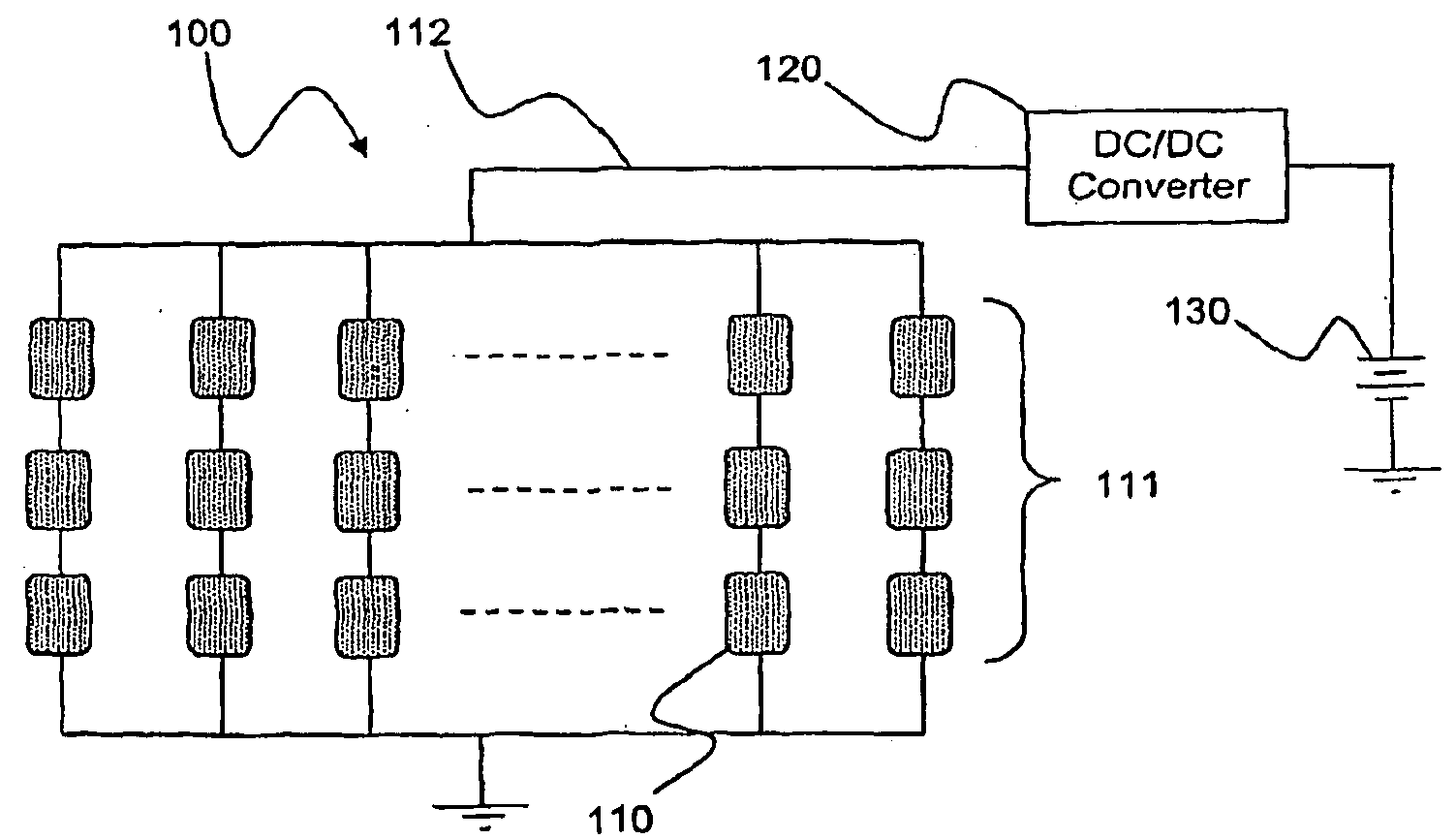
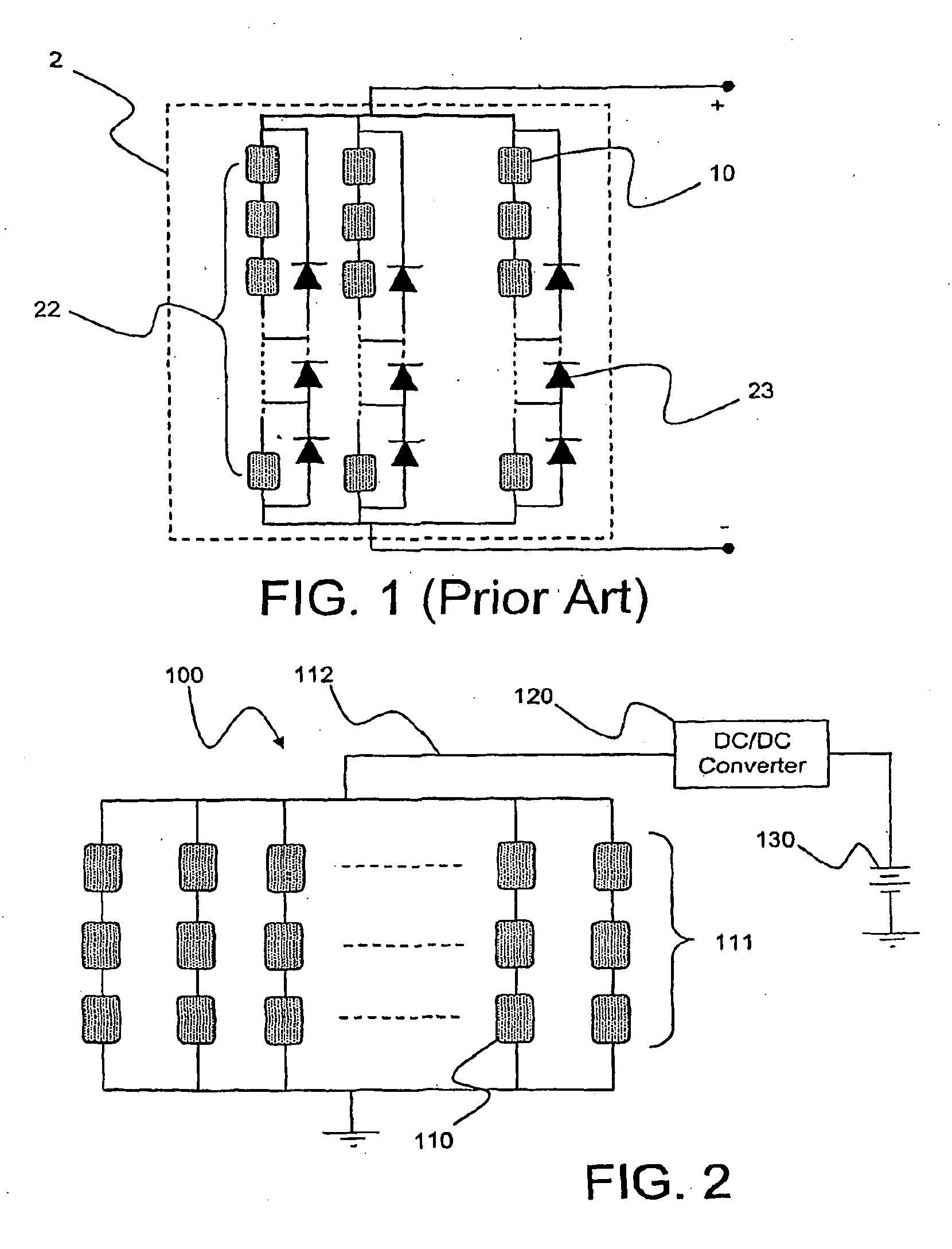
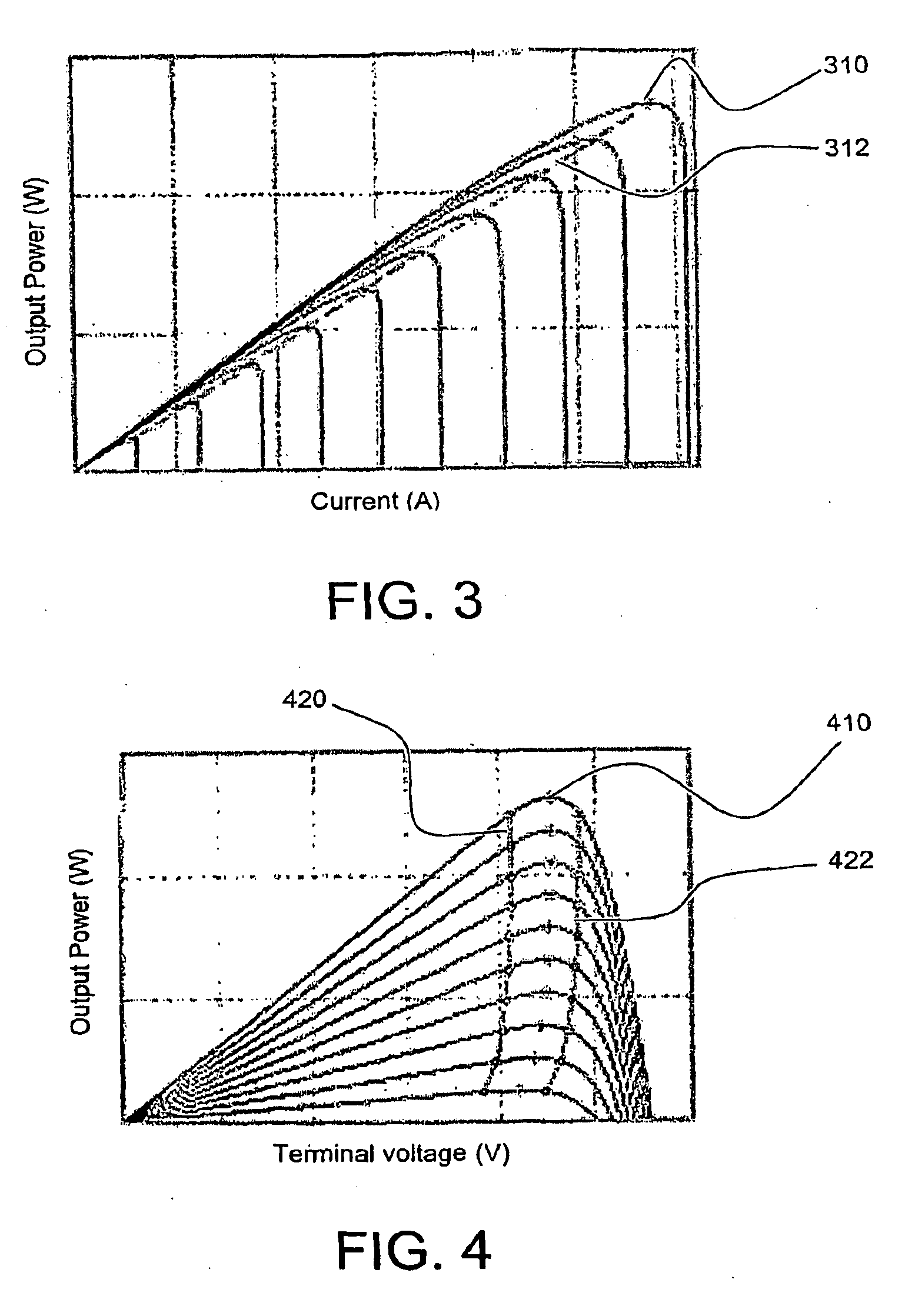
- A solar array configuration with a limited number of cells in series connected in parallel, along with a power converter to boost the terminal voltage, which eliminates the need for bypass diodes and controls the solar array voltage to follow reference values based on cell manufacturing material and temperature, optimizing power generation under varying illumination conditions.

Solar cell array and solar power generation apparatus using it
PatentInactiveEP0854521B1
Innovation
- Configuring solar cell arrays with solar cell strings of varying series module numbers, allowing for increased flexibility in design and installation, while minimizing IV mismatch loss by utilizing amorphous silicon cells and differing series module counts, which enables efficient power generation across the entire installation area without dummy modules.


Environmental Impact Assessment of Solar Arrays
The environmental implications of solar array deployment represent a critical consideration in the pursuit of maximum energy output optimization. While solar photovoltaic systems offer substantial environmental benefits compared to fossil fuel alternatives, their installation and operation generate measurable ecological impacts that must be carefully evaluated and mitigated.
Land use efficiency emerges as a primary environmental concern when optimizing solar array configurations. Large-scale solar installations require significant land areas, potentially affecting local ecosystems, wildlife habitats, and agricultural productivity. The configuration optimization process must balance energy density maximization with minimal ecological disruption, considering factors such as soil composition, vegetation patterns, and wildlife migration corridors.
Water resource management presents another crucial environmental dimension. Solar panel manufacturing processes consume substantial water quantities, while operational cleaning and cooling requirements can strain local water supplies. Advanced configuration strategies increasingly incorporate water-efficient cleaning systems and dry cooling technologies to minimize hydrological impacts, particularly in arid regions where solar resources are abundant but water is scarce.
The carbon footprint assessment of optimized solar arrays reveals complex environmental trade-offs. While manufacturing and transportation of solar components generate initial carbon emissions, strategic configuration optimization can significantly reduce the energy payback period. Modern silicon photovoltaic systems typically achieve carbon neutrality within 1-3 years of operation, with optimized configurations potentially reducing this timeframe through enhanced energy capture efficiency.
Waste management considerations become increasingly important as first-generation solar installations approach end-of-life cycles. Configuration optimization strategies must incorporate recyclability factors and material selection criteria that facilitate component recovery and reuse. Advanced tracking systems and mounting structures designed for maximum energy output should simultaneously consider disassembly requirements and material separation processes.
Biodiversity preservation requires careful integration into configuration planning processes. Solar installations can create microhabitat opportunities for certain species while potentially displacing others. Optimized array spacing and height configurations can accommodate native vegetation growth and provide wildlife corridors, transforming solar farms into dual-purpose ecological and energy production facilities.
Visual and noise pollution mitigation represents an often-overlooked environmental consideration in configuration optimization. Strategic placement and orientation of solar arrays can minimize visual impact on surrounding communities while reducing operational noise from tracking mechanisms and inverter systems, ensuring sustainable integration with existing landscapes and human settlements.
Land use efficiency emerges as a primary environmental concern when optimizing solar array configurations. Large-scale solar installations require significant land areas, potentially affecting local ecosystems, wildlife habitats, and agricultural productivity. The configuration optimization process must balance energy density maximization with minimal ecological disruption, considering factors such as soil composition, vegetation patterns, and wildlife migration corridors.
Water resource management presents another crucial environmental dimension. Solar panel manufacturing processes consume substantial water quantities, while operational cleaning and cooling requirements can strain local water supplies. Advanced configuration strategies increasingly incorporate water-efficient cleaning systems and dry cooling technologies to minimize hydrological impacts, particularly in arid regions where solar resources are abundant but water is scarce.
The carbon footprint assessment of optimized solar arrays reveals complex environmental trade-offs. While manufacturing and transportation of solar components generate initial carbon emissions, strategic configuration optimization can significantly reduce the energy payback period. Modern silicon photovoltaic systems typically achieve carbon neutrality within 1-3 years of operation, with optimized configurations potentially reducing this timeframe through enhanced energy capture efficiency.
Waste management considerations become increasingly important as first-generation solar installations approach end-of-life cycles. Configuration optimization strategies must incorporate recyclability factors and material selection criteria that facilitate component recovery and reuse. Advanced tracking systems and mounting structures designed for maximum energy output should simultaneously consider disassembly requirements and material separation processes.
Biodiversity preservation requires careful integration into configuration planning processes. Solar installations can create microhabitat opportunities for certain species while potentially displacing others. Optimized array spacing and height configurations can accommodate native vegetation growth and provide wildlife corridors, transforming solar farms into dual-purpose ecological and energy production facilities.
Visual and noise pollution mitigation represents an often-overlooked environmental consideration in configuration optimization. Strategic placement and orientation of solar arrays can minimize visual impact on surrounding communities while reducing operational noise from tracking mechanisms and inverter systems, ensuring sustainable integration with existing landscapes and human settlements.
Grid Integration Standards for Optimized Solar Systems
Grid integration standards play a crucial role in maximizing the energy output potential of optimized solar array configurations. The IEEE 1547 standard series establishes fundamental requirements for distributed energy resources, including solar photovoltaic systems, to connect safely and reliably to the electrical grid. These standards define voltage and frequency operating ranges, power quality requirements, and islanding protection protocols that directly impact how solar arrays can be configured and operated for optimal performance.
The IEC 61727 standard specifically addresses photovoltaic system characteristics and test procedures for utility-interconnected systems. This standard mandates specific power factor requirements, harmonic distortion limits, and DC injection constraints that influence inverter selection and array design decisions. Compliance with these parameters ensures that optimized solar configurations can deliver maximum energy while maintaining grid stability and power quality.
Recent updates to grid codes, particularly the introduction of smart inverter functionalities under IEEE 1547-2018, have expanded the operational capabilities of solar systems. These advanced standards enable dynamic voltage regulation, frequency response, and reactive power control, allowing optimized solar arrays to provide grid support services while maintaining peak energy production. The implementation of these functions requires sophisticated control algorithms that can balance energy maximization objectives with grid support requirements.
Interconnection standards also establish specific metering and communication protocols that affect system monitoring and optimization capabilities. The adoption of IEEE 2030.5 communication standards enables real-time data exchange between solar systems and grid operators, facilitating advanced optimization algorithms that can adjust array performance based on grid conditions and pricing signals.
Regional variations in grid integration requirements, such as California's Rule 21 or European EN 50549 standards, create additional complexity for solar array optimization strategies. These jurisdiction-specific requirements often impose unique constraints on system operation, including specific ramp rate limitations, voltage ride-through capabilities, and frequency response characteristics that must be incorporated into optimization algorithms to ensure both maximum energy output and regulatory compliance across different markets.
The IEC 61727 standard specifically addresses photovoltaic system characteristics and test procedures for utility-interconnected systems. This standard mandates specific power factor requirements, harmonic distortion limits, and DC injection constraints that influence inverter selection and array design decisions. Compliance with these parameters ensures that optimized solar configurations can deliver maximum energy while maintaining grid stability and power quality.
Recent updates to grid codes, particularly the introduction of smart inverter functionalities under IEEE 1547-2018, have expanded the operational capabilities of solar systems. These advanced standards enable dynamic voltage regulation, frequency response, and reactive power control, allowing optimized solar arrays to provide grid support services while maintaining peak energy production. The implementation of these functions requires sophisticated control algorithms that can balance energy maximization objectives with grid support requirements.
Interconnection standards also establish specific metering and communication protocols that affect system monitoring and optimization capabilities. The adoption of IEEE 2030.5 communication standards enables real-time data exchange between solar systems and grid operators, facilitating advanced optimization algorithms that can adjust array performance based on grid conditions and pricing signals.
Regional variations in grid integration requirements, such as California's Rule 21 or European EN 50549 standards, create additional complexity for solar array optimization strategies. These jurisdiction-specific requirements often impose unique constraints on system operation, including specific ramp rate limitations, voltage ride-through capabilities, and frequency response characteristics that must be incorporated into optimization algorithms to ensure both maximum energy output and regulatory compliance across different markets.
Unlock deeper insights with Patsnap Eureka Quick Research — get a full tech report to explore trends and direct your research. Try now!
Generate Your Research Report Instantly with AI Agent
Supercharge your innovation with Patsnap Eureka AI Agent Platform!